Azerbaijan folds an improbable range into one country: a walled medieval capital on the Caspian, petroglyphs carved long before the pyramids, bubbling mud volcanoes and stone villages pinned to the Greater Caucasus. Here is where to go first, what not to miss, and how to string the best of it together.
Baku: The Walled Old City and the Caspian Skyline
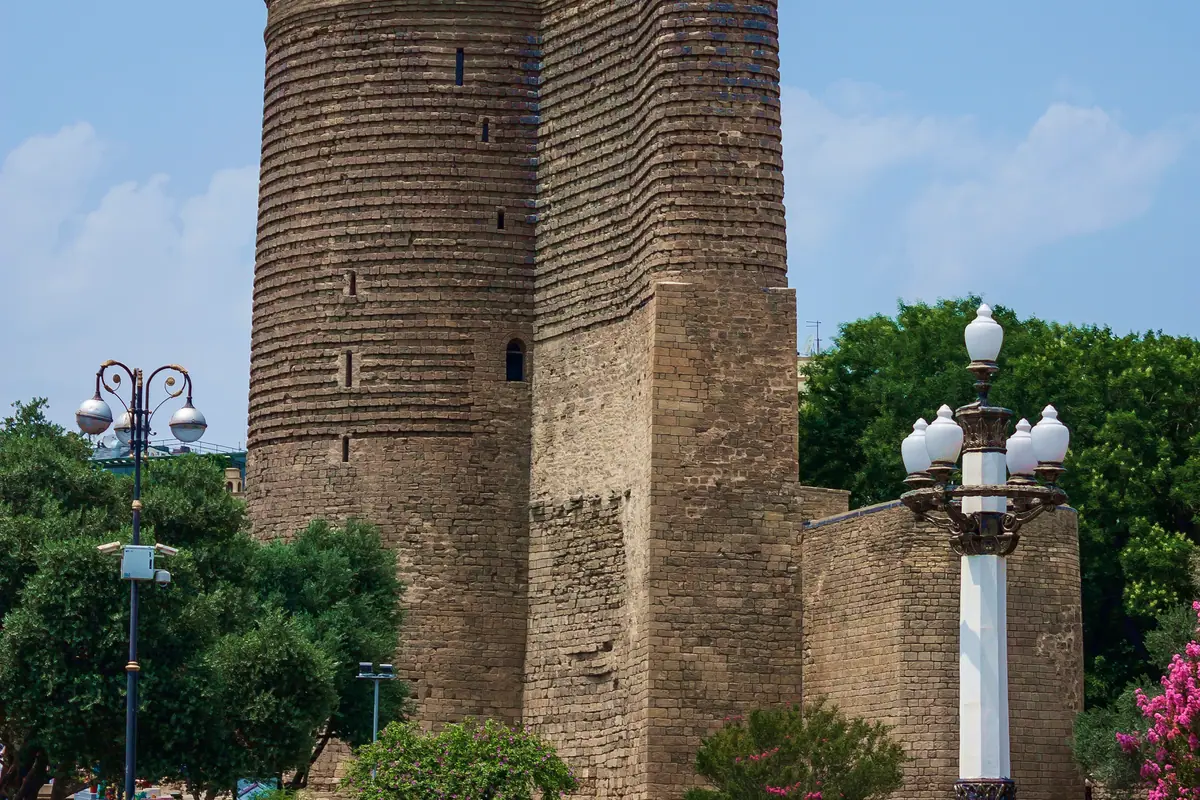
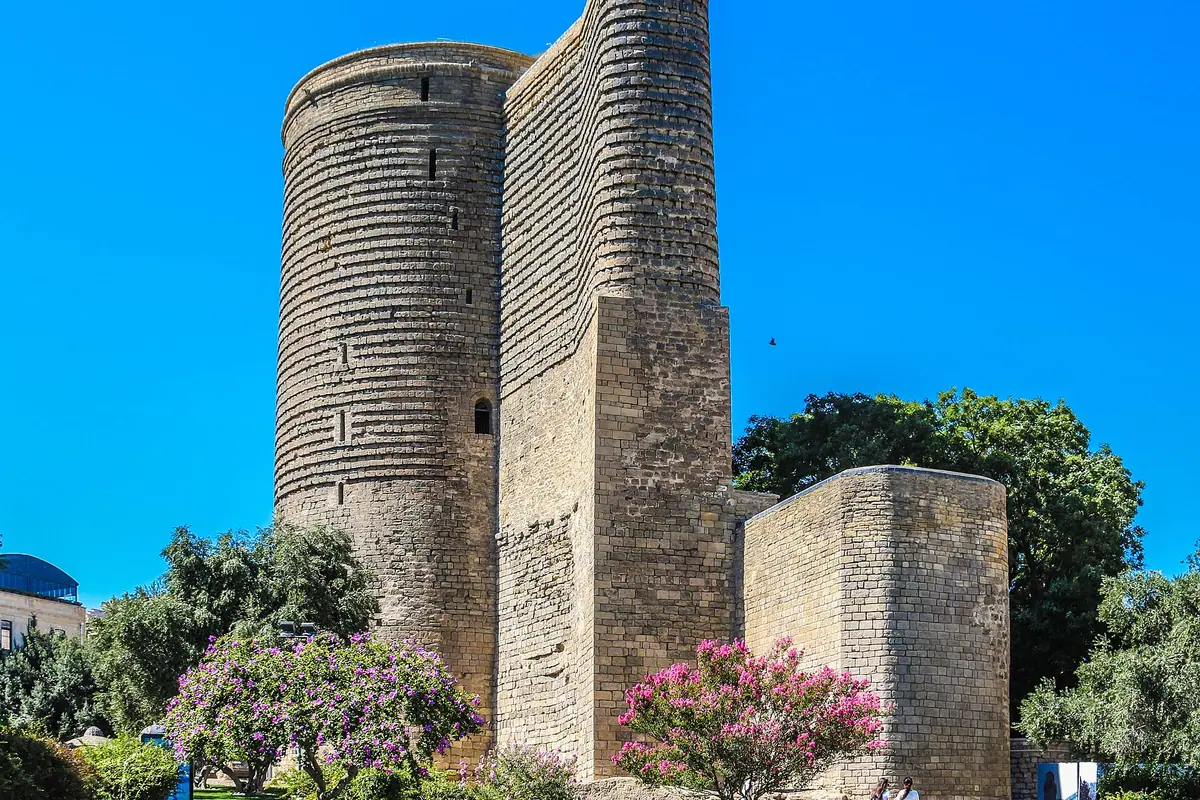
Start in the capital, where the Absheron Peninsula juts into the Caspian Sea. Icherisheher, the walled old city, is compact enough to walk in two or three unhurried hours, but most visitors end up returning for a second morning. The 12th-century Maiden Tower — Qiz Qalasi — rises eight storeys above lanes of worn limestone, and the 15th-century Palace of the Shirvanshahs, with its divankhana courtyard and burial vaults, is the most complete royal complex of its kind in the Caucasus. Between them you will find caravanserais turned into tea houses, a working hammam, small museums and shopkeepers who insist you try the local sherbet.
Outside the walls the city flips to glass and neon. Walk Nizami Street and Fountains Square in the evening, then follow the Caspian Boulevard, a seafront promenade several kilometres long, past the museum shaped like a rolled carpet. For the postcard view, ride the funicular up to Upland Park at dusk, when the Flame Towers light up and the bay curves away below. The swooping white curves of the Heydar Aliyev Center, the city's landmark of contemporary architecture, deserve a separate visit, and exhibitions there are best booked ahead. Two or three full days in Baku is a comfortable minimum, with one kept free for the day trips below.
If you have a spare hour, the covered market is the place to load up on saffron, dried fruit and mountain honey before heading out of the city. English is widely spoken in central hotels and restaurants, but a few words of Azerbaijani or Russian go a long way in the markets.
Gobustan and the Absheron Peninsula: Petroglyphs, Mud and Eternal Fire
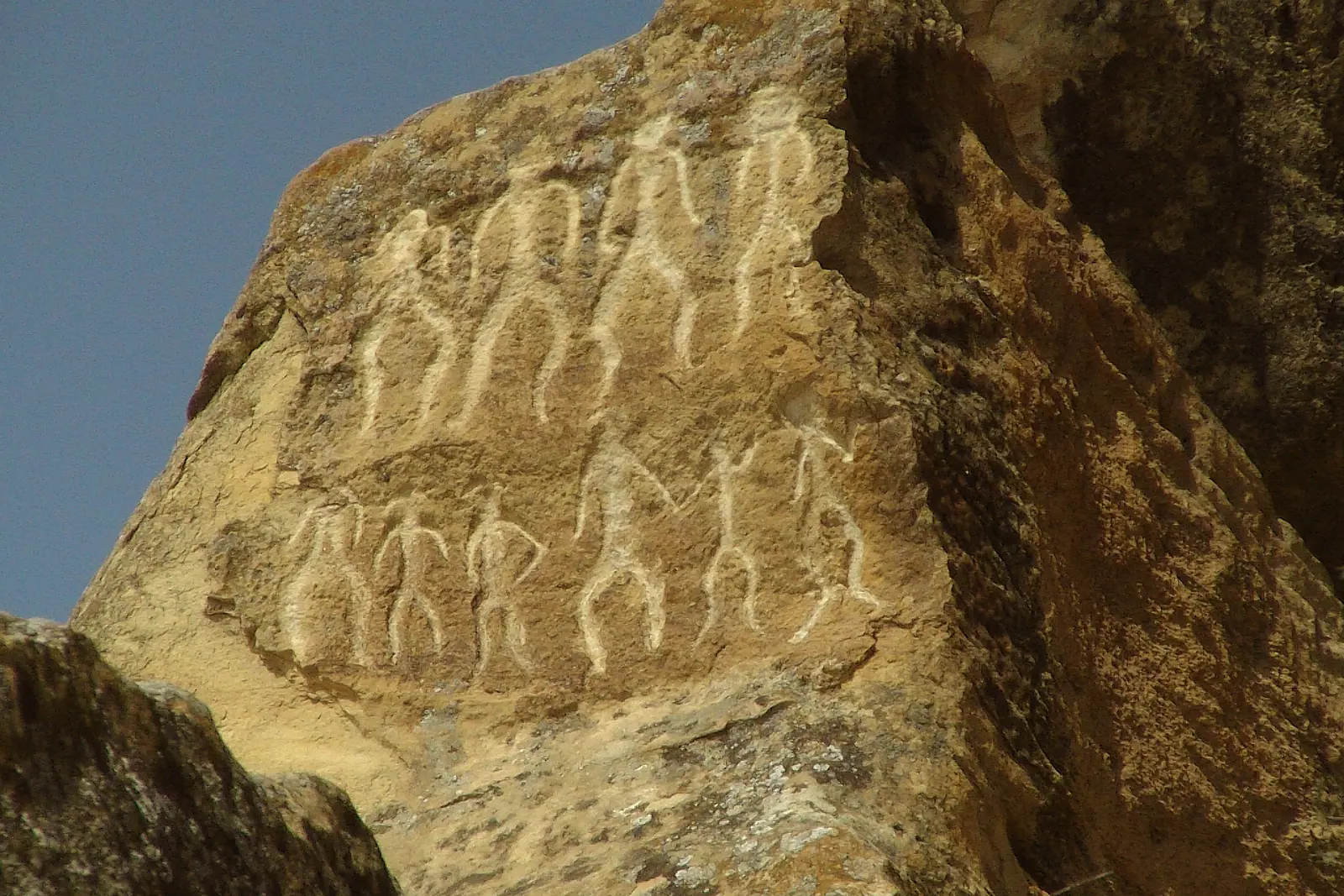
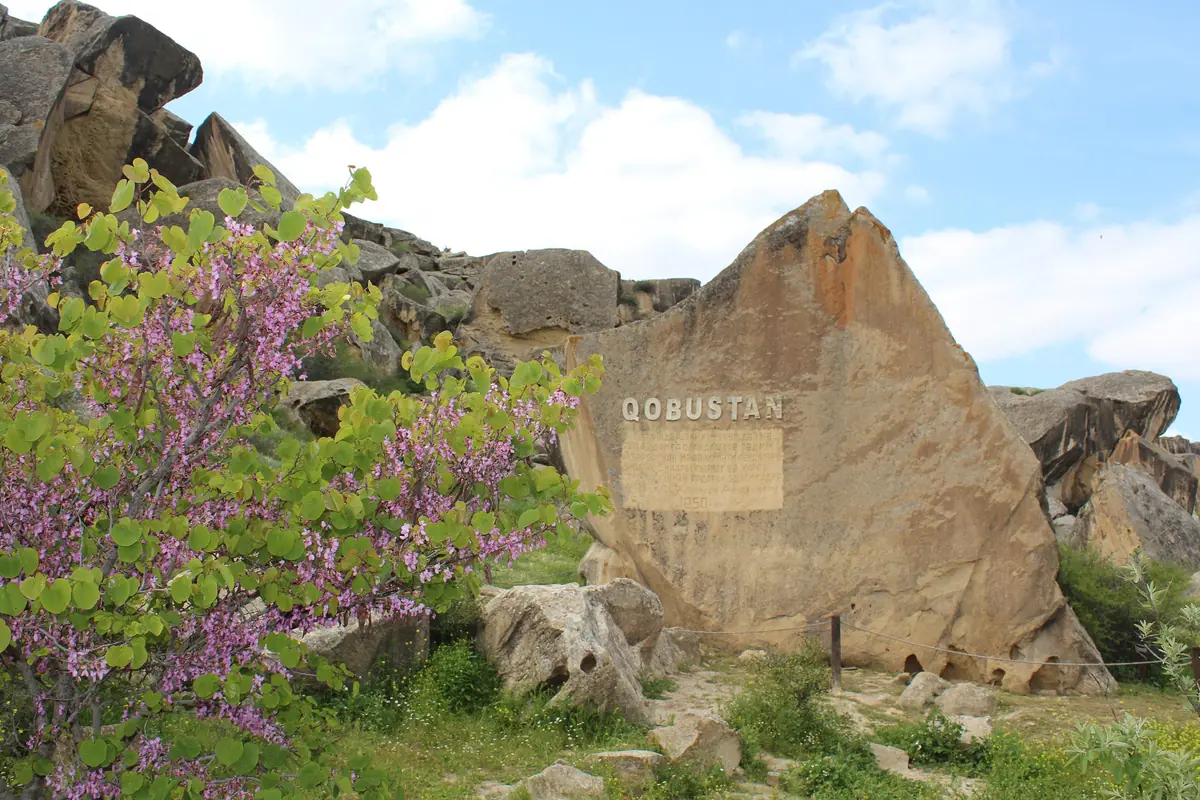
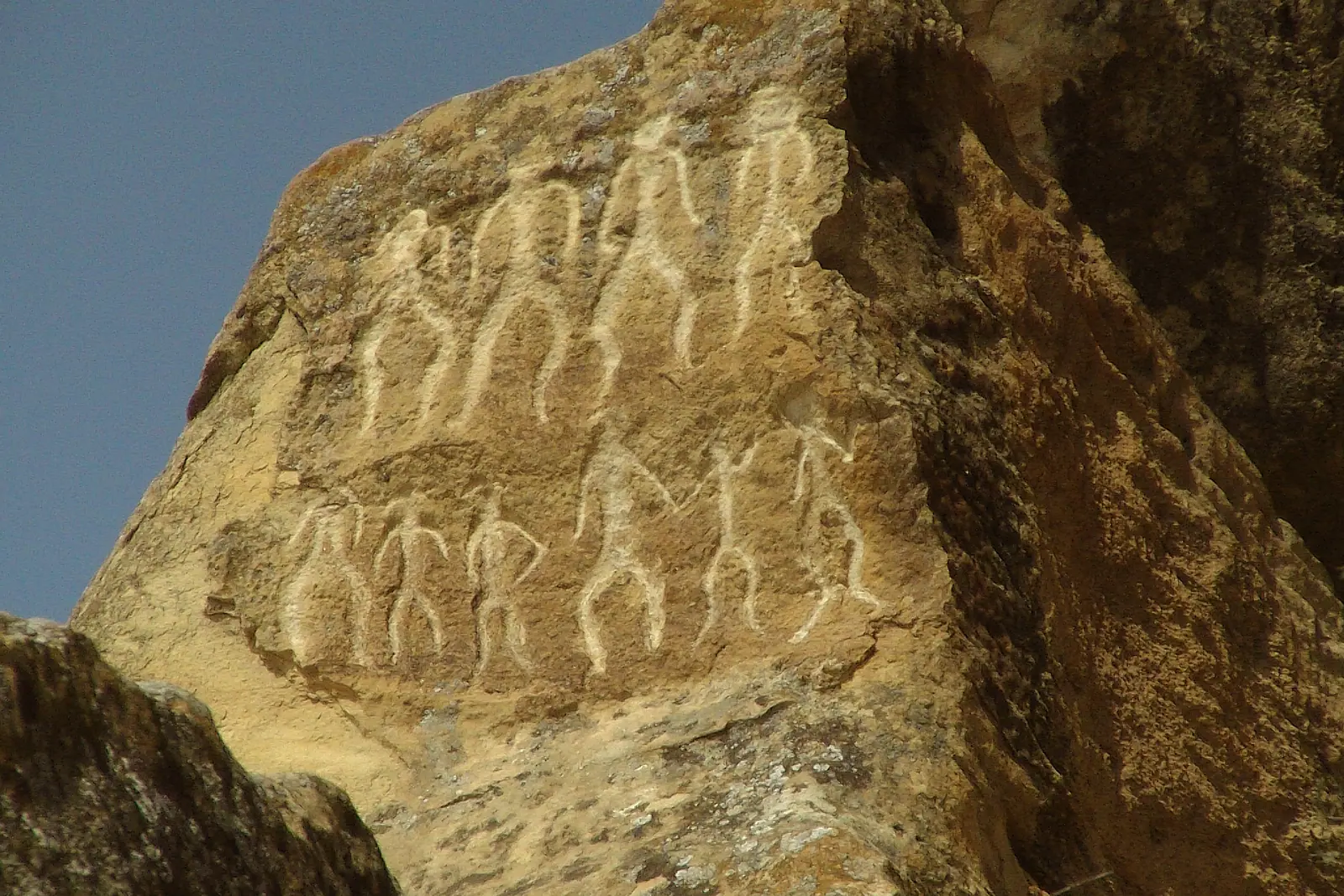
About an hour's drive south-west of Baku, Gobustan National Park protects more than 6,000 rock engravings — hunters, reed boats, bulls and dancing figures — the oldest of which are dated back tens of thousands of years. The site is recognised as a World Heritage landscape, and the setting alone justifies the trip: dry, stony hills falling towards the Caspian. Go early, because there is almost no shade and the light on the carved slabs is best before midday. Wear shoes with grip for the rock steps, carry water, and allow two to three hours with a guide, who will point out figures you would otherwise walk straight past.
A short, bumpy detour from the same road leads to the mud volcanoes: low grey cones of slurry that burp and pop continuously and are cool to the touch. They are a genuinely strange sight, best reached in a sturdy vehicle, and the surrounding badlands make an atmospheric half-hour of wandering.
Round out the day on the Absheron Peninsula itself. At Yanar Dag a hillside of natural gas burns without pause, flames flickering along a low ridge, and at the Ateshgah fire temple in Surakhani, an old shrine of pentagonal walls and flame altars shows how long fire has been sacred on this coast. The squat quadrangular fortress at Mardakan, built in the 12th century, is a fine final stop before the drive back into Baku.
Sheki and the Silk Road Villages of the North-West
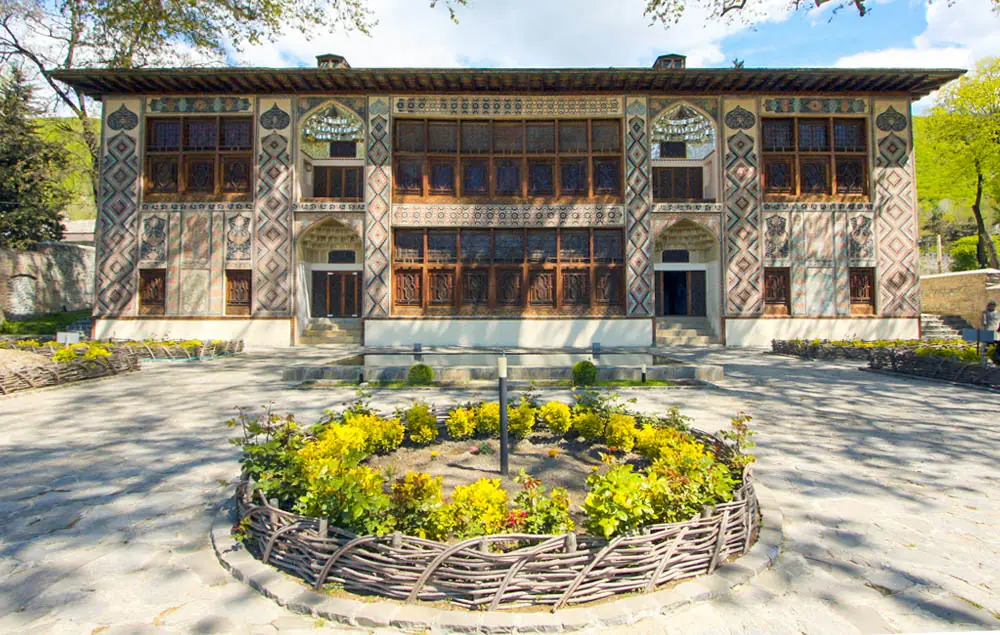
Four to five hours west of Baku, Sheki sits in a green bowl beneath the Greater Caucasus and is the most rewarding overnight stop outside the capital. The Sheki Khan's Palace, built in the 1760s, is the showstopper: room after room of painted murals and shebeke, mosaic windows of coloured glass set into wooden lattice assembled without nails or glue, glowing when the afternoon sun hits them. Combine it with the round tower and the tree-shaded khan's garden, and give the palace a good two hours.
Below the palace, the old Sheki Caravanserai once sheltered Silk Road traders and now houses courtyards where you can drink tea under the arches. Sheki is also where you should eat: piti, a slow-cooked lamb and chickpea soup served in a clay pot, and the local halva made with rice flour and sugar, sold in thick slabs. Use the town as a base for craft workshops in the surrounding hills and for a full day of wandering the old lanes.
Two side trips are worth the detour. In the village of Kish, a short drive away, the round-towered Albanian church is one of the oldest Christian structures in the Caucasus and holds a small museum. Farther east, in Ismayilli province, the mountain village of Lahij has been a copper-smithing centre for centuries, and you can watch hammered trays and jugs take shape in tiny workshops. On the way back to Baku, break the journey at Shamakhi for the Juma Mosque, the oldest in the Caucasus, and the Yeddi Gumbaz mausoleum complex.
The High Caucasus: Quba, Khinaliq, Qusar and Gabala
North of Baku, the road climbs through apple orchards to Quba, a tidy town of wooden houses, carpet weaving and a long-standing mountain community in the nearby Red Settlement. From Quba a paved road switchbacks up to Khinaliq, a stone-and-timber village at around 2,350 metres and among the highest permanently inhabited settlements in the Caucasus. The drive takes roughly an hour and a half, and the weather can turn within minutes, so take a jacket even in July. Villagers speak their own language, keep sheep and run simple homestays; the view from the terraces over the valley below is worth the trip on its own.
East of Quba, Qusar looks across the valley to snow-capped peaks and the Shahdag mountain resort, where the ski season runs roughly December to March with lifts, groomed runs and rental gear. In summer the same slopes turn into hiking and paragliding country.
Further south-west, Gabala has become the region's family playground. A cable car sweeps up to the Tufandag ridge, where trails lead to waterfalls and viewpoints, while below, the Seven Beauties waterfall and the calm Nohur lake make easy half-day outings. It is a two-and-a-half to three hour drive from Baku, and there is enough here for two nights if you like cool air in midsummer.
Ganja, Goygol and the Western Interior
Azerbaijan's second city, Ganja, is a good counterweight to Baku: wide, low-rise and heavy with history. The Nizami Mausoleum, a tall cylindrical monument to the 12th-century poet, anchors a hillside park, and nearby stand the Shah Abbas Mosque, an old caravanserai and the curious Bottle House, a private home faced entirely with embedded glass bottles. The bazaar and the long pedestrian stretch of Javad Khan Street are where to eat and people-watch. Intercity trains from Baku cover the distance in a few hours, which makes Ganja an easy overnight trip.
An hour away, Goygol — 'blue lake' — sits in a national park of beech forest and alpine meadow, its water shifting between turquoise and ink depending on the light. Trails circle the shoreline, and spring wildflowers or October colour are the best reasons to come. Farther west, Naftalan is known for its heavy crude-oil baths, a therapy-resort experience unlike anything else in the country, while the mountain town of Shamkir offers vineyards and reservoirs for a slower day.
The Green South: Lankaran, the Talysh Mountains and Astara
The south is Azerbaijan's subtropics: humid, leafy and warm, with tea plantations, citrus groves and forests protected as a World Heritage landscape for their ancient Hyrcanian flora. Lankaran is the natural base — small and relaxed, with a fortress and museum, tea and citrus culture you can taste at every roadside stall, and markets overflowing with lemons, feijoa and locally grown tea. The hot springs at Istisu, a short drive inland, are a good way to end an afternoon.
Inland, the Talysh Mountains climb towards Lerik, a district with a long-standing reputation for unusual longevity and superb terraced walking. Farther south, Astara sits on the Iranian border, where springs and warm coastal air offer a last taste of the Caspian lowlands. Spring and autumn are the seasons to do this stretch, since summers are muggy and the coast can be hazy, and a two- or three-night run from Baku, by train to Lankaran or with a hired driver, reveals a side of the country most first-time visitors never see.
Frequently asked questions
When is the best time to visit Azerbaijan?
April to June and September to October are ideal almost everywhere, with mild temperatures and green or golden landscapes. Baku is hot and famously windy in July and August, while the mountain resorts of Shahdag and Tufandag ski from roughly December to March. The southern subtropics around Lankaran are humid in summer, and high villages such as Khinaliq can be snowbound in winter.
How many days do you need in Azerbaijan?
Four to five days is enough for Baku plus day trips to Gobustan, the Absheron fire sites and one northern town. Eight to ten days allows a proper loop: Baku, Sheki and its Silk Road villages, the high Caucasus around Quba and Gabala, and either the western interior around Ganja and Goygol or the green south around Lankaran.
Do I need a visa to visit Azerbaijan?
Many nationalities can apply for an electronic visa online before travelling, and it is usually issued within a few days. Rules and eligibility change from time to time, so check the current requirements for your passport well before you book flights, and print your approval to show on arrival.
Can I travel outside Baku without a car?
Yes. Intercity trains and buses link Baku with Ganja, Sheki, Lankaran and Gabala, and domestic flights serve the Nakhchivan exclave. For villages such as Khinaliq, Lahij or Kish, hiring a driver or joining a local guide for the day is the practical option. Carry some cash in manat, since cards are not accepted everywhere outside the capital.
Is Nakhchivan worth adding to an itinerary?
If you have the time, yes. The exclave is reached by short flights from Baku or overland through Iran, and its highlights include the Momine Khatun Mausoleum, the tomb traditionally associated with Noah, and the extraordinary salt-mine sanatorium at Duzdag. Allow two days and treat the logistics as a separate trip.
Plan it — experiences in Azerbaijan
Live search, booked directly with trusted providers.
Sort the rest of your trip
Everything for Azerbaijan, in one place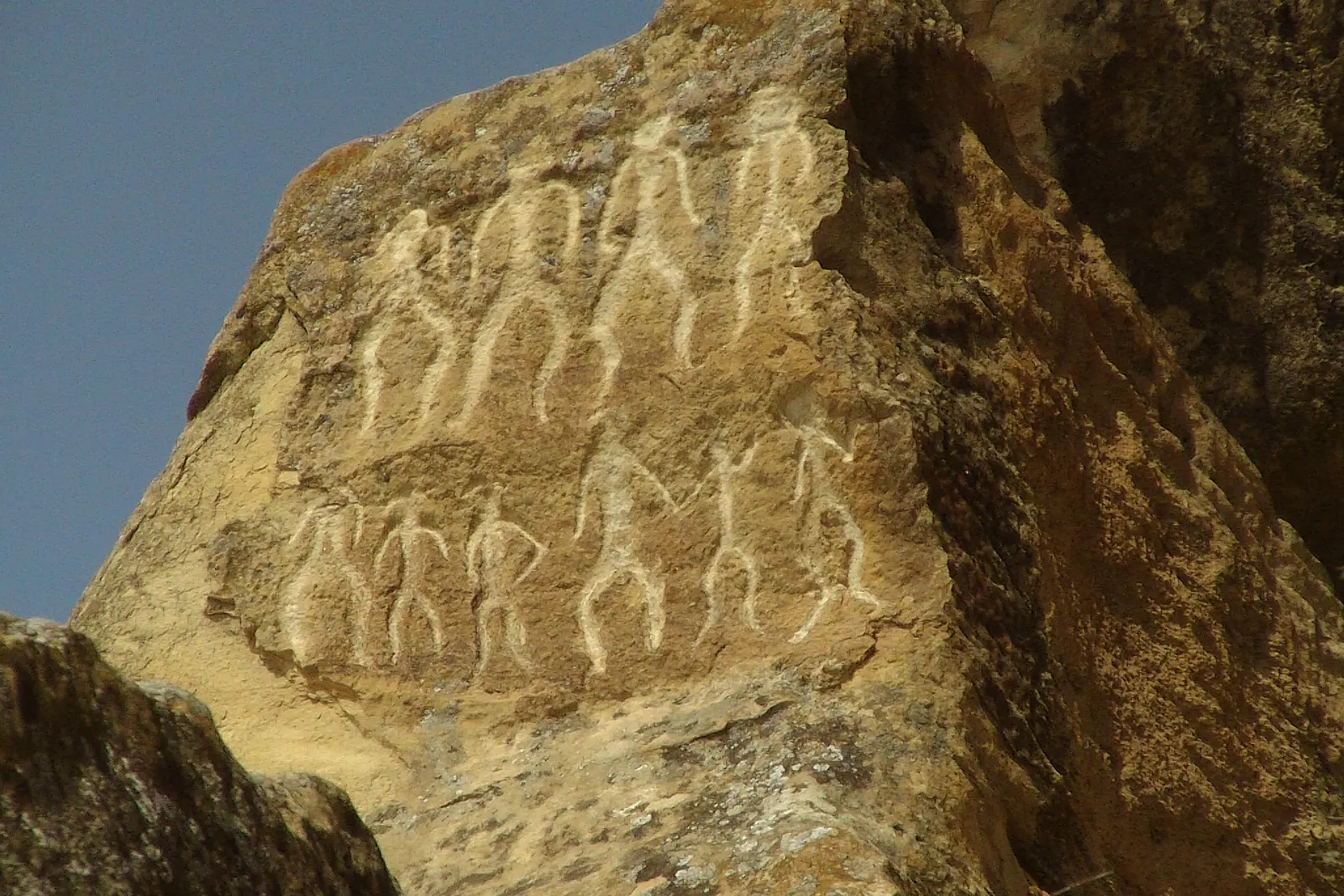
Stay in Azerbaijan
Hotels, guesthouses and apartments — compared in one search.
Search hotels
Transfer in Azerbaijan
Private driver waiting on arrival — no queues, no surprises.
Book a transfer
Stay online in Azerbaijan
Travel eSIM — data the moment you land, no roaming bills.
Get an eSIMMore guides in Azerbaijan
Best Time to Visit Azerbaijan: A Season-by-Season Guide to Hotels and Sights
Top Things to Do in Azerbaijan: Landmarks, Fire Temples and Mountain Villages
Hotels in Azerbaijan: Where to Stay in Baku, Sheki and the Caucasus