Syria is a country of stone courtyards, minarets and crusader walls, where a night's sleep might come with a fountain murmuring in a restored merchant's house or a window framing the floodlit Citadel of Aleppo. Choosing the right base decides how much of that you actually see.
What to Expect From Hotels in Syria
Syria's accommodation is more varied than most first-time visitors imagine. The signature stay is the beit — a traditional Damascene or Aleppan courtyard house converted into a small boutique hotel, usually with a handful of rooms wrapped around an orange-tree courtyard, a fountain, a raised liwan for lounging and a rooftop terrace. Beyond these, you will find solid mid-range concrete hotels in city centres, family-run guesthouses in smaller towns, simple roadside motels on the highway between Homs and Aleppo, and beach chalets and low-rise resorts along the Mediterranean coast near Latakia and Tartus. Services tend to be personal rather than polished: a family on reception, breakfast laid out on a tray, and someone happy to call a driver for you.
Breakfast, wherever you stay, is a highlight — small bowls of moutabal and hummus, white cheese, olives, apricot jam, eggs, mountain honey and warm flatbread. Expect a kettle in the room and hot water that is best in the evening rather than at dawn. English is spoken in boutique courtyard hotels and coastal resorts but rarely in budget places outside Damascus and Aleppo, so a few phrases of Arabic go a long way. Power cuts are still part of daily life in many districts, and most hotels run a generator; bring a small torch and a power bank.
Timing matters enormously. March to May and September to November are the sweet spots, with mild days in Damascus and Aleppo perfect for walking the old cities. July and August push past 35°C inland, which makes the coast and the mountain villages the sensible choice; December to February is cold, damp and occasionally snowy in Damascus, and chilly in Aleppo, so book somewhere with proper heating.
Damascus: Courtyard Hotels Inside the Old City
Nothing beats sleeping inside the walls of Damascus, the world's oldest continuously inhabited capital. The best boutique properties cluster around Bab Touma, Bab Sharqi and along Straight Street, the Roman Via Recta that still cuts a straight line through the souq. Step out of your door and you are minutes from the Umayyad Mosque, with its gilded mosaics and the shrine of John the Baptist; the covered lanes of Souq al-Hamidiyah, scented with spices, soap and brocade; the eighteenth-century Azm Palace, now a museum of arts and popular traditions; and the Damascus Citadel, whose walls and gates dominate the northern edge of the old town. Also within walking distance are the Chapel of Saint Ananias, the ornate Al-Takiyya Al-Sulaymaniyya complex, and the lively Christian quarter of Bab Touma.
For a wide angle on all of it, climb or drive up Mount Qasioun at sunset, when the minarets, domes and the white sprawl below turn gold. After dark, the old city is quiet, and the muezzin's call at dawn is unavoidable in a courtyard room — many travellers find it the most memorable alarm clock they have ever had.
If you prefer lifts, air conditioning and room service, base yourself in the modern districts of Mezzeh, Mazraa or near Baramkeh, where larger hotels sit close to embassies, restaurants and taxi ranks. Distances are short — a taxi to the old city takes fifteen to twenty minutes depending on traffic — but the atmosphere is entirely different, and you will trade the courtyard for a car park. For most visitors, two or three nights inside the walls and a night or two in a modern hotel is the ideal split.
Aleppo: Rooms in the Shadow of the Citadel
Aleppo rewards those who stay in its historic core rather than on the modern western edge. The Citadel — a vast limestone mound crowned with a gateway, mosque and throne-room remains — sits at the centre, and the Great Mosque of Aleppo and the vaulted kilometres of Souq al-Madina lie just below it. Stay in or near Al-Jdeida, the old Christian quarter of pale stone merchant houses, and you can walk to Al-Hatab Square, the antique shops and galleries, the khans where soap and pistachios were once traded, and the handsome caravanserais such as Khan al-Wazir. Several of these mansions have been restored as small courtyard hotels, with carved ceilings, sunken marble basins and courtyards that stay cool even in August.
Aleppo is also an excellent base for excursions. An hour northwest brings you to the ruined basilica of Saint Simeon Stylites at Qalaat Semaan, one of the most atmospheric sites in the Middle East; other half-days reach the dead cities of the limestone massif, the Roman ruins of Cyrrhus and the pilgrimage town of Maarat al-Numan. Give Aleppo a minimum of two nights, three if you plan day trips.
Practical notes: old-city lanes are too narrow for cars, so arrange with your hotel to be met at a nearby square; ask for a room away from the early-morning bread ovens and workshops; and take a traditional hammam visit one evening, followed by pistachio sweets from a shop near Bab al-Faraj. Winter here bites harder than the coast, so check that heating is real and not just a blanket.
Bases for the Great Sites: Palmyra, Krak des Chevaliers, Bosra and Maaloula
Palmyra is the reason many travellers come to Syria at all: a desert city of honey-coloured columns, the Great Colonnade, the Temple of Bel, the Tower and Underground Tombs of the Valley of the Tombs, and the Arab castle that looks down on the whole plain from its hilltop. Accommodation in the small town beside the ruins is modest — simple hotels and guesthouses with the desert at the doorstep — but staying overnight is worth it for the light at sunrise and for the stars, which no day trip can give you. Bring layers: desert evenings drop fast even in spring.
Krak des Chevaliers, the finest surviving crusader castle anywhere, sits near the town of al-Hosn and is easily visited from Homs, an hour's drive away, or as a long day trip from Damascus. Combine it with the colonnade of Apamea and the norias — the great wooden water wheels groaning on the Orontes at Hama — and you have one of the best days in the country. In the south, the black basalt city of Bosra holds a Roman theatre so complete you can still hear a whisper from the stage; base yourself in Bosra for an early start or visit from Damascus. Maaloula, a village of pale houses stacked against a cliff and still home to Aramaic speakers, offers small guesthouses and two cliff-side monasteries, Mar Sarkis and Mar Taqla, a short drive from the capital.
Distances are greater than they look: Damascus to Palmyra is roughly three and a half hours, Damascus to Aleppo about five, Damascus to Homs around two. Hiring a car with a driver for these stretches is the norm, and it saves the hassle of early bus connections. Start before dawn for desert sites, carry water and sun protection, and agree the day's itinerary and return time in advance.
The Coast and the Mountains: Latakia, Tartus, Arwad and the Summer Hills
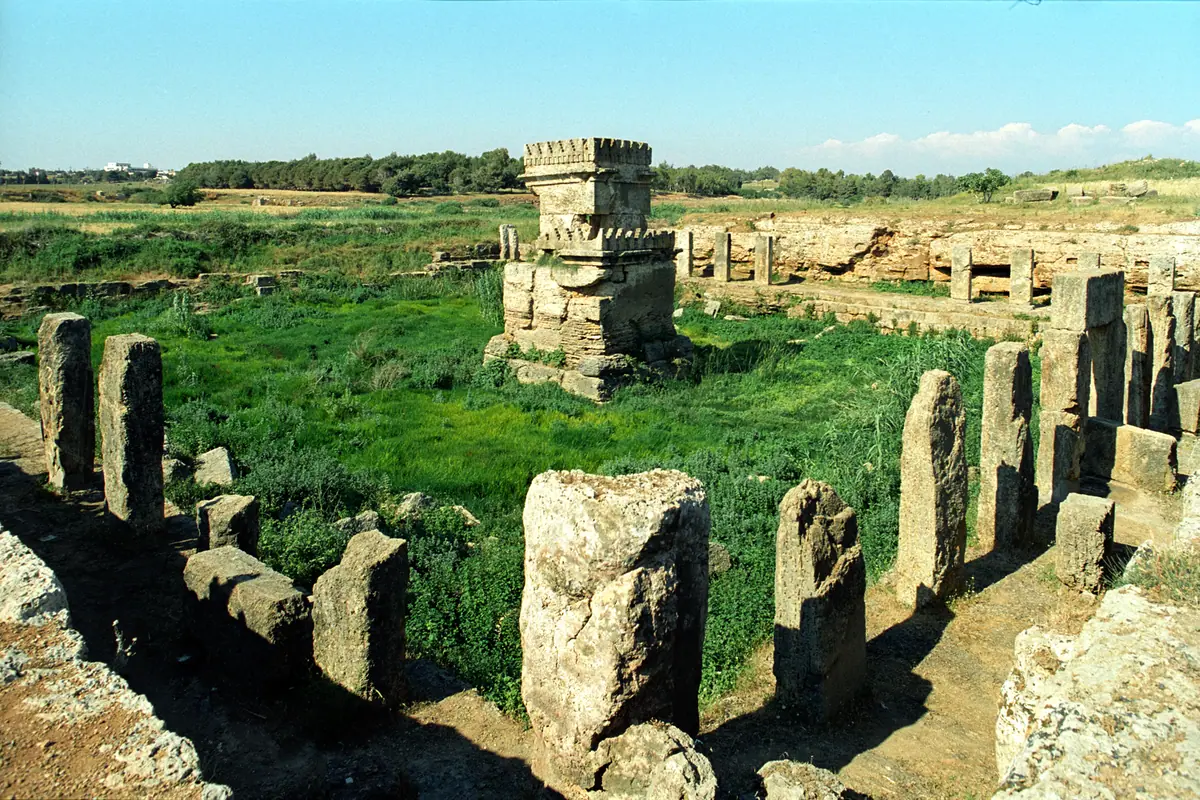
Syria's Mediterranean strip feels like a different country: citrus groves, banana plantations, humid evenings and a horizon of blue water. Latakia, the main coastal city, has the widest choice of beach hotels, chalets and seafront apartments, mostly north of the centre toward Ras al-Bassit. Two unmissable sights lie within easy reach: the ruins of Ugarit at Ras Shamra, where one of the world's earliest alphabets was carved, and the mountain stronghold known as Saladin's Castle, perched above forested gorges with a moat cut straight from the rock. Swimmers are happiest from May to October, though the sea stays pleasant into November.
South of Latakia, Tartus is quieter and keeps a small cathedral-turned-museum from the crusader era. From its harbour, little boats shuttle to Arwad, the only inhabited island in Syria, where fishermen mend nets beside a fortress and the seafood is served almost within reach of the waves. The coast makes a relaxed counterweight to the intensity of the old cities, and hotel rates here are generally lower than in Damascus or Aleppo.
Inland, the coastal mountains rise to pine forests and cool villages — Slunfeh, Kassab on the Turkish border, and further south the hill resorts of Bloudan, Zabadani and Mashta al-Helu. These are the places Syrians themselves escape to in July and August, when Damascus is stifling; you will find simple family hotels, garden restaurants and mountain air, with snow on the highest passes in January. Book ahead on summer weekends, when the hill towns fill up.
Practicalities: Booking, Paying and Local Etiquette
Reservations in Syria are often made by phone, email or through a local contact rather than an instant online booking, and it pays to reconfirm a few days before arrival — email and messaging can be slow. Few international credit cards work, and ATMs are unreliable, so bring enough cash in US dollars or euros to change into Syrian pounds at exchange offices, and keep a reserve. Ask clearly whether breakfast, taxes and airport transfers are included, and whether the quoted rate is per room or per person.
Tipping is expected and small notes are appreciated: porters, drivers, waiters and hotel staff. Friday is the main day off, when many shops and some restaurants close, and hotel breakfasts run later. During Ramadan, daytime eating in public is best avoided, and hotel restaurants often serve only in the evening; many places offer a late suhoor instead. Alcohol is available in hotels and licensed restaurants but not everywhere, so check before planning a celebratory dinner.
Finally, a word on conditions. Parts of the country remain affected by years of conflict and some regions are off-limits or unsuitable for visitors, so travel plans should follow current official guidance and local advice, with flexible bookings and a willingness to change routes. Ask your hotel to recommend drivers and guides they know, avoid photographing military sites, checkpoints and people without permission, and dress modestly in conservative areas and around religious sites — shoulders and knees covered, shoes off inside mosques. Handled with care and curiosity, a stay in Syria is one of the most rewarding travel experiences left in the region.
Frequently asked questions
Which cities should I base myself in for a first trip to Syria?
Plan around Damascus and Aleppo, with at least two or three nights in each, staying inside the old cities where possible. Add a night in Palmyra for the desert ruins, and use Homs or Hama as a base for Krak des Chevaliers and Apamea. Latakia or Tartus works well for a coastal finish, especially in summer.
When is the best time of year to visit Syria?
March to May and September to November are ideal, with mild walking weather in Damascus and Aleppo. July and August are extremely hot inland, so head for the coast or the mountain villages. December to February is cold and often wet, with occasional snow in Damascus and the coastal mountains, so check that your hotel has proper heating.
What kinds of hotels are available in Syria?
The most characterful are courtyard houses, known as beits, converted into small boutique hotels in Damascus and Aleppo. You will also find mid-range modern hotels in the city centres, family-run guesthouses in towns such as Maaloula and Bosra, simple hotels beside the ruins at Palmyra, and beach hotels and chalets along the coast near Latakia and Tartus.
How do I pay for a hotel in Syria?
Cash is king. Bring US dollars or euros to change into Syrian pounds locally, since international cards are rarely accepted and ATMs cannot be relied on. Agree the rate in advance, confirm whether breakfast and taxes are included, and keep a cash reserve for drivers, tips and the occasional power-cut-related change of plan.
Can I visit Palmyra or Krak des Chevaliers from Damascus?
Yes, but both are long days. Palmyra is roughly three and a half hours each way, so an overnight stay in the town beside the ruins is far better for sunrise light and stargazing. Krak des Chevaliers is more comfortable from Homs, about an hour away, and pairs well with Apamea and the water wheels at Hama.
Sort the rest of your trip
Everything for Syria, in one place
Transfer in Syria
Private driver waiting on arrival — no queues, no surprises.
Book a transfer
Things to do in Syria
Skip-the-line tickets, guided tours and standout experiences.
See experiences
Stay online in Syria
Travel eSIM — data the moment you land, no roaming bills.
Get an eSIM