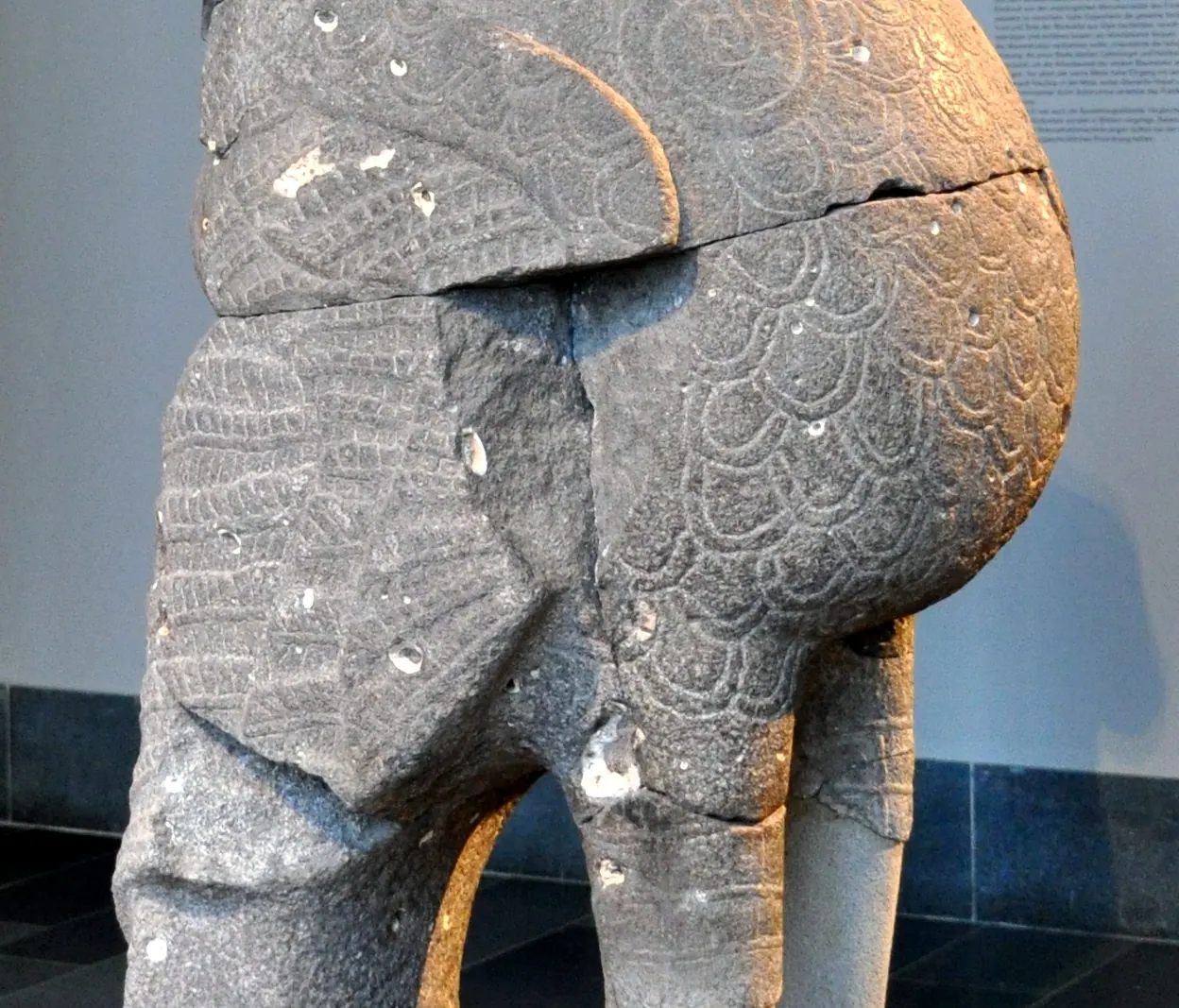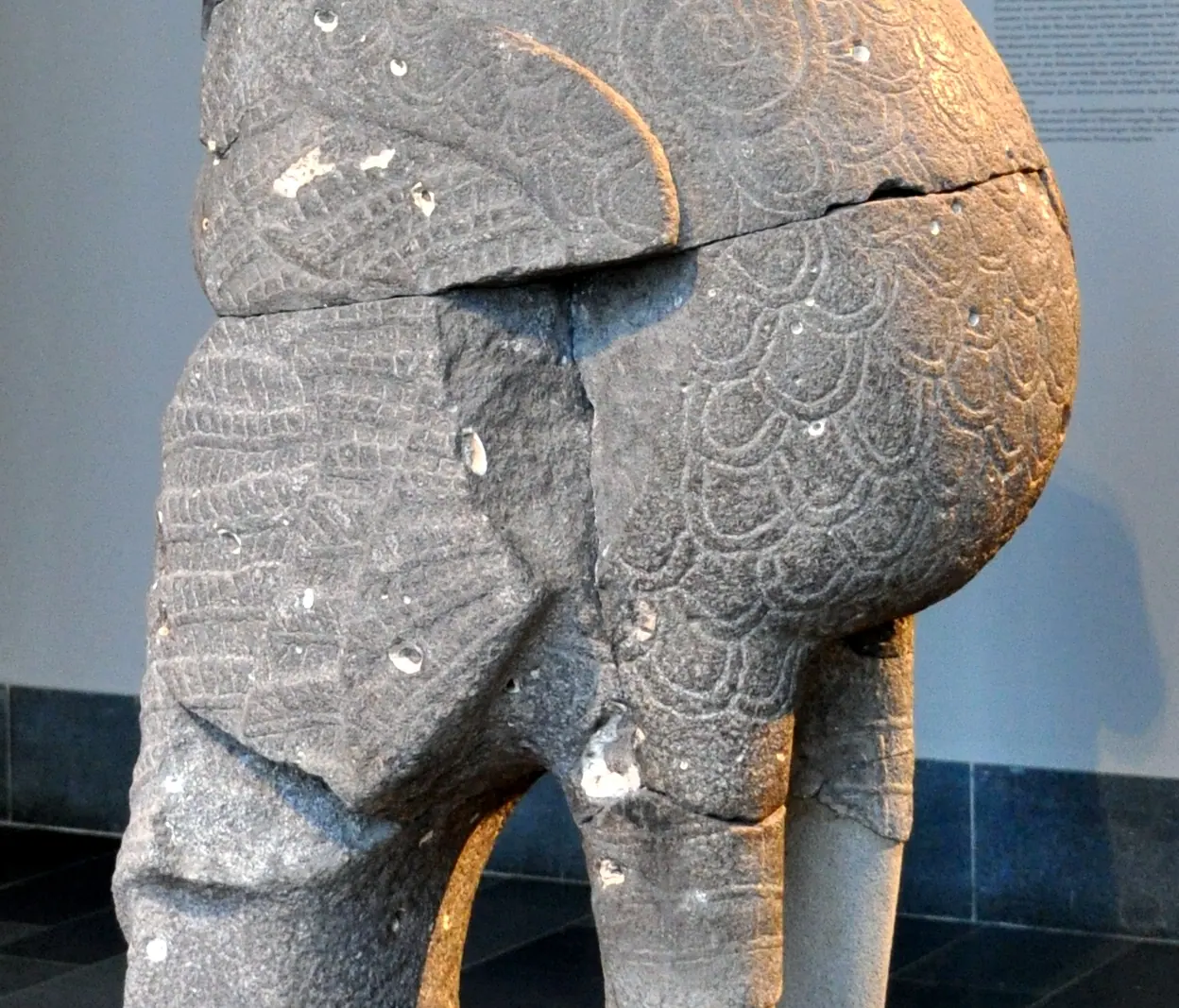
Syria rewards the traveller who arrives by air with one of the densest concentrations of ancient monuments on earth — Roman theatres, Crusader castles, Umayyad mosques and a desert caravan city that once rivalled Rome. This seven-day route begins at the airport in Damascus, loops through the Orontes Valley and the steppe, and ends beneath the citadel of Aleppo.
Landing in Damascus: Wheels Down and Into the Old City
Most international arrivals touch down at Damascus International Airport, set in the flat farmland roughly half an hour southeast of the capital. Aleppo International in the north and the coastal airport serving Latakia handle a smaller share of traffic, and connections via Gulf hubs and Istanbul have returned in stages, so it pays to check schedules and book well ahead rather than assume daily service. Formalities are unhurried and occasionally repetitive; keep a printed hotel address, know where you are staying for the first nights, and arrange a car through your guesthouse rather than haggling outside the terminal after a night flight.
The drive in is unexpectedly green in spring, with the Anti-Lebanon mountains rising to the west and the first minarets appearing long before the city proper. Drop your bags, then walk straight into the walled Old City for a first, disorienting encounter with Damascus — narrow lanes, brass workshops, the smell of charcoal and cardamom. End the evening in the Christian quarter of Bab Tuma, where courtyard restaurants serve mezze under strings of lights, or simply stand outside the floodlit walls of the Umayyad Mosque and listen to the city settle. Sleep early; tomorrow is dense.
Give yourself two full nights here before heading north. Damascus is a walking city and the distances inside the walls are small, but the heat from June to August and the sheer volume of things to see make a slow start worthwhile.
Days One and Two: The Great Monuments of Damascus
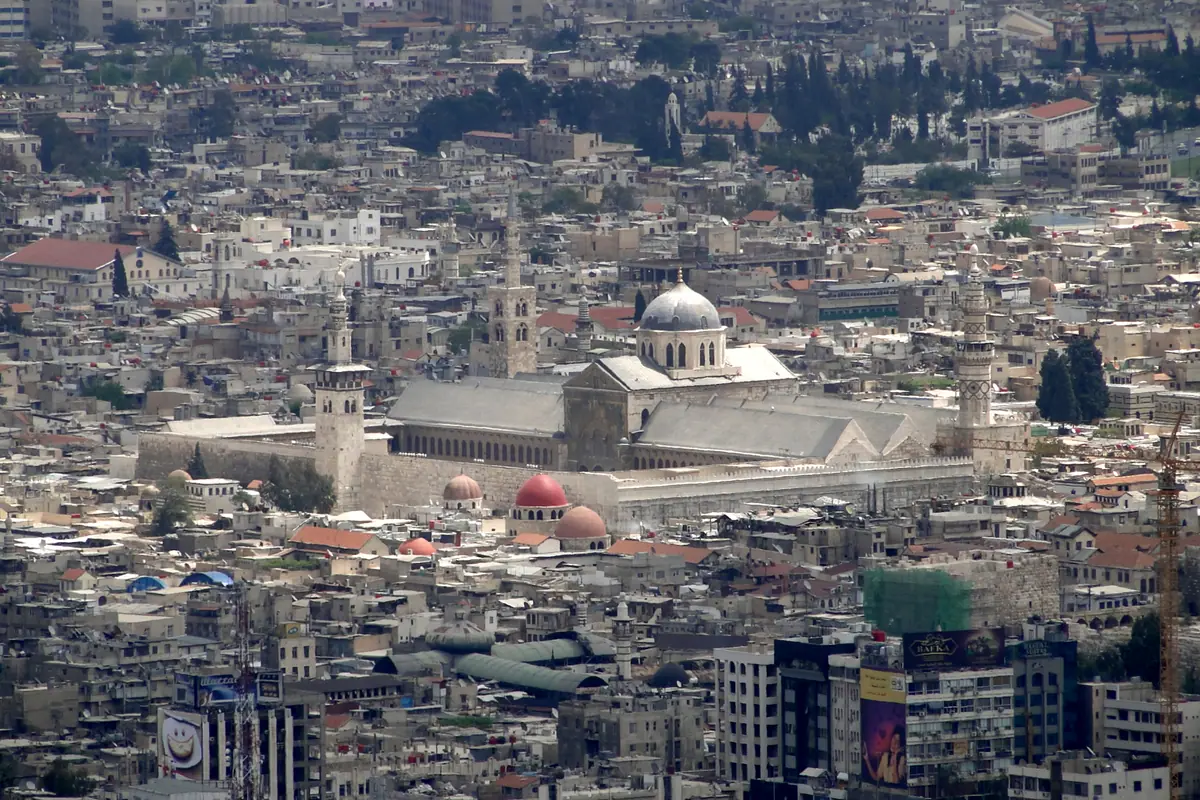
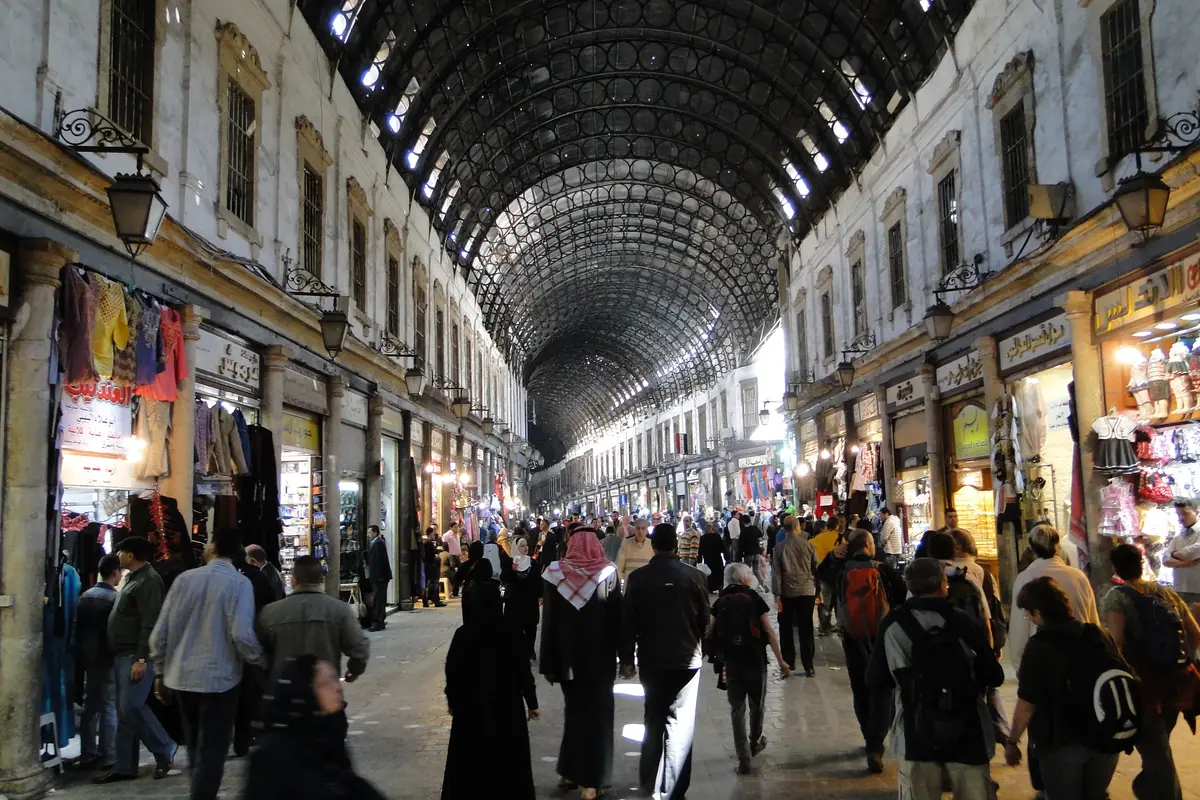
Begin at the Umayyad Mosque, completed in 705 and still the emotional centre of the city. Its vast courtyard of polished stone, the gilded mosaics of trees and palaces along the inner facade, and the shrine said to hold the head of John the Baptist make it the single unmissable sight in Syria. Dress modestly, remove shoes, and go early or in the late afternoon when the light slants across the minarets. From the mosque's northern gate you step directly into the covered lanes of Al-Hamidiyah Souq, a kilometre of fabric sellers, spice mounds, copper-beaters and pastry stalls, ending at the Roman arch that once marked the western gate of the old city.
Cross the souq to the Damascus Citadel, a sprawling Ayyubid fortress with towers built by Saladin's brother, then walk south through the textiles market to the Azm Palace, an 18th-century governor's residence of striped stone and cool fountains, now a museum of traditional life. Set aside an afternoon for the National Museum, where the reconstructed synagogue from Dura-Europos and the finds from Mari and Ebla give context to everything you will see later in the week. Finish the day on Mount Qasioun, the ridge above the city, for a panorama that takes in the whole bowl of Damascus at sunset.
Use the second day for the quieter layers of the city: the Chapel of Saint Ananias in the Christian quarter, the Roman street of the Via Recta that still cuts straight through the old town, and the pilgrim mosques and shrines on the southern edge of the capital. If you have energy left, drive out to Maalouf, an hour north, where villagers still speak a form of Aramaic and the monasteries cling to a limestone gorge — a gentle counterpoint to the noise of the souq.
Day Three: Bosra and the Roman South
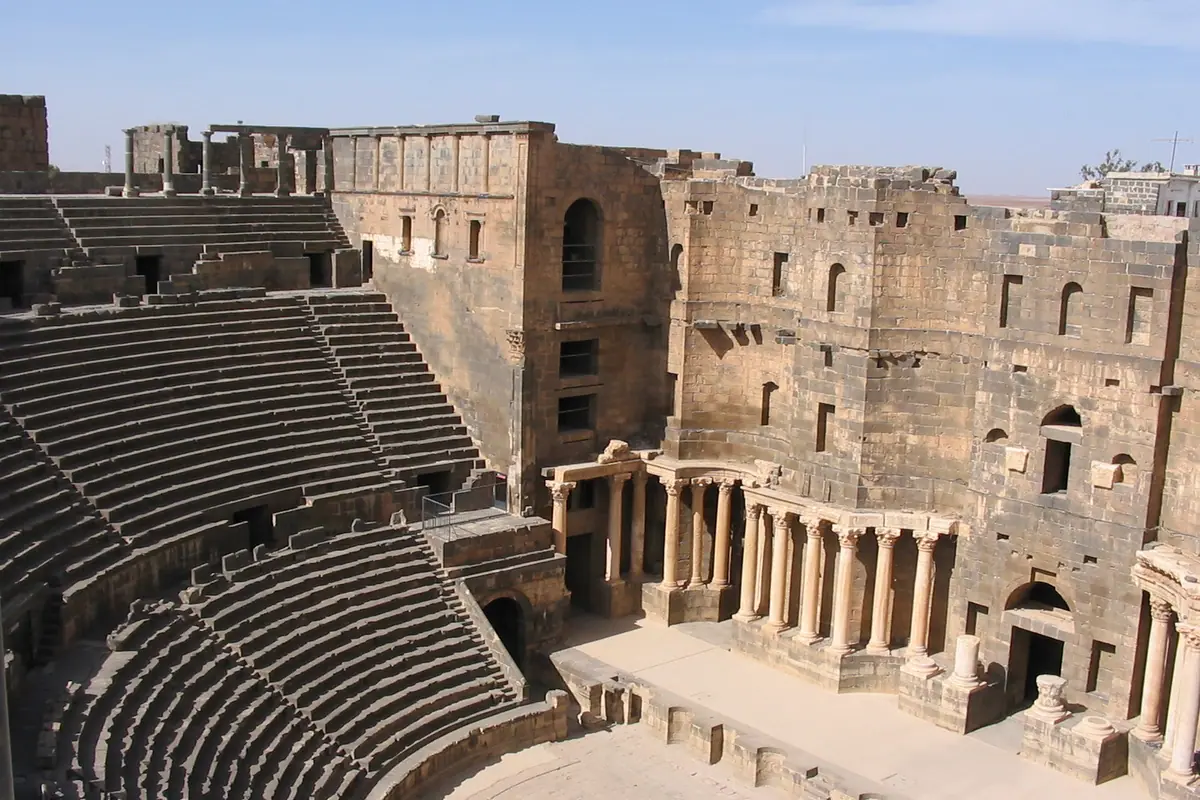
Head south on the highway towards Daraa for the finest single Roman monument in the region: the theatre at Bosra, built in the second century and later wrapped inside an Ayyubid citadel, which is precisely why it survived intact. You walk through a fortress gate, along a dark passage, and emerge into a semicircle of black basalt seating that once held around 15,000 spectators. The stage wall still stands three storeys high, and the acoustics remain unnervingly good — clap your hands in the centre of the orchestra and the sound returns from every tier.
Bosra itself is a whole Nabataean and Roman city built of dark volcanic stone: a colonnaded street, baths, a mosque from the earliest decades of Islam, and a cathedral turned into a fortress. Allow three hours on site, more if you like ruins without crowds, and bring water and shade — the black basalt holds the heat. On the way back, the small museum town of Shahba, ancient Philippopolis, is worth a stop for its mosaics.
The southern governorates have seen their share of instability, so treat this as a day to arrange with a knowledgeable local driver and to confirm access on the morning itself rather than months in advance. That flexibility applies across the country: sites open and close with the security situation, and a good guide is worth far more than a rigid plan.
Day Four: Homs, Krak des Chevaliers and the Orontes Valley
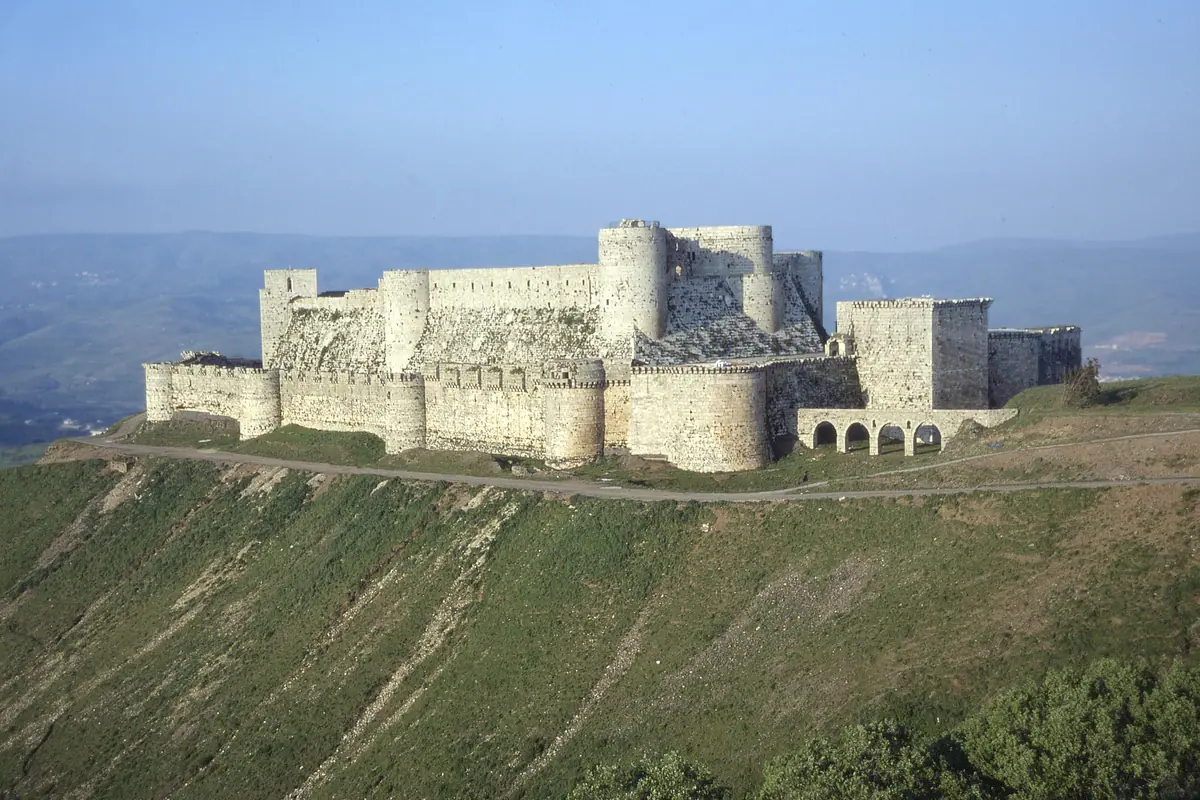
Drive north from Damascus to Homs, the natural base for the Orontes Valley, and continue west into the gap in the coastal mountains where Krak des Chevaliers sits on its spur. This is the most complete Crusader castle anywhere — a concentric fortress of sloping walls, round towers and a great hall, with a Gothic chapel whose faint frescoes survive. Climb to the roof of the south tower for the view across olive terraces to the sea-facing mountains, then walk the ramparts, where the echo of footsteps on stone is the only soundtrack.
The same day can take in Hama, a river town of norias — giant wooden waterwheels that have creaked along the Orontes for centuries, groaning as they lift water into the aqueducts. The old quarters and the riverside restaurants make an easy evening. If you have a spare half-day, push north to Apamea, where a two-kilometre colonnaded street runs across a plateau like a spine, and to the limestone villages known as the Dead Cities, abandoned Byzantine settlements such as Serjilla and al-Bara whose olive presses and villas stand roofless in the fields.
Distances here are short by Syrian standards but roads are slow, and checkpoints add time. A car and driver for the day is the practical choice, and it lets you stop for the roadside kebab stalls and pistachio shops that make the drive worthwhile in themselves.
Day Five: Palmyra, the Desert Queen
No Syrian itinerary is complete without Palmyra. From Homs the desert road runs east for around three hours to the oasis of Tadmur, where a Greco-Roman caravan city of honey-coloured limestone rises out of the sand. Walk the Great Colonnade, the long street of columns that once carried a portico on both sides, then the theatre, the agora and the Temple of Bel enclosure. In the Valley of the Tombs outside the walls, tower tombs and underground hypogea hold carved reliefs of the merchant families who grew rich on the incense route.
Damage inflicted during the years of conflict destroyed or badly battered several of the most photographed monuments, and the site today is a mixture of standing ruins, rubble and reconstruction. That makes the visit more moving rather than less: you are seeing a place that survived two millennia of sand and is now being pieced back together. Go at sunrise or in the last two hours of light, when the stone turns gold and the heat relents, and climb to the hilltop castle above the oasis for the classic panorama of palms, ruins and empty steppe.
Palmyra is remote and access can change at short notice, so build in a margin and travel with someone who knows the road. Nights near the site are limited; most visitors return to Homs or press on towards Aleppo the following morning.
Days Six and Seven: Aleppo, and the Flight Out
Aleppo is the second half of Syria's story and, for many travellers, the more beautiful one. The Citadel dominates the skyline from a steep-sided hill that has been fortified since the third millennium BC, with an imposing gateway, a mosque, baths and a throne hall inside; walk the glacis at dusk for the best view of the city. Below it, the Great Mosque and the kilometres of Al-Madina Souq — the largest covered market in the Middle East — have been painstakingly rebuilt after fires and fighting, and the lanes of soap sellers, pistachio merchants and carpenters are coming back to life street by street.
Spend the rest of your time in the Jdeideh quarter, where 17th-century stone mansions with carved doorways and shaded courtyards sit alongside Armenian churches and antique workshops. Khan al-Wazir, a restored merchant caravanserai, and the city museum are easy additions, and the food — Aleppo is famous for its kibbeh, its cherry kebabs and its sweets — justifies lingering. Two nights here feels right: one for the citadel and souq, one for the neighbourhoods.
Depart from Aleppo International if the schedules allow, or take the fast road south to Damascus for the flight home, a run of four to five hours through Homs. Aim to be at the airport three hours before departure; security checks are thorough and the terminals are small. And do not over-schedule: the country is opening in fits and starts, and the best journeys here leave room for the unexpected interruption.
Frequently asked questions
Which airports in Syria handle international flights?
Damascus International is the main gateway, about half an hour southeast of the capital. Aleppo International in the north and the airport serving Latakia on the coast handle a smaller and more variable number of services. Routes have been restored in stages, so verify schedules when you book rather than assuming a daily connection, and allow for changes close to departure. Some travellers also arrive overland from Jordan or Lebanon and fly out of Damascus.
What is the best time of year for this itinerary?
March to May and September to November are ideal: mild days, green hills in spring and comfortable walking temperatures across the ruins. Summer from June to August is punishing, often well above 35°C inland, and Palmyra in particular demands an early start. Winter brings rain and cold nights in Damascus and Aleppo, occasional snow on higher ground, and shorter daylight hours.
Can I combine Damascus, Palmyra and Aleppo in a single week?
Yes, though it is a full seven days with a lot of driving. The route that works best is two nights in Damascus, a day trip south to Bosra, a night in Homs with Krak des Chevaliers and Hama, a long day out to Palmyra, then two nights in Aleppo before flying out or returning south. If you prefer a slower pace, drop either Bosra or Palmyra rather than rushing both.
What should I know about money, dress and connectivity in Syria?
Bring plenty of clean, untorn foreign cash — international cards are rarely accepted outside a few large hotels, and ATMs are unreliable. Carry small notes for tips, drivers and site guardians. Dress modestly, especially at mosques and shrines, where women should cover their hair and everyone removes shoes. Mobile coverage exists in the cities but is patchy and sometimes restricted, so download offline maps and keep a paper copy of your hotel addresses.
Do I need a guide to visit sites like Bosra and Palmyra?
It is not always compulsory, but it is strongly advisable. Both sites sit in regions where access can shift quickly, checkpoints are common, and Arabic is essential at roadblocks. A local driver-guide also opens doors — literally, in the case of locked tombs and museums — and can tell you which restaurants and guesthouses are genuinely open this season. Book through your accommodation, not through a stranger who approaches you at the airport.