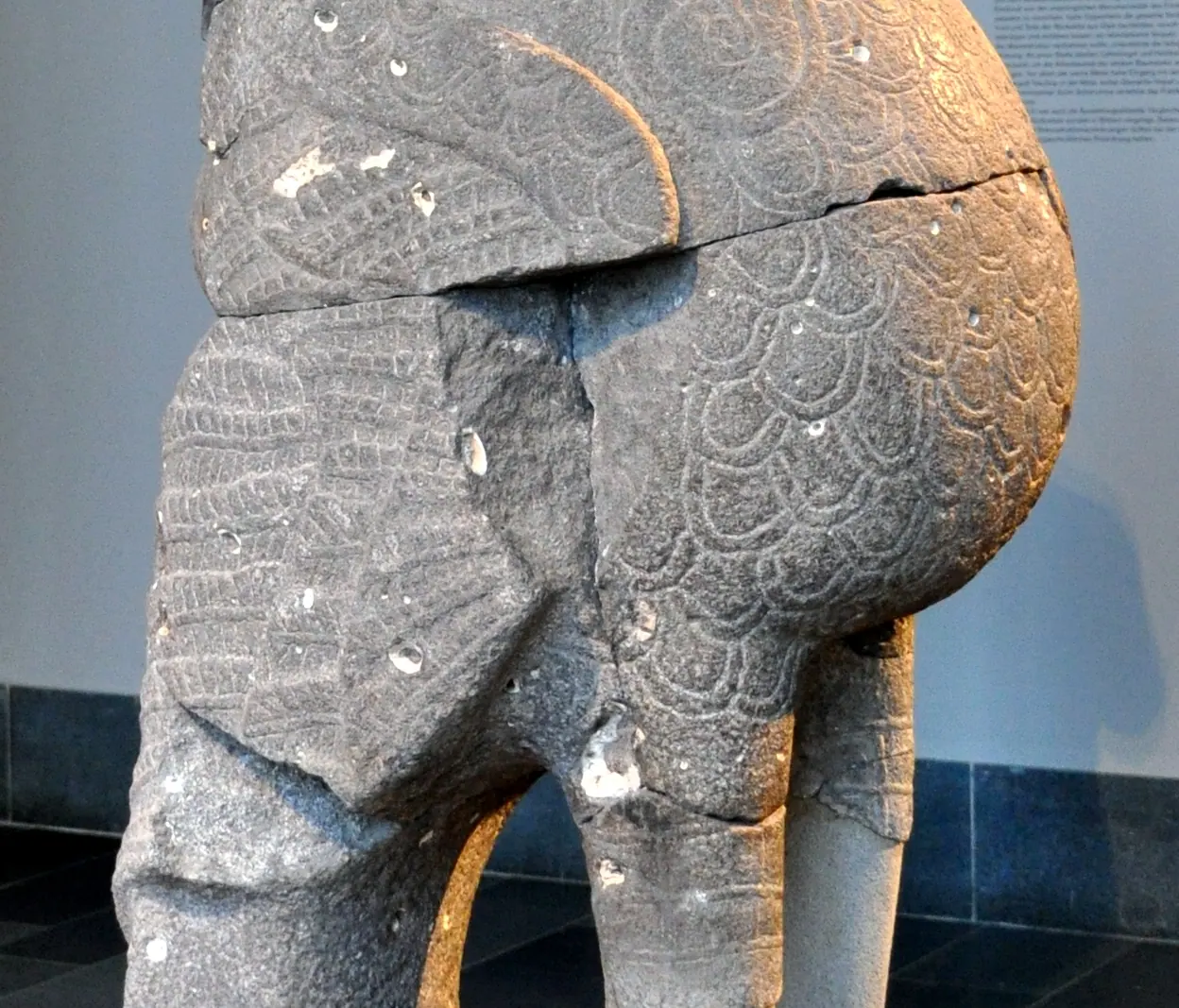
Syria is a country you taste before you understand it: cardamom coffee poured from a brass pot, sour-cherry kebab in a stone courtyard in Aleppo, apricot leather drying on a Damascus rooftop. Between the minarets, Roman colonnades and olive terraces runs an older rhythm of hospitality that has outlasted every upheaval — and it remains the best reason to come.
Damascus: Breakfast, Mosaics and the Old City's Endless Souq
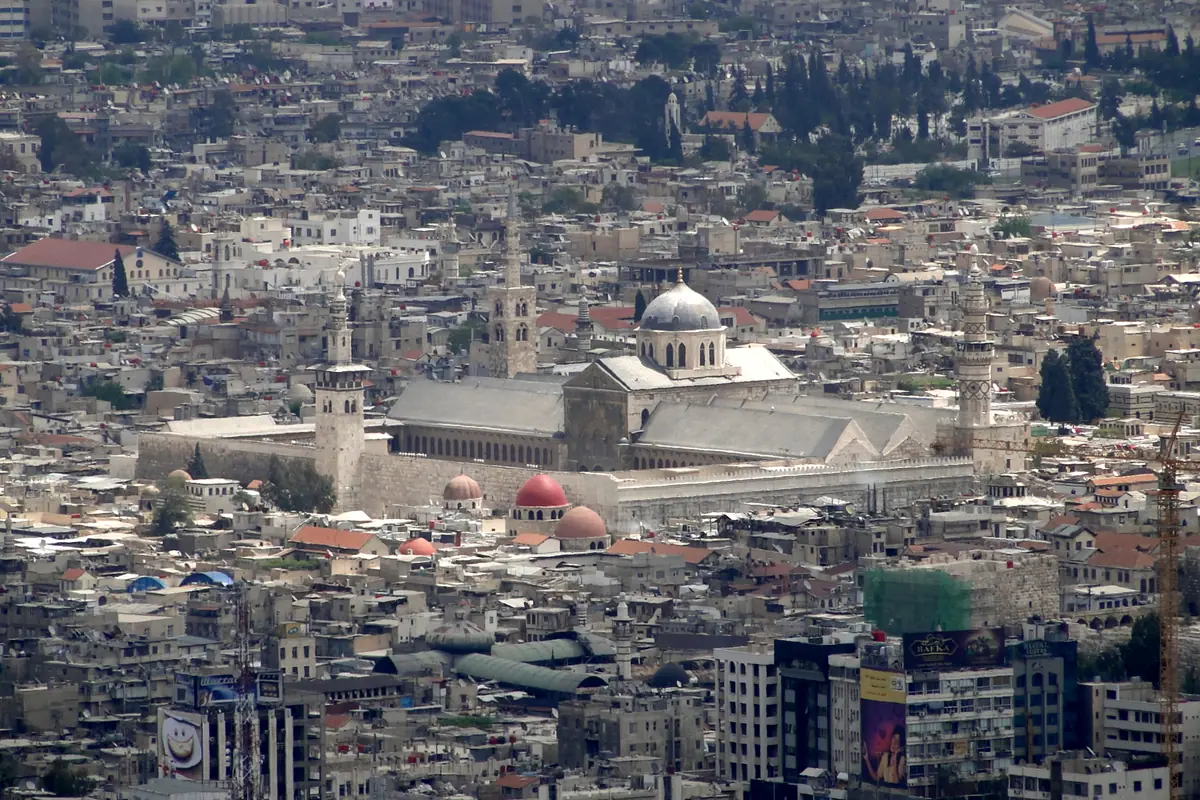
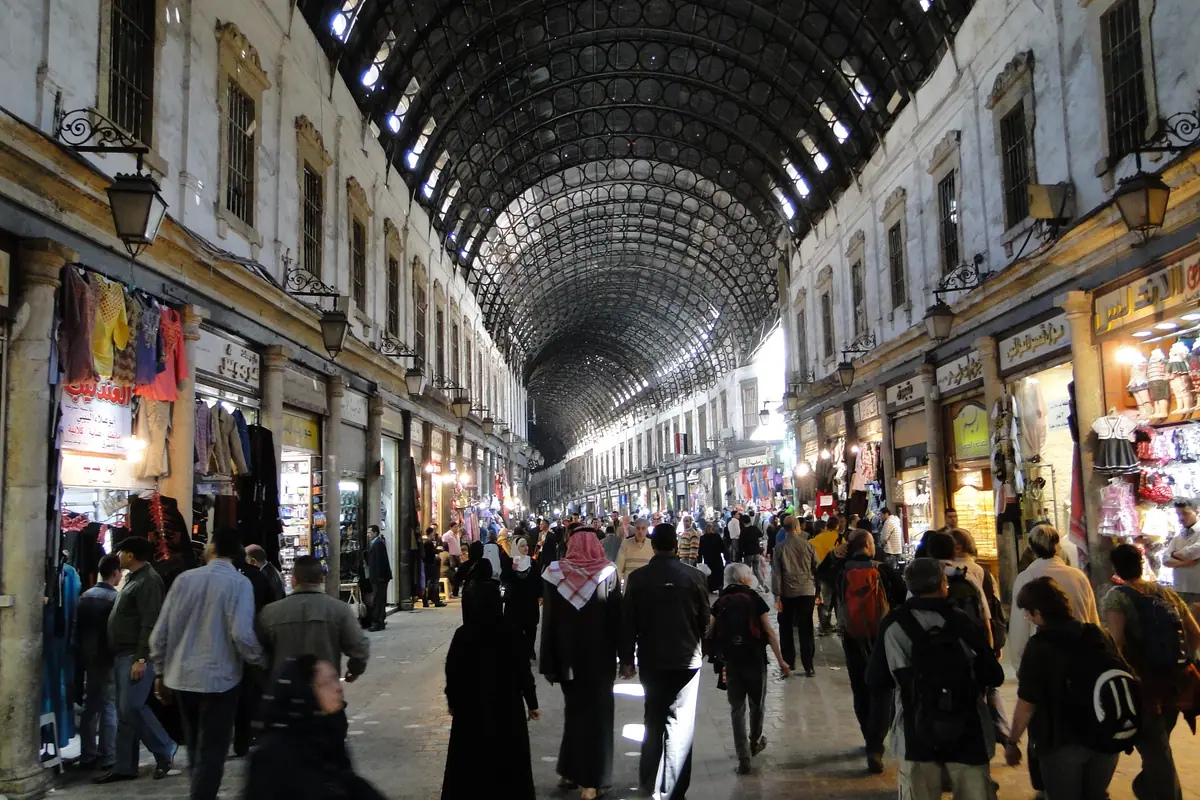
Start where Syria has always started, in Damascus, whose Old City is a dense weave of basalt, limestone and jasmine-scented alleys. The Umayyad Mosque anchors everything: a vast courtyard where children chase pigeons, gold-flecked mosaics along the arcades, and a shrine that draws pilgrims of more than one faith. Step out of its northern gate and you are inside Al-Hamidiyah Souq, a vaulted avenue of spice pyramids, brocade, copper and sweets. Continue east along the Street Called Straight to Bab Sharqi, the Roman gate that still frames the old Christian quarter, then lose an afternoon in the striped stone courtyards of Azem Palace.
Mornings here belong to food. Bakeries fire up before dawn for manakish — flatbread slicked with olive oil and za'atar or melted cheese — eaten standing, folded in paper. Breakfast is foul mudammas with lemon and cumin, or fatteh layered with chickpeas, yoghurt, toasted bread and pine nuts. In the afternoon, follow the sound of wooden mallets pounding pistachio ice cream in the souq, and buy barazek sesame cookies and honey-soaked pastries by the box.
Give the Old City two unhurried days: one for the mosque, souq and palaces, one for the National Museum, the churches of Bab Touma and an evening hammam, where a historic bathhouse steam, cold plunge and olive-oil soap ritual will reset you. At dusk, climb to Mount Qasioun for the view over the whole basin as the call to prayer rolls from minaret to minaret. Note that Friday mornings are quiet, with many shops shuttered until afternoon.
Aleppo: The Citadel, the Souq and Syria's Most Refined Table
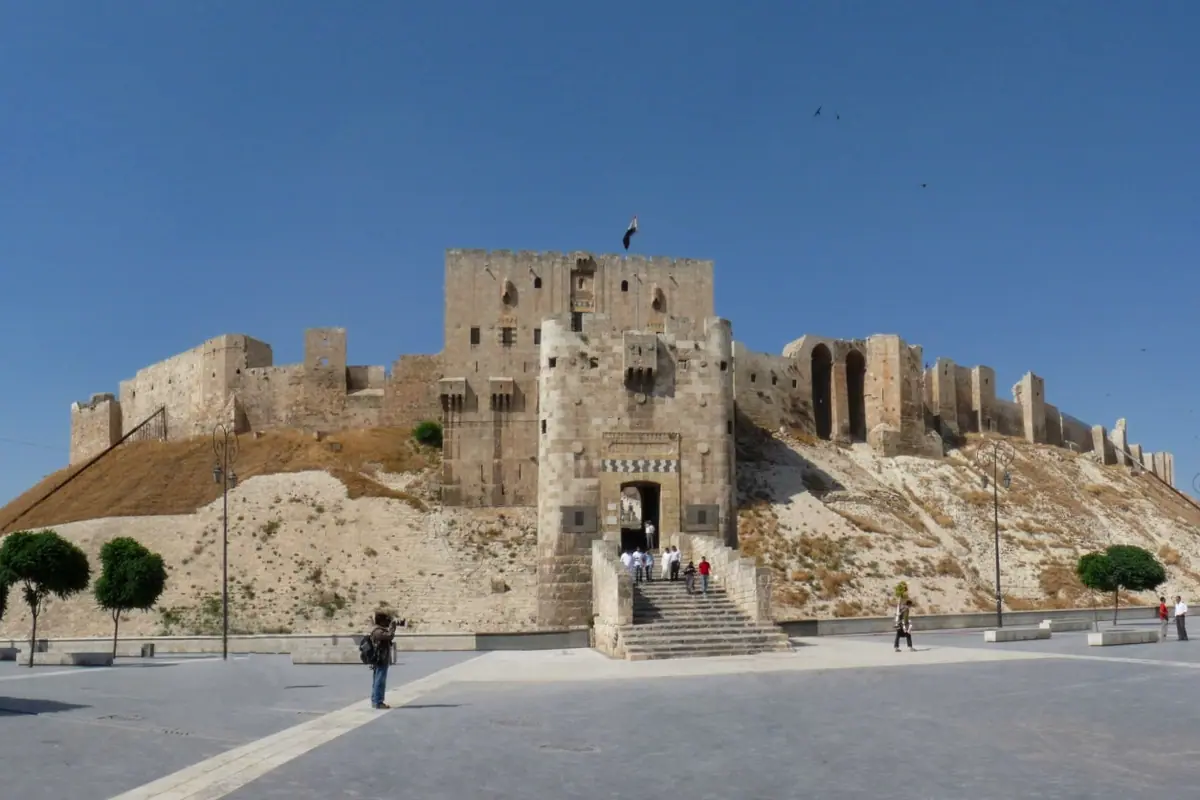
Aleppo's silhouette is unmistakable: the Citadel rising on its limestone tell above the city, ramped entrance and all. Below it sprawls Al-Madina Souq, one of the longest covered markets in the region, where the air smells of laurel soap, cardamom and wool. Its khans — merchant courtyards once used for caravans and soap — are worth seeking out, as are the Great Mosque of Aleppo and the Jdeideh quarter, with its stone churches and old merchant houses.
Aleppan cooking is widely considered the most sophisticated in the Levant, and it shows in the details. Order kebab karaz, lamb meatballs simmered with sour cherries and piled over flatbread; muhammara, a fiery walnut and red pepper dip; kibbeh stuffed with quince; and tiny kebabs seasoned with Aleppo pepper and pistachio. Finish with pistachio sweets and a glass of tea in a courtyard restaurant where lunch stretches comfortably past three o'clock.
Aleppo rewards slow travel. Two or three days lets you see the Citadel, wander the souq without rushing, visit a hammam, and take a day trip to the basilica of Saint Simeon, one of the oldest surviving church complexes anywhere. Buy Aleppo's olive-oil and laurel soap — it is the city's most portable souvenir and a genuine local staple, not a tourist trinket.
Roman Theatres, Crusader Castles and Villages That Still Speak Aramaic
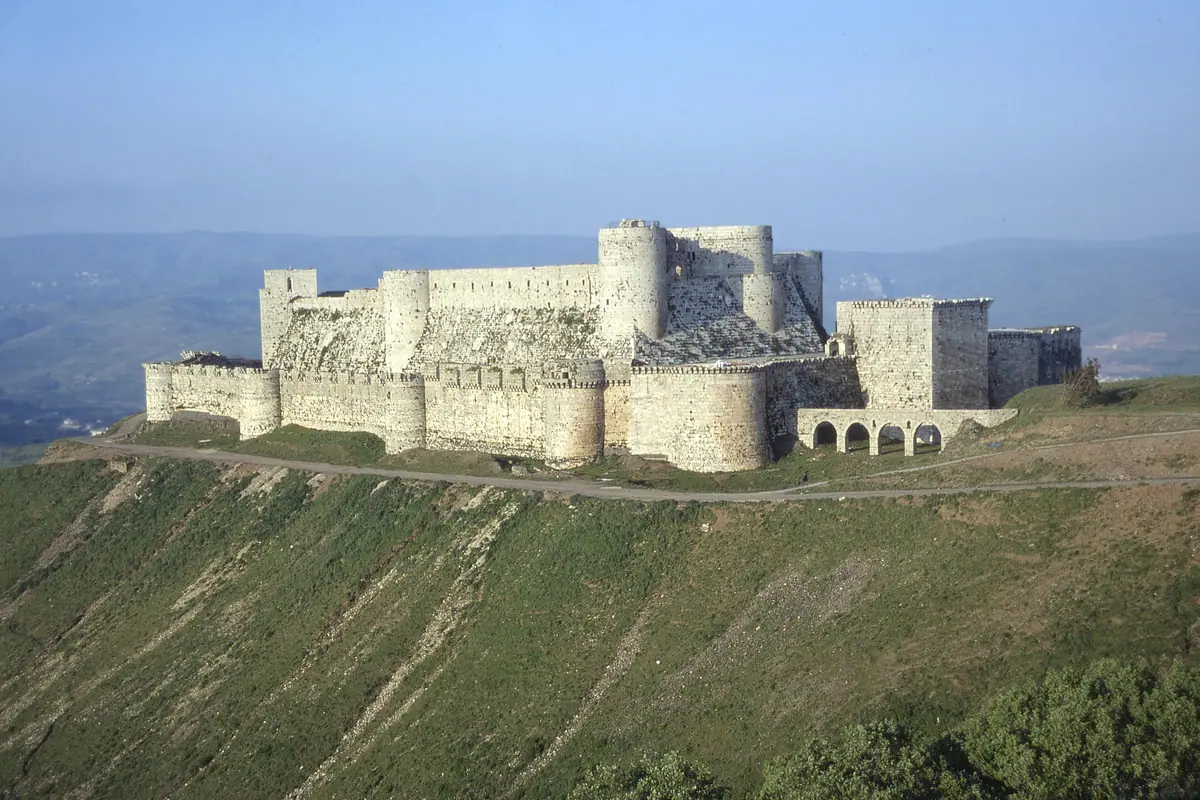
Syria's countryside is an open-air museum. South of Damascus, Bosra holds a Roman theatre so complete you can stand in the top tier and hear a whisper from the stage, ringed by black basalt ruins and a Nabataean arch. Further north, Krak des Chevaliers is the great Crusader castle of the region — concentric walls, sloping glacis and a chapel, best visited in the soft light of late afternoon. Near the coast, Saladin's Castle sits on a wooded ridge above the green Alawite mountains, and Arwad island offshore is a fishing town of narrow lanes and boatyards.
In the desert east of Homs, Palmyra's colonnade, temple and Valley of the Tombs rise out of the sand in a scale that photographs never quite convey — plan a full day, and go early to avoid the midday heat. West of Damascus, Maaloula clings to a cliff face and remains one of the last places where a form of Aramaic is still spoken; its monasteries of Mar Sarkis and Mar Taqla are cut into the rock. Add the norias of Hama, giant wooden water wheels groaning on the Orontes, and the long colonnade of Apamea, and you have a loop of antiquities no other country matches.
Practicalities matter here. Distances are short on the map but slow on the road, so pair sites sensibly: Bosra as a day trip from Damascus, Krak des Chevaliers and Hama together, Palmyra as an overnight rather than a punishing round trip. Carry water, wear shoes with grip for castle rubble, and hire a local driver-guide for the archaeological sites — the stories make the stones legible.
What to Eat in Syria: A Menu from Dawn to Midnight
A Syrian day is built around meals. Breakfast is manakish, labneh strained thick as cream, olives, mint and tea. Lunch is the big event: mezze first — hummus, baba ghanoush, tabbouleh heavy with parsley, fattoush sharp with sumac — then kibbeh in its many forms, stuffed vine leaves, freekeh with chicken, or maqluba, a layered rice dish upended at the table with theatrical flair. Shanklish, a crumbly aged cheese rolled with thyme and onion, turns up alongside arak at long evening meals.
Street food is where Syria is most generous. Shawarma carved from vertical spits, felafel stuffed with pickles and tahini, grilled corn, roasted sunflower seeds, and glasses of tamarind or bitter-orange juice from street carts. Bread is sacred and constant — torn, dipped, used as a spoon. On the coast, around Latakia and Tartus, expect seafood grilled simply with lemon and garlic, plus the local habit of sipping yerba mate from a shared gourd.
Leave room for sweets. Kunafa, warm cheese under shredded pastry and syrup, is a speciality of Homs and Hama; Damascus counters with muhalabia, ma'amoul and honeyed pistachio confections sold by weight. Finish with cardamom coffee, poured thick and bitter into tiny cups. Vegetarians eat extremely well — beans, pulses, vegetables and yoghurt carry much of the cuisine — but always ask whether a dish was cooked with meat stock.
Local Rituals: Hammams, Coffee, Mate and the Art of Being a Guest
Syrian hospitality is formal, warm and surprisingly easy to accept. Refuse tea twice and it will still appear. In a shop, you will be offered coffee before business; in a home, you will be pressed to eat a third helping. The correct response is not to protest too much — praise the food, take a little more, and let the conversation run. Greetings are long by design: ask after family and health before you ask for anything else.
The hammam is the great social institution. Go in the late afternoon, when local families arrive, and expect a sequence of hot room, vigorous scrub, cold rinse and a long rest in the outer lounge with tea and sweets — two hours minimum. Coffee culture is equally ritualised: the coffee is boiled with cardamom and served in rounds until you tilt your cup to signal you are done. In the evenings, argileh (water pipe) with apple or grape tobacco accompanies backgammon in cafés everywhere from Aleppo to the Corniche in Latakia.
Shop etiquette is relaxed: bargaining is expected in the souqs, but it is a conversation, not a contest, and walking away cheerfully is normal. Weddings, if you are lucky enough to be invited, are enormous, loud and last into the small hours. Dress modestly in mosques and shrines — long trousers or skirts, shoulders covered, women's hair covered, shoes removed at the threshold — and you will be welcomed everywhere.
When to Go, What to Wear and How to Move Around
Spring, roughly March to May, and autumn, September to November, are the sweet spots: mild days, green hills, and comfortable walking in Damascus, Aleppo and the desert sites. Summer is genuinely hot — 35°C and above inland — which argues for early starts and afternoons indoors, though the Mediterranean coast around Latakia is more forgiving. Winter is cold in Damascus and Aleppo, sometimes with snow, and rainy on the coast; mountain towns such as Bloudan and Zabadani become weekend escapes for locals.
Ramadan transforms the rhythm of travel: daytime cafés and restaurants largely close, then the streets fill after sunset for iftar, when the atmosphere is at its most festive and invitations are easiest to receive. Always ask before photographing people, particularly women and worshippers, and expect Friday to be a quiet morning and a busy evening.
Between cities, shared service taxis and microbuses are the local standard, with private drivers affordable for full-day excursions to castles and ruins. Arabic is the language of daily life — a dozen words of Levantine greeting will change how you are treated. Check current official travel advisories and insurance requirements before booking, travel with a reputable local operator who knows conditions on the ground, and build slack into any itinerary. Ten days is enough for Damascus, Aleppo, Krak des Chevaliers and Palmyra; three weeks lets you add the coast, the Dead Cities and Maaloula without rushing.
Frequently asked questions
What are the must-see sights in Syria for a first visit?
Prioritise the Umayyad Mosque and Al-Hamidiyah Souq in Damascus, the Citadel and covered souq of Aleppo, the Roman theatre at Bosra, Krak des Chevaliers, Palmyra's colonnade and tombs, the norias of Hama and the cliff village of Maaloula.
Which Syrian dishes should I try first?
Start with manakish and foul for breakfast, mezze including muhammara and fattoush, then kebab karaz, kibbeh and maqluba. Save room for kunafa and pistachio sweets, and finish with cardamom coffee or, on the coast, shared yerba mate.
When is the best time to visit Syria?
March to May and September to November offer the most comfortable weather for both cities and archaeological sites. Summer is very hot inland, while winter brings cold, occasional snow in Damascus and Aleppo, and rain along the Mediterranean coast.
How long do I need to see Damascus and Aleppo properly?
Allow two full days in Damascus for the Old City, souq, museum and a hammam, and two to three days in Aleppo for the Citadel, the souq, courtyard restaurants and a day trip to the basilica of Saint Simeon. Ten days covers both plus castles and desert ruins at a relaxed pace.
What should I wear and how should I behave in mosques and souqs?
Dress modestly: long trousers or skirts, covered shoulders, and a headscarf for women in mosques and shrines, with shoes removed at the entrance. In souqs, bargaining is expected and friendly, but always ask permission before photographing people, especially women and worshippers.