Syria rewards travellers who time the journey well: a country of Roman colonnades, Mamluk souqs and pistachio groves where the difference between a good week and an unforgettable one is often a matter of six weeks on the calendar. Spring and autumn are the sweet spots, but every season opens a different door — desert ruins in October, sea breeze on the coast in July, snow-dusted citadels in January.
The Short Answer: Two Golden Windows, March to May and September to November
Syria sits where Mediterranean, steppe and desert climates collide, so "the best time" depends on which Syria you want. Two windows stand out: March to May and late September to November. In those weeks the inland cities sit at a comfortable 20–28°C, the coast is warm without being muggy, and the desert ruins at Palmyra and Deir ez-Zor stay walkable from morning until late afternoon. Spring brings almond blossom in the Qalamoun hills, wildflowers across the basalt plains of the Hauran and roses in the gardens around Damascus; autumn brings pomegranates, olives and the soft, honeyed light that photographers chase along the Colonnade.
Outside those windows the country becomes far more seasonal. Midsummer belongs to the coast and the mountains, when Latakia and Tartus catch sea breezes and the hill towns of Bloudan, Zabadani and Slunfeh stay several degrees cooler than the plateau. Winter is for the cities — Aleppo, Damascus and Homs turn rainy, occasionally snowy, and blissfully free of crowds. Whatever the season, plan around daylight: days are short from November to February, and many archaeological sites close early, so build in a generous margin.
Spring in Damascus: Minarets, Souqs and Mount Qasioun
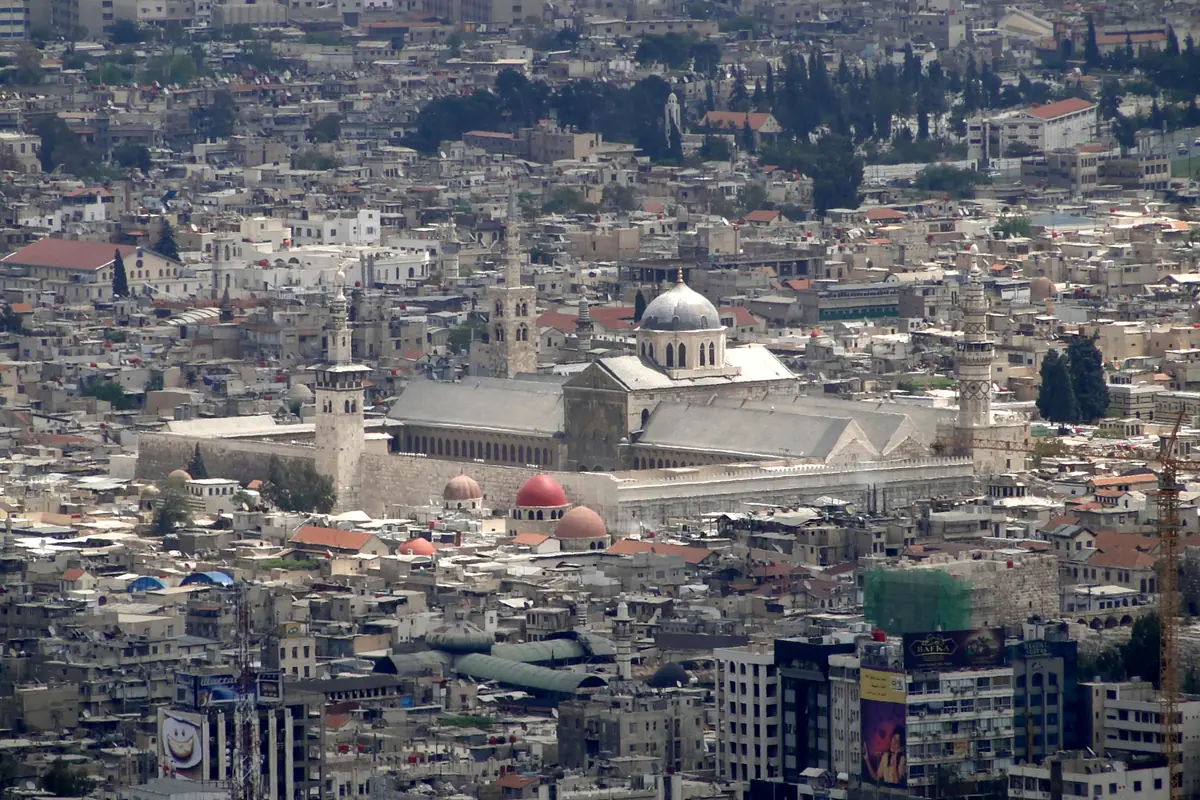
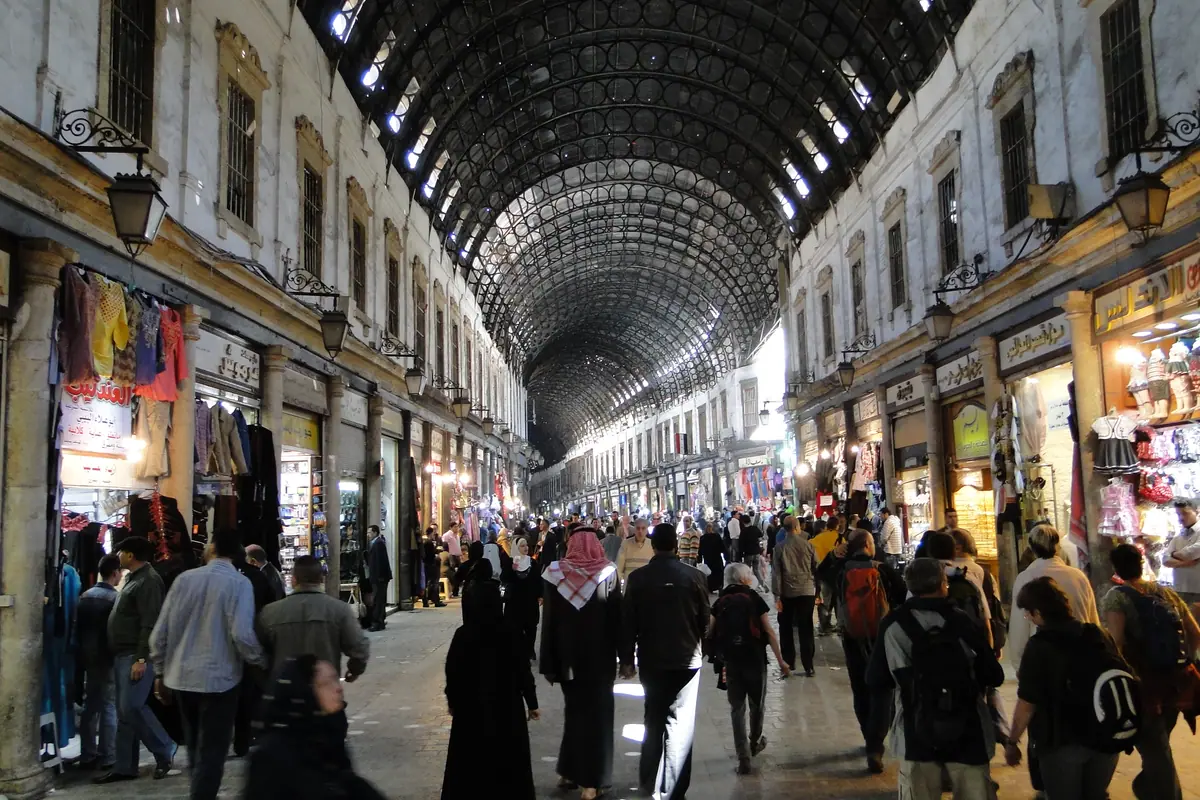
March to May is Damascus at its most generous. Days warm from the low 20s into the high 20s by May, and the courtyards that will be unbearable in August are still pleasant at midday. The Umayyad Mosque, one of the great monuments of Islam with its gilded mosaics and vast marble courtyard, is best visited in the early morning, when the light rakes across the minarets and the tour groups have not yet arrived. From there, wander straight into Al-Hamidiyah Souq, the covered bazaar that funnels shoppers toward the old city walls, and emerge near the Azm Palace, a striped-stone Ottoman residence whose shaded courtyard is a welcome refuge in spring.
Spring is also the season to explore the old quarters on foot: Straight Street, the Roman axis that still slices through the city; Bab Tuma and Bab Sharqi, the Christian quarter with its churches, courtyard houses and Easter processions; and the tiny underground Chapel of Saint Ananias. Finish the day on Mount Qasioun, the ridge above the city, where families gather with tea and pistachios to watch the minarets light up one by one. April and May evenings are jasmine-scented and mild, but note that old-city guesthouses fill quickly around Easter and Eid, so book ahead.
Autumn in the Desert: Palmyra, the Euphrates and the Best Light
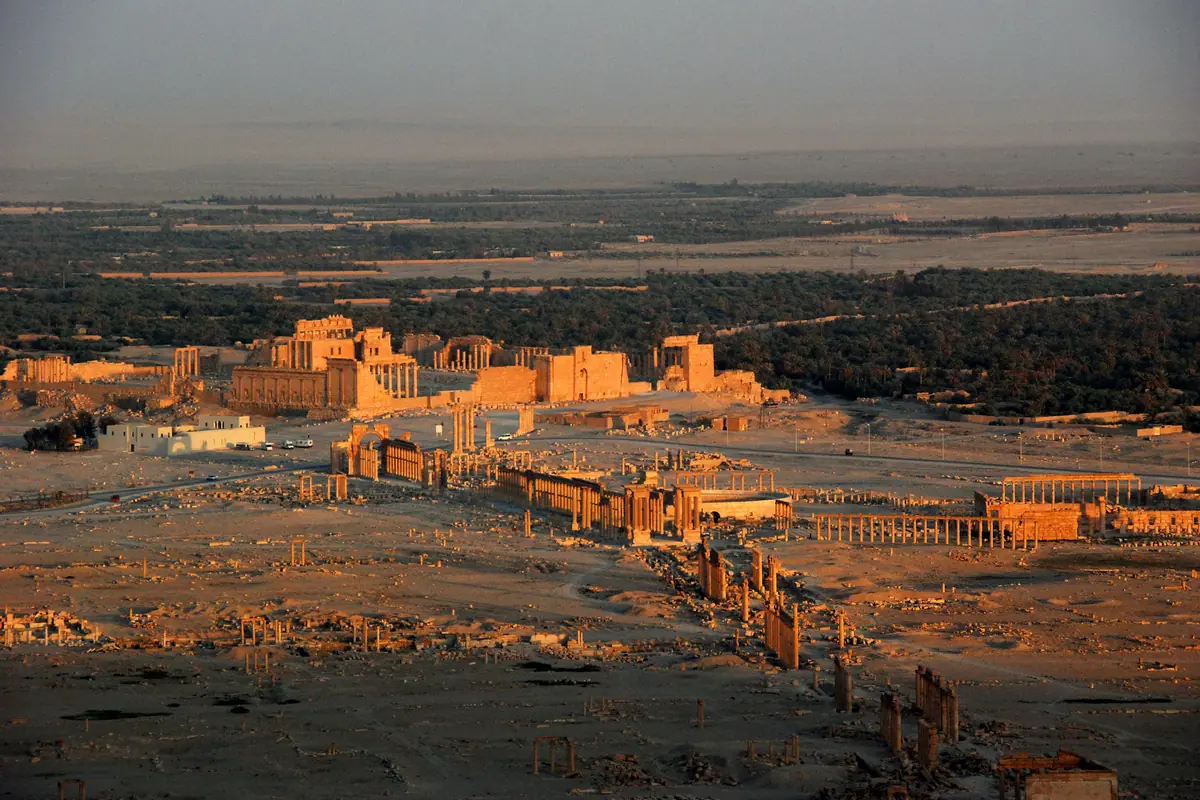
If your trip centres on Palmyra, aim for mid-October to mid-November. The desert city — the Great Colonnade, the Temple of Bel, the theatre and the Valley of the Tombs — is brutal in July and August, when temperatures push past 40°C and the stone radiates heat long after sunset. By October, highs settle around 28–30°C and mornings turn crisp; by November, days are mild and nights genuinely cold, so pack a jacket for sunrise at Qalaat Ibn Maan, the hilltop castle whose view over the oasis palms and ruins is the single best reason to schedule around the weather.
Autumn also suits the Euphrates. Deir ez-Zor makes a useful base, with its suspension bridge and riverside gardens, plus side trips to Dura-Europos and Mari, two of the region's great archaeological mounds. The date harvest runs through the autumn along the river, so expect sweet, sticky fruit at every roadside stall. April is a fine alternative for the desert — winter rains leave a brief flush of wildflowers across the steppe — but avoid June to early September entirely, and prepare for near-freezing nights between December and February.
Aleppo and the North: Winter's Cold, Quiet Rewards
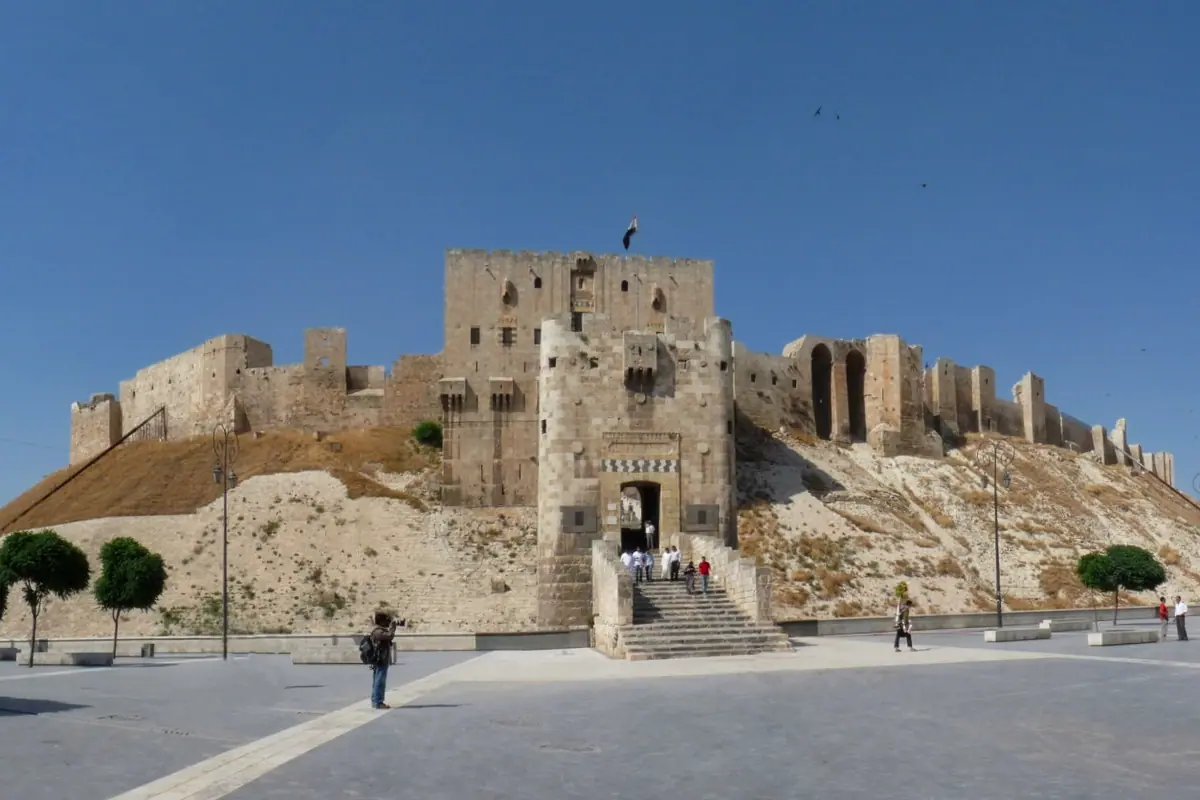
Aleppo sits lower than Damascus and feels colder in winter than many visitors expect. December to February brings rain, grey skies and occasional snow, and the Citadel of Aleppo, rising on its great mound above the old city, is genuinely dramatic in that soft light. The Great Mosque of Aleppo, the kilometres of stalls in Al-Madina Souq, the merchant caravanserai of Khan al-Wazir and the stone houses of the Jdeideh quarter are all far quieter than in spring — winter is when you can have these places almost to yourself.
North and west of the city, the limestone massif known as the Dead Cities — Serjilla, Al-Bara and the pilgrimage complex of Qalaat Seman around the pillar of Saint Simeon Stylites — is green and silent from February, with olive groves, fog in the valleys and almost no other visitors. Be honest about the cold, though: many historic buildings lack central heating, guesthouses can be chilly, and hot water is not always guaranteed. Pack thermal layers, a hat and a proper jacket. In exchange, you get long, unhurried afternoons in a souq café with a glass of tea and the feeling that the city is breathing slowly.
Summer on the Coast and in the Mountains
From June to September the interior bakes — Damascus and Hama regularly reach 36–42°C — so locals move west. Latakia and Tartus are humid but breezy, with long beaches, grilled seafood and the short boat ride to Arwad, a fortified island where fishing families still live inside the old walls. Just south of Latakia, the excavations at Ugarit (Ras Shamra) preserve the remains of a Bronze Age trading city tied to the earliest alphabets. The sea is warmest from July to September, when swimming is pleasant in the early morning and again after sunset.
Summer is also the best season for the Crusader castles, provided you climb early. Krak des Chevaliers, the great concentric fortress that dominates the Homs Gap, and Qalaat Salah al-Din farther north both have walls, staircases and vaulted halls that turn into ovens by noon but feel magical at eight in the morning. Inland, the norias of Hama — the enormous wooden water wheels on the Orontes that creak and groan as they turn — are at their most photogenic in low morning light before the heat sets in.
When the coast gets muggy, head for the hills: the cliff-side monasteries of Maaloula, the summer resorts of Bloudan and Zabadani in the Qalamoun range, and Slunfeh and Kassab in the coastal mountains. These towns run 8–12°C cooler than the cities and fill with Syrian families in July and August, when guesthouse demand and rates peak — book well ahead if you want a weekend room.
The South, the Hauran and Practical Timing
Southern Syria keeps its own rhythm. Bosra's Roman theatre, the best-preserved in the region, is a black basalt amphitheatre that once seated some 15,000 spectators, and it is most comfortable in April, May, October and November; midsummer here is dry, dusty and punishing. Nearby Shahba, Qanawat and Sweida sit on the volcanic plateau of the Hauran, where spring wheat turns the plains green and the basalt villages look their best in April and May. Winter brings frost and the occasional dusting of snow to this high ground.
Timing also matters for Ramadan, which moves roughly eleven days earlier each year. During the fast, opening hours shorten, some restaurants close in daylight and the old cities come alive after sunset — atmospheric, but trickier for a tightly packed itinerary. Eid al-Fitr and Eid al-Adha swell souqs, transport and family resorts; Easter and Christmas are busy in the Christian quarter of Damascus and in Maaloula; and the Feast of the Cross in mid-September draws torchlight processions to Maaloula's monasteries.
Finally, treat any itinerary as provisional. Access, opening hours and local conditions vary by region and can change quickly, so check your government's current travel advice before booking, arrange a local guide where it is recommended, and confirm that individual sites such as Palmyra are receiving visitors before building a trip around them. Flights into Damascus — and, when operating, Aleppo — are limited, which is another reason the shoulder seasons serve travellers best: more connections, more rooms and easier access to drivers.
Frequently asked questions
When is the best time to visit Syria overall?
March to May and late September to November. In these windows the inland cities sit at roughly 20–28°C, the coast is warm without heavy humidity, and desert sites such as Palmyra and Deir ez-Zor are comfortable to explore from morning to late afternoon. Spring brings blossom and wildflowers; autumn brings harvest colours and the best light for photography.
How hot does Damascus get in summer?
July and August typically reach 36–38°C in the city, with strong sun from mid-morning to late afternoon. Sightseeing is best between about 7am and 11am, then again after 5pm, when the old city fills with families. Many residents escape to hill towns like Bloudan, Zabadani and Slunfeh, which are noticeably cooler.
What is the best month to see Palmyra?
Mid-October to mid-November is ideal: days around 28–30°C, crisp mornings and cold nights that require a jacket for sunrise at Qalaat Ibn Maan. April is a good secondary option, with mild days and wildflowers on the steppe. Avoid June to early September, when temperatures exceed 40°C, and expect near-freezing nights from December to February.
Is winter a good time to visit Aleppo and northern Syria?
Yes, if you value empty sites over warm weather. December to February brings rain, grey skies and occasional snow, and the Citadel of Aleppo, the Great Mosque, Al-Madina Souq and the Dead Cities are far quieter than in spring. Many historic buildings lack central heating, so pack thermal layers, a hat and a warm jacket, and expect hot water to be inconsistent.
How should I plan around Ramadan and public holidays?
Ramadan shifts about eleven days earlier each year, and during it opening hours shorten while some restaurants close in daylight, with the liveliest atmosphere coming after sunset. Eid al-Fitr and Eid al-Adha bring crowds to souqs, buses and family resorts. Easter and Christmas are busy in Damascus's Christian quarter, and Maaloula's Feast of the Cross in mid-September features torchlight processions. Book transport and rooms early around all of these.
Sort the rest of your trip
Everything for Syria, in one place
Transfer in Syria
Private driver waiting on arrival — no queues, no surprises.
Book a transfer
Things to do in Syria
Skip-the-line tickets, guided tours and standout experiences.
See experiences
Stay online in Syria
Travel eSIM — data the moment you land, no roaming bills.
Get an eSIM