Sri Lanka packs eight UNESCO World Heritage sites, a leopard-filled national park and a hill country of misty tea estates into an island you can cross in a single long day of driving. The trick is choosing your hotel bases wisely, because what you see on any given morning depends entirely on which coast or valley you slept in the night before.
Colombo and the West Coast: Arrival Bases With the Best of Both Worlds
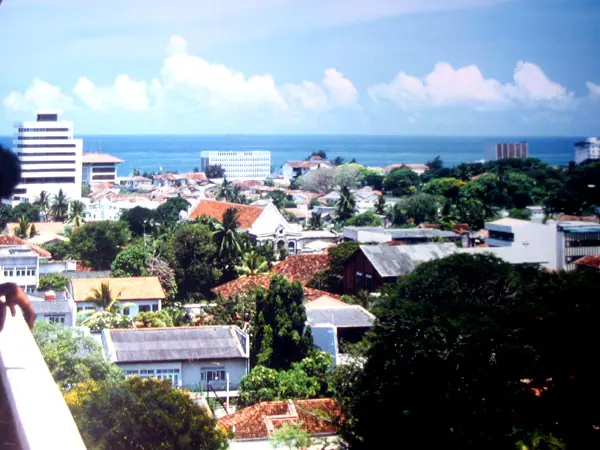
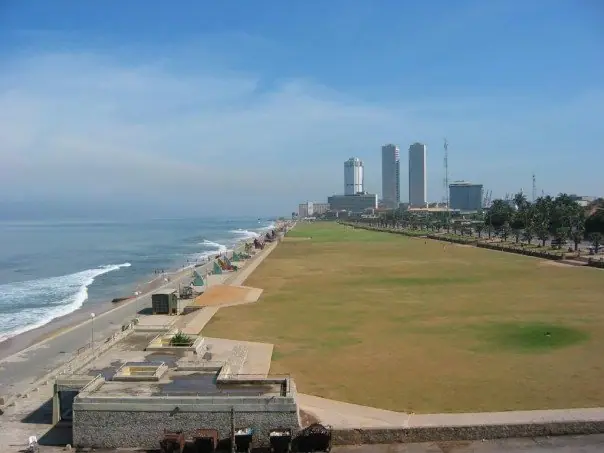
Most journeys begin at the international airport north of Colombo, which puts the lagoon town of Negombo — barely twenty minutes away — in a quietly useful position. Negombo's fish market, catamaran-lined beach and old Dutch canal make a soft landing spot, and the drive south into Colombo along the expressway takes under an hour. In the capital itself, hotels range from sleek high-rise properties facing the ocean to leafy boutique townhouses tucked into the Cinnamon Gardens district. Time a walk along Galle Face Green at sunset, when kites, food carts and families fill the seafront; then work in Gangaramaya Temple and its serene island shrine on Beira Lake, the scarlet-and-white striped Jami Ul-Alfar Mosque in the bustling Pettah bazaar, and the National Museum for context before you head inland.
South of the city the west coast unwinds through Mount Lavinia, Bentota, Ambalangoda and Hikkaduwa, where a shallow coral sanctuary sits just offshore. This is where Sri Lanka's resort tradition began, and the hotel stock shows it: riverside properties with boat transfers, former colonial seaside mansions converted into intimate boutique stays, and family-run guesthouses a few steps from the sand. The west and southwest coasts are at their best from December through March, when the sea is calm and the skies mostly clear. From May to September the southwest monsoon drenches this side of the island, and rates drop noticeably — a reasonable trade if you simply want a pool and short bursts of rain between showers.
The Cultural Triangle: Sleeping Beneath Sigiriya and the Cave Temples
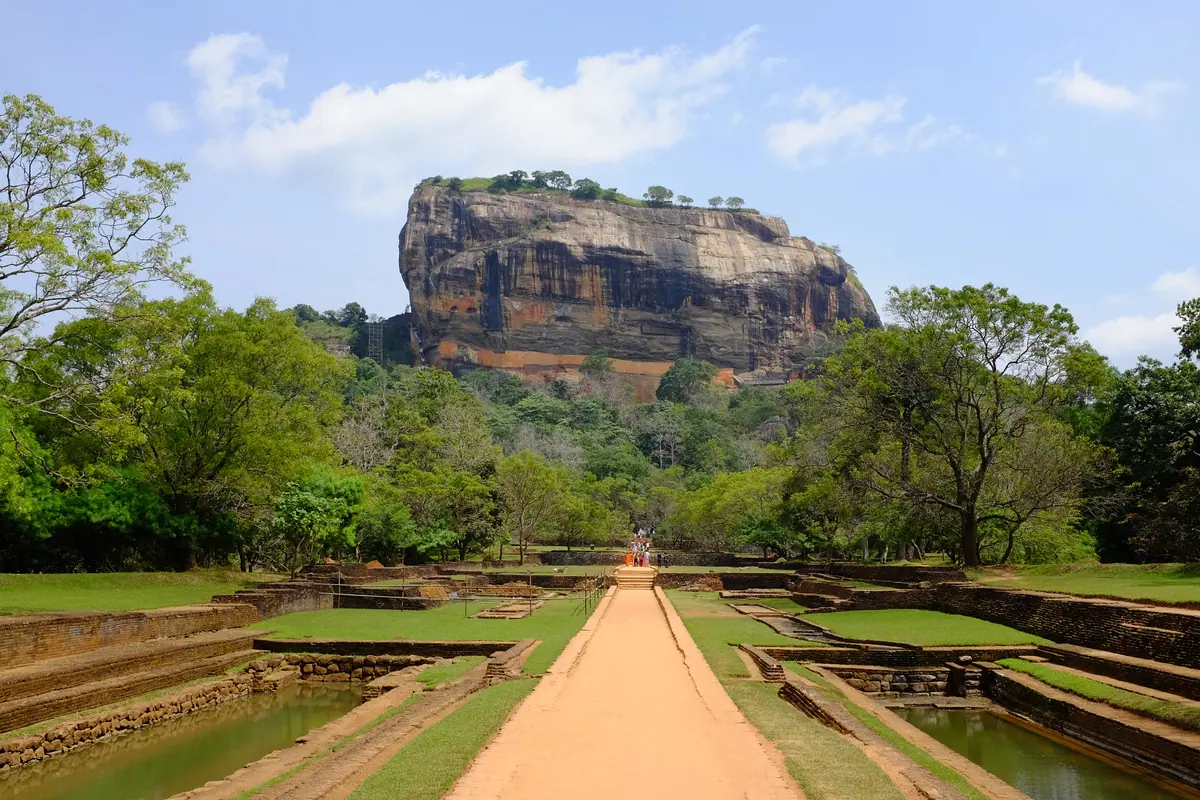
The island's ancient heart lies in the dry plains north of Kandy, where three former capitals and one extraordinary rock fortress cluster within an hour or two of each other. Sigiriya Rock Fortress is the centrepiece: a fifth-century royal citadel raised on a sheer granite monolith, reached by roughly 1,200 steps past mirror-polished walls and painted maidens, opening to a ruined palace on the summit. Climb at first light when the gates open and the temperature is still kind; the whole ascent and descent takes about two hours. Afterwards, Pidurangala Rock opposite delivers the postcard view of Sigiriya itself. Hotels here lean into the setting — jungle eco-lodges, stilted treehouses and small retreats with plunge pools, some with the rock filling the horizon from the terrace.
Base yourself around Sigiriya or Habarana for three or four nights and the rest of the triangle falls into easy day trips. Dambulla's cave temple complex shelters more than 150 Buddha figures across five painted chambers beneath a golden exterior, while the ruined cities of Polonnaruwa — best explored by bicycle — and Anuradhapura, with the sacred Bodhi tree and the vast white Ruwanwelisaya stupa, demand at least half a day each. Between August and September, hundreds of elephants converge on the grasslands of Minneriya and Kaudulla in a gathering you can watch from a jeep. December to March brings dry, comfortable days; April turns hot and heavy before the rains arrive.
Kandy and the Hill Country: Tea Bungalows, Trains and Cool Nights
Kandy, the last royal capital, is built around a lake and the Temple of the Sacred Tooth Relic, where drumming and incense fill the evening puja ceremonies. A walk around the water, a wander through the Royal Botanical Gardens at Peradeniya, and a dose of the Esala Perahera — the July or August procession of caparisoned elephants and dancers — justify a night or two. Lakeside colonial hotels and hillside guesthouses with valley views are the main choices, though the real romance begins further up.
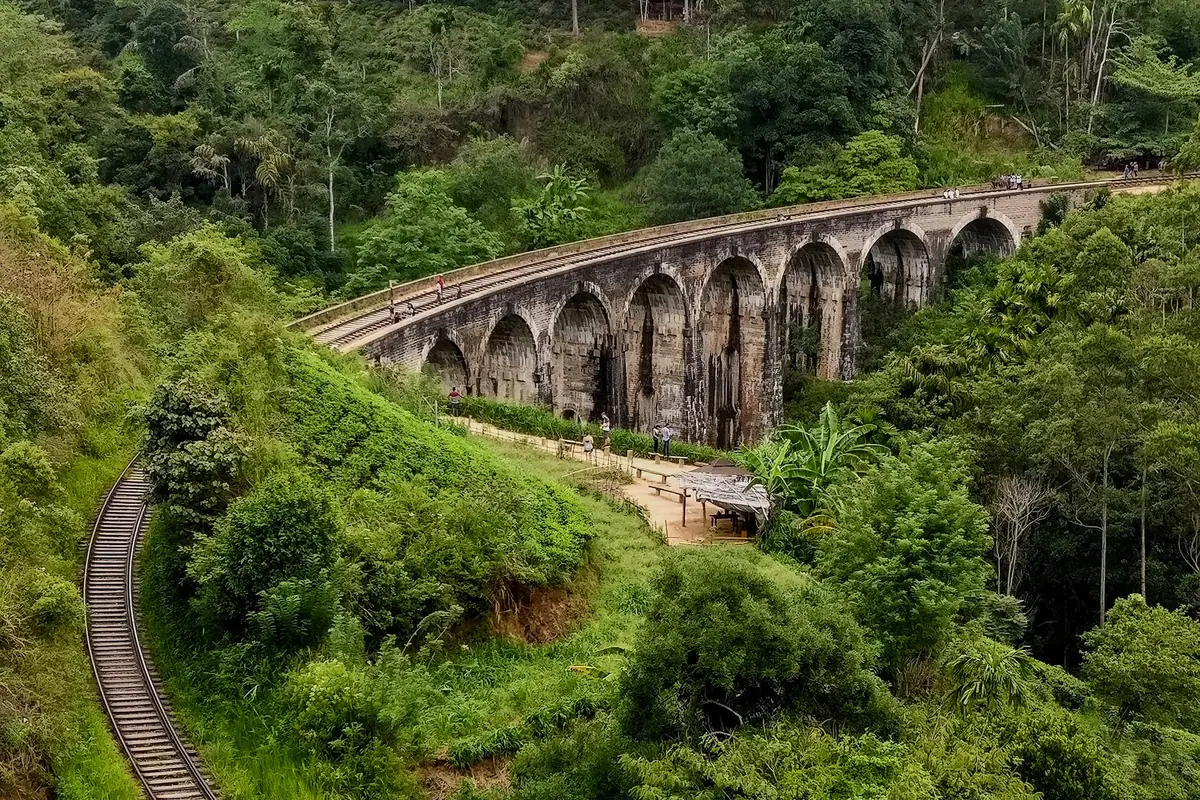
From Kandy, the railway climbs through tea country to Ella in six to seven unhurried hours; the stretch between Nanu Oya, the station for Nuwara Eliya, and Ella is the one to book, ideally in an observation carriage weeks in advance. Working tea estates have converted planter's bungalows into characterful hotels with wood fires, four-poster beds and estate walks, and nights up here can dip to around 10°C. Nearby, the Nine Arch Bridge at Demodara draws crowds for the morning trains, Little Adam's Peak is a gentle 45-minute climb, and the Horton Plains plateau — with its cliff-edge viewpoint at World's End — rewards a 6am start before the mist closes in on the nine-kilometre loop.
The South Coast, Galle Fort and Safari Country
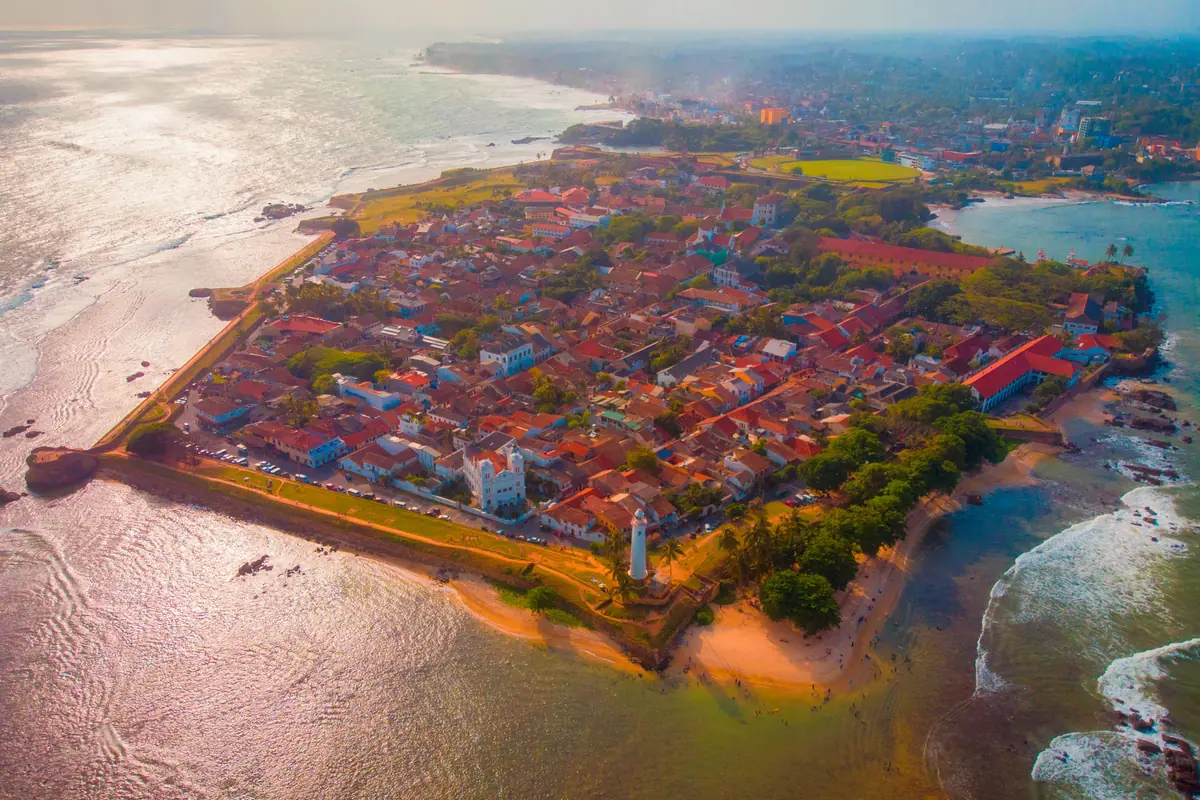
Galle Fort is the south's showpiece: a Dutch-walled town of ramparts, a white lighthouse, a colonnaded Dutch Reformed Church and lanes of shops and cafés inside the fortifications. Sunset on the ramparts, with cricket on the green below and the Indian Ocean beyond, is a ritual worth planning your day around. Hotels within the walls — converted merchant houses, courtyard villas and small boutique properties — number only a few dozen, so reserve well ahead for the December to March high season.
East of Galle, the coast shifts character every few kilometres: Unawatuna's sheltered bay, the palm swing at Dalawella, Mirissa for blue whale and dolphin trips that leave harbour before dawn between November and April, Weligama's forgiving beginner waves, and the long, quiet sands around Tangalle and Hiriketiya. Clifftop boutique hotels, staffed beach villas and simple cabanas all feature; the south is where Sri Lanka's design-led hospitality is most visible.
Inland, Yala National Park holds one of the densest leopard populations on earth, and sightings are best from February to June when water sources shrink and animals concentrate. Udawalawe reliably delivers elephants year-round, while Bundala's wetlands fill with flamingos and waders. Tented safari camps and lodges sit close to the park gates, which means 5am wake-ups, flask coffee and the chance of a leopard crossing the track before breakfast.
The East Coast and the North: Where to Go When the Rains Come
While the southwest soaks between May and September, the east coast is in its prime. Trincomalee combines a natural harbour of improbable beauty with Koneswaram Temple perched on Swami Rock, the calm bays of Nilaveli and Uppuveli, and Pigeon Island National Park, where snorkellers drift over reef and blacktip reef sharks. Hotel choice is smaller and more low-key than the south — beachfront bungalows, family-run guesthouses and a handful of polished resorts — but the water is warm, clear and uncrowded.
Further south along the same coast, Arugam Bay is a right-hand point break that draws surfers from June to August, backed by a strip of surf shacks, cafés and a growing set of design-minded villas; nearby Kumana National Park and the Pottuvil lagoon suit early mornings. In the far north, Jaffna feels like another country, with the towering Nallur Kandaswamy Temple, the remnants of Jaffna Fort, and Delft Island's wild ponies. Hotels remain limited and book up around temple festivals, but the region rewards travellers willing to trade polish for quiet. Pasikuda's shallow bay, meanwhile, is one of the island's safest places to swim with children.
Practical Hotel Wisdom: Seasons, Drives and Booking Timing
Sri Lanka has two monsoons, which is why the island is never entirely out of season. The southwest monsoon runs roughly May to September and hits the west and south coasts and the hill country hardest; the northeast monsoon arrives October to January and targets the north and east. Plan a loop that follows the dry side — west and south from December to March, east and north from May to September — and you can travel in sunshine almost year-round. Peak periods coincide with Western holidays and local festivals, so reserve two to four months ahead for the December–March window, and far earlier for Christmas, New Year and tea estate bungalows.
Distances look short on a map but roads are slow. Colombo to Kandy takes three to four hours, the expressway down to Galle about an hour and a half, and Kandy to Ella by rail six to seven hours — which is the point rather than a problem. Many visitors hire a car with a driver for multi-stop itineraries, using tuk-tuks for short hops and trains for the scenic legs. Expect a service charge plus government taxes on hotel bills, and carry small notes for tips, which are customary for drivers, guides and porters.
Finally, think about what kind of stay you actually want. Ayurvedic retreats in the southwest ask for three to five nights minimum to be worthwhile; homestays in the villages around Dambulla and Ella offer cooking lessons and rice-and-curry dinners; and river-side or jungle lodges trade air conditioning and televisions for birdsong. Breakfast is almost always included, and it is usually a good one.
Frequently asked questions
What is the best time of year to visit Sri Lanka?
It depends which coast you are heading for. The west and south coasts, the Cultural Triangle and the hill country are driest and most comfortable from December to March. The east coast and the north — Trincomalee, Arugam Bay, Jaffna — are at their best from May to September, when the southwest monsoon is soaking the rest of the island.
How many days do I need, and how many hotel bases?
Ten days to two weeks suits most first trips. Three or four bases works well: two or three nights in the Cultural Triangle for Sigiriya, Dambulla and Polonnaruwa; two nights in Kandy; two or three in the hill country around Ella or Nuwara Eliya; and the rest on the south coast around Galle Fort, Mirissa or Tangalle.
Do I need to book hotels in advance?
For the December to March high season, yes — especially for Galle Fort villas, tea estate bungalows and safari camps, which are small and fill up months ahead. Christmas, New Year and the July–August festival period are the tightest. Outside peak dates you can often decide a day or two in advance, but the best rooms still go early.
How do I get between hotels around the island?
Hiring a car with a driver is the most common approach for multi-stop trips and can be arranged per day or for the whole itinerary. Trains are the highlight of the Kandy–Ella route, tuk-tuks handle short journeys, and the southern expressway makes the run from Colombo to Galle quick. Always allow more time than the distance suggests.
What should I expect from a Sri Lankan hotel stay?
Breakfast is nearly always included and usually generous. Bills typically carry a service charge plus taxes, and tipping for drivers, guides and porters is customary. Rooms in the hill country may have no air conditioning because nights are genuinely cool, and remote eco-lodges often run on solar power with limited Wi-Fi — part of the appeal rather than a flaw.
Sort the rest of your trip
Everything for Sri Lanka, in one place
Transfer in Sri Lanka
Private driver waiting on arrival — no queues, no surprises.
Book a transfer
Things to do in Sri Lanka
Skip-the-line tickets, guided tours and standout experiences.
See experiences
Stay online in Sri Lanka
Travel eSIM — data the moment you land, no roaming bills.
Get an eSIMMore guides in Sri Lanka
Sri Lanka Tours: A Food, Culture and Local Experiences Guide
Best Places to Visit in Sri Lanka: Must-See Sights and Unmissable Activities
Sri Lanka in One Week: A 7-Day Itinerary from Airport to Coast
Best Time to Visit Sri Lanka: Seasons, Hotels and When to Book
Where to Stay in Colombo: The Best Neighborhoods for Every Kind of Trip