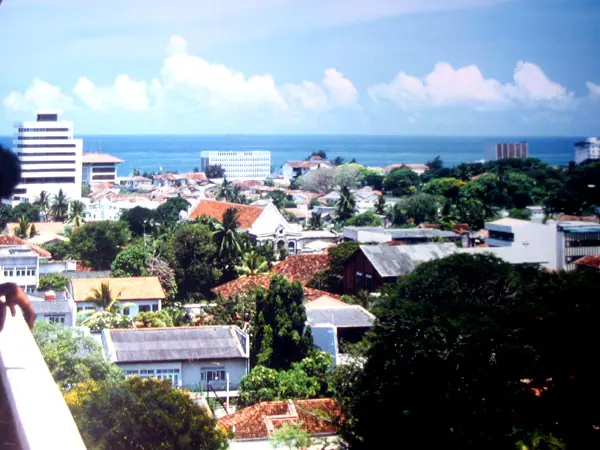
One week in Sri Lanka is a tight, glorious sprint: you climb a 1,200-step rock fortress before breakfast, ride a rattling blue train through tea country, and end the week watching blue whales breach off a palm-fringed southern bay. The trick is picking a line and holding it — the island rewards depth over distance.
Arrival Day: Touching Down at Katunayake and Finding Your Feet
Almost every long-haul arrival lands at Bandaranaike International Airport at Katunayake, roughly 32 km north of Colombo on the west coast. Step out of the terminal into the warm wall of humidity, and you have one decision to make: sleep near the airport or push straight into the city. Negombo, a former fishing town laced with canals and lagoon-side churches, sits only 20 to 30 minutes away and makes a far gentler first night than Colombo's gridlock, which can take 90 minutes to two hours to reach in evening traffic.
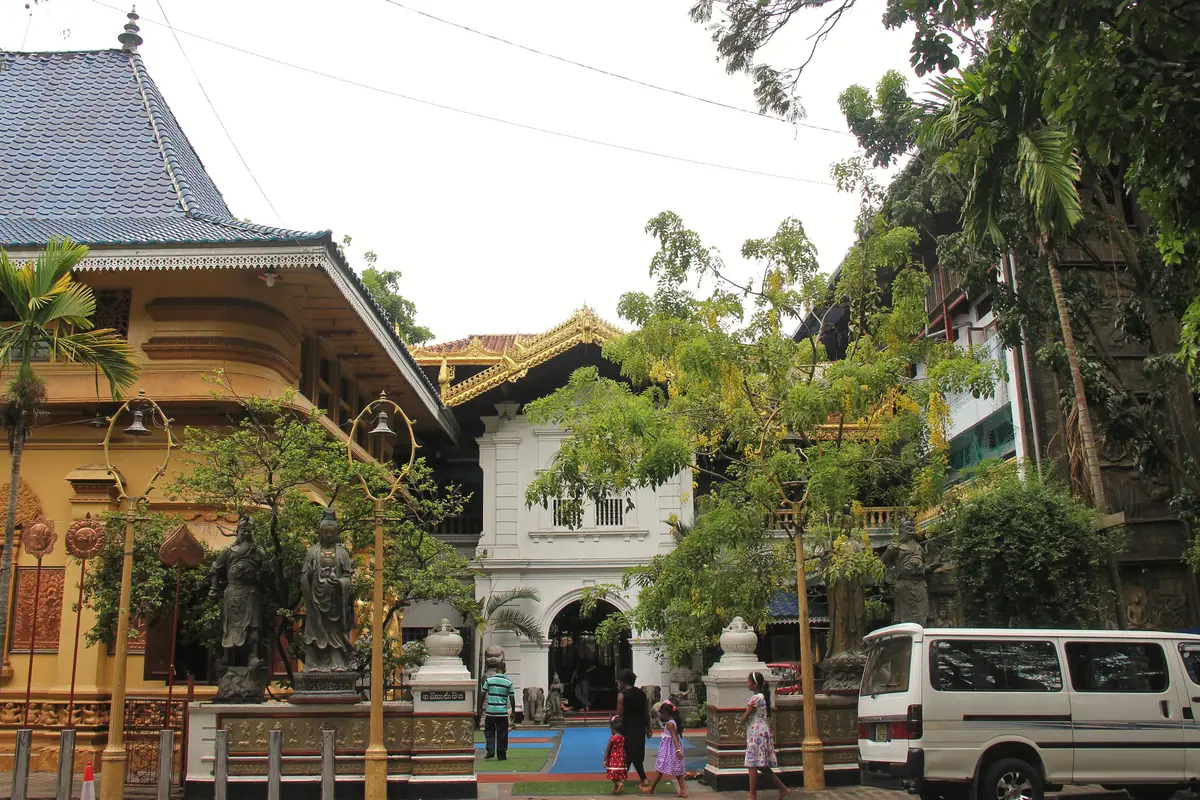
If you land in the small hours, take the Negombo option, eat a hopper or a plate of kottu roti by the lagoon, and wake up to the sound of outrigger canoes. If daylight is still on your side, use the hours to pick up a local SIM card in the arrivals hall, change enough cash for the road, arrange a private car and driver for the week, and stretch your legs at Gangaramaya Temple or the breezy Galle Face Green promenade in Colombo. Fuelled and oriented, you leave the coast in the morning for the interior.
The single most useful thing to understand about this island is that distances lie. Sri Lanka is the size of Ireland, but a 180 km drive can swallow five hours on curving two-lane roads. Build every day around one anchor sight, not three, and you will see more, not less.
Days One and Two: The Cultural Triangle — Sigiriya, Polonnaruwa and Dambulla
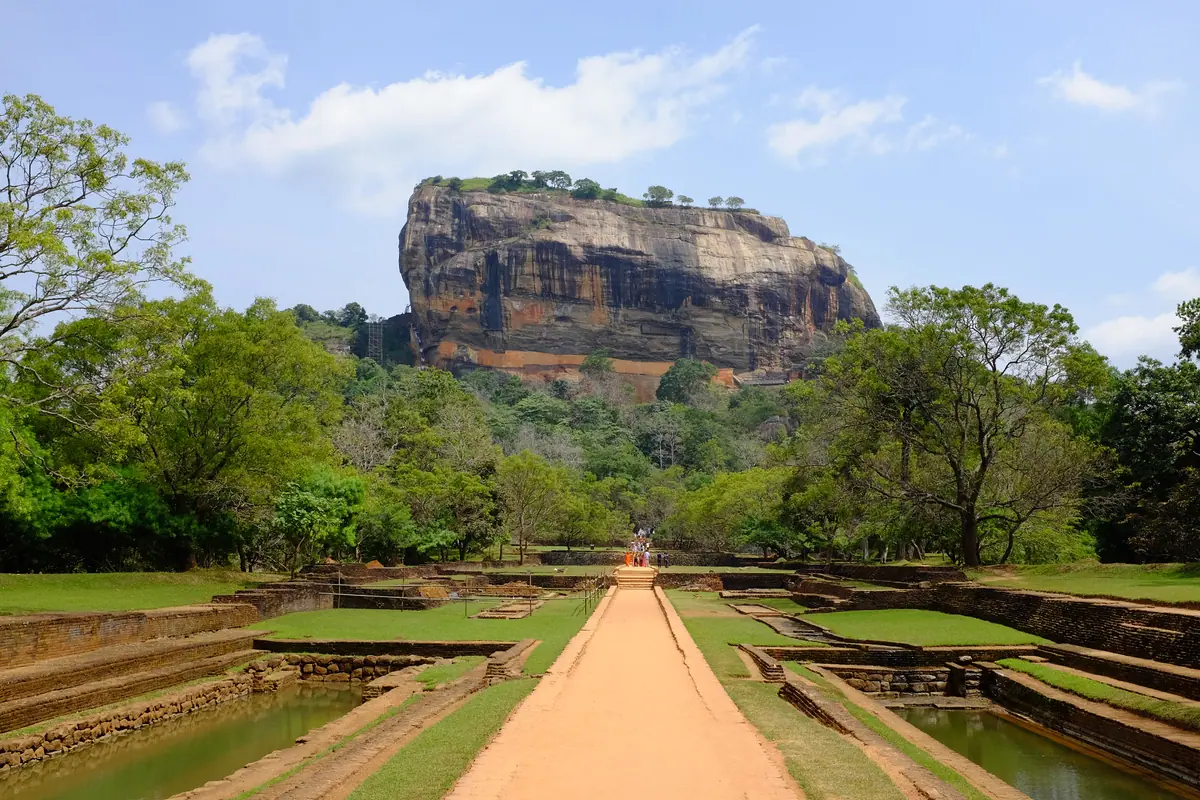
Head north-east from the airport towards the dry-zone heartland where Sri Lanka's first great civilisations rose. Most travellers base themselves in Habarana or Sigiriya village and spend two nights here. The centrepiece is Sigiriya, the 5th-century rock fortress whose sheer 200-metre face hides water gardens, mirror walls and frescoed maidens. Climb early — gates open around 6:30am and the 1,200-odd steps take 90 minutes to two hours round trip. Do it after 10am and you will be sharing the summit with heat, haze and half the island's school groups.
For a quieter, arguably better view, climb neighbouring Pidurangala Rock for sunrise or sunset: a shorter, rougher scramble that puts Sigiriya itself in your frame rather than under your feet. Pair the fortress with the Dambulla Cave Temple, a UNESCO-listed complex of five painted caves reached by a short stairway, where 150-plus Buddha statues glow under centuries of murals — allow an hour and a half, and cover your shoulders and knees.
Day two belongs to Polonnaruwa, the 12th-century capital whose ruins spread across a shaded park best explored by bicycle, and to the elephants of Minneriya or Kaudulla reservoirs, where herds of up to several hundred animals gather in the dry season, roughly August to September. Two days here is the perfect calibration for the rest of the week: big archaeology, big wildlife, and a quiet rural rhythm that the coast simply cannot offer.
Day Three: Kandy and the Temple of the Sacred Tooth Relic
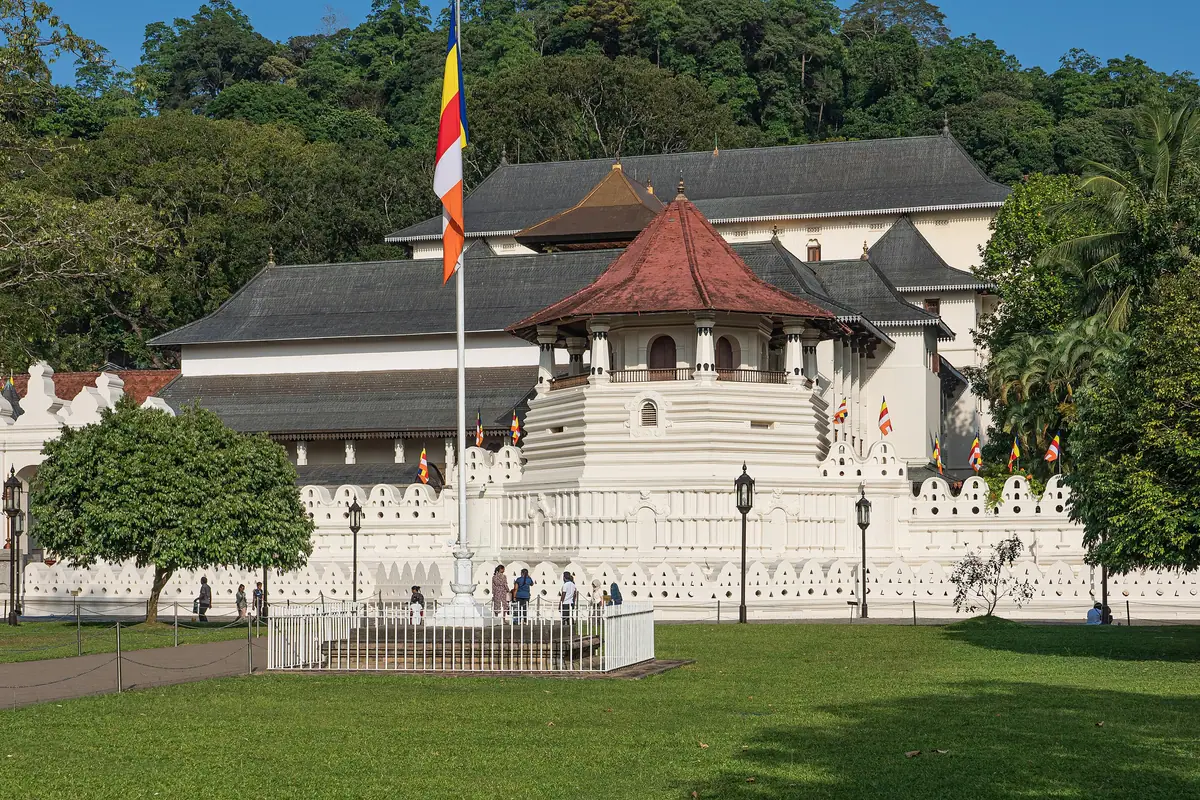
From the Cultural Triangle it is a two-and-a-half to three-hour drive south to Kandy, the last royal capital and the spiritual capital of Sinhalese Buddhism. The city curls around a lake at 500 metres, and at its heart stands the Temple of the Sacred Tooth Relic, Sri Dalada Maligawa, where the island's most revered Buddhist object is kept. Visit in the late afternoon and stay for the evening thevava ceremony, when drummers beat and the inner shrine briefly opens to devotees — roughly 6:30pm, and worth planning your whole afternoon around.
Kandy rewards half a day of wandering: the lakeside path, the white-and-gold temple walls, and the Royal Botanical Gardens at Peradeniya, 5 km out of town, where an avenue of royal palms and an orchid house fill an easy two hours. If you have energy left, an evening performance of Kandyan drumming and acrobatic dance gives a vivid, if touristy, taste of the hill-country arts.
Kandy is also your gateway to the tea country, so sleep here and be on the platform early. Note that the town sits at the junction of monsoon zones — it can rain any month — so pack a light shell and treat showers as part of the drama.
Days Four and Five: The Hill Country by Rail — Nuwara Eliya, Ella and Nine Arch Bridge
The Kandy-to-Ella rail line is the single most beautiful train ride in South Asia, and it costs almost nothing. Trains wind through emerald tea terraces, misty pine forest and tunnels carved into hillsides, roughly six to seven hours end to end. Second-class reserved seats book out weeks ahead in high season; unreserved carriages are cheap, crowded and completely doable if you are willing to stand in the open doorway with the wind in your face. Break the journey at Nanu Oya for Nuwara Eliya, a colonial hill station at 1,868 metres where the temperature drops to sweater weather and tea factories offer pluck-to-packet tours.
From Nuwara Eliya, an early start gets you to Horton Plains National Park for the World's End trail, a 9 km loop to a cliff that drops nearly 900 metres. Be at the trailhead by 6am — cloud rolls in by mid-morning and erases the view entirely. Then continue by train to Ella, the backpacker village perched above a gorge.
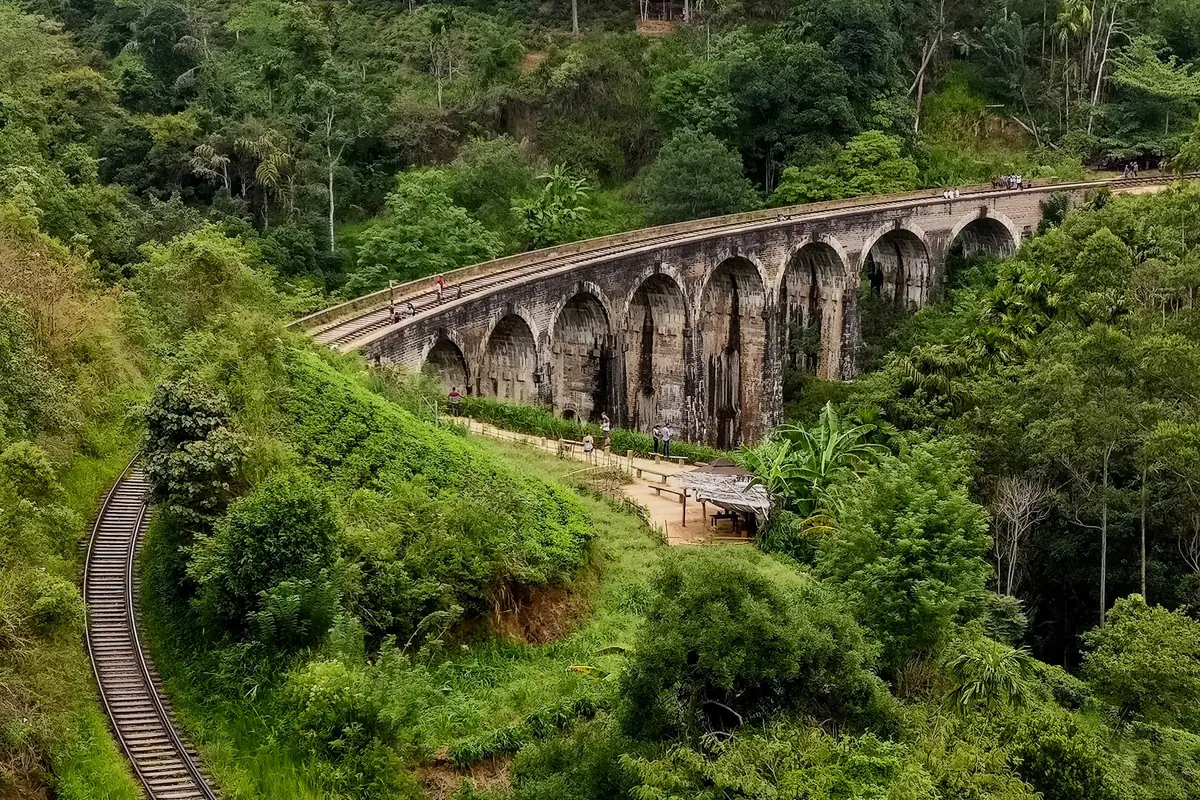
Ella's easy walks are the reward for two days of travel: Little Adam's Peak takes 90 minutes return, Ravana Falls tumbles right beside the road, and the Demodara Nine Arch Bridge — a soaring colonial-era viaduct in jungle — is best reached on foot for the mid-morning and mid-afternoon trains that crawl across it. Stay two nights, eat rice and curry on a hillside veranda, and let the pace slow down.
Day Six: Yala National Park and the Wild South
Drive south from Ella through tea estates and into the lowland scrub: two and a half to three hours brings you to the edge of Yala National Park, the island's most famous leopard territory. Dawn safaris leave around 5:30am and last three to five hours in open-sided jeeps, tracking spotted deer, wild boar, sloth bears, elephants, peacocks and, if the morning is kind, a leopard draped along a granite outcrop. Afternoon drives run from about 2:30pm until dusk. Block 1, the most visited sector, sometimes closes for maintenance in September, so check before you commit.
If elephants matter more to you than leopards, Udawalawe National Park, a couple of hours west, delivers reliable herds year-round around its reservoir — a strong alternative for families or anyone travelling in the wetter months. Either way, stay in a tented camp or a lodge just outside the park boundary and let the night fill with cicadas.
This is also the leg where flying pays off. There is a small domestic airstrip at Weerawila in the deep south, and scheduled light-aircraft and seaplane services hop between the southern coast, Colombo and the Cultural Triangle in under an hour. If your week has been squeezed by slow roads, a 40-minute flight back to the west coast buys you an entire extra afternoon.
Day Seven: Galle Fort, Mirissa and the Run Back to the Airport
Finish on the coast. Galle Fort, a UNESCO World Heritage Site, is a walled Dutch-era town of ramparts, lighthouses and narrow lanes, and two to three hours of slow walking covers it: the clock tower, the lighthouse on Point Utrecht bastion, the old Dutch Reformed Church, and the cricket ground where locals lean over the walls to watch a match. Sunrise or late afternoon light on the ramparts is the photograph you came for.
An hour further east, Mirissa is the launch point for whale watching from November to April, when blue whales and sperm whales feed in the deep channel offshore. Boats leave around 6:30am and stay out three to five hours; seasickness tablets and a tolerance for early starts are non-negotiable. Outside that season, swap whales for turtles and reef snorkelling at Unawatuna or Hikkaduwa, then spend the last night in a beach guesthouse rather than a city hotel.
From Galle, the Southern Expressway puts Colombo within about two hours and the airport within two and a half to three, so leave a generous buffer on departure day — a breakdown, a festival procession or a monsoon downpour can easily add an hour. Fly out with salt still in your hair, a suitcase full of tea, and the distinct sense that a week was both just enough and nowhere near enough.
Frequently asked questions
What is the best time of year for a one-week Sri Lanka itinerary?
December to March is the sweet spot for this route: the west and south coasts and the Cultural Triangle are dry and sunny. From May to September the southwest monsoon soaks the coast but the east coast — Trincomalee and Arugam Bay — comes into its own, so you would flip the itinerary eastward. October and November, plus April, bring inter-monsoonal storms and heavier rain almost everywhere.
Do I need domestic flights to see Sri Lanka in a week?
No, but they help. A private car and driver covers the classic loop, and the Kandy-to-Ella train is unmissable. Domestic light aircraft and seaplane services from the south coast and the Cultural Triangle to Colombo cut multi-hour drives to around 30–45 minutes, which is worth the cost if you have lost a day to weather or want one last afternoon on the beach.
How long does the Kandy to Ella train take, and should I book ahead?
Expect six to seven hours for the full run, or around four hours if you break it at Nanu Oya for Nuwara Eliya. Reserved second-class seats sell out weeks in advance in high season, so book as early as your dates allow. Unreserved tickets are sold on the day, are very cheap, and put you in a carriage full of locals — a fine experience if you do not mind standing.
Can I fit Sigiriya, Kandy, Ella and a safari into seven days?
Yes, if you move in one direction and accept long transfer days. A realistic shape is two nights in the Cultural Triangle for Sigiriya and Dambulla, one night in Kandy, two nights in Ella with the hill country train, one night near Yala or Udawalawe, and a final night in Galle or Mirissa. Skip Anuradhapura, Jaffna or the east coast; they deserve their own trip.
How much time should I allow at Sigiriya and the Dambulla Cave Temple?
Give Sigiriya 90 minutes to two hours including the climb, and start by 6:30–7am to beat both the heat and the crowds. The Dambulla Cave Temple, 20–30 minutes away by road, takes about 90 minutes and involves a short but steep stairway; shoulders and knees must be covered. Pair them with an afternoon at Polonnaruwa or a late-afternoon climb of Pidurangala for the classic view back at Sigiriya.
Plan it — flights in Sri Lanka
Live search, booked directly with trusted providers.
Sort the rest of your trip
Everything for Sri Lanka, in one place
Stay in Sri Lanka
Hotels, guesthouses and apartments — compared in one search.
Search hotels
Transfer in Sri Lanka
Private driver waiting on arrival — no queues, no surprises.
Book a transfer
Travel insurance
Medical cover, delays and lost baggage — sorted before you go.
Get coveredMore guides in Sri Lanka
Hotels in Sri Lanka: Where to Stay for Beaches, Tea Country and Ancient Cities
Sri Lanka Tours: A Food, Culture and Local Experiences Guide
Best Places to Visit in Sri Lanka: Must-See Sights and Unmissable Activities
Best Time to Visit Sri Lanka: Seasons, Hotels and When to Book
Where to Stay in Colombo: The Best Neighborhoods for Every Kind of Trip