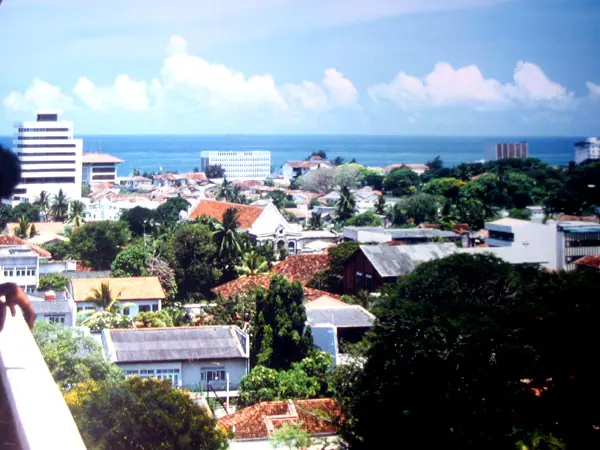
Sri Lanka packs an entire subcontinent's worth of flavour, faith and landscape into an island you can cross in a day. It is a place where you eat rice and curry with your right hand, wake to temple drums, and watch tea pickers move across hillsides that vanish into cloud. Tour it slowly and it will feed you, story by story.
Sri Lanka at a Glance: An Island Built for Slow Travel
Sri Lanka is small enough to be genuinely knowable in a fortnight, which is exactly why it rewards a slower pace. The classic loop runs from the ancient cities of the dry north-central plains, up through the cool hill country, and back down to the fortified southern coast — roughly 1,000 kilometres of road, but a thousand years of history layered along it. Buddhist stupas, Hindu kovils, Dutch ramparts and colonial tea bungalows sit within a few hours' drive of each other, and English is widely spoken alongside Sinhala and Tamil, which makes conversations with locals unusually easy.
The island runs on two monsoons, and this is the single most useful thing to understand before you book. When the south-west monsoon soaks the western and southern coasts from roughly May to September, the east coast around Trincomalee and Arugam Bay is dry and sunny. When the north-east monsoon arrives from around October to January, the equation flips: the south and west become the place to be. The hill country can catch rain most of the year, so pack a light waterproof whatever the month.
Give yourself ten to fourteen days if you want food, culture and coast without rushing. A tight seven days works for the Cultural Triangle plus Kandy, but you will be trading long lunches and unhurried market wanderings — the best parts — for time in a vehicle.
The Cultural Triangle: Sigiriya, Dambulla and Polonnaruwa
Everything in Sri Lanka's cultural heartland radiates from a handful of extraordinary sites. Sigiriya, the fifth-century rock fortress, is the icon: a sheer granite outcrop rising from the jungle, topped by the ruins of a royal citadel built by King Kasyapa. You climb through terraced water gardens, past the famous frescoes of maidens tucked into a rock pocket, and up between two enormous carved lion paws to a summit with 360-degree views. Go at first light to beat both the heat and the crowds, and allow two to three hours for the whole circuit.
Nearby, the Dambulla Cave Temple is a different kind of wonder — five rock caves whose ceilings and walls are covered in centuries of painted Buddhas, with more than a hundred and fifty statues crammed into the dim, incense-scented chambers. An hour's drive away lies Polonnaruwa, a medieval capital you can explore by bicycle: the reclining Buddha at Gal Vihara, the carved moonstones, the brick stupas. Further north, Anuradhapura holds the Sri Maha Bodhi, a sacred fig grown from a cutting of the tree under which the Buddha is said to have attained enlightenment, and the vast white dome of Ruwanwelisaya Stupa.
Finish the triangle in Kandy, the hill capital, where the Temple of the Sacred Tooth Relic — Sri Dalada Maligawa — guards Buddhism's most revered relic. Time your visit for the evening thevava ceremony, when drummers and horn players fill the courtyard with sound, then walk the loop around Kandy Lake as the lights come on. If you can, plan around the Esala Perahera in July or August, when decorated elephants, fire dancers and whip crackers take over the streets for ten nights.
Eating Sri Lanka: Rice and Curry, Hoppers and Kottu
Sri Lankan food is the country's most underrated attraction. The national meal, rice and curry, is a misnomer — a modest mound of rice surrounded by five to eight small dishes: dhal tempered with curry leaves, jackfruit curry, okra, beetroot, a fiery fish curry, and always pol sambol, a rough paste of scraped coconut, chilli, lime and Maldive fish. You eat with your right hand, mixing a little of everything into each mouthful. Look for the plain, family-run eateries locals call "hotels" — the ones with the day's curries laid out in trays — and you will eat superbly for very little.
Breakfast is where the island shows off. Hoppers (appa) are bowl-shaped rice-flour pancakes with lacy, crisp edges and a soft, slightly sour centre; the egg version, with a whole egg cracked into the middle, is a small miracle. String hoppers — steamed nests of rice noodles — come with kiri hodi, a mild coconut milk gravy, and a chilli-onion sambol that will wake you up properly. Pittu, steamed cylinders of rice flour and coconut, is heavier and deeply comforting.
After dark, listen for the clatter of metal blades on a hot griddle: that is kottu roti, a godhamba roti chopped and stir-fried with egg, vegetables, leek and your choice of chicken, cheese or seafood. It is Sri Lanka's late-night street food of choice. On the coasts, seek out ambul thiyal, a sour, dry fish curry cooked with goraka, and in the north around Jaffna, the celebrated crab curry, heavy with roasted curry powder and coconut milk. Save room for watalappan, a jaggery-and-coconut custard, and for buffalo curd drenched in dark kithul treacle. Wash it all down with plain Ceylon tea served in a glass, or a milky, sugary one if you want it the local way. For a single crash course, wander the stalls and spice shops of Pettah Market in Colombo, or eat your way around the lanes inside Galle Fort.
Tea Country and the Hill Line: Ella, Nuwara Eliya and Horton Plains
The train from Kandy into the hills is one of the great railway journeys of the world, and there is no better way to understand how tea built this part of the island. The stretch between Nanu Oya and Ella is the showstopper: the line curls through emerald plantations, past waterfalls, and over viaducts, with the carriage doors flung open and tea pickers waving from the slopes. Reserved seats are worth arranging in advance; unreserved carriages fill quickly and the journey takes the better part of a day.
Ella is the base most travellers choose, a small town wedged in a valley with hikes radiating out of it. Walk to the Nine Arches Bridge, a colonial-era viaduct that looks like something from a jungle fairytale, ideally timing your arrival for a train crossing. Little Adam's Peak is a gentle hour's climb with huge views, while Ella Rock is a longer, steeper half-day outing. Higher up, Nuwara Eliya feels like a slice of an English hill town — cool, misty, hydrangeas and cottages — and it is the place to tour a working tea factory and watch plucking, withering, rolling and firing turn green leaf into the cup you drink at breakfast.
For something wilder, head to Horton Plains National Park, a high plateau of grassland and cloud forest where a loop trail leads to World's End, a cliff edge that drops so sharply the valley below is often swallowed by mist. Start before dawn to reach the escarpment before the clouds roll in. And if you are here between December and May, consider the night pilgrimage up Adam's Peak, where thousands of lantern-carrying walkers climb the 5,000-plus steps to greet sunrise from the summit.
The Coast: Galle Fort, Stilt Fishermen and Wildlife Safaris
Galle Fort is the south coast's crown: a walled peninsula of Dutch-era streets, churches, boutique shops and cafe terraces, ringed by ramparts where locals fly kites and couples watch the sunset. Walk the walls at golden hour, past the white lighthouse, the Dutch Reformed Church and the old gate, then eat seafood in a courtyard behind the sea wall. It is one of the few places in Asia where a colonial town has been lived in continuously rather than turned into a museum.
Along the coast from Galle, the beaches come thick and fast — Unawatuna for swimming, Mirissa for whale watching between November and April, Weligama for beginner surf, and Koggala, where stilt fishermen still perch above the swell on slender wooden poles at dawn and dusk. Further east, Arugam Bay is the island's surf capital, best from roughly April to October, and Trincomalee offers calm bays and reef snorkelling around Pigeon Island.
Wildlife is a genuine reason to tour Sri Lanka, not an afterthought. Yala National Park, on the south-eastern edge, holds one of the densest leopard populations anywhere, and the dry months from around February to June give the best odds as animals gather at waterholes. Udawalawe is the reliable place for elephants, often in large herds, while Minneriya and Kaudulla host "the gathering", when hundreds of elephants converge on the receding reservoir between roughly August and October. Book a jeep with a licensed local tracker, take the dawn slot, and bring a dust scarf and binoculars.
Festivals, Etiquette and the Rhythm of Local Life
Sri Lanka's calendar is dense with celebration, and planning a trip around one is the fastest route to experiencing the island rather than just photographing it. Vesak, on the May full moon, turns every town into a festival of lanterns and free food stalls — a night when strangers feed strangers. The Sinhala and Tamil New Year in mid-April empties offices and fills villages with games, sweets like kokis and aluwa, and family visits. In the north, Thai Pongal in January and Deepavali bring colour to Jaffna's kovils, and the Nallur Kandaswamy Temple there is worth a visit in its own right for its towering golden gopuram.
Poya — every full moon — is a public holiday, and a serious one. Temples fill with white-clad worshippers, alcohol sales stop, and some businesses close. Treat it as an invitation rather than an inconvenience: this is the best day to visit a temple and simply sit and watch.
Temple etiquette matters. Remove shoes and hats before entering, cover shoulders and knees, and never pose with your back to a Buddha image or point your feet toward one. Give and receive with your right hand, ask before photographing people, and dress modestly away from the beaches. Beyond that, the practical rhythms are simple: hire a driver-guide for the Cultural Triangle, use trains for the hills, and tuk-tuks for short hops. Drink sealed or filtered water, be cautious with ice and unpeeled fruit from roadside carts, and carry long sleeves for the mosquito-heavy hours around dusk.
Frequently asked questions
How many days do I need for a food and culture tour of Sri Lanka?
Ten to fourteen days is the sweet spot. That gives you three or four nights in the Cultural Triangle, a couple in Kandy, a slow train ride through tea country to Ella, and several days on the southern coast around Galle. A seven-day version is possible if you stick to Sigiriya, Dambulla, Polonnaruwa and Kandy, but you will spend a lot of it in the car.
When is the best time to visit Sri Lanka?
There is no single answer, because the island has two monsoons. The west and south coasts — Colombo, Galle, Mirissa — are best from roughly December to March. The east coast, including Trincomalee and Arugam Bay, is at its best from around May to September. The hill country around Kandy, Nuwara Eliya and Ella is a year-round option but can rain at any time, so bring a light waterproof.
Is Sri Lankan street food safe for visitors?
Generally yes, if you follow local logic: choose busy stalls with high turnover, eat food that is cooked fresh and served hot, and avoid anything that has been sitting out in the sun. Kottu roti, hoppers and rice-and-curry eateries are all safe bets when they are crowded. Be cautious with ice, tap water and pre-cut fruit, and carry a basic rehydration sachet and stomach remedy just in case.
What should I wear when visiting temples?
Shoulders and knees must be covered, and shoes and hats come off before you step onto temple grounds. Many temples have a shoe deposit area for a small fee, so wear socks or bring a bag for your footwear. White clothing is traditional at Buddhist sites including the Temple of the Sacred Tooth Relic in Kandy. Avoid turning your back to a Buddha statue for photographs.
How do I get around Sri Lanka, and is the hill country train worth it?
The Kandy-to-Ella line is one of the highlights of any Sri Lankan trip — book a reserved seat in advance for the Nanu Oya to Ella stretch and sit on the left-hand side for the best views. For the Cultural Triangle, where sites are spread out and public transport is slow, a private driver-guide is far more efficient. Tuk-tuks are perfect for short urban hops, and metered taxis or ride-hailing apps work well in Colombo.
Sort the rest of your trip
Everything for Sri Lanka, in one place
Stay in Sri Lanka
Hotels, guesthouses and apartments — compared in one search.
Search hotels
Transfer in Sri Lanka
Private driver waiting on arrival — no queues, no surprises.
Book a transfer
Stay online in Sri Lanka
Travel eSIM — data the moment you land, no roaming bills.
Get an eSIMMore guides in Sri Lanka
Hotels in Sri Lanka: Where to Stay for Beaches, Tea Country and Ancient Cities
Best Places to Visit in Sri Lanka: Must-See Sights and Unmissable Activities
Sri Lanka in One Week: A 7-Day Itinerary from Airport to Coast
Best Time to Visit Sri Lanka: Seasons, Hotels and When to Book
Where to Stay in Colombo: The Best Neighborhoods for Every Kind of Trip