Slovakia is compact enough to cross in a morning and layered enough to fill a month, which makes it a rare gift for a week-long trip: a baroque old town before lunch, a turreted castle by mid-afternoon, a glacier-cut mountain tarn before dinner. This route starts at the airport in Bratislava, threads through the castle-dotted west and centre, then climbs into the High Tatras and finishes on the Spiš plain — where you can fly home from a runway almost at the foot of the peaks.
Landing in Slovakia: Airports, Timing and How to Move
Slovakia has three passenger airports, and where you land shapes the whole week. Bratislava's M. R. Štefánik airport sits only nine kilometres from the old town — a twenty-minute bus or taxi ride — and is the natural start for a west-to-east route. Košice, in the east, is the better gateway if you want to reverse the trip and work backwards from the mountains. And Poprad-Tatry, a tiny field sitting around 720 metres above sea level among the highest in this part of Europe, drops you ten minutes from the High Tatras and makes an elegant exit at the end of the week. Low-cost carriers from across Europe feed all three, though Bratislava has by far the widest choice, and some travellers simply fly into Vienna and ride the hour-long bus or train across the border.
For moving around, a rental car is the difference between seeing Slovakia and merely passing through it. Castles like Bojnice, Orava and Spiš sit above towns that trains reach only with patience, and the detours into wine villages or mountain gorges are pure driving pleasure. That said, the main line from Bratislava to Poprad and Košice is fast, comfortable and scenic, so a car-free version of this itinerary is entirely workable if you base yourself in the bigger towns and use buses for the last stretch. Reserve a car in advance for July and August — mountain resorts empty their fleets quickly.
Timing matters more here than in most of Central Europe. Late May and June bring long daylight, wildflower meadows and room to move; early September is arguably the sweet spot, with warm valleys, stable weather in the Tatras and far smaller crowds. July and August are hot in the lowlands and busy on the mountain trails, while late September and October paint the beech forests copper and gold. Winter rewrites the whole plan: from December to March the Tatras become a ski destination, the castles wear snow, and hikes give way to cable cars and spa towns.
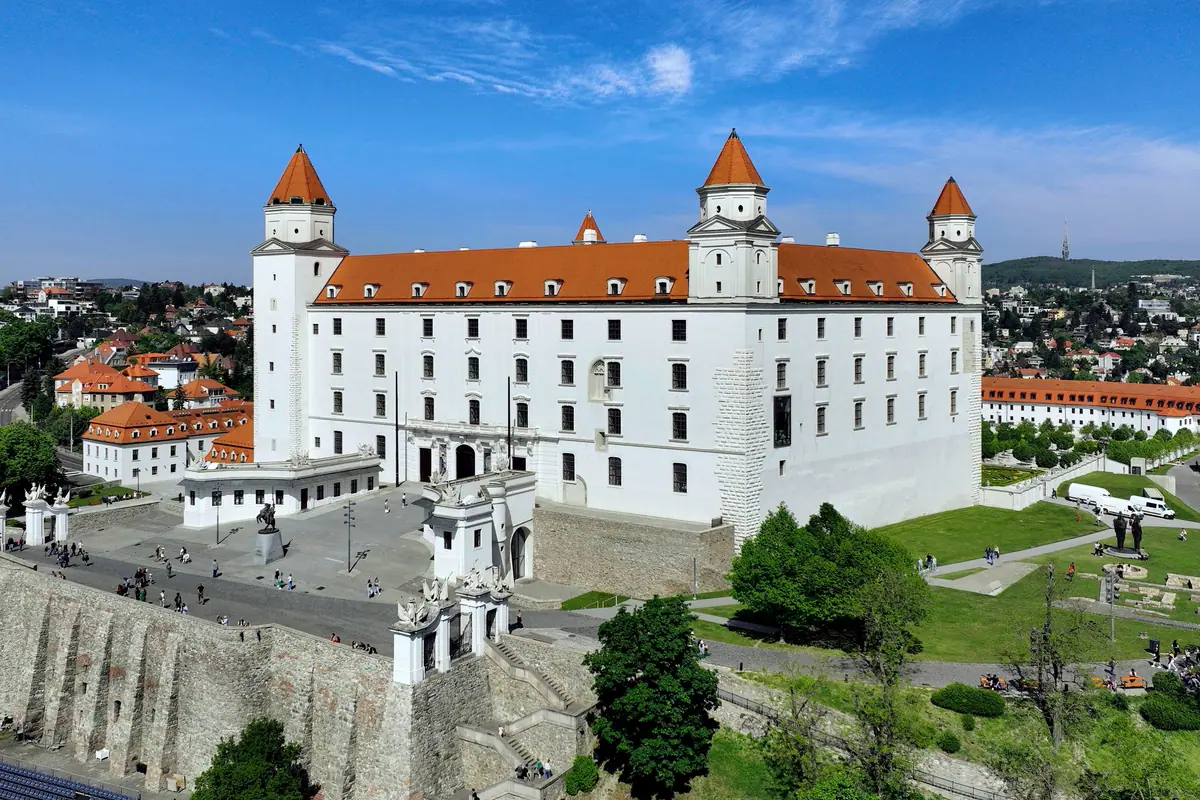
Days 1–2: Bratislava on Foot, Castle Above the Danube
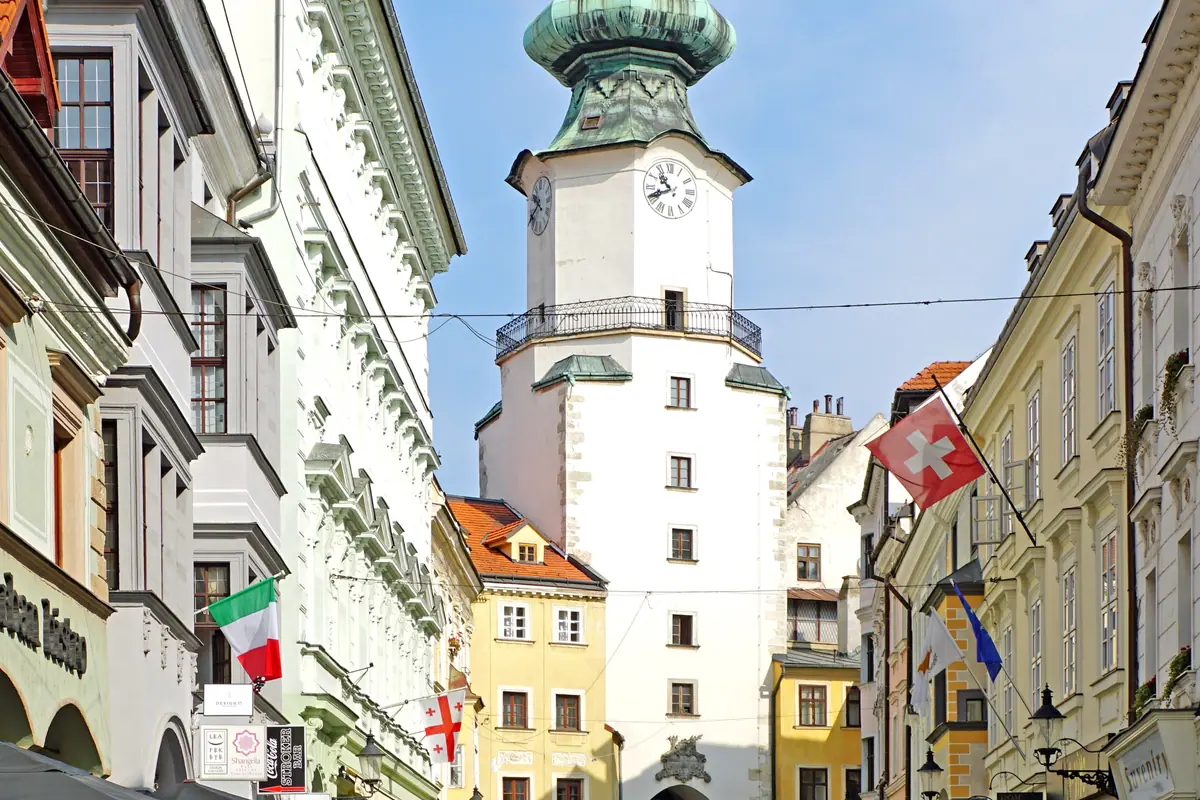
Give Bratislava two unhurried days. Start in the old town, where Michalská brána — Michael's Gate, the only surviving gate of the medieval fortifications — still straddles a cobbled lane with a small weapons museum in its tower. From there the route drifts through Hlavné námestie with its pastel houses and old town hall, past the Primate's Palace and the coronation church of St Martin's Cathedral, where Habsburg monarchs were crowned for centuries. The lanes are short, the distances tiny, and the pleasure is in the courtyards, the faded facades and the coffee stops rather than any list of sights.
Above it all stands Bratislava Castle, the white, four-square block on the hill that dominates every postcard. Rebuilt after a devastating fire and reopened as a museum and ceremonial space, it offers terraces with views that on clear days run down the Danube into Austria and across to Hungary. Below, the SNP bridge — known locally as the UFO bridge for the flying-saucer observation deck that crowns its single pylon — carries traffic across the river; ride the lift up at dusk for a completely different angle on the city.
Spend your second day mixing the odd and the elegant: the powder-blue Art Nouveau church of St Elizabeth, the gardens around Grassalkovich Palace, and the riverside promenade where cyclists drift past in the evening. For dinner, order bryndzové halušky — potato dumplings smothered in sheep's cheese and bacon — and a glass of local white. It is the dish that will follow you across the whole country.
Day 3: Devín Castle Ruins and the Small Carpathian Wine Road
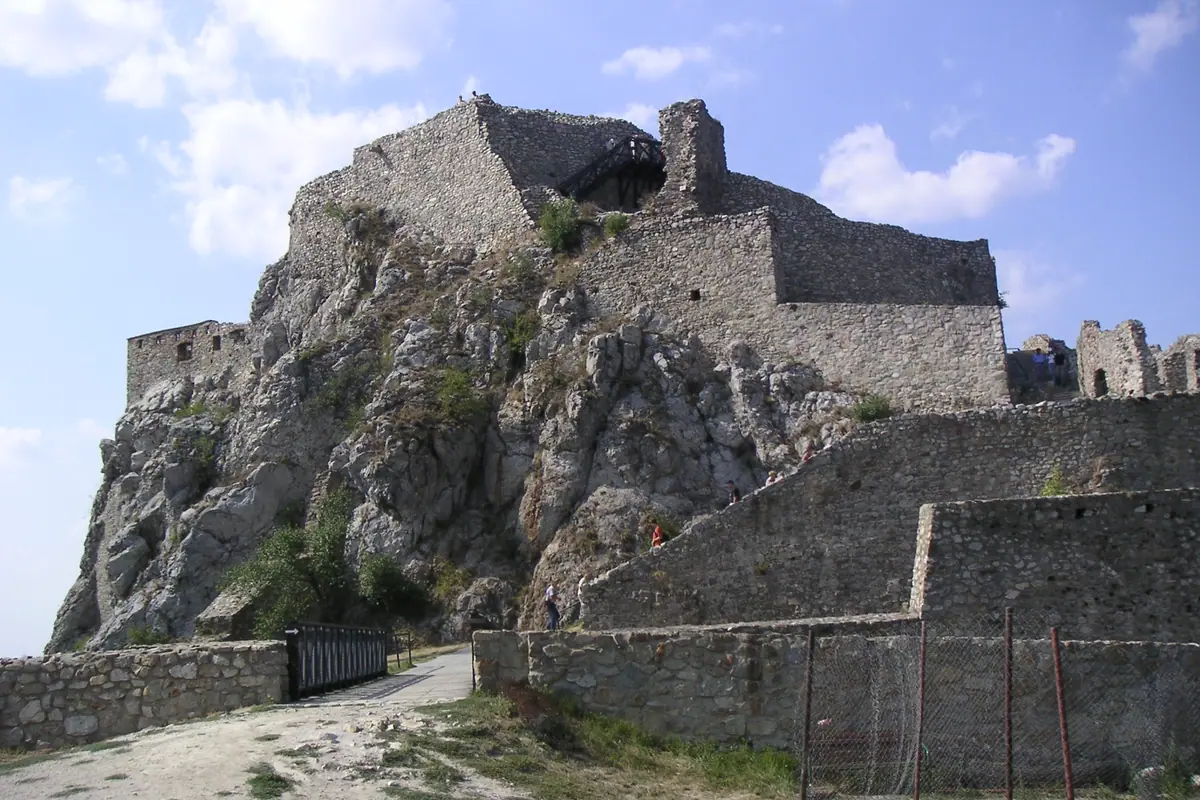
Head out of the city early for Devín Castle, a dramatic ruin balanced on a crag exactly where the Morava river meets the Danube. From the top of the rock you can look straight across the water into Austria, with the border running through the middle of the river and the castle's lower gate standing almost in the current. Buses run from the old town in about half an hour, and the walk from the village along the confluence is one of the prettiest short strolls near Bratislava.
Come back via the Small Carpathian wine route, the low range of vine-covered hills that starts at the city's edge. Pezinok and Modra are the twin anchors: the first for its cellars and wine museum, the second for its blue-and-white pottery workshops and the tiled courtyards of its old houses. Family cellars in villages like these open by appointment, and a tasting of Welschriesling, Grüner Veltliner or the locally beloved Frankovka Modrá is a very good use of an afternoon.
If wine isn't your priority, swap in Trnava, a walled university town of churches and quiet squares often nicknamed the little Rome, or follow the Danube instead with a boat ride or a cycling path. Either way, sleep in Bratislava again — the drive west the next morning is shorter from there.
Day 4: Trenčín, Bojnice and the Mining Town of Banská Štiavnica
This is the day Slovakia's castles come thick and fast. Drive north-east to Trenčín, where an immense castle climbs a limestone cliff directly above the town. Before you go up, look at the rock face below the castle walls for a Roman inscription carved nearly two thousand years ago — the northernmost trace of a Roman legion in this part of Europe. The climb to the battlements rewards you with a view straight down onto the main square.
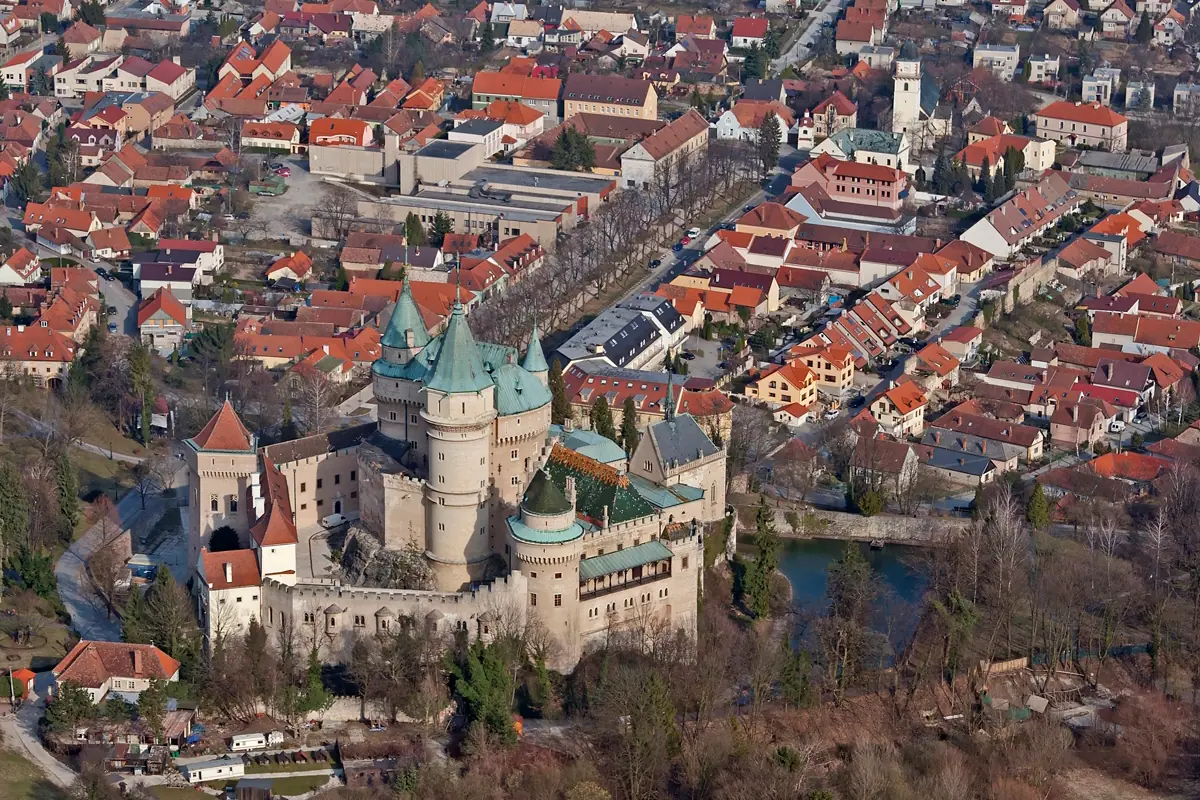
Next comes Bojnice Castle, the country's fairy-tale showpiece: turreted, moated, painted in soft ochre, with a chapel, a cave-like grotto and a park full of peacocks. Guided tours run through the state rooms, and the small spa town around it makes a pleasant lunch stop. Arrive early in high season — this is the one castle where tour groups can genuinely fill the corridors.
Finish in Banská Štiavnica, an old silver-mining town terraced across a volcanic hillside and listed for its extraordinary concentration of Renaissance and Baroque architecture. Wander the steep lanes between the Old Castle and New Castle, walk up to the Calvary for the view back over the rooftops, and if time allows descend into one of the preserved mine tunnels with a guide and a hard hat. Stay the night here rather than pushing on — the town is at its best in the evening when the day-trippers have gone.
Day 5: North to Orava Castle and the Gorges of Malá Fatra
Point the car north into the mountainous Orava region, where Orava Castle rises from a spur of rock almost vertically above the river. Its silhouette is so theatrical that it played the role of a vampire's fortress in classic cinema, and the interior tour — halls, armour, a wooden chapel — makes the steep climb worthwhile. Below, the Orava reservoir and the wooden village houses of the surrounding valleys feel a world away from the capital.
From here the landscape turns properly wild. In the Malá Fatra range, the village of Terchová is the base for the Jánošíkove diery, a network of narrow limestone gorges threaded with wooden walkways, ladders and chains fixed into the wet rock. It is a two- to three-hour circuit that feels like mild via ferrata, and it is one of the most enjoyable half-days in the country. Alternatively, head east to Slovak Paradise National Park, where the Suchá Belá gorge offers a similar ladder-and-waterfall adventure with even more drama.
Overnight in Žilina or Terchová. Fuel up on a hearty dinner — cabbage soup, grilled meat, dumplings — because tomorrow the air gets thinner.
Days 6–7: The High Tatras, Spiš Castle and the Flight Home
The High Tatras are the reason many people come to Slovakia at all, and one full day is the minimum. Base yourself around Štrbské Pleso, a glassy mountain tarn at roughly 1,345 metres where a flat, easy loop around the water takes about an hour and offers reflections of the peaks on still mornings. From Tatranská Lomnica, a cable car lifts you towards Lomnický štít at 2,634 metres — a dizzying, often snow-patched summit station with a view that swallows the whole range. If you prefer walking, the trails from Hrebienok to the Studený potok waterfalls are gorgeous and manageable in half a day; serious mountaineers need a guide for Gerlachovský štít, the country's highest point, and for Rysy on the Polish border.
Use your final day for the Spiš plain below the mountains. Spiš Castle, a vast UNESCO-listed ruin spread across a green hill, is one of the largest castle complexes in Europe and takes two to three hours with its lower fortifications and museum. A short drive away is Levoča, a walled medieval town whose church of St James holds an astonishingly tall wooden Gothic altar carved by Master Paul, and Kežmarok, with its castle and its remarkable wooden articular church.
Then comes the easy part: Poprad-Tatry airport is barely fifteen minutes from the mountain resorts, and Košice is about ninety minutes from Spiš if you want a bigger departure hub. If your flight leaves from Bratislava instead, allow four to five hours by car or train and treat the drive back through the Váh valley as one last look at the country you've just crossed.
Frequently asked questions
Which airport should I fly into for a one-week Slovakia trip?
Bratislava's M. R. Štefánik airport is the best start for a west-to-east route, with the widest choice of European flights and the old town only twenty minutes away. Poprad-Tatry is ideal if the High Tatras are your priority, and Košice works well as an eastern gateway or exit. Flying into one and out of another avoids retracing your steps.
Do I need a rental car to follow this itinerary?
Not strictly, but it helps enormously. Trains connect Bratislava, Žilina, Poprad and Košice quickly, and buses serve most towns, yet castles like Bojnice, Orava and Spiš are far easier by road. A car also lets you stop at wine villages and mountain gorges on impulse. Book well ahead for July and August, when mountain-region fleets sell out.
When is the best time of year to visit Slovakia?
Late May to June and early September offer the best balance of warm weather, long days and manageable crowds. July and August are busiest and hottest in the lowlands. Late September and October bring spectacular autumn colour in the forests, while December to March turns the Tatras into a ski destination and closes many high trails.
Can I see the High Tatras without serious hiking?
Absolutely. The lakeside loop at Štrbské Pleso is flat and takes about an hour, and cable cars from Tatranská Lomnica and Starý Smokovec carry you high into the range without any effort. The waterfall path from Hrebienok is a gentle half-day walk. Only the highest summits, such as Gerlachovský štít, require a certified mountain guide.
How much time should I allow for Slovakia's castles?
Plan two to three hours at the big sites — Spiš Castle, Bojnice Castle and Orava Castle all include guided or self-guided routes through multiple wings. Smaller ruins like Devín or Trenčín need around ninety minutes. Trying to fit more than two major castles into one day leaves you rushing and driving in the dark.
Sort the rest of your trip
Everything for Slovakia, in one place
Stay in Slovakia
Hotels, guesthouses and apartments — compared in one search.
Search hotels
Transfer in Slovakia
Private driver waiting on arrival — no queues, no surprises.
Book a transfer
Travel insurance
Medical cover, delays and lost baggage — sorted before you go.
Get coveredMore guides in Slovakia

Where to Stay in Slovakia: Hotels and Must-See Sights from Bratislava to the High Tatras
Slovakia Food, Culture and Local Experiences: A Tour Through Kolibas, Castles and Wine Cellars
Top Things to Do in Slovakia: Castles, Tatras and Cave Country