Slovakia is the kind of country that feeds you before it explains itself: a plate of bryndzové halušky lands on the table, a juniper-scented borovička follows, and somewhere outside the window a castle ruin sits on a hill like it has always been there. Travel here and you get medieval towns, sheep-cheese kitchens, carved wine cellars and a folk culture that is still sung, not just displayed.
Bratislava Old Town: Where Slovak Kitchens Meet Wine Cellars
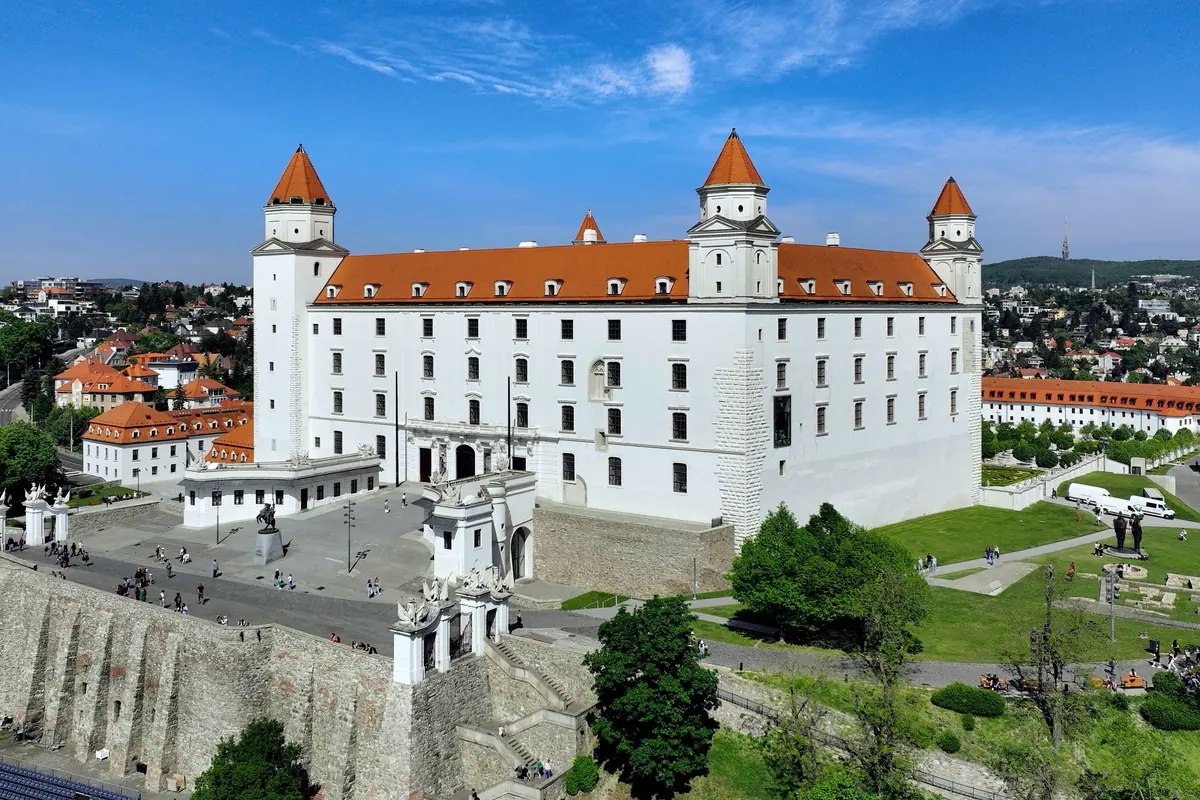
Start under Bratislava Castle, the white block on the hill above the Danube, and walk down through the Old Town. The route passes St. Martin's Cathedral, where Hungarian kings and queens were crowned for centuries, then Michalská brána, the last surviving medieval gate, and opens onto Hlavné námestie with its pastel facades and old town hall. This is the most compact introduction to Slovak eating you will find anywhere: pivnice (cellar pubs) serve bryndzové halušky — potato dumplings folded through sheep's cheese and topped with fried bacon — alongside kapustnica, a sour cabbage soup that ranges from gently smoky to seriously sharp depending on the season.
Give at least half a day to the food side of the city. On Saturday mornings the old market hall on the square fills with farm stalls selling ovčí syr (sheep cheese), honey, poppy-seed pastries and small-producer wine, and the covered courtyards off the main lanes hide specialty coffee rooms that roast their own beans. Buy a Bratislavský rožok, the city's protected poppy-seed and walnut roll, and eat it while walking the Danube embankment toward Most SNP, the UFO-shaped bridge that frames the castle in every second photograph.
In the evening, skip the tourist strip and look for wine bars pouring bottles from the Little Carpathians an hour north: Frankovka modrá, Veltlínske zelené, Pálava. Two days is enough for Bratislava itself, but December transforms it — the Christmas markets on Hlavné námestie and Františkánske námestie fill the air with mulled wine, lokše (potato flatbreads) cooked on griddles, and roasted chestnuts.
Koliba Country: Sheep Cheese, Halušky and Mountain Hospitality
Leave the capital and Slovak food gets more honest and more regional. In the Malá Fatra hills around Terchová and the Vrátna dolina, family-run kolibas — the wooden shepherds' houses turned rustic restaurants — serve the dishes that define the country: strapačky with cabbage, bryndzové pirohy, grilled sheep cheese with cranberries, and žinčica, a tart whey drink poured straight from the churn. Summer is when the sheep are up on the meadows, and some farms still let visitors watch the cheese-making, taste bryndza fresh from the vat, or buy it at the gate.
Autumn and winter bring their own rituals. Kapustnica thickens with smoked sausage and dried mushrooms as the weather turns, and in villages across the north you may stumble into a zabíjačka, the traditional winter pig-slaughter feast where the whole street eats sausages, black pudding and crackling for two days straight. Mountain huts in the High Tatras serve a simplified version of the same cooking — goulash, cabbage soup, dumplings — and a bowl of it after a climb tastes better than anything a city kitchen can produce.
To eat this way, plan your travel around lunch. Kitchens in rural kolibas often close mid-afternoon and reopen for dinner, and Sunday afternoons fill up with families. Cash still helps in the smallest villages, and a few words of Slovak — dobrý deň, ďakujem — go a long way with a shepherdess who has just handed you a wedge of cheese.
Castles and UNESCO Towns: Spiš, Levoča, Bardejov and Banská Štiavnica
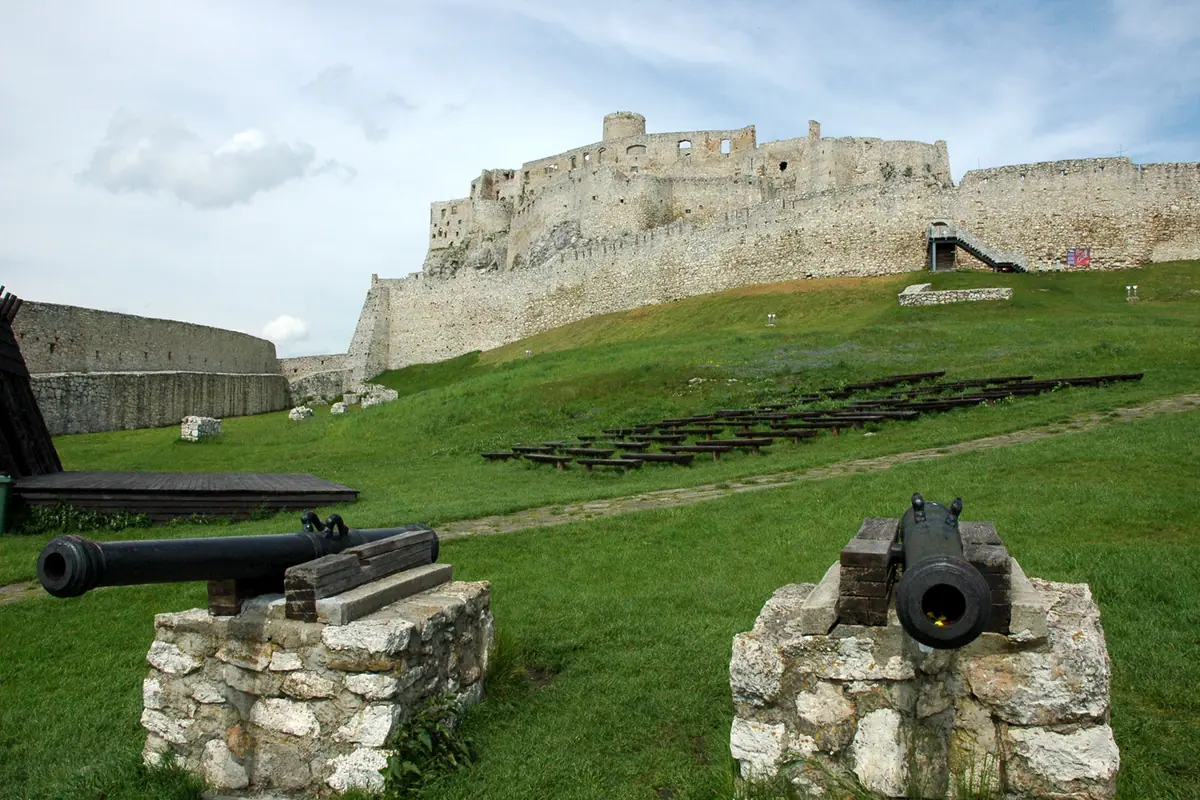
Slovakia has one of the densest concentrations of castles in Europe, and the east is where the drama is. Spiš Castle, sprawled across a hill above the village of Žehra, is one of the largest castle complexes on the continent; below it, the tiny Romanesque church at Žehra holds 13th-century frescoes most visitors never see because they drive straight past. Nearby Levoča, a UNESCO-listed town, keeps its medieval walls and the tallest wooden altar in the world inside the Church of St. James, carved by Master Paul of Levoča. Further east, Bardejov's Radničné námestie is a perfectly preserved Gothic square, and the surrounding hills hide the UNESCO wooden churches of the Carpathians.
In the centre and west, the castles change character. Orava Castle clings to a rock above the Orava river and looks genuinely uninhabitable in the best way; Bojnice Castle is the romantic, turreted one with a moat and a park; Trenčín Castle carries a Roman inscription on its rock, proof that legions camped here nearly two thousand years ago. Banská Štiavnica, a UNESCO mining town built into a volcanic caldera, is the connoisseur's stop — terraced streets, a Calvary hill with views over the old shafts, and café culture that would not look out of place in Vienna.
Between these towns, eat what the region eats. In the Šariš and Zemplín areas you will find holubky (stuffed cabbage), šúľance with poppy seeds, and heavier, paprika-forward dishes influenced by Hungarian and Rusyn cooking. Košice, the eastern capital, is the best base: Hlavná ulica, the longest pedestrian square in the country, runs past St. Elisabeth Cathedral, and its cafés and wine bars are where young Slovaks from the east spend their evenings.
Wine Roads, Harvest Festivals and Tokaj Cellars
Slovak wine is a well-kept secret, partly because so little of it leaves the country. The Little Carpathian wine route runs from Bratislava through Svätý Jur, Pezinok and Modra, threading between vineyards and family cellars dug into loess and rock. September is the magic month: burčiak, lightly fermenting young wine, appears in every roadside stall, and towns along the route hold vinobranie harvest festivals with brass bands, folk costumes and open cellars. Modra, also known for its blue-and-white majolica ceramics, makes a natural stop between tastings.
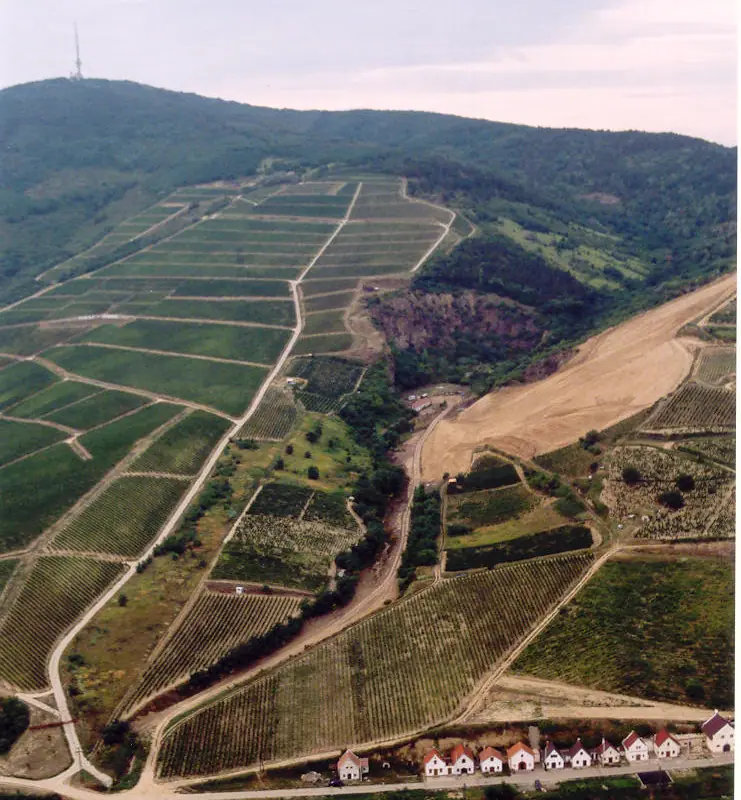
In the far southeast, the Tokaj region around Malá Tŕňa and Slovenské Nové Mesto produces the sweet, botrytised wines that once travelled to royal courts. Cellars here are deliberately left with their mouldy, velvety walls — the fungus regulates humidity — and a tasting usually moves from dry Furmint through samorodné to the syrupy putňové and, on rare occasions, essencia. Tours are small, personal and often guided by the winemaker's own family.
Elsewhere, beer is the everyday drink: crisp pale lagers poured in every village pub, and borovička, the juniper spirit that appears at the end of a long meal whether you asked for it or not. Drink the way locals do — slowly, with food, and with a toast of Na zdravie.
Folklore, Fujara Music and Painted Villages
Slovak folk culture is not a museum piece. In the village of Čičmany, every wooden house is covered in white geometric patterns that look like lace painted onto timber, and the effect in snow is unforgettable. Detva hosts the Folklórne slávnosti pod Poľanou, one of the country's great folklore festivals, while Východná in July draws ensembles from every region for days of dancing, singing and costume. Even outside festival season, Sunday afternoons in villages like Terchová often end with heligónka accordions and songs about the outlaw Jánošík, the Robin Hood figure claimed by half the mountains.
The fujara, an enormous three-holed shepherd's flute, is recognised as intangible cultural heritage, and hearing one played on a hillside — a low, eerie, overtoned hum — is worth arranging your route around. Crafts travel with the same culture: woodcarving, wirework, painted Easter eggs, bobbin lace and ceramics, sold at regional fairs rather than souvenir shops. Easter brings its own rituals, including the korbáč whip and the dousing of water, while Christmas is a season of koledy carols and baked poppy-seed rolls.
The practical advice is to plan around a festival if you possibly can. Book village accommodation weeks ahead for Detva or Východná, expect long evenings, and bring cash for craft stalls. If your dates are fixed, aim for a summer weekend and ask locally — there is almost always a village celebration somewhere within an hour's drive.
High Tatras and Caves: Mountain Food and Alpine Days
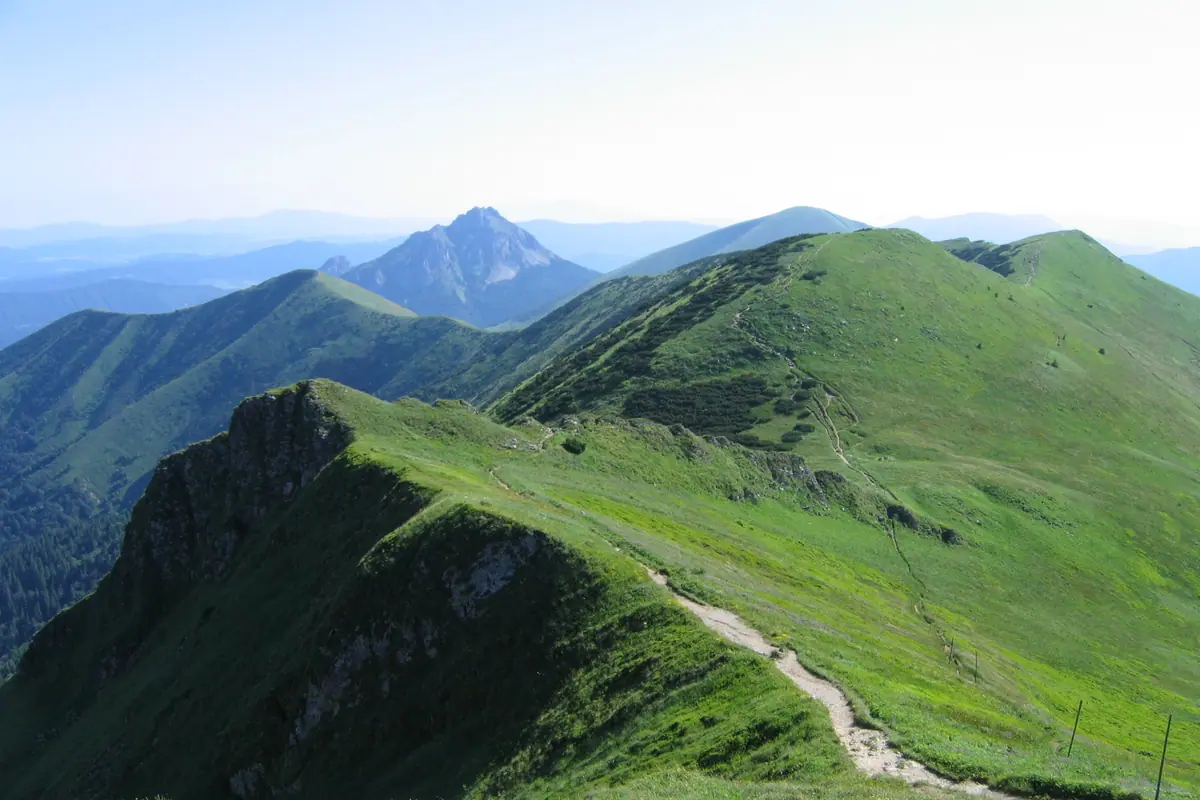
The High Tatras are the country's outdoor heart: Gerlachovský štít, the highest peak, Rysy on the Polish border, and the glacial lake at Štrbské Pleso, where a walk around the water takes about an hour and views open onto ridges that hold snow into June. Cable cars lift walkers toward Lomnický štít and Hrebienok, but the best days are spent on marked trails between mountain huts (chaty), where you eat kapustnica and goulash at long wooden tables beside strangers who become friends by dessert. June to September is hiking season; December to March turns Tatranská Lomnica and Starý Smokovec into ski bases.
Below the peaks, Slovakia is a country of caves. Dobšinská Ice Cave keeps ice year-round, the Demänovská caves in the Low Tatras are vast and dramatically lit, and the Slovak Karst and Slovak Paradise offer gorge walks on ladders and chains over rushing water. Each of these suits a half-day, and all of them stay cool in summer — a genuine relief during a July heatwave.
Travel here is slower than the map suggests: buses connect the resort towns, but a car makes the smaller valleys, castles and kolibas reachable. Whichever way you go, build in a rest day. Slovak hospitality is unhurried, and the best moments — a shared bottle of Tokaj, a shepherd's advice on which ridge to climb tomorrow — rarely fit a schedule.
Frequently asked questions
What Slovak dishes should I try first?
Start with bryndzové halušky — potato dumplings with sheep's cheese and bacon — then kapustnica (sour cabbage soup), bryndzové pirohy, lokše potato flatbreads, and šúľance with poppy seeds. In the east, look for holubky (stuffed cabbage). Finish with a Bratislavský rožok pastry and a shot of borovička.
When is the best time to visit Slovakia for food and culture?
Late May to June and September to October offer mild weather and full cultural calendars. September brings burčiak and vinobranie wine harvests along the Little Carpathian route; December brings Christmas markets in Bratislava and Feasts; July is best for the Východná folklore festival. Winter suits skiers, summer suits hikers.
How many days do I need to tour Slovakia?
Five to seven days covers Bratislava, one castle region and the High Tatras comfortably. For a fuller loop including Banská Štiavnica, Spiš Castle, Levoča, Bardejov and Košice, allow ten days to two weeks, since rural buses are slower than driving.
Do I need a car to reach the local food and folk experiences?
Not for Bratislava, Košice or the main Tatra resorts, which are well served by trains and buses. You do need a car or a local driver to reach kolibas, wine cellars, wooden churches and villages like Čičmany efficiently. The Bratislava–Košice rail line is fast and reliable for crossing the country.
What cultural etiquette should I know?
Accept a drink when it is offered, toast with Na zdravie, and expect to eat more than you planned. In village pubs and kolibas, cash is safer than cards. Ask before photographing people in folk costume, and note that Sunday afternoons are family time in rural restaurants, so book or arrive early.
Sort the rest of your trip
Everything for Slovakia, in one place
Stay in Slovakia
Hotels, guesthouses and apartments — compared in one search.
Search hotels
Transfer in Slovakia
Private driver waiting on arrival — no queues, no surprises.
Book a transfer
Stay online in Slovakia
Travel eSIM — data the moment you land, no roaming bills.
Get an eSIM