Seychelles is not one destination but 115 of them, scattered across the Indian Ocean like granite marbles dropped from a great height. Where you sleep decides which of them you actually see — a beach bungalow on Mahé looks nothing like a hilltop villa above Praslin's Anse Lazio, and neither resembles a barefoot lodge on a private atoll. This guide unpacks the islands one by one, so your hotel matches the holiday you have in mind.
Choosing Your Island Base: Mahé, Praslin or La Digue?
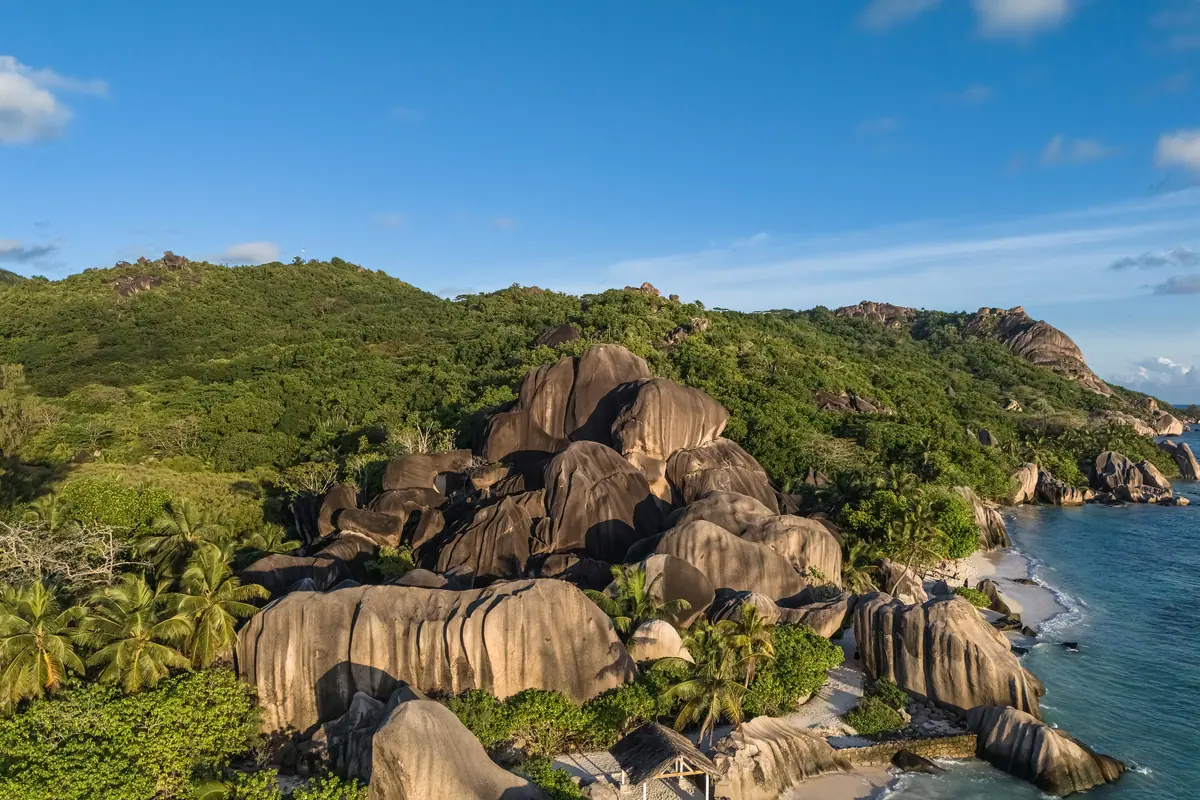
Almost every trip begins on Mahé, the largest island and the one holding the international airport, the capital Victoria and roughly three-quarters of the population. It is the practical choice: widest range of accommodation, easiest transport, and enough coastline — over 60 beaches — to fill a fortnight without ever boarding a boat. Hotels here run from simple Creole guesthouses in the hills to full-service resorts along Beau Vallon and the quieter southwest shore.
Praslin, a short ferry or hop-flight away, is slower and greener, home to the UNESCO-listed Vallée de Mai and some of the country's most photographed sand in Anse Lazio. It suits travellers who want a village feel with restaurants within walking distance and jungle right behind the garden wall. La Digue, third in size, is the smallest-scale option: almost car-free, navigated by bicycle, with granite boulders and the famous Anse Source d'Argent at its edge.
My honest advice: split your stay. Four nights on Mahé plus three on Praslin or La Digue gives you both the convenience and the castaway feeling, and inter-island ferries and small flights make the transfer genuinely easy. Base yourself on one island only if you are travelling with very young children or have less than a week.
Mahé: Victoria, Beau Vallon and the Granite South
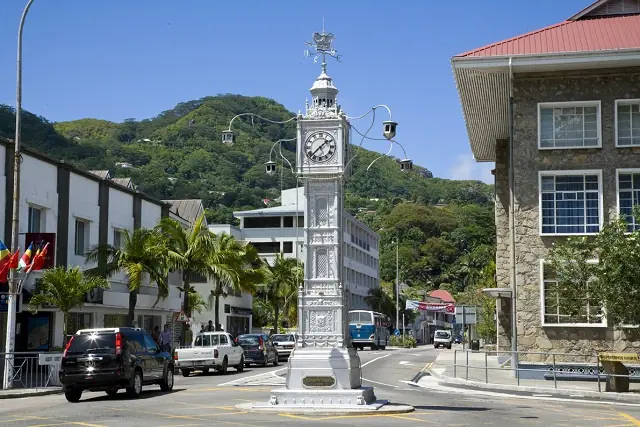
Mahé's capital, Victoria, is one of the smallest capital cities on earth and worth half a day. Start at the silver Clock Tower that marks the town centre, wander the produce halls of the Sir Selwyn Selwyn-Clarke Market for vanilla pods, cinnamon bark and fresh tuna, then look in on the pastel Hindu temple and the botanical gardens at Mont Fleuri, where fruit bats hang in the canopy and giant tortoises graze. Staying in or near Victoria means markets, buses and local cafés on your doorstep — good value, less beach.
Most first-time visitors head to Beau Vallon on the northwest coast, a long crescent of calm, swimmable water with a proper strip of hotels, dive centres and evening food stalls. It is the liveliest resort area on the island and the best base for families. For something quieter, look south to Anse Intendance, Anse Takamaka and Anse Soleil, where villas sit in the forest above steep, dramatic bays.
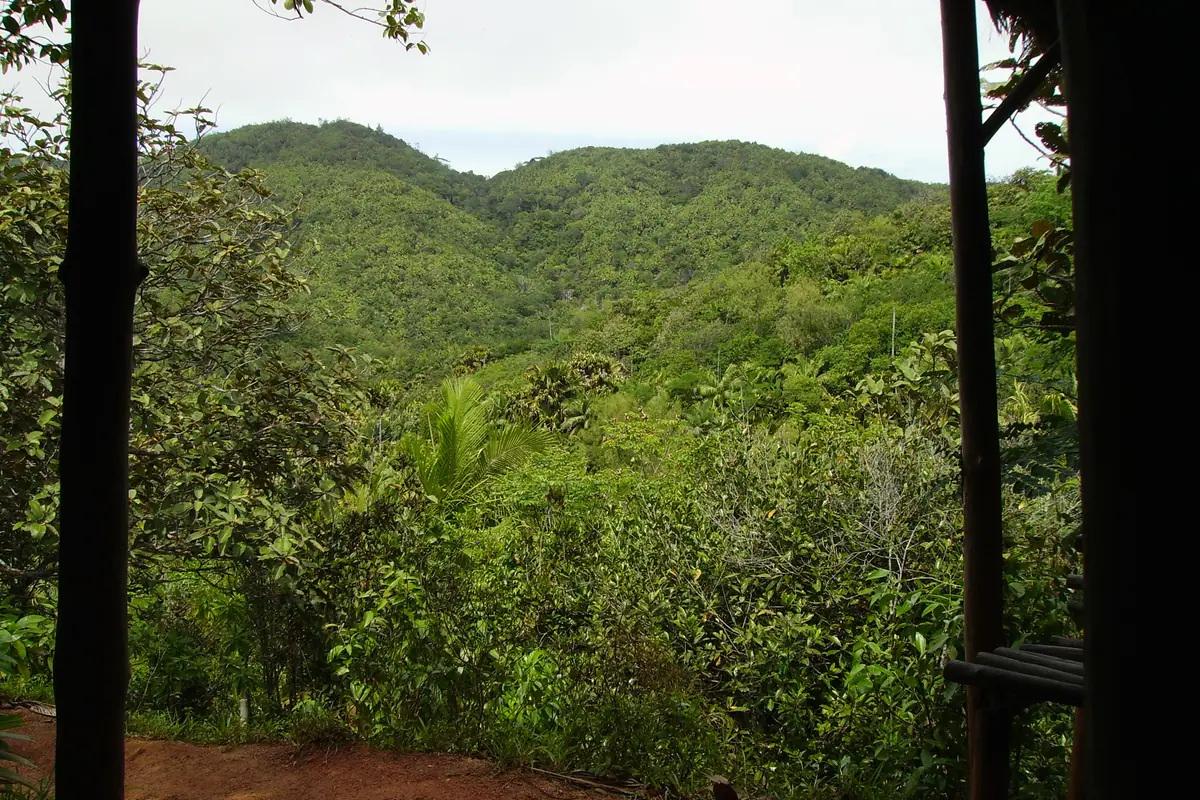
Behind all of this rises Morne Seychellois National Park, which covers about a fifth of the island and peaks at roughly 905 metres. Misty trails lead through endemic palms to viewpoints over the coast, and the old Mission Lodge terrace offers one of the finest panoramas in the country. Hotels on Mahé's higher slopes trade beach access for breeze and birdlife — a trade worth making in the humid months.
Praslin: Anse Lazio, Anse Georgette and the Vallée de Mai
Praslin's headline act is the Vallée de Mai, a UNESCO World Heritage palm forest where the coco de mer grows wild. Its seeds are the largest of any plant on earth, and the trees' fan-shaped fronds filter a green, cathedral-like light. Go early, walk the loop in about an hour, and keep an eye out for the Seychelles black parrot, found nowhere else. Hotels cluster along the Côte d'Or strip nearby, close enough to walk to dinner.
Then there is Anse Lazio, on the northwest tip, with flour-soft sand, granite boulders and water that shifts from turquoise to deep blue within a few steps. It gets busy by mid-morning and parking is limited, so arrive before nine or come for late afternoon. Neighbouring Anse Georgette is prettier still in some eyes, but access runs through a golf course and generally needs a booking ahead — ask your hotel to arrange it.
Praslin makes an excellent base for day trips: boat trips to Curieuse Island to meet free-roaming Aldabra giant tortoises, snorkelling around Île Cocos and the marine park islets, and short crossings to La Digue. Accommodation skews toward boutique resorts, self-catering apartments and small garden guesthouses, with fewer large hotels than Mahé. A car or a friendly taxi driver is useful, since the island's beaches are spread around the coast.
La Digue: Anse Source d'Argent and the Car-Free Life
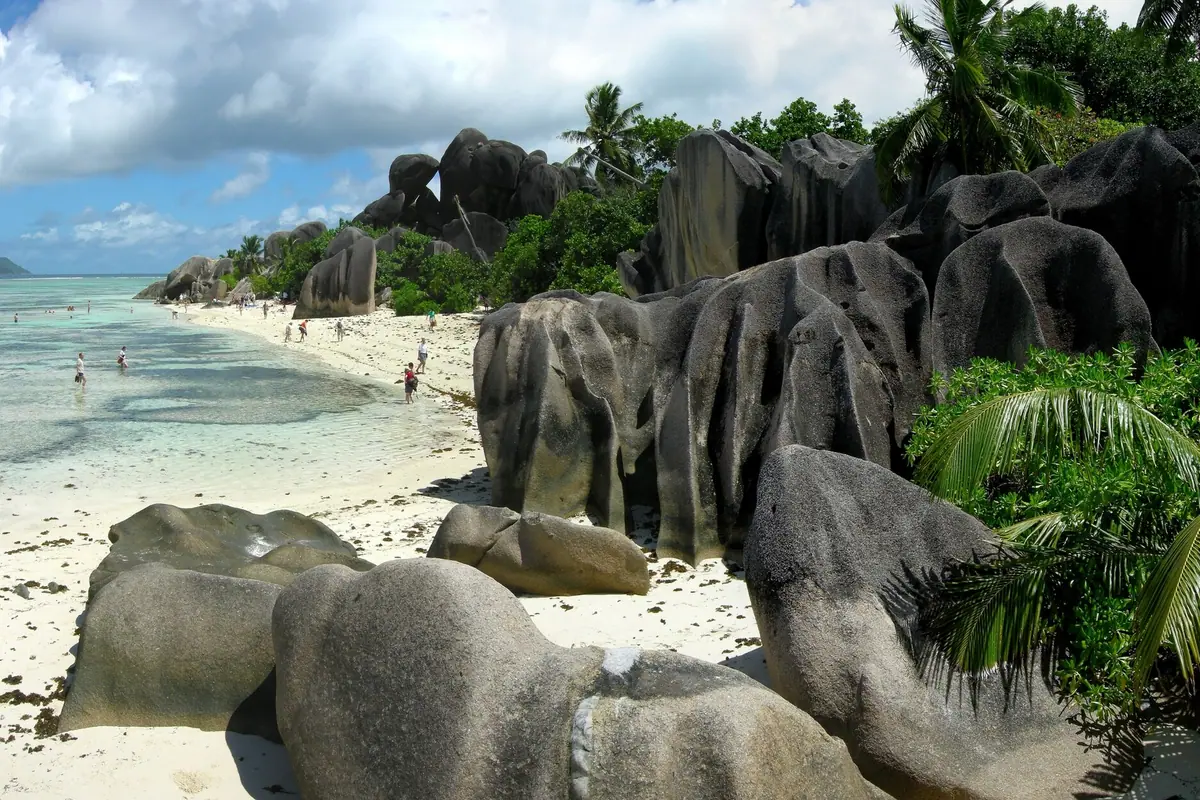
La Digue does one thing better than anywhere else in the archipelago: the classic Seychelles postcard. Anse Source d'Argent is a mile of pale sand framed by sculpted granite boulders, shallow, bathtub-warm water and coconut palms leaning at impossible angles. It sits inside the old L'Union Estate, where you pay a small entry fee and pass a vanilla plantation and an ox-cart track on the way in. Come at low tide for the widest sand and the best reflections.
Beyond it, the island's east-coast villages of La Passe and Anse Réunion hold most of the guesthouses, while the wilder southern beaches — Grand Anse, Petite Anse and Anse Cocos — demand a sweaty hike or a mountain-bike ride and reward you with surf, solitude and no facilities at all. Carry water. The Veuve Reserve, a small patch of forest in the middle of the island, is the place to spot the rare Seychelles paradise flycatcher.
Bicycles are the main transport, which keeps the pace gentle and the air quiet. Stay in a family-run guesthouse or a small self-catering cottage, eat Creole curry and grilled fish at a roadside table, and accept that La Digue is about slow days rather than sightseeing checklists. Two or three nights is plenty for most travellers, though honeymooners regularly wish they had booked longer.
Outer Islands and Private-Island Stays
A handful of Seychelles hotels occupy their own islands, and for many visitors this is the whole point of the trip. Silhouette, a granitic island northwest of Mahé, is wrapped in dense forest and ringed by dive sites; Frégate and North lie further out with a single property apiece; Sainte Anne Marine National Park sits almost within sight of Victoria's harbour. Rates are high, transfers are by boat or helicopter, and the reward is silence, privacy and house reefs you can snorkel from the sand.
The outer coralline islands are a different world again. Bird Island, reached by light aircraft, hosts enormous colonies of sooty terns between roughly May and October and is one of the few places where you can watch green and hawksbill turtles nesting on the beach. Desroches and Alphonse offer flat, palm-shaded atolls with superb flats fishing and diving. These stays are for travellers who value wildlife and emptiness over nightlife.
Book private-island properties far ahead, especially for the peak months of July, August, December and January, and check what is included — many bundle all meals and some activities, which changes the maths considerably compared with a beach hotel on Mahé. If a full island is out of budget, a two- or three-night splurge in the middle of a longer island-hopping trip is a good compromise.
When to Go, Getting Between Islands and Booking Sense
Seychelles is warm year-round, typically 24–31°C, but the trade winds shape your holiday. May to September brings the southeast trades: drier, breezier, slightly cooler, with seaweed and choppier water on some east-facing beaches. November to March is the northwest monsoon — hotter, more humid, heavier rain showers, but calm seas. The sweet spots are April–May and October–November, when the wind drops, the water flattens and underwater visibility is at its best for diving and snorkelling.
Inter-island ferries link Mahé, Praslin and La Digue several times daily; the Mahé–Praslin crossing takes about an hour and Praslin–La Digue around fifteen minutes. Small scheduled flights cover Mahé to Praslin in roughly twenty minutes and suit travellers prone to seasickness. Book ferry seats in advance around public holidays and in high season, and keep luggage light — some crossings get bouncy in the trade-wind months.
A few practical notes when choosing a hotel: confirm whether the beach in front is genuinely swimmable (some are beautiful but rocky or rough), check how far you are from restaurants if you are not on a full-board plan, and ask about airport or jetty transfers before you arrive. Driving on Mahé and Praslin is on the left; a rental car is inexpensive and transformative if you want to chase quiet beaches. Carry small notes in Seychellois rupees for entry fees at estates and nature reserves, and buy reef-safe sunscreen — the reefs that make these islands famous are fragile.
Frequently asked questions
Which island should I stay on for a first trip to Seychelles?
Start with four or five nights on Mahé for convenience, beaches like Beau Vallon and Anse Intendance, and easy access to Victoria's market and the trails of Morne Seychellois National Park. Add three nights on Praslin for the Vallée de Mai and Anse Lazio, or on La Digue for Anse Source d'Argent. Splitting your stay shows you both the practical and the postcard sides of the country.
What is the best time of year to book a Seychelles hotel?
April–May and October–November offer the calmest seas and clearest diving conditions. July, August, December and January are the busiest and priciest periods, so reserve six months or more ahead if you want a specific property. May to September is drier and breezier, while November to March is hotter and more humid with short, heavy showers.
How do I travel between Mahé, Praslin and La Digue?
Regular ferries connect all three islands, taking about an hour from Mahé to Praslin and around fifteen minutes from Praslin to La Digue. Small scheduled flights cover Mahé to Praslin in about twenty minutes. Book ferry seats ahead in high season, travel with light luggage, and allow buffer time if you have an onward international flight.
Are private-island stays in Seychelles worth the cost?
They are if you want solitude, house-reef snorkelling and wildlife on your doorstep — properties on islands such as Silhouette, Frégate and Desroches or Bird Island deliver all three. Many include meals and some activities, which offsets part of the price. If the budget is tight, book two or three nights as a finale to a longer island-hopping itinerary.
What should I check before booking a beach hotel in Seychelles?
Confirm that the beach in front is safe and comfortable for swimming, since some bays are rocky or exposed to swell. Check the distance to restaurants if you are not on full board, ask about jetty and airport transfers, and note that some entry fees at estates and reserves are paid in cash in Seychellois rupees. On La Digue, expect bicycles rather than rental cars as your main transport.
Plan it — hotels in Seychelles
Live search, booked directly with trusted providers.
Sort the rest of your trip
Everything for Seychelles, in one place
Transfer in Seychelles
Private driver waiting on arrival — no queues, no surprises.
Book a transfer
Things to do in Seychelles
Skip-the-line tickets, guided tours and standout experiences.
See experiences
Stay online in Seychelles
Travel eSIM — data the moment you land, no roaming bills.
Get an eSIMMore guides in Seychelles

Seychelles Island-Hopping Itinerary: One Week by Air, Ferry and Bicycle
Top Things to Do in Seychelles: Beaches, Forests and Island Landmarks

Best Time to Visit the Seychelles: Weather, Beaches and When to Book Your Hotel