Few places on earth let you swap a granite cove for a coral atoll before lunch, and the Seychelles does it with a fifteen-minute hop over water so clear the reefs show through like stained glass. This is a week built around the country's little island aircraft, threading Mahé, Praslin, La Digue and one bare coral island into a single, unhurried loop.
Why the Seychelles Is Made for Flying Between Islands
The archipelago's 115 islands fall into two distinct worlds. The inner islands — Mahé, Praslin, Silhouette, La Digue — are granite, mountainous and green, clustered within a short flight of one another. The outer islands are low, coralline and remote, beginning a few hundred kilometres to the southwest, and for most of them a small plane is the only practical way in.
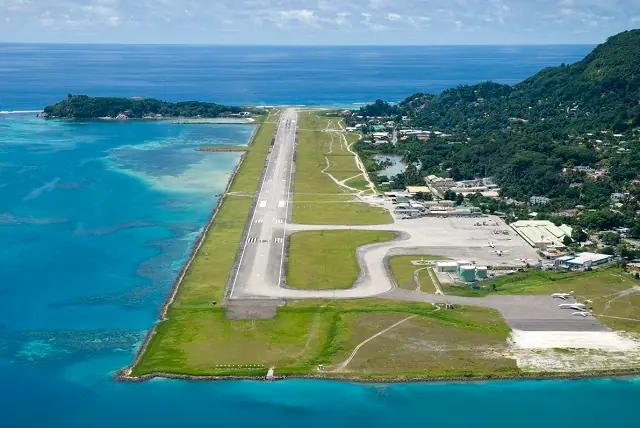
Domestic departures leave from a modest terminal beside the international airport at Pointe Larue on Mahé, with the only other scheduled inner-island strip at Amitié on Praslin. The hop takes about fifteen minutes — barely enough time to see the reef edge slide beneath the wing — and light aircraft carry only a dozen or so passengers, so seats sell out fast around the December–January and July–August peaks.
There is a helicopter shuttle for travellers who want to reach La Digue or Silhouette directly, since neither has an airstrip, but the fixed-wing network is the workhorse. Book domestic legs as soon as your long-haul flights are confirmed, and keep the first and last nights on Mahé so a delayed connection never costs you a beach day.
Days 1–2: Mahé — Victoria, Beau Vallon and the Wild South
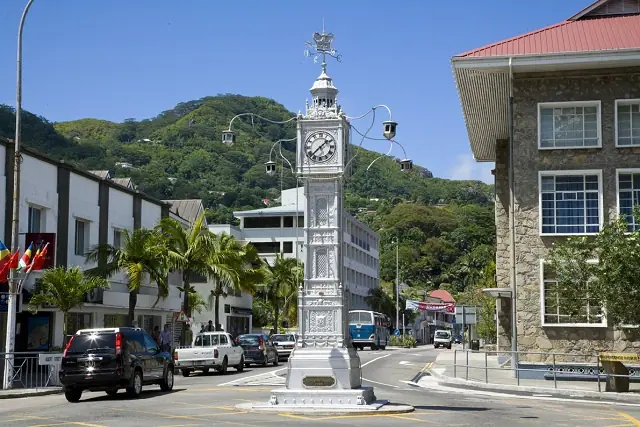
Start in Victoria, one of the smallest capitals on the planet and still the archipelago's beating heart. The Sir Selwyn Selwyn-Clarke Market fills with tuna, breadfruit and cinnamon bark before the heat sets in, the silver clock tower marks the centre, and the brightly painted Sri Navasakthi Vinayagar temple sits a few steps away. Above town, the National Botanical Garden offers a gentle introduction to the coco de mer and the islands' endemic palms.
Then work your way around the coast. Beau Vallon, on the northwest, is the island's longest and calmest swimming beach, with a lively Wednesday evening bazaar of grilled fish and Creole music. The south is wilder: Anse Intendance takes a heavy swell and has no protecting reef, Anse Takamaka and Anse Royale are softer and family-friendly, and Anse Soleil and Baie Lazare deliver classic granite-boulder sunsets.
Spend your second day on foot in Morne Seychellois National Park. The Copolia Trail climbs through mist forest to a polished granite plateau with views across Victoria, the airport and the Sainte Anne islands, and takes roughly two hours return. The Anse Major Trail, further west, finishes at a cove you can only reach by boat or boot, while the old Mission Lodge at Venn's Town gives a cooler, higher panorama over the coast.
Day 3: The Fifteen-Minute Hop to Praslin
Fly to Praslin in the morning; it is the second-largest island and the launchpad for the country's most famous forest. The airstrip at Amitié sits near Grand Anse, ten minutes from the villages of Baie Sainte Anne and Côte d'Or, where most guesthouses and small hotels cluster along a sheltered strip of water good for swimming and snorkelling.
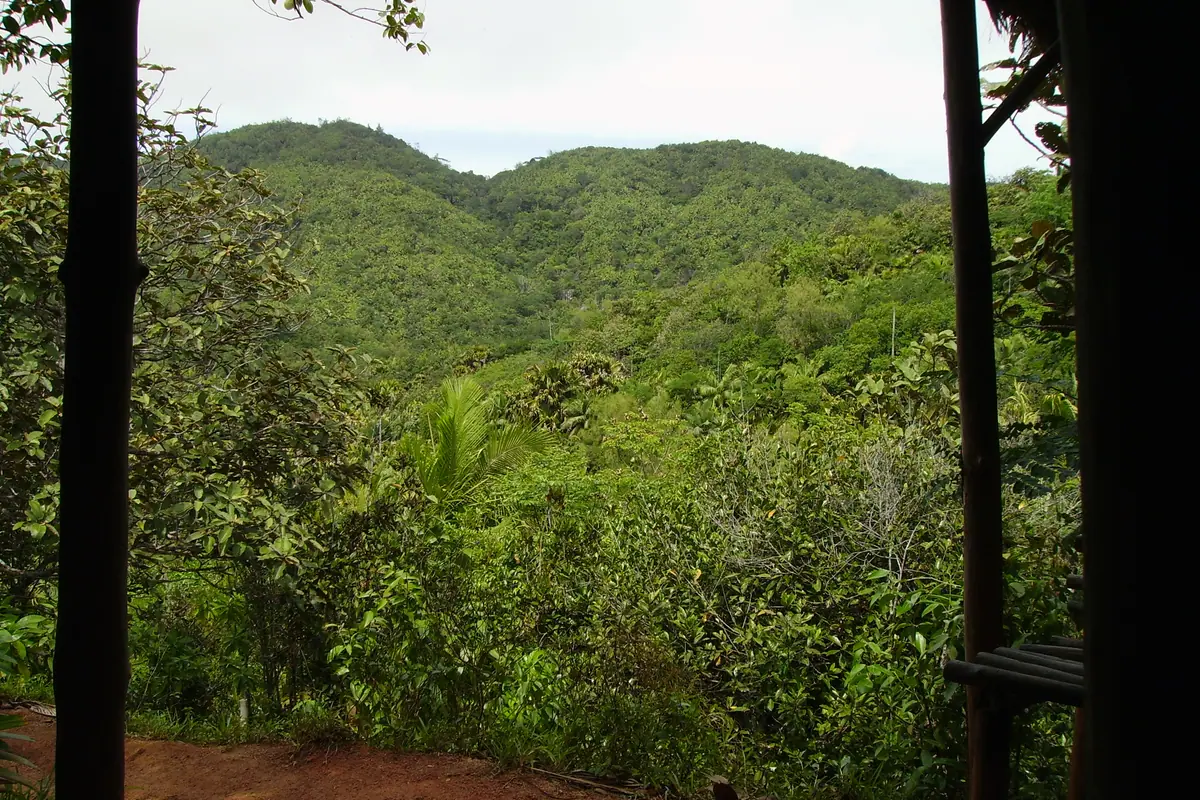
The Vallée de Mai is the reason many travellers come. This UNESCO-listed palm forest is the stronghold of the coco de mer, whose fruit is the largest seed in the plant kingdom, and the shadowed paths wind between trees that look older than the idea of trees. The rare Seychelles black parrot lives here too; go early, when the light filters low and the humidity is kind.
In the afternoon, head north to Anse Lazio, a curve of white sand framed by dark granite and arguably the most photogenic beach on the island — swim at the sheltered ends rather than the middle, where the current can pull. Anse Georgette, reached through the golf course by prior arrangement, is quieter still. If you have a spare day, boat trips run to Curieuse for its giant tortoises and mangrove boardwalk, to Cousin for its protected seabird colony, and to Aride's cliffs.
Day 4: La Digue — Anse Source d'Argent and Life Without Cars
La Digue has no airstrip, so you reach it the pleasant way: a fifteen-minute ferry from Praslin's Baie Sainte Anne jetty, watching the island's granite peaks rise out of the sea. Once ashore at La Passe, transport means bicycles and ox-carts. Hire a bike for the day and the whole island opens up in a way no car ever allows.
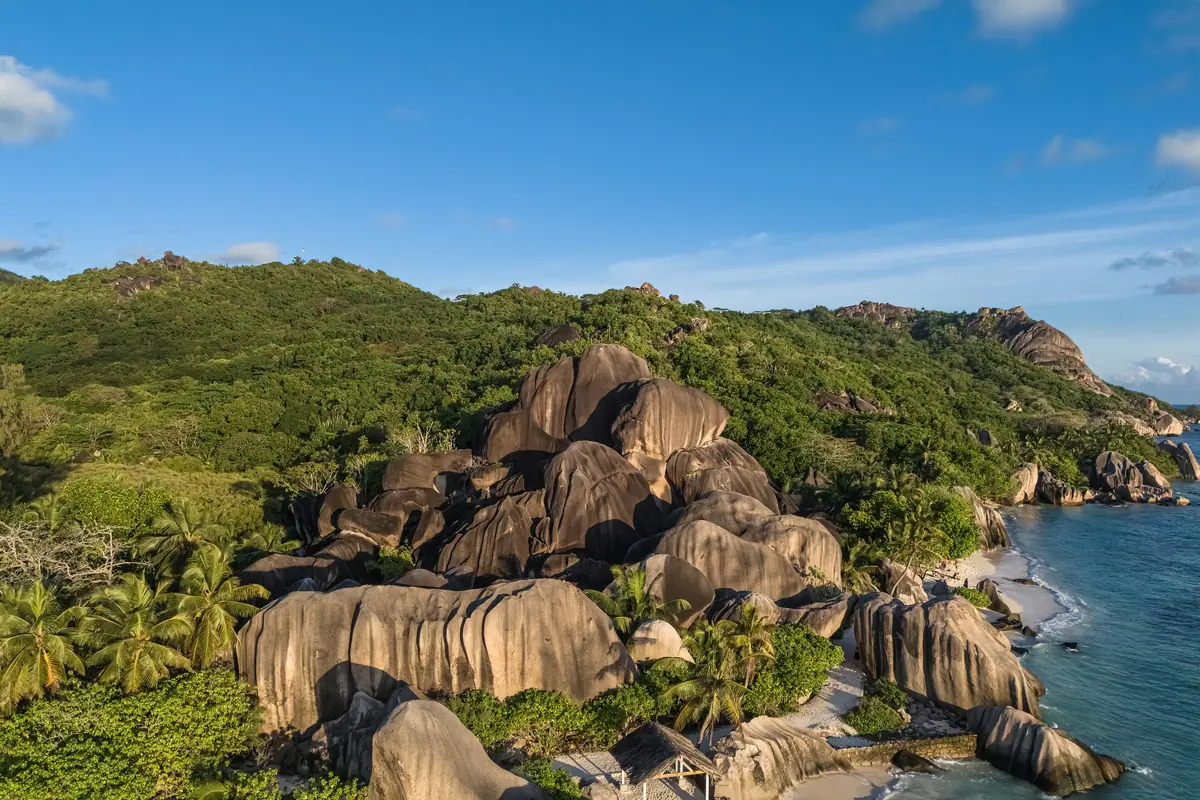
Anse Source d'Argent, inside the old L'Union Estate, is the beach you have seen without knowing its name: shallow, milky-turquoise water threaded between sculpted granite boulders, with coconut palms leaning overhead. Arrive before nine or after four for soft light and breathing room, and check the tide — at low water the lagoon turns into a slow, knee-deep maze.
Spend the middle of the day in the Veuve Reserve, a small patch of takamaka and badamier woodland that shelters the Seychelles black paradise flycatcher, then ride east to Grand Anse, Petite Anse and Anse Cocos, a trio of dramatic, current-swept bays that reward a look but not always a swim. The guided walk to Anse Marron, through boulders and shallow channels, is the island's best half-day adventure.
Days 5–6: Wings Over the Outer Islands
Now use the aircraft properly. Bird Island, about thirty minutes from Mahé, is a flat speck of sand and casuarina with a grass strip, no cars and a colony of sooty terns that nests in staggering numbers, roughly May to October. Esmeralda, a giant tortoise reputedly among the oldest living on earth, plods freely around the island's single small lodge.
Denis Island is another thirty-minute hop: a coconut plantation turned quiet retreat, ringed by reef, with hawksbill turtles hauling ashore to nest mainly between October and February. Further out in the Amirantes, Desroches is around thirty-five minutes away and Alphonse close to an hour, both offering bonefish flats, coral gardens and the peculiar silence of an island with one settlement. Frégate has its own strip and a long-running conservation programme for endemic birds.
Silhouette, by contrast, has no airstrip at all — it is helicopter or boat only, which keeps it blissfully undeveloped. And then there is Aldabra Atoll, more than a thousand kilometres southwest, a UNESCO-listed raised coral atoll holding the largest population of giant tortoises anywhere on earth. No scheduled flights go there; access is by expedition ship with a permit, so treat it as a dream for another trip rather than a day out.
Day 7: Back to Mahé — Seasons, Timings and Packing
Fly back to Mahé with the morning aircraft and keep the day loose. If your international departure is in the evening, there is time for a last swim at Anse Soleil or Port Launay, or a stop at the craft village at Domaine de Val des Prés for vanilla, cinnamon and locally distilled rum. Allow two to three hours at the international terminal, and never schedule a same-day domestic connection with less than three hours between them.
Timing your trip matters more here than in most destinations. The northwest monsoon, from November to March, brings heat, humidity and short heavy showers but generally calm seas and good visibility underwater. The southeast trades, from May to September, are cooler and drier but breezier, rougher on the water and prone to seaweed on east-facing beaches such as Anse Royale and La Digue's Grand Anse. The sweet spots for glassy water and clear snorkelling are April, May, October and November.
Pack for light aircraft: soft-sided bags, generally capped at 15–20 kilograms per person, with anything extra stored at Mahé. Bring reef-safe sunscreen, cash in Seychellois rupees for market stalls and small guesthouses, and shoes you can wear into the sea, since many beaches drop straight onto coral. English, French and Seychellois Creole are all widely spoken, and the water stays between 26°C and 30°C year-round.
Frequently asked questions
Do I have to fly between the Seychelles islands, or can I take ferries?
Both work. Mahé to Praslin has a fast ferry taking around an hour, and Praslin to La Digue is a fifteen-minute crossing. Flying is quicker, far smoother in choppy conditions, and it is the only realistic way to reach Bird, Denis, Desroches, Alphonse and Frégate, since those outer islands have no ferry service.
How long are the inter-island flights, and how early should I check in?
Mahé to Praslin is about fifteen minutes, Mahé to Denis and Bird roughly thirty minutes, Desroches around thirty-five to forty minutes, and Alphonse close to an hour. Because these are small aircraft with limited space, plan to check in sixty to ninety minutes before departure.
What is the baggage allowance on the small island planes?
Expect a total allowance of roughly 15–20 kilograms per person in soft-sided bags, plus a small personal item. Hard cases are awkward to load and excess luggage is usually stored at the Mahé terminal for collection on your return. Confirm the exact limit when you book, as it varies by aircraft.
When is the best time of year to visit the Seychelles?
April, May, October and November offer the calmest seas, clearest water and lightest winds. November to March is hotter and more humid with passing downpours, while May to September brings cooler, breezier conditions and rougher water, with seaweed more likely on east-facing beaches.
Can I visit Aldabra Atoll?
Not on a scheduled flight. Aldabra lies over a thousand kilometres southwest of Mahé and is reached only by expedition ship with a permit, usually as part of a multi-day voyage. Visits are tightly controlled to protect the atoll's giant tortoises and seabird colonies, so plan it as a separate, specialist trip.
Plan it — flights in Seychelles
Live search, booked directly with trusted providers.
Sort the rest of your trip
Everything for Seychelles, in one place
Stay in Seychelles
Hotels, guesthouses and apartments — compared in one search.
Search hotels
Transfer in Seychelles
Private driver waiting on arrival — no queues, no surprises.
Book a transfer
Travel insurance
Medical cover, delays and lost baggage — sorted before you go.
Get coveredMore guides in Seychelles
Hotels in Seychelles: Where to Stay on Mahé, Praslin and La Digue
Top Things to Do in Seychelles: Beaches, Forests and Island Landmarks
Best Time to Visit the Seychelles: Weather, Beaches and When to Book Your Hotel