Senegal packs an implausible amount into seven days: a car-free island with a heavy history, a pink salt lake ringed by dunes, mangrove deltas where pelicans nest, and a green southern province that is barely an hour away by plane. This route strings together the country's essential sights — Dakar, Gorée, Lac Rose, the Saloum Delta and Casamance — using one short domestic flight to skip the longest, dustiest road.
Landing in Senegal: Blaise Diagne Airport and a First Night in Dakar
Most long-haul flights into Senegal land at Blaise Diagne International Airport, a modern terminal set among baobabs near the village of Diass, roughly 45 to 50 kilometres southeast of central Dakar. The transfer into the city takes 45 minutes to well over an hour depending on traffic on the toll autoroute, and European arrivals often touch down late in the evening. Sleep close to where you land: Ngor and the Almadies peninsula give you ocean air and quick access to the airport road, while the Plateau puts you in the middle of the historic city.
Sort the practicalities on the first evening rather than the first morning — a local SIM card, a modest amount of cash, and a transfer arranged before you fly, because taxi fares quoted at the exit are not the fares locals pay. Then find the water. The Corniche runs along the western edge of the city, and watching the sun drop behind the Atlantic with fishing pirogues bobbing offshore is the best possible introduction to Senegal.
One booking deserves to be made before you leave home: the domestic flight south to Casamance. Seats on the small aircraft linking Dakar with Cap Skirring, and seasonally with Ziguinchor, are limited, schedules shift through the year, and this leg is the one most likely to fill during the dry months from November to April.
Days 1–2: Dakar's Plateau, the Museum of Black Civilisations and Gorée Island
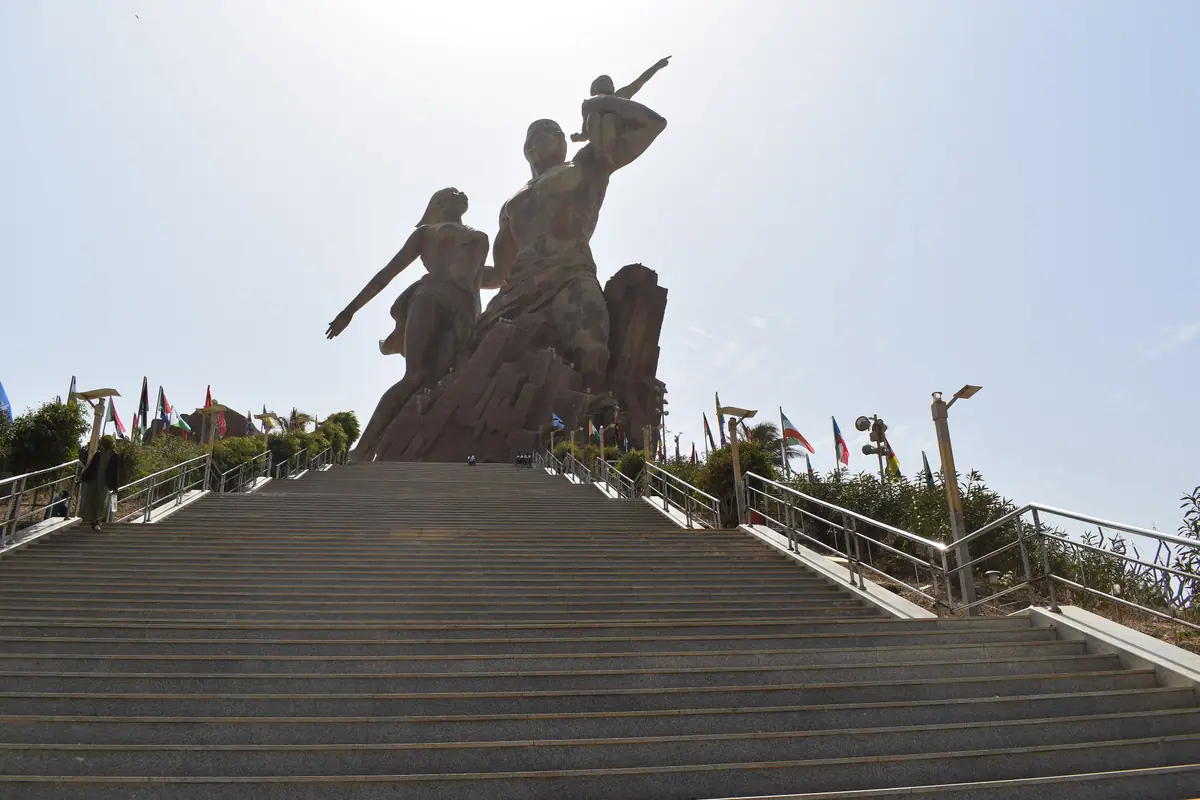
Give Dakar two days and start in the Plateau, the peninsula's old colonial grid. The Palais Présidentiel faces Place de l'Indépendance; a few blocks away, Marché Kermel sells flowers, spices and fabric under a cast-iron hall, while the sprawling, chaotic Marché Sandaga is where you go for wax prints and noise. The Musée Théodore Monod d'Art Africain holds one of West Africa's finest collections of masks, drums and textiles, and the Museum of Black Civilisations — a striking circular building near the port — traces African art and history across the continent and its diaspora. Finish on the Mamelles hill at the African Renaissance Monument, a 52-metre bronze figure you can climb from the inside for the best panorama over the city and the sea.
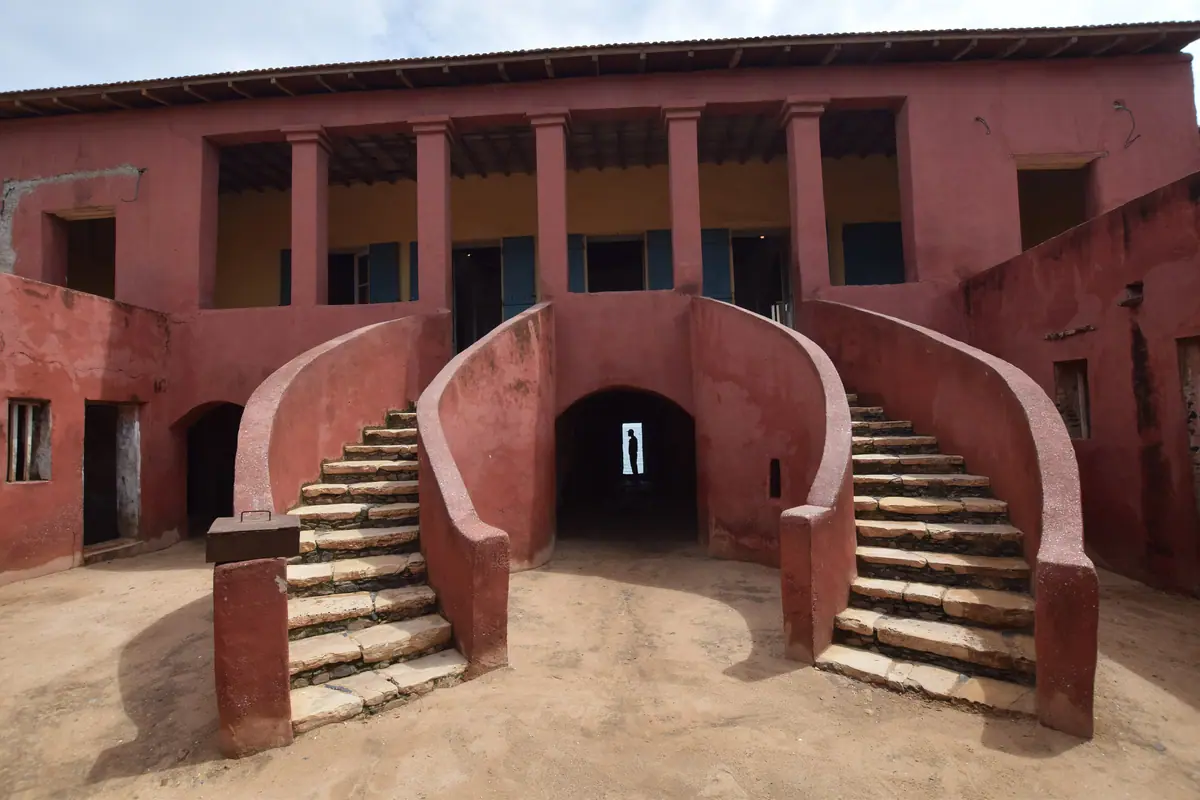
Day two belongs to Gorée. Ferries leave the port several times a day for the 20-minute crossing, and the island is car-free and walkable end to end in an hour. The Maison des Esclaves and its Door of No Return are why most people come, but Gorée rewards lingering: pastel colonial houses, bougainvillea, cobbled lanes, small beaches, artists' studios and a hilltop fort looking back towards Dakar. Take an early ferry, walk up before the crowds arrive, and eat grilled fish on the waterfront before the afternoon sailing.
Eat what Senegal actually eats: thieboudienne, the national dish of fish and rice cooked in tomato, yassa chicken with onion and lemon, and grilled sole straight off the boats at Yoff. Then take a pirogue from Ngor beach across to Île de Ngor for a swim, or stay on the mainland and watch the surfers working the Yoff breaks.
Day 3: Lac Rose, Bandia Reserve and the Shell Island of Joal-Fadiouth
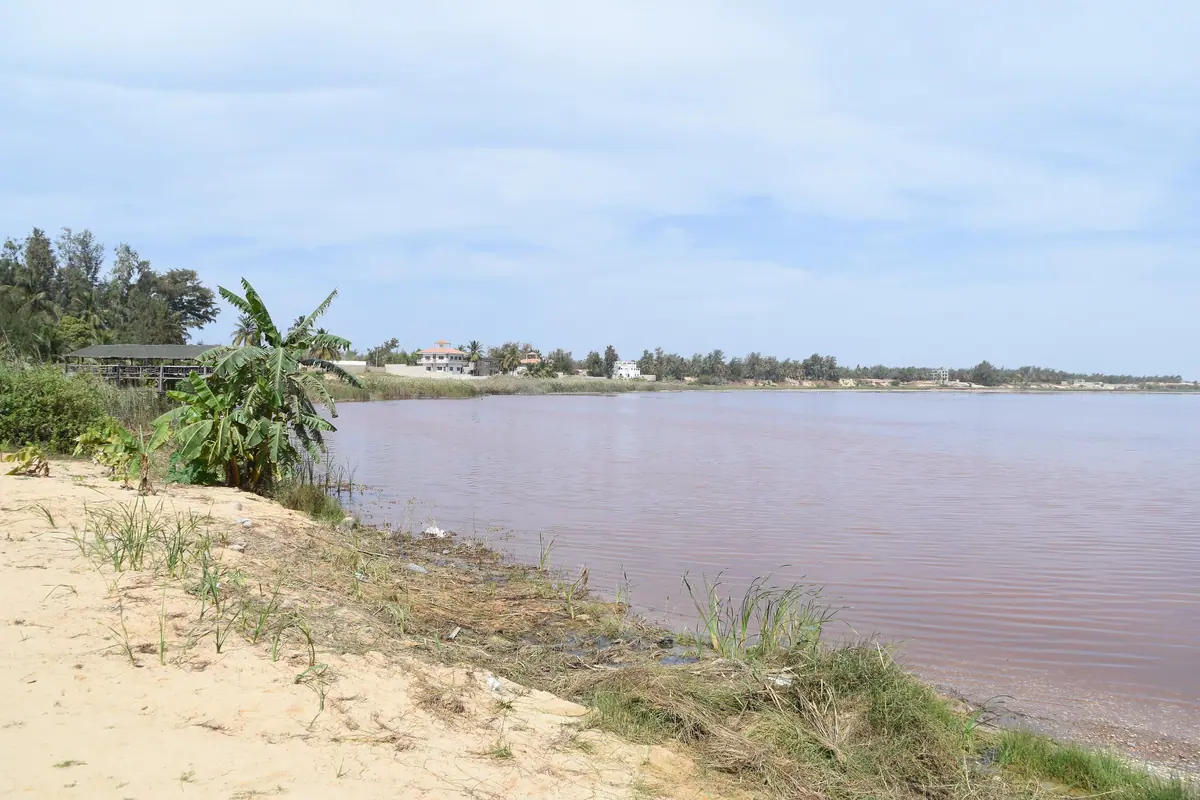
Head out of Dakar on the autoroute for Lac Retba, better known as Lac Rose, about 35 kilometres away. Salt-loving algae turn the water from mauve to bubblegum pink depending on the light, harvesters pole their pirogues across it with their skin coated in shea butter against the brine, and the dunes behind the lake are laced with tracks for quad and 4x4 excursions. The colour is strongest in the dry months, and morning is the best time to see and photograph it.
Loop south to Bandia Reserve near Sindia, where baobab and acacia bush shelters giraffe, white rhino, zebra, ostrich, buffalo and several kinds of antelope. A two- to three-hour drive in an open 4x4 gets you surprisingly close, and it breaks the long haul south neatly. On the road beyond, look for baobabs and roadside vendors selling cashews and mangoes.
Continue to Joal-Fadiouth, birthplace of Senegal's poet-president Léopold Sédar Senghor. Joal is a working fishing town; Fadiouth, its twin, sits across a long wooden footbridge and is built almost entirely on mounds of shell — shell paths, shell walls, granaries on stilts and a cemetery shared by Christians and Muslims. Reaching Ndangane or Saly by sunset takes roughly three hours of driving from Dakar, so start early.
Days 4–5: The Saloum Delta by Pirogue
The Sine-Saloum Delta is a labyrinth of mangrove creeks, sandbanks and shell islands where a river system meets the Atlantic. It is one of West Africa's great birdwatching areas: flamingos, pelicans, herons, egrets, terns, kingfishers and ospreys all feed in the shallows, and the hour after dawn is the finest of the day.
Base yourself in Ndangane, a fishing village with a jetty full of pirogues, or further south in Toubakouta. Boat trips of two to four hours can be arranged on the spot — a run to Île aux Coquillages, an island built up from shell, past salt flats and oyster racks, or a sunset cruise among the mangroves. Mar Lodj, Mar Fafako and Palmarin all make rewarding stops, and the Serer and Wolof villages along the delta are known for cast-net fishing, oyster gathering and salt.
Inland from Toubakouta, Fathala Reserve protects a pocket of forest where giraffe, rhino, buffalo and antelope can be seen on a two-hour game drive. Give the delta two nights if you can; simple eco-lodges and campements let you sleep right on the water, with the tide slapping under your window. Bring binoculars, a hat and insect repellent.
Day 6: Flying South to Casamance — Cap Skirring and Ziguinchor
Casamance is the reason to keep a flight in your plan. The road south crosses the Gambia and can take the better part of a day or more; the small aircraft linking Dakar with Cap Skirring, and seasonally with Ziguinchor, cover it in about an hour. Seats are limited and luggage allowances are strict, so book early, reconfirm a few days before you travel, and leave slack for the return, since schedules can shift with weather and demand.
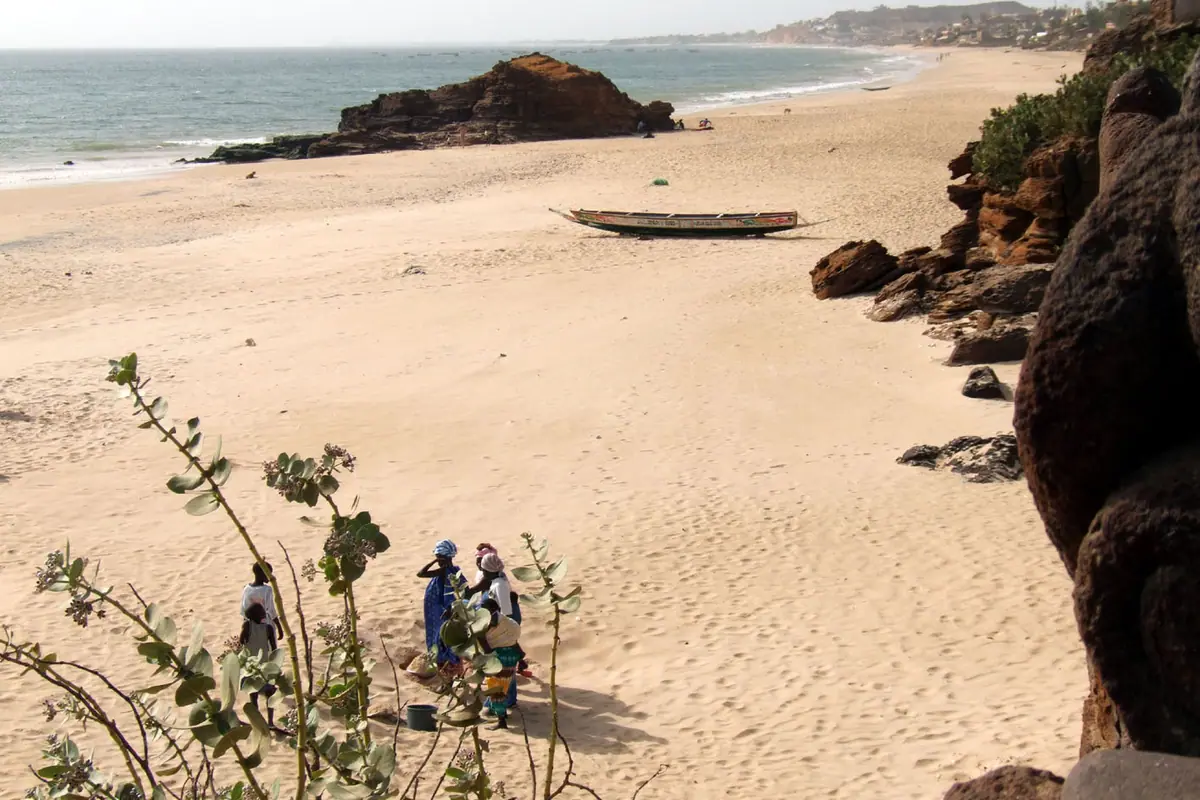
Cap Skirring is the classic base: a long arc of pale sand backed by palms, pirogues pulled up on the shore and simple beach kitchens serving grilled fish with rice. Ziguinchor, upriver, is a slow, green city of colonial-era buildings, a busy market and a riverfront where boats leave for the islands. From there, Île de Karabane at the mouth of the Casamance River — a former trading post with a weathered church, sandy lanes and empty beaches — is worth a day, reached by boat in about an hour.
If you would rather not fly, trade Casamance for the north and drive to Saint-Louis, four to five hours from Dakar. The Faidherbe Bridge links the mainland to the island city, whose crumbling colonial grid, Guet Ndar fishing quarter and Langue de Barbarie peninsula make it the most atmospheric town in the country. Add the Djoudj National Bird Sanctuary, a wetland thronged with pelicans and flamingos, and a night under canvas in the ochre dunes of the Lompoul desert.
Day 7: Dindefelo Falls, Bassari Country and the Flight Home
With a last day in the south, either stay on the coast or push inland. Dindefelo Falls, tumbling off the Fouta Djallon escarpment near Kedougou, is the region's great natural spectacle, and the surrounding Bassari Country — terraced hills and villages such as Iwol perched on a ridge — is among the most beautiful landscapes in Senegal. Be realistic about distances: roads are rough, journeys are slow, and an overnight in Kedougou is usually part of the deal.
The gentler option is a morning swim at Cap Skirring, a long lunch, then the short flight back to Dakar. However you plan it, leave a generous buffer between the domestic hop and your international departure — they use the same airport complex, but domestic timings do move.
Timing matters more than almost anything else here. November to May is dry, bright and hot, with December to February bringing cooler evenings and a hazy harmattan dust that softens the light. June to October is the rainy season: humid, green and dramatic, with the heaviest downpours in Casamance between July and September, when roads flood and some camps close. Mosquitoes are around year-round near water, so bring repellent and take advice on antimalarials if you are heading to the delta or the south. A yellow fever certificate is commonly requested on arrival, and bottled water is the sensible default everywhere.
Frequently asked questions
How many days do you need in Senegal?
A week is enough for Dakar, Gorée Island, Lac Rose, Bandia and the Saloum Delta, with a domestic flight to Casamance squeezed in, but it is tight. Two weeks lets you add Saint-Louis and the Djoudj wetlands in the north, the Lompoul dunes, and Niokolo-Koba or the Bassari Country in the southeast without spending every day in a car.
Is it worth flying between Dakar and Casamance?
Yes, if your time is limited. The flight takes around an hour against ten or more by road, including a border crossing through the Gambia. The trade-offs are limited seats, strict luggage allowances and schedules that change with the season, so book well ahead and reconfirm shortly before departure.
What is the best time of year to visit Senegal?
November to May, when the country is dry and the light is clear; December to February is the most comfortable stretch. June to October is hot, humid and green, with the heaviest rain in Casamance from July to September. Birdwatchers do well in the wet season, when the Saloum Delta and the Djoudj are at their liveliest.
Do I need a visa or vaccinations for Senegal?
Entry rules depend on your nationality, so check with the Senegalese embassy before you fly; many visitors from Europe and North America can enter visa-free for short stays. A yellow fever vaccination certificate is frequently requested on arrival, and antimalarial tablets are usually advised for the Saloum Delta, Casamance and the southeast. Comprehensive travel insurance is worth having if you plan to fly domestically or travel by boat.
What should I not miss if I only have three days in Senegal?
Dakar's Plateau and the African Renaissance Monument, a morning on Gorée Island, and a night in the Saloum Delta. With more time, add Lac Rose and Bandia Reserve, Saint-Louis with the Djoudj National Bird Sanctuary, and the beaches and waterfalls of Casamance.
Sort the rest of your trip
Everything for Senegal, in one place
Stay in Senegal
Hotels, guesthouses and apartments — compared in one search.
Search hotels
Transfer in Senegal
Private driver waiting on arrival — no queues, no surprises.
Book a transfer
Travel insurance
Medical cover, delays and lost baggage — sorted before you go.
Get covered