Puerto Rico is only about 100 miles long and 35 miles wide, yet it holds a walled colonial city, a tropical rainforest, a surf coast, a dry forest and two island getaways reachable by propeller plane. Choosing a hotel here is really choosing a landscape — so start with the place, then find the bed that fits it.
How Puerto Rico's Hotel Map Works: Picking Your Base
Accommodation on the island falls into a few clear categories, and each one anchors you to a different kind of trip. Old San Juan is stacked with small inns and restored colonial guesthouses set around courtyards, where thick walls, tiled floors and centuries-old doors do most of the talking. Condado and Isla Verde, a short ride east, are the high-rise beach belt: balconies over the sand, pool decks, easy taxi access. Outside the capital you find paradores — the island's countryside inns, often family-run, in mountain towns or beside quiet beaches — plus surf lodges in Rincón, historic downtown hotels in Ponce, and villas and guesthouses on Vieques and Culebra where big-brand properties simply don't exist.
Distances look small on a map and feel bigger on the road. San Juan to Ponce runs about 90 minutes on the main southern expressway; San Juan to Rincón takes two and a half hours; the drive east to Fajardo and Luquillo is roughly an hour. Vieques and Culebra sit off the east coast and are reached by 25-minute flights from the San Juan area or by ferry from Ceiba — 30 to 45 minutes to Vieques, about an hour to Culebra. Outside the San Juan metro, taxis and rideshares thin out fast, so a rental car is close to essential unless you plan to stay put on an island and rent a jeep locally.
The most satisfying approach is a split stay: three or four nights in San Juan for history, food and nightlife, then two or three nights somewhere with a slower pulse — a hillside inn near the rainforest, a surf lodge in the west, or a guesthouse on Vieques. Note that Puerto Ricans travel heavily within their own island on long weekends, around Christmas and New Year, on Three Kings Day in early January and during Easter week, so those dates tighten availability and push rates up everywhere.
San Juan: Old San Juan, Condado and Isla Verde
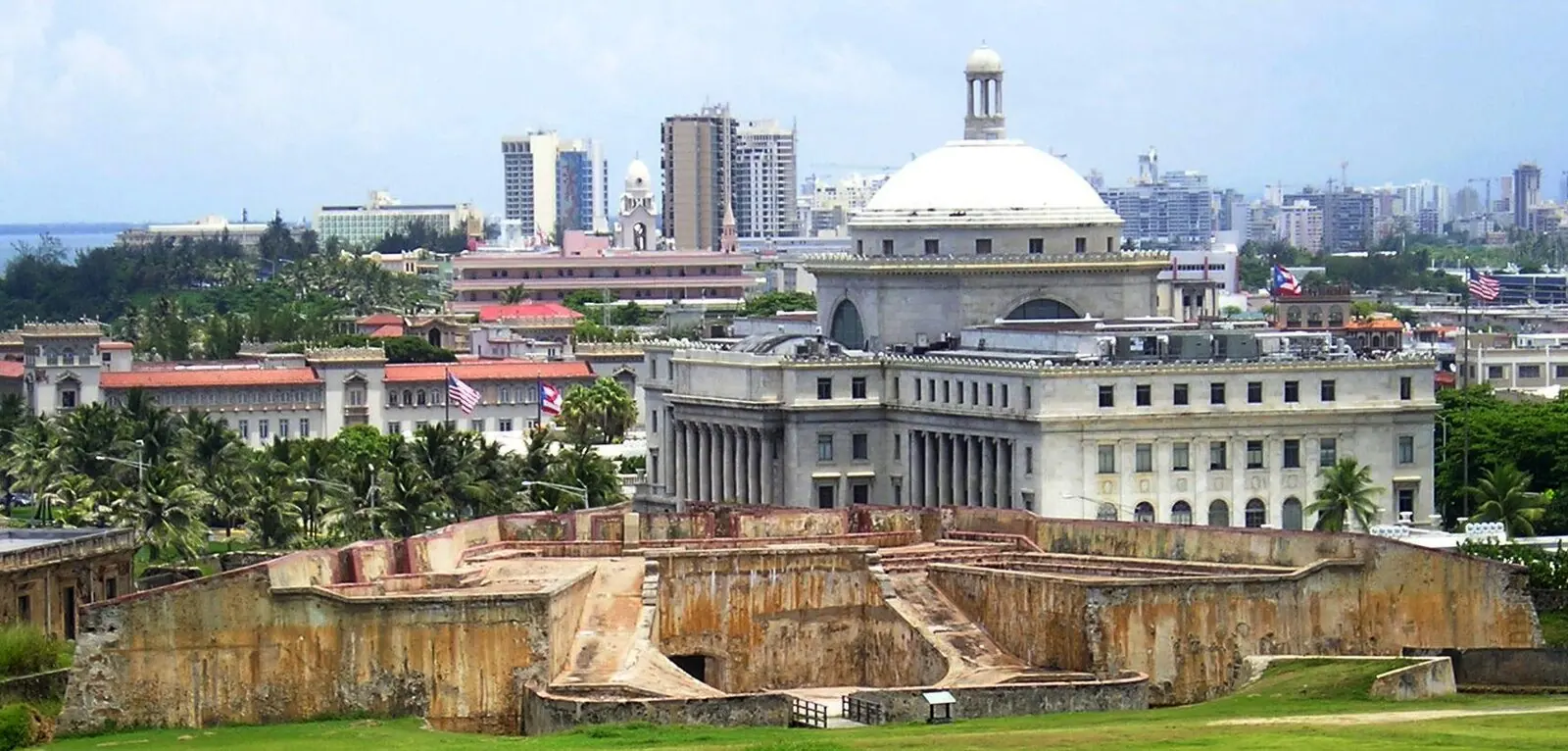
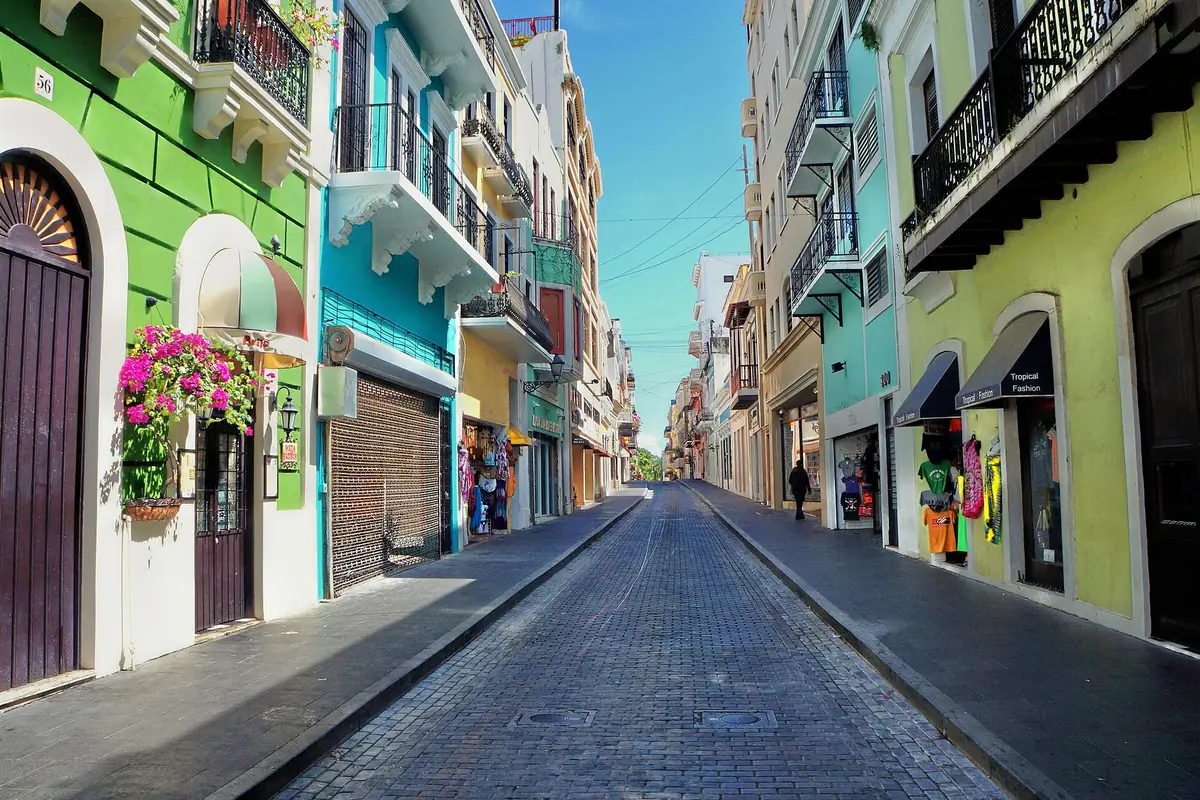
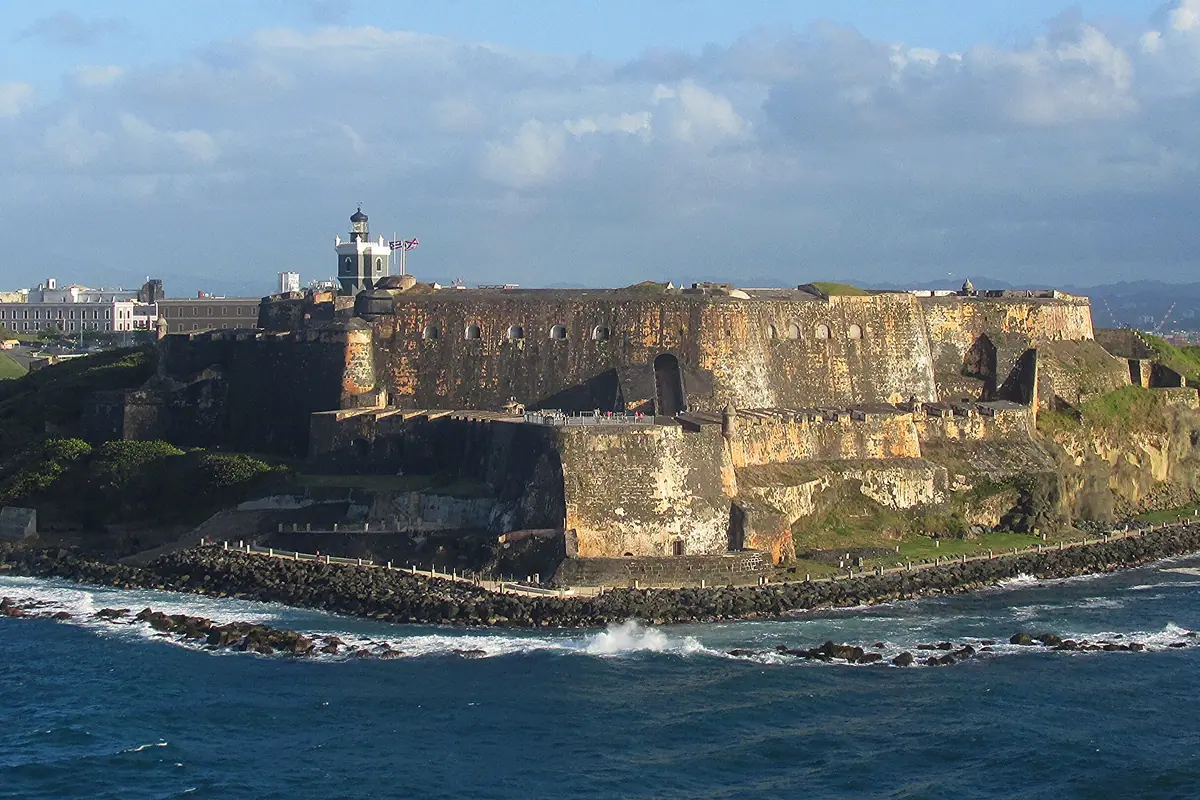
Old San Juan is the reason many people come, and staying inside its walls changes the trip entirely. The city is a grid of blue cobblestones and pastel facades behind fortifications begun in the 1500s. Walk the ramparts of Castillo San Felipe del Morro on its grassy headland above the Atlantic, then cross town to Castillo San Cristóbal, the largest Spanish fortification in the Americas. Between them you pass the San Juan Gate, the Cathedral of San Juan Bautista with its marble tomb, leafy Plaza de Armas, and the shop-lined stretch of Calle Fortaleza. One ticket covers both forts, so plan a half day for each and keep the receipt. Hotels here are boutique-scale: rooms can be small, parking is scarce and weekend noise is real, but you can walk to dinner, drinks and the waterfront at Paseo de la Princesa without touching a car.
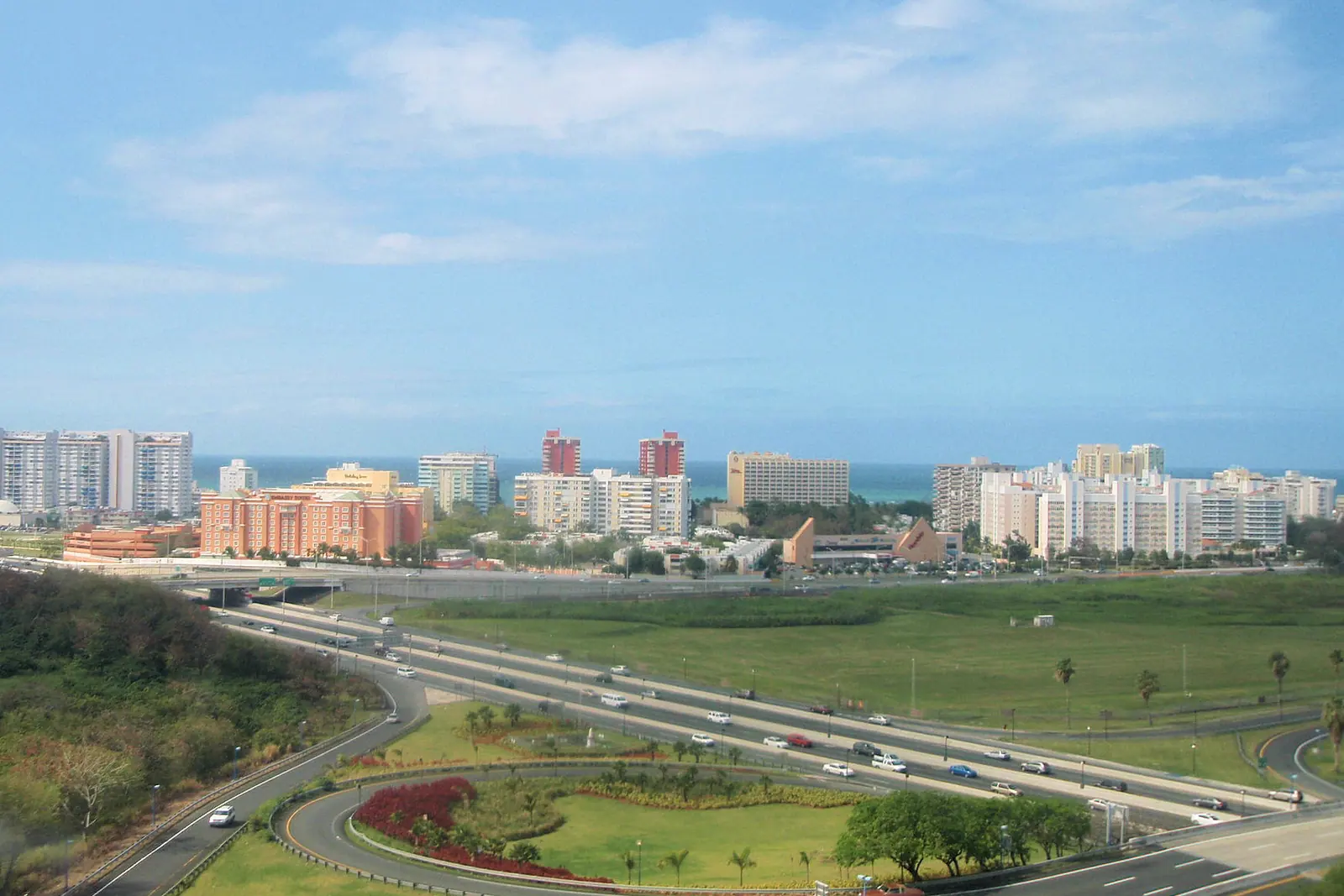
Condado and Isla Verde trade that romance for beachfront ease. Condado's Ashford Avenue runs parallel to the sand, with restaurants, cafés and the small Ventana al Mar park where locals gather at sunset; Isla Verde sits closest to the airport and has the wider, calmer-feeling beach of the two. Between them, Ocean Park is a quieter, tree-lined residential strip of guesthouses a few blocks from the water — a good middle path for travelers who want beach access without the tower blocks. For nightlife, head inland to La Placita de Santurce, a produce market square by day that turns into an open-air music party on Thursday and Friday evenings.
A few practicalities shape the choice. Parking in Old San Juan is genuinely difficult, and many small inns have none at all, so if you plan to rent a car, confirm the arrangement before booking. Along Route 187 toward Piñones you'll find a line of roadside kiosks selling bacalaítos, alcapurrias and pinchos — a classic first stop after landing, or a lazy Sunday detour. And build in an extra day: San Juan rewards wandering, and two nights rarely does it justice.
The South and West: Ponce, Cabo Rojo and Rincón
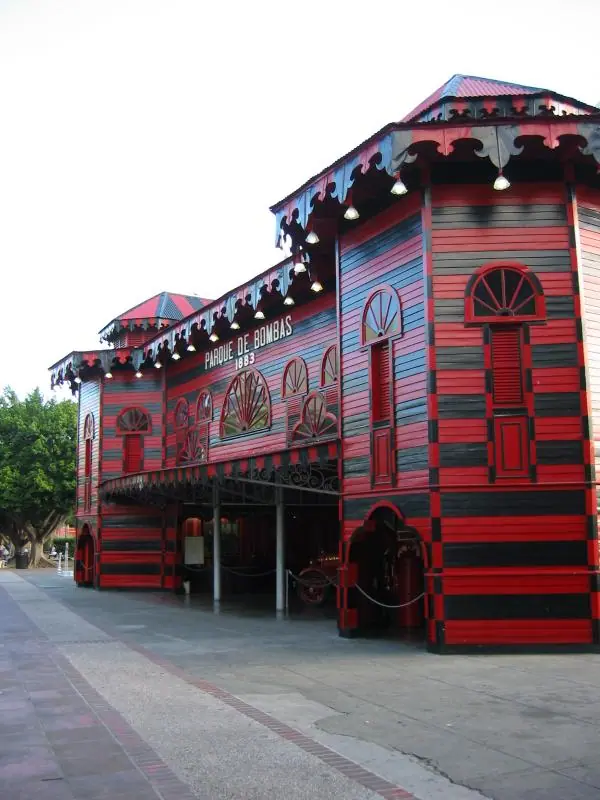
Ponce, the island's second city, sits on the drier southern coast about 90 minutes from San Juan and feels like a different island: hotter, sun-bleached, more formal. Its heart is Plaza Las Delicias, where the 1882 Parque de Bombas — a firehouse painted in bold red and black stripes — is the most photographed building in the south. Nearby stand the Cathedral of Our Lady of Guadalupe and the Museo de Arte de Ponce, whose collection of European masters surprises first-time visitors. Walk the La Guancha boardwalk at dusk for pelicans, fried snacks and a breeze off the Caribbean, and if you have time, drive out to the Tibes Indigenous Ceremonial Center or a hillside coffee estate in the mountains above town. Downtown has small historic hotels and business-style properties; the coast has a handful of beachside options.
The southwest corner is where Puerto Rico's landscapes get strange and beautiful. At Cabo Rojo, the Los Morrillos Lighthouse stands on limestone cliffs above Playa Sucia, a crescent of sand backed by salt flats that flush pink with brine shrimp. Boquería village nearby is all wooden houses, oyster stands and a low-key bar strip; La Parguera is the launch point for mangrove cays and a glowing bay where you can swim in water that lights up as you move. Further east, the Guánica dry forest protects cactus and century plants on a coast that feels nothing like the rainforest. Lodging out here is mostly guesthouses, small inns and vacation rentals — book early for winter weekends, when San Juan residents drive over.
Rincón, on the northwest tip, is the island's surf capital and its most relaxed beach town. The waves break at Domes Beach, María's and Steps Beach inside the Tres Palmas marine reserve; the surf season runs roughly November through March, when North Atlantic swells arrive, and humpback whales pass offshore from January to March, often visible from the cliffs by the Punta Higüera Lighthouse. Accommodation ranges from surf lodges and simple inns to well-appointed hillside villas, and almost everything is within a ten-minute drive of a break. Plan around sunsets — the whole town seems to stop for them — and expect the best rooms to disappear for winter weekends months in advance.
Island Escapes: Vieques and Culebra
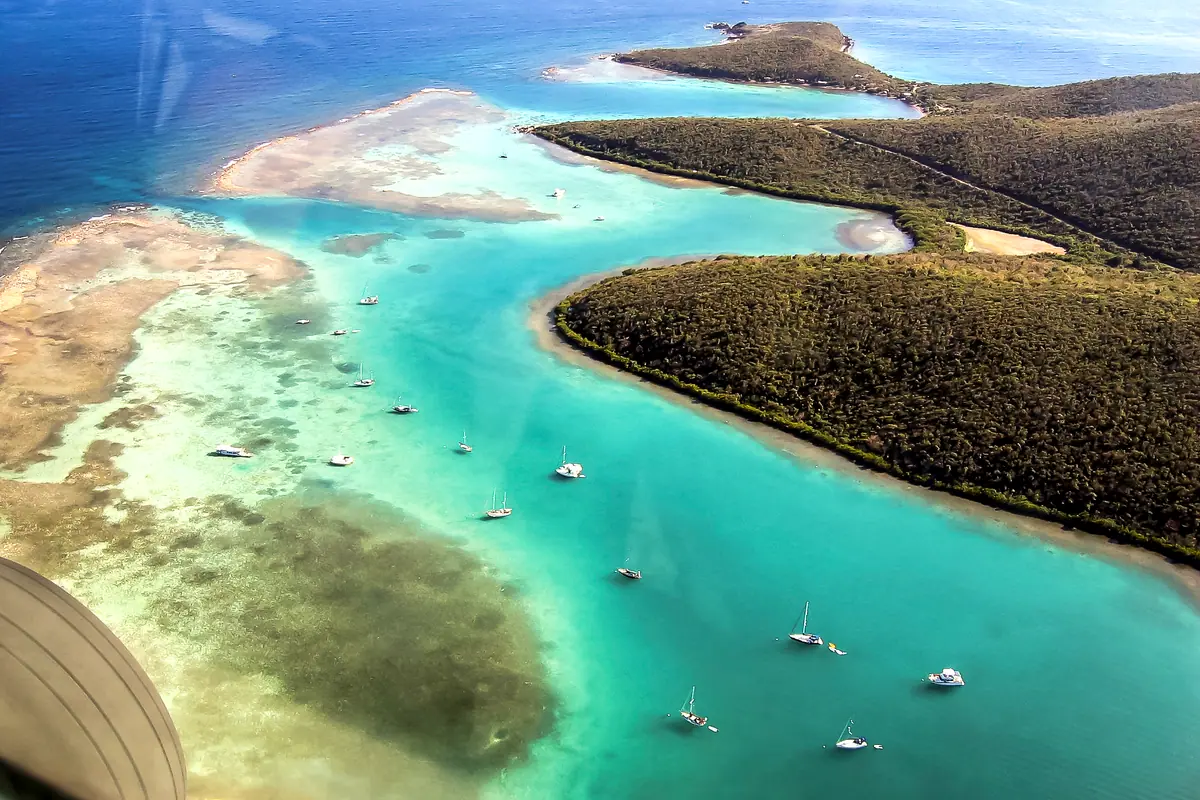
Vieques, twenty-odd miles east of the mainland, is where Puerto Ricans go to slow down. Mosquito Bay on its south shore holds one of the brightest bioluminescent bays in the world: on dark nights around the new moon, every paddle stroke sends up a bloom of blue-green light. Kayak tours run after sunset and should be booked well ahead. By day, Sun Bay offers a long, palm-backed curve of sand, the malecón at Esperanza is the island's dining strip, and the small Fortín Conde de Mirasol museum explains the island's layered history. Playa Negra's volcanic black sand is a short walk from the road and worth the detour. There are no high-rise resorts here — only guesthouses, small inns and villas — and a jeep rental is the practical way to get around, since taxis are limited and beaches are spread out.
Culebra is smaller and even more stripped back. Flamenco Beach, a horseshoe of white sand with rusting tanks left on the sand from decades past, is the postcard image of the island, and the reef just offshore makes for easy snorkeling. Take a water taxi to Culebrita for natural tide pools and an old lighthouse, or head to Tamarindo Beach to swim with green sea turtles in the protected channel. The town center, Dewey, is a few streets of cafés and dive shops. Hotel inventory is tiny — a handful of guesthouses and rentals — so book months ahead, especially from December through April and around holidays, when day-trippers fill the beaches but the beds are gone.
Getting there takes planning. Ferries from Ceiba carry foot passengers far more easily than vehicles, and vehicle spaces sell out first, so reserve early if you want to bring a car. Small aircraft flights from the San Juan area are quick but impose strict luggage weight limits. Bring cash, since ATMs are few and unreliable, and keep a flexible schedule — wind and weather occasionally disrupt ferries and flights, particularly in late summer.
The East Coast and El Yunque: Fajardo, Luquillo and Río Grande
El Yunque is the only tropical rainforest in the United States, and it sits about an hour east of San Juan. The road climbs through tree ferns and sierra palms past Yokahú Tower, a stone observation point with views to the coast, then up to Mount Britton Tower and trails toward the peak. Trails such as La Mina lead past waterfalls and swimming pools, and timed-entry reservations are often required in busy periods, so secure a slot and arrive early. It rains here more than anywhere else on the island — that's why it's a rainforest — so pack a dry bag, wear shoes with grip and expect slick footing. Stay until dusk if you can: the coquí frogs start calling as the light drops, and the forest turns into a wall of sound.
Río Grande, just below the forest, is where the island's largest beachfront resorts cluster, gated and golf-lined, with the rainforest on one side and the Atlantic on the other. Continue east to Luquillo, where the sheltered Balneario Monserrate is one of the calmest swimming beaches on the north coast, and the famous roadside kiosks serve pinchos, mofongo and cold drinks to a mix of locals and visitors. Farther on, Fajardo is the launching point for boat trips to Icacos and Palomino for day snorkeling, for the Laguna Grande bioluminescent bay, and for the trails and mangroves of the Las Cabezas de San Juan reserve. It's also where you catch ferries onward to Culebra and Vieques.
For a family or a first trip with kids, basing in Luquillo or Río Grande gives you rainforest mornings and beach afternoons without long drives. For a quieter version of the same, look at the guesthouses along the coast road between the two towns. Book rainforest entry for the earliest slot you can get, then spend the afternoon at the beach — by two o'clock the clouds usually roll in over the peaks.
When to Go, What to Expect and How to Book
The dry season runs roughly mid-December through April: steady sunshine, lower humidity and the highest rates of the year. May and November are the sweet spots for value, with warm water and only occasional showers. Hurricane season officially spans June 1 to November 30, with the statistical peak from late August through October — if you travel then, watch forecasts closely and choose a property with a clear cancellation policy, backup power and a water cistern, which many well-run hotels on the island maintain. Summer is hot and humid but wonderful for swimming, and sargassum seaweed sometimes washes onto east-facing beaches between May and October.
Practical expectations matter more here than in most destinations. The currency is the US dollar, English is widely spoken though Spanish is the everyday language, and US citizens need no passport; international visitors follow the same entry rules as for the mainland United States. Driving is on the right, tolls are electronic, and rural roads after dark are best avoided. On the north coast, rip currents are a genuine hazard — Condado and Isla Verde regularly post warnings and many beaches have no lifeguards, so read the flags and ask locally before swimming.
Booking strategy comes down to timing and fit. Reserve winter trips two to three months ahead, and three to six months ahead for Vieques and Culebra around holidays. When comparing properties, ask three questions: is there parking, is the room air-conditioned or breeze-cooled, and how far is the actual beach. A hillside villa with a view can be a fifteen-minute drive from the sand, while an Old San Juan inn may put you steps from history but nowhere near a pool. Split your stay between two bases, and you'll see far more of the island than any single hotel can show you.
Frequently asked questions
Where should a first-time visitor stay in Puerto Rico?
Start with three or four nights in San Juan — Old San Juan for atmosphere and walkability, or Condado and Isla Verde if you want a beach at the door. Then move: two or three nights in Rincón or Cabo Rojo for the west coast, in Ponce for the south, or on Vieques or Culebra if you want an island pace. Rainforest-focused trips work well based in Luquillo or Río Grande.
Do I need a rental car to get around Puerto Rico?
In San Juan you can manage with taxis and rideshares. Everywhere else, a car is close to essential, particularly for reaching beaches, mountain roads and the west coast. Vieques and Culebra are exceptions where you rent a jeep locally rather than bringing a car over on the ferry, since vehicle spaces are limited.
When is the best time to visit Puerto Rico?
Mid-December through April offers the driest, most reliable weather and the highest prices. May and November balance good conditions with lower rates. June through November is hurricane season, peaking late August to October — travel then only with flexible bookings and close attention to forecasts.
Do I need a passport to visit Puerto Rico?
US citizens do not need a passport, since Puerto Rico is a US territory and uses the US dollar. International visitors need the same documentation and entry authorization required for the mainland United States, and should check current requirements before booking.
How far in advance should I book hotels in Puerto Rico?
For winter travel, two to three months ahead is sensible. For Vieques and Culebra, or for any trip over Christmas, New Year, Three Kings Day or Easter week, aim for three to six months. Rainforest entry slots in peak season should be reserved as soon as your dates are fixed, and bioluminescent bay kayak tours on Vieques often sell out weeks ahead.
Plan it — hotels in Puerto Rico
Live search, booked directly with trusted providers.
Sort the rest of your trip
Everything for Puerto Rico, in one place
Transfer in Puerto Rico
Private driver waiting on arrival — no queues, no surprises.
Book a transfer
Things to do in Puerto Rico
Skip-the-line tickets, guided tours and standout experiences.
See experiences
Stay online in Puerto Rico
Travel eSIM — data the moment you land, no roaming bills.
Get an eSIMMore guides in Puerto Rico
1 Week in Puerto Rico: An Island-Hopping Itinerary by Air, Sea and Road
Best Places to Visit in Puerto Rico: Forts, Rainforest, Glowing Bays and Surf Coast
Best Time to Visit Puerto Rico: A Season-by-Season Guide to Booking the Right Hotel

Top Things to Do in Puerto Rico: Landmarks, Beaches and Rainforest Adventures