Puerto Rico packs a walled colonial city, a cloud-soaked rainforest, two inhabited island paradises and a phosphorescent bay into a drive you can finish before dinner. The island is small enough to see a great deal in a week, varied enough that no two days look alike.
Old San Juan: Cobblestones, Colours and a 500-Year-Old Wall
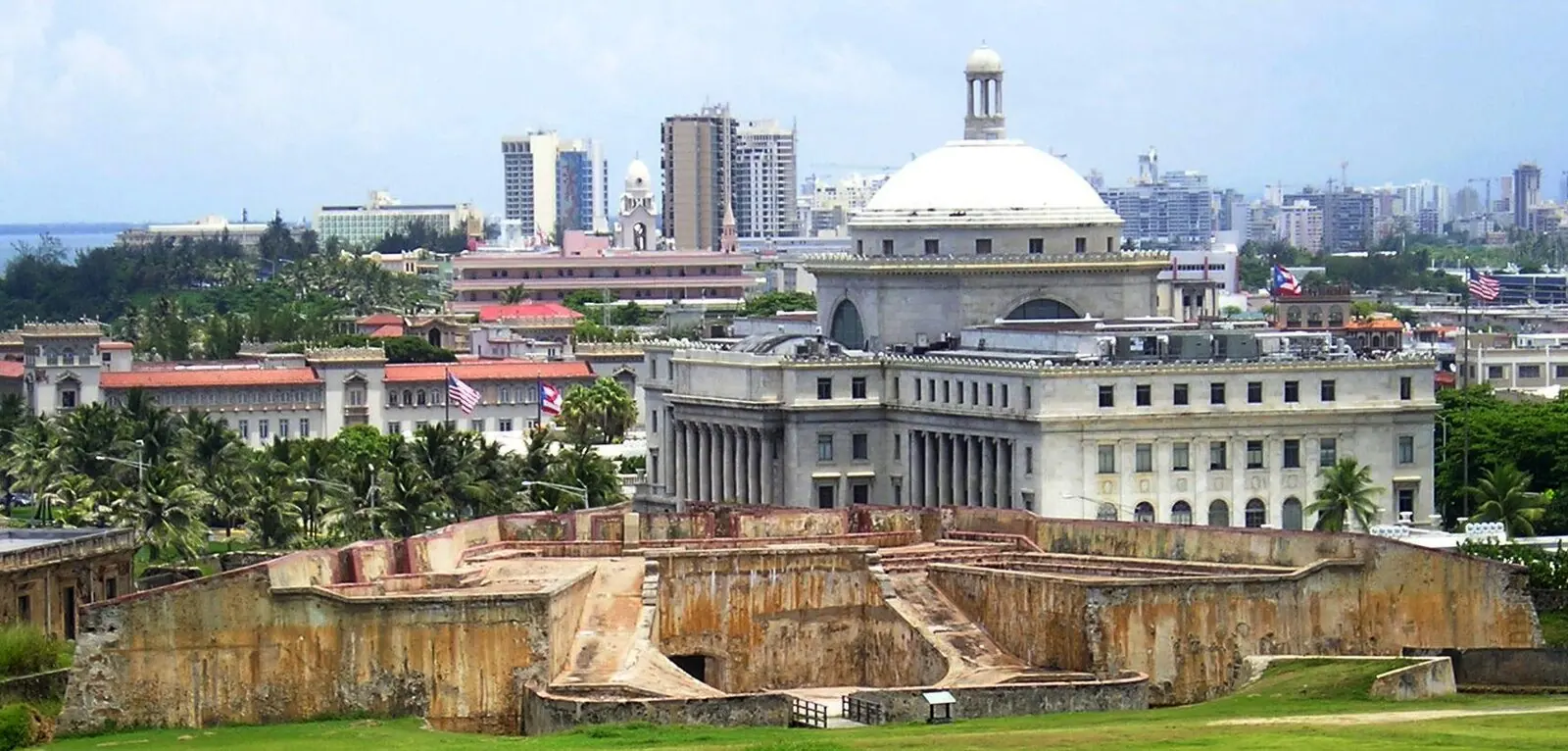
Start in Old San Juan, the walled city the Spanish began laying out in 1521. Its streets are paved with adoquines, the blue-tinged cobblestones once used as ballast in sailing ships, and lined with pastel facades, wrought-iron balconies and heavy wooden doors. Walk Calle Fortaleza to the umbrella-canopied stretch, cross Plaza de Armas, and step into the Cathedral of San Juan Bautista, where the explorer Juan Ponce de Leon lies buried. Just uphill stands La Fortaleza, the oldest continuously occupied governor's residence in the Western Hemisphere. Give the old town a full morning before the heat peaks, then return after dark when the plazas fill with music.
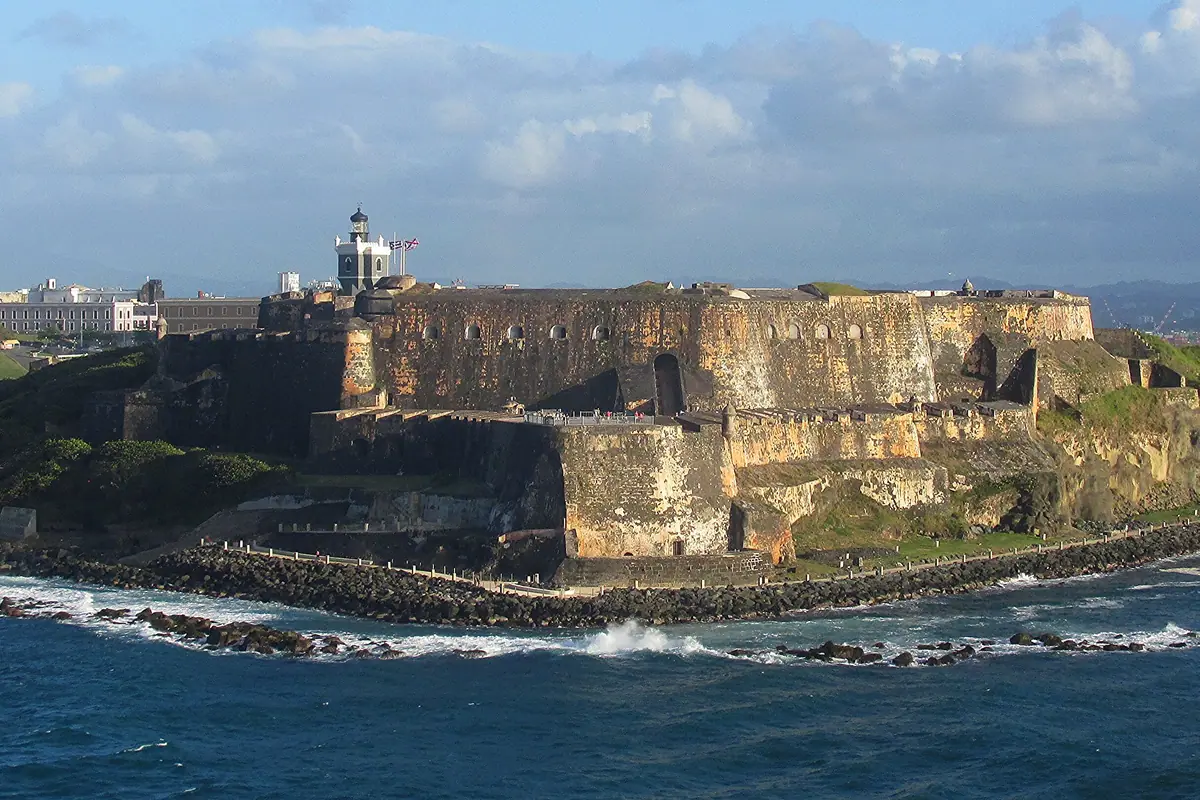
The headline sight is Castillo San Felipe del Morro, a six-level citadel begun in 1539 and perched on a grassy headland above the Atlantic. Climb through its ramps and powder magazines, find the 1846 lighthouse, and stay for sunset, when locals fly kites on the great lawn below the walls. A short walk east along the city wall brings you to Castillo San Cristobal, the largest fortress Spain built anywhere in the Americas, complete with a maze of tunnels and the lonely sentry box known as the Garita del Diablo.
Two more stops round out the day: the San Juan Gate, the last surviving formal entrance through the wall, and the Paseo de la Princesa, a tree-lined promenade that curves toward the bay with food stalls and buskers. One ticket covers both fortresses for the same day, so buy once and give the forts three unhurried hours. Sturdy shoes matter; the ramps and cobbles are uneven, and afternoon thunderstorms arrive fast between May and November. In the evening, head to La Placita de Santurce, where a produce market by day becomes an open-air block party of salsa and street food after ten.
El Yunque: Hiking the Only Tropical Rainforest in the U.S. Forest System
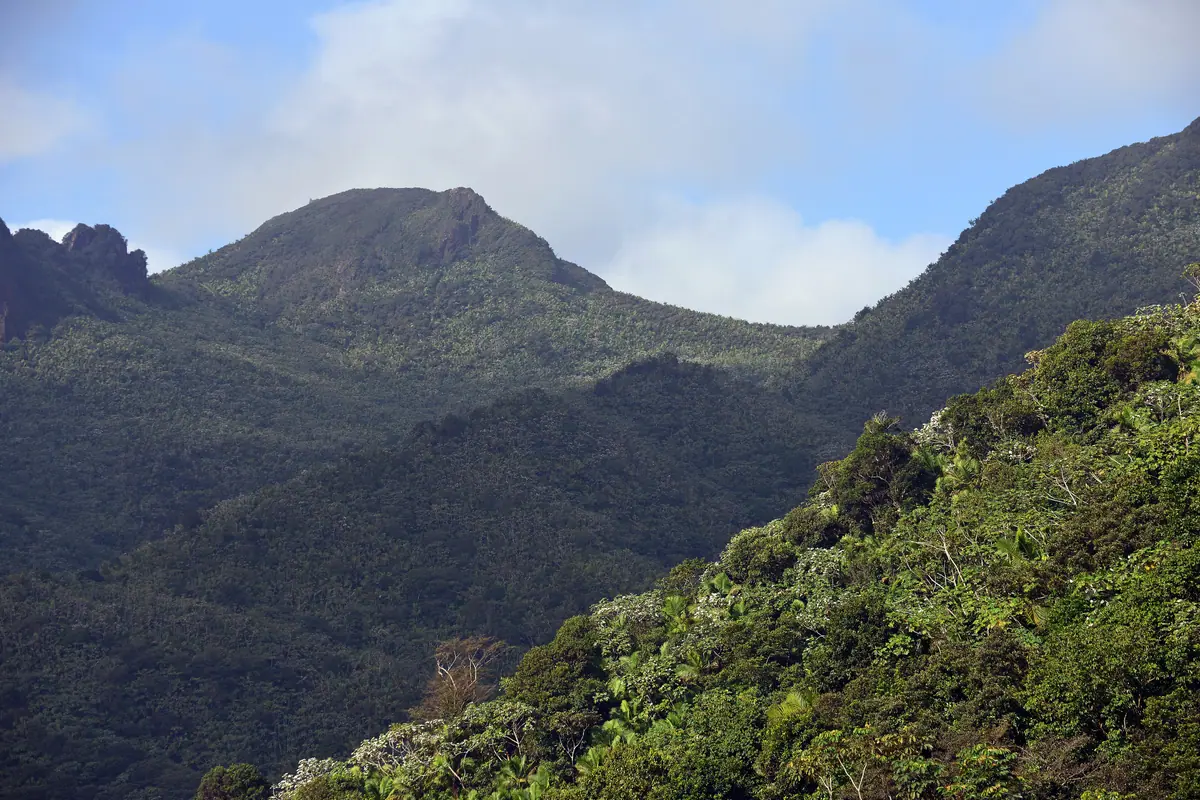
El Yunque National Forest rises out of the northeast coast about an hour from San Juan, 28,000 acres of ridgeline jungle that receives rain on most days of the year. More than two dozen trails thread the slopes, from the paved, half-hour loop to La Coca Falls to the steeper trek up to El Yunque Peak, where a steel tower looks straight down at the coast. Climb Yokahu Tower for the classic panorama, cool off at Juan Diego Falls, and listen for the coqui, the tiny tree frog whose two-note call defines Puerto Rican nights.
The rainforest now uses timed-entry reservations for its main recreation corridor in high season, and they can vanish days in advance during winter and around holidays. Book early, arrive at opening, and treat the weather as part of the experience: a poncho beats an umbrella, and footwear with grip is essential on the slick rock and root steps. Most visitors spend two to four hours; serious hikers should set aside a full morning for the peak trail, which climbs roughly 1,000 feet through dwarf forest.
Pair the forest with the northeast coast. Balneario Luquillo, often called the island's most beautiful public beach, has calm water, lifeguards and the Luquillo kiosks just behind it, a long row of roadside stalls selling skewers, fried snacks and cold drinks. Nearby Las Paylas offers a natural rock waterslide into a jungle pool when conditions are safe. Continue east to Fajardo for a catamaran run to Icacos or Palomino, where the water turns glass-clear and snorkelling is easy even for beginners.
Glowing Bays: Vieques, Culebra and the Spanish Virgin Islands
Puerto Rico has three bioluminescent bays, and the brightest by far is Mosquito Bay on Vieques, a shallow, mangrove-ringed lagoon where dinoflagellates flare blue-white at every stroke of a paddle. Go on or near a new moon, when darkness is deepest, and join a guided kayak trip after sunset; swimming is not allowed, and insect repellent containing strong chemicals is barred because it damages the organisms. Laguna Grande in Fajardo and La Parguera in the southwest also glow, and both are reachable as a late-night excursion from the mainland.
Vieques itself rewards more than a single night. Sun Bay is a long crescent of palm-backed sand with wild horses wandering the access road, while Playa Negra shows off volcanic black sand and Playa Navio offers a rugged, near-empty stretch on the north shore. Culebra, a short hop further east, holds Playa Flamenco, routinely named among the world's finest beaches, plus the uninhabited islet of Culebrita with its tidal pools and old lighthouse. Both islands are reached by ferry from Ceiba or by small-plane flights from San Juan.
The practical trick is to stay overnight rather than attempt a day trip from the capital. Ferries sell out weeks ahead in winter and around Easter, so reserve early and travel light. Bring cash for local guesthouses and beach bars, reef-safe sunscreen, and a plan for the island's limited taxis. Two nights on Vieques or Culebra turns a checklist stop into the highlight of the trip.
Caves, Canyons and Ziplines: Puerto Rico's Adventure Circuit
Inland from San Juan, the island turns vertical. Toro Verde Adventure Park near Orocovis strings ziplines across a mountain valley, including the enormous cable known as The Monster, a flight of well over a mile that reaches highway speeds and lasts long enough to look around. Softer options include shorter lines, a hanging bridge and a via ferrata-style course, so mixed-ability groups can split up. Book the big line in advance, wear closed shoes, and leave loose items in a locker.
West of there, the Rio Camuy cave system ranks among the largest in the Western Hemisphere, with a tram descending into a vast sinkhole and boardwalks threading past cathedral-scale chambers and a subterranean river. Check current opening days before you drive out, because sections close periodically for maintenance. Near Arecibo, Cueva Ventana, the Window Cave, is a guided one-hour walk that ends at a natural opening framing the green river valley below; the same limestone country hides Cueva del Indio, a sea cave with Taino petroglyphs carved into the rock.
For a different kind of wild, head south to the Guanica State Forest, a dry forest and UNESCO biosphere reserve that looks nothing like the rainforest. Trails lead to Fuerte Capron for a sweeping view of Guayanilla Bay and down to Ballena Bay, and birders come for the endemic Puerto Rican tody. Go at dawn, carry more water than you think you need, and expect cactus, acacia and relentless sun rather than mud.

The West Coast: Surf Towns, Salt Flats and Sunset Beaches
Rincon, on the island's northwestern tip, is the surf capital, and between November and March the winter swells roll in for long, clean waves at Domes Beach, Maria's Beach and Indicators. Beginners can take a lesson at Sandy Beach in gentler summer surf, and everyone should walk out to El Faro de Punta Higuera, the 1892 lighthouse on the point, where humpbacks pass offshore from January through March. Sunsets here are the island's most celebrated, best watched with a cold drink from a roadside bar.
South along the coast, Aguadilla's Crash Boat Beach has a broken pier that makes an easy snorkel, calm swimming in the lee, and a row of food kiosks under the palms. Continue to Cabo Rojo at the island's southwestern corner for Playa Sucia, also called La Playuela, a horseshoe of sand beneath the Los Morrillos lighthouse cliffs, with the pink-tinted salt flats of the Cabo Rojo saltworks behind it. Flamingos and other waders feed in the brine pools; the access road is rough, there is no shade, and the reward is one of the most photographed landscapes in the Caribbean.
Further east, La Parguera in Lajas is a low-key fishing village with mangrove cays, shallow snorkelling, fresh seafood on the waterfront and its own glowing bay. Base yourself in Rincon or Cabo Rojo for two or three nights if you want to surf or simply catch the best light of the day; the drive from San Juan takes about two and a half hours, longer on holiday weekends when locals head west.
Ponce and the Southern Route: Firehouses, Mansions and Coffee Country
Puerto Rico's second city makes a strong overnight stop on the way west. Plaza Las Delicias is anchored by the Parque de Bombas, an 1882 firehouse painted in bold red and black stripes that now serves as a museum to the island's firefighters. Beside it stand the Cathedral of Our Lady of Guadalupe and the handsome colonial arcades of the old commercial centre, while a short drive uphill takes you to Castillo Serralles, a 1930s hilltop mansion built by a rum dynasty, with terraced gardens and views over the whole valley.
The Museo de Arte de Ponce holds an impressive European collection, and the steel-and-glass Cruceta del Vigia sky bridge climbs to a lookout beside a wooden cross. Beyond the city, the south coast moves slowly: coffee farms and roadside fruit stands dot the mountain roads toward Adjuntas, and the hot springs at Coamo have drawn bathers since colonial times. Give Ponce half a day for the plaza and museums, and let the rest of the south be your unhurried route between San Juan and the beaches of Cabo Rojo.
Frequently asked questions
What is the best time of year to visit Puerto Rico?
Mid-December through April is the sweet spot: lower rainfall, drier trails in El Yunque, reliable beach weather and the best surf on the west coast. June through November is hurricane season, with the highest risk from August to October, though this is also when you will find the lowest room rates and emptiest beaches. Expect hot, humid afternoons year-round and brief showers even in the dry season.
How many days do I need in Puerto Rico?
Seven to ten days lets you see the island comfortably. A workable split is three nights in San Juan for Old San Juan and the forts, two nights on Vieques or Culebra, two nights on the west coast for Rincon or Cabo Rojo, and a night in Ponce. If you only have four days, stay in San Juan and add day trips to El Yunque and Luquillo rather than trying to circle the whole island.
Do I need a rental car to get around?
Old San Juan, Condado and Santurce are easy on foot or by ride-hailing, so you can skip a car for the first days. You will want one for El Yunque, the cave country near Arecibo, Guanica, Ponce and the west coast. Automatic rentals go fast in high season, toll roads use an electronic transponder that rental agencies provide, and rural roads are narrow, so drive in daylight where possible.
Do I need reservations for El Yunque or the bioluminescent bays?
Yes to both in practice. The main recreation area of El Yunque uses free timed-entry reservations that fill up days ahead during winter and holidays. Kayak tours on Mosquito Bay, Laguna Grande and La Parguera should be booked two to six weeks out, especially around the new moon when the glow is strongest, and overnight stays on Vieques or Culebra need booking even earlier because ferries and small guesthouses sell out.
Is Puerto Rico part of the United States, and what currency is used?
Puerto Rico is a U.S. territory, so U.S. citizens travel there without a passport and the currency is the U.S. dollar. Spanish is the everyday language and English is widely spoken in San Juan, at hotels and on tours, though less so in small mountain and coastal towns. Visitors of other nationalities should check their own entry requirements before booking, and travellers from the mainland should note that the island has its own sales tax.
Plan it — experiences in Puerto Rico
Live search, booked directly with trusted providers.
Sort the rest of your trip
Everything for Puerto Rico, in one place
Stay in Puerto Rico
Hotels, guesthouses and apartments — compared in one search.
Search hotels
Transfer in Puerto Rico
Private driver waiting on arrival — no queues, no surprises.
Book a transfer
Stay online in Puerto Rico
Travel eSIM — data the moment you land, no roaming bills.
Get an eSIMMore guides in Puerto Rico
1 Week in Puerto Rico: An Island-Hopping Itinerary by Air, Sea and Road
Where to Stay in Puerto Rico: Top Areas, Hotels and Must-See Sights
Best Time to Visit Puerto Rico: A Season-by-Season Guide to Booking the Right Hotel

Top Things to Do in Puerto Rico: Landmarks, Beaches and Rainforest Adventures