Palau is not a place where you pick a resort strip and settle in for a week. It is a scatter of some 340 islands strung across the western Pacific, and where you sleep quietly decides how much of each day you spend on the water. Choose well and the Rock Islands, the drop-offs and the battlefields are all within reach; choose badly and you will spend your holiday in a shuttle.
Where to Stay in Palau: How the Archipelago Shapes Your Choice
Palau runs roughly north to south as a chain of limestone and volcanic islands, with almost all visitor beds concentrated in one small corner: the twin towns of Koror and Malakal Island. That is the commercial heart, home to dive operators, restaurants, the hospital and the boat moorings that launch nearly every excursion in the country. Babeldaob, the largest island and the site of the capital at Ngerulmud, sits just across a short bridge and offers a completely different mood — rainforest, waterfalls and empty roads. Further south, Peleliu trades comfort for atmosphere, and remote Kayangel and Angaur offer the kind of quiet that requires real planning to reach.
A practical rule of thumb: the further you get from Koror, the more self-sufficient you need to be. On Koror you can walk to dinner and join a dive boat at dawn. On Babeldaob you will want a rental car. On Peleliu, boats and small planes run on limited schedules and accommodation is simple, so you go for the history rather than the thread count. Visitors staying on the outer islands should expect to arrange transfers in advance and to be flexible if weather delays a crossing.
Most travellers base themselves on Koror for four to seven nights, adding a liveaboard or an outer-island stay if time allows. The country is small — you can drive the length of Babeldaob in a couple of hours — but the water distances matter more than the road ones. Everything is measured in boat minutes, not kilometres.

Koror and Malakal Island: The Natural Base for First-Timers
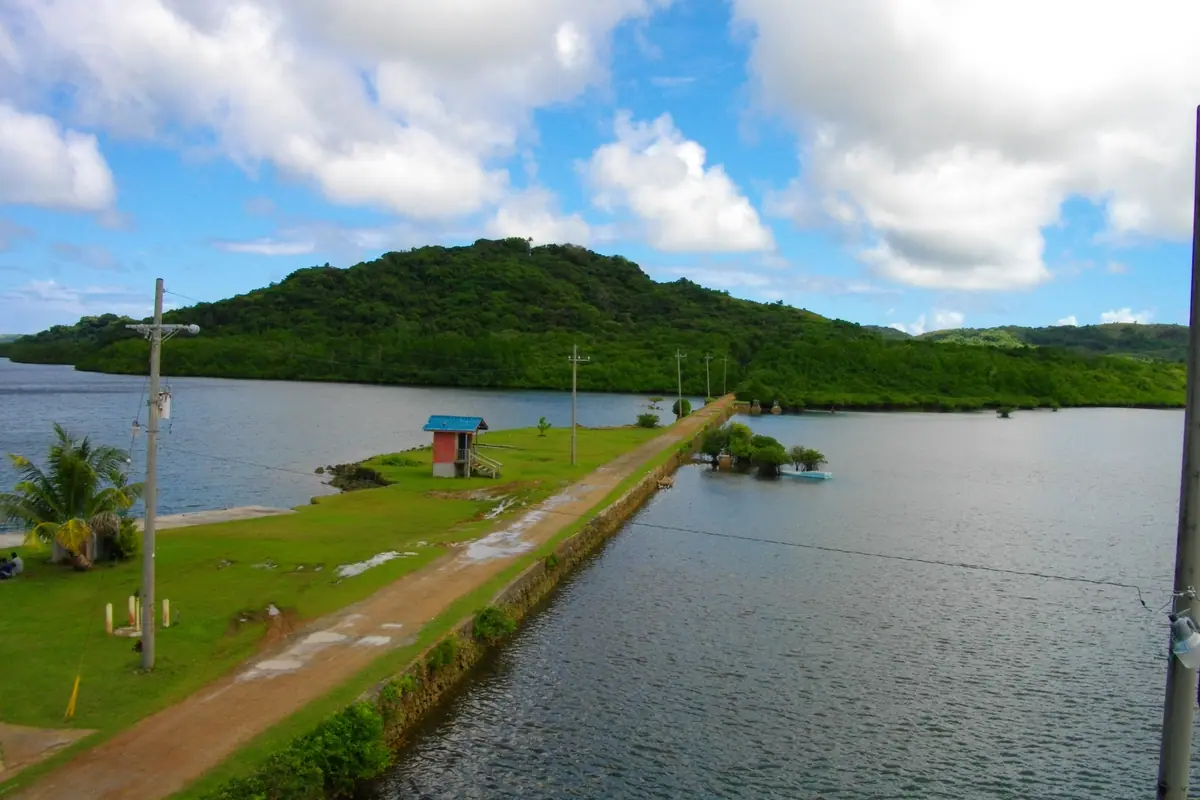
Koror town is where Palau actually lives. Government offices, shops, cafés and the country's two best museums sit within a few walkable blocks, and the waterfront strip along Malakal Island — connected to Koror by a short causeway — holds the harbour where dive boats and Rock Islands tour vessels tie up. Staying here means you are ten to thirty minutes by boat from the classic sites: the towering coral gardens of the Rock Islands Southern Lagoon, a UNESCO-listed seascape of mushroom-shaped islets ringed in turquoise shallows, and the famous dive walls of Blue Corner and the German Channel.
Accommodation in this area covers the widest range in the country. Waterfront resorts with their own beaches and dive facilities cluster on Malakal and the western shore, while mid-range hotels and family-run guesthouses fill the streets around Koror's main road. Budget travellers find simple rooms above restaurants and small pensions, and there are self-catering apartments for longer stays. Book early for December through March, when the dry season coincides with peak dive traffic and the better waterfront rooms sell out months ahead.
Two museums are worth building an afternoon around. The Belau National Museum in Koror is the oldest in Micronesia and explains the country's carved storyboards, shell money and clan systems — useful context before you meet the islands themselves. The smaller Etpison Museum nearby covers natural history and traditional crafts. From Koror you can also drive the Japan-Palau Friendship Bridge to Babeldaob and the international airport in Airai in about 25 minutes, which makes early flights painless. A car is unnecessary here; taxis and hotel shuttles handle the short hops.
Babeldaob: Rainforest Lodges, Waterfalls and Ancient Stones
Babeldaob is the part of Palau that surprises people. It is big, green and largely empty, with a ring road circling volcanic hills, mangroves and stands of jungle. Sleeping here suits travellers who want mornings without engines, and it puts several of the country's most interesting land attractions on your doorstep. The headline is Ngardmau Waterfall in the northwest, the tallest in Palau, reached by a muddy forest trail that ends in a cool plunge pool beneath a curtain of water. Further north in Ngarchelong, the Badrulchau stone monoliths — a field of weathered basalt pillars whose purpose is still debated — sit on a grassy ridge with views to the sea.
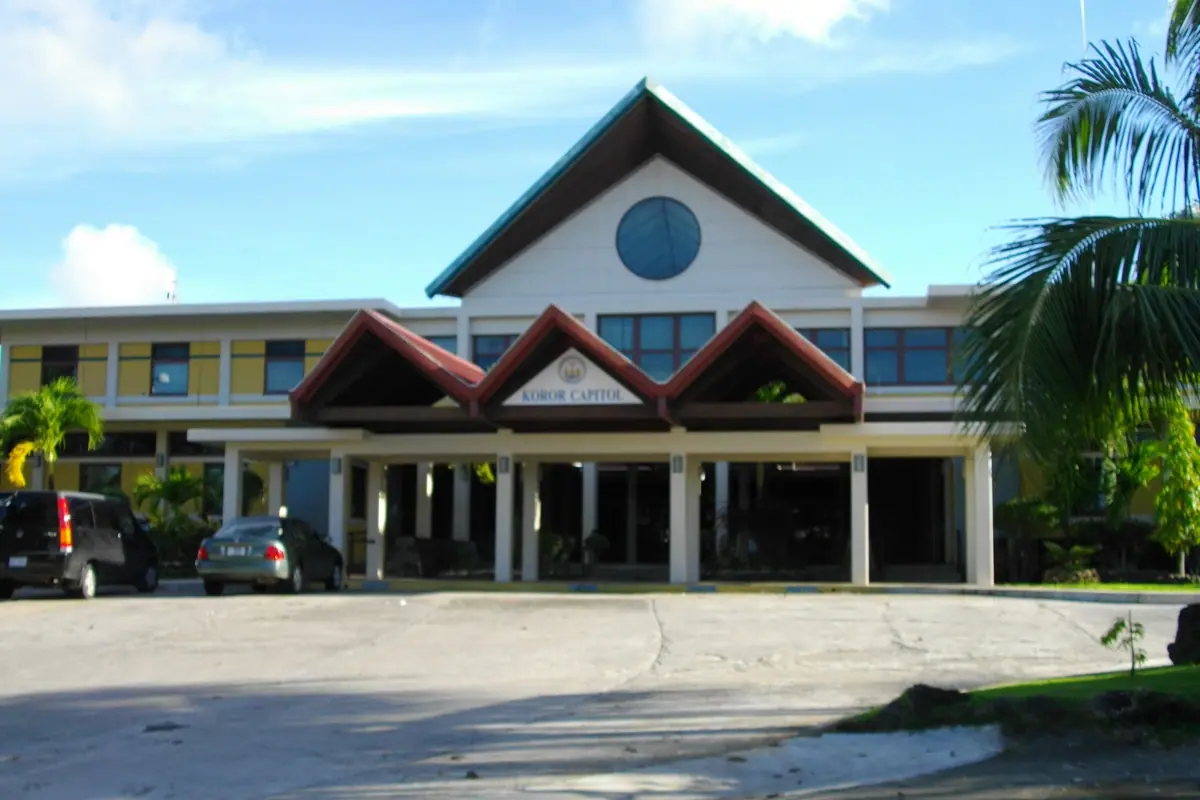
History is layered across the island too. In Airai you can visit a restored traditional men's meeting house, or bai, its interior painted with scenes of village life and legend, and in Melekeok you can see the domed national capitol at Ngerulmud, an unexpectedly grand building in an otherwise sleepy landscape. Along the east coast, the Airai area also gives the easiest access to the airport, which is handy if you are flying in late or out early.
Practically, this is car territory. Rental agencies operate from Koror, roads are paved and lightly trafficked, and distances are short — but there is no real public transport and taxis do not cruise the rural states. Lodgings here are mostly small: eco-oriented lodges, beach bungalows and a handful of guesthouses, some with kitchens. Stock up on supplies in Koror before you head north, and carry cash, because ATMs are scarce once you leave town.
The Rock Islands, Liveaboards and the Jellyfish Lake Run
The Rock Islands themselves are almost entirely uninhabited, which means there is no village to check into — but that does not make them off-limits as a base. A small number of liveaboard boats moor in Malakal Harbour and sail south for multi-day itineraries through the lagoon, putting divers on sites such as Blue Corner, New Drop Off, Ulong Channel and the German Channel, where manta rays often glide through on a cleaning station. Liveaboards are the most efficient way to dive Palau's best walls repeatedly, and they usually run from three to ten nights.
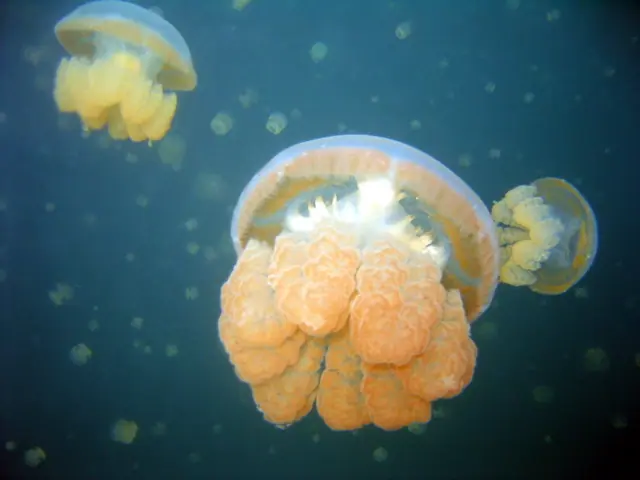
For everyone else, the Rock Islands are a day-trip destination, and the single most famous stop is Jellyfish Lake on Eil Malk — a marine lake cut off from the sea where golden jellyfish drift in clouds. It is reached by a short but steep forest hike over the island ridge, requires a permit, and sensible snorkelling rules apply: fin gently, never lift a jellyfish out of the water. The lake was closed for a period to allow the jellyfish to recover, and their numbers still rise and fall with conditions, so ask locally before you build a whole day around it.
Other must-sees on a Rock Islands itinerary include the Milky Way, a shallow marine lake with a chalky white bottom that is traditionally used as a natural mud bath, and the shallow coral gardens and hidden beaches of the southern lagoon. Day boats typically leave Koror between 8 and 9 a.m. and return late afternoon, so staying in Koror or on Malakal is the only realistic way to do them comfortably. Bring reef-safe sunscreen — certain ingredients are banned here to protect the reefs — plus a dry bag and plenty of water.
Peleliu: Sleeping Beside the Battlefields
Peleliu is a flat, thinly populated island about an hour south of Koror by boat, and it carries the heaviest history in the country. The 1944 battle here left the ridges scarred and the beaches named for their landing colours — Orange Beach and White Beach — while Bloody Nose Ridge, the coral spine of the Umurbrogol, remains a landscape of caves, bunkers and rusted relics. Memorials, a small museum and quiet Japanese and American monuments are scattered across the island, and touring them takes a full, unhurried day.
Accommodation is limited to a few small guesthouses and family-run lodgings, mostly simple rooms with fans and cold water. That is part of the appeal. Nights on Peleliu are extraordinarily still, the beaches are empty, and the snorkelling and diving off the island — including coral gardens and wrecks — is underrated because so few people make the trip. Independent travel is possible, but many visitors come as an overnight add-on to a Koror-based trip, arranged through a local operator.
Getting there requires planning. Boats run on limited schedules and small aircraft serve the island's airstrip, with weather sometimes disrupting both, so allow a spare day on either side. Bring cash, basic supplies and any medication you need, and expect the pace of everything to slow down the moment you step ashore.
Timing, Permits and Practicalities for Booking Your Stay
Palau's dry season runs roughly December to April, with February and March usually the calmest and brightest months — best for boat crossings, the Rock Islands and outer-island stays. The wet season from May to October brings heavier rain, higher humidity and greener hills, but diving remains excellent year-round thanks to warm water of around 28 to 30°C and typically superb visibility. Palau sits largely outside the main typhoon belt, though storms are not impossible, and the wet season often delivers short, heavy showers rather than all-day rain.
Permits and fees are part of the deal. Visitors sign the Palau Pledge on arrival, a promise to protect the environment, and a conservation fee is collected with air tickets. Separate permits apply for the Rock Islands and for Jellyfish Lake, usually arranged by your tour operator or dive shop, so confirm what is included before you commit to a package. Reef-safe sunscreen is the norm and certain chemical filters are prohibited.
On the ground, a few details make a difference. The currency is the US dollar, English is widely spoken alongside Palauan, and power runs on US-style 110 to 120-volt plugs. Tap water is generally not recommended for drinking, so buy bottled or refill at your hotel. Book accommodation and liveaboard berths early for the December-to-March window, confirm boat transfers in writing, and keep one flexible day in your plan — in an archipelago this small, the weather always gets a vote.
Frequently asked questions
Which part of Palau is best for a first-time visitor?
Koror and neighbouring Malakal Island are the sensible first base. Dive boats, the Rock Islands day trips, restaurants, museums and the bridge to the airport are all within ten to thirty minutes, and accommodation ranges from budget guesthouses to waterfront resorts.
How many days do you need in Palau?
Five to seven nights on Koror covers the Rock Islands, Jellyfish Lake, a few dive days and a trip north to Ngardmau Waterfall or the Badrulchau monoliths. Add two to three nights for a liveaboard or an overnight on Peleliu.
What is the best time of year to stay in Palau?
December to April is the dry season, with the calmest seas and clearest skies — ideal for boat transfers and outer islands. May to October is wetter but still excellent for diving, with warm water and good visibility year-round.
Do I need a car when staying in Palau?
Only if you plan to explore Babeldaob. Koror and Malakal are compact and served by taxis and hotel shuttles, but there is no real public transport in the rural states, and rental cars are booked from Koror.
Are there hotels in the Rock Islands or on Peleliu?
The Rock Islands are uninhabited, so overnight stays there mean a liveaboard boat. Peleliu has a handful of small guesthouses with basic facilities, reached by limited boat or small-plane services, and worth it for the WWII history and empty beaches.
Sort the rest of your trip
Everything for Palau, in one place
Transfer in Palau
Private driver waiting on arrival — no queues, no surprises.
Book a transfer
Things to do in Palau
Skip-the-line tickets, guided tours and standout experiences.
See experiences
Stay online in Palau
Travel eSIM — data the moment you land, no roaming bills.
Get an eSIMMore guides in Palau
Palau in One Week: A 7-Day Itinerary of Flights, Rock Islands and Peleliu

Top Things to Do in Palau: Rock Islands, Blue Corner and Peleliu

The Best Time to Visit Palau: Seasons, Dive Windows and When to Book a Hotel

Best Places to Visit in Palau: Top Activities, Dives and Islands