Palau is not one island but a green necklace of limestone hummocks strung across a lagoon so clear that boats seem to hover above the reef. Before you taste anything, you smell it — woodsmoke, coconut, salt and the sweet green tang of taro gardens. This is a guide to the food, stories and landmarks that make a first trip here feel like an introduction rather than a checklist.
Taro, Coconut and Reef: How Palau Eats
Palauan cooking grows from two harvests: the flooded garden and the reef. Taro is the anchor, raised in terraced, spring-fed swamps known as mesei that traditionally belong to the women of a clan and still measure a family's standing. Around it sit breadfruit, cassava, banana, pandanus and coconut, much of it cut the same day it is eaten.
From the water come tuna, parrotfish, rabbitfish, mangrove crab and giant clam, served raw as sashimi or grilled quickly over coconut husks. The dish most visitors remember is demok, taro leaves simmered slowly in coconut milk, eaten alongside kukau — boiled taro — or a mound of rice. A proper feast still comes out of an earth oven, food layered over heated stones and left to steam under leaves. Coconut crab, called ayuyu, is the great delicacy, and its take is tightly controlled by size limits and closed seasons; fruit bat soup survives as ceremonial fare rather than everyday eating.
To eat the way locals do, head to Koror's weekly night market, where stalls turn out grilled reef fish, taro chips, fried banana, cassava cake, tapioca pudding and ice-cold coconut. Family kitchens nearby serve plate lunches that fold Palauan staples into Japanese, Filipino and American habits — teriyaki, rice, pickles and a heap of fresh salad. Expect plenty of betel nut chewing around you; it is a social ritual here, but it is not for everyone, and declining politely is perfectly normal.
Koror: The Island's Front Porch
Koror was Palau's capital until 2006 and remains the country's front porch. Two main roads hold almost everything a traveller needs: boat operators, small hotels, bakery counters, shaved-ice stands and shops selling reef-safe sunscreen. Most journeys begin here, since flights touch down at Airai across the causeway — and every arriving visitor signs a pledge, stamped into their passport, promising to explore lightly for the sake of Palauan children.
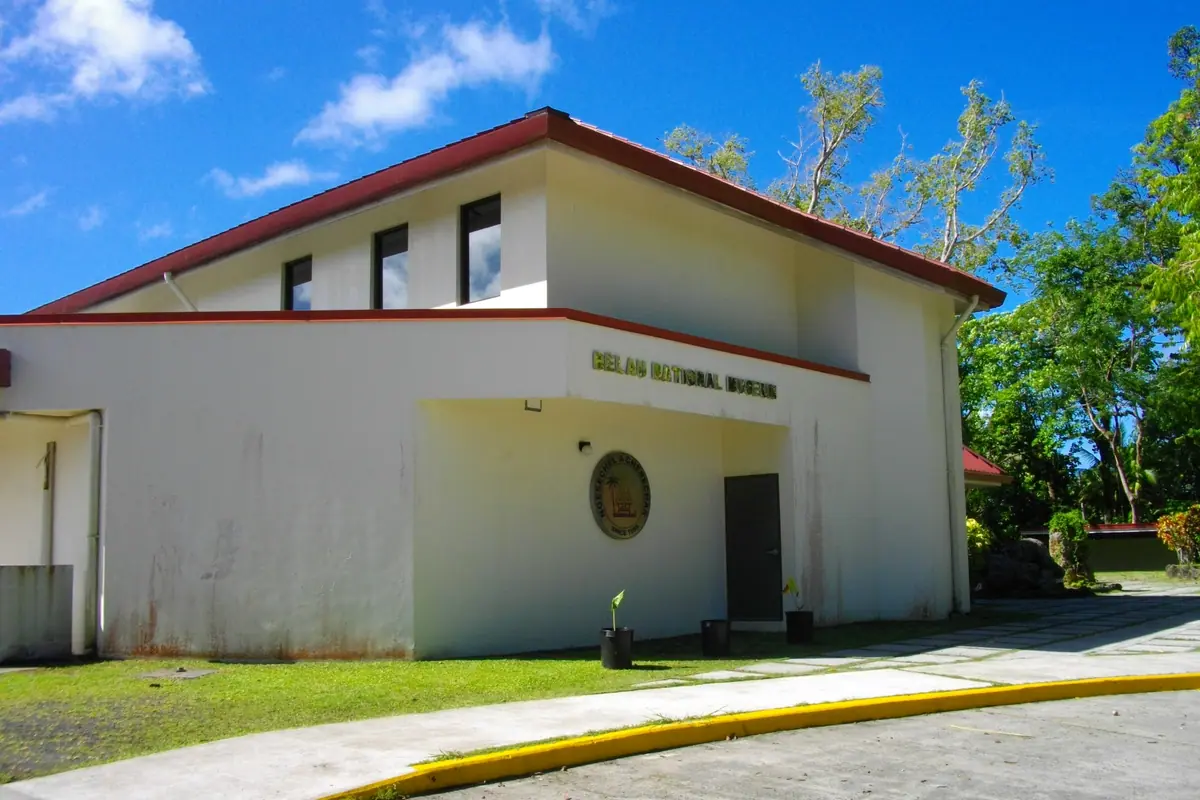
The Belau National Museum is the cultural starting point, a rambling collection of carved storyboards, shell ornaments, fishing gear and Japanese-era relics, with a traditional bai meeting house and a stone monolith standing in its grounds. Storyboards are worth learning to read: these carved wooden panels stack legend onto legend, and the oldest ones are treated as documents rather than decoration. Just up the hill, the quieter Etpison Museum goes deeper into Palauan bead money and village life.
Evenings in Koror are social and unhurried. Grills fire up along the waterfront, families spread mats on the sea wall, and conversations drift between Palauan and English. If a local invites you to a first-birth ceremony or a clan gathering, accept: these are the moments when Palauan hospitality, dance and food come together, and no tour can replicate them.
The Rock Islands: Palau's Signature Day Out
The Rock Islands Southern Lagoon is Palau's postcard and its pilgrimage — hundreds of uninhabited limestone islands, mushroom-shaped and jungle-capped, floating in shallow turquoise. The whole lagoon is recognised as a World Heritage site for both its geology and its human history, and day boats run out of Koror year-round, usually thirty to fifty minutes from the dock.
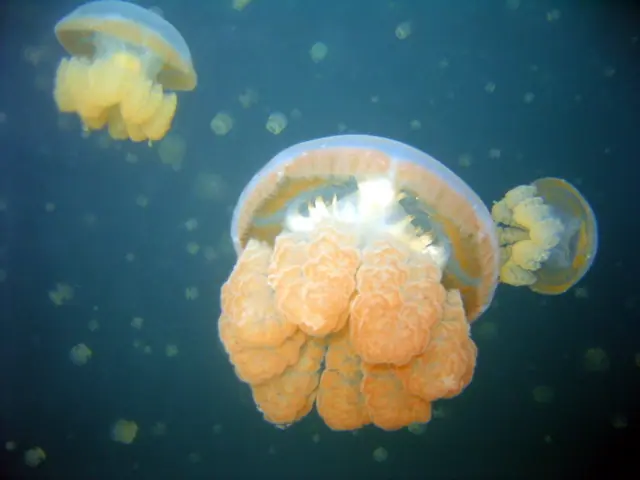
Two stops define the standard itinerary. Jellyfish Lake, on Eil Malk, is a marine lake where snorkellers drift among golden jellyfish that have lost most of their sting; scuba and sunscreen are banned, life vests are required, and the lake sometimes closes so the population can recover. Nearby, the Milky Way lets you scoop white limestone mud from the shallows, and Clam City puts you over giant clams the size of coffee tables.
Divers come for the named sites they have read about for years: Blue Corner, where you hook onto the reef edge and watch grey reef sharks and napoleon wrasse ride the current; German Channel, blasted through the reef in the early 1900s and now a manta cleaning station; the Big Drop-Off, a coral wall that tumbles into the blue; and Chandelier Cave, five chambers of stalactites with air pockets you can surface into. Non-divers are not shortchanged — sea kayaking between the islands at high tide is one of the Pacific's great quiet pleasures.
Babeldaob: Waterfalls, Monoliths and the Quietest Capital
Babeldaob, Palau's biggest island, is reached by the bridge from Koror and feels like a different country: rolling rainforest, cattle pastures, red dirt roads and villages strung along a single ring road. This is where most of the mesei taro swamps lie, and where you can watch women working flooded terraces that have been tended for centuries.
In the northwest, Ngardmau Waterfall is the tallest in Micronesia at roughly thirty metres, reached by a short, muddy forest trail that crosses a shallow river — bring shoes you do not mind soaking. Further north in Ngarchelong, the Badrulchau Stone Monoliths stand on a grassy plateau: more than thirty basalt pillars, several carved with broad human faces, and a legend that a god carried them downhill one by one.
Do not skip Melekeok, home to the Capitol complex at Ngerulmud and one of the least populated capital districts on earth — a strange, handsome surprise in the middle of farmland. On the way back south, stop at the Airai men's meeting house, one of the oldest surviving bai in Palau, its gable covered in painted legends, and at Long Beach in Ngaraard, a long sweep of pale sand that rarely has more than a handful of people on it.
Peleliu: History, Reef and Respect
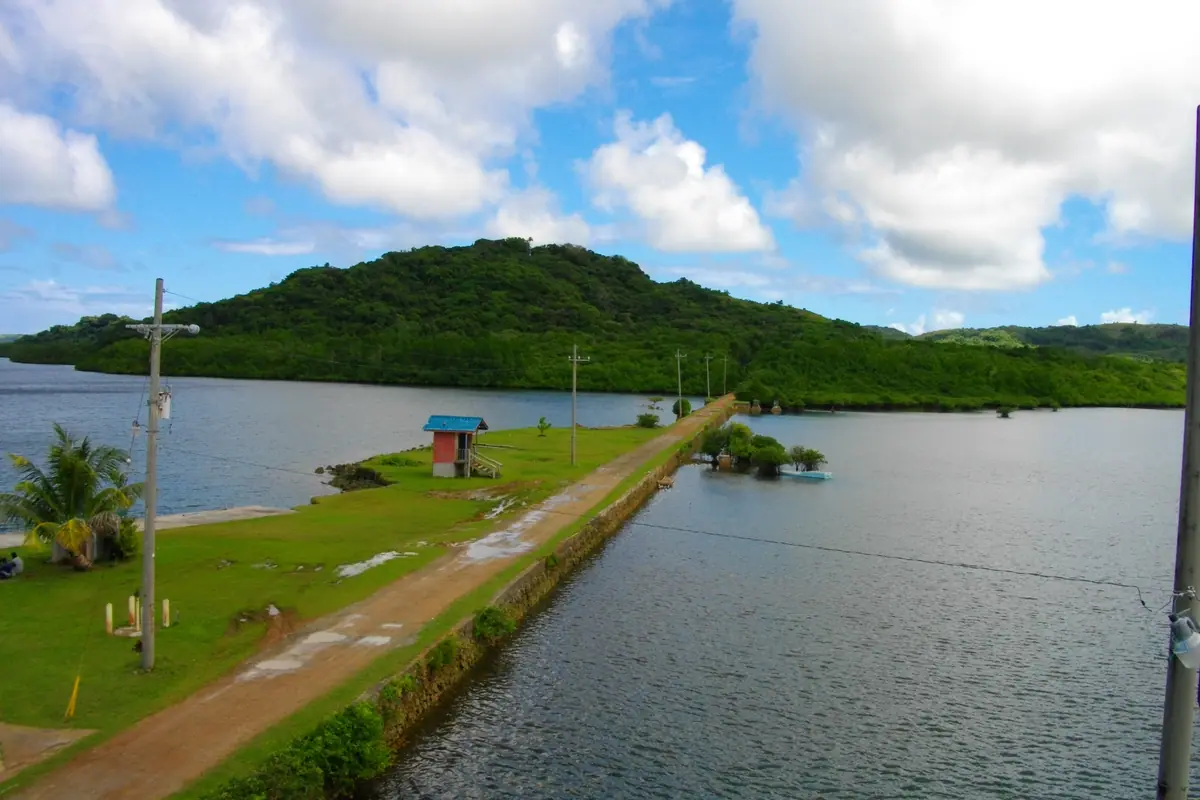
A boat ride of about an hour south of Koror brings you to Peleliu, an island of mangrove edges, quiet villages and one of the bloodiest battlefields of the Pacific war. The 1944 fighting lasted more than two months and reshaped the landscape. Orange Beach, where landings began, and Bloody Nose Ridge, the coral spine the Americans nicknamed for the fighting there, are the most visited sites, along with the peace memorial on the ridge and the old coral airstrip that still cuts across the island.
Walk it slowly with a local guide who knows which paths cross private land; the island is a living community, not an open-air museum. Rusted landing craft, bunkers, a Japanese command post and aircraft wreckage sit among the palms, and Palauan law protects all of it — take photographs, take nothing else.
Underwater, Peleliu is just as compelling. Its outer walls and channels offer drop-offs and drift dives with strong currents and excellent fish life, plus wartime wrecks that make the island a two-part history lesson. Many travellers day-trip here, but staying a night or two in a guesthouse gives you the dawn light over the ridge and the chance to eat with families rather than with a boatload of strangers.
Timing, Permits and Reef Manners
The dry season, roughly December to April, brings steadier trade winds, calmer water and the clearest visibility — this is peak diving and snorkelling weather. From May to October the rain arrives in short, warm bursts, the islands turn intensely green, boats are quieter and rates soften. Sea temperatures hover around 28–30°C all year, so a rash guard is often enough, and typhoons are rare this close to the equator. Whatever the month, plan boat days for the morning, when the wind is lowest and the light best.
Permits matter. Entry to the Rock Islands Southern Lagoon requires a permit bought in Koror before you leave the dock, and Jellyfish Lake needs its own separate tag; rangers do check on the water. Sunscreen containing reef-harming chemicals is banned, so bring mineral-based protection, and single-use plastics are heavily restricted — pack a refillable bottle. Respect for the reef is not a suggestion here: do not stand on coral, do not chase turtles or mantas, and keep your fins off the sand where juvenile fish shelter.
Palauan society is matrilineal, and land, beaches and reefs belong to clans rather than to the state. Ask before crossing private ground or using a village beach, remove your shoes before entering a bai or a home, and never pocket shells, coral or battlefield artefacts. On land, cars are easy to hire in Koror and driving is on the right with low speed limits; on water, boats are the only sensible way to reach the Rock Islands and Peleliu. Small, local operators and guides keep more of your money in the islands — and usually know exactly where the fish are.
Frequently asked questions
What is the best time of year to visit Palau?
December to April is the dry season, with the calmest seas, clearest water and best visibility for diving and snorkelling. May to October is wetter and more humid, with short heavy showers, lush scenery and lower rates. Water stays around 28–30°C year-round, and severe storms are uncommon.
Do I need permits for the Rock Islands and Jellyfish Lake?
Yes. A Rock Islands Southern Lagoon permit is required for boat trips into the lagoon and is bought in Koror before you set out. Jellyfish Lake requires its own separate tag, and rangers check both on the water. The lake is occasionally closed to visitors so the jellyfish population can recover.
Can anyone snorkel in Jellyfish Lake?
Snorkelling is generally allowed for competent swimmers, but scuba diving is banned, life vests are required and sunscreen must be left behind because it harms the lake. You float rather than swim hard, and you must not lift jellyfish out of the water. The lake's condition is monitored, so check locally before booking.
Is Palau suitable for beginner divers?
Yes, though site choice matters. Blue Corner is an advanced drift dive with strong currents and a hook-in position. Beginners are better off on the sheltered reefs, the Big Drop-Off and the calmer sections of German Channel, where dive shops run training and guided shallow dives close to Koror.
What food should I try first in Palau?
Start with demok, taro leaves cooked in coconut milk, served with kukau (boiled taro). Add fresh tuna sashimi, grilled reef fish, mangrove crab and coconut crab in season, then finish with fried banana, cassava cake or tapioca pudding at the night market. Vegetarian dishes lean heavily on taro, breadfruit and coconut.
Sort the rest of your trip
Everything for Palau, in one place

More guides in Palau
Palau in One Week: A 7-Day Itinerary of Flights, Rock Islands and Peleliu
Top Things to Do in Palau: Rock Islands, Blue Corner and Peleliu
The Best Time to Visit Palau: Seasons, Dive Windows and When to Book a Hotel
Best Places to Visit in Palau: Top Activities, Dives and Islands