Pakistan runs from the warm Arabian Sea to glacier-carved valleys under the Karakoram, and the right hotel changes completely depending on which of those worlds you wake up in. Base yourself in the Mughal heart of Lahore, the breezy capital, the coastal sprawl of Karachi, or a family-run guesthouse in Hunza where the balcony faces Rakaposhi. This guide walks you through the best places to sleep and the landmarks you should not miss in each.
Where to Stay in Pakistan: Cities, Seasons and Styles of Lodging
A single trip to Pakistan rarely means one base. Most travellers build an arc of three or four stops: the plains cities in the cooler months, then a flight or a long, spectacular drive north into the mountains. Lodging follows that geography closely — glass-fronted city hotels in Karachi and Islamabad, restored merchant houses inside Lahore's walled city, and small family-run guesthouses in Hunza, Skardu and Swat where the owner's cousin cooks dinner and the generator hums through the evening power cut.
Timing matters more than almost anywhere else. October to March is the comfortable window for Lahore, Karachi, Islamabad and Rawalpindi, when days sit in the pleasant twenties and evenings need a jacket. The mountains switch seasons entirely: late May to early September for Hunza, Skardu, Fairy Meadows and the high passes, late March to mid-April for the cherry and apricot blossom that turns Hunza's terraces pink, and late September to late October for the poplar gold that photographers chase along the Karakoram Highway.
Book early for the peaks — Eid holidays, the winter wedding season and blossom weeks fill the small mountain guesthouses months ahead, and cancellation policies in the north are often strict because rooms are genuinely limited. Expect the basics to be good and the extras to vary: air conditioning in the cities, hot water on a schedule in the mountains, and Wi-Fi that is best treated as a bonus rather than a promise.
Islamabad and Rawalpindi: The Capital's Green Edge and Old Bazaars
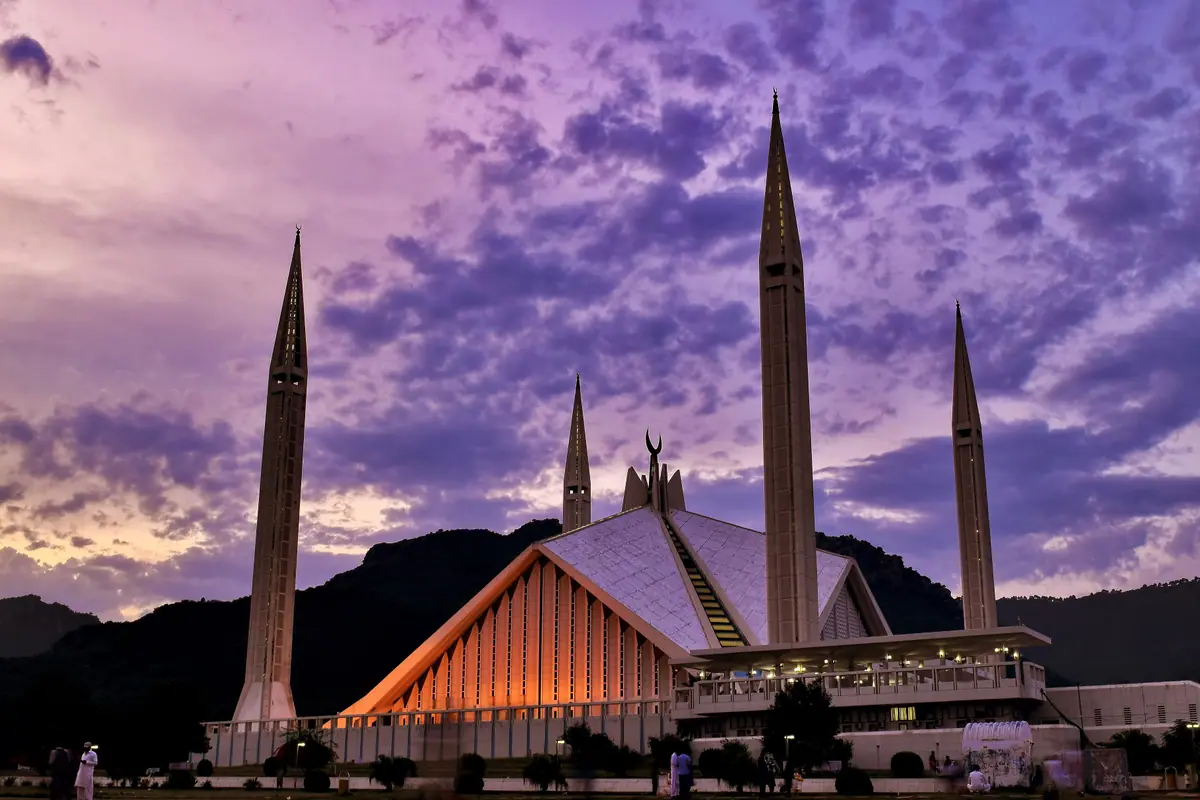
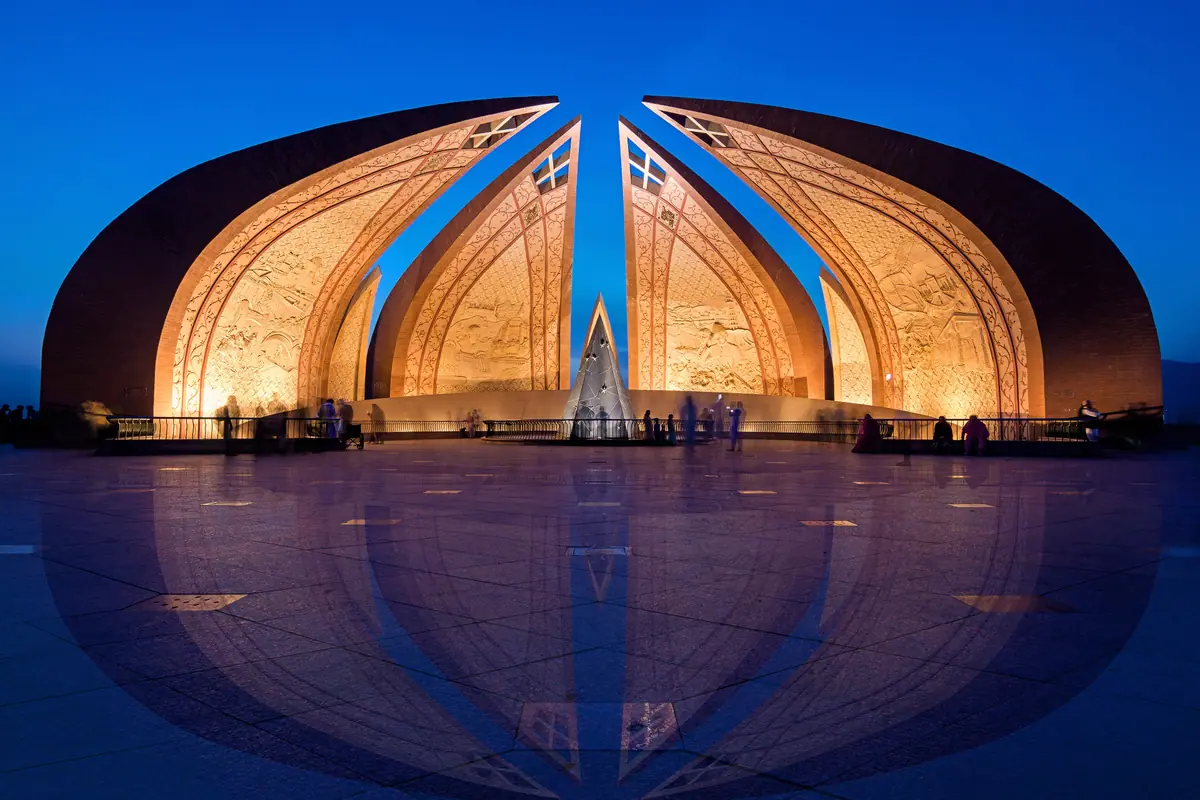
Islamabad is the softest landing in the country — wide, green and calm, with the Margalla Hills rising straight out of the city. Its landmark is the Faisal Mosque, an enormous white tent-shaped structure that looks almost weightless against the pine-covered slopes, and it is worth visiting at dusk when the call to prayer rolls across the valley. Nearby, the Pakistan Monument on Shakarparian hill uses petal-shaped granite panels to tell the country's story, and the adjoining museum gives it context.
For views, drive up to Daman-e-Koh, the terraced viewpoint halfway up the Margallas, or earn the panorama by walking Trail 5 to Pir Sohawa, a steady two to three hour climb rewarded with tea and grilled food at the top. Down in the city, Saidpur Village folds a restored Hindu-era settlement, pottery workshops and small cafés into one lane, while Rawal Lake offers paddle boats and a quieter afternoon.
Twin city Rawalpindi is a different mood altogether: Raja Bazaar's crush of carts, spice sacks and textile stalls is the classic introduction to Pakistani street life, and colonial-era Saddar is handy for cheap eats and pharmacies. Most visitors sleep in Islamabad's F-6, F-7 or Blue Area neighbourhoods, where guesthouses and mid-range hotels sit within walking distance of restaurants, or in the quieter G sectors for lower rates and easy parking. Two nights is enough for the pair, three if you plan a day trip to Taxila's Gandharan ruins.
Lahore: Walled City Heritage Stays and Mughal Grandeur
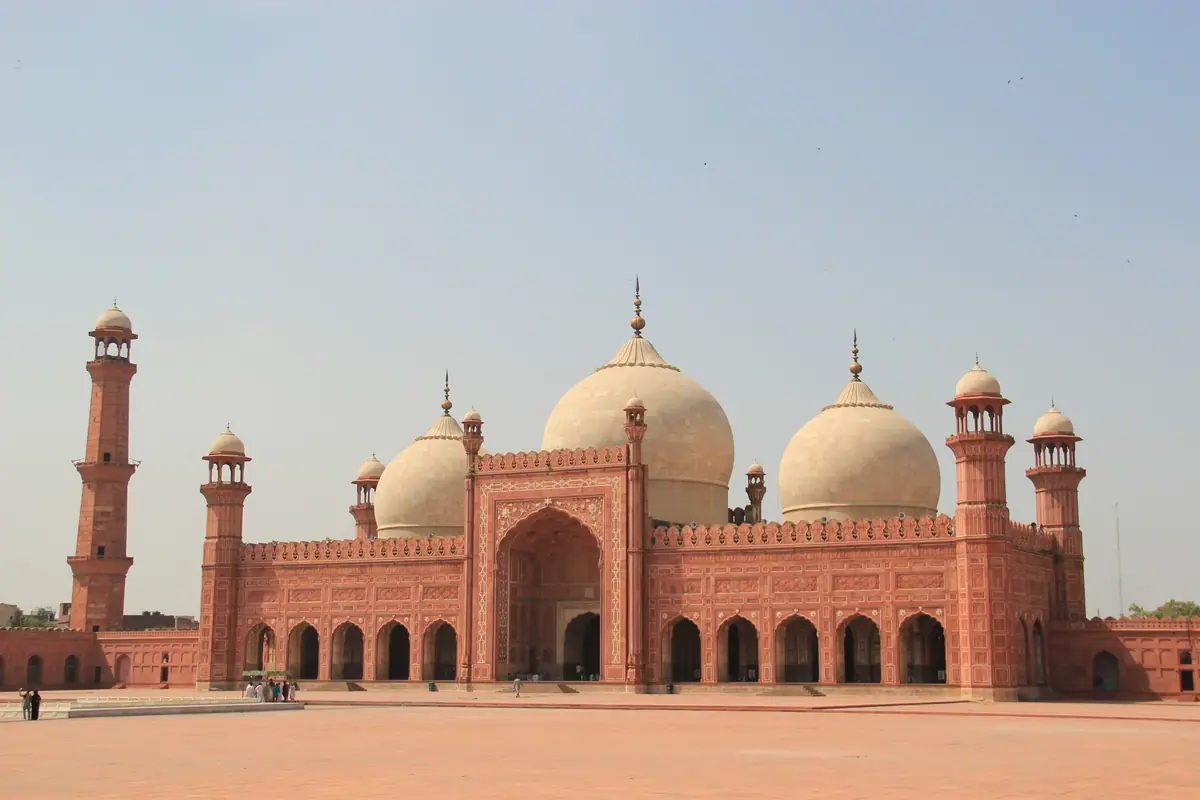
Lahore rewards slow travel, and the best place to feel it is inside the Walled City. The Badshahi Mosque, completed in 1673, is the city's defining image — red sandstone, vast marble courtyard, room for tens of thousands of worshippers — and it faces the Lahore Fort, a UNESCO-listed complex whose Sheesh Mahal glitters with thousands of mirror tiles and whose Naulakha Pavilion is a Mughal jewel in miniature. Walk the Royal Trail from Delhi Gate through the bazaar to reach both.
Deeper inside the old streets, the Wazir Khan Mosque hides one of the finest displays of kashi tilework in South Asia, and the surrounding lanes still smell of frying jalebi and roasting corn. Across town, the Shalimar Gardens lay out three terraced levels of water channels and pavilions, while Shahdara's riverside cluster holds the tomb of Jahangir, surrounded by gardens and frescoed walls. At sunset, the flag ceremony at the Wagah border crossing draws crowds for its theatrical march-off.
Sleeping options mirror that history. Small heritage guesthouses converted from old havelis put you a few minutes' walk from the fort and the food street, though expect steep stairs and thin walls. For air conditioning, pools and reliable Wi-Fi, head to Gulberg or the newer southern districts, where most mid-range and upscale hotels cluster. Give Lahore three nights minimum — plus a half day for Anarkali Bazaar and Liberty Market if you like shopping.
Karachi: Coastal Contrasts and Colonial Landmarks
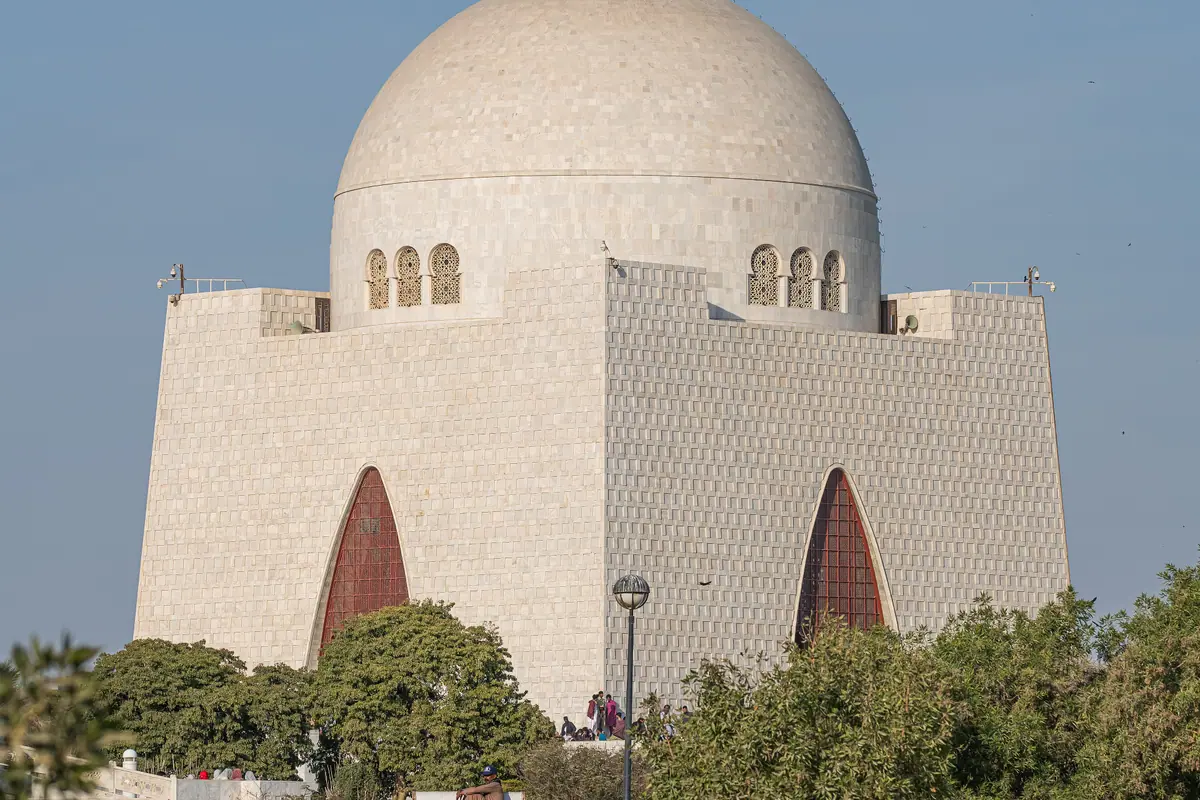
Karachi is Pakistan's biggest city and its most contradictory: colonial stone facades, crowded wholesale markets, and an Arabian Sea horizon that turns orange every evening at Clifton. The white marble Mazar-e-Quaid, the mausoleum of the country's founder, is the must-see — a modernist landmark on a raised platform, best in the cooler hours when the guards stand still and the light is soft.
Nearby, Frere Hall's yellow-stone facade and its painted interior panels make a rewarding stop, and the Mohatta Palace Museum, a pinkish Rajput-style mansion in Clifton, hosts rotating art exhibitions in rooms that still feel residential. Empress Market's tower is one of the city's oldest surviving colonial structures, though the surrounding bazaar is best visited with a local and an early start.
Beaches are a mixed bag: Sea View and Clifton are for evening walks and street corn rather than swimming, while boat trips out to Churna Island offer clearer water and snorkelling on a good day. South of the city, the UNESCO-listed Makli Necropolis and the Shah Jahan Mosque at Thatta make a fine full-day escape. Stay in Clifton or the adjoining DHA for sea air and restaurants, in Saddar for budget options near the sights, or near the airport if you have an early flight north.
The Mountain North: Hunza, Skardu, Swat and the High Passes
This is the Pakistan people come back for. Hunza's capital, Karimabad, sits below the 7,788-metre bulk of Rakaposhi, and two of its oldest structures — Baltit Fort on its ridge and Altit Fort above the river — are UNESCO-listed reminders of a princely state that once controlled these valleys. Sunrise from Duikar, also called Eagle's Nest, lights up a panorama of seven-thousanders, and the drive north past Attabad Lake's impossible turquoise water to the Passu Cones and the Hussaini suspension bridge is the classic Karakoram Highway run.
Skardu offers a different scale of beauty: the Kachura lakes, the cold desert dunes at Katpana, and July-to-September access to Deosai National Park, a high plateau of wildflowers and Himalayan brown bears around Sheosar Lake. Further west, Fairy Meadows is reached by a nerve-testing jeep ride from Raikot Bridge and then an hour or two on foot, delivering the classic view of Nanga Parbat, the world's ninth-highest mountain.
For softer mountain country, Swat's Malam Jabba ski slopes and the green river towns of Kalam and Ushu suit families, while Chitral's Kalash valleys — Bumburet, Rumbur and Birir — offer a cultural stay unlike anywhere else. Naran is the gateway to Lake Saif-ul-Malook and Babusar Pass. Lodging up here is mostly small guesthouses and wooden chalets run by local families: simple, warm, often with meals included, and booked out far in advance for blossom and autumn.
Practicalities: Permits, Transport and Booking Sense
Getting around Pakistan is the part that needs planning. Domestic flights link Islamabad with Gilgit and Skardu but are frequently delayed or cancelled by weather, so leave slack in your itinerary. Driving the Karakoram Highway is unforgettable but slow — allow full days between stops. Some northern districts require a no-objection permit or police registration for foreign visitors, and checkpoints along the way may ask you to sign a register; your guesthouse can usually arrange the paperwork, so ask before you travel rather than at the barrier.
Pay attention to money and connectivity. ATMs are plentiful in the cities and scarce in the mountains, so carry enough cash for the northern leg, plus small notes for tips, jeep drivers and roadside chai. Mobile data works in most towns but fades on remote stretches of the highway. Tipping is common for porters, drivers and guides, and a modest ten percent in restaurants is appreciated.
On etiquette, dress modestly outside resort areas — loose trousers, covered shoulders, and a scarf handy for shrines and mosques, where you remove your shoes. Always ask before photographing people, use your right hand for eating and greeting, and be flexible during Ramadan, when many restaurants close by day. Finally, eat properly: nihari and naan in Lahore, chapli kebab in Peshawar, biryani anywhere, and apricot cake in Hunza. The food is half the reason you came.
Frequently asked questions
What is the best time of year to visit Pakistan?
For the plains cities — Lahore, Karachi, Islamabad and Rawalpindi — October to March brings the most comfortable weather, with spring blossom in February and March and mild, clear days in November. For the northern mountains, including Hunza, Skardu, Swat and Fairy Meadows, aim for late May to early September, when the high passes and Deosai are open. Cherry and apricot blossom in Hunza arrives in late March and early April, and the autumn colours peak in late September and October.
Are hotels in Pakistan safe, and what standard should I expect?
The range is wide but predictable. Cities have modern mid-range and upscale hotels with air conditioning, lifts and backup generators, while the mountains are dominated by small family-run guesthouses and wooden chalets with simple rooms, shared dining and hot water on a schedule. Security at larger properties is visible and routine, with bag checks at entrances. Choose places with recent reviews, confirm whether meals are included in remote areas, and never leave valuables in a parked vehicle.
Do I need a permit to visit northern areas like Hunza or Skardu?
Many northern districts are open to foreign visitors without a special permit, but some restricted zones and border-adjacent valleys require a no-objection certificate or police registration. Requirements change, so confirm the current rules for your exact route before departure and again on arrival. Guesthouses in Gilgit-Baltistan and Khyber Pakhtunkhwa routinely help guests with registration paperwork; ask them a few days ahead so it is ready when you arrive.
Should I fly or drive between Pakistani cities?
Fly the long hops and drive the scenic ones. Domestic flights connect Karachi, Lahore and Islamabad quickly, and there are services from Islamabad to Gilgit and Skardu — but mountain flights are weather-dependent and cancellations are common, so never book a tight onward connection. Driving the Karakoram Highway between Chilas, Gilgit and Hunza is one of the world's great road journeys, though it takes a full day or more per leg. For Lahore to Islamabad, the motorway is fast and comfortable.
What should I pack and how should I dress in Pakistan?
Pack layers: hot days and cold nights are standard, and mountain evenings even in summer call for a fleece. Bring modest, loose clothing that covers shoulders and knees, a light scarf for shrines and mosques, comfortable walking shoes for bazaar lanes and fort stairs, sun protection, and a power bank for long road days. Carry cash for the north, a reusable water bottle, and any medication you rely on, since pharmacies thin out beyond the main towns.
Sort the rest of your trip
Everything for Pakistan, in one place
Transfer in Pakistan
Private driver waiting on arrival — no queues, no surprises.
Book a transfer
Things to do in Pakistan
Skip-the-line tickets, guided tours and standout experiences.
See experiences
Stay online in Pakistan
Travel eSIM — data the moment you land, no roaming bills.
Get an eSIMMore guides in Pakistan
Pakistan in One Week by Plane: A Flight-Hopping Itinerary from Karachi to the Karakoram
Best Places to Visit in Pakistan: Mountains, Mughal Cities and Adventure Activities
Top Things to Do in Pakistan: Mughal Cities, Karakoram Peaks and the Ruins of Mohenjo-Daro