Monaco packs a principality's worth of glamour into two square kilometres of hillside, harbour and cliff, and where you sleep decides which version of it you wake up to. Choose carefully and the casino is your neighbour, the Mediterranean is your balcony view, and the old town is a lift ride away — choose badly and you will spend your weekend queuing for buses up a very steep hill.
How Monaco's Districts Shape Your Stay
Monaco is the world's second-smallest country, roughly 200 hectares pressed against the Mediterranean between the French Alps-Maritimes and the Italian border. What surprises first-time visitors is that it is not one continuous city but a handful of distinct districts stacked on terraces and cliffs, stitched together by a network of free public lifts, escalators and tunnels. The price you pay for a room, the view from your window and even how long it takes to reach breakfast all depend on which terrace you book into.
The five areas that matter for visitors are Monte-Carlo, in the east, home to the casino, the opera house and the luxury shopping streets; La Condamine and Port Hercule, the working heart of the principality built around its deep-water harbour and the market at Place d'Armes; Monaco-Ville, known simply as Le Rocher, the fortified headland where the Prince's Palace has stood since the 13th century; Fontvieille, the western district created on land reclaimed from the sea in the 1970s; and Larvotto, the eastern seafront, where the beach and the principality's convention and culture centre sit side by side.
As a rule, the grandest hotels cluster around the casino and along the seafront, with a smaller handful of boutique properties in La Condamine and almost nothing on Le Rocher. Almost every address is within a twenty-minute walk of the casino, but those walks include serious gradients — check whether your hotel sits above or below the road you will actually be using. During the Grand Prix in May, the circuit literally threads through these neighbourhoods, and access changes from day to day.
A useful rule of thumb: if you want nightlife, book Monte-Carlo; if you want to feel like a resident, book La Condamine; if you want the sea at your feet, book Larvotto. Fontvieille suits families and longer stays, while Le Rocher rewards travellers who prize atmosphere over convenience.
Palace Hotels and Old-World Glamour Around Casino Square
Place du Casino is the address that made Monaco famous, and its hotels are still the reason many people come. The Casino de Monte-Carlo, a turreted belle-Époque fantasy completed in 1878, anchors the square, with the Opéra de Monte-Carlo's gilded Salle Garnier attached to one flank and the glass-and-iron shopping arcades of the Allées within a short stroll. Staying here means marble lobbies, liveried doormen, and rooms whose balconies look straight down onto the fountains and the supercars circling the square at dusk.
The properties in this district trade on tradition rather than novelty: frescoed ceilings, vintage lifts, cellars deep enough to hold tens of thousands of bottles, rooftop pools framed by caryatids, and dining rooms with serious gastronomic pedigrees. Expect the full apparatus of a luxury stay — spas, private beach clubs on the Larvotto seafront, chauffeur transfers, butlers on request — and expect to pay for it, particularly for a room facing the casino rather than the courtyard.
Off-season is when this district becomes surprisingly approachable. Between November and March, outside the yacht show and the January rally, rates soften and long weekends become viable for travellers who could not justify August prices. Book well ahead regardless: the best rooms in these hotels are sold out a year in advance for Grand Prix week, when minimum stays of several nights and full prepayment are standard conditions.
Port Hercule, La Condamine and the Value End of the Market
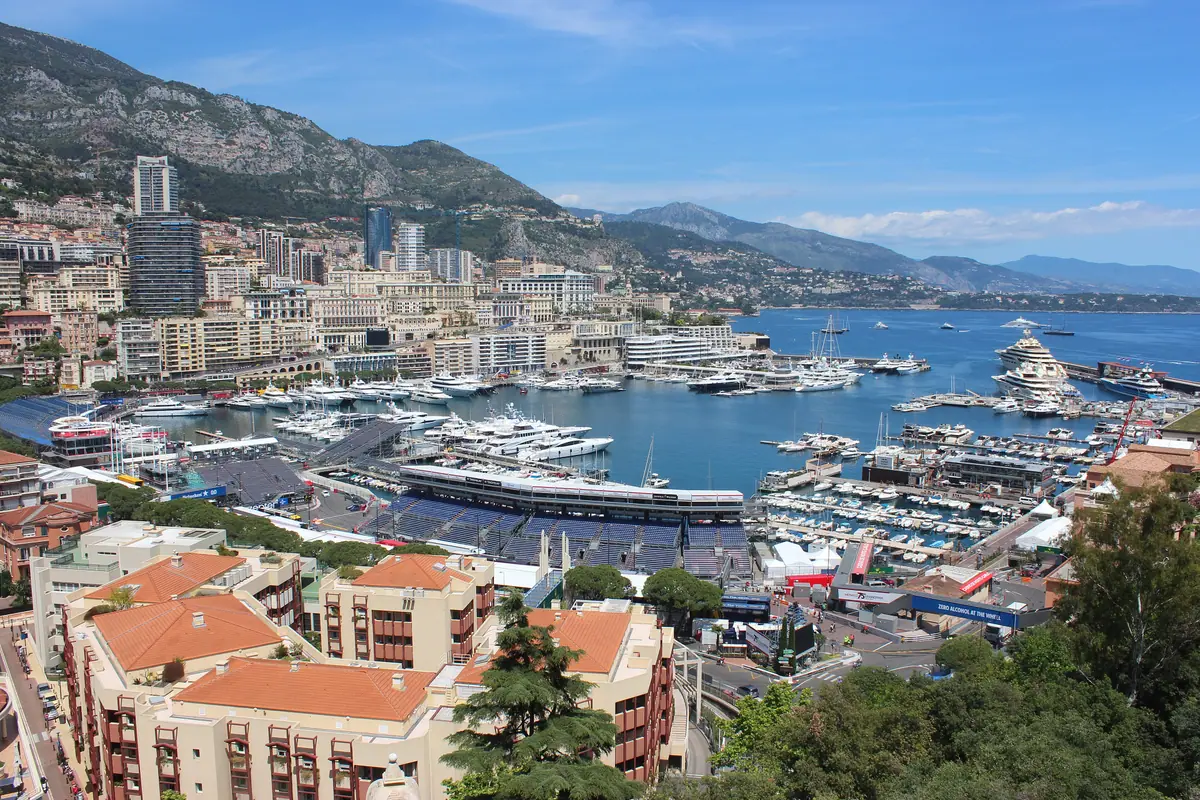
Port Hercule is Monaco's front door and its most photogenic corner: a deep harbour ringed by quays, overlooked by the royal rock on one side and Monte-Carlo on the other, and filled from spring onwards with yachts longer than most streets. Hotels set above the water here sell one thing above all — the view across the basin towards the old town, especially at night when the palace is floodlit and the harbour lights double in the water. During race week, the harbourfront becomes the best grandstand in motorsport, and balconies are priced accordingly.
Immediately inland, La Condamine is the principality's everyday neighbourhood. The food market at Place d'Armes opens early with produce, flowers and local specialities, the pedestrian Rue Princesse Caroline is lined with casual restaurants, and the streets around the Place Sainte-Dévote and its small chapel climb towards the main station. This is where you find the most reasonable hotel rates in Monaco, plus small independent properties that larger chains have never bothered to open here.
Fontvieille, the reclaimed western district, is the quietest option of all. It has its own marina, the Louis II stadium, the heliport, the Princess Grace Rose Garden and the exotic car collection, but almost no tourist bustle after dark. Hotels here tend to be smaller and calmer, with easier parking and a more residential feel — a sensible base if you are travelling with children, staying several nights, or simply want to escape the crowds at the end of the day.
Seafront Stays on the Larvotto Beach Strip
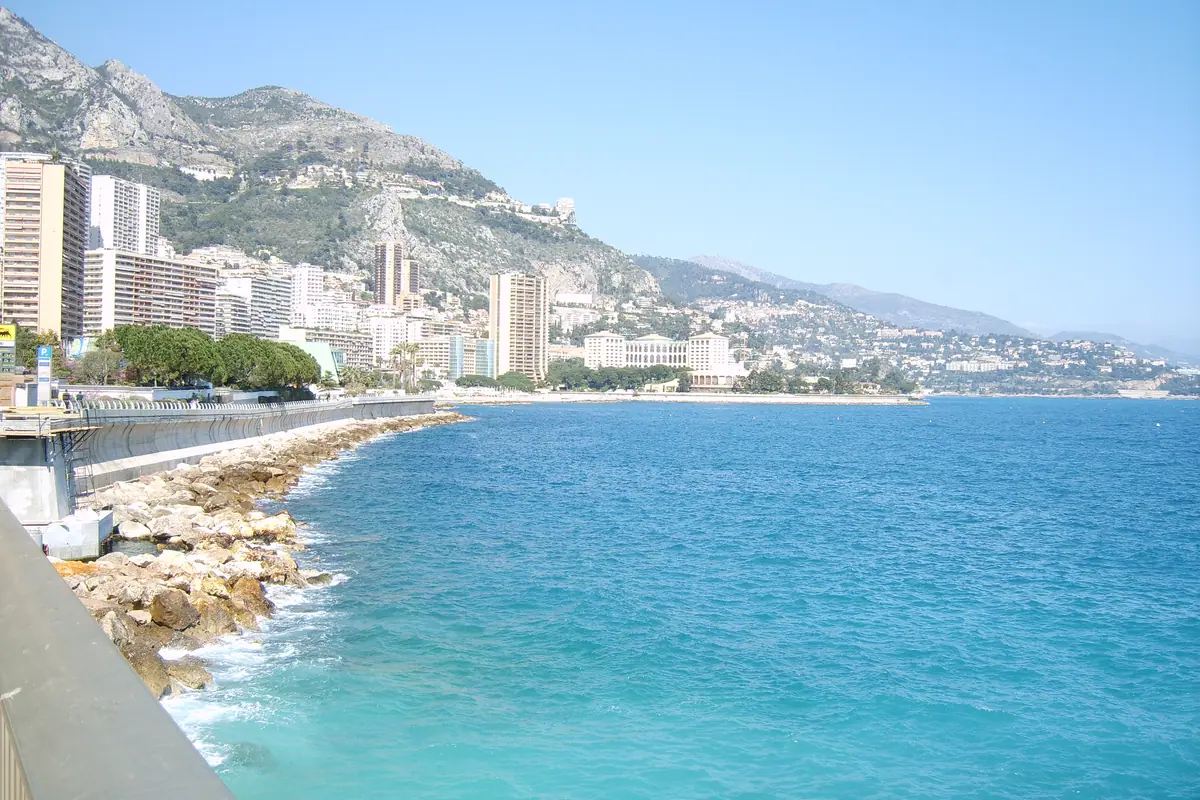
Larvotto is where Monaco goes to swim. The beach curves along the eastern edge of the principality, mostly pale imported sand over pebbles, with calm, clean water, a palm-lined promenade, and the Japanese Garden laid out just across the road. Behind it runs Avenue Princesse Grace, the seafront artery where many of the newer hotels stand, and the long, low building of the culture and convention centre closes the western end of the bay.
Rooms here divide into two clear categories: sea-facing, which open onto the Mediterranean and the sound of the waves, and inland-facing, which look over gardens or the hillside and cost noticeably less. Both put you within a few minutes' walk of the sand, the beach clubs and the promenade, which is at its best early in the morning when locals jog and swim before the sun gets high. At the far eastern tip of the bay, where Monaco meets the French border, a 1930s-style beach club with a seawater pool keeps a more nostalgic kind of Riviera glamour alive.
Summer is this district's season. July and August bring sea temperatures around 26°C, a packed beach, and the annual fireworks festival that lights up the harbour on several evenings. Book at least three months ahead for a sea-view room in high summer, and be aware that Larvotto is lively during the day but almost silent at night — if you want bars and casino tables, you will be taking a taxi or a bus back into Monte-Carlo.
Sleeping on Le Rocher: The Old Town Option
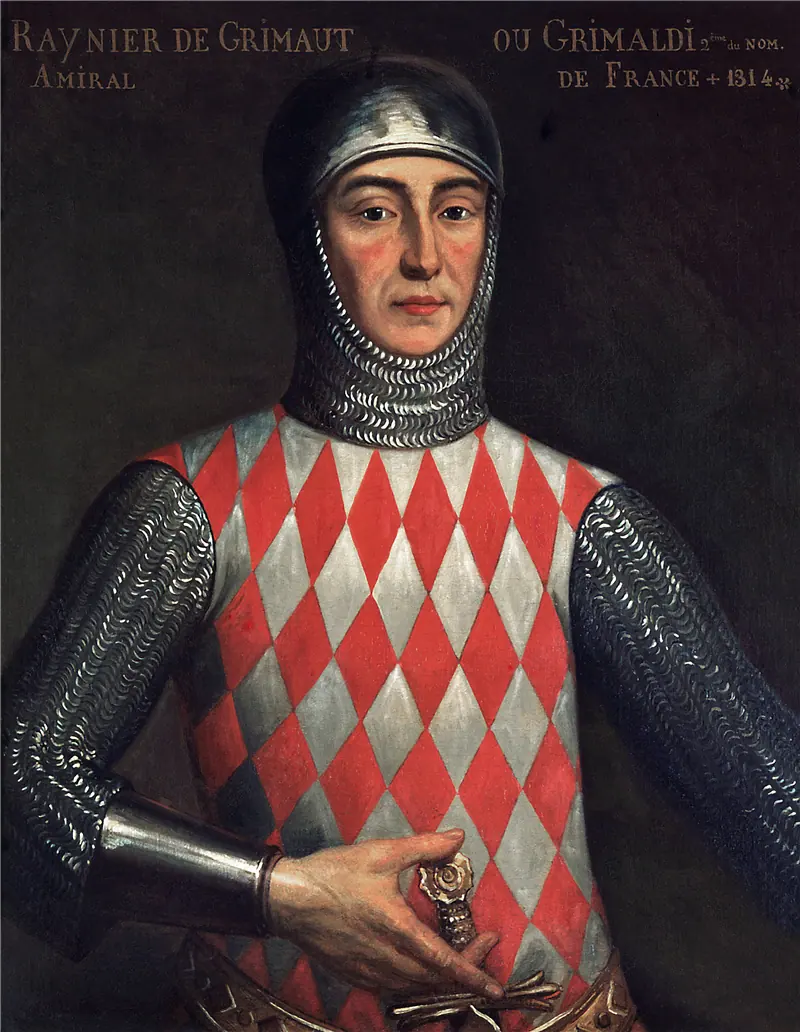
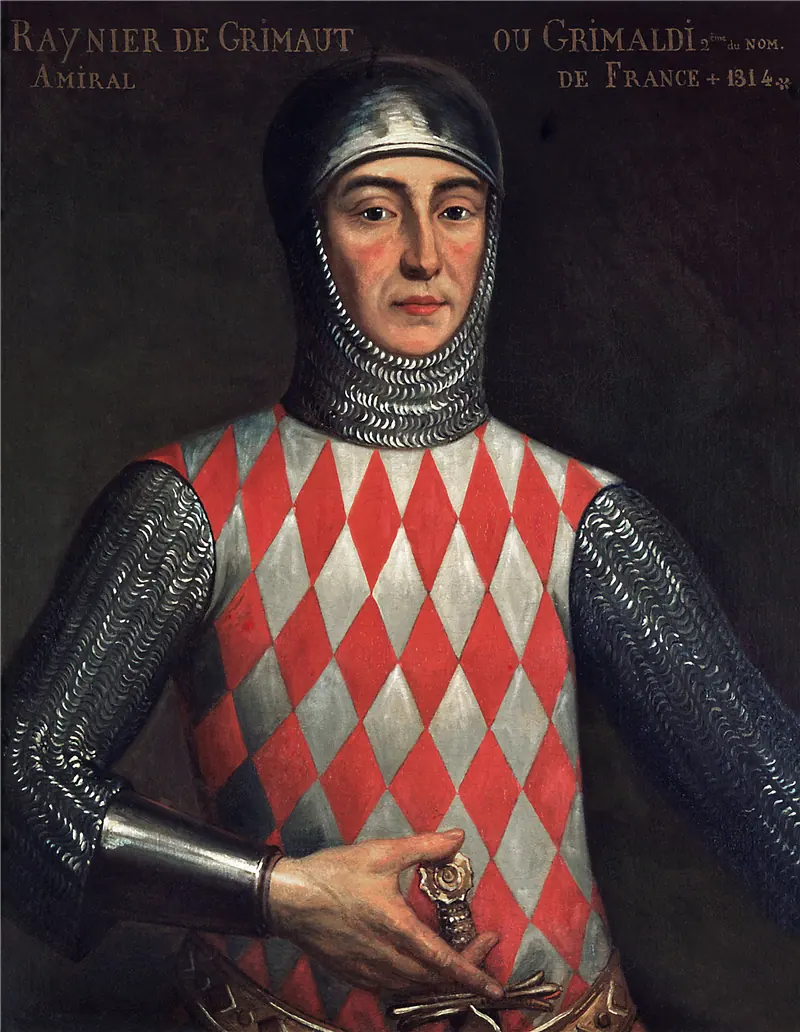
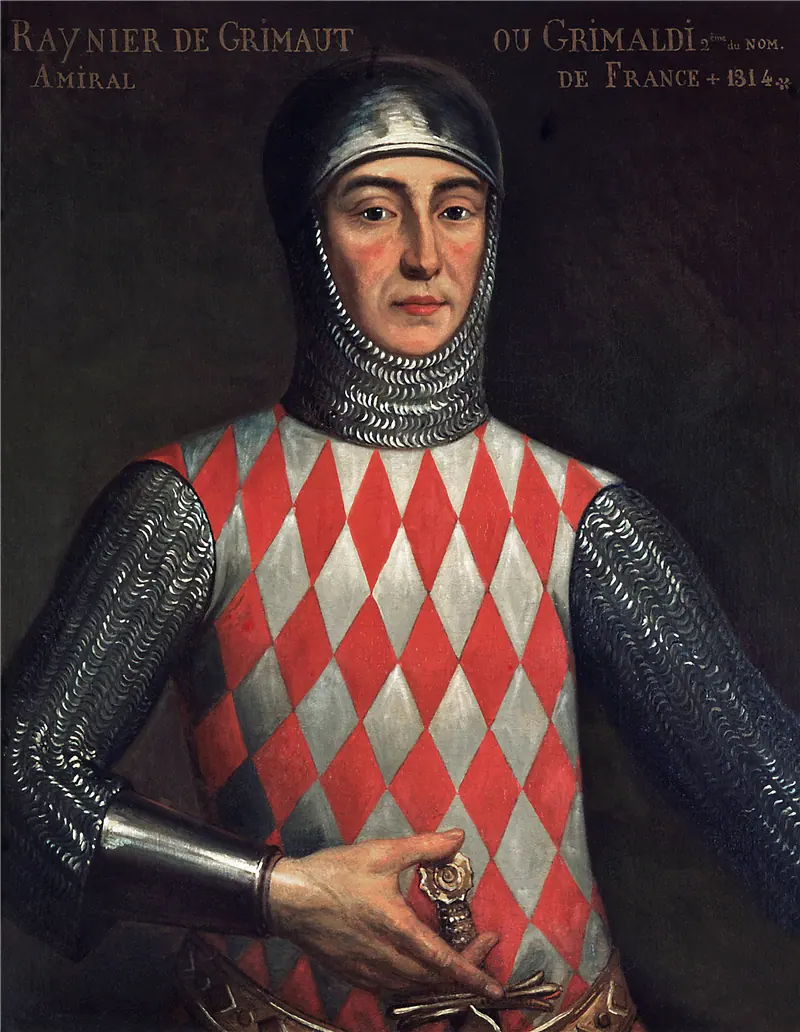
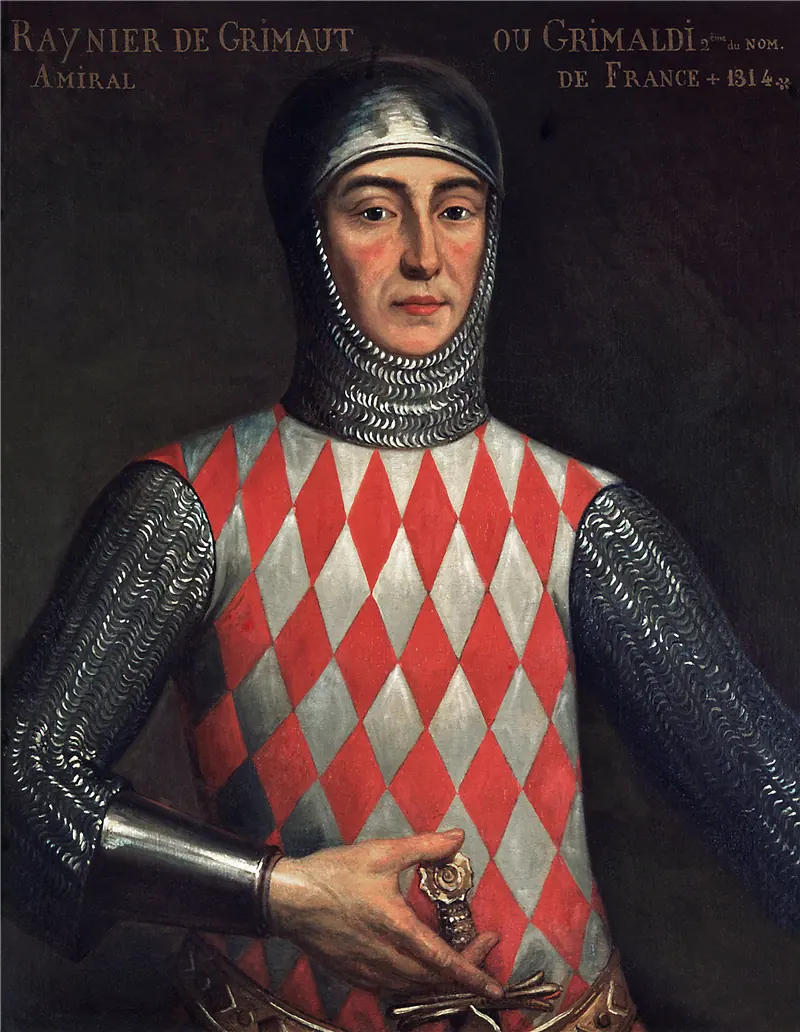
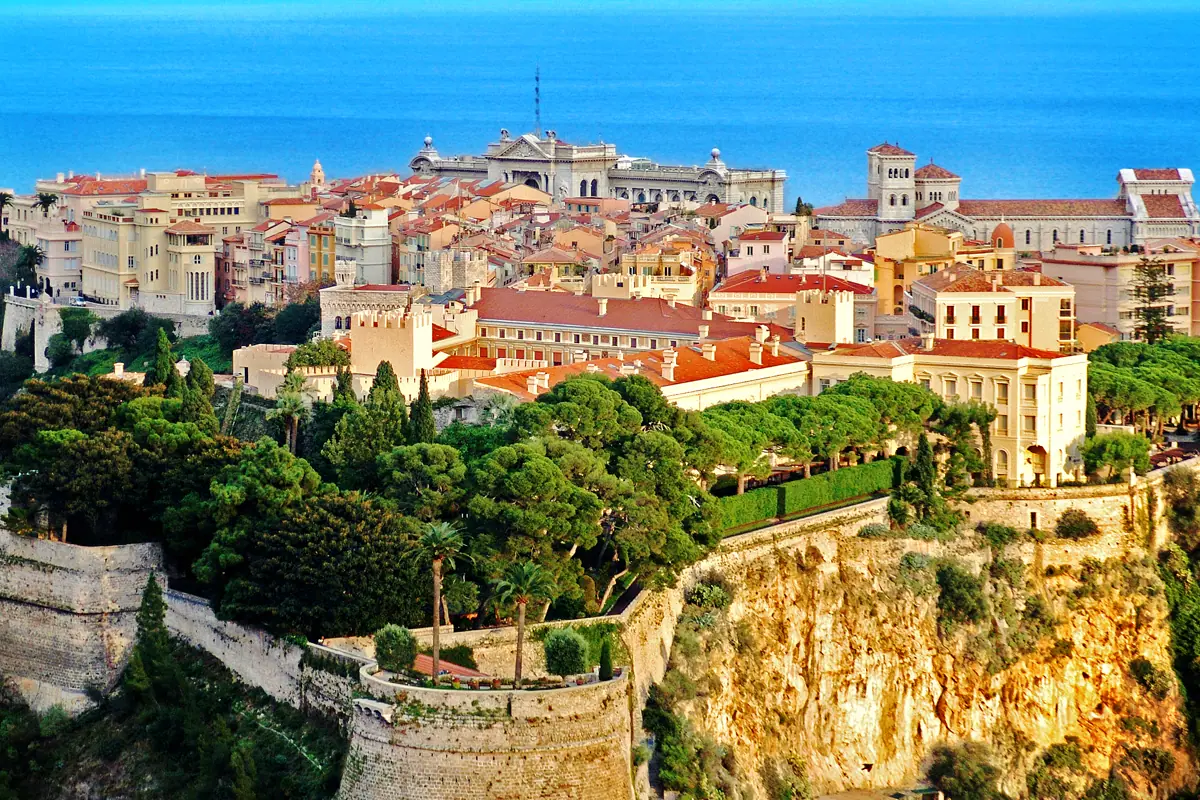
Monaco-Ville, universally called Le Rocher, is the original Monaco: a limestone headland jutting into the sea, crowned by the Prince's Palace, which the Grimaldi family has occupied for more than seven centuries. The changing of the guard outside the palace gates takes place every day shortly before noon, and the square in front of it, with its rows of cannon and its views along the coast towards France, is the single most photographed spot in the principality.
The old town's other landmarks are all within a few minutes of one another: the cathedral, where Grace Kelly married and where she and Prince Rainier are buried; the Oceanographic Museum, cut dramatically into the cliff face and home to one of Europe's oldest aquariums; the shaded terraces of Saint-Martin Gardens along the cliff edge; and the small open-air theatre at Fort Antoine, which hosts performances on summer evenings. Below the ramparts, the walk down to the port passes through the old town's narrow lanes, where restaurants serve outside under vines.
Accommodation on the Rock is scarce — a couple of small hotels and a scattering of guest rooms, most of them booking out months in advance. What you gain is something no other district can offer: the old town to yourself before the day-trippers arrive and after they leave. What you give up is convenience. The nearest beach is a bus or a long walk away, dining options are limited, and the climb back up from the harbour is genuinely steep, so plan on using the public lifts and escalators that connect the levels.
When to Go, What It Costs and What to Expect
Monaco's climate is mild year-round, but its calendar matters more than its weather. May and September are the sweet spots: warm sea, long evenings, and fewer crowds than midsummer. April and October offer the best combination of pleasant temperatures and softer hotel rates. Winter is quiet and cool rather than cold, with daytime temperatures around 13–15°C, Christmas lights along the harbour, and the January rally filling the town for a few days. The Grand Prix in May and the yacht show in September are the two events that empty the principality's hotel inventory a year ahead, so if either is your reason for coming, book six to twelve months out and expect multi-night minimum stays.
There is no airport in Monaco. The nearest is Nice Côte d'Azur, about 22 kilometres away: roughly thirty minutes by road, seven minutes by helicopter shuttle, and around twenty-five minutes by regional train to Monaco-Monte-Carlo station, which is buried in the hillside and reached by lifts from the town below. Once you are in the principality, walking is the best way to get around — it is only two square kilometres — but the terrain is hilly, so use the free public lifts and escalators and the short bus routes that link the districts. Taxis exist but are few, and surge pricing around event weeks is normal.
Budget for more than the room rate. A local tourist tax is added per person per night at most hotels, breakfast is rarely included at the top end, and beach loungers, spa treatments and casino entry are all extras. When comparing rates, look at what is bundled — sea view, breakfast, transfers, spa credit — rather than the headline figure, because in Monaco the inclusions often make more difference than the price. Booking direct with a hotel frequently secures an upgrade or a late checkout that no third party can offer.
Finally, prepare for a principality that is formal without being stiff. French is the official language and English is widely spoken; euros are the currency; smart-casual dress is the norm almost everywhere, and the casino's gaming rooms ask for identification, a small entrance fee and, in the evening, a jacket for men. Shops keep short Sunday hours, restaurants fill early, and the whole place runs on a rhythm of long lunches and late dinners. Settle into it rather than fighting it.
Frequently asked questions
Does Monaco have its own airport?
No. The nearest airport is Nice Côte d'Azur in France, about 22 kilometres away. You can reach Monaco in roughly thirty minutes by road, seven minutes by helicopter shuttle, or around twenty-five minutes by regional train to Monaco-Monte-Carlo station, which sits underground and connects to the town via lifts and escalators.
When should I book a hotel in Monaco?
For the Grand Prix in May or the yacht show in September, book six to twelve months ahead; multi-night minimum stays and full prepayment are common during those weeks. For a normal summer visit, three months is usually enough, and for winter or early spring a few weeks will often do. April and October generally offer the best value.
Which district is best for a first visit to Monaco?
Monte-Carlo, around Place du Casino, is the classic choice and puts the Casino de Monte-Carlo and the opera within a few steps. La Condamine and Port Hercule suit travellers who want harbour views and better rates, Larvotto is for beach lovers, and Le Rocher appeals to anyone who wants the historic old town on their doorstep.
Is Monaco walkable, or do I need transport?
It is very walkable — the whole principality is about two square kilometres — but it is built on steep terraces. Rely on the free public lifts and escalators to move between levels, and use the short bus routes for longer hops. Walking beats driving almost everywhere, and taxis are scarce and expensive.
What should I pack for a stay in Monaco?
Something smart for evenings: the casino's gaming rooms require identification, a small entry fee and, after dark, a jacket for men. Add comfortable shoes for the hills, swimwear for the Larvotto beach clubs and the seawater pools, and a light layer for spring and autumn evenings, when the sea breeze makes the terraces cooler than the daytime temperature suggests.
Sort the rest of your trip
Everything for Monaco, in one place
Transfer in Monaco
Private driver waiting on arrival — no queues, no surprises.
Book a transfer
Things to do in Monaco
Skip-the-line tickets, guided tours and standout experiences.
See experiences
Stay online in Monaco
Travel eSIM — data the moment you land, no roaming bills.
Get an eSIM