Monaco has no runway of its own — the planes come in low over the Baie des Anges at Nice, and the principality begins half an hour later, where the cliffs turn to towers. This seven-day plan gives you the casino squares, the palace rock, the cliff gardens and the quiet harbours at a human pace, with time left over for the Riviera villages that frame it.
Flying In: How Monaco Actually Works as an Air Arrival
Start with the geography, because it shapes the whole trip: the principality is barely two square kilometres, packed onto a shelf of rock between France and the sea, and it has no airport. Flights land at Nice Côte d'Azur, roughly twenty-two kilometres west along the coast. From there you have three sensible options. A helicopter shuttle lifts off from the airport and touches down at the Monaco heliport in Fontvieille about seven minutes later, which is the fastest and most theatrical arrival in Europe. The coastal train runs from Nice's main station to Monaco-Monte-Carlo in roughly twenty-five minutes, arriving in a cathedral-like underground station bored into the hillside at Moneghetti, where lifts and escalators carry you up into town. Or take a taxi or private transfer for the thirty-to-forty-five-minute drive along the Basse or Moyenne Corniche — beautiful, but slow when the summer traffic congeals.
Timing matters more here than in most cities. April to June and September to October are the sweet spots: warm sea, long light, manageable crowds. Late May brings the Grand Prix, when the streets themselves become grandstands and accommodation books out months ahead with minimum-stay rules. Late September is the yacht show, when Port Hercule fills with superyachts and the quayside restaurants fill with everyone else. July and August are hot, humid and jammed with day-trippers between about eleven and four; February is quiet and mild, and pairs well with nearby Menton's lemon festival.
Once you arrive, accept that Monaco is vertical. Free public lifts and escalators stitch the districts together — you can ride from the port up to the palace rock, or climb from La Condamine into Monte Carlo without touching a staircase. Choose your base by mood: Monte Carlo for Belle Époque glamour, La Condamine and Port Hercule for markets and boats, Larvotto for the beach promenade. Moneghetti, above the station, is the quietest and least expensive corner. And don't overthink the border — there is no passport control between France and the principality; in places you simply cross a street.
Days 1–2: Monte Carlo, the Casino and the Grand Prix Streets
Ease in around Place du Casino, the polished heart of Monte Carlo, where the casino's wedding-cake facade faces a square of fountains, palm trees and Belle Époque hotels. The Casino de Monte-Carlo is the obvious first stop: marble, stained glass and chandeliers inside, with the Salle Garnier opera house attached, all gilt and crimson. The gaming rooms open through the afternoon and run late into the night, and there is a smart dress code after around seven in the evening — jacket for men, no trainers or beachwear — plus photo ID and a minimum age of eighteen. Even if you never place a chip, walk the atrium and the terraces outside, where the view drops past the gardens to the sea.
Give your second day to the circuit. For most of the year, Monaco's famous race track is just ordinary asphalt with painted kerbs, and you can walk the whole 3.3-kilometre loop. Start at the Sainte-Dévote corner near the station, climb past the Beau Rivage, thread the sweepers at Massenet into Casino Square, then drop through the circuit's signature hairpin bend below the casino — the tightest, slowest, most photographed turn in motor racing. Continue down to Mirabeau, through the second hairpin, into the echoing tunnel where drivers emerge blinking into daylight, then out to the chicane by the swimming pool and the final tight Tabac corner onto the harbour straight.
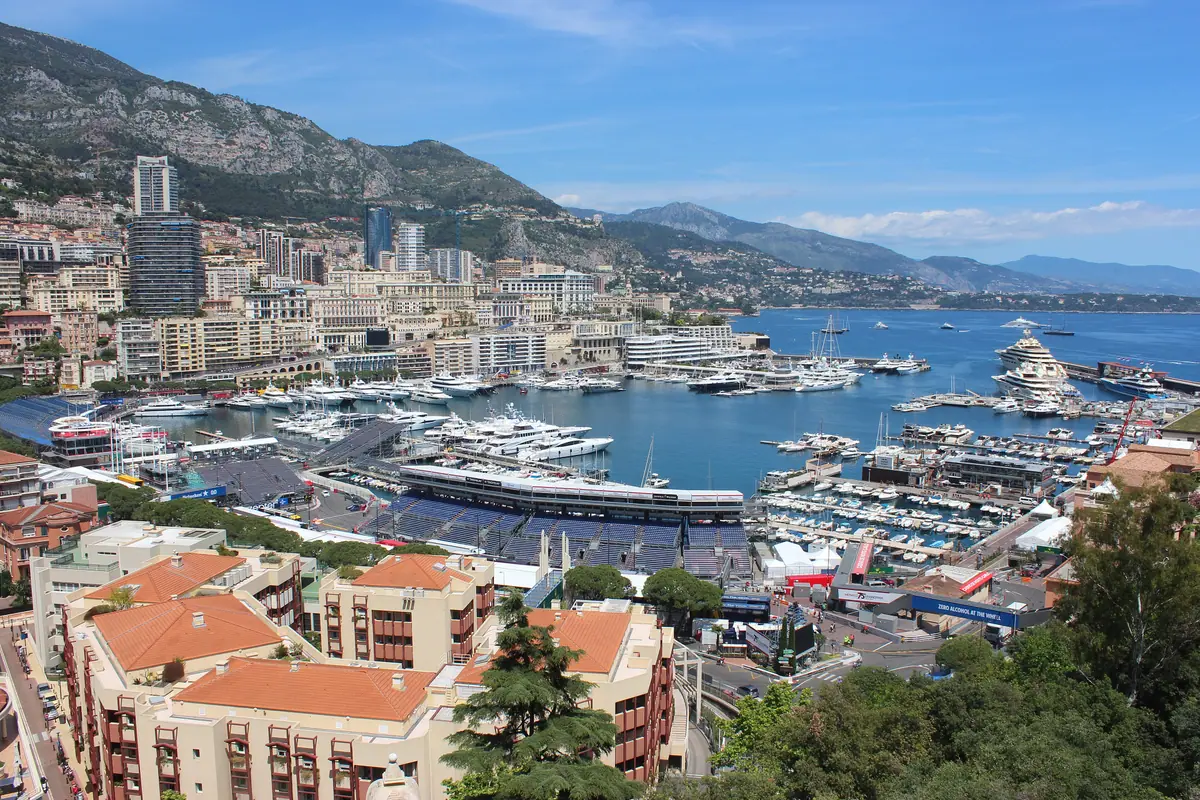
Round the day off at Port Hercule, where the yachts are moored bow-to-stern and the quayside fills with joggers, families and dinner service at dusk. Climb to the terraces above the port for the classic postcard view back across the water to the palace, and stay for the lights coming on.

Days 3–4: Le Rocher, the Prince's Palace and Monaco's Old Town
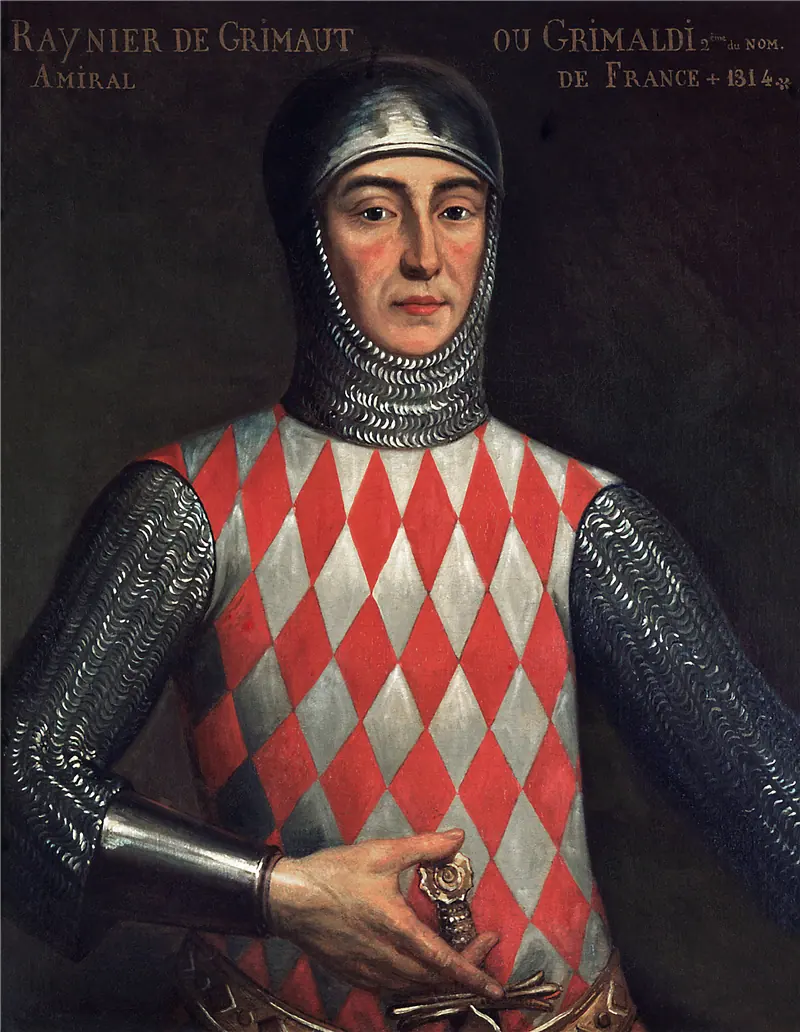
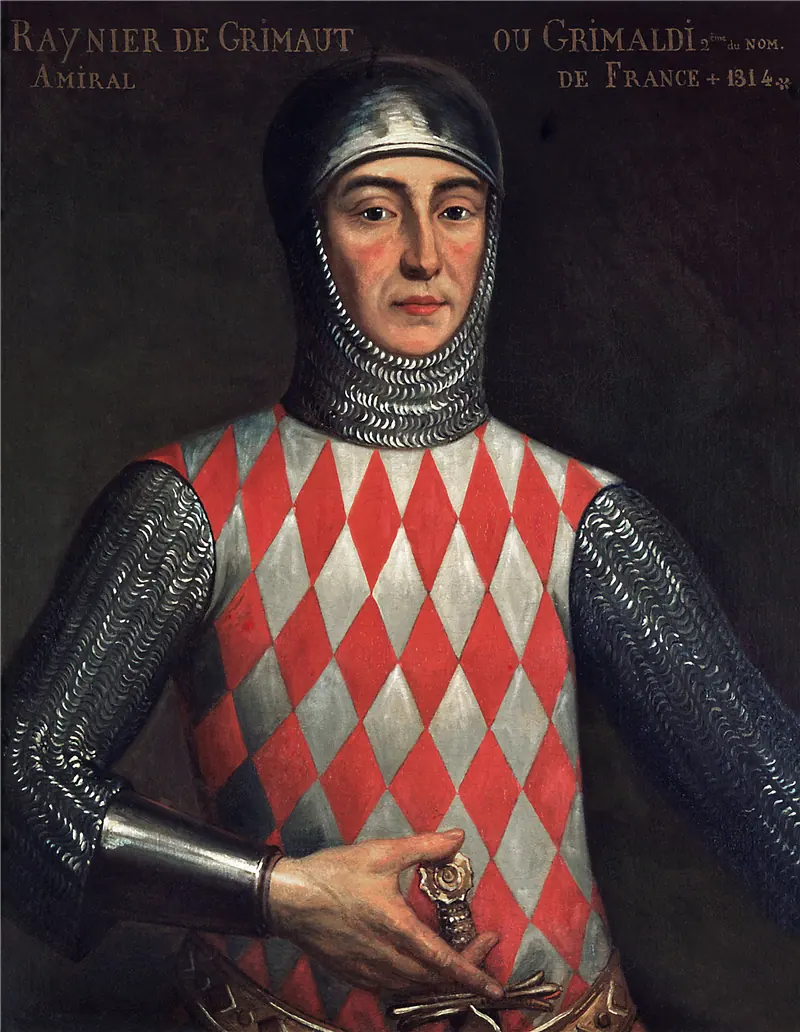
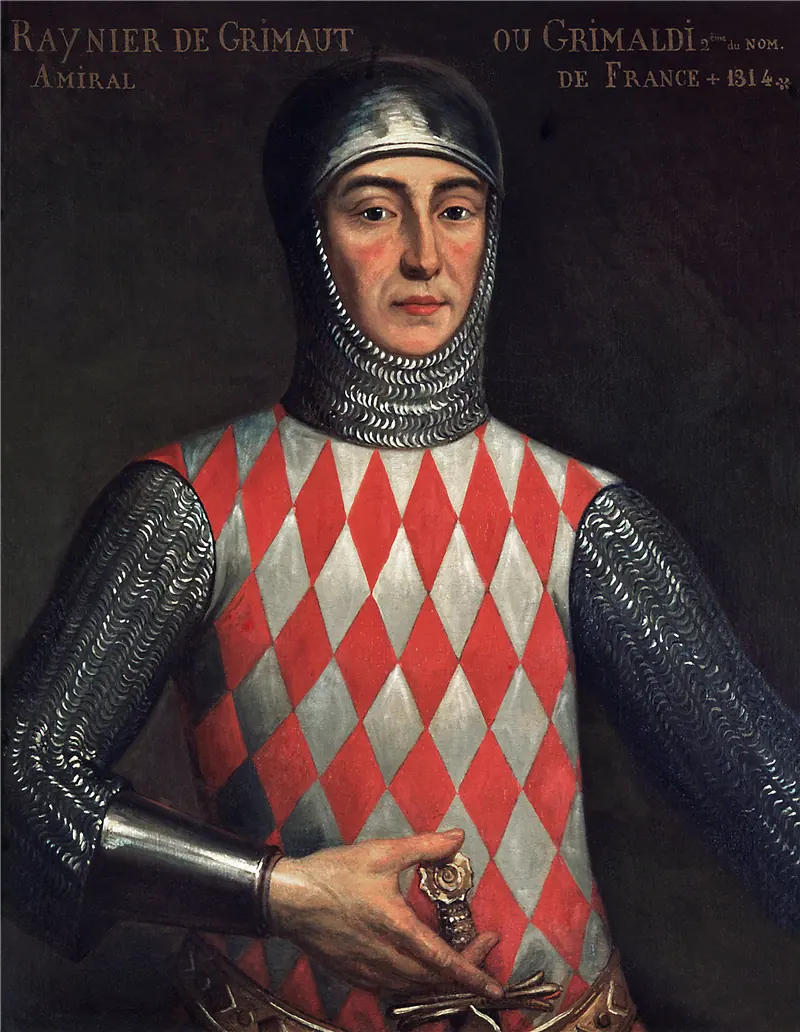
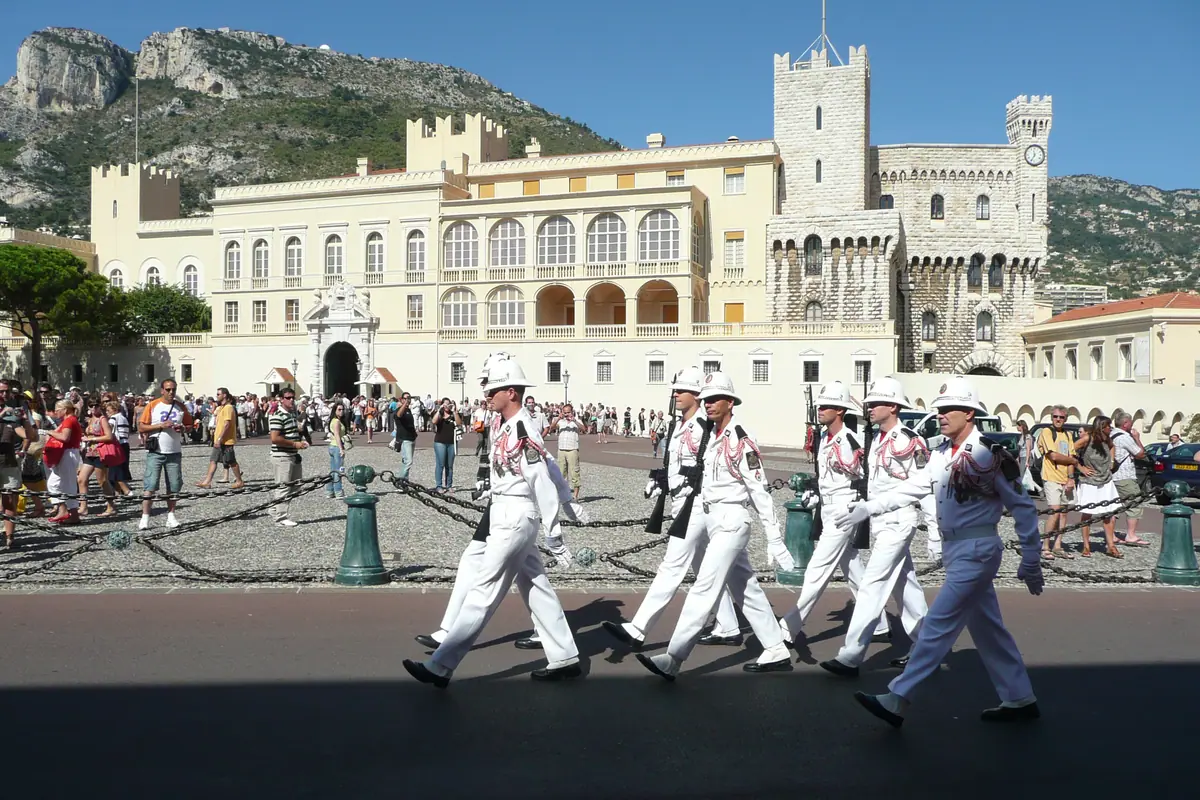
Le Rocher — the Rock — is the oldest Monaco, a headland of ochre and cream lanes hanging over the Mediterranean, and it deserves a full unhurried day. Head first to the Prince's Palace, the Grimaldi residence since the thirteenth century, fronting a square of cannons, ceremonial guards and a bronze statue looking out to sea. The Changing of the Guard takes place daily at 11:55 and draws a small, camera-waving crowd; arrive twenty minutes early for a spot by the rail. The state apartments open to visitors from roughly April to October, with guided or audio-led routes through frescoed halls, throne rooms and the Mirror Gallery.
From the palace, walk five minutes to Saint Nicholas Cathedral, a Romanesque-Byzantine building of pale stone from La Turbie, where Grace Kelly married and where she and Prince Rainier III are buried. Beside it, the Saint Martin Gardens offer shaded benches, sea views and a statue of Prince Albert I, the oceanographer prince who founded the Oceanographic Museum that looms at the cliff edge below. That museum is the old town's other unmissable stop: a monumental 1910 building that holds aquariums, a shark lagoon, whale skeletons and a rooftop terrace with one of the best panoramas in the principality. Allow two to three hours, more if you travel with children.
Finish by descending through the lanes to La Condamine and the Marché de la Condamine at Place d'Armes, where stalls sell produce in the morning and the surrounding counters serve socca — a hot chickpea flatbread — alongside barbagiuan and pissaladière. It is the most ordinary, most local corner of an otherwise extraordinary place, and a good reminder that people actually live here.
Day 5: Cliff Gardens, Caves and the Larvotto Seafront
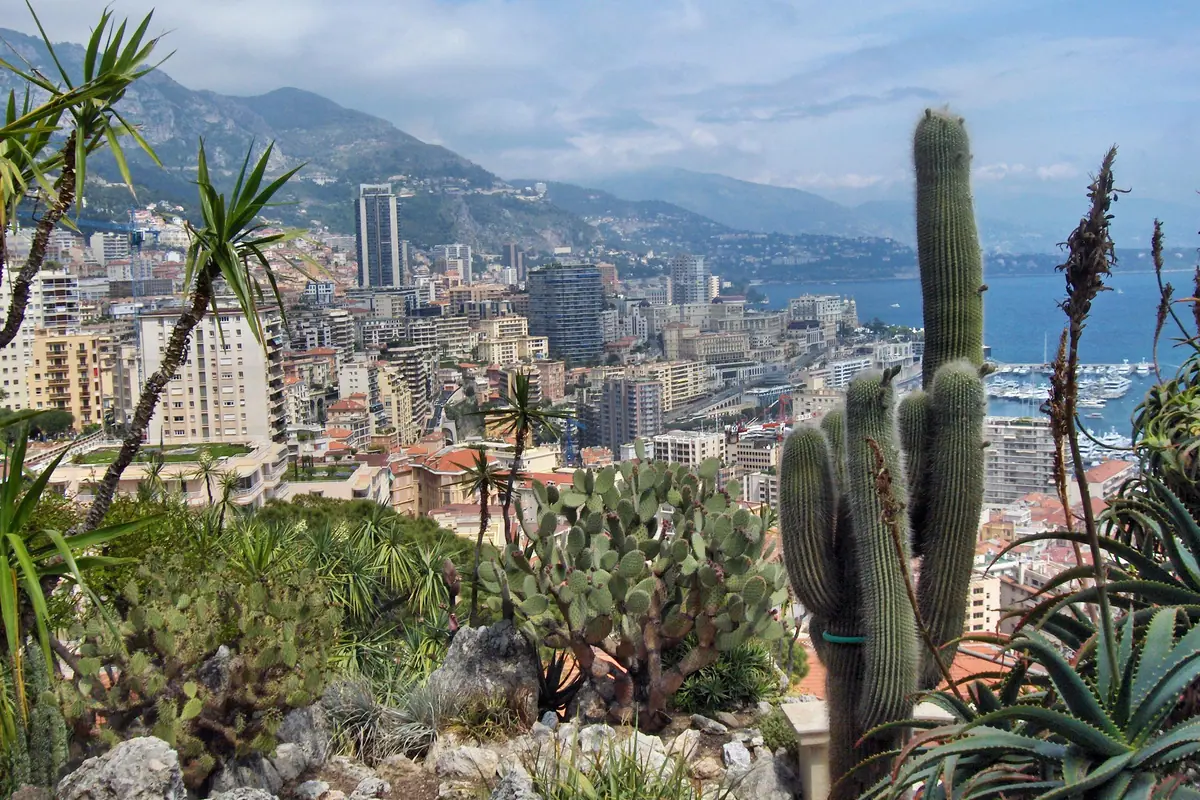
Start early and high at the Jardin Exotique, a vertiginous garden of succulents and cacti spilling down a cliff face above Fontvieille. It was laid out in the 1930s around a natural cave system, and the visit includes the Grotte de l'Observatoire, a guided descent through chambers of stalactites and stalagmites with a constant, cool drip of water. The same ticket covers the small Museum of Prehistoric Anthropology on site. Wear shoes with grip — there are hundreds of steps — and go before ten in the morning to beat both the heat and the coach groups.
Come down through Fontvieille and cross to the Japanese Garden on Avenue Princesse Grace, a deliberately tranquil composition of raked gravel, koi ponds, bamboo fences, stone lanterns and a tea house, designed by a Japanese landscape architect and opened in the mid-1990s. It takes fifteen quiet minutes and costs nothing. From there it is a short walk to Larvotto, Monaco's main beach: pebbles rather than sand, clear water, a long promenade and a protected marine reserve just offshore that makes it genuinely good for snorkelling. Beach clubs line the bay with loungers and lunch service, while the free public sections fill up by midday in summer.
Stay for a late swim, then walk the seafront promenade toward the eastern border, where the pavement narrows and the coast road begins its climb toward France. In the evening, check what's on at the Salle Garnier or the principality's concert hall — Monaco punches far above its size for classical music, and a night at the opera or a philharmonic concert is one of the least expected pleasures of a week here.
Day 6: Fontvieille, Museums and the Quieter Side of the Principality
Fontvieille is Monaco's reclaimed district — literally built out into the sea in the 1970s and 80s — and it holds most of the principality's museums in a compact, walkable cluster around a small marina ringed by low modern blocks and a stadium. Begin at the Prince's Car Collection, a hangar of roughly a hundred vehicles spanning early horse-drawn carriages, grand touring cars and the Formula 1 machines that made the streets above famous. Nearby, the Museum of Stamps and Coins tells the story of a country whose postage stamps are collected worldwide, and the small private naval museum displays intricate ship models.
Then slow down in the Princess Grace Rose Garden, a scented, open-air garden of thousands of roses with contemporary sculptures scattered among the beds and the sea just beyond the trees. It is free, unfenced and almost never crowded before lunchtime. If you want art, the Nouveau Musée National de Monaco runs two venues — Villa Paloma above the port and Villa Sauber in Larvotto — with changing exhibitions, a single ticket covering both, and a short bus or walk between them.
Finish the afternoon at the heliport on the Fontvieille waterfront, where the shuttles rise and settle all day — a good place to understand the scale of the place you've been exploring, with the Rock behind you and the French coast curving away. Dinner back at Port Hercule, or in the smaller Fontvieille marina, is a gentle way to close the day.
Day 7: Riviera Day Trips and Your Flight Home
With a full week, use the last day for the coast that makes Monaco make sense. Èze is the classic: a medieval village perched four hundred metres above the sea, twenty to thirty minutes away by bus, taxi or car, with narrow stone lanes, a cactus garden at the summit and sweeping views back toward the principality. Fit walkers can descend the Nietzsche Path from Èze village to Èze-sur-Mer on the shore in about an hour — steep, rocky and spectacular — then take the train back. Equally worthwhile: Menton, with its pastel old town and lemon-scented gardens; Roquebrune-Cap-Martin, where Le Corbusier's tiny Cabanon sits on a protected coastal site; and the Tête de Chien above La Turbie, which delivers the aerial photograph of Monaco you have been trying to take all week.
For your departure, build in slack. Road transfers along the Corniche can stretch badly on summer Friday evenings and Sunday afternoons, when the whole Riviera seems to be driving home; the train is far more predictable, running frequently between Monaco-Monte-Carlo and Nice. If you are flying out of Nice to a non-Schengen destination, allow a full two hours at the airport in high season. Helicopter passengers should factor in the shuttle ride, check-in and the walk to the terminal at the far end — the flight is seven minutes, but the process still takes about an hour door to door.
If time allows on the final morning, spend it walking the Saint Martin Gardens one last time, or take coffee on the palace square before the crowds arrive. Monaco rewards repetition more than most destinations: the same three square kilometres read completely differently on a Tuesday in October than they do under the August sun.
Frequently asked questions
Which airport do you fly into for Monaco?
Nice Côte d'Azur, about twenty-two kilometres west of the principality, is the only practical arrival point. From there you can take a seven-minute helicopter shuttle to the heliport in Fontvieille, a roughly twenty-five-minute coastal train to Monaco-Monte-Carlo station, a coach along the coast, or a taxi and private transfer taking thirty to forty-five minutes depending on traffic.
How many days do you actually need in Monaco?
Three or four days cover the essentials — Monte Carlo, the palace rock, the oceanographic museum and the harbour. A full week lets you move at a slower pace, add the cliff gardens, Larvotto beach, the Fontvieille museums and at least one Riviera day trip to Èze or Menton without spending every day rushing.
What is the best time of year to visit Monaco?
April to June and September to October offer warm weather, long days and reasonable crowds. Late May is Grand Prix week, when streets close and accommodation is booked out at premium rates, and late September brings the yacht show. July and August are hot and busy, especially between eleven and four, while winter is mild and quiet.
Do you need a car in Monaco?
No — the principality is tiny, dense and walkable, with free public lifts and escalators linking the hillside districts. Trains along the coast are the fastest way to reach Nice, Menton, Èze-sur-Mer and the Italian border, and parking is scarce and expensive. Use a car only if you plan to explore the backcountry villages.
What should you wear at the Monte Carlo casino?
Daytime visits are relaxed, but from around seven in the evening the gaming rooms apply a smart dress code: jackets for men, no trainers, shorts, flip-flops or beachwear, and no sports bags. Bring photo ID, since entry to the gaming rooms is restricted to adults and identification is checked at the door.
Sort the rest of your trip
Everything for Monaco, in one place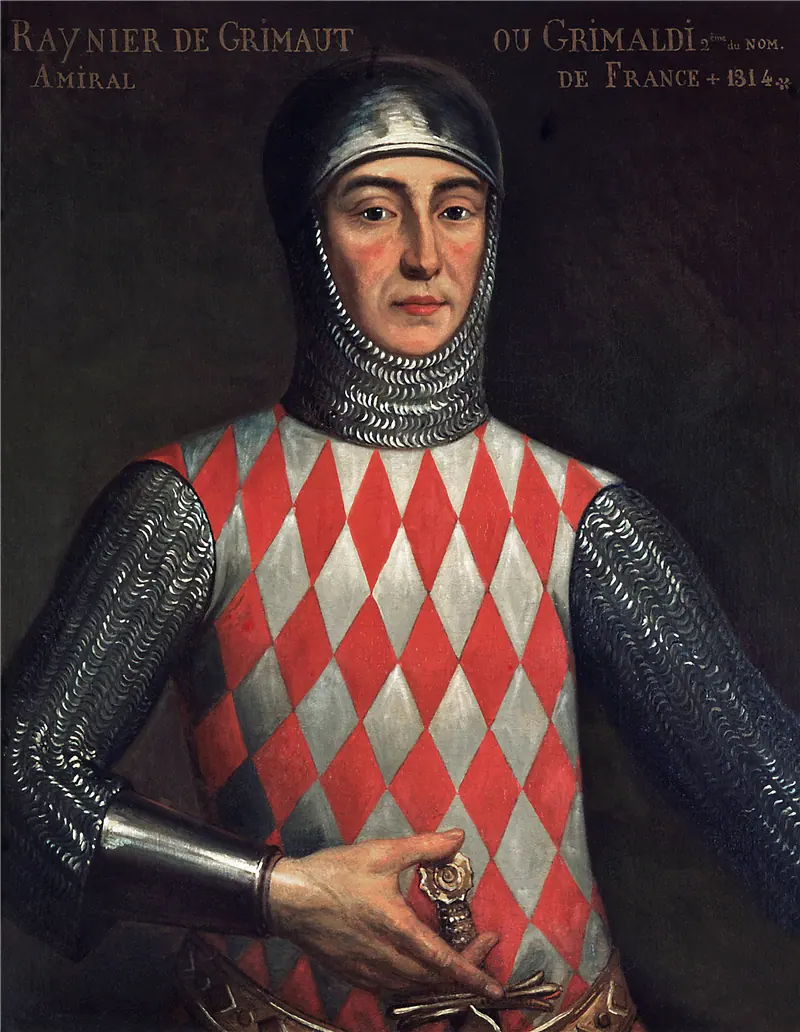
Stay in Monaco
Hotels, guesthouses and apartments — compared in one search.
Search hotels
Transfer in Monaco
Private driver waiting on arrival — no queues, no surprises.
Book a transfer
Travel insurance
Medical cover, delays and lost baggage — sorted before you go.
Get covered