Monaco squeezes an entire Riviera holiday into two square kilometres, yet its calendar swings between two completely different places: a sun-struck playground of terrace lunches, harbour yachts and beach clubs from spring to autumn, and a hushed, lamplit principality of opera nights and near-empty squares in the depths of winter. Knowing which version you want — and what it does to room rates in Monte-Carlo, Monaco-Ville and La Condamine — is the whole trick to timing a trip here.
Monaco's Seasons at a Glance: A Sheltered Riviera Microclimate
Monaco sits in a natural amphitheatre of hills, backed by the last ridges of the Alps and fronted by the Mediterranean, which is why its weather is gentler than almost anywhere else at this latitude. Winter days hover around 12–14°C with bright, low sun and occasional short downpours from November to February; July and August push into the high twenties, sometimes touching 30°C, with humid, still afternoons and sea temperatures of roughly 22–25°C. Most rain falls between late October and March, and even then it usually arrives in brief, dramatic bursts rather than grey all-day drizzle.
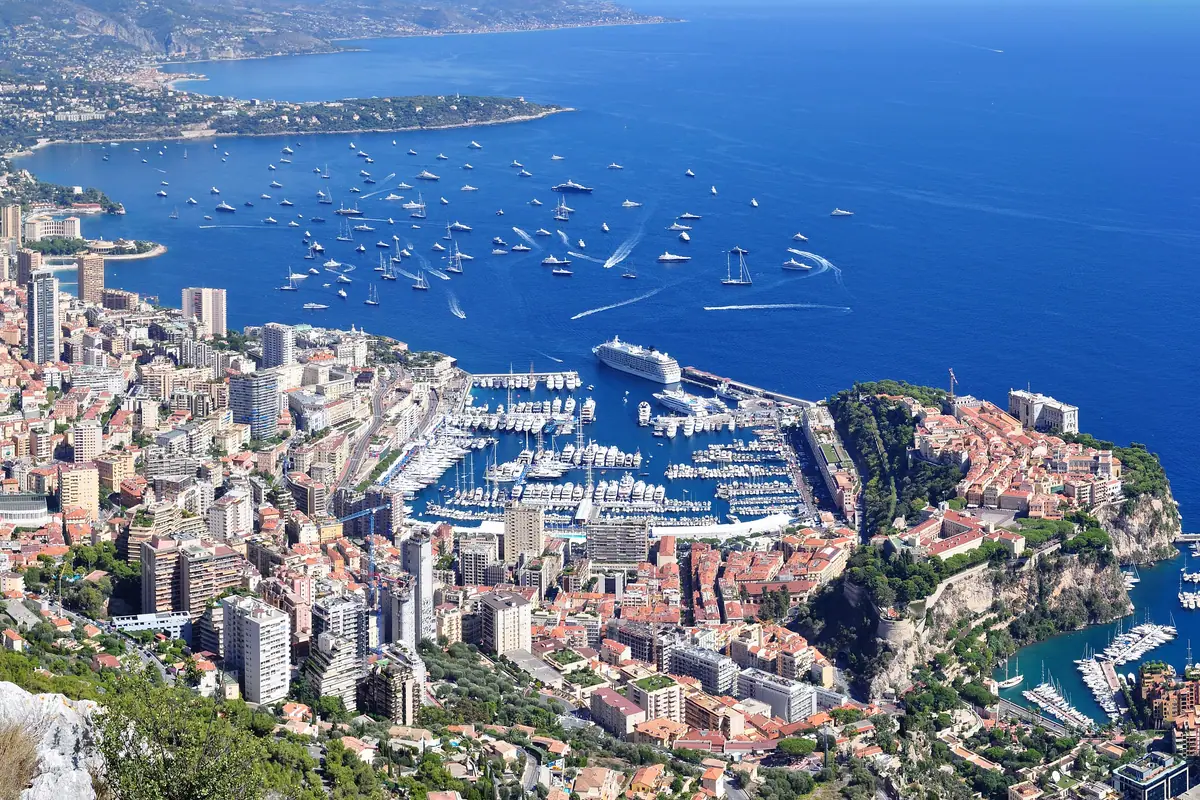
Because the principality is barely two square kilometres, the seasons change what you do rather than where you go. You can walk from the beach at Larvotto to the old town on Le Rocher in well under an hour, dipping through public lifts, escalators and stairways cut into the rock. What genuinely shifts is the atmosphere: the middle of the day from May to September brings day-trippers pouring in from Nice, Cannes and Menton and cruise passengers filling Casino Square and the Prince's Palace forecourt, while early mornings and the hours after dinner belong to residents and hotel guests again.
Spring (March to May): Grand Prix Fever and the Best Balance of the Year
March is a soft, underrated month: daytime temperatures climb to around 15–17°C, mimosas and citrus are still in flower along the Corniche, hotel rates are low and the terraces begin to reopen. April is livelier, with the Monte-Carlo Masters tennis tournament drawing crowds to the Monte-Carlo Country Club on the French border and Easter week filling the cafés around Casino Square. The sea is still bracing at this point, so this is a season for gardens, galleries and long lunches rather than swimming.
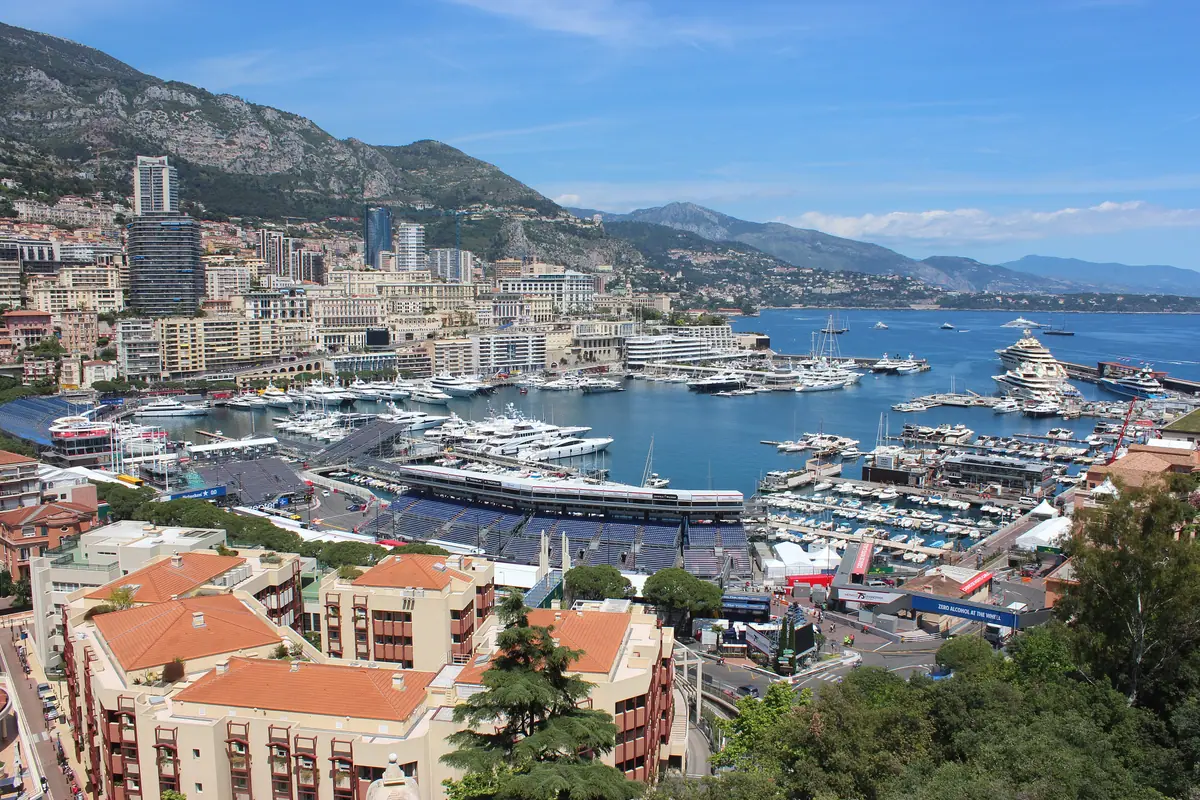
May belongs to the Grand Prix. For one long weekend in late May the harbourfront and the streets around Casino Square are transformed into a race circuit, with grandstands on the quayside, crash barriers along the famous run down to the hairpin, and hospitality suites overlooking the tunnel exit. Hotel rooms are booked six to twelve months ahead, minimum-stay conditions apply, and rates can triple. If you want the atmosphere without the price, base yourself just over the French border in Beausoleil or Cap d'Ail, or stay in Nice and use the frequent coastal trains into the underground Monaco-Monte-Carlo station.
The week immediately after the race is arguably the sweet spot of the entire year: the city is still buzzing, the days are warm and bright at 22–24°C, evening light lasts until nearly nine, and rooms suddenly become available again. Late May and early June combine the best weather of spring with the last of the shoulder-season pricing.
Summer (June to August): Larvotto Beach Days and High-Season Prices
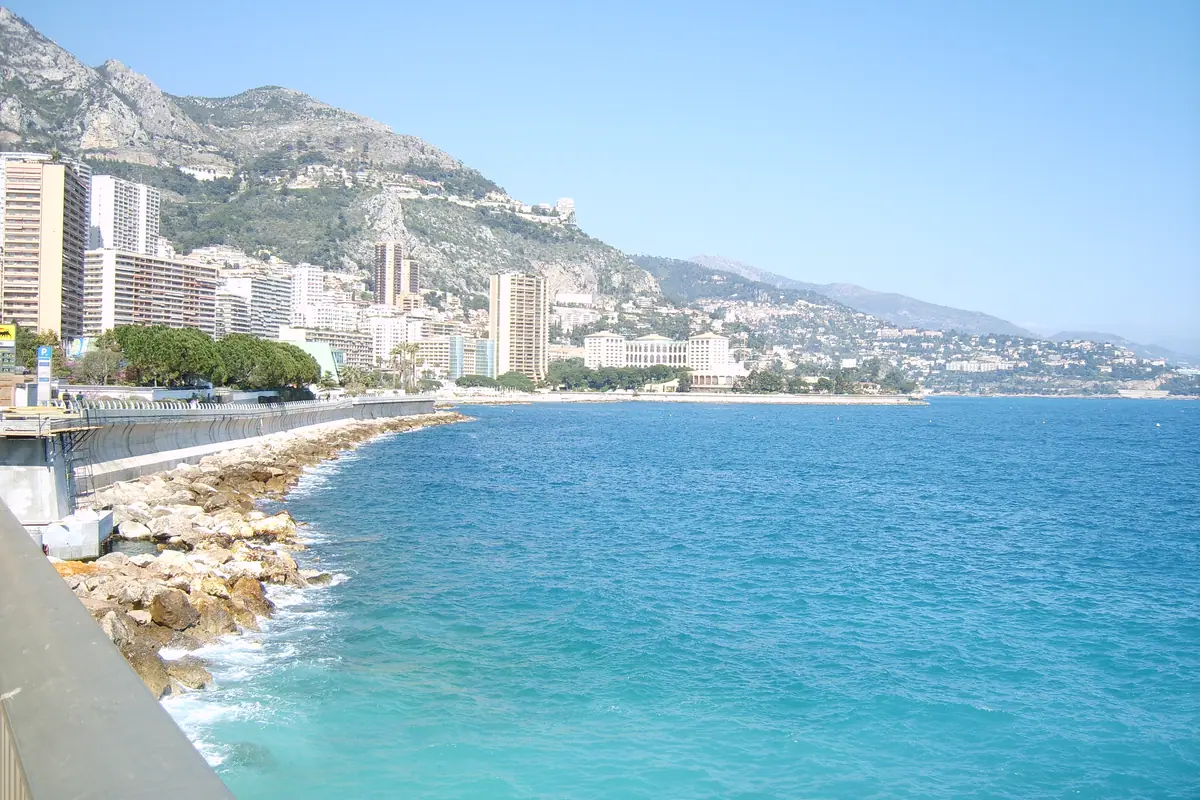
June is the connoisseur's summer month. The Mediterranean warms to a genuinely comfortable 20–22°C, sunset stretches past 21:00, the gardens are at their peak, and hotel rates have not yet reached their August heights. It is also the month when the beach clubs along Larvotto settle into their rhythm, with sun loungers, paddleboards and a promenade that stays busy well into the evening.
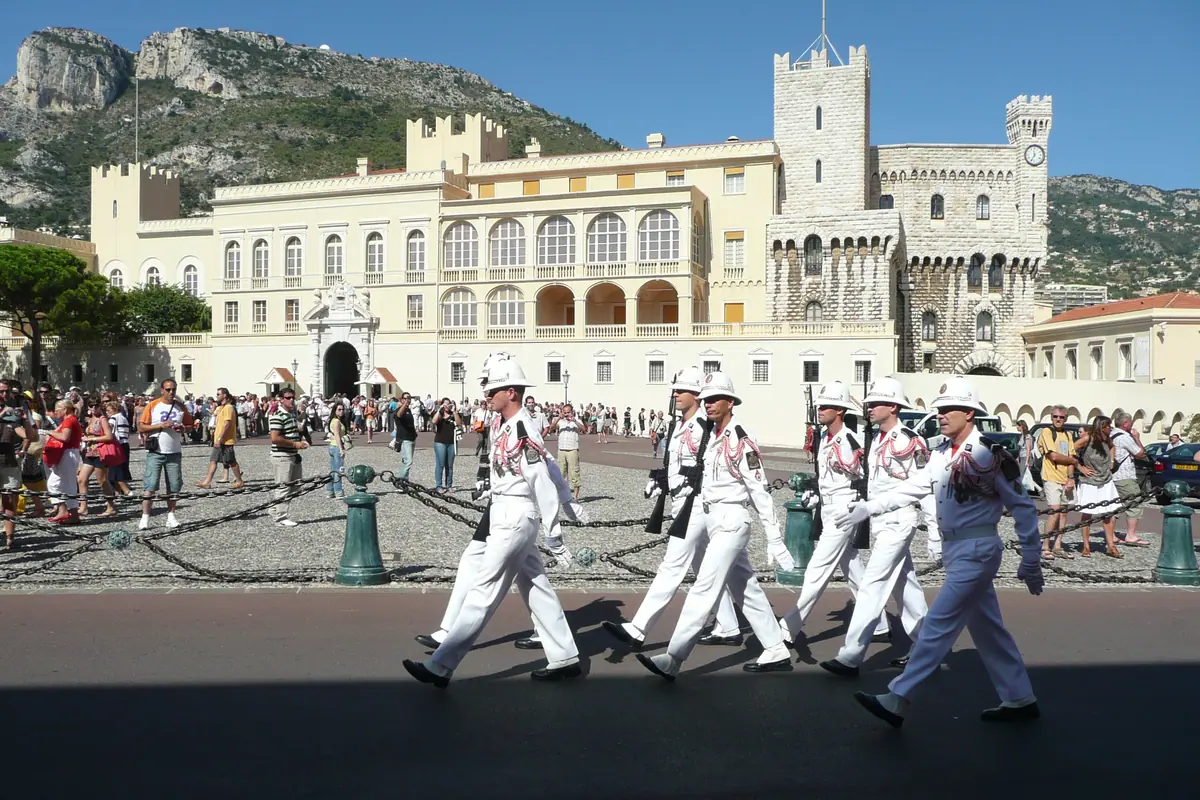
By July and August the heat and the crowds both peak. Larvotto's pebbly shore is the only real swimming beach in Monaco and fills quickly on weekends; water shoes make the stones far more comfortable. Midday is best spent indoors or underground — the Oceanographic Museum on the cliff edge of Le Rocher is blissfully cool, as is the cathedral nearby, while the Prince's Palace and its square are far more bearable in the early morning, particularly around the changing of the guard at 11:55.
This is the most expensive stretch for accommodation, so book two to four months out and expect a sea-view premium. A hotel with a rooftop pool or a shaded courtyard earns its money in August, when the humidity can make walking uphill to Monaco-Ville a genuine effort. Fontvieille, on the western side, stays noticeably calmer than the casino district, and early risers get the harbour quay almost to themselves.
Autumn and Winter (September to February): Yacht Show, Christmas Lights and Value Rooms
September brings the warmest sea of the year, around 24–25°C, and a softer golden light, but also the Monaco Yacht Show, when Port Hercule fills with superyachts and hotel rates jump again for four days in late September. Once the show packs up, October takes over as the connoisseur's choice: 22–24°C afternoons, calm water for swimming, terrace tables still in use and prices noticeably kinder than summer.
November is the quiet, sometimes damp shoulder — a good month for the opera and concert season at the ornate Salle Garnier theatre inside the casino, for museum visits and for low room rates outside event weekends. December flips the mood again: the Christmas village at Port Hercule arrives with market stalls, a big wheel and an ice rink, Casino Square is strung with lights, and New Year's Eve brings fireworks over the harbour. Rates spike for the holidays themselves, then fall away sharply.
January and February are the cheapest and calmest months, though not empty: the Monte-Carlo Rally and the International Circus Festival both draw crowds in January, and on 27 January the quayside ceremony for Saint Devota, Monaco's patron saint, ends with a boat set alight on the harbour. Expect 8–10°C nights and a jacket. Some beach clubs and seasonal restaurants close, but the museums, gardens and Belle Époque interiors are at their most peaceful, and weekday rooms can be a fraction of summer prices.
Must-Visit Landmarks to Build Your Days Around
Start with the Casino de Monte-Carlo, the Belle Époque landmark that gave the district its name. Non-gamblers can wander the atrium and the marble galleries freely, while the gaming rooms and the jewel-box Salle Garnier opera house inside reward those who dress smartly and pay the small entry fee. The square outside is the social heart of Monaco — best seen early in the morning, when the light catches the dome and the terraces are still being laid.
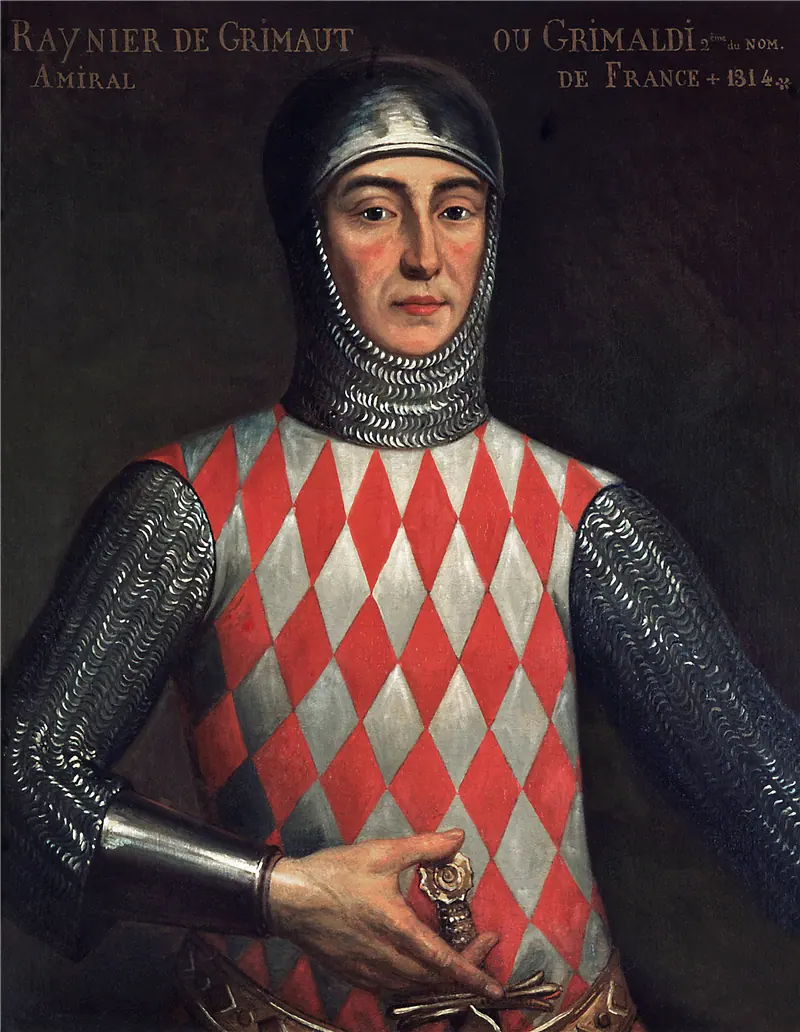
Monaco-Ville, the old town on Le Rocher, is the historic counterweight. The Prince's Palace has guarded the headland since the thirteenth century, and its square offers cannon, views and the daily changing of the guard at 11:55. Below it, Saint Nicholas Cathedral holds the tombs of Grace Kelly and Rainier III, and along the southern cliff the Saint-Martin Gardens wind above the sea with views towards France and Italy. The Oceanographic Museum, perched dramatically on the rock, combines a century-old aquarium with a rooftop terrace worth the climb.
Elsewhere, the Exotic Garden sprawls down a cliff face thick with cacti and succulents, with the underground Observatory Grotto beneath it, and the Japanese Garden near Larvotto offers a quiet, precisely raked contrast to the surrounding glass. In Fontvieille, the Princess Grace Rose Garden scents a whole corner of the reclaimed district near the Monaco Top Cars Collection, while the Formula 1 circuit itself — Port Hercule's quayside, the tunnel and the swimming-pool complex — is walkable any day of the year, barriers or not.
Where to Stay: Districts, Timing and What Your Money Buys
Monte-Carlo, around Casino Square and Avenue Princesse Grace, means Belle Époque palace hotels, the highest rates and the shortest walk to nightlife, shopping and Larvotto beach. La Condamine, wrapped around Port Hercule and the market on Place d'Armes, is the practical middle ground: mid-range rooms, excellent transport links and a genuine neighbourhood feel. Monaco-Ville has atmosphere but very few rooms, while Fontvieille is quieter, family-friendly and handy for the heliport. Many properties sold as "Monaco" are technically in Beausoleil, just across the French border — often ten minutes on foot from the casino and considerably cheaper.
Timing your booking matters more than your budget. For the Grand Prix and the Yacht Show, reserve six to twelve months ahead; for July and August, two to four months is usually enough; in January and February you can often book weeks in advance and still find sea-view rooms. Note that midweek nights are typically softer than weekends, when visitors arrive from Nice and Cannes, and that a hill-view room can cost noticeably less than one facing the water.
One local quirk shapes everything: Monaco has no airport of its own. Nice Côte d'Azur is about thirty minutes by road, with a seven-minute helicopter transfer or frequent trains to the underground Monaco-Monte-Carlo station. Taxis are scarce and expensive, so it pays to choose a hotel within walking distance of the public lifts and escalators that link the port, Le Rocher and the upper streets — a detail that matters far more than a few hundred metres on a map when the July heat sets in.
Frequently asked questions
What is the best month to visit Monaco?
Late May just after the Grand Prix, June and October are the standout months. All three combine warm, reliable weather with fewer crowds than high summer — late May and June offer long daylight and sea temperatures that are pleasant by early June, while October keeps the water at its warmest and softens hotel prices considerably.
When are Monaco hotels cheapest?
Midweek nights in January and February are generally the quietest and cheapest, followed by November and the first half of December. Avoid the Grand Prix long weekend in May, the Yacht Show in late September, and the Christmas and New Year period, when rates rise sharply and minimum-stay rules often apply.
How far ahead should I book for the Monaco Grand Prix?
Six to twelve months ahead is realistic for the May race weekend, and some hotels sell out even earlier. Expect minimum-stay requirements and much higher rates. Cheaper alternatives include staying in Beausoleil, Cap d'Ail, Menton or Nice and taking the coastal train to the underground Monaco-Monte-Carlo station.
Can you swim in Monaco, and when?
Yes. Larvotto is the main swimming beach, pebbly rather than sandy, so water shoes help. The season runs roughly from June to early October, with the warmest water in late August and September at around 24–25°C. There are also sheltered coves at the foot of the old town, though access involves steps.
How many days do you need in Monaco?
Two days is enough to cover the Casino de Monte-Carlo, Monaco-Ville with the Prince's Palace and cathedral, the Oceanographic Museum and the Exotic Garden at a comfortable pace. Three days lets you add Larvotto beach time, the Japanese Garden, Fontvieille's rose garden and a slower evening on the harbour.
Sort the rest of your trip
Everything for Monaco, in one place
Transfer in Monaco
Private driver waiting on arrival — no queues, no surprises.
Book a transfer
Things to do in Monaco
Skip-the-line tickets, guided tours and standout experiences.
See experiences
Stay online in Monaco
Travel eSIM — data the moment you land, no roaming bills.
Get an eSIM