Mauritius looks tiny on the map — barely 65 kilometres from tip to tip — yet it packs volcanic peaks, a UNESCO-listed mountain, coral lagoons, a colonial capital and some of the best street food in the Indian Ocean into that space. This one-week route circles the island anticlockwise, starting in the sleepy south-east where your flight lands, and finishing among the northern beaches. It moves at a pace that leaves room for rum, reef snorkelling and long lunches, because rushing Mauritius misses the point entirely.
Days 1–2: Landing in the South-East — Mahebourg, Blue Bay and Île aux Aigrettes
Long-haul flights to Mauritius arrive at Sir Seewoosagur Ramgoolam International Airport at Plaine Magnien, usually in the early morning after an overnight hop of roughly 11 to 12 hours from Europe, six from the Gulf or around four from southern Africa. The airport sits in the quiet south-east, ten minutes from Mahebourg, so resist the urge to drive straight to a northern resort. Base yourself in Mahebourg or nearby Pointe d'Esny for two nights and let the jet lag fade against a backdrop of fishing boats and mountain silhouettes.
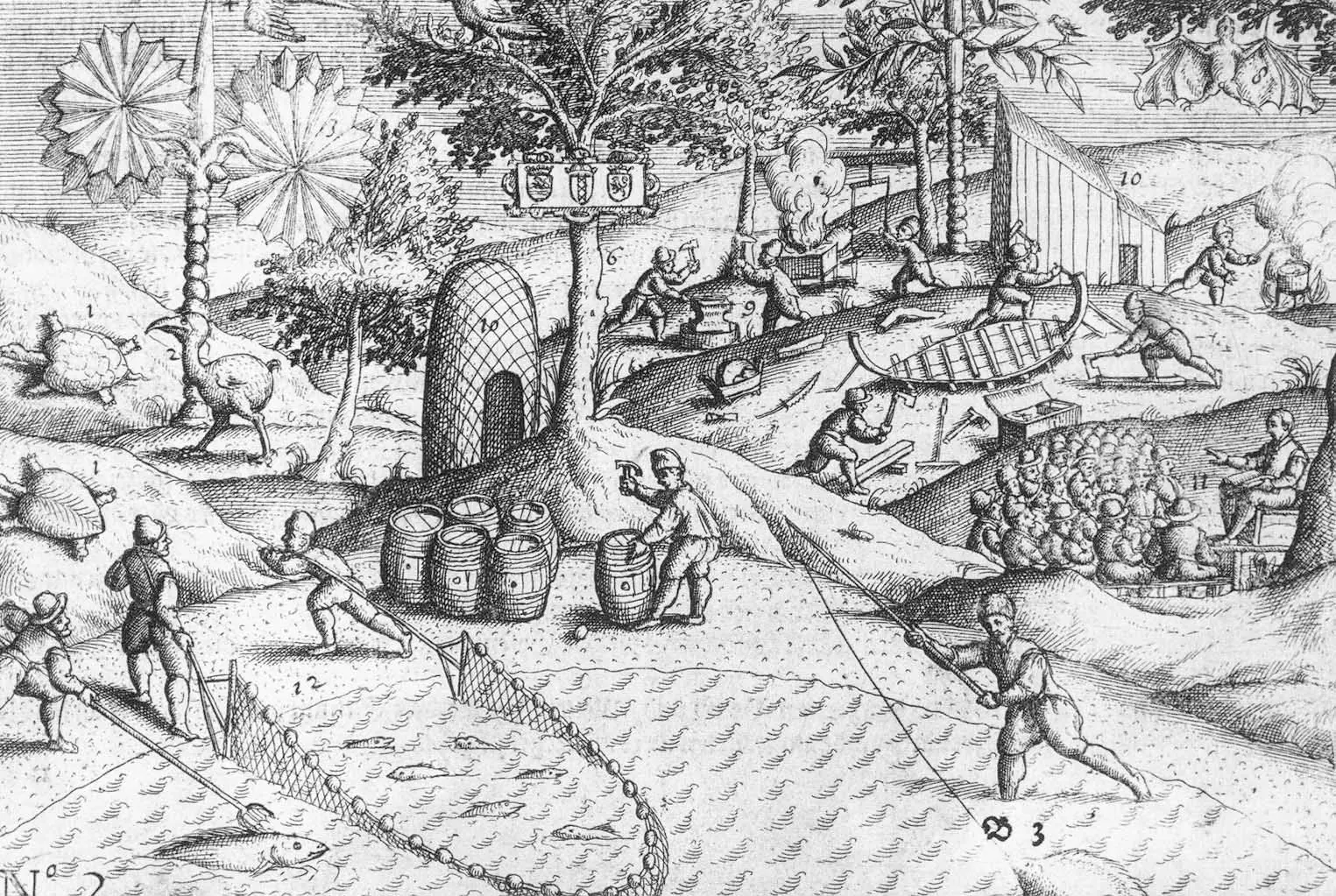
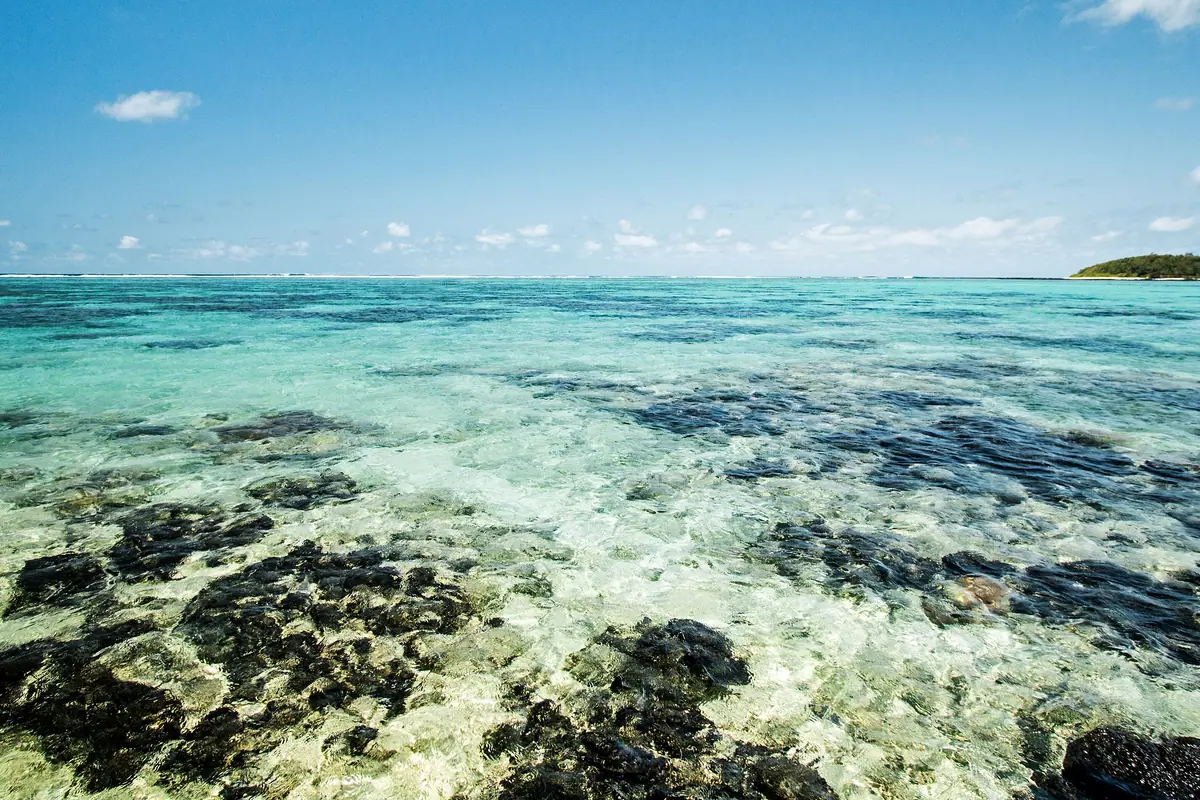
Mahebourg itself is a low-key grid of colonial-era streets on the edge of a wide bay, with a Monday market on the waterfront and a small museum in a creole villa that tells the story of the 1810 naval Battle of Grand Port, fought in the waters just offshore. Ten minutes further east, Blue Bay Marine Park protects one of the island's richest coral gardens; glass-bottom boats and snorkelling trips leave from the beach, and the water is calm and shallow enough for nervous swimmers. Nearby Île aux Aigrettes, reached by boat from Pointe Jérôme, is a restored nature reserve where giant Aldabra tortoises, pink pigeons and ancient ebony trees survive behind a predator-proof shoreline — guided walks last about 90 minutes and numbers are capped, so reserve a slot a day ahead.
Spend the second afternoon doing very little on Pointe d'Esny's long white beach, then eat grilled fish or octopus curry in a barefoot beach shack as the sun drops behind Lion Mountain. It is a gentle introduction to an island that rewards slow mornings.
Day 3: Chamarel, the Seven Coloured Earths and Black River Gorges
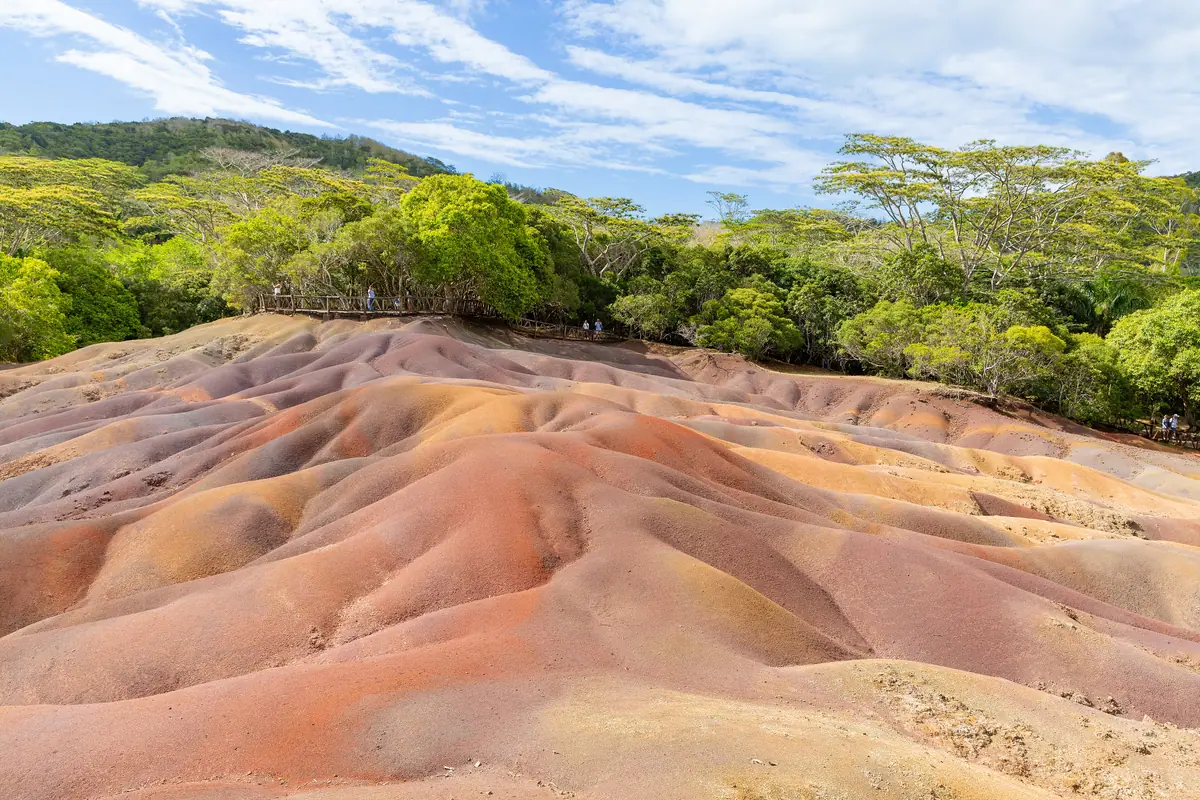
Collect a hire car — you drive on the left here, and automatic transmission is worth booking early — and climb onto the central plateau. First stop is the Chamarel Seven Coloured Earths, a small field of volcanic ash dunes that shift through ochre, rust, violet and grey depending on the light. Arrive before 10am to have the wooden walkways to yourself, and pair it with the neighbouring Chamarel Waterfall, where a single ribbon of water drops about 100 metres into a forested gorge. The village also has a rum distillery worth a tasting stop.
From Chamarel, the road runs into Black River Gorges National Park, 6,500 hectares of native forest and heath that shelters most of the island's remaining endemic birds, including the Mauritius kestrel, pink pigeon and echo parakeet. Even without hiking you can drive between the Gorges Viewpoint and Alexandra Falls for sweeping views into the ravines; keener walkers should pick the Maccabée or Black River Peak trails, both a few hours return. Continue to Grand Bassin, or Ganga Talao, a crater lake sacred to the island's Hindu majority, ringed by temples and watched over by the 33-metre Mangal Mahadev statue. During Maha Shivaratri in February or March, pilgrims walk here in their hundreds of thousands.
Finish the day at Trou aux Cerfs in Curepipe, a dormant volcanic crater with a paved rim path and views across the plateau to the coast. It is a 20-minute stop, but a strange and memorable one — a perfect green cone sitting in the middle of a busy town.
Day 4: Le Morne Brabant, Tamarin Bay and the Sunset Coast
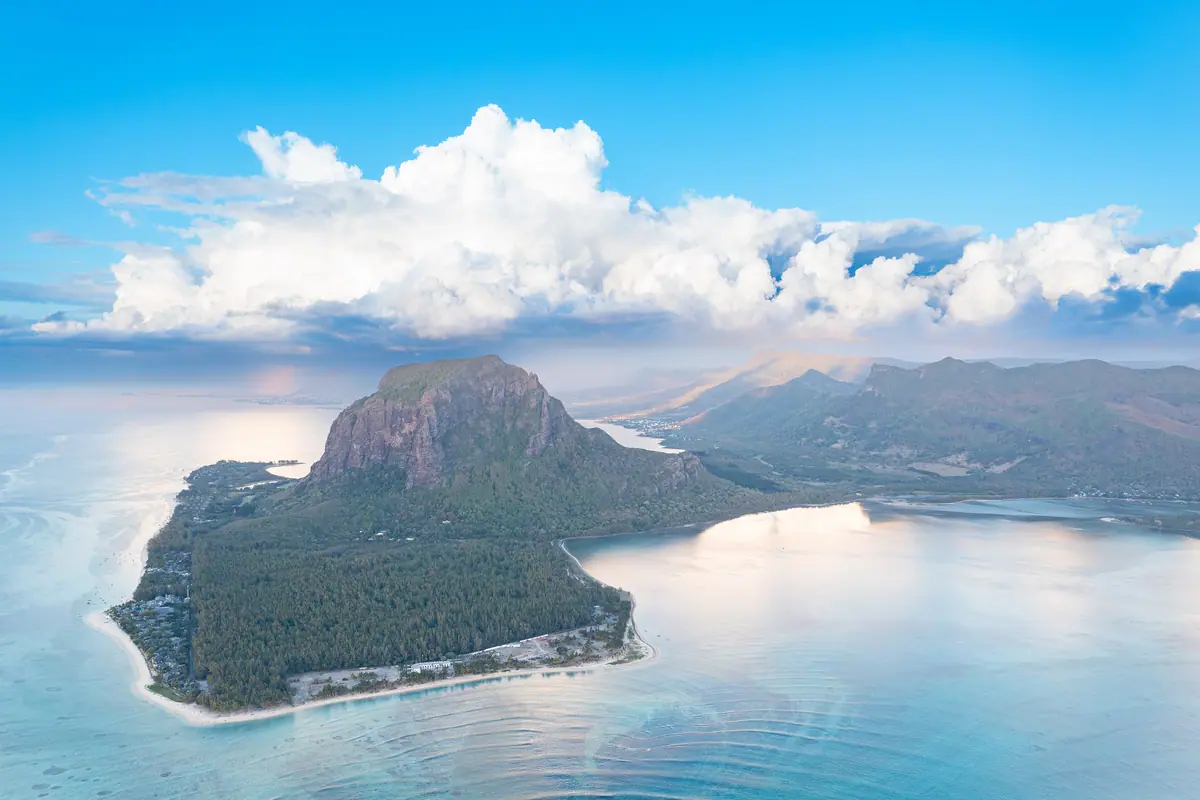
Le Morne Brabant is the sight most visitors remember. This 556-metre basalt monolith on the south-west peninsula is a UNESCO World Heritage cultural landscape, listed for its history as a refuge for escaped slaves, and the hike to the summit takes roughly two and a half to three and a half hours return. The first half is a shaded forest path; the last section is steep, exposed rock that needs hands as well as feet and is genuinely unsuitable for anyone uneasy with heights. Start by 6.30am to beat both the heat and the crowds, carry at least two litres of water, and look back constantly — the view over the lagoon, the reef line and the islets of Île aux Benitiers is the reward.
Below the mountain, the peninsula is a kitesurfing hub from roughly May to November, when the south-east trade winds fill the bay and the flat-water lagoon turns into a playground of colourful kites. If you would rather be on the water than above it, head north to Tamarin Bay for a sunrise dolphin trip — spinner dolphins are resident, and humpback whales pass through between July and September. Surfers should check the breaks at Dal and Black Rocks; everyone else can settle onto the long, casuarina-shaded beach at Flic en Flac, one of the island's easiest public beaches.
Families often fold in a half-day at the Casela nature park near Flic en Flac for tortoises, big cats and zip lines, and then drive back to Le Morne or La Preneuse for sunset. Order a dark rum and watch the mountain turn black against an orange sky — this is the west coast's nightly ritual.
Day 5: Port Louis — Aapravasi Ghat, the Central Market and Champ de Mars
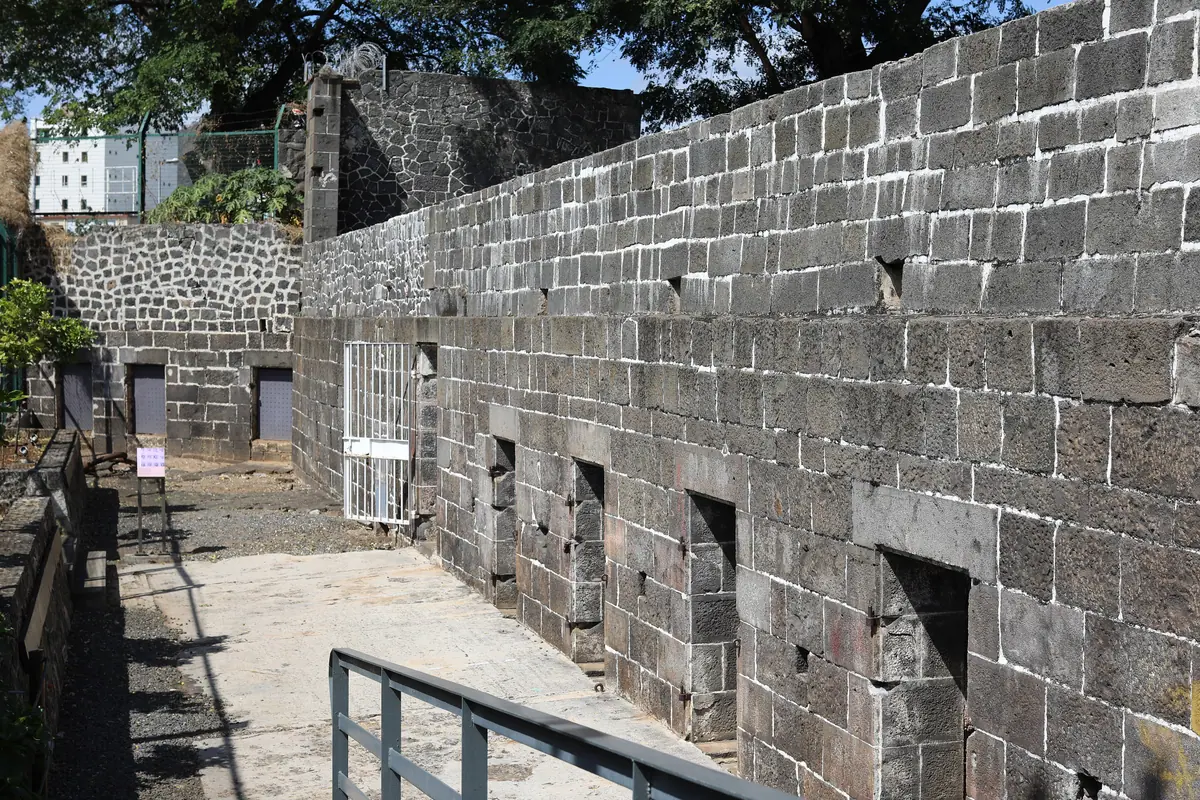
Give the capital a morning, ideally on a weekday when the port is working. Start at Aapravasi Ghat, a UNESCO World Heritage site of worn stone steps where hundreds of thousands of indentured labourers from India first landed after 1834; the small interpretation centre is quietly powerful. Nearby, the Blue Penny Museum at Caudan Waterfront displays one of the world's great stamp rarities alongside maritime and colonial art. Then push into the covered Central Market, where stalls sell vanilla, saffron, chillies and palm hearts, and where the food counters serve dholl puri, farata and gato pima for the price of a coffee.
Walk up through Chinatown to Fort Adelaide, known as the Citadel, a hilltop British fort from the 1830s with the best free panorama over the harbour and the Champ de Mars racecourse below. Racing has been run here since 1812, making it one of the oldest courses in the southern hemisphere; if your visit coincides with a meeting, it is a wonderfully loud afternoon. Otherwise, use the market streets for a spot of lunch and then escape the traffic northwards.
The afternoon belongs to Pamplemousses, where the Sir Seewoosagur Ramgoolam Botanical Garden spreads across dozens of hectares of talipot palms, spice trees, giant tortoises and the huge floating leaves of Victoria amazonica lilies — allow 90 minutes. Round it off at L'Aventure du Sucre, a museum inside an old sugar mill, or at the colonial Château de Labourdonnais near Mapou for a house tour and tasting. Sleep in Grand Baie or Trou aux Biches, ready for the north.
Day 6: Île aux Cerfs and the East Coast Lagoons
The east coast is the island's softest, prettiest side: a near-continuous chain of pale beaches and shallow turquoise lagoons. From the village of Trou d'Eau Douce, small boats shuttle across to Île aux Cerfs in about 15 minutes. The island has beaches, a golf course and a sheltered lagoon for kayaking and snorkelling, but it also absorbs day-trippers by the hundred, so take the first boat out and claim a quiet stretch of sand before the middle of the day. Many boats also stop at the Grande Rivière Sud-Est waterfall on the way back, where you can step ashore for a look at the basalt cliffs.
Back on the mainland, drive north along the coast through Belle Mare and Palmar, where the sand is flour-white and the water stays waist-deep far out. This is a good day to do almost nothing: swim, read, and eat a long lunch of grilled prawns. If you have energy left, a scenic helicopter or seaplane flight is the only way to see the famous 'underwater waterfall' illusion off the south-west coast, where sand and silt pouring off the reef shelf creates the optical trick of a cascade beneath the sea.
Prefer a wilder coastline? Swap the lagoon for the south, driving to Gris Gris near Souillac, where cliffs meet the full ocean swell with no protecting reef, and to Rochester Falls, a short curtain of water spilling over squared basalt columns. La Vanille Nature Park, inland from Souillac, is a reliable stop for giant tortoises and crocodiles with children in tow.
Day 7: Cap Malheureux, Grand Baie and the Northern Beaches
Save the north for last. Drive to Cap Malheureux at the island's northern tip, where the little chapel of Notre-Dame Auxiliatrice stands with its red roof against the sea, framing the silhouette of Coin de Mire island offshore — it is the most photographed spot on the island and deservedly so. From there, the coast curves west through Grand Baie, the island's liveliest resort town, with boutiques, restaurants and catamaran trips out to the northern islets for snorkelling and dolphin spotting.
For swimming, skip the busiest stretches and head to Mont Choisy or Trou aux Biches, where casuarina trees shade long arcs of sand, or to the small cove of Péreybère just south of Grand Baie. The north-west is sheltered from the trade winds, so the water is usually glassy and warm — ideal for a final lazy afternoon.
Plan your last night sensibly. The international airport is at the opposite end of the island, 90 minutes or more from Grand Baie in traffic, so either leave a generous buffer or spend the final night back in the south-east near Mahebourg. Distances are short here — the island is only about 65 kilometres by 45 — but roads are slow, so two hours of driving in a day is plenty. Aim to reach the terminal about three hours before departure.
When to Go, What to Expect and How to Get Around
Mauritius is a year-round destination, but the seasons genuinely change the trip. May to December brings the dry, cooler months, with June to September the windiest and freshest — daytime temperatures of around 22 to 25°C on the coast, and the best conditions for kitesurfing, walking and diving visibility. The trade winds blow from the south-east, so the east and south coasts are breezier while the north and west stay calmer. November to April is hotter and more humid, with afternoon rain on the central plateau and a cyclone risk that peaks between January and March; travel insurance and a flexible attitude are sensible if you book then.
Getting around is easiest with a hire car, which gives you the freedom to chase the weather and stop at roadside fruit stalls, though driving is on the left and the capital's traffic is heavy. Buses are cheap and frequent on main routes but slow and crowded, and taxis are best hired by the day for set itineraries. Carry some cash in Mauritian rupees for markets and beach food; cards are widely accepted in hotels and restaurants.
Finally, book the things that are capped in advance: guided walks on Île aux Aigrettes, the Le Morne Brabant ascent with a licensed guide, and any catamaran or dolphin trip in high season. Learn a few words of Mauritian Creole, eat everything that comes off a grill, and leave a morning free — the island's real luxury is that nothing is ever far away.
Frequently asked questions
What is the best time of year for a one-week Mauritius itinerary?
May to December offers the most reliable weather: drier, less humid and cooler, with coastal temperatures around 22–25°C from June to September. January to March is the hottest and wettest period with a cyclone risk, while April, May, October and November are warm, green and pleasantly quiet.
Where do flights to Mauritius land, and how long is the journey?
All international flights land at Sir Seewoosagur Ramgoolam International Airport at Plaine Magnien in the south-east, roughly ten minutes from Mahebourg. Expect about 11–12 hours from Europe, around six hours from the Gulf and roughly four hours from southern Africa, with most arrivals in the early morning.
Do I need to rent a car in Mauritius?
A car gives you far more freedom and is the best way to cover this route. Driving is on the left, roads outside the capital are generally quiet, and an automatic is worth reserving ahead. Buses are very cheap but slow, and taxis work best as full-day hires for fixed itineraries.
Is one week enough to see the main sights of Mauritius?
Yes, if you keep moving. Seven days comfortably covers Mahebourg and Blue Bay, Chamarel and Black River Gorges, Le Morne Brabant, Port Louis and Pamplemousses, the east coast lagoons and the northern beaches. Add a second week if you want to slow down, dive seriously or spend whole days doing nothing.
What should I not miss on a first visit to Mauritius?
Prioritise the Le Morne Brabant hike, the Seven Coloured Earths and Chamarel Waterfall, Black River Gorges National Park, the Aapravasi Ghat World Heritage site in Port Louis, Île aux Cerfs, the botanical garden at Pamplemousses and the red-roofed chapel at Cap Malheureux — that combination gives you the island's landscapes, history and coastline in a single week.
Plan it — flights in Mauritius
Live search, booked directly with trusted providers.
Sort the rest of your trip
Everything for Mauritius, in one place
Stay in Mauritius
Hotels, guesthouses and apartments — compared in one search.
Search hotels
Transfer in Mauritius
Private driver waiting on arrival — no queues, no surprises.
Book a transfer
Travel insurance
Medical cover, delays and lost baggage — sorted before you go.
Get covered