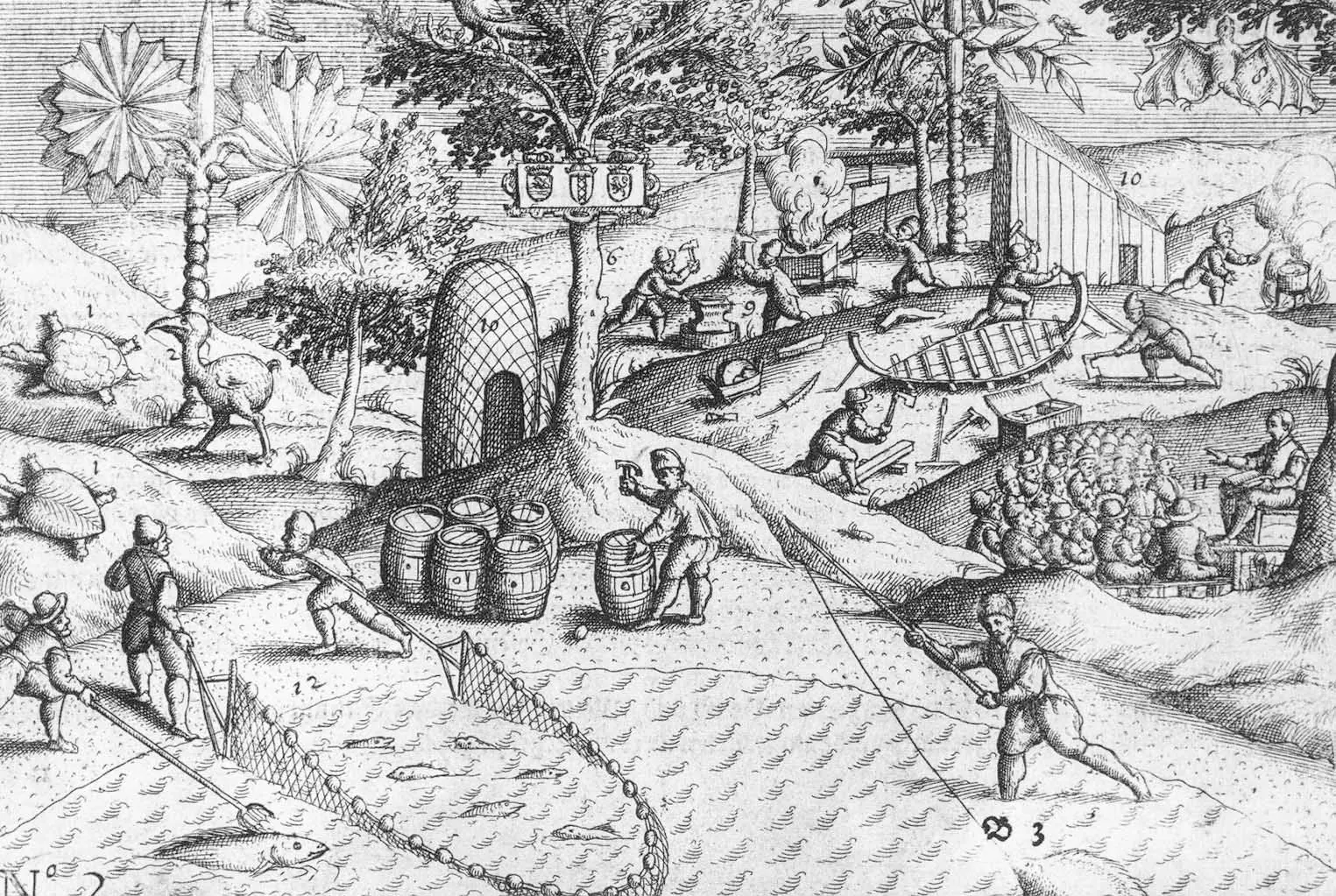
Mauritius packs an improbable amount into a single island: a basalt mountain that plunges straight into a lagoon, seven-coloured dunes, a sacred crater lake, a capital layered with migrant memory and beaches that stretch for kilometres under casuarina trees. This is where to point yourself once you've unpacked.
Le Morne Brabant: The Mountain That Anchors the Southwest
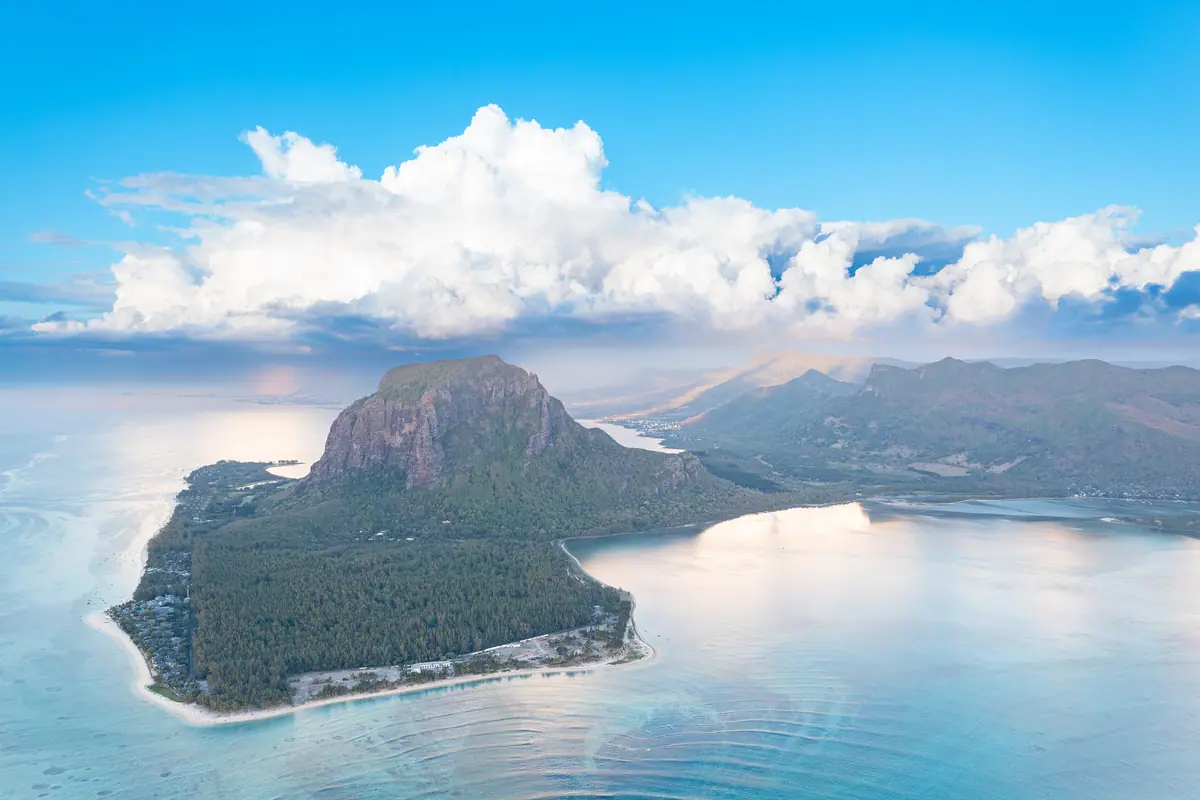
Le Morne Brabant rises 556 metres out of the sea on the island's southwestern tip, a sheer basalt mass with a plateau on top and cloud often snagged on its shoulder. Its UNESCO-listed status comes from darker history: escaped enslaved people took refuge in its caves and on its summit, and the mountain has become one of the island's most powerful places of memory. The hike is roughly 3.5 kilometres return, taking about 90 minutes to two hours up depending on your pace, and the final stretch is a hands-on scramble over exposed rock. Start by 7am to beat the heat, carry more water than you think you need, and hire a local guide for the upper section.
Below the peak, Le Morne beach is a long crescent of pale sand backed by filao trees, with a shallow turquoise lagoon that stays calm even when the wind picks up. It is one of the best sunset spots on the island, and the scene of most of Mauritius' kitesurfing: the flat water inside the reef suits beginners, while the reef pass known as One Eye tempts experts with big swell in the winter months.
The southwest rewards slow driving. The coastal road curls past Macondé, where a bend cut into the cliff gives a famous lookout over Baie du Cap, and the village of Le Morne itself has small Creole tables serving grilled fish and rougaille. Allow a full day if you want the summit, the beach and the viewpoint without rushing.
Black River Gorges, Chamarel and the Sacred Highlands
Black River Gorges National Park protects around 6,574 hectares of the island's interior, a rumpled green landscape of native forest, ridge lines and waterfalls. Well-marked trails suit everything from an hour's stroll to a full day: the Macchabée loop meanders through guava and ebony, while the climb to Piton de la Petite Rivière Noire, at 828 metres the island's highest point, earns sweeping views. This is the best place in Mauritius to spot birds found nowhere else, including the Mauritius kestrel, pink pigeon and echo parakeet — binoculars and an early start make a real difference.
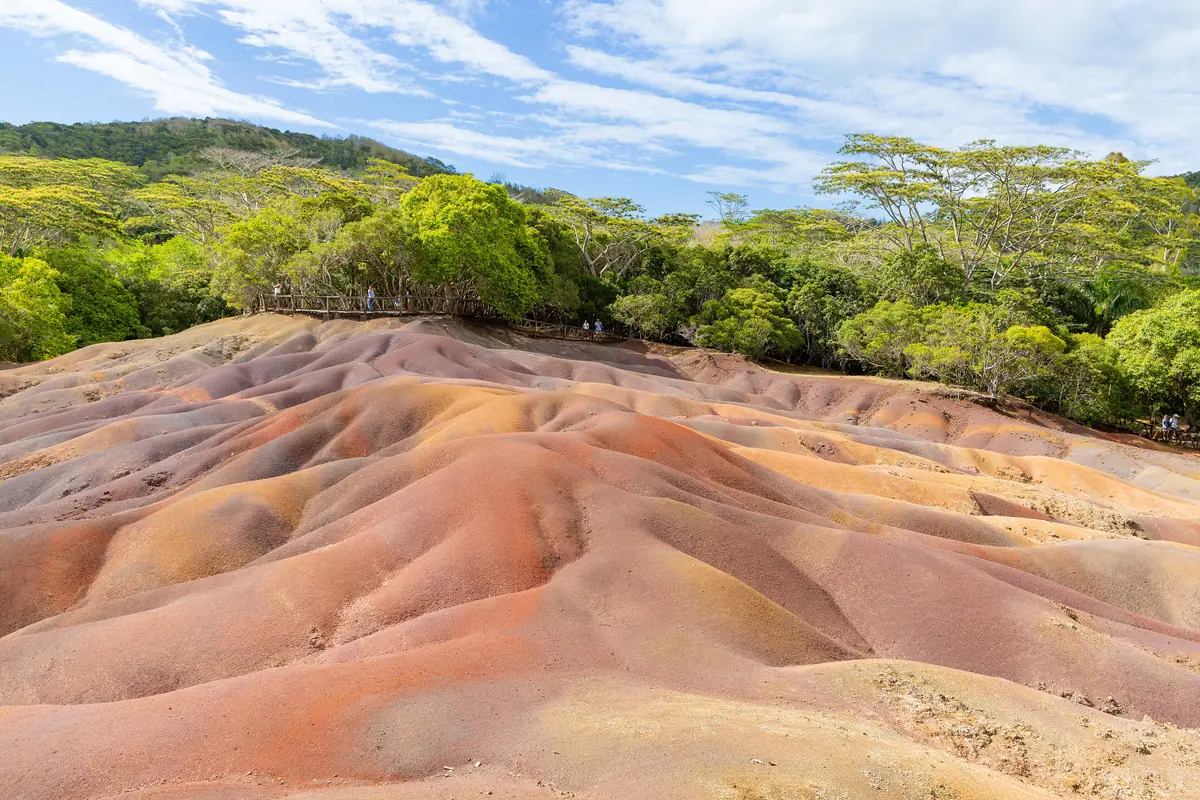
Just south of the park, Chamarel is where the island shows off. The Seven Coloured Earths are low dunes of volcanic clay that shade from ochre to deep red, violet and grey, best seen in the clearer light of morning before cloud builds. A short drive away, Chamarel Waterfall drops roughly 100 metres into a forested gorge — a two-minute walk from the car park for the classic view. Continue along the Plaine Champagne road for Alexandra Falls and the Gorges viewpoint, both free and both spectacular in the wetter months when the water is loud.
High in the central plateau sits Grand Bassin, also called Ganga Talao, a crater lake sacred to the island's Hindu community, ringed by temples and a towering Shiva statue. During Maha Shivaratri in February or March, pilgrims walk here in enormous numbers and the atmosphere is extraordinary; at quieter times it is serene, misty and worth an hour of anyone's day. On the way back down, Curepipe's Trou aux Cerfs is a dormant volcanic crater you can drive around, with views across the plateau on a clear afternoon.
Port Louis: Markets, Memory and the Creole Capital
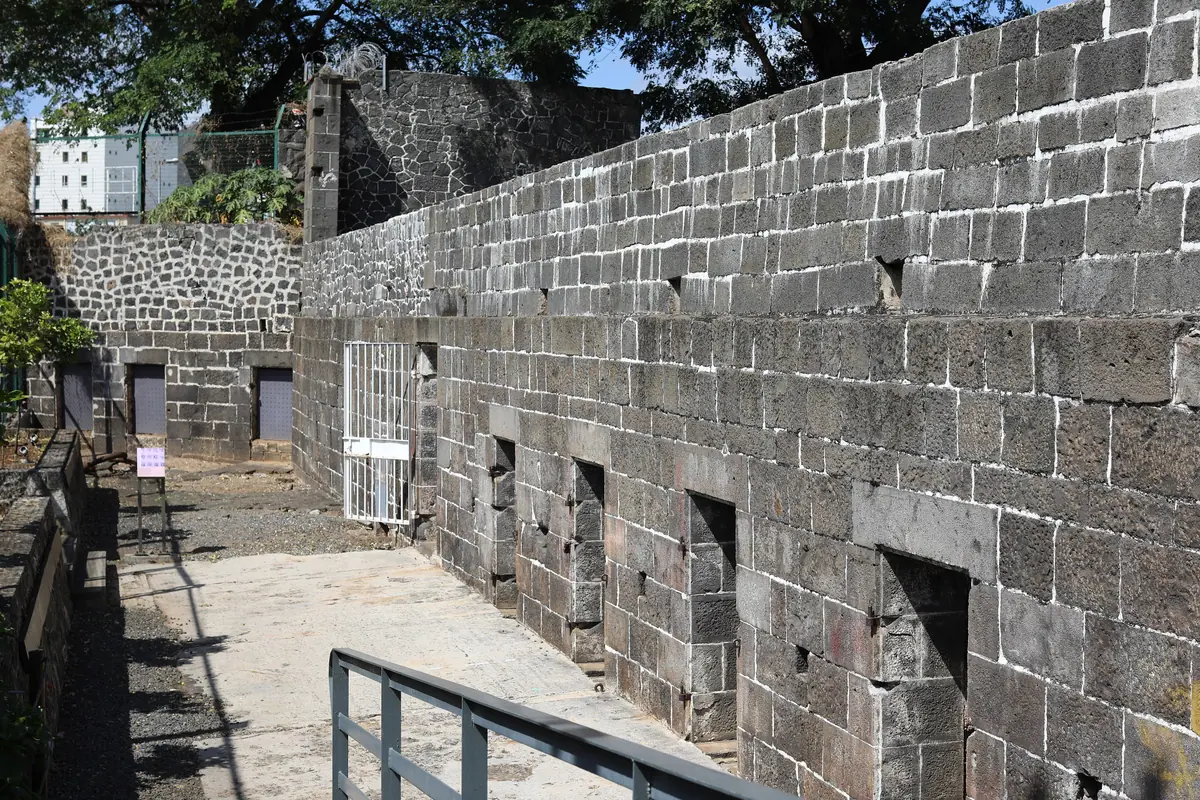
Mauritius' capital is often skipped in favour of the coast, which is a mistake. At Aapravasi Ghat, a UNESCO World Heritage site on the harbour edge, you stand where indentured labourers from India first stepped ashore from 1849 onwards — the modest remains and the small interpretation centre tell that story with quiet force. A short walk away, the Blue Penny Museum holds rare early stamps and maps that explain how this small island became a crossroads of Africa, Asia and Europe.
The Central Market is the city's beating heart: pyramids of mangoes and chillies, vanilla pods, woven baskets, and stalls frying dholl puri and gateau piment for a few rupees. Arrive before 10am, and on Saturdays if you want the full theatre of it. Afterwards, climb to Fort Adelaide, the 1830s citadel on the hill, for a panoramic look over the harbour and the Champ de Mars racecourse below — laid out in 1812 and among the oldest racing tracks anywhere in the southern hemisphere.
Shop for crafts and textiles along the waterfront, wander into Chinatown for noodles and dumplings, and keep an eye on the heat: Port Louis is hottest and busiest at midday, so plan a morning visit and retreat to the coast for the afternoon. Weekdays are calmer than weekends, and comfortable shoes are essential on the steep, uneven streets.
The North: Pamplemousses, Grand Baie and Cap Malheureux
The Sir Seewoosagur Ramgoolam Botanical Garden at Pamplemousses is the island's oldest garden and still its most beautiful, with avenues of towering royal palms, a spice garden scented with nutmeg and cinnamon, and ponds carpeted with giant Victoria amazonica lilies. Give it two to three hours in the morning, when the light is soft and the tour groups have not yet arrived, and take a guide if you want the plant names and history rather than just the shade.
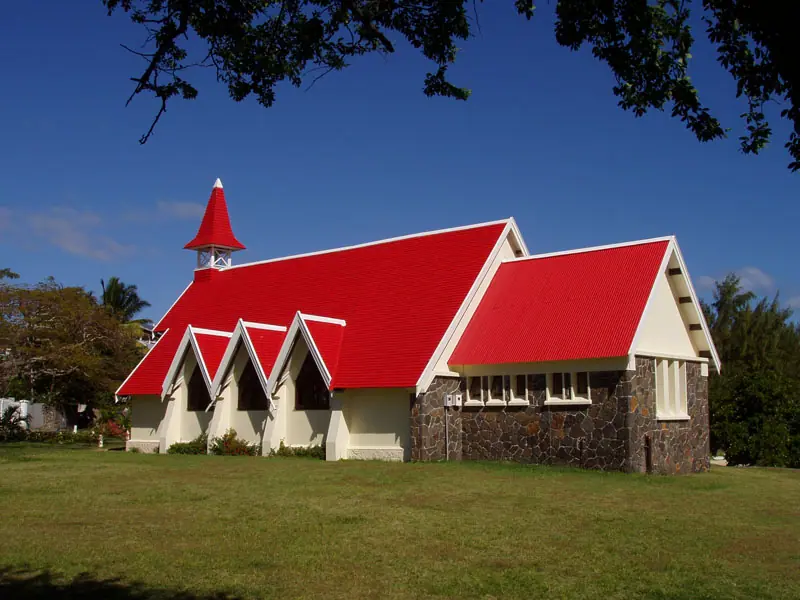
Grand Baie is the north's lively hub — boutiques, seafood restaurants and boats heading out to the northern islets — and it makes an easy base if you want nightlife within walking distance. Neighbouring Pereybère has a smaller, friendlier beach, while the little chapel at Cap Malheureux, with its red roof and view across to the bare islet of Coin de Mire, is one of the most photographed spots in the country. Go at sunset for the colour on the water.
Inland from here, colonial-era houses such as Eureka House near Moka and the plantation estate at Labourdonnais open their verandas, gardens and old kitchens to visitors, offering a glimpse of the sugar-and-spice economy that shaped the island's grand homes. Pair one with a tea estate visit on the central plateau for a day that feels nothing like the beach.
The East Coast and Its Islands: Île aux Cerfs, Belle Mare and Blue Bay
Île aux Cerfs floats just off Trou d'Eau Douce and is reached by a ten- to fifteen-minute boat ride across a lagoon so still it looks varnished. The island has white-sand coves, shallow swimming water and a network of paths, plus a golf course for those so inclined. Come on the first boats of the morning: by late morning the main beach fills up, and the afternoon breeze roughens the crossing.
Back on the mainland, Belle Mare is arguably the island's finest swimming beach — several kilometres of pale sand, a wide calm lagoon and a fringe of trees for shade, with Palmar and Trou d'Eau Douce offering quieter alternatives nearby. This is the coast for long, unhurried days, and the sunrise here is worth setting an alarm for at least once.
In the southeast, Île aux Aigrettes is a small nature reserve where giant tortoises and reintroduced ebony forest are protected, reached by boat from Mahébourg's waterfront. Nearby, Blue Bay Marine Park protects patchy coral and shoals of tropical fish in clear, shallow water — ideal for snorkelling or a glass-bottomed boat if you'd rather stay dry. The old town of Mahébourg, with its creole houses and small history museum, makes a good half-day pairing, and Pointe d'Esny's long, breezy shoreline is a lovely place to end the afternoon.
Lagoon Days, Wildlife and How the Seasons Shape Your Trip
On the west coast, Flic en Flac delivers wide sunset beaches and easy access to dive sites and dolphin-rich water, while Tamarin Bay is the launch point for early-morning dolphin trips — boats leave around 6am, and the responsible ones keep their distance and cut the engine rather than chasing. Tamarin also has the island's most reliable surf when winter swell arrives. Further south, Gris Gris is the exception to every postcard: no protecting reef, so the Indian Ocean hits the cliffs head-on, spraying over the viewing platforms at Souillac. Add Rochester Falls nearby, where the water has carved blocky columns out of the rock.
Timing matters. The dry, cooler winter from June to September brings temperatures of roughly 20–26°C, low humidity and the best conditions for hiking Le Morne Brabant or the Black River Gorges, plus humpback whales offshore from June to October. Summer, from November to April, is hot and humid at 27–33°C with warm lagoon water and afternoon showers; the cyclone season peaks between January and March, so travel insurance and flexible plans are wise. May and October are the sweet spots — warm sea, manageable heat and few crowds.
The cultural calendar is worth planning around too: Maha Shivaratri pilgrimages to Grand Bassin, the fire-walking Cavadee ceremonies, Holi's coloured powders, Divali's lamps and Chinese Spring Festival, alongside Independence Day on 12 March and the commemoration of the abolition of slavery on 1 February. Eat widely — dholl puri, gateau piment, farata, vindaye, octopus curry and alouda — and remember that rental cars make the island far more rewarding than resort shuttles, though you drive on the left and the coastal roads can be slow.
Frequently asked questions
How many days do you need in Mauritius?
Seven to ten days lets you see the island properly: two or three days in the north around Grand Baie and Pamplemousses, a couple on the east coast for Île aux Cerfs and Belle Mare, and two or three in the southwest for Le Morne Brabant, Chamarel and Black River Gorges. A five-day trip is possible but forces you to choose a coast and stay put.
When is the best time to visit Mauritius?
May to December is the most comfortable window, with May and October offering warm seas, moderate heat and thinner crowds. June to September is cooler and drier — ideal for hiking — and best for whale watching. January to March is the hottest, wettest and most cyclone-prone period, so build in flexibility if you travel then.
Do you need a car to get around Mauritius?
It helps enormously. Public buses are cheap but slow and rarely link the beaches and trailheads directly, while taxis get expensive for full days of sightseeing. A small rental car lets you combine the interior highlands, the capital and two coasts in one trip. Remember traffic drives on the left, roads narrow sharply inland, and driving after dark in rural areas is best avoided.
Is the Le Morne Brabant hike difficult?
It's moderate for most of the route and genuinely demanding at the top, where you scramble over exposed rock with some drop-offs and no shade. Allow 90 minutes to two hours up and about an hour down. Go early, wear shoes with grip, carry at least two litres of water per person, and take a certified local guide for the summit section — they also bring the history alive.
Which part of Mauritius should you stay in?
The north around Grand Baie suits anyone who wants restaurants, shops and boat trips within walking distance. The east coast, from Belle Mare to Trou d'Eau Douce, is calm, breezy and best for long beach days. The west around Flic en Flac and Tamarin offers sunsets, dolphins and dive sites, while Le Morne in the southwest is the pick for kitesurfing and mountain views.
Plan it — experiences in Mauritius
Live search, booked directly with trusted providers.
Sort the rest of your trip
Everything for Mauritius, in one place
Stay in Mauritius
Hotels, guesthouses and apartments — compared in one search.
Search hotels
Transfer in Mauritius
Private driver waiting on arrival — no queues, no surprises.
Book a transfer
Stay online in Mauritius
Travel eSIM — data the moment you land, no roaming bills.
Get an eSIM