Kosovo is small enough that a single well-chosen bed can put half the country's landmarks within an hour's drive, yet varied enough that the right base changes your whole trip. Sleep in Pristina for museums and cafés, in Prizren for Ottoman lanes under a hilltop fortress, or in Peja for mountain trailheads and a 13th-century patriarchate. This guide maps the towns worth booking, the sights you shouldn't miss, and the seasons that shape it all.
Pristina: The Practical Capital Base
Almost every Kosovo itinerary begins in Pristina, and the city rewards a night or two rather than a rushed transit. Most accommodation clusters along and just off Mother Teresa Boulevard, the pedestrian spine where cafés, bakeries and hotels sit shoulder to shoulder, with quieter boutique conversions and apartment rentals in the Dardania and Bregu i Diellit districts a short walk uphill. Because the country is compact, a Pristina hotel also works as a hub: Gračanica Monastery is roughly fifteen minutes away by car, the Roman ruins of Ulpiana and the marble chambers of Gadime Cave are within an easy half-day, and Novo Brdo Fortress sits an hour to the southeast.
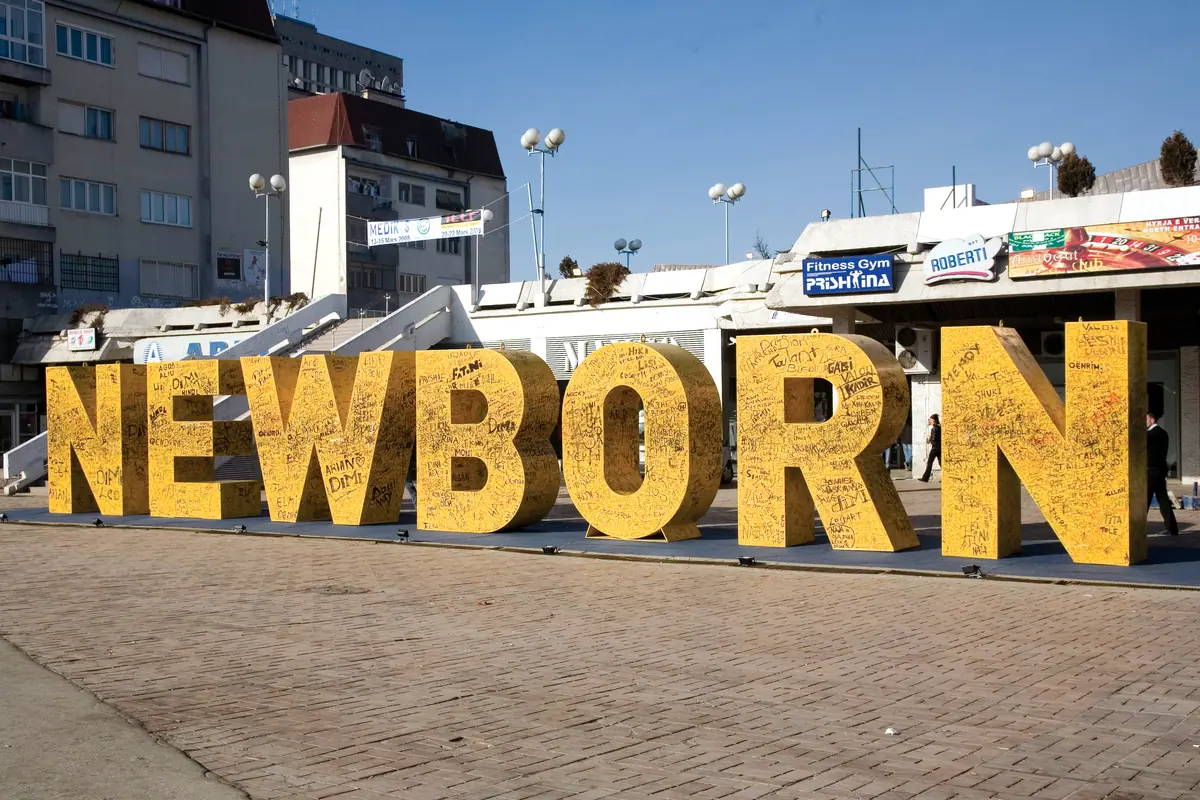
The city's own must-sees are clustered and walkable. Start at the Newborn Monument, the lettering that has been repainted annually since Kosovo declared independence, then walk to the National Library of Kosovo, a lattice of white metal and domes that is either beautiful or baffling depending on your mood. The Kosovo Museum and the Great Hamam sit nearby in the old bazaar quarter, Mother Teresa Cathedral rises on a low hill above the centre, and Germia Park offers marked forest trails twenty minutes from the boulevard — a genuine surprise for a capital. Families and animal lovers usually add the Bear Sanctuary Prishtina, a rescue centre in the hills near Badovca, to the itinerary.
For lodging style, expect a spread of polished business hotels near the centre, friendly family-run guesthouses on the edges, and a healthy supply of self-catering flats. Pristina is also the easiest place in the country to find late-night food, English-speaking staff and reliable Wi-Fi, which makes it a sensible first and last stop. If you plan to rent a car, choose a hotel with its own parking — street parking in the centre can be tight on weekday mornings.
Prizren: Sleeping Inside a Living Ottoman Core
If you only book one atmospheric stay in Kosovo, make it Prizren. The old town is a tight weave of cobbled lanes, stone houses with wooden balconies, and mosque minarets climbing the hillside below Prizren Fortress. Accommodation here is mostly small: restored Ottoman houses turned into boutique hotels, family guesthouses with courtyards, and a few apartments tucked above the bazaar. Rooms are limited and summer weekends fill quickly, so reserve two to four weeks ahead if you want a terrace with a view of the Kalaja.
The sights are all within a fifteen-minute stroll. Shadervan Square is the social heart, ringed by cafés and centred on a fountain where locals linger late. The Sinan Pasha Mosque dominates the skyline, the Stone Bridge crosses the Bistrica River just below it, and the Church of Our Lady of Ljeviš — a UNESCO-listed Serbian Orthodox church turned mosque and back again — stands a few streets away. Above everything, Prizren Fortress rewards a twenty-minute uphill climb with the best panorama in Kosovo, especially in the hour before sunset. Don't skip the League of Prizren complex and the Gazi Mehmet Pasha Hamam, which between them explain why this town matters so much to the country's identity.
Prizren is also the natural base for the Sharr Mountains. Prevalla is a thirty-minute drive into pine forest and summer hiking country, and the ski slopes around Brezovica are roughly an hour away. In early August the town hosts its international documentary film festival, when beds vanish and the squares stay loud until dawn — magical if you're part of it, inconvenient if you arrive without a reservation.
Peja and the Rugova Valley: Base Camps for the Accursed Mountains
Peja, also written Peć, is the gateway to the Rugova Valley and the Accursed Mountains, and its lodging reflects that: small hotels in the town centre, guesthouses with wood-burning stoves on the valley road, and mountain huts and lodges near the trailheads. If your trip revolves around hiking rather than city sightseeing, this is where you sleep. The centre itself is compact and pleasant, with the old bazaar and the Bajrakli Mosque within a few minutes of most addresses.
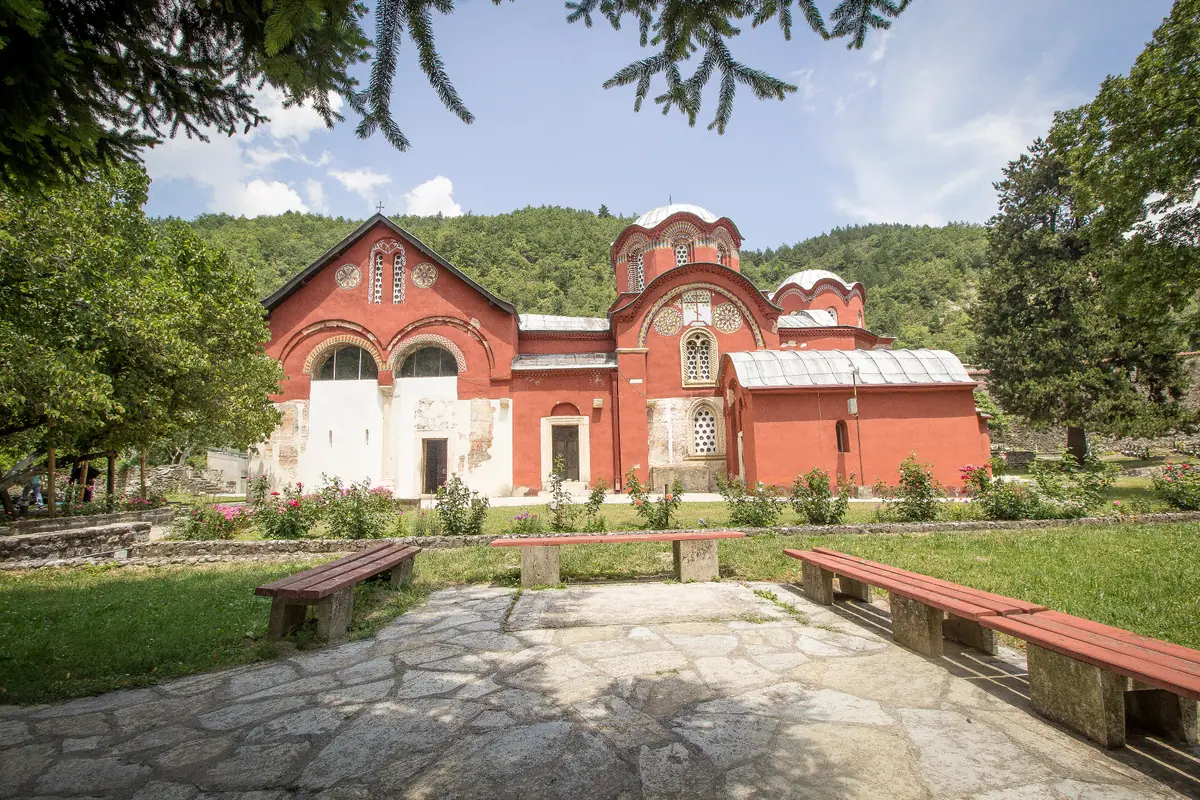
The headline sight is the Patriarchate of Peć, a walled medieval monastery complex of three churches covered in frescoes and inscribed on the UNESCO World Heritage list. Dress modestly, keep your voice low, and leave bags and tripods at the gate. From town, the road climbs into Rugova Canyon, one of the deepest and most dramatic gorges in the region, passing the White Drin Waterfall at Radavc — a spring-fed cascade that freezes into blue columns in January. Further up, the glacial lakes of Kuqishta and Liqenat make superb half-day walks, and the long-distance Peaks of the Balkans trail begins its Kosovo leg here.
Beyond the valley, the Visoki Dečani Monastery near the town of Deçan is about thirty minutes away and worth planning a morning around, while Gjakova lies forty minutes east. Spring and early summer bring wildflowers and rushing water; October turns the beech forest copper. Winter is quieter, cold and occasionally snowy on the passes, so check road conditions before committing to a valley guesthouse between December and February.
Building a Route Around the UNESCO Monasteries
Four medieval monuments carry Kosovo's UNESCO listing, and they're spread in a way that shapes where you should sleep. Gračanica Monastery, with its tiered Byzantine domes, is close enough to Pristina for a morning visit. The Patriarchate of Peć pairs naturally with a night in Peja or the Rugova Valley. Visoki Dečani and the church of Our Lady of Ljeviš in Prizren complete the set, meaning a sensible loop is Pristina, then Peja, then Prizren — two or three nights in each, with a car.
Practical etiquette matters here. These are active religious sites, not museums: shoulders and knees covered, no beachwear, no flash photography inside, and women are often offered headscarves at the door. Entrance is generally free or by donation, and opening hours tighten in winter, so plan monastery visits for the middle of the day rather than late afternoon. Guided tours in English are usually available on request and turn a ten-minute look at frescoes into a genuine lesson in Balkan history.
If you'd rather not drive, day trips from Pristina cover Gračanica and often Ulpiana in the same afternoon, and Prizren guesthouses can arrange transport to Dečani and the Patriarchate. Either way, give each site a full hour — the fresco cycles reward slow looking — and pair them with the surrounding towns for lunch.
Gjakova, Mitrovica and the Small-Town Alternative
Gjakova is the most underrated overnight stop in Kosovo. Its Çarshia e Madhe is the largest surviving bazaar in the region, a long street of low wooden-fronted workshops and cafés rebuilt after the war, with the Hadum Mosque at its centre and the fifteenth-century Terzijski Bridge — the Tailors' Bridge — spanning the Erenik River just outside town. A handful of small hotels and guesthouses sit inside or beside the bazaar, and staying here means you get the bazaar at 7am, before the tour buses, when it belongs to the shopkeepers again.
Mitrovica, an hour north, is defined by the Ibar River that divides it into south and north banks, and its lodging is concentrated in the southern, mostly Albanian half. It's a working, industrial-leaning city rather than a pretty one, but the bridge itself and the surrounding hills make for an honest, unvarnished look at contemporary Kosovo. Most visitors pass through on the way to Batlava Lake or the north, and a single night is usually enough.
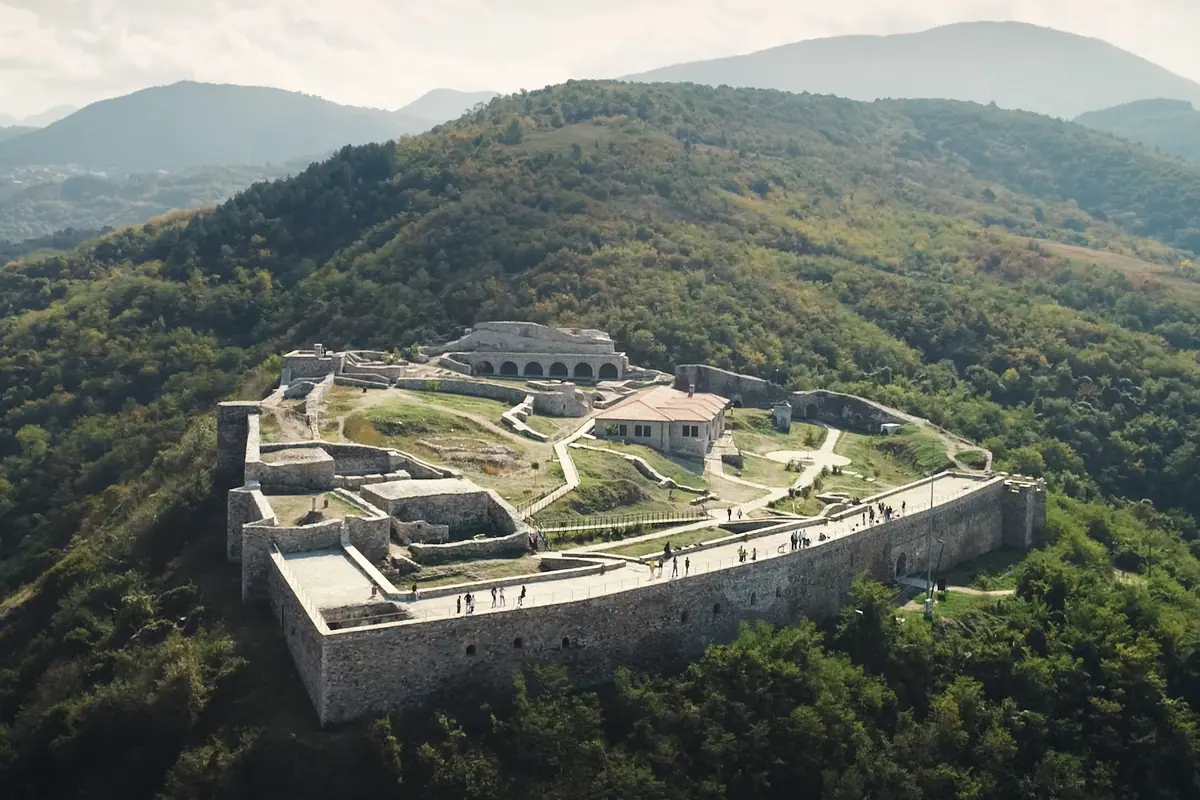
Smaller towns fill in the gaps. Ferizaj and Gjilan offer basic, cheap hotels useful for breaking up long drives south and east, while the area around Novo Brdo pairs a hilltop fortress ruin with quiet village guesthouses. If you're travelling on a tight budget, these outlying towns are where you'll find the country's simplest rooms — and often the warmest welcomes.
When to Go, How to Get Around, and How to Book
Kosovo's best months for a hotel-based trip are May, June, September and early October: mild days, green mountains, and long evenings in Prizren's squares. July and August push past 30°C in Pristina and Prizren but are ideal for high-altitude hiking in Rugova and the Sharr Mountains. Winter from December to February is cold and often snowy, with skiing around Brezovica and the slopes above Bogë; some mountain guesthouses close, and a few stay open for snowshoeing and log-fire evenings.
Getting around is easiest by car — rent at Pristina's airport or in the city centre, and expect good main roads with slower mountain stretches. Buses link Pristina with Prizren and Peja in roughly an hour and a half each, and there's a limited rail line on the same corridor. Distances are short enough that you can see Prizren Fortress, the Patriarchate of Peć and the Gjakova bazaar in three consecutive days without ever driving more than two hours at a stretch.
For booking, reserve ahead for Prizren in summer and for ski-season weekends near Brezovica, and confirm whether your guesthouse takes cards — many smaller places prefer cash, and Kosovo uses the euro, which makes budgeting pleasantly simple. City hotels usually include breakfast and secure parking; valley guesthouses often include dinner cooked by the family, which is frequently the highlight of the stay.
Frequently asked questions
Which city in Kosovo is best for a first-time stay?
Pristina is the most convenient base for arrivals, transport and city sights, while Prizren is the most atmospheric and photogenic place to sleep. A common split is two nights in Pristina and two to three in Prizren, adding Peja if you want mountain hiking.
When is the best time to visit Kosovo?
May, June, September and early October offer the best balance of mild weather and open trails. July and August suit mountain hiking but are hot in the cities, while December to February is for winter scenery and skiing around Brezovica.
Do hotels in Kosovo accept credit cards?
Larger city hotels generally accept cards, but many small guesthouses and family-run rooms prefer cash. Kosovo uses the euro, so bring some notes for mountain stays, monastery donations and rural cafés.
Is it easy to visit Kosovo's must-see sights without a car?
Buses connect Pristina with Prizren, Peja and Gjakova reasonably well, and taxis cover shorter hops, but the UNESCO monasteries, Rugova Canyon and the Sharr Mountains are far easier with a rental car. Guesthouses can often arrange local drivers for a fee.
How many days do you need in Kosovo?
Four to five days covers Pristina, Prizren and one mountain region comfortably. A week lets you add Peja, the Patriarchate of Peć, Gjakova's bazaar and a monastery loop without rushing between hotels.
Sort the rest of your trip
Everything for Kosovo, in one place
Transfer in Kosovo
Private driver waiting on arrival — no queues, no surprises.
Book a transfer
Things to do in Kosovo
Skip-the-line tickets, guided tours and standout experiences.
See experiences
Stay online in Kosovo
Travel eSIM — data the moment you land, no roaming bills.
Get an eSIM