Kosovo packs an improbable amount into a territory you can cross in half a day: Ottoman bazaars, UNESCO-listed monasteries, a canyon road that climbs straight into the Accursed Mountains and a capital that runs on caffeine and stubborn optimism. It is one of Europe's youngest countries and one of its least discovered, where a morning among 14th-century frescoes ends with grilled meat, mountain honey and a macchiato in a village square. These are the places worth building a trip around.
Pristina: Coffee, Concrete and the Newborn Monument
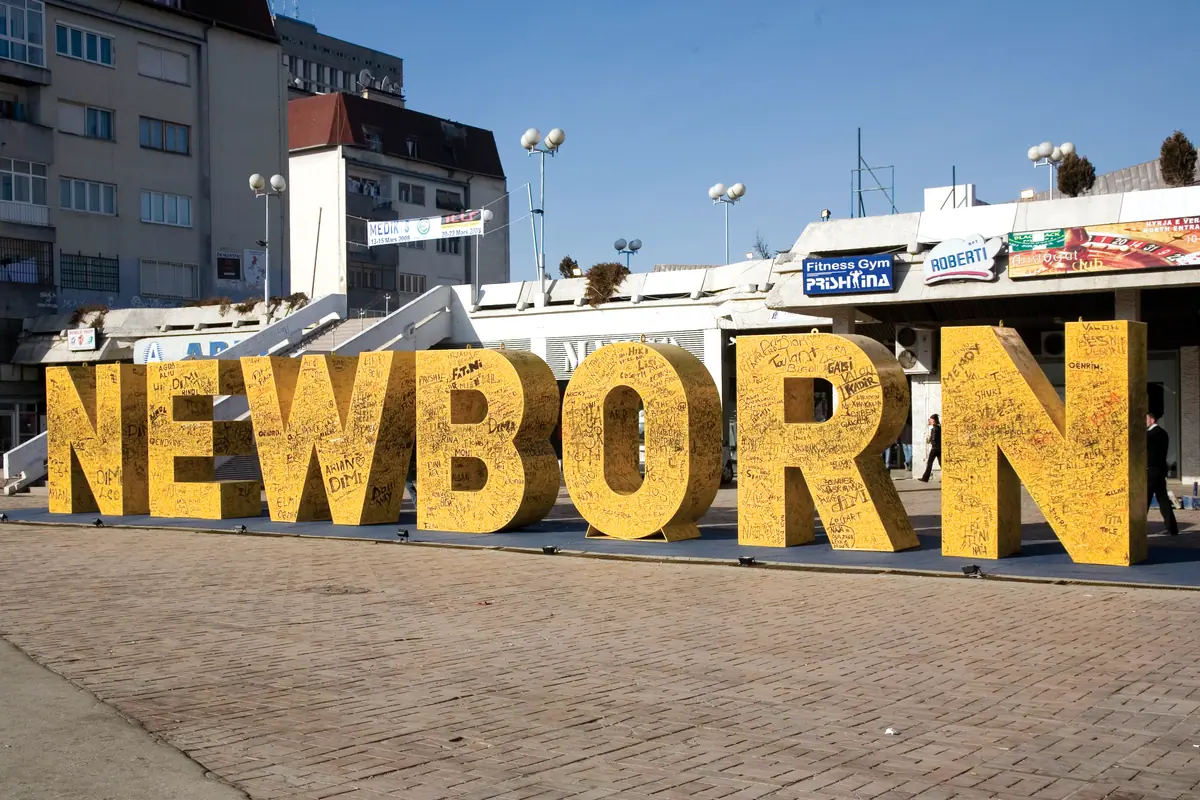
Start in Pristina, where the city's main artery, Mother Teresa Boulevard, runs from the Newborn Monument — unveiled in 2008 and repainted each February with a new theme — down towards the old bazaar. Just off the boulevard, the Kosovo Museum occupies a handsome Austro-Hungarian-era building and holds Illyrian and Roman finds, while a few steps away stands the National Library of Kosovo, an unforgettable tangle of white lattice, metal mesh and bulbous domes. Love it or loathe it, it is the building every visitor photographs first.
Wander north to the Çarshia e Madhe, the old bazaar, where butchers, greengrocers and tiny qebaptore grill skinless minced-meat sausages served in flatbread with raw onion and ajvar. From the centre it is a short taxi ride or a 40-minute walk to Germia Park, a pine-covered ridge with marked trails, a summer outdoor pool and picnic spots where Pristina families escape the heat. Further out, in the wooded hills above Badovc Lake, a bear sanctuary keeps rescued brown bears in large forested enclosures — an easy, worthwhile half-day, especially with children.
Come evening, climb the bell tower of the Mother Teresa Cathedral for a rooftop view over the city's minarets, cranes and red roofs, then settle into the café-bars around the centre. Pristina's macchiato habit is close to a civic religion, and the tables stay busy long after dark; order a raki if you want to drink like a local.
Prizren: The Ottoman Heart of Kosovo
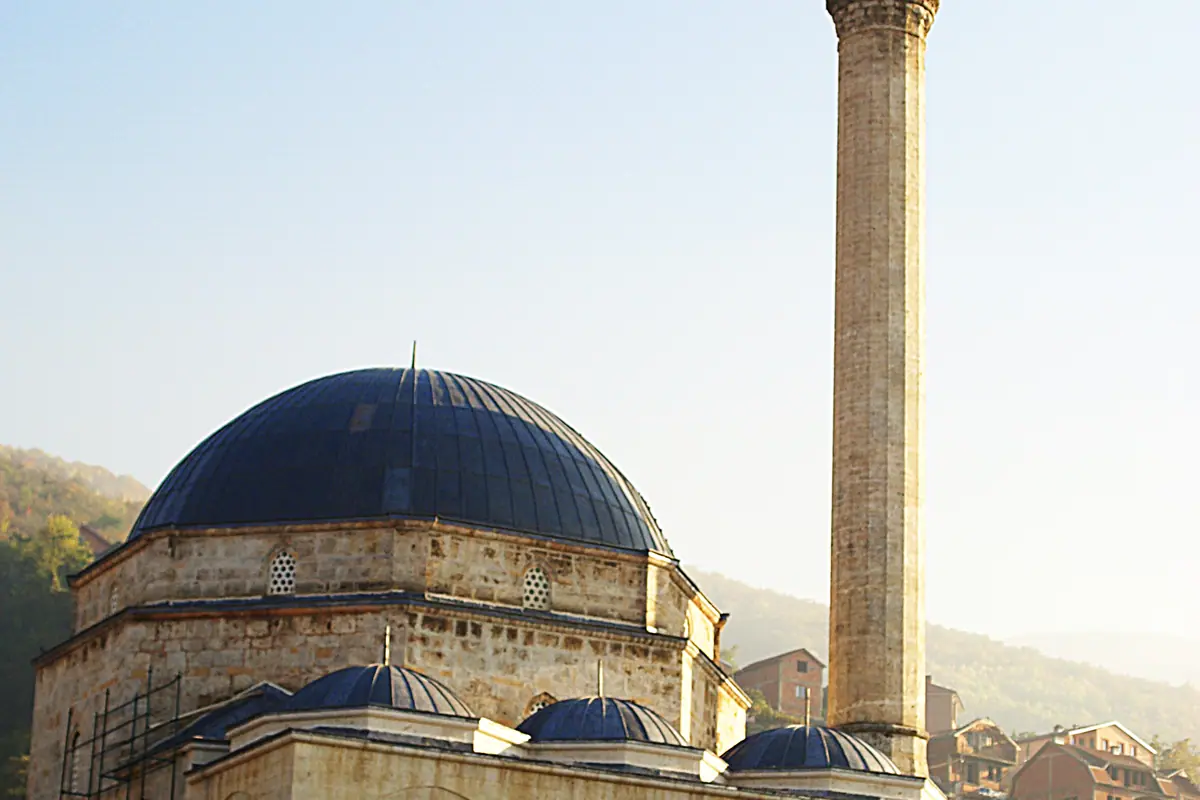
If Pristina is Kosovo's head, Prizren is its soul. The old town is stitched together by the Bistrica river, crossed by a 15th-century stone bridge that leads into Shadervan Square, the cobbled heart of the city and its outdoor living room. Above the square stands the Sinan Pasha Mosque, completed in 1615, its minaret and dome dominating a skyline of terracotta roofs; the call to prayer rolling across the valley at dusk is one of Kosovo's signature sounds.
Almost every lane leads uphill to Prizren Fortress, a ruined Byzantine-Ottoman citadel on the ridge above town. The climb takes 15 to 20 minutes on steep stone paths and rewards you with the definitive view of Prizren — minarets, the river, the plain beyond. Back below, the Church of Our Lady of Ljeviš, a 14th-century Serbian Orthodox church inscribed on the UNESCO list, sits quietly in the old quarter, while the house of the Albanian League of Prizren tells the story of the 1878 assembly that shaped modern Albanian identity. The Gazi Mehmed Pasha Hamam and the workshops of Prizren's filigree silversmiths are worth seeking out for handmade souvenirs.
Prizren is also the most atmospheric place in the country to eat. Order tava, a slow-baked dish of meat and vegetables, follow it with baklava from a shop near Shadervan, and finish with strong Turkish-style coffee. If you come in August, you will collide with Dokufest, a documentary film festival that turns the town into open-air cinemas, stages and late-night crowds.
Peja and the Rugova Valley: Gateway to the Accursed Mountains
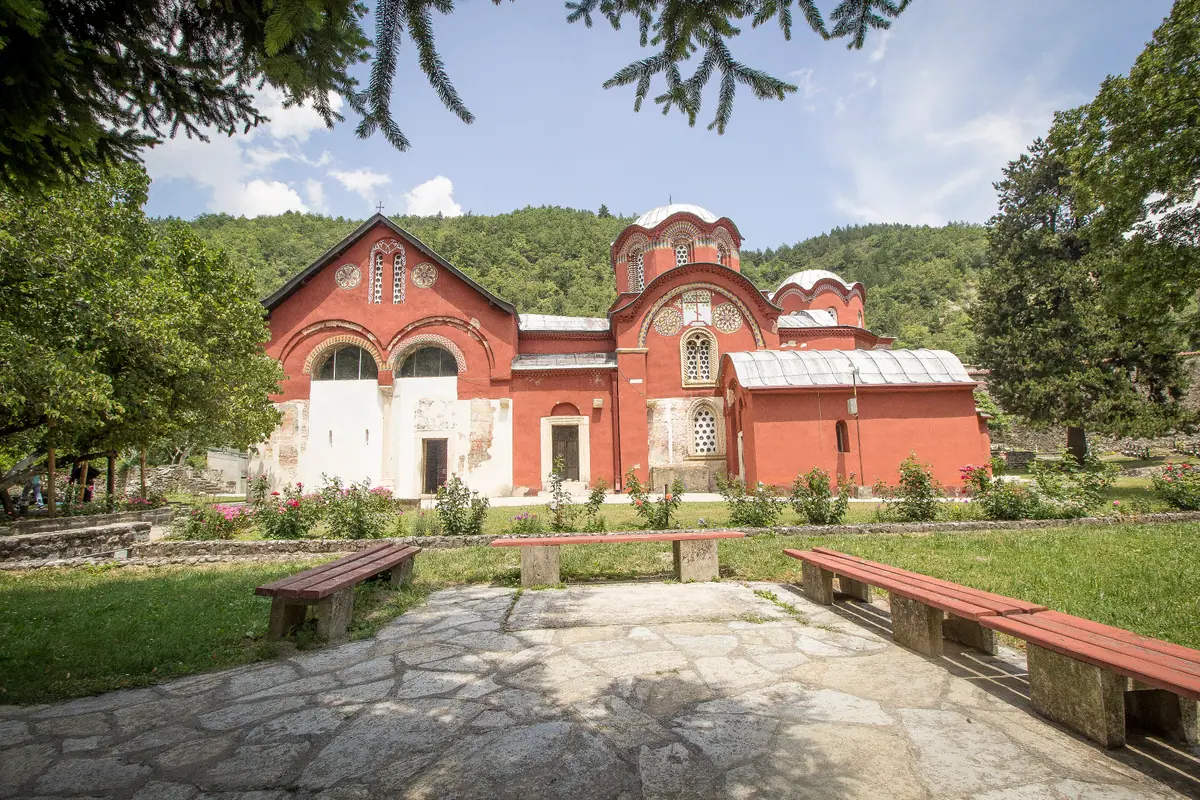
About 90 minutes by road from Pristina, Peja (Peć) sits at the mouth of a gorge where the plains end and the mountains begin. Its greatest treasure is the Patriarchate of Peć, a walled complex of 13th- and 14th-century churches covered in extraordinary frescoes and protected as a UNESCO World Heritage Site. It remains an active monastery, so visitors dress modestly, keep voices low and should carry identification for the checkpoint at the entrance.
From town, the Rugova Valley road climbs through a 25-kilometre canyon of limestone cliffs, tunnels and waterfalls. This is Kosovo's adventure playground: a via ferrata bolted to the rock face, a zip line over the gorge, and hiking trails to Lake Liqenat above the village of Kuqishtë, where the water sits in a glacial bowl beneath jagged peaks. Allow three to four hours for the lake walk and bring layers — the weather turns quickly at altitude.
The region also anchors the Peaks of the Balkans trail, a long-distance route of roughly 190 kilometres that links Kosovo with Albania and Montenegro through shepherd country. You do not need to walk the whole thing: even a day hike between villages such as Bogë and Reka e Allagës delivers high pastures, flocks of sheep and guesthouses serving flija, a layered pancake baked slowly under a metal lid. In winter the same slopes become Kosovo's main ski terrain.
Gjakova and Deçan: Bazaars, Monasteries and the White Drin
Gjakova's Grand Bazaar, the Çarshia e Madhe, is the largest surviving Ottoman-era bazaar in the Balkans — a long pedestrian spine of low wooden shopfronts that was burned in 1999 and painstakingly rebuilt. Today you can watch watchmakers, saddlers, tailors and coppersmiths at work, then walk two minutes to the Hadum Mosque, built at the end of the 16th century, whose library and painted interior were restored by hand. The bazaar is at its best in the early evening, when the cafes fill and the light turns golden.
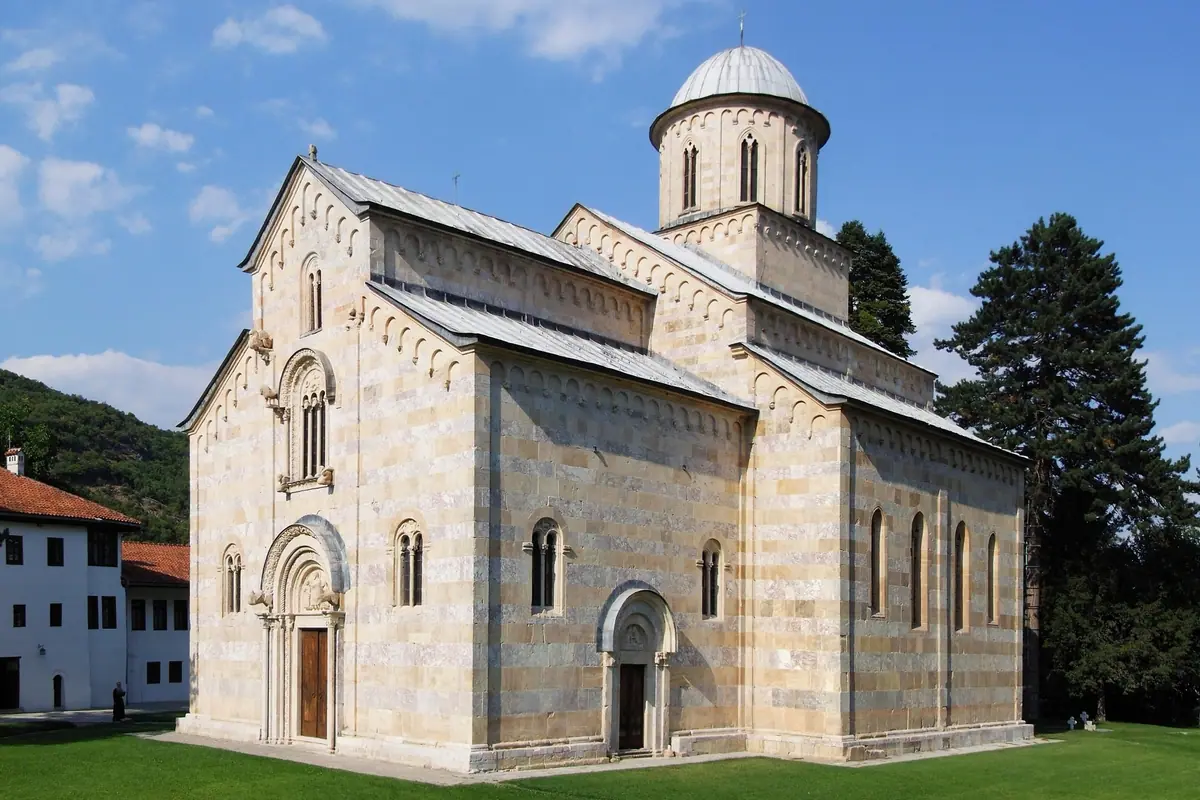
South of there, near the town of Deçan, stands Visoki Dečani Monastery, founded in the 14th century and inscribed on the UNESCO list. Its church of pale marble and purple breccia holds one of the most complete cycles of Byzantine fresco painting in southeastern Europe. Non-monastic visitors are welcome, but shoulders and knees must be covered, and photography inside the church is restricted.
This western corner of Kosovo is where the landscape becomes dramatic. At Radavc, between Peja and Deçan, a short and easy walk leads to the White Drin waterfall, where the river emerges from a cave and drops some 25 metres into a green pool — a favourite stop on the road south. Continue towards Junik and the mountain villages, and the guesthouses here serve some of the best home cooking in the country: sarma, stuffed peppers, grilled lamb and rough mountain rakia.
Waterfalls, Caves and Roman Ruins: Kosovo's Best Day Trips
The Mirusha Waterfalls, roughly halfway between Pristina and Gjakova, are Kosovo's most photographed natural sight: a limestone canyon where the river drops through a chain of pools and cascades, some of them deep enough to swim in. Spring and early summer are the best time to see them in full flow; by late summer the smaller falls can slow to a trickle. Bring shoes with grip — the paths are uneven. Nearby, the Gadime Cave, also known as the Marble Cave, offers guided tours through more than a kilometre of passages of stalactites and stalagmites, with a constant interior temperature that makes it a perfect refuge on a hot afternoon.
Closer to the capital, Gračanica Monastery is a 14th-century Serbian Orthodox foundation with soaring brickwork and frescoes that rank among the finest in the Balkans; it is only about 10 minutes' drive from Pristina, and the surrounding village is pleasant for a slow lunch. A short distance away lies Ulpiana, a Roman and early Byzantine city that was one of the most important settlements of the province of Dardania — archaeologists are still at work, and the mosaic floors and foundations give a sense of the region's deep, layered past. Further east, the hilltop ruins of Novo Brdo Fortress recall the medieval silver-mining town that once minted coins for half the Balkans.
If you want mountains without the drive to Rugova, head south to the Sharr range around Brezovica, where a modest ski resort operates from December to March and hiking trails open up in summer. The high pastures and glacial lakes above the tree line are quiet, wild and almost empty of visitors.
When to Go and How to Get Around Kosovo
Late spring, early summer and September are the sweet spots: mild days, green hills, waterfalls running strong and trails in good condition. July and August are hot in the lowlands — Pristina and Prizren regularly push past 30°C — but they bring the festival season, including Prizren's documentary film festival, and long, warm evenings in the bazaars. October brings golden light and harvest food; winter is cold and often snowy, best for skiing at Brezovica and Bogë and for monastery visits without crowds.
Distances are short. The international airport sits at Slatina, about 15 kilometres from central Pristina, and buses and minibuses connect the main towns cheaply and reasonably often — Pristina to Prizren or Peja takes roughly an hour and a half each. To reach the Rugova Valley, Mirusha, Deçan, the bear sanctuary or Brezovica at your own pace, however, a rental car is far more practical; the main highways are in good shape, while mountain roads are narrow, winding and occasionally unmarked. The euro is the currency, Albanian and Serbian are the official languages, and English is widely spoken among younger people, especially in cities and hospitality.
Eat widely: flija, pite, qebapa, tavë, stuffed peppers and baklava, washed down with macchiatos, mountain honey with breakfast and a glass of rakia offered by a host who will not take no for an answer. Dress modestly at monasteries and mosques — cover shoulders and knees, and women should carry a scarf for mosque visits. Tipping is appreciated but modest, and the safest rule for a country this sociable is simply to leave room in your schedule for the conversations you will inevitably end up having.
Frequently asked questions
How many days do you need to see Kosovo?
Four to five days is enough for the classic loop of Pristina, Prizren and Peja with the Rugova Valley. Give yourself seven to ten days if you want to add Gjakova, the Deçan monastery, Mirusha Waterfalls, Gračanica and a night or two of hiking or skiing in the mountains.
What is the best time of year to visit Kosovo?
May, June and September offer the best combination of mild weather, green landscapes and flowing waterfalls. July and August are hot in the cities but lively, with festivals and long evenings outdoors. Winter suits skiing at Brezovica and quiet monastery visits, though mountain roads can be snowy.
Do you need a car to travel around Kosovo?
Not for the main towns — buses and minibuses link Pristina, Prizren and Peja comfortably. A rental car makes a real difference for the Rugova Valley, Mirusha Waterfalls, Deçan, the bear sanctuary near Badovc Lake and Brezovica, where public transport is limited and schedules are thin.
Is Kosovo safe and welcoming for visitors?
Yes. Crime rates are low, travel between regions is straightforward and hospitality is genuine — it is common to be offered coffee or rakia within minutes of meeting someone. Take ordinary precautions in busy areas, and dress modestly with shoulders and knees covered at monasteries and mosques.
What food should I try in Kosovo?
Look for flija, a slow-baked layered pancake; qebapa, grilled minced-meat sausages served in flatbread with onion; pite, savoury pastry; tavë, a baked meat and vegetable dish; and baklava for dessert. Coffee culture is taken seriously, and a macchiato is the default order.
Plan it — experiences in Kosovo
Live search, booked directly with trusted providers.
Sort the rest of your trip
Everything for Kosovo, in one place
Stay in Kosovo
Hotels, guesthouses and apartments — compared in one search.
Search hotels
Transfer in Kosovo
Private driver waiting on arrival — no queues, no surprises.
Book a transfer
Stay online in Kosovo
Travel eSIM — data the moment you land, no roaming bills.
Get an eSIM