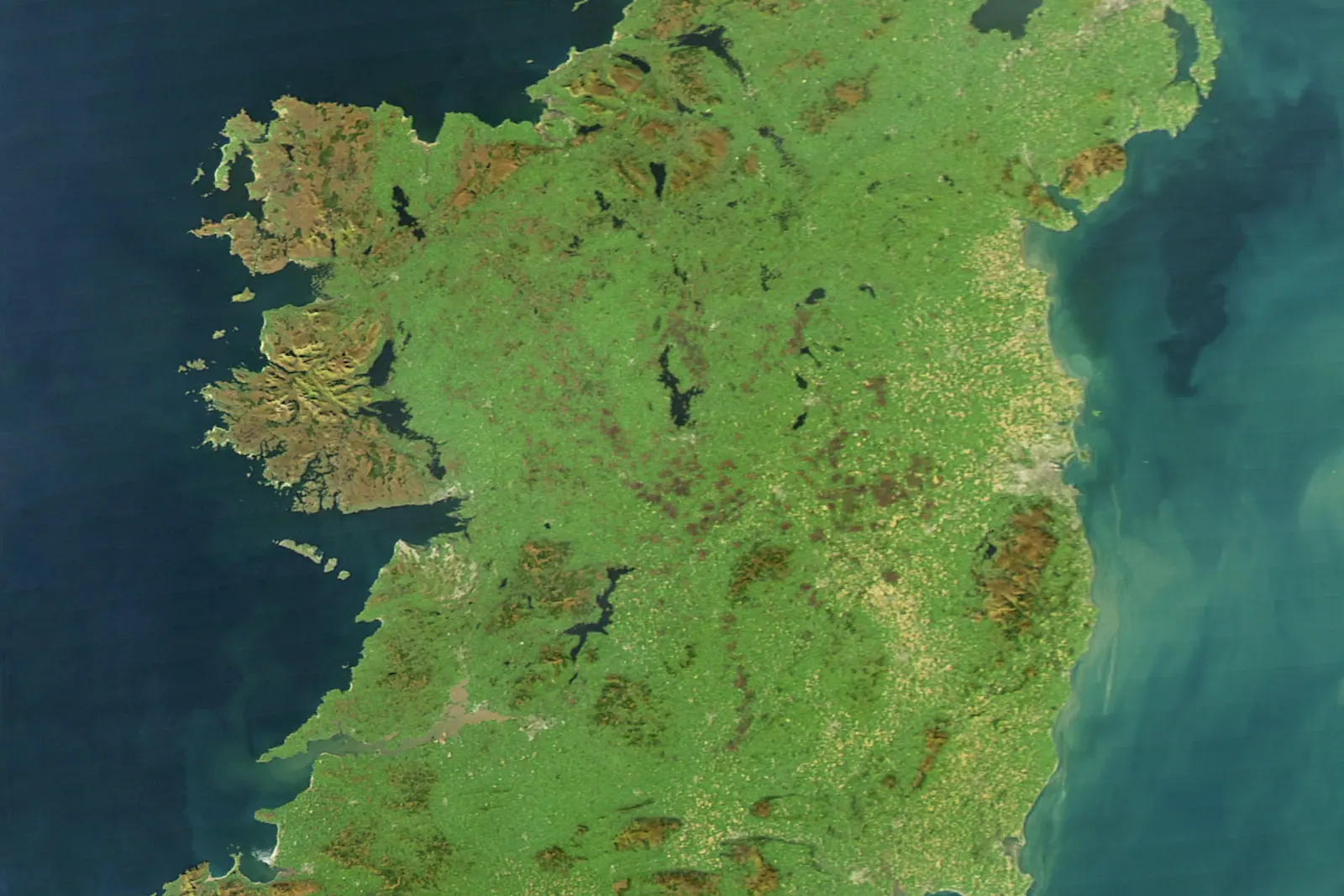
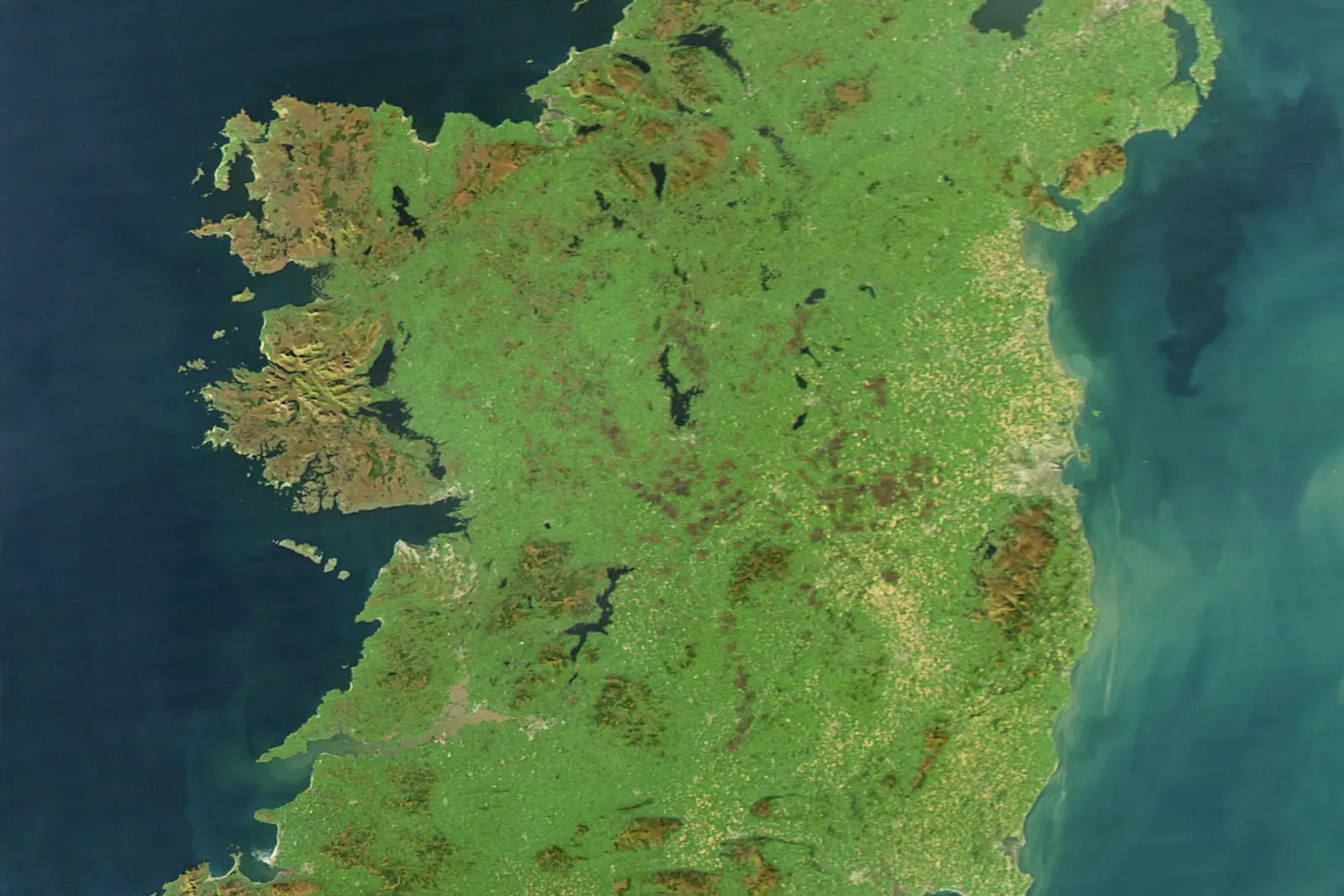
Seven days in Ireland is barely a sip of the good stuff, but it is enough to stand under the Long Room's barrel vault, scramble over a ruined cathedral on a limestone crag, and watch Atlantic swell detonate against the Cliffs of Moher. The trick is choosing your arrival airport wisely and resisting the urge to circle the whole island — this route runs south and west, then loops back, with a couple of short flights to save your legs.
Days 1–2: Landing in Ireland and Falling for Dublin
Most long-haul and European arrivals touch down at Dublin, the busiest gateway on the island, but it is not your only option. Shannon, on the mid-west coast, puts you within an hour of the Burren and the Cliffs of Moher; Cork serves the south; Ireland West Knock and Donegal handle smaller regional traffic; Belfast has two airports of its own if you want to start in the north. Fly into Dublin and out of Shannon — an open-jaw ticket — and you skip a tedious cross-country drive at the end of the week. Travellers heading to the United States can even clear immigration before boarding at Dublin and Shannon, which makes the return leg unusually painless.
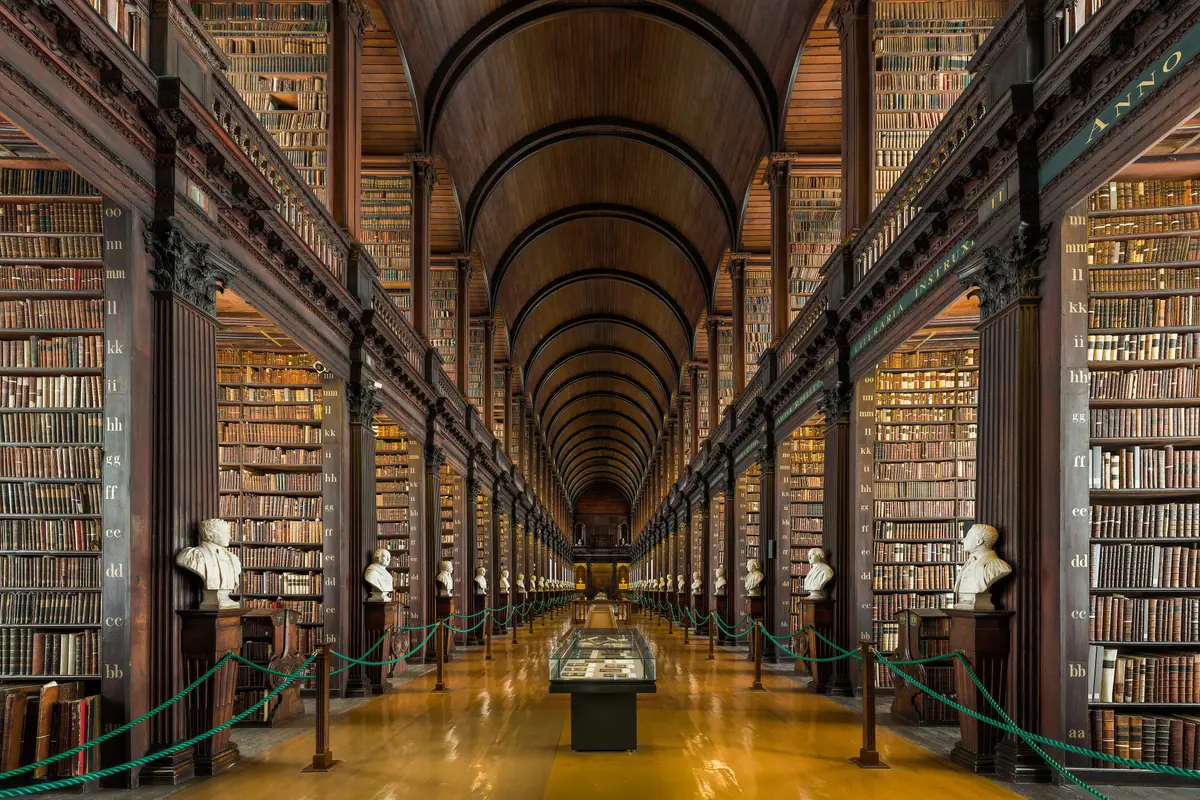
Dublin rewards two unhurried days. Start at Trinity College, where the Book of Kells — an illuminated ninth-century gospel manuscript — sits in a darkened room, and the Long Room library above it is a cathedral of oak and old paper. Walk five minutes to Dublin Castle, then west to St Patrick's Cathedral and Christ Church Cathedral, both wedged into the medieval tangle of streets around Temple Bar. Book a timed slot at Kilmainham Gaol, the bleak Victorian prison where the leaders of the 1916 Rising were executed; it is one of the most affecting hours you will spend in the country.
Fill the gaps with Grafton Street buskers, the Ha'penny Bridge over the Liffey, and a slow loop of Phoenix Park, one of Europe's largest walled city parks. The centre is compact and walkable, with trams and a coastal commuter train for longer hops. Late May, June and September are the sweet spots: long evenings, manageable crowds, and prices that have not yet peaked into high summer.
Day 3: Glendalough, Powerscourt and the Wicklow Mountains
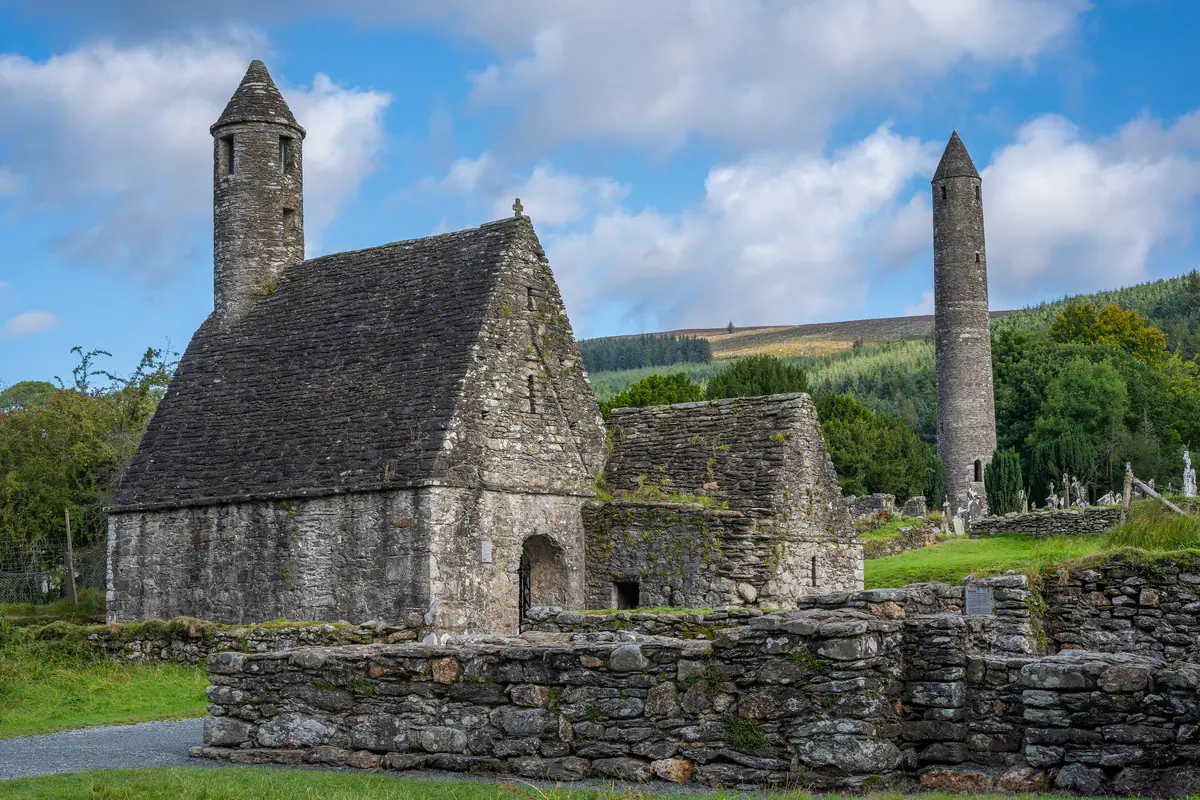
An hour south of the city, the Wicklow Mountains rise into peat-brown emptiness. Glendalough — the valley of the two lakes — holds the ruins of a monastic settlement founded in the sixth century, its round tower still standing 30 metres tall beside a cluster of stone churches and a graveyard crowded with Celtic crosses. Give it three or four hours: the boardwalk trail to the Upper Lake and the Poulanass waterfall is easy going, while the Spinc loop climbs high above the water for views that justify the effort.
Nearby, Powerscourt Estate pairs a manicured Italianate garden with a 121-metre waterfall a short drive up the hillside, and the Military Road over the Sally Gap cuts through some of the loneliest scenery in Leinster, passing the dark water of Lough Tay. Weather changes fast up here — cloud can swallow the road in twenty minutes — so carry a waterproof shell and decent shoes even in July.
Return to Dublin for a second night, or stay in the village of Enniskerry for a quieter start. If you have hired a car, collect it on the morning of day three rather than day one; driving in central Dublin is expensive and unnecessary, and city traffic on the wrong side of the road is a miserable way to begin a holiday.
Day 4: The Rock of Cashel, Cork and the Blarney Stone
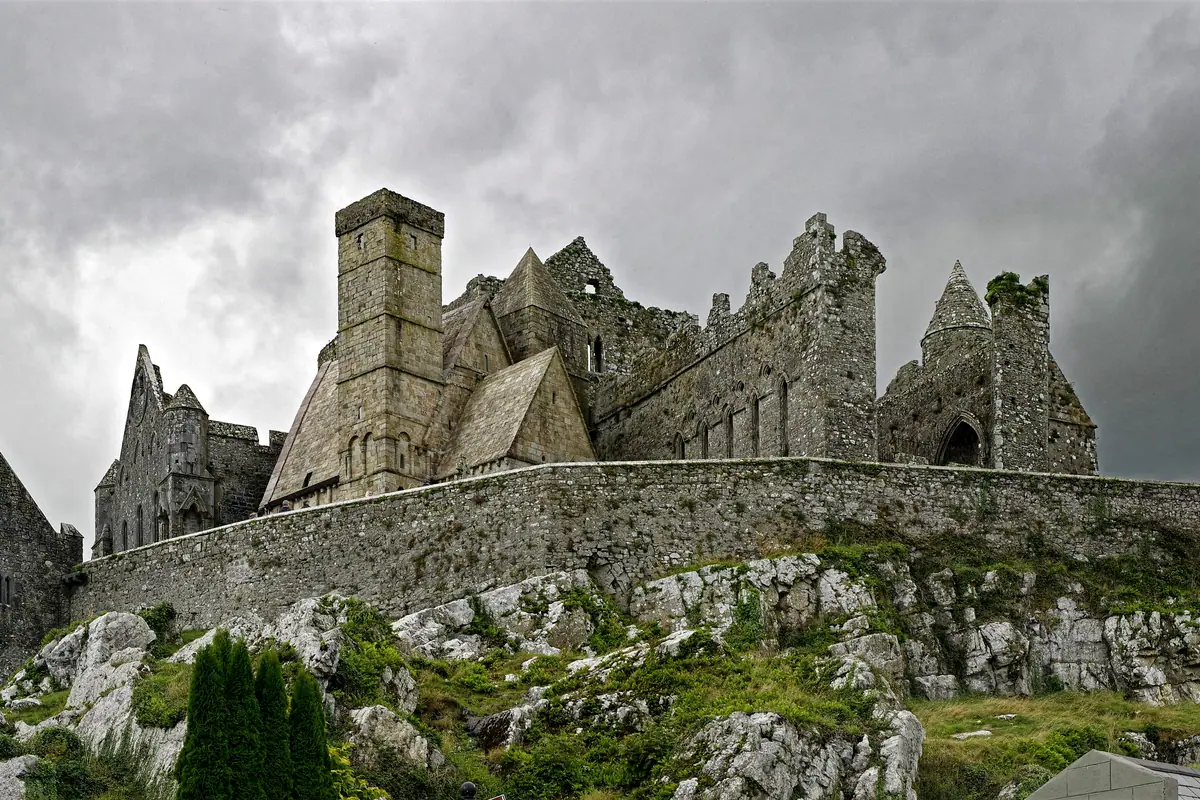
Head south on the motorway towards Cork and break the journey at the Rock of Cashel, a limestone outcrop crowned with a cathedral, a Romanesque chapel and a round tower, all of it looming over the Tipperary plains. It is one of Ireland's most photographed sites and one of its most atmospheric; arrive before ten to have the ramparts mostly to yourself. Cahir Castle, twenty minutes away, is a beautifully preserved riverside fortress worth an hour if you have it.
Cork city itself is a lively, compact place built on a marsh — the river splits into channels, and the streets have a habit of changing name mid-block. Browse the covered English Market for smoked fish and soda bread, and climb to the tower of St Anne's Church in Shandon to ring the bells and look down on the rooftops. West of town, Blarney Castle draws the crowds for the Stone, which requires lying on your back and leaning backwards over a considerable drop; go early, and enjoy the gardens and rock close on the way out.
Finish the day in Cobh, the harbour town where the Titanic made her final port of call and where millions of emigrants boarded ships for the New World. The heritage centre tells that story well, and the pastel terraces climbing the hill behind the harbour make an easy, melancholy sort of beauty.
Days 5–6: Killarney, the Ring of Kerry and the Dingle Peninsula
Drive west into County Kerry and the landscape sharpens: macgillycuddy's Reeks on the horizon, oak woods dropping to the lakes. Killarney National Park is the anchor, with Muckross House and its Victorian walled garden, the ruins of Ross Castle on the water's edge, and Torc Waterfall a short walk from the road. Horse-drawn jaunting cars still clatter out from the town centre — touristy, yes, but a pleasant way to see the park without another turn behind the wheel.
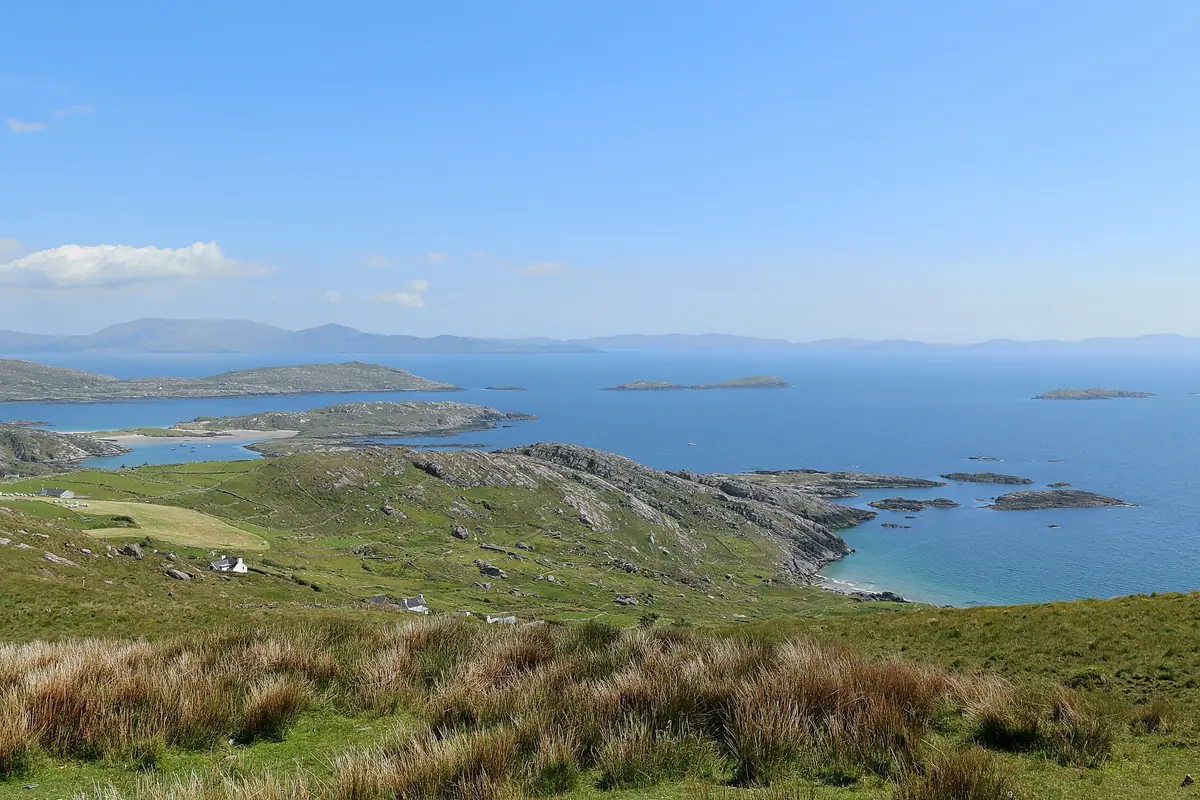
The Ring of Kerry is a 179-kilometre loop of the Iveragh Peninsula, and it deserves a full day rather than a rushed half. Drive anticlockwise to keep the tour buses behind you, and stop at Moll's Gap and Ladies View for the classic postcard sweep over the lakes. From Portmagee, seasonal boats run to Skellig Michael, the rocky island monastery used as a filming location for a certain space saga; sailings run roughly May to September and book out far in advance.
If you have only one peninsula in you, the Dingle Peninsula is the more rewarding drive: the Slea Head road hugs cliffs above crashing surf, the Gallarus Oratory is a perfectly dry-stone-built early Christian chapel, and the town of Dingle has a serious food and music scene for somewhere so small. Base yourself in Killarney or Dingle for two nights and let the car rest.
Day 6–7: The Cliffs of Moher, the Burren and Galway
Cross the Shannon estuary into County Clare and drive to the Cliffs of Moher, where the Atlantic-facing wall of rock drops 214 metres into the sea and O'Brien's Tower sits on the highest point. Go before nine in the morning or after seven in the evening; midday in August is a scrum, and the cliff-top path is exposed to whatever the Atlantic decides to throw. The visitor centre is built into the hillside and explains the geology, seabirds and folklore without spoiling the view.
Just inland lies the Burren, a lunar plateau of cracked limestone pavement where Arctic and Mediterranean plants grow side by side and the Poulnabrone Dolmen — a 5,000-year-old portal tomb — stands alone in the wind. Then press on to Galway, a city of narrow lanes, buskers and brightly painted pubs. Walk the Latin Quarter, look out from the Spanish Arch over the Claddagh quays, and eat oysters if the month has an R in it.
Galway is also the launching point for the Aran Islands. Ferries leave from Rossaveal and from Doolin beneath the cliffs, but there are also short flights from Connemara Regional Airport to Inishmore — twelve minutes in a small aircraft over a maze of stone walls, and a genuine reason to use Ireland's domestic aviation rather than your car. On Inis Mór, hire a bike and ride out to Dún Aonghasa, a prehistoric stone fort perched on a 100-metre cliff edge.
Day 7: Connemara, Kylemore Abbey and the Flight Home
Spend your final morning in Connemara, the wildest corner of the west: bog, lakes and the Twelve Bens mountain range, with the Sky Road looping out of Clifden above the Atlantic. Kylemore Abbey is the showpiece, a nineteenth-century castle reflected in a lake, with a Victorian walled garden and woodland walks behind it. Diamond Hill in Connemara National Park offers a moderate two-to-three-hour climb with views back across the entire peninsula.
If you have time for one more flight, small regional aircraft connect Dublin with Donegal, Kerry and Knock, and they can genuinely rescue a tight itinerary — the north-west is a five-hour drive from the capital but an hour in the air. Flying is rarely faster than driving for shorter hops on this island, though, and the roads are the whole point of an Irish week. Alternatively, push north to Sligo's Benbulben and Donegal's Slieve League sea cliffs, or cross into Northern Ireland for the Giant's Causeway and Belfast — remember that Northern Ireland uses pounds sterling, not euro, and prices are marked accordingly.
Return from Shannon if you started in Dublin, or from Dublin if you started in Shannon. Allow three hours at the airport for a long-haul departure and keep a full day's buffer before an international connection; Atlantic weather regularly reshuffles schedules, and a relaxed last morning beats a frantic motorway dash.
Frequently asked questions
Which airport should I fly into for a one-week Ireland trip?
Dublin is the easiest gateway with the widest choice of routes, but Shannon suits an itinerary weighted to the west and Cork suits the south. If you can book an open-jaw ticket — into Dublin, out of Shannon, or the reverse — you avoid backtracking across the country on your last day. Belfast's two airports are useful if you want to include the Giant's Causeway and Northern Ireland.
Is it worth taking internal flights within Ireland?
Occasionally, yes. The island is small, so driving usually wins for short hops, but Dublin to Donegal, Kerry or Knock saves hours if you are short on time. There are also tiny flights from Connemara Regional Airport to the Aran Islands, which are a memorable experience in their own right.
Do I need a rental car in Ireland?
For this route, yes. Rural attractions like the Ring of Kerry, the Burren and Glendalough are poorly served by public transport, and buses can eat an entire day. Pick the car up as you leave Dublin rather than on arrival, and check your insurance covers the narrow, hedge-lined back roads. Driving is on the left.
What is the best time of year for a one-week Ireland itinerary?
Late May, June and September offer the best balance of long daylight, manageable crowds and reasonable weather. July and August are warmest but busiest, particularly around Killarney and the Cliffs of Moher. Winter is quiet and atmospheric but days are short, many seasonal boats and sites close, and rain is a near-certainty.
Does this itinerary include Northern Ireland, and which currency do I need?
Northern Ireland is part of the United Kingdom, so you cross a border but no passport control on the drive from Donegal. You will need pounds sterling there rather than euro, and mobile roaming rules differ. Most one-week trips stick to the Republic, but adding the Giant's Causeway and Belfast is feasible if you sacrifice a day in Kerry.
Sort the rest of your trip
Everything for Ireland, in one place
Stay in Ireland
Hotels, guesthouses and apartments — compared in one search.
Search hotels
Transfer in Ireland
Private driver waiting on arrival — no queues, no surprises.
Book a transfer
Travel insurance
Medical cover, delays and lost baggage — sorted before you go.
Get covered