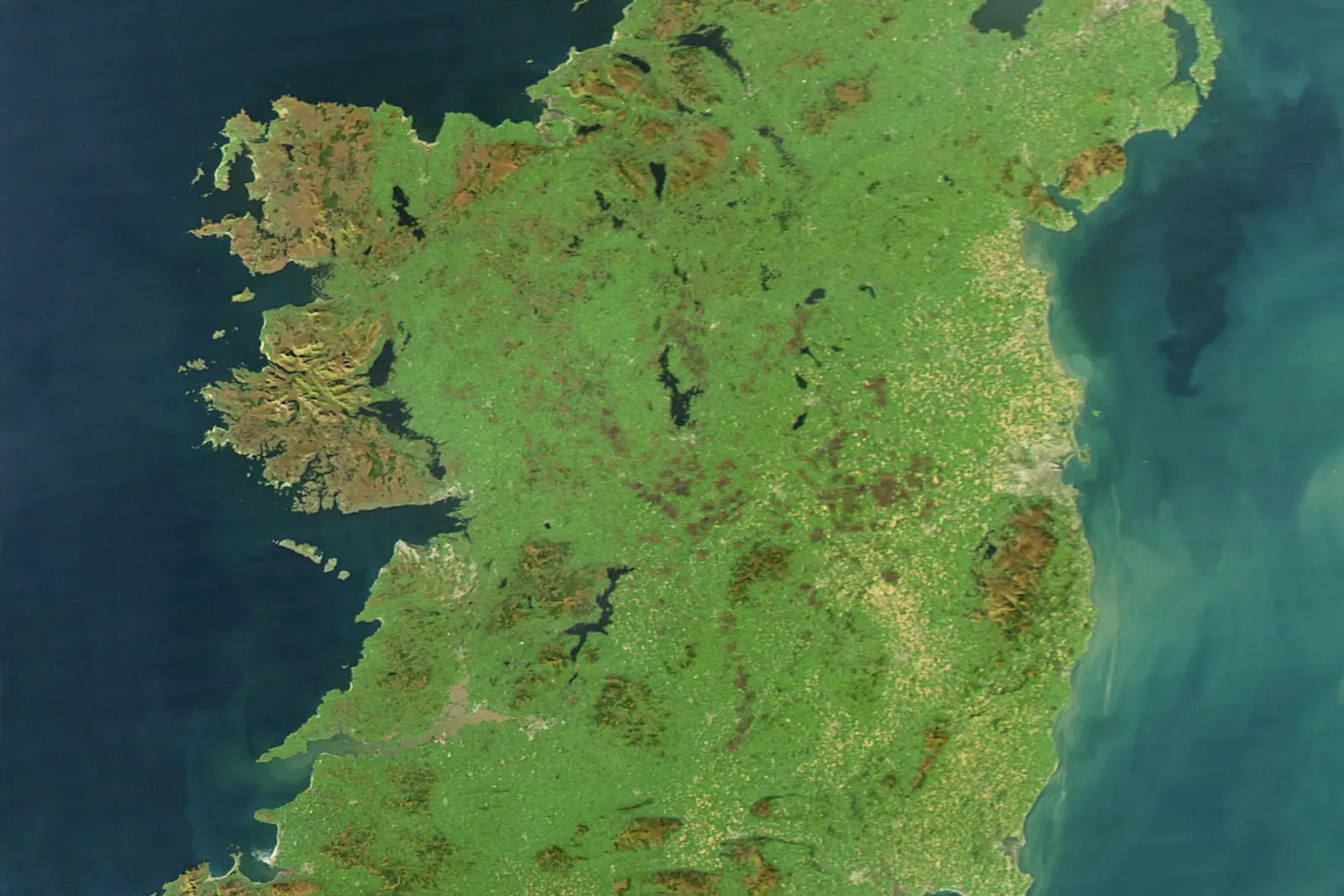
Ireland packs an improbable amount into a small island: sea cliffs that drop sheer into the Atlantic, stone monuments older than the pyramids, and a pub culture that treats conversation as a national art form. The challenge is never finding something worth seeing, but choosing a route that lets you see it properly rather than through a car window.
Dublin: Trinity College, Kilmainham Gaol and the Literary Core
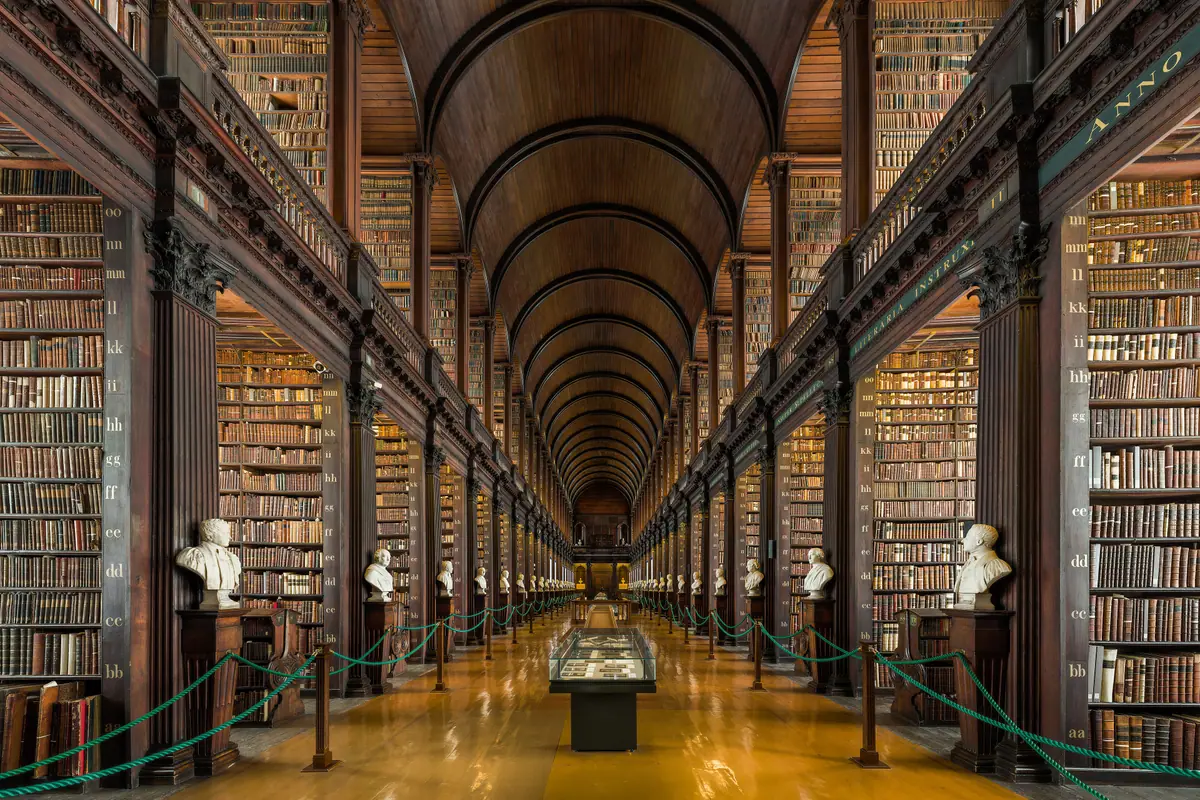
Most trips begin in Dublin, and the city earns a proper two days rather than a rushed afternoon before heading west. Start at Trinity College, where the Book of Kells — an illuminated manuscript of the Gospels copied by monks around the year 800 — is displayed in a darkened room, and the Long Room library above it, a barrel-vaulted hall of oak shelves and marble busts, is arguably the single most photographed interior in the country. Tickets are timed and sell out on summer mornings, so book ahead and arrive at opening.
From there the historic spine runs west: Dublin Castle and its Record Tower, the medieval crypts of Christ Church Cathedral, and St Patrick's Cathedral, where Jonathan Swift is buried. Allow a half day for Kilmainham Gaol, the prison where leaders of the 1916 Rising were executed; entry is by guided tour only, slots vanish weeks in advance in high season, and the tour is unexpectedly moving even for visitors with no prior interest in Irish history.
Cross the River Liffey for the livelier half of the city. Grafton Street has buskers and good people-watching, the Ha'penny Bridge is the classic photo stop, and the cobbled Temple Bar district is the busiest and most expensive place for a pint — locals tend to drink in Stoneybatter, Ranelagh or along the south quays instead. Finish in Phoenix Park, one of Europe's largest walled city parks, where fallow deer graze within sight of the city centre.
The Wild Atlantic Way: Cliffs of Moher, Connemara and the Aran Islands
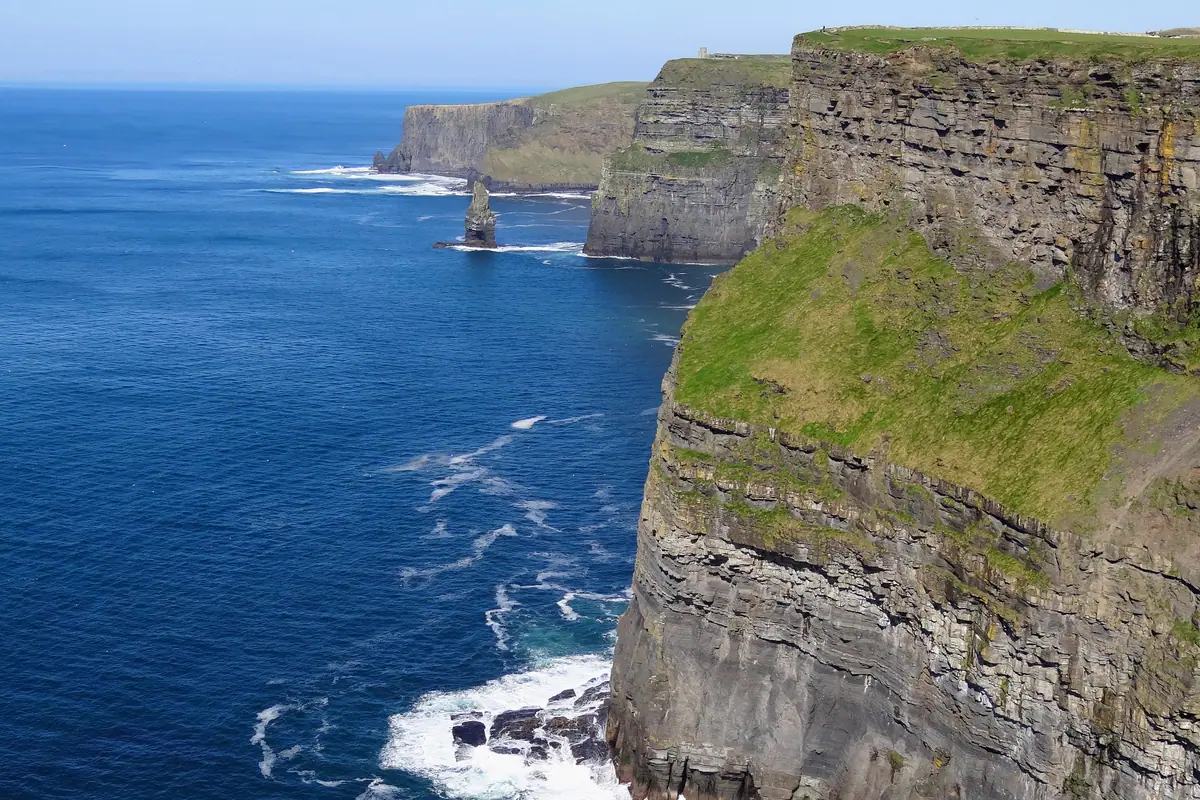
The Wild Atlantic Way strings together some 2,500 kilometres of coastal road from west Cork up to Donegal, and its signature stop is the Cliffs of Moher in County Clare. The cliffs rise to about 214 metres at their highest point beside O'Brien's Tower, and the visitor centre is buried into the hillside so it barely intrudes on the view. Come before 10am or after 5pm to dodge the coach crowds, and walk the clifftop path south towards Hag's Head for the quietest and most dramatic stretch.
Galway city makes the natural base for the middle of the west. Its Latin Quarter is a knot of coloured shopfronts, buskers and seafood pubs, with the Claddagh quay a short stroll away. From here, day trips run into Connemara, a landscape of bog, granite and the Twelve Bens mountains, where Kylemore Abbey sits reflected in a lake below a Victorian walled garden. Ferries and small flights also connect to the Aran Islands; Inishmore is the largest, and its Dún Aonghasa fort perches on a 100-metre cliff edge with no safety rail.
Push further north and the crowds thin out. Achill Island is joined to Mayo by a bridge and offers empty beaches and the serpentine Atlantic Drive, while County Sligo's flat-topped Benbulben dominates the skyline that shaped its most famous poet. In Donegal, Slieve League plunges nearly 600 metres to the sea, making it one of Europe's highest sea cliffs — and you may well have the viewpoint to yourself.
Ring of Kerry, Skellig Michael and the Dingle Peninsula
Killarney is the classic touring base for the southwest. Killarney National Park wraps around Lough Leane, with Muckross House and its restored Victorian gardens, the short walk to Torc Waterfall, and Ross Castle on the lake shore. The Ring of Kerry is a 179-kilometre loop of the Iveragh Peninsula; drive it clockwise to avoid meeting tour coaches head-on, give it a full day with stops, and break the journey at Ladies View for the postcard panorama over the lakes.
The most extraordinary excursion in Ireland is out to Skellig Michael, a rocky island 12 kilometres off the Kerry coast. A monastic settlement of beehive huts clings to the summit, reached by roughly 600 steep, uneven stone steps that were cut by monks more than a thousand years ago. Boats sail from Portmagee and nearby harbours, landings depend entirely on swell and wind, and the season runs only from around mid-May to early autumn. Book months ahead, and skip it if you dislike heights or exposure.
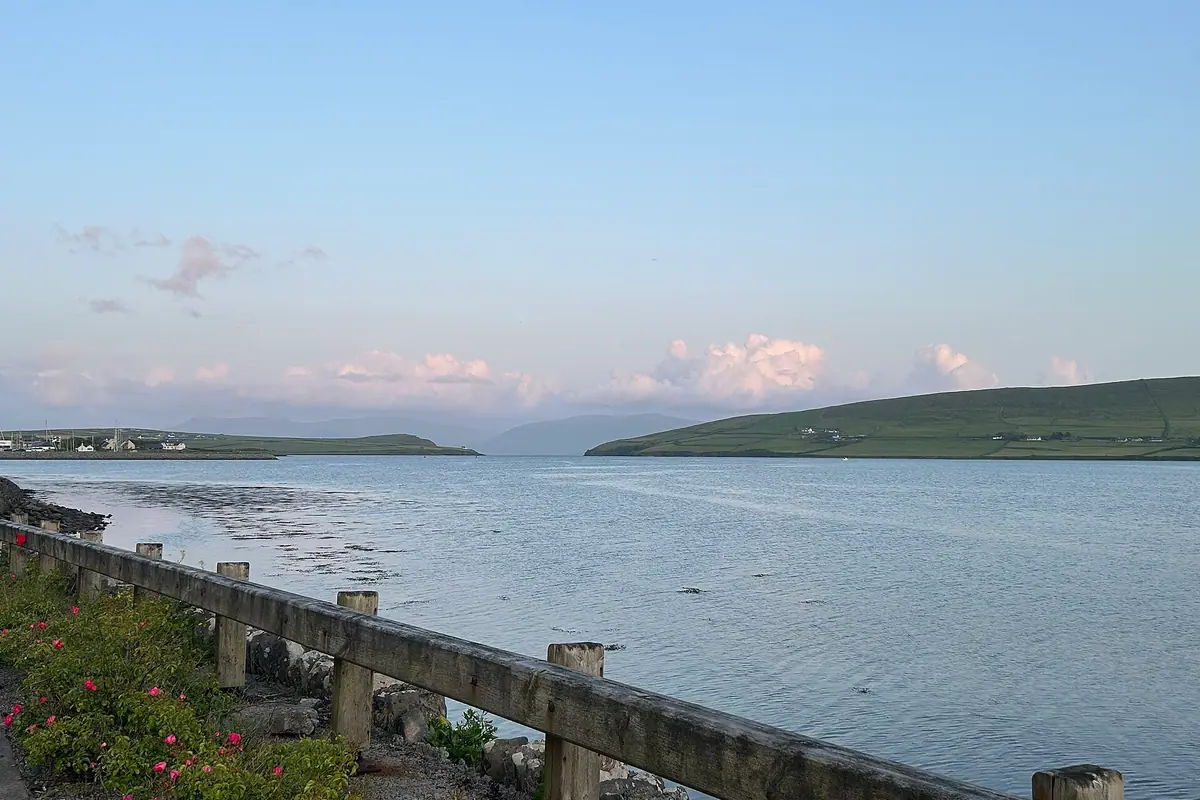
For something gentler, the Dingle Peninsula delivers the same scenery with less traffic. The Slea Head Drive is a 47-kilometre loop past drystone walls, Iron Age stone huts, the beehive-shaped Gallarus Oratory and views to the Blasket Islands, whose abandoned village is preserved as a heritage site. Inland, County Tipperary's Rock of Cashel — a cluster of medieval cathedral and chapel ruins on a limestone outcrop — and Blarney Castle near Cork city round out the inland highlights.
Ancient Ireland: Newgrange, Glendalough and the Burren
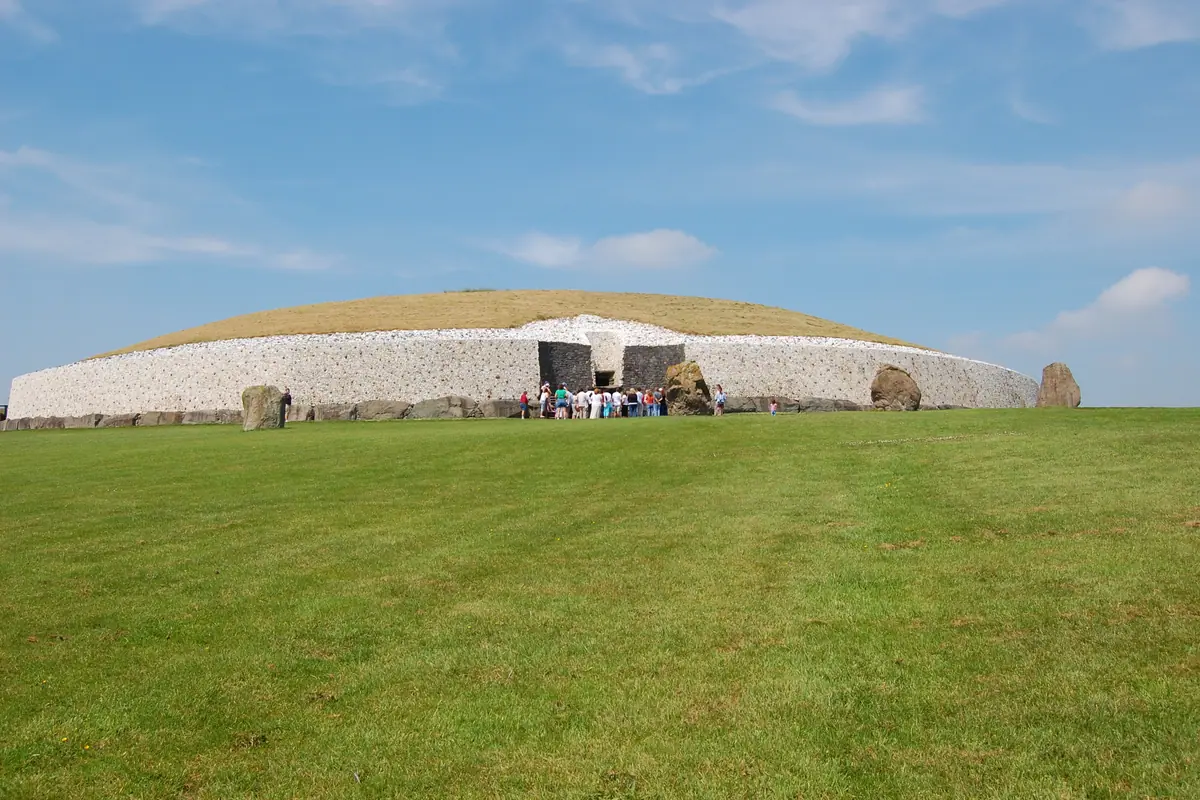
Newgrange in the Boyne Valley is the country's greatest prehistoric monument: a vast grass-topped mound built around 3200 BC, older than the Egyptian pyramids, with a passage and chamber aligned so that the midwinter sunrise lights the floor for a few minutes each December. Access is only by shuttle from the visitor centre at Brú na Bóinne, and the solstice lottery attracts tens of thousands of entrants annually, so book ordinary tours well in advance in summer.
South of Dublin, Glendalough in the Wicklow Mountains is a monastic city founded in the sixth century by St Kevin. A 30-metre round tower, a stone-roofed chapel and hundreds of weathered crosses and slabs survive among two lakes backed by heather hills. It pairs naturally with the Wicklow Mountains drive over the Sally Gap and a stop at Powerscourt Estate, whose terraced gardens and waterfall are among the most polished in the country.
In County Clare, the Burren is a grey moonscape of limestone pavement where arctic and Mediterranean plants grow side by side; the Poulnabrone Dolmen, a portal tomb roughly 5,800 years old, stands alone in the middle of it. Further north in Mayo, the Céide Fields preserve a stone-walled field system buried under bog for millennia — the oldest known in the world. Add the Hill of Tara in Meath, seat of Ireland's high kings, and you have a full prehistoric itinerary.
Giant's Causeway, Belfast and the Causeway Coast
Northern Ireland's headline sight is the Giant's Causeway, roughly 40,000 interlocking basalt columns stepping into the sea on the Antrim coast. Legend credits the giant Finn McCool; geology credits cooling lava. The columns are free to visit, though the visitor centre charges, and the light is best early or late in the day. Walk the clifftop path above the amphitheatre for the view most photographs miss.
The surrounding coast is packed with stops: the Carrick-a-Rede rope bridge sways 30 metres above the water on a short coastal walk, the Dark Hedges is a tunnel of gnarled beech trees, and Dunluce Castle sits ruined on a headland above the surf. Inland, the 17th-century walls of Derry form a complete 1.5-kilometre circuit and are still walked daily.
Belfast deserves its own day. The Titanic Belfast museum occupies the old shipyard where the liner was built, the Ulster Museum is free and strong on local history, and St George's Market fills with food stalls on Fridays, Saturdays and Sundays. The Cathedral Quarter handles evening drinks, and the city's political murals are best understood on a guided walking or taxi tour. Note that Northern Ireland uses pounds sterling, while the Republic uses euros.
When to Go and How to Get Around Ireland
May, June and September are the sweet spot: long daylight (up to 17 hours in mid-June), reasonable chances of dry weather, and roads that are busy but not overwhelmed. July and August bring the warmest temperatures and the heaviest crowds, especially along the Ring of Kerry and at the Cliffs of Moher. October is quieter with soft, dramatic light, while winter is mild but dim, with only seven to eight hours of daylight in December and reduced hours at some heritage sites.
A rental car is close to essential for the west coast, but adjust your expectations about distance. Hedged, single-lane roads mean 100 kilometres can easily take two hours, so plan fewer stops than you think you need. Drive on the left, take the full insurance waiver, and book an automatic well ahead — manuals dominate the fleet. Trains connect Dublin with Cork, Galway, Belfast and Sligo comfortably, and buses fill many gaps, but the scenic peninsulas are car or tour territory.
Book the fixed-capacity sights first: Kilmainham Gaol, Newgrange, Skellig Michael, the Book of Kells and any Belfast Titanic slot. Pack layers and a genuinely waterproof jacket rather than an umbrella, which the Atlantic wind renders useless. On summer evenings, midges gather near lakes and bogs in the west, so bring repellent if you plan to sit outside. Pubs generally serve food until around 9pm, and a hot whiskey is the accepted remedy for a wet day.
Frequently asked questions
How many days do you need to see Ireland properly?
Seven to ten days is the realistic minimum for a first trip. Give Dublin two days, then pick either the southwest (Killarney, the Ring of Kerry and Dingle) or the west and north (Galway, Connemara and the Causeway Coast) rather than trying to circle the whole island. Distances look small on a map but narrow coastal roads make them slow, so aim for no more than two to three hours of driving a day.
What is the best month to visit Ireland?
June and September offer the best balance of daylight, weather and manageable crowds. May is also excellent and slightly quieter. July and August are warmest but busiest and most expensive, while November to February is mild but dark, with some castles and gardens on reduced winter hours.
Do I need a car to get around Ireland?
For Dublin and the main cities, no — trains and buses are perfectly adequate. For the Wild Atlantic Way, the Dingle Peninsula, Connemara and the Causeway Coast, a car transforms the trip. Book an automatic early, budget for full insurance, and expect narrow roads where 100 kilometres can take two hours.
Are the Cliffs of Moher and Skellig Michael worth it?
Yes, both, but they demand planning. The Cliffs of Moher need only an hour or two and are far better before 10am or after 5pm. Skellig Michael is a half-day boat trip with a steep 600-step climb, dependent on calm seas, sailing roughly mid-May to early autumn — reserve months ahead and avoid it if you suffer from vertigo.
Can you visit both the Republic of Ireland and Northern Ireland on one trip?
Easily. Dublin to Belfast is about two hours by train or car, and the border crossing is normally unmarked and quick. Just remember the currencies change: euros in the Republic, pounds sterling in Northern Ireland, so carry a little of each if you are crossing back and forth.
Plan it — experiences in Ireland
Live search, booked directly with trusted providers.
Sort the rest of your trip
Everything for Ireland, in one place
Stay in Ireland
Hotels, guesthouses and apartments — compared in one search.
Search hotels
Transfer in Ireland
Private driver waiting on arrival — no queues, no surprises.
Book a transfer
Stay online in Ireland
Travel eSIM — data the moment you land, no roaming bills.
Get an eSIM