Iceland is small on the map and enormous on the ground, which is why a single week here feels like a compressed version of a much longer trip. Fly into Keflavík, pick up a car or hop a 45-minute domestic flight, and you can stand in a rift valley, walk behind a waterfall and watch icebergs drift to sea before the week is out.
Day 1: Landing at Keflavík and Finding Your Feet in Reykjavík
Almost every trip begins at Keflavík, on the wind-scoured Reykjanes Peninsula, roughly 50 kilometres southwest of the capital. The drive into Reykjavík takes about 45 minutes on a good day, longer in winter weather, and airport coaches run frequently if you would rather not drive on arrival. Collect a rental car here rather than in the city centre — the airport has the widest choice and you will avoid hauling luggage through town. By the time you check in, most travellers have enough daylight left for a gentle first wander, and in June and July it will still be bright at midnight.
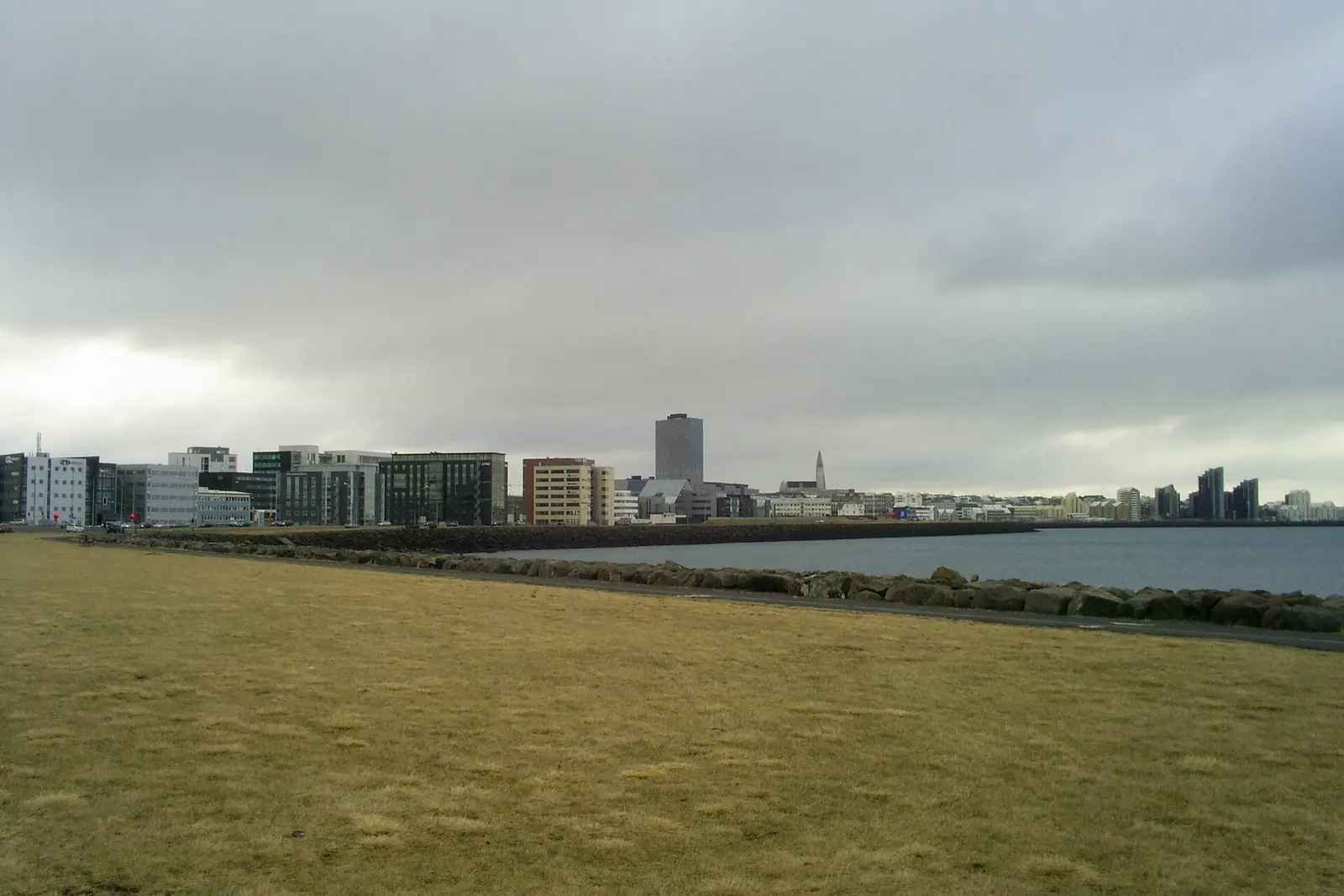
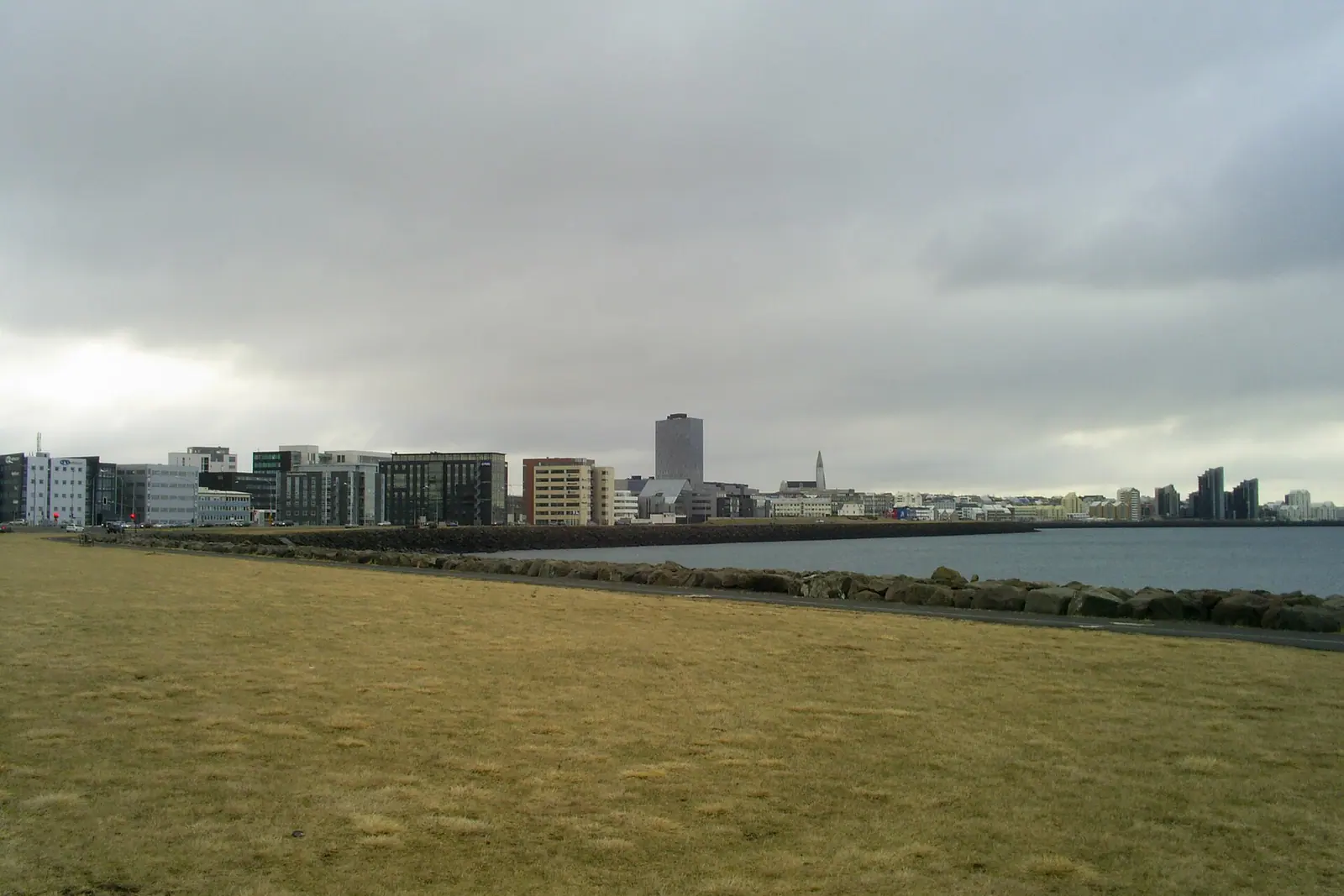
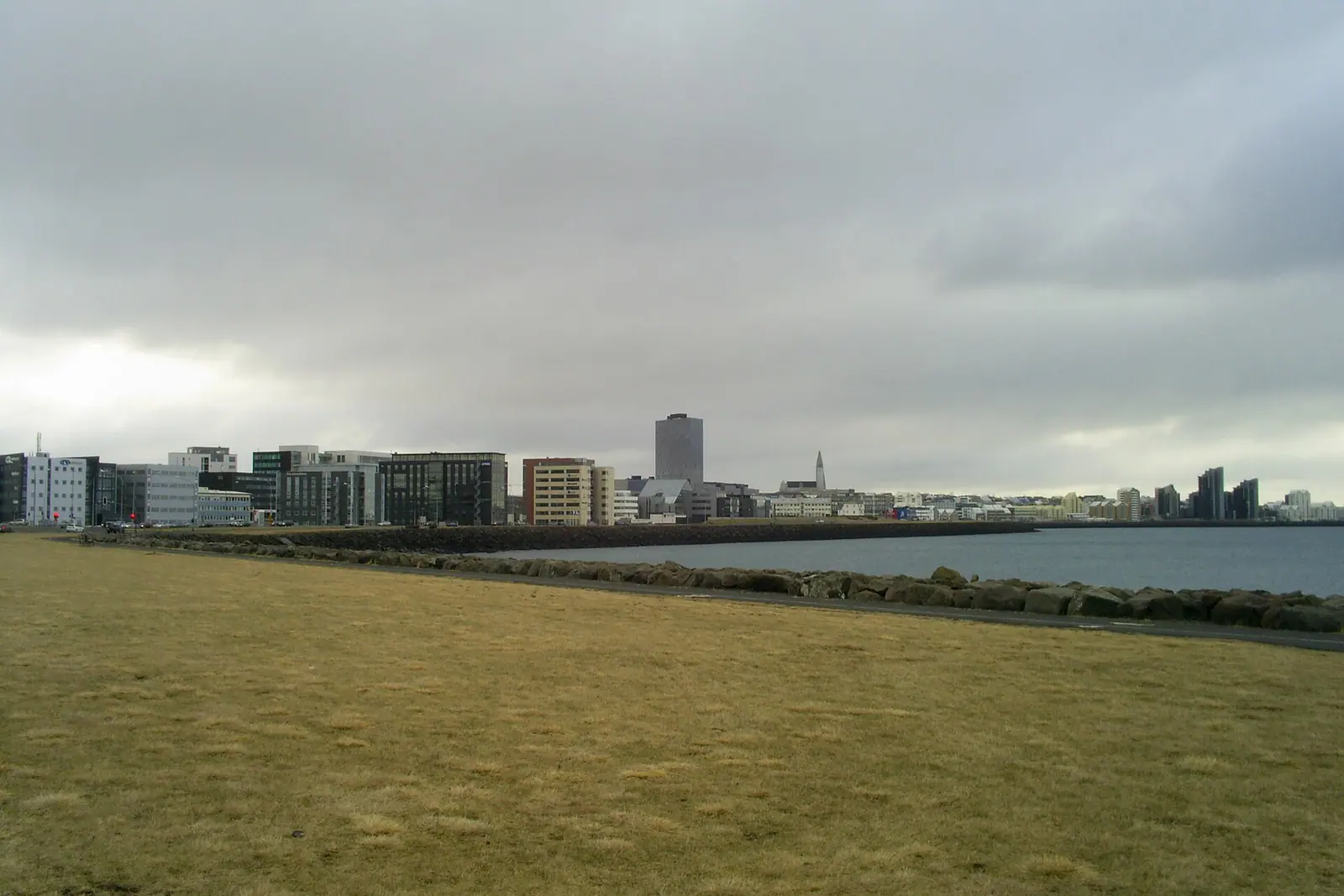
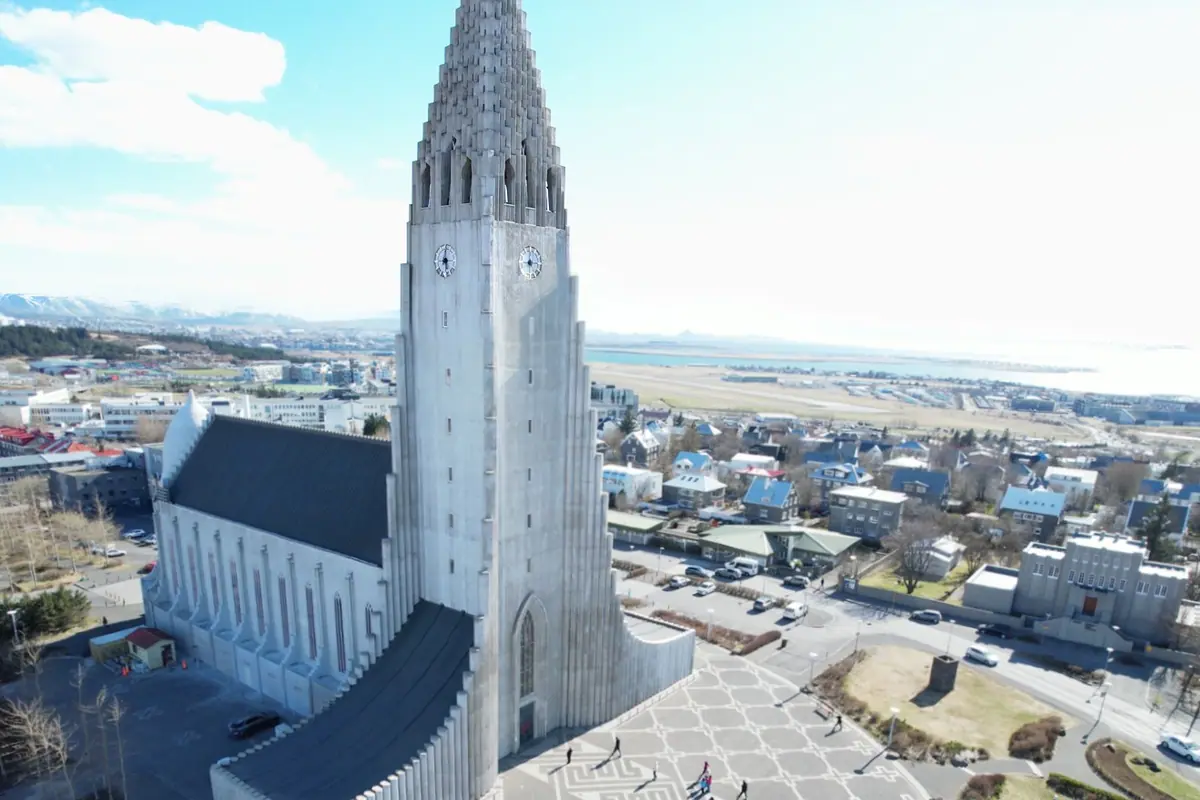
Spend the afternoon on foot in the capital. Hallgrímskirkja, the concrete church that towers over the city centre, has an observation tower with the best free panorama in Reykjavík, looking down over the colourful tin-roofed houses of the old quarters. From there, walk down Skólavörðustígur to Laugavegur, the main shopping street, then along the harbour to Harpa, the glass concert hall whose honeycomb facade reflects whatever the sky happens to be doing. The Sun Voyager sculpture sits a few minutes further east, a skeletal steel boat pointing out to Mount Esja.
If you have energy left, the old harbour runs whale-watching trips that last around three hours, and the city's geothermal pools are a cheaper, more local alternative to the famous lagoons. Eat early: Icelandic lamb soup or a hot dog from a harbour stand, then sleep off the flight before the driving days begin.
Days 2–3: The Golden Circle and the Rift Valley
The Golden Circle is the classic first loop and it earns its reputation. Þingvellir National Park is where the North American and Eurasian tectonic plates pull apart, and you can walk down into the Almannagjá gorge between them to reach the Lögberg law rock, where Iceland's ancient parliament met from the year 930. The park's clear glacial water also hides Silfra, one of the few places on earth where you can snorkel or dive directly between two continents.
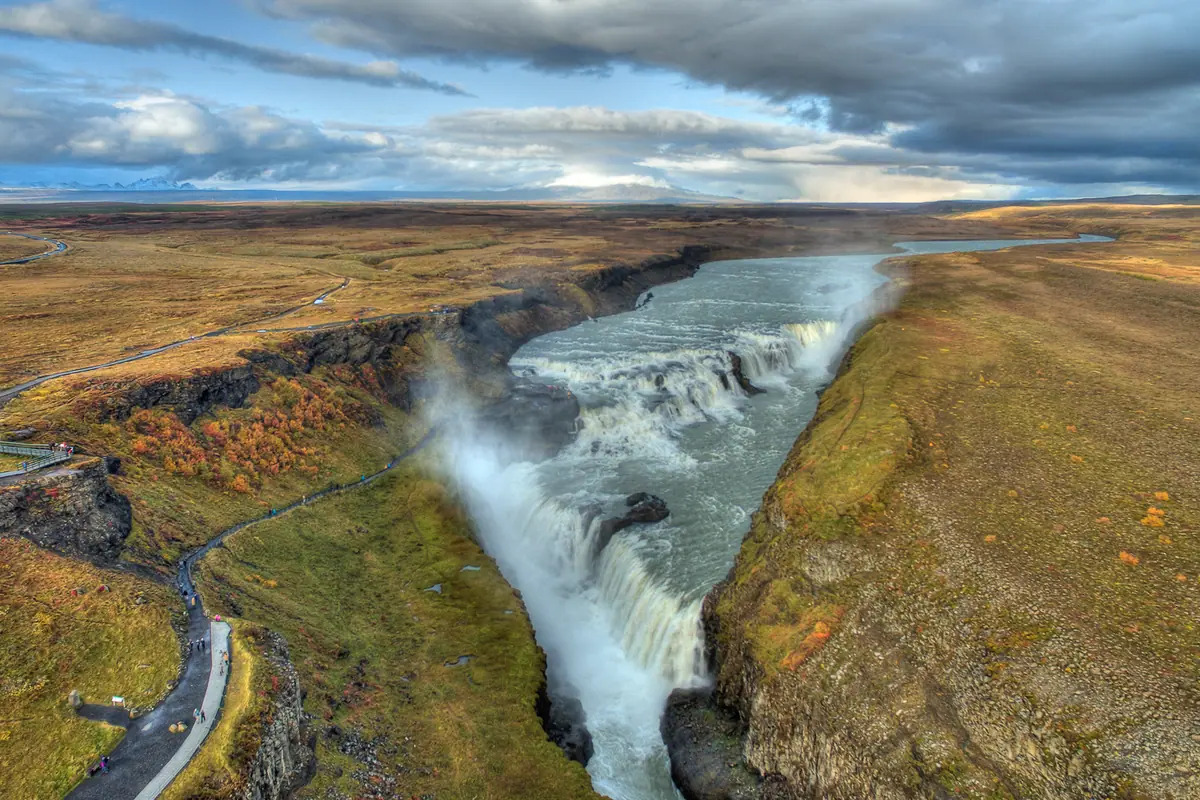
Next is the Geysir geothermal field, where the original geyser gave every other one its name. It rarely erupts now, but its neighbour Strokkur fires a column of boiling water 15 to 30 metres into the air every six to ten minutes, and the crowd always flinches. Ten minutes further on, Gullfoss thunders over two tiers into a canyon that glows gold in low sun — the single most photographed waterfall in the country, and worth the spray-soaked walk to the lower viewpoint.
Two days gives you room to add Kerið, a volcanic crater with an unnervingly blue lake at the bottom, and the Secret Lagoon at Flúðir, a small geothermal pool that predates the tourist boom and still steams beside a geyser of its own. Hardy souls can push on to Langjökull for a snowmobile ride or an ice tunnel, or drive the quieter interior road towards the hot river at Reykjadalur, where a 45-minute hike ends in a bath you can lie in while steam rises off the valley.
Day 4: The South Coast Waterfall Run
Heading east from Reykjavík, the Ring Road quickly becomes a highlight reel. Seljalandsfoss is the first stop: a 60-metre fall that drops off an old sea cliff and has a path running behind the curtain of water, so bring a rain shell unless you enjoy being soaked. A few hundred metres north, tucked inside a narrow fissure, Gljúfrabúi hides behind a boulder and is missed by most of the traffic — squeeze through the gap and you will have a waterfall almost to yourself.
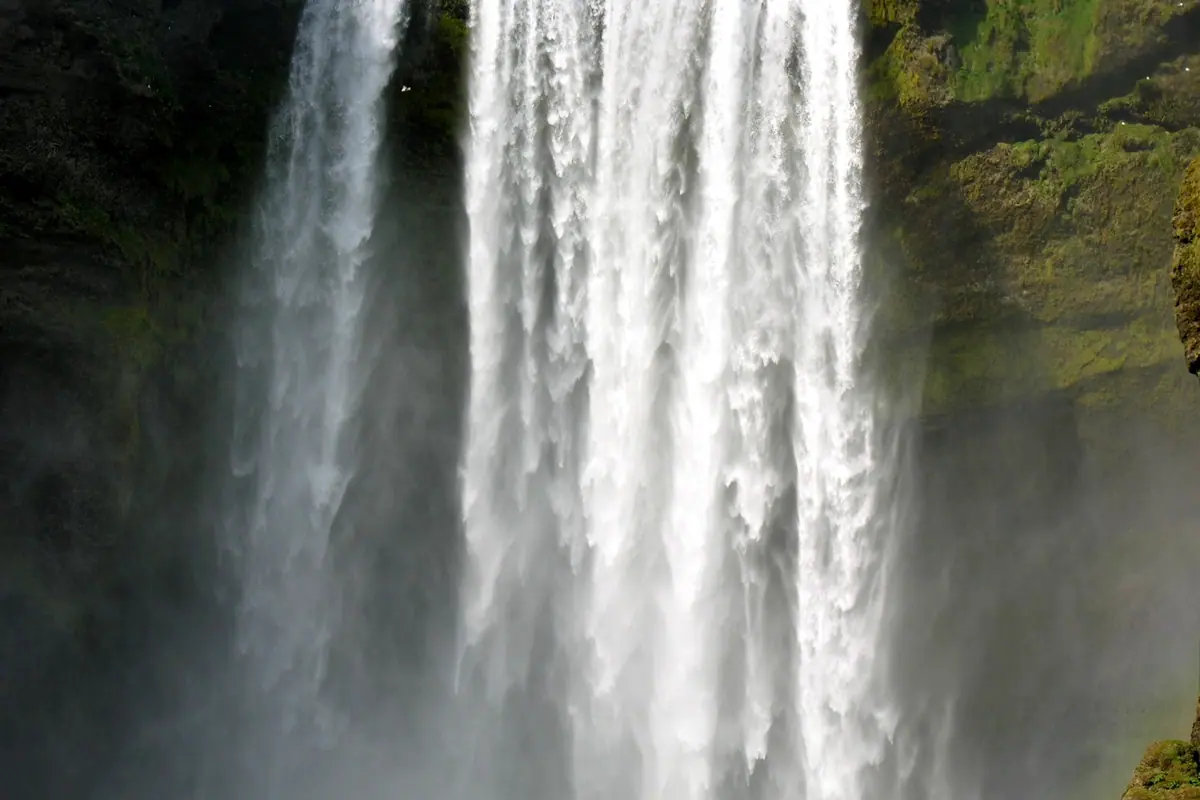
Skógafoss comes next, a broad 25-metre-wide wall of water with a staircase of 500-odd steps climbing the cliff beside it. The view back down over the south coast from the top, with the glacier-capped Eyjafjallajökull behind you, is one of the great easy payoffs in Iceland. Continue past the wreck of the DC-3 plane on Sólheimasandur if you fancy a flat 45-minute walk each way, and stop at Sólheimajökull to see a glacier tongue that has retreated dramatically in living memory.
End the day at Reynisfjara, the black sand beach near Vík í Mýrdal, where basalt columns form a natural staircase and the Reynisdrangar sea stacks rise out of the surf. This is also the most dangerous beach in the country — sneaker waves have killed visitors who turned their backs on the sea, so stay well above the waterline and never stand on the wet sand. Dyrhólaey, a few minutes west, gives you a cliff-top view of the arch and, in summer, puffins nesting within metres of the car park.
Day 5: Glacier Lagoons and the Edge of Vatnajökull
The stretch from Vík to Jökulsárlón covers roughly 380 kilometres of lava fields and outwash plains, so start early. Break the drive at Fjaðrárgljúfur, a serpentine canyon with a rim path that takes about 40 minutes to walk, then at Skaftafell in Vatnajökull National Park, the gateway to Svartifoss, a waterfall framed by black basalt columns that looks like a pipe organ. Guided glacier walks onto Falljökull or Svínafellsjökull leave from here several times a day and need only basic fitness, though crampons and a guide are non-negotiable.
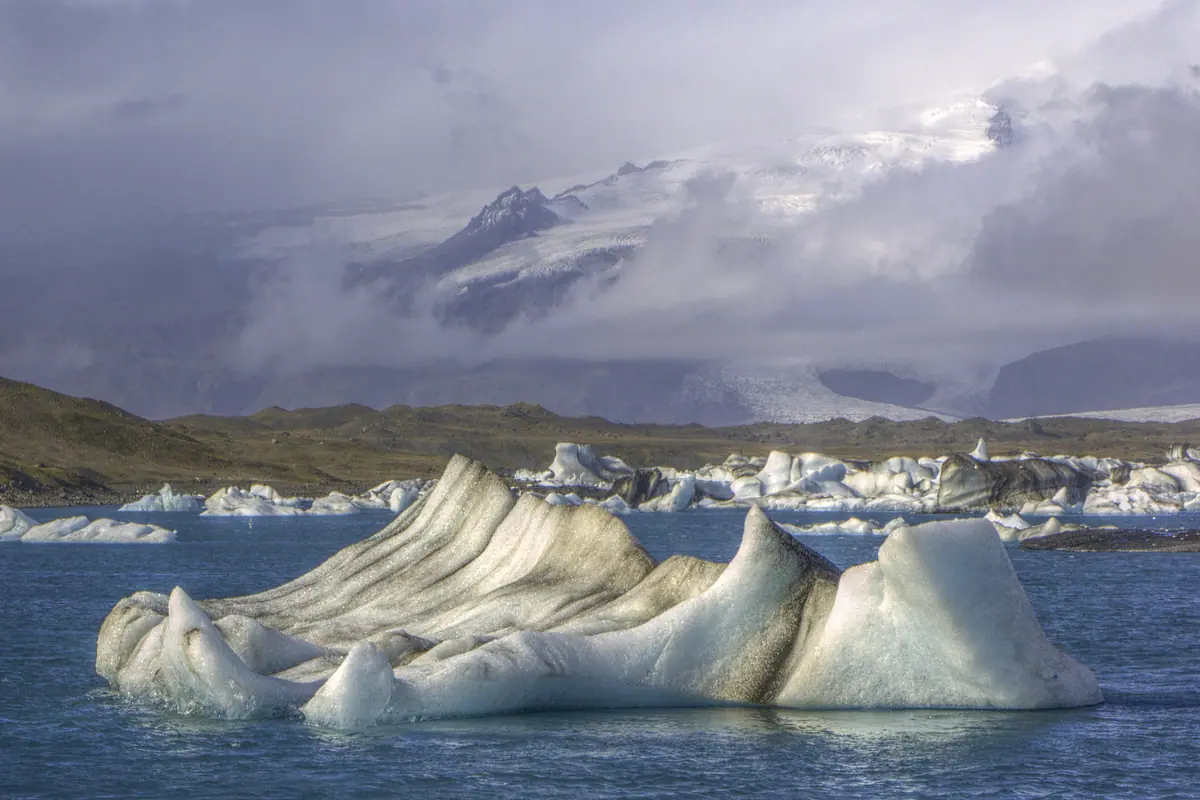
Jökulsárlón is the day's headline: a lagoon filling with icebergs calved off Breiðamerkurjökull, drifting slowly towards the sea, often with seals hauled out on the smaller chunks. Across the road, the so-called Diamond Beach is where those same bergs wash up on black sand and glitter until they melt. Zodiac boat tours run between roughly May and October and put you within arm's reach of the ice; in winter the lagoon freezes and the light turns a deep, theatrical blue.
If the weather is clear and you are travelling between September and March, this is prime northern lights territory — dark, far from city glow, and often cloud-free enough for a decent chance. Book two nights here rather than one if aurora is a priority, because a single cloudy night can otherwise be your whole trip.
Day 6: Flying North to Akureyri and the Diamond Circle
Rather than driving the long way round, take the 45-minute domestic flight from Reykjavík's city airport to Akureyri and pick up a car on arrival — it turns a seven-hour drive into a morning, and the approach over Eyjafjörður fjord is a scenic flight in its own right. Akureyri itself is a compact, likeable town with a striking modernist church, a botanical garden and the world's northernmost botanic collection of its kind, plus the short drive to Goðafoss, the 'waterfall of the gods', where the churning crescent of water is visible from the roadside.
The real draw north is the Diamond Circle, a loop of volcanic scenery that rivals anything in the south. Mývatn is a shallow lake studded with lava pillars and pseudo-craters, ringed by Dimmuborgir's twisted lava formations, the steaming vents of Hverir at the foot of Námafjall, and Grjótagjá, a cave with a warm blue pool that has been too hot to bathe in for decades. Dettifoss, further northeast, is the most powerful waterfall in Europe — 100 metres wide, 44 metres high, and loud enough that you feel it through the ground before you see it.
Finish at Ásbyrgi, a horseshoe-shaped canyon carpeted in birch and said in folklore to be the hoofprint of Odin's horse, or drive north to Húsavík, the whale-watching capital of the country, where humpbacks and minkes are commonly seen on three-hour summer sailings. Fly back to Reykjavík in the evening, or stay the night and return the following morning.
Day 7: Snæfellsnes or Reykjanes, Then Wheels Up
With one day left, pick your final loop by your flight time. The Snæfellsnes Peninsula, about two hours north of the capital, is nicknamed Iceland in miniature for good reason: Kirkjufell, the arrow-shaped mountain beside Kirkjufellsfoss, is the most photographed peak in the country; Djúpalónssandur's black pebble beach is littered with the rusting remains of a British trawler; and the Snæfellsjökull glacier above it all is the one Jules Verne sent his explorers down into the earth. It is a long day but a genuinely complete one.
If your flight is early, stay closer to the airport instead. The Reykjanes Peninsula has the Bridge Between Continents, the violently bubbling Gunnuhver hot springs, and the lava fields around Fagradalsfjall that erupted as recently as 2021. The Blue Lagoon sits on this peninsula, about 20 minutes from the terminal, and makes a memorable last stop if you book a slot in advance — it is a 90-minute soak at most before you want to move, and the silica mud and warm water are a fine antidote to a week in a car.
Aim to be at Keflavík two hours before a European departure and three in peak summer, when check-in queues stretch. Fuel up the rental car before you drop it off, keep any duty-free receipts handy, and remember that Icelandic weather can close roads and cancel domestic flights with little warning — build a little slack into the final day and the week ends as smoothly as it began.
Frequently asked questions
Do I need to rent a car for a one-week Iceland itinerary?
For the Golden Circle and the south coast, yes — a car gives you the freedom to stop at Seljalandsfoss, Skógafoss and Reynisfjara on your own schedule. If you would rather not drive, guided tours cover the same ground, and the domestic flight to Akureyri removes the longest leg entirely.
When is the best time of year to visit Iceland?
June to August brings the midnight sun, all roads open and the most reliable whale-watching, but also the biggest crowds and highest prices. September to March delivers northern lights, ice caves and lower rates, at the cost of short daylight and occasional road closures on the south coast and interior.
How long is the flight from Reykjavík to Akureyri?
About 45 minutes, compared with roughly five to seven hours of driving each way. Flights leave from the small city airport near Reykjavík's centre rather than Keflavík, so allow extra time to get to the right airport.
Can I combine the Blue Lagoon with a same-day departure from Keflavík?
Yes, and many travellers do. The lagoon sits around 20 minutes from the terminal, so a mid-morning soak followed by an afternoon flight works well — just book a timed entry in advance, as walk-up availability in summer is unreliable.
What should I pack for a week in Iceland?
Waterproof jacket and trousers, sturdy waterproof boots and layers you can remove, even in July, since wind and rain arrive without warning. Add a swimsuit for geothermal pools, sunglasses for glacier glare, and a hat and gloves if you are travelling outside the summer months.
Sort the rest of your trip
Everything for Iceland, in one place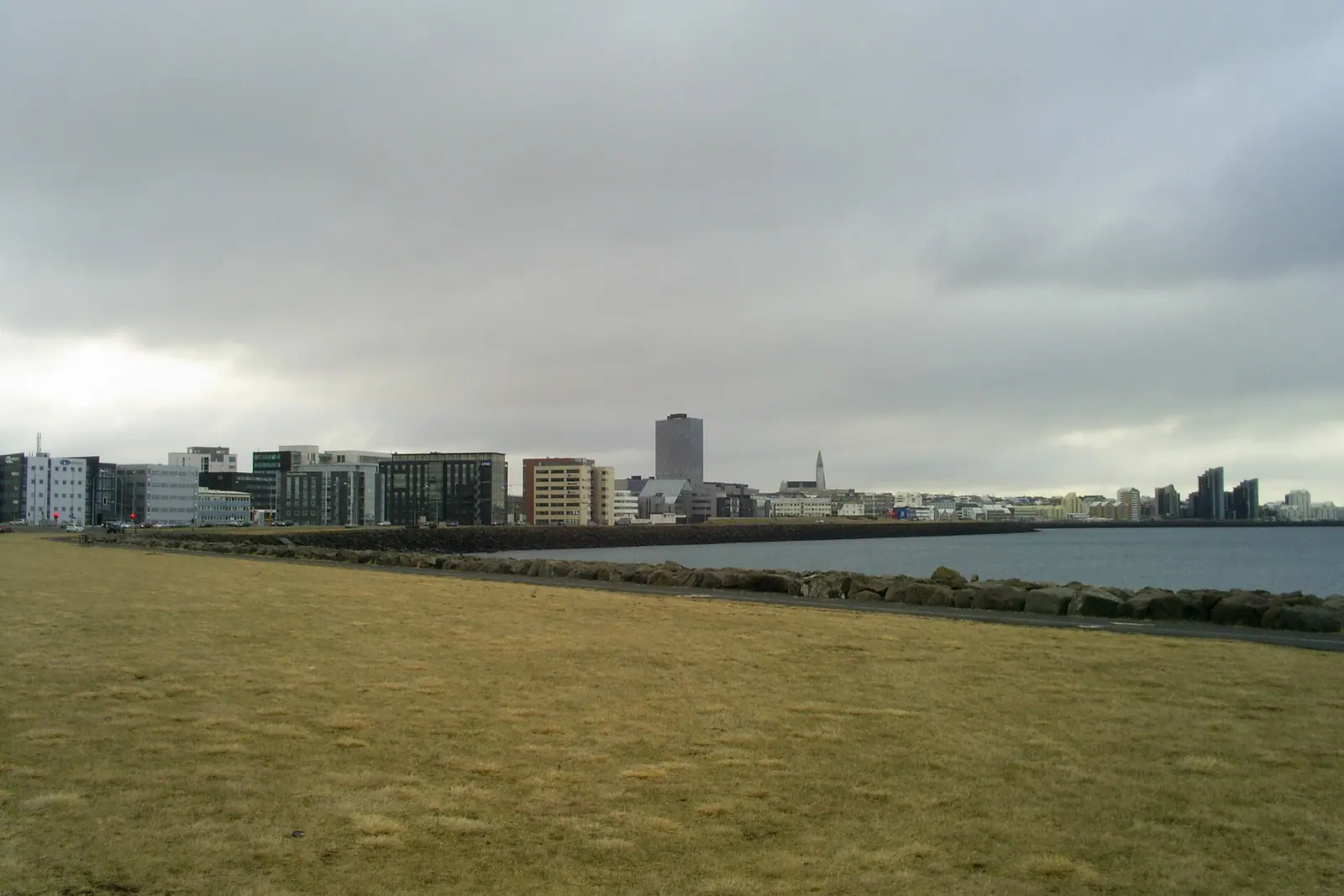
Stay in Iceland
Hotels, guesthouses and apartments — compared in one search.
Search hotels
Transfer in Iceland
Private driver waiting on arrival — no queues, no surprises.
Book a transfer
Travel insurance
Medical cover, delays and lost baggage — sorted before you go.
Get covered