Grenada is the Caribbean at its most fragrant and unhurried — an island where the air smells of nutmeg and mace, the rainforest drips with waterfalls, and the coastline flips from two-mile white-sand beaches to black volcanic coves within a single afternoon. Choosing the right place to sleep shapes the whole trip here, because the island's moods are so different from one coast to the next. This guide walks you through Grenada's main lodging areas and the landmarks you should build your days around.
Choosing Your Base: How Grenada's Hotel Map Actually Works
Grenada is small — roughly 21 miles long and 12 miles wide — but it packs three distinct travel personalities into that space. Almost all visitor accommodation sits in the southwest corner, in a loose band running from St. George's, the capital, down through Grand Anse, Morne Rouge, Lance aux Epines and Point Salines, where the international airport sits right on the coast. This is where the big beach resorts, apartment-style hotels and villa rentals cluster, and where most first-time visitors end up staying.
The second personality is the island's green interior — the Grand Etang rainforest, crater lakes and waterfall trails that rise steeply out of the middle of Grenada. There are only a handful of lodgings up here, mostly simple guesthouses and eco-cottages, and they suit travellers who want cool nights, birdsong and hiking from the doorstep rather than sand between their toes.
The third is the north, plus the sister islands of Carriacou and Petite Martinique. The northern parishes around Sauteurs, Bathway and Levera are the wildest, emptiest part of Grenada, with small locally run inns and a handful of restored plantation houses. Carriacou, reached by ferry or short flight, has its own slow rhythm and its own beaches. A split stay — three or four nights in the southwest, two or three in the north or on Carriacou — is the single best way to understand the country.
Timing matters as much as location. The dry season runs from December to April, with the driest, breeziest weather from mid-January to April, and that is when rooms are fullest and rates highest. June to November is the green season: lush, warm, cheaper, with short heavy showers and the odd tropical system; September and October are the quietest and riskiest months. Spicemas, Grenada's carnival, lands in early August and books out St. George's well in advance.
Grand Anse and the Southwest: Beachfront Resorts and Easy Living
Grand Anse Beach is the reason many people book Grenada in the first place: a two-mile arc of pale sand and calm, gradually shelving water, backed by sea grape trees and a low-key strip of restaurants, bars and spice stalls. Hotels here range from large all-inclusive resorts with multiple pools and watersports to modest self-catering apartments a minute's walk from the sand. Staying on or just behind Grand Anse means you can swim before breakfast, walk to dinner, and still reach the capital in ten minutes by road or by the small water taxis that hop across the bay.
Just around the headland, Morne Rouge — known locally as BBC Beach — is smaller, prettier and calmer, with a sheltered curve of sand and a couple of beach bars. A little further on, Magazine Beach and La Sagesse Beach offer something different again: Magazine for snorkelling and a striking setting near the airport, La Sagesse for a wilder, darker-sand bay with mangroves behind it. Guests based in the southwest can reach all of them in under half an hour.
The Grand Anse Craft and Spice Market is worth more than a quick look — it is one of the best places on the island to buy nutmeg, cinnamon, vanilla and cocoa directly from vendors, along with woven baskets and handmade jewellery. Note that the southwest is also Grenada's busiest corner: if you want silence and empty sand, this may not be the right base, and sargassum seaweed sometimes washes ashore in the warmer months, most often between May and September.
St. George's: Boutique Inns Above the Carenage
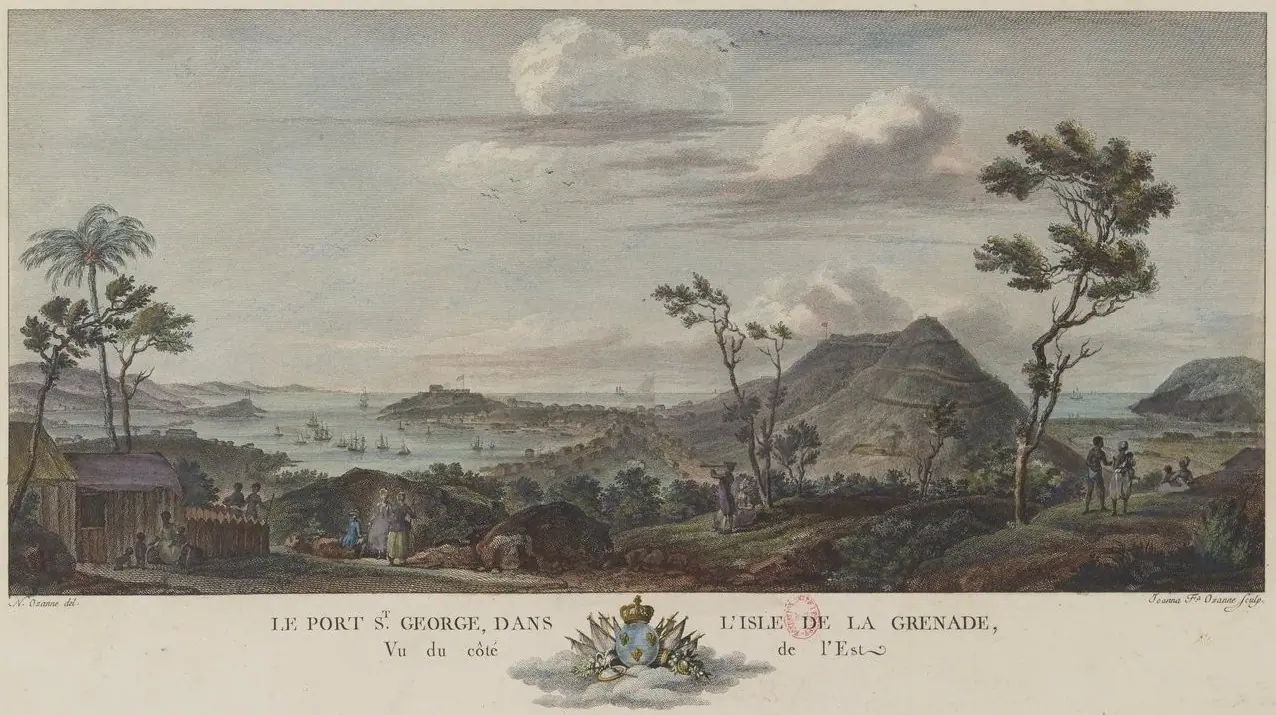
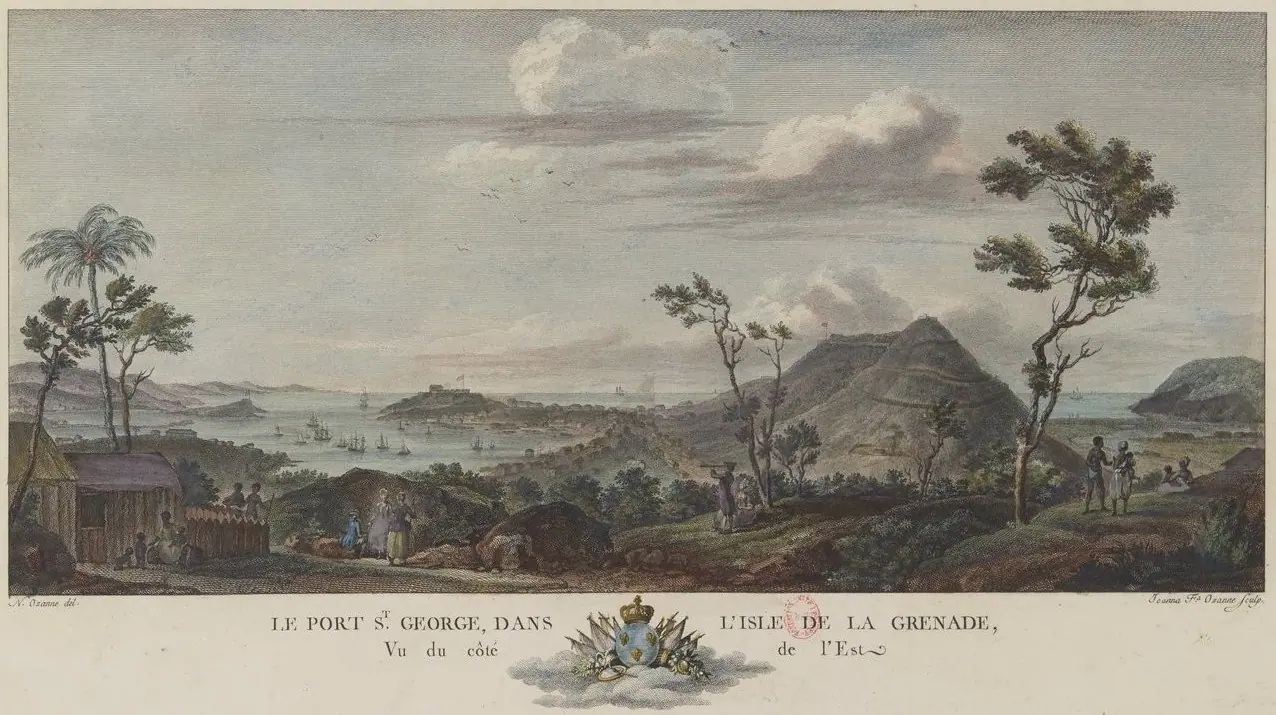
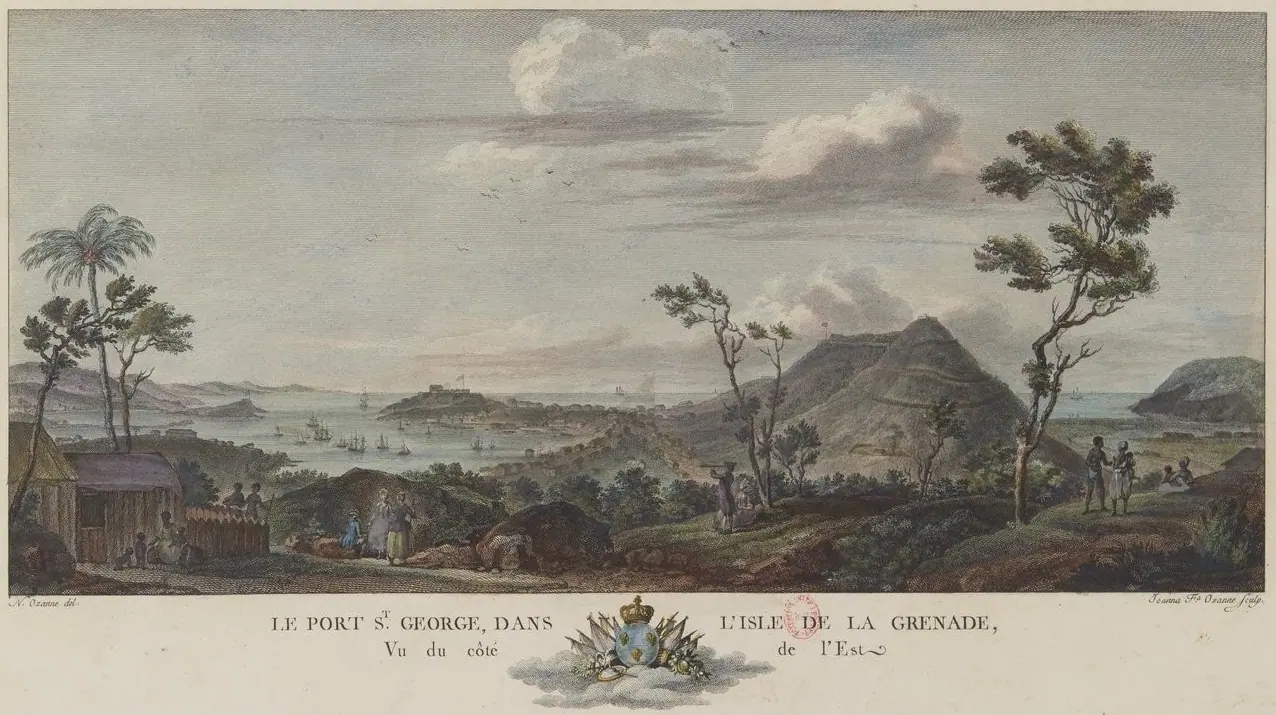
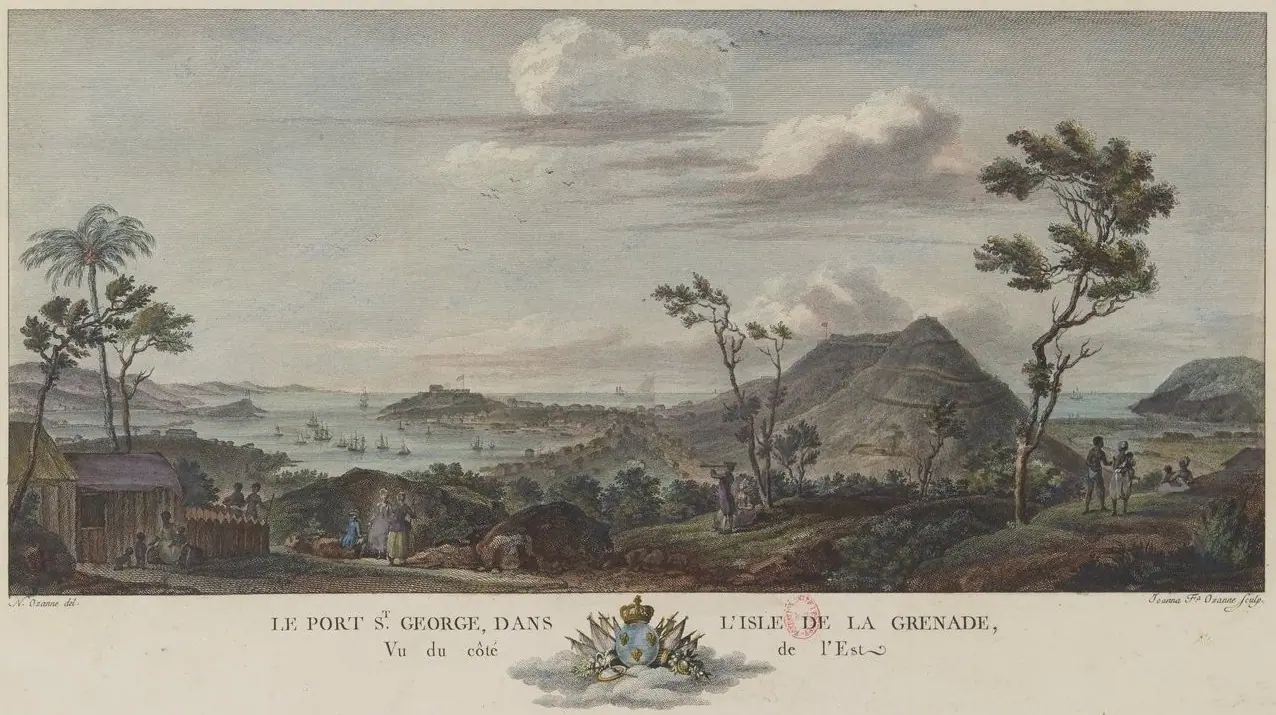
St. George's is one of the most photogenic harbour towns in the Caribbean, and sleeping in it is a completely different experience from sleeping on the beach. The Carenage, the horseshoe-shaped inner harbour, is lined with pastel Georgian warehouses, fishing boats and waterfront restaurants; above it, narrow streets climb to Fort George, the 18th-century French-built fort whose ramparts look straight down over the town and the cruise pier. Walking through the Sendall Tunnel — cut in the 1890s to link the Carenage with the outer harbour — is a small piece of Grenadian history in itself.
Accommodation in town is mostly small: restored merchant houses, family-run guesthouses and boutique inns with harbour-view terraces, often no more than ten or fifteen rooms. The payoff is atmosphere — you wake to the smell of the fish market and the sound of vendors at Market Square, where Saturday mornings bring a loud, colourful sprawl of produce, spices, herbs and crafts that is genuinely worth rearranging your plans for.
St. George's is also the best base if you plan to explore rather than lounge. Annandale Falls and Concord Falls are short drives inland, the Dougaldston Estate spice plantation and the fishing town of Gouyave — famous for its Friday night street food and music — are within easy reach, and the island's rum distilleries sit further up the same coast. Two or three nights here, bookended by beach time, gives you a far richer sense of Grenada than a single resort stay ever could.
Lance aux Epines, True Blue and Point Salines: Villas, Marinas and Family Comfort
If you are travelling with a group, staying a fortnight, or simply prefer a house to a hotel room, the residential peninsula south of Grand Anse is the answer. Lance aux Epines and the neighbouring Prickly Bay area are leafy and low-density, full of private villas, small apartment complexes and marina-side properties where sailboats swing at anchor. Distances are short — ten minutes to the airport, ten to Grand Anse — but the pace is noticeably slower and the evenings quieter.
True Blue, next to the island's university campus, has a young, local feel, with cafés, casual eateries and reasonably priced rooms that appeal to visiting families and long-stay guests. Point Salines, at the very southern tip, mixes airport-adjacent hotels with a couple of excellent beaches and the start of the road that curves up to the island's southern viewpoints. Because this whole corner faces west and south, sunsets here are the ones worth planning your evening around.
Practicalities are easier here too: supermarkets, petrol stations and laundries are close by, and self-catering makes sense given how good Grenada's markets are. The trade-off is that you will want a car or a reliable taxi arrangement, because this is a spread-out, residential part of the island and not somewhere you can wander out to a bar strip at midnight.
The North and Carriacou: Waterfalls, Wild Coast and Quiet Guesthouses
Northern Grenada rewards anyone willing to trade beach access for landscape. Levera National Park, at the island's northern tip, protects a mangrove lagoon, a sea turtle nesting beach and views out to the Grenadines; Bathway Beach nearby is a broad, breezy sweep of sand with natural rock pools. Sauteurs, on the west coast, sits on cliffs above Leapers Hill, a site layered with Carib history and one of the most evocative spots on the island.
This is also rum and cocoa country. The River Antoine Estate distillery, working with water power and methods that predate industrial rum-making, sits in the north-east, while the Belmont Estate and the Dougaldston Estate show how nutmeg, cocoa and mace move from tree to drying tray. Inland, the Grand Etang National Park and Forest Reserve is the island's green heart, with a crater lake, easy forest trails and the steeper climb up Mount Qua Qua, plus Seven Sisters Falls — a chain of cascades reached on foot through private farmland, best visited with a local guide.
Accommodation up here is limited and personal: small guesthouses, a few plantation-style stays and simple rooms in Sauteurs, Grenville and Victoria. If you want more, take the ferry or a short flight across to Carriacou, where Tyrell Bay is a low-key sailors' town, Hillsborough is the main settlement, and Anse La Roche and Paradise Beach rank among the region's loveliest strands. Sandy Island, a thin sliver of sand and palms offshore, is a classic day trip. Carriacou's regatta in August and its Big Drum and string-band traditions give the island a cultural life entirely its own.
Must-See Attractions and How to Fit Them Into a Week
Grenada's headline sights are spread around the island, so it pays to group them by day. Base yourself in the southwest and give the first day entirely to Grand Anse Beach, Morne Rouge and the spice market; add an afternoon at the Underwater Sculpture Park in Molinière Bay, where snorkellers and divers swim over a submerged gallery of figures that has become an artificial reef. Day two belongs to St. George's: Fort George, the Carenage, the Sendall Tunnel, Market Square and the small national museum, finishing with a drink above the harbour.
Day three heads inland to the Grand Etang National Park for the lake and forest trails, then on to Annandale Falls and, if you are steady on your feet, the Seven Sisters Falls hike. Day four can push north to Concord Falls, the Dougaldston Estate, the River Antoine Estate and the cliff-top viewpoint at Sauteurs, with a stop at Bathway Beach or Levera. Gouyave's Friday night fish fry is the perfect end to a north-coast loop.
With a week, add two or three nights on Carriacou for Anse La Roche, Sandy Island and Tyrell Bay — a completely different pace and arguably the highlight for repeat visitors. Fort Frederick, on the ridge above St. George's, is often skipped and shouldn't be: the drive up through the hairpins gives you the best panoramic view on the island. Keep in mind that roads are narrow and winding and driving is on the left, so allow generous travel times; a 20-mile journey can easily take an hour.
Frequently asked questions
What is the best time of year to visit Grenada?
The dry season from December to April is the most reliable, with the breeziest, driest conditions usually from mid-January to April. June to November is greener, hotter and cheaper, with short intense showers; September and October are the quietest months and carry the highest storm risk. Carnival, known as Spicemas, falls in early August and fills St. George's.
Which part of Grenada is best for a first visit?
The southwest coast around Grand Anse, Morne Rouge and Lance aux Epines suits most first-timers: you are minutes from the island's best-known beach, a short hop from St. George's, and well placed for day trips to the rainforest and the north. Consider adding two nights in the capital for harbour-town atmosphere, or on Carriacou for a slower finish.
Do you need a car to get around Grenada?
It helps, particularly if you stay in a villa or in the north, but it is not essential. Minibuses run frequently between St. George's and Grand Anse, taxis are widely available, and water taxis cross the bay. If you do drive, remember traffic keeps to the left, roads are narrow and winding, and journeys take longer than the distance suggests.
How many days do you need in Grenada?
Five to seven nights lets you cover Grand Anse, St. George's, the Grand Etang rainforest and a northern loop without rushing. Add two or three nights on Carriacou or Petite Martinique if you have ten days or more. A split stay between the southwest and the north or the sister islands shows you far more of the country than a single base.
What should you pack for Grenada?
Lightweight clothing, reef-safe sunscreen, insect repellent for the rainforest and evenings, and sturdy shoes if you plan to hike to Seven Sisters Falls or up Mount Qua Qua. Bring a light rain shell for the green season, and something slightly smarter for harbour-side dinners in St. George's. The local currency is the Eastern Caribbean dollar, though US dollars are widely accepted.
Sort the rest of your trip
Everything for Grenada, in one place
Transfer in Grenada
Private driver waiting on arrival — no queues, no surprises.
Book a transfer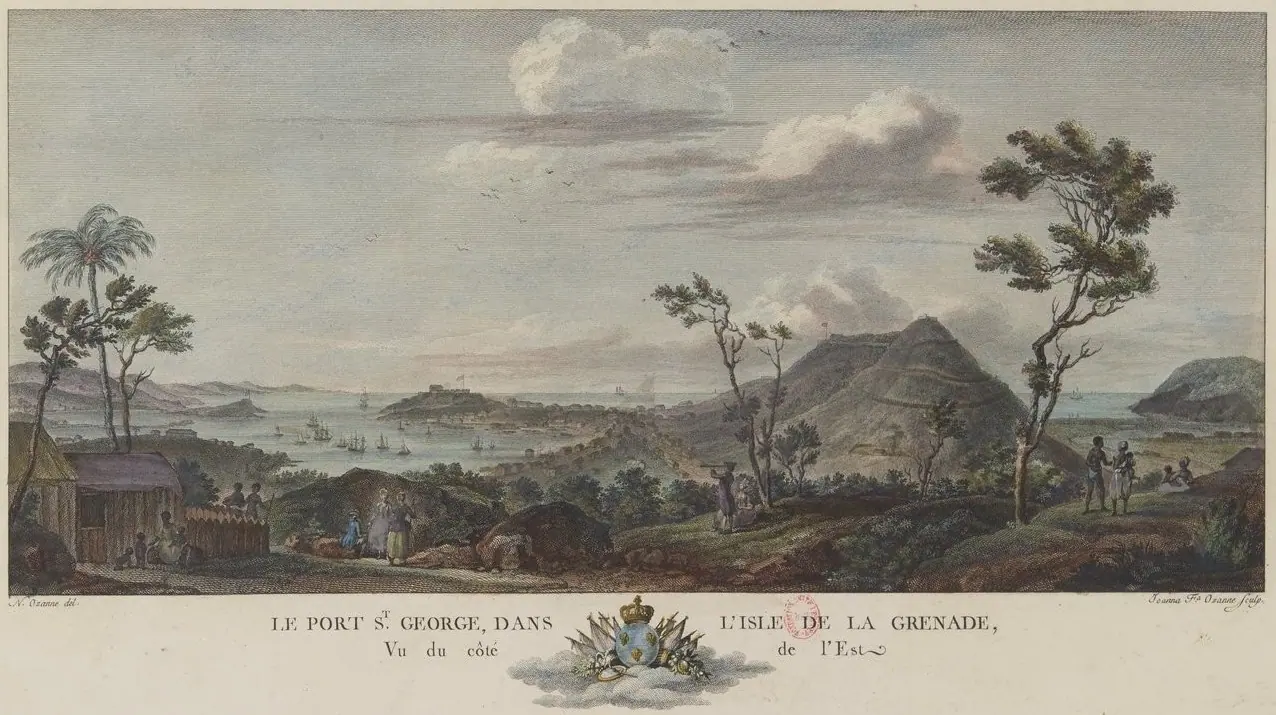
Things to do in Grenada
Skip-the-line tickets, guided tours and standout experiences.
See experiences
Stay online in Grenada
Travel eSIM — data the moment you land, no roaming bills.
Get an eSIM