Germany rewards the traveller who moves fast and looks closely: a country where a one-hour hop can carry you from Prussian boulevards to Alpine castle towers before lunch. This seven-day route uses short internal flights to stitch the big set pieces together — the capital, Bavaria's fairy-tale palaces, the Rhine's vineyard terraces — without wasting your week on motorways. Pack light, book your castle tickets early, and let the airports do the heavy lifting.
Days 1–2: Berlin — Landing in the Rebuilt Capital
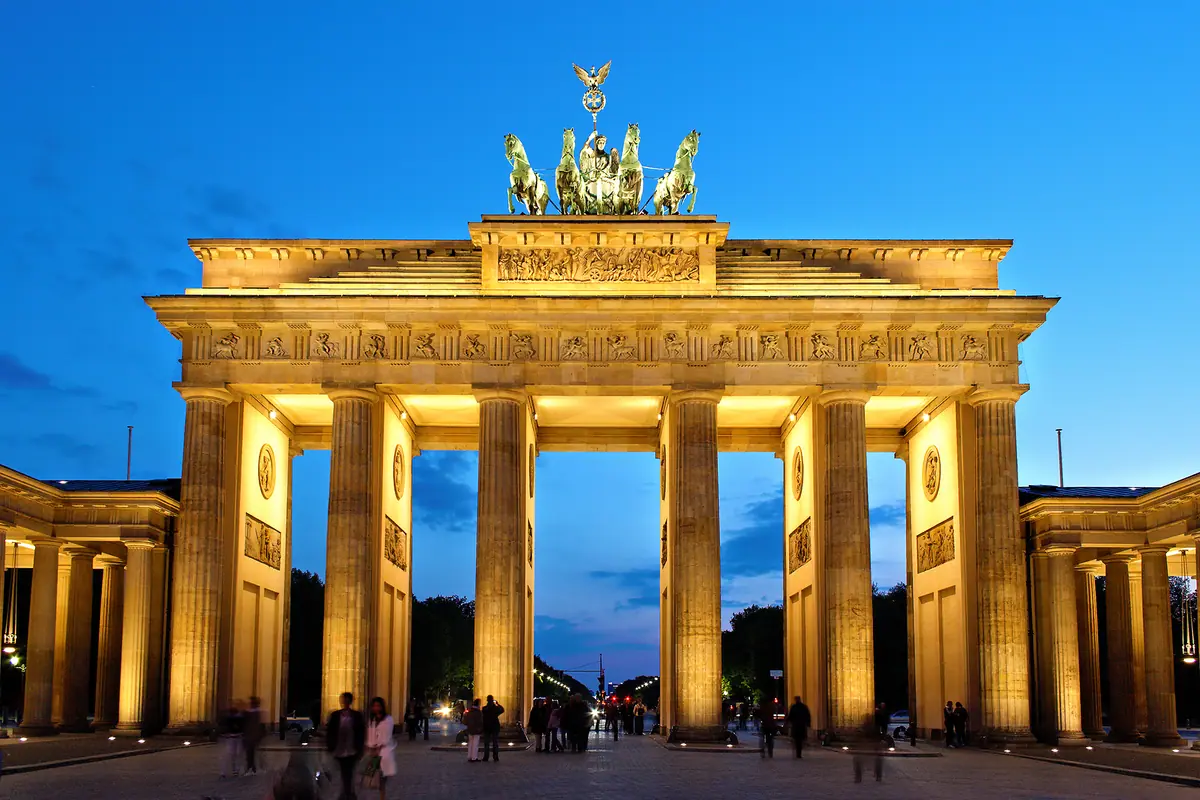
Most arrivals touch down at Berlin Brandenburg Airport, roughly half an hour by suburban train from the city centre. Give Berlin two full days, because the scale of the place is deceptive until you start walking it. Begin early at the Brandenburg Gate, when the light is soft and the tour groups have not yet gathered, then cross to the Reichstag and claim a free timed slot for Norman Foster's glass dome — book it weeks ahead, and bring your passport for the security check. From there the Memorial to the Murdered Jews of Europe, a field of grey stelae, leads you down Unter den Linden towards Museum Island.
Spend the afternoon among the island's five museum buildings, where the bust of Nefertiti and the reconstructed Pergamon altar anchor collections spanning five thousand years. Afterwards, climb the Fernsehturm at Alexanderplatz for the single best orientation view in the city, then walk east along the River Spree to the East Side Gallery, the longest surviving stretch of the Berlin Wall, its concrete slabs painted by artists from around the world.
Berlin is flat, easy on the feet and superbly served by U-Bahn and S-Bahn lines. Late spring and early autumn give the kindest weather for walking; a December visit trades long daylight for some of Europe's finest Christmas markets, glowing in the squares around the Gedächtniskirche and Charlottenburg Palace.
Day 3: A Short Hop South to Munich
Berlin to Munich is about an hour and ten minutes in the air — brief enough that the cabin crew barely finish the drinks service, though you should still budget half a day door to door once transfers and security are counted. The alternative is a high-speed train covering the same distance in roughly four hours, city centre to city centre; fly if time is short, ride the rails if you would rather watch the countryside roll past.
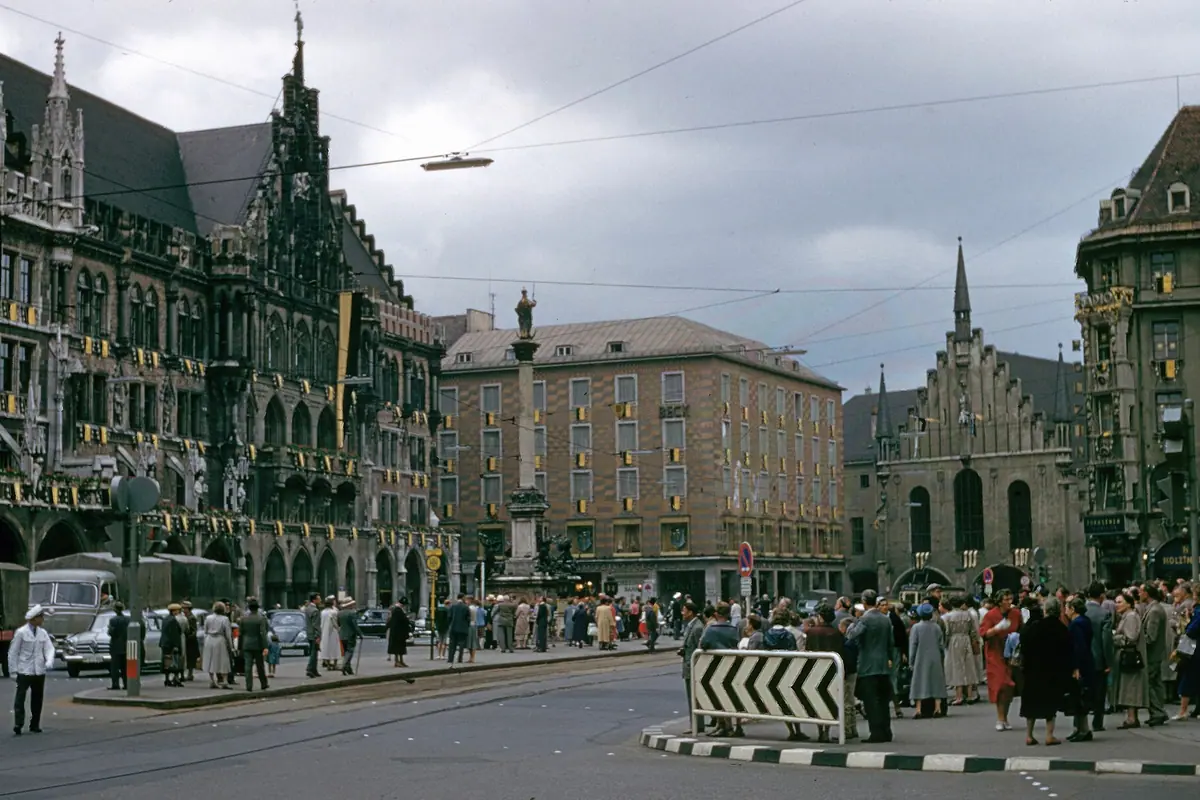
Munich itself is compact and confident. Marienplatz forms the heart of it, with the neo-Gothic New Town Hall and its Glockenspiel chiming at eleven and again at noon, a mechanical performance of knights and barrel-makers that draws a crowd every time. A few minutes away rise the twin brick towers of the Frauenkirche, and beyond them the stalls of the Viktualienmarkt, where you can build a lunch from radishes, pretzels, mountain cheese and white sausage.
Spend the late afternoon in the Englischer Garten, one of the largest urban parks in Europe, where surfers ride a standing wave on the Eisbach stream year-round while sunbathers watch from the banks. Finish with a wander through Nymphenburg Palace's baroque gardens, or over a slow beer in one of the historic halls near the market. Munich Airport sits about forty minutes from the centre by suburban train, so plan your next morning accordingly.
Day 4: Neuschwanstein and the Bavarian Alps
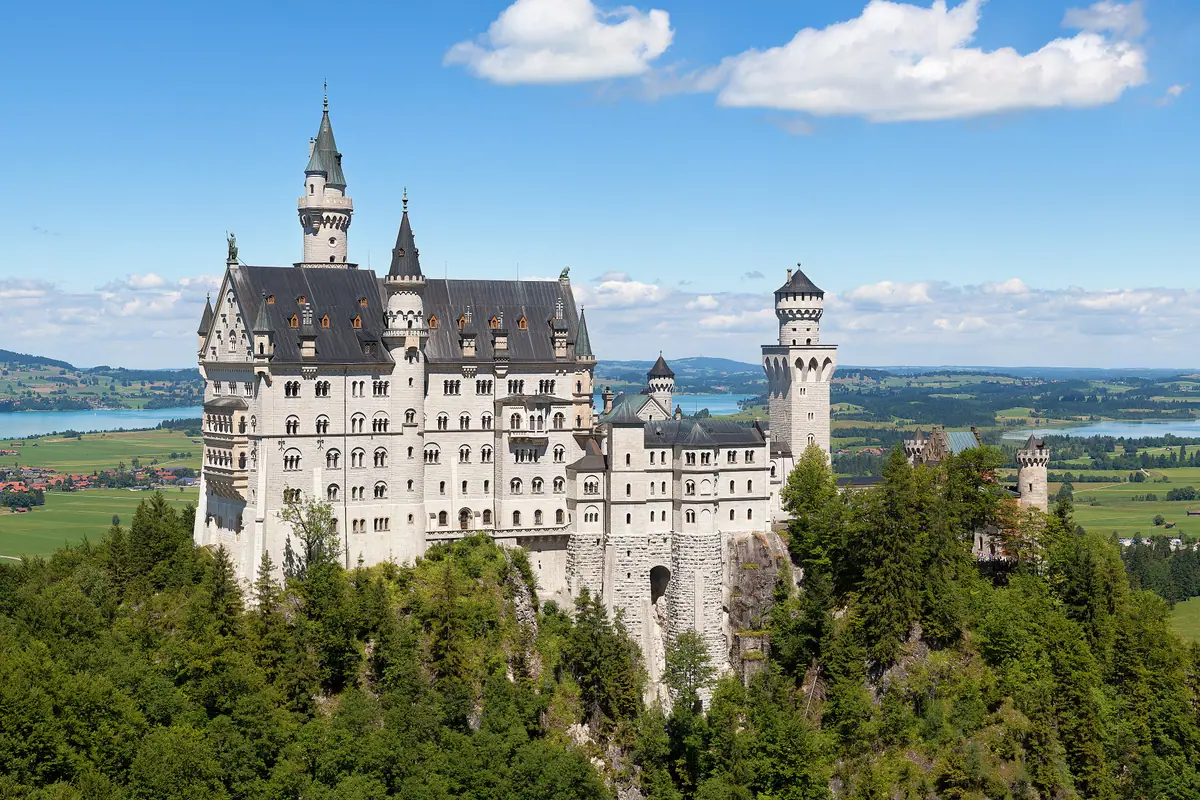
This is the day most travellers remember. Take an early train south to Füssen — around two hours — then a local bus to the village of Hohenschwangau, where the road climbs through forest towards Neuschwanstein. Built for King Ludwig II in the 19th century and never finished, the castle rises in white limestone turrets above a gorge, the model for countless fairy-tale silhouettes. Timed-entry tickets sell out weeks in advance during summer, so reserve before you leave home, and allow at least half a day for the visit plus the walk up.
For the classic photograph, follow the path beyond the castle to the Marienbrücke, a slender iron bridge spanning the waterfall gorge, where the whole building appears to float above the trees. Below it stands Hohenschwangau Castle, Ludwig's childhood home, and an hour further west lies Linderhof Palace, a jewel-box of rococo excess with terraced gardens and a grotto. If you would rather aim higher, head instead to Garmisch-Partenkirchen and ride the cable car to the summit of the Zugspitze, at 2,962 metres the highest point in Germany, where four countries ripple away beneath you on a clear day.
Crowds peak from June to August, so July and August visitors should take the first castle slot of the morning. October brings copper-coloured woods and thinner queues, while winter turns the whole valley into a snow-globe — beautiful, but check that paths and buses are running before you commit.
Day 5: Fly to Cologne and Climb the Cathedral
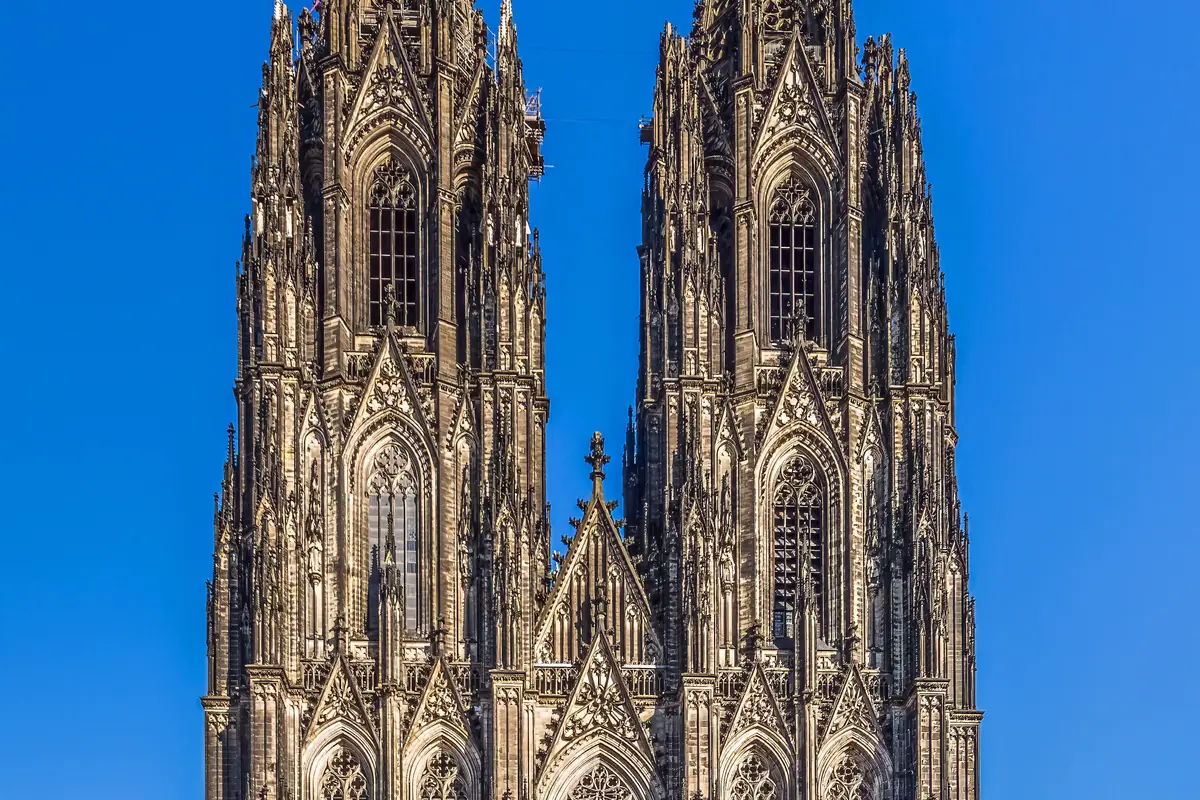
A morning flight from Munich to Cologne takes a little over an hour, landing you a short train ride from the Rhine. Nothing prepares you for the first sight of Cologne Cathedral: a blackened Gothic giant with twin spires reaching 157 metres, begun in 1248 and finally completed six centuries later. Entry to the nave is free, but it is the climb that stays with you — 533 worn stone steps spiral up the south tower to a gallery where the river, the bridges and the rooftops of the old town spread out below.
Walk down to the Hohenzollern Bridge, where thousands of padlocks clicked shut by couples glitter along the railings, and then into the Altstadt, a tight grid of brew houses and gabled facades rebuilt after the war but still full of atmosphere. The Roman-Germanic Museum next to the cathedral preserves a mosaic floor from a Roman villa, a reminder that this city is two thousand years old.
Order a small glass of the local pale beer in a traditional brewery and let the waiter keep replacing it until you signal otherwise — that is simply how it works here. Early morning is the calmest time to see the cathedral interior, and the tower climb is best attempted before the queues form at mid-morning.
Day 6: The Rhine Valley and Heidelberg
Take a slow train south along the Rhine and you will understand why this valley has been romanticised for two centuries. Vineyards climb impossibly steep slopes, half-timbered villages huddle at the water's edge, and castles appear on every crag. The Lorelei rock, a 120-metre slate bluff where the river narrows and legend says a siren lured sailors to their deaths, is the most famous viewpoint; the small town of Bacharach and the wine village of Rüdesheim make excellent stops. Short river cruises of one to four hours run between the main towns from spring through autumn.
Above the village of Braubach stands Marksburg Castle, the only hill castle on the Rhine never destroyed, its kitchens, armoury and battlements intact enough to feel lived in. If you have time for only one detour inland, make it Heidelberg: the red sandstone castle ruins towering over the river Neckar, the enormous wine barrel in its cellars, the baroque old town and the Philosopher's Way path on the opposite bank, which delivers the postcard view back across the rooftops.
The valley is at its best from May to early October, when the ferries and cable cars operate and the terraces are green or gold. Winter visits are quieter and mistier, with many castle interiors closed, though the Christmas markets in the riverside towns are worth the trade-off.
Day 7: Frankfurt, Römerberg and the Journey Home
Finish in Frankfurt, Germany's glass-and-steel financial capital, which hides a surprisingly cosy medieval core. The Römerberg is the showpiece: a square of reconstructed gabled houses around the Römer town hall, where emperors were once crowned. Climb the 200-metre Main Tower observation deck for a skyline panorama, wander the Museum Embankment along the river, or slow down in the Palmengarten, a botanical garden of glasshouses and lawns that makes an easy final afternoon.
St Bartholomew's Cathedral, with its distinctive red sandstone tower, sits a few minutes from the square and is worth a quick look inside between coffee and packing. If your flight leaves in the evening, the airport is only about fifteen minutes from the central station by suburban train, which makes a last-day city stroll entirely practical.
For long-haul departures, arrive three hours before take-off; for European flights, two hours is comfortable. Domestic fares are usually cheapest when booked four to eight weeks out, and Monday-morning and Friday-evening departures carry a premium. Keep luggage to one cabin bag and this whole week — three flights, half a dozen cities, one very full camera roll — becomes genuinely effortless.
Frequently asked questions
How many internal flights should I take during one week in Germany?
Two or three is the sweet spot. One flight south from Berlin to Munich and one north or west to Cologne keeps the week moving without turning it into an airport tour. Every flight costs you roughly four hours door to door once transfers, security and boarding are counted, so more than three hops means you will see airports rather than cities.
Is it better to fly or take the train between German cities?
For distances under about four hours by rail — Cologne to Frankfurt, Munich to Nuremberg, Berlin to Hamburg — the train wins, because stations sit in the city centre and there is no check-in. Flying makes sense for the long north–south legs such as Berlin to Munich or Hamburg to Munich, where you save three or more hours of travelling time.
What is the best time of year for a one-week Germany itinerary?
May, June and September offer the best combination of long daylight, mild weather and manageable crowds. July and August are warm but busy, especially at Neuschwanstein and along the Rhine, while late November and December trade daylight for Christmas markets in nearly every major city. January and February are quiet and cheap but cold and short on daylight.
How early should I arrive at German airports?
Two hours before a European departure and three hours before a long-haul flight is the safe standard. Security queues at the larger hubs can be long at peak morning times, and some airports involve a train or bus ride between terminals and gates, which adds another fifteen to twenty minutes.
Can I visit Neuschwanstein as a day trip from Munich?
Yes, and most people do. The train to Füssen takes about two hours, followed by a short bus ride to the castle village. Because entry is by timed ticket and summer slots sell out weeks ahead, book online in advance and aim for an early morning departure so you can also fit in Hohenschwangau Castle or the Marienbrücke viewpoint before returning to Munich in the evening.
Sort the rest of your trip
Everything for Germany, in one place
Stay in Germany
Hotels, guesthouses and apartments — compared in one search.
Search hotels
Transfer in Germany
Private driver waiting on arrival — no queues, no surprises.
Book a transfer
Travel insurance
Medical cover, delays and lost baggage — sorted before you go.
Get covered