Georgia squeezes glaciers, cave monasteries, buried wine jars and Black Sea beaches into a country you can cross in a day, which means a single week can hold an unreasonable amount of scenery. This seven-day route lands in Tbilisi, loops north into the Caucasus and east into wine country, then uses short domestic hops to reach the coast and fly home from the west.
Day 1: Landing in Tbilisi and the Old Town on Foot
Most international arrivals touch down at Tbilisi International Airport, roughly twenty to thirty minutes east of the centre depending on traffic. A morning landing is ideal: drop your bags in Sololaki or along Rustaveli Avenue, where leafy 19th-century facades sit within walking distance of almost everything, and spend the afternoon acclimatising on foot rather than behind a windscreen.
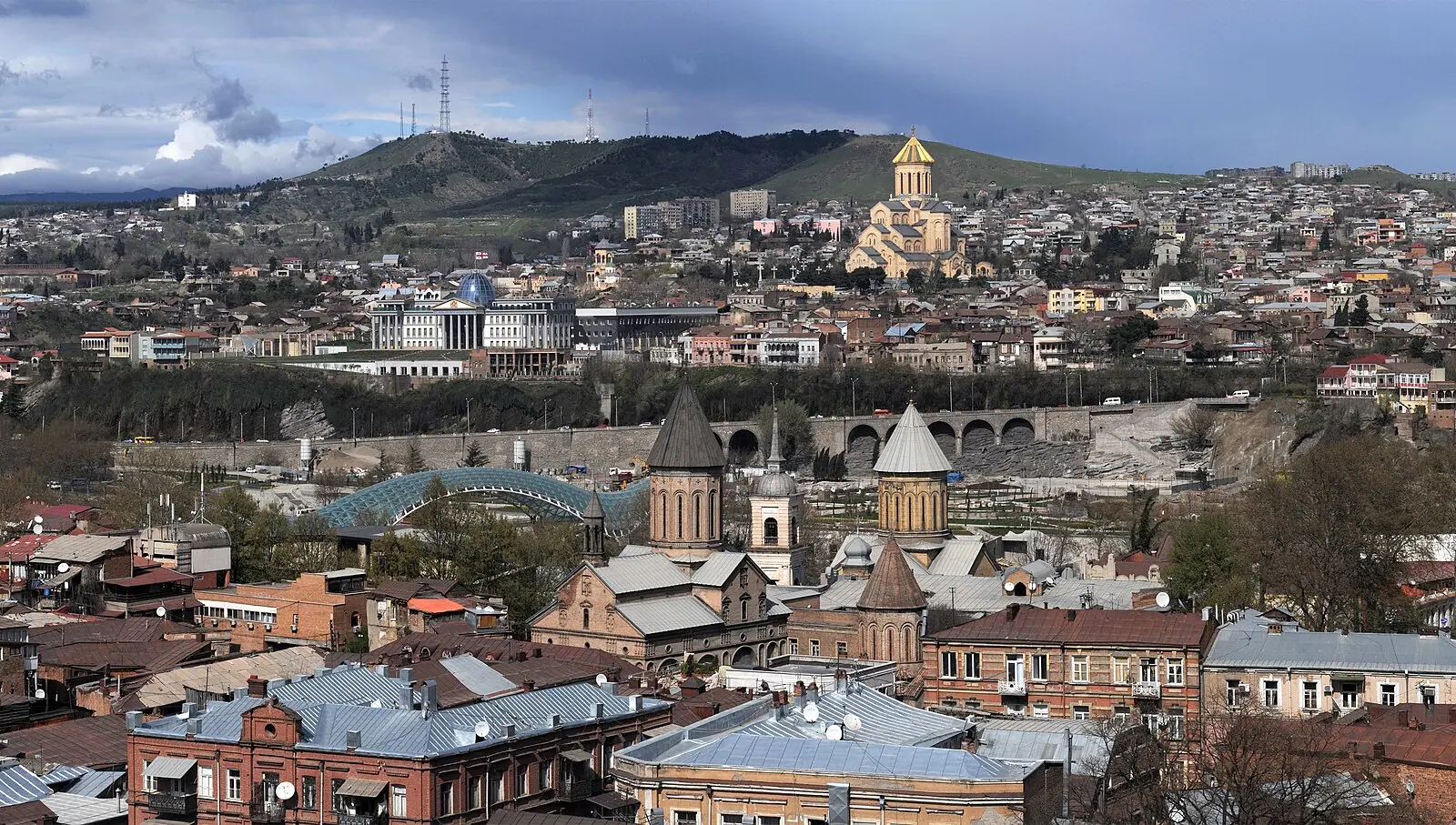
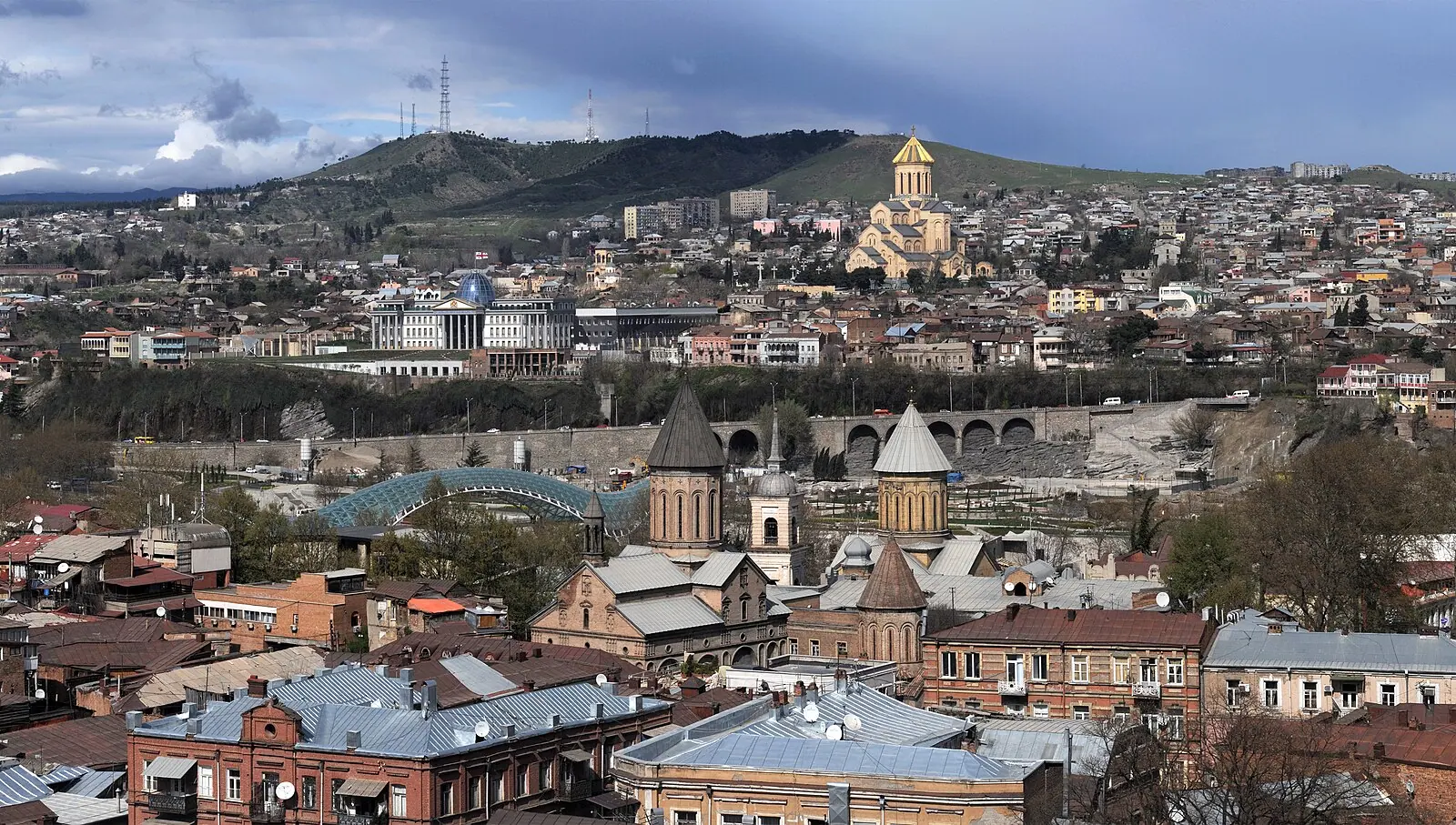
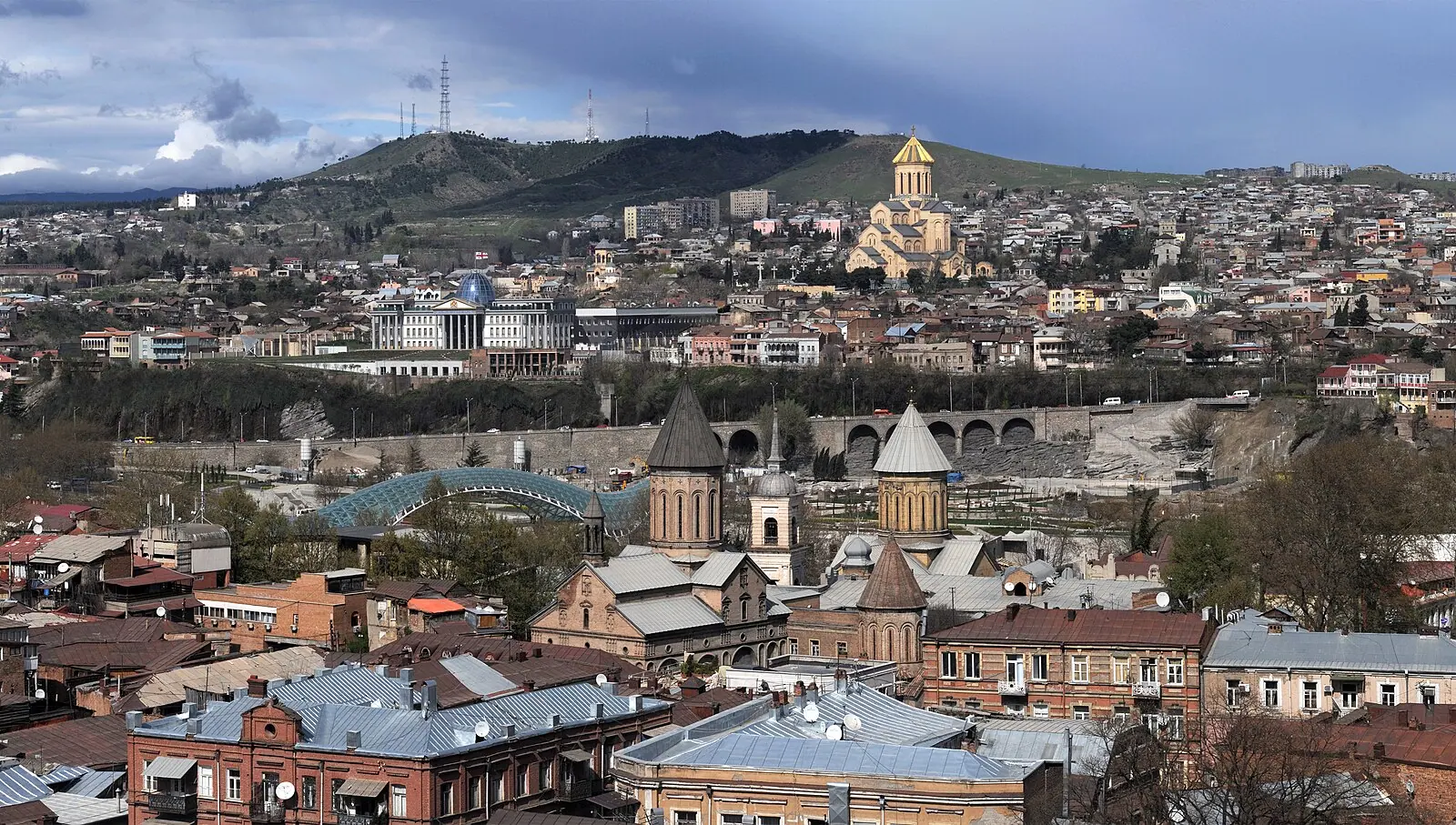
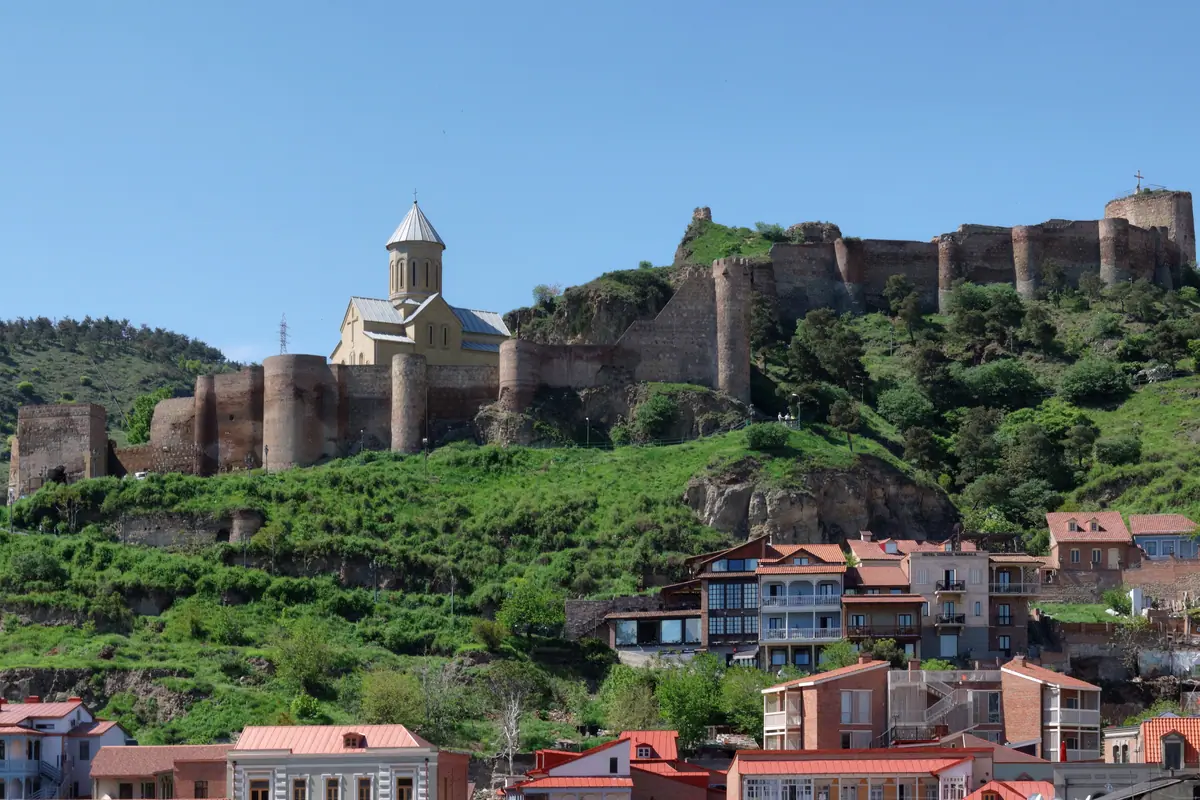
Start at Freedom Square and walk downhill through the old town to Anchiskhati Basilica, the city's oldest surviving church, then cross the Mtkvari river on the glass-and-steel Bridge of Peace. From there a cable car climbs to Narikala Fortress, the ruined citadel that has watched over the valley since the 4th century, and the view from its walls takes in the leaning minarets, the domed sulphur baths of Abanotubani and the canyon houses stacked along the river.
Finish with the ritual of a Georgian table: khinkali dumplings eaten by hand, boat-shaped khachapuri cheese bread, and a glass of amber qvevri wine in a Sololaki cellar. If you still have legs, the funicular up to Mtatsminda Park gives you the city lights after dark. Tbilisi's old town is short on distance but long on stairs and cobbles, so wear shoes with grip.
Days 2-3: Mtskheta and the Georgian Military Highway to Kazbegi
Give your second day to Mtskheta, the country's ancient capital half an hour north of Tbilisi and a World Heritage-listed town. Svetitskhoveli Cathedral, its stone walls rising above a courtyard of tombs, has been the spiritual heart of Georgia for a thousand years, while Jvari Monastery perches on a cliff above the meeting point of the Aragvi and Mtkvari rivers — the single most photographed view in the country.
Then point the car north along the Georgian Military Highway, the old invasion route through the Caucasus. You pass the Zhinvali reservoir with its drowned church tower, stop at Ananuri Fortress where crenellated towers hang above turquoise water, and climb through Gudauri, a ski resort that buries itself in snow from December to March. The road ends at Stepantsminda, usually called Kazbegi, a valley village at 1,740 metres beneath the ice-capped cone of Mount Kazbek.
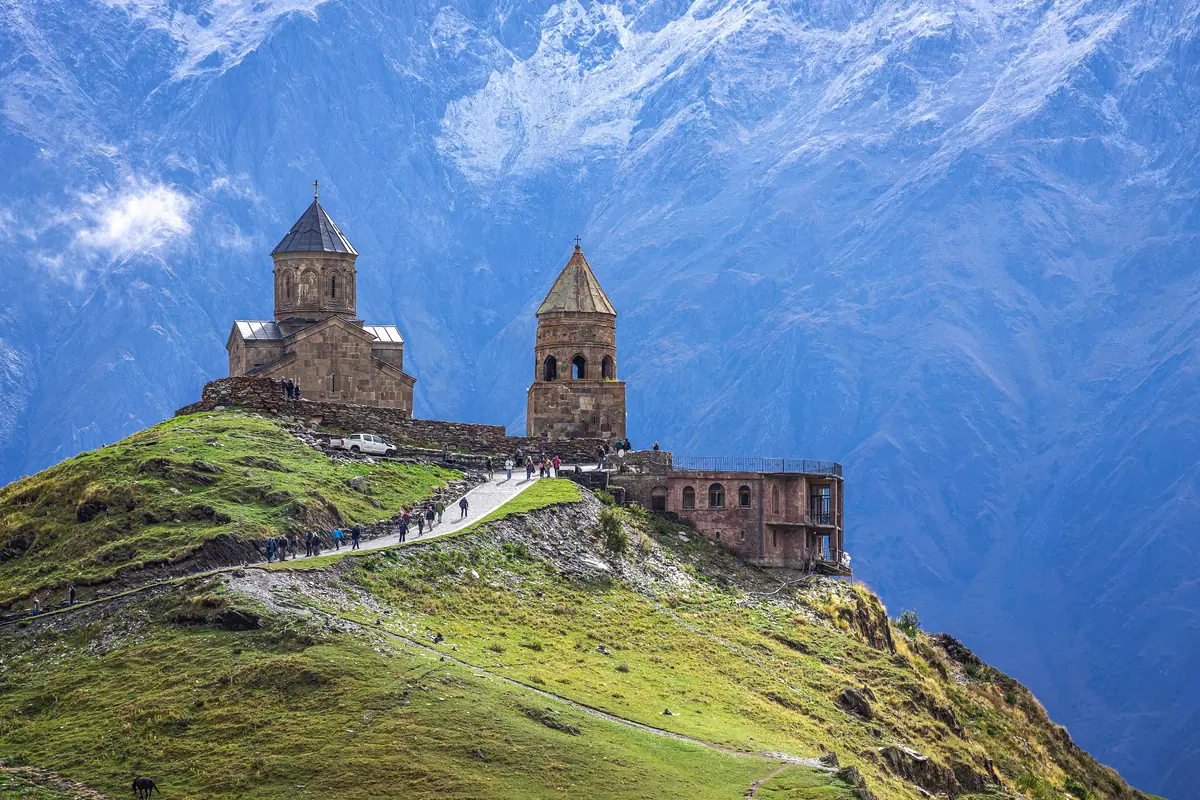
The next morning, walk or ride up to Gergeti Trinity Church, the lonely 14th-century chapel on its grassy shoulder at 2,170 metres. On foot it takes about an hour and a half to two hours each way, and clear mornings reward you with Kazbek's 5,054-metre summit filling the sky. There is no scheduled flight to this valley, so treat the three-hour drive from Tbilisi as part of the experience, and sleep in a Stepantsminda guesthouse rather than rushing back the same day.
Day 4: Kakheti Wine Country — Sighnaghi, Bodbe and Telavi
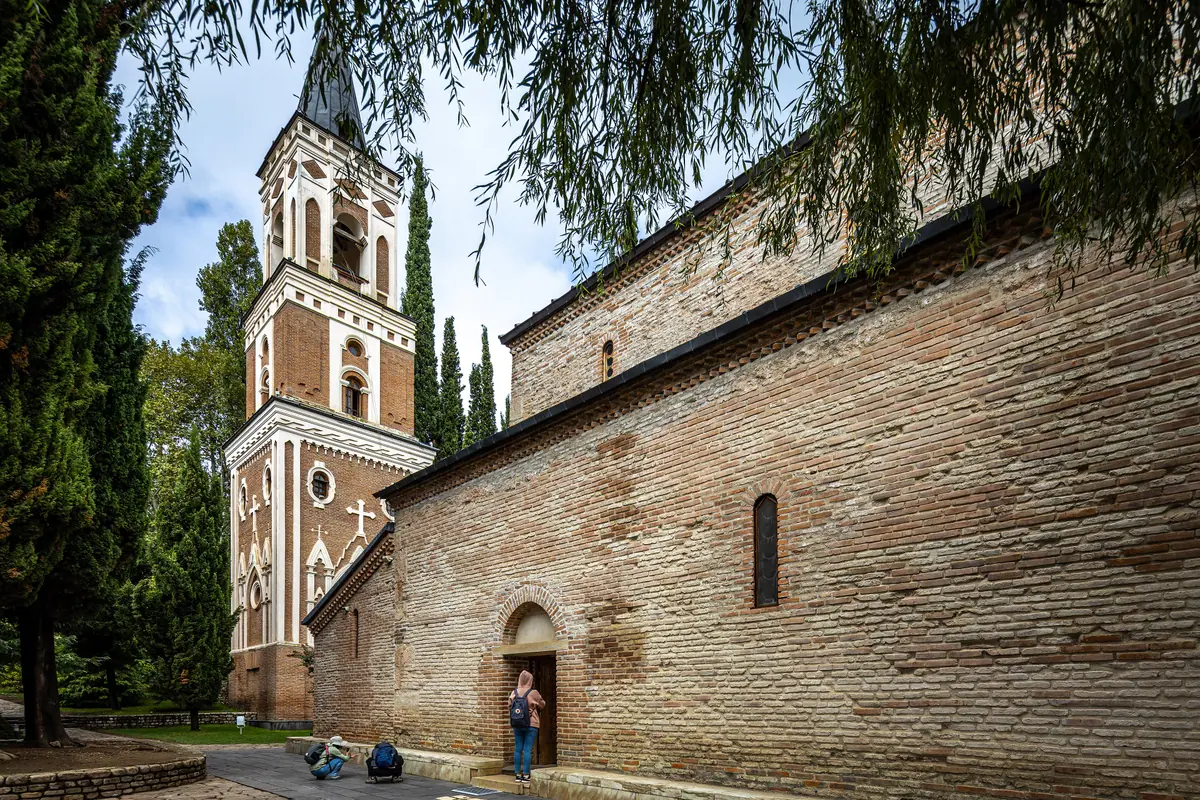
Head east into Kakheti, the warm, dry basin where most Georgian wine is grown. Sighnaghi is the postcard stop: a hilltop town ringed by 18th-century defensive walls with 23 surviving towers, red-tiled roofs tumbling toward a plain that runs all the way to the Caucasus. Two kilometres downhill, Bodbe Monastery holds the grave of St Nino, the woman credited with bringing Christianity to Georgia in the 4th century, and its cypress-lined garden is a quiet counterpoint to the town's bustle.
Kakheti's real draw, though, is the wine. Around Telavi, Kvareli and the villages in between, families still ferment grapes in qvevri — clay amphorae buried up to their necks in the earth — a method old enough to be recognised as intangible cultural heritage. Knock on the door of a small marani, or wine cellar, and you will taste saperavi, a red so dark it stains the glass, and rkatsiteli, an amber white made with skins and stems.
The distances are gentle: Tbilisi to Sighnaghi runs about two hours, Sighnaghi to Telavi another hour. Add the cathedral-fortress of Alaverdi and the ruined citadel of Gremi if you have time, then either overnight in Telavi or return to Tbilisi for the night.
Day 5: Cave Towns and Cliff Monasteries in the South
Spend day five underground and in the rock. Uplistsikhe, ten kilometres from the town of Gori, is a whole city carved from soft sandstone — pagan temples, wine presses, bakeries and secret tunnels occupied from the first millennium BC until the Mongols arrived. Gori itself holds the museum dedicated to Stalin, complete with the tiny house where he was born and his armoured railway carriage, an uncomfortable but genuinely fascinating hour.
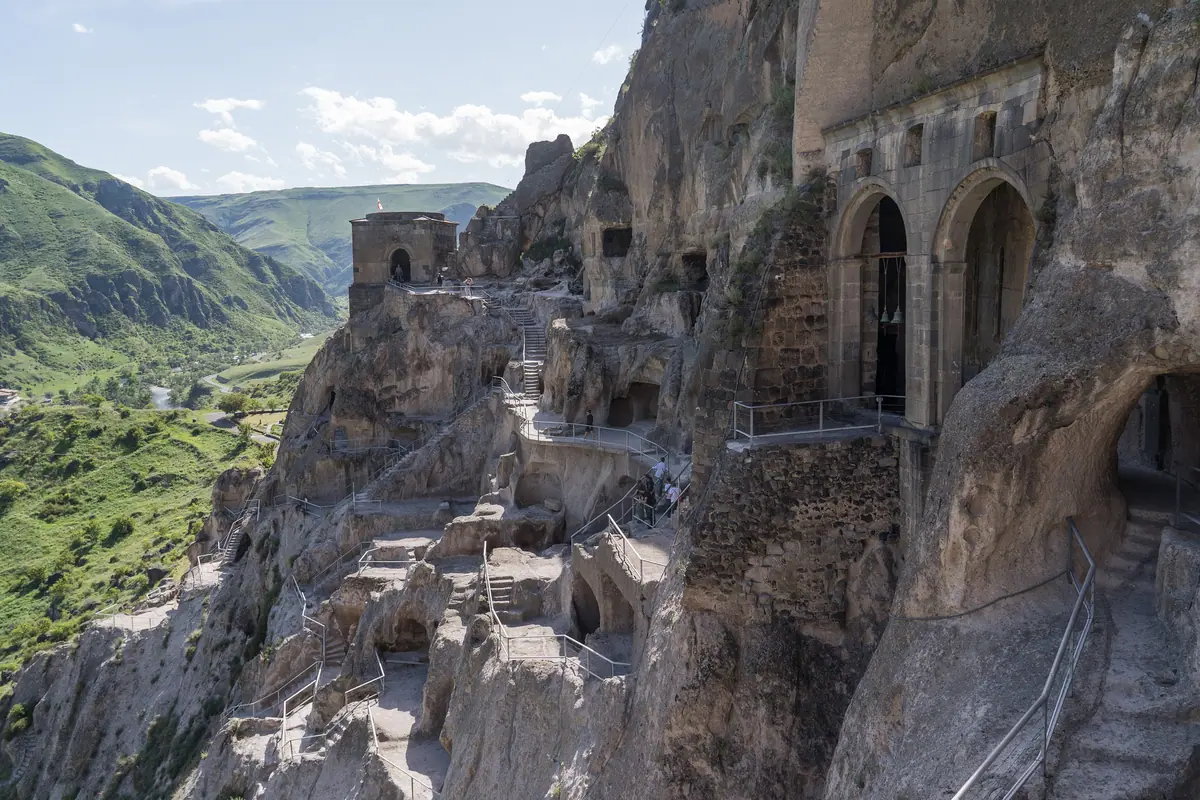
Further south, Vardzia is the showstopper: a 12th-century cave monastery of roughly 6,000 rooms hollowed out of the Erusheti cliff above the Mtkvari river, its Church of the Dormition still frescoed with portraits of Queen Tamar. The site was partly destroyed by an earthquake within decades of its founding, and what remains — narrow stairways, chapel walls, terraces dropping to the water — is a labyrinth you can wander for two hours.
This is a long day if you do it from Tbilisi, roughly three hours each way via Akhaltsikhe, where the restored Rabati Castle makes a good lunch stop. Overnighting in Akhaltsikhe is the relaxed option. Summer afternoons here are brutally hot, so arrive early, carry more water than you think you need, and note that sites tend to shut by early evening in high season.
Day 6: Flying West to the Black Sea — or to Svaneti
Georgia's domestic air links turn a full day of driving into an hour in the air. The Tbilisi to Batumi hop takes around sixty minutes and replaces a five- to six-hour drive or train ride to the coast. For the truly spectacular option, a small twin-propeller service runs to Queen Tamar Airport at Mestia in Svaneti, one of the highest and most dramatic airstrips in Europe — sweeping between mountain walls before dropping onto the valley floor. It is weather-dependent, seats are limited, and cabin baggage is restricted to about 15 kilograms, so pack accordingly.
Choose Batumi and you get the Black Sea in full subtropical mode: the long seaside boulevard, the twisting Alphabet Tower, Europe Square and Piazza Square, the fountains that dance to music after dark, and the Botanical Garden spilling down a headland towards Turkey. Eat Adjarian khachapuri, baked in a boat shape with a molten egg yolk in the middle, and visit Gonio Fortress, a Roman-era garrison just south of town.
Choose Svaneti instead and you trade beaches for glaciers. Mestia's stone defensive towers have guarded these valleys for centuries, Ushguli sits at around 2,100 metres beneath Mount Shkhara, and a half-day walk to the Chaladi Glacier takes you under hanging ice. Either way, this is the night to sleep in the west so that your final day isn't a mad dash.
Day 7: Kutaisi, Gelati Monastery and the Flight Home
Base your last day in Kutaisi, Georgia's second city and the departure point for many of the low-cost European carriers that serve the country. Half an hour out of town, Gelati Monastery is a World Heritage-listed complex founded in the 12th century under David the Builder, its interior glowing with gold-ground mosaics and murals. Closer in, Bagrati Cathedral's rebuilt shell sits on a hill above the river and gives you a farewell panorama of the whole city.
If your flight is late, fill the gap with Prometheus Cave and its lit stalactite halls, or the emerald water and suspended walkways of Martvili Canyon, both within easy reach of Kutaisi. The strange limestone pillar of Katskhi, topped by a tiny hermit's church, is another offbeat stop nearby.
Kutaisi International Airport is only about twenty minutes from the centre, so allow two hours before departure for check-in and security rather than the three you'd budget for Tbilisi. If your return flight leaves from Tbilisi instead, either drive the four hours across the country or take an afternoon domestic hop back east and stay the night near the airport.
Frequently asked questions
Which airport in Georgia should I fly into?
Tbilisi International Airport suits the classic loop through the capital, Kazbegi and Kakheti, and has the widest long-haul connections. Kutaisi serves many budget European routes and pairs naturally with the west, Batumi and Svaneti. Plenty of travellers fly into one and out of another, which avoids backtracking.
Do I really need domestic flights in Georgia?
Not strictly, but they save real time. Flying Tbilisi to Batumi takes about an hour versus five to six hours by road or rail, and the small-plane service into Mestia turns a long, sometimes snow-closed mountain road into a sixty-minute flight with a luggage limit of roughly 15 kilograms. For Kazbegi and Kakheti, road trips are the only practical option.
What is the best time of year for this itinerary?
Late April to June and September to October give you mild city weather and clear mountain views. July and August are hot and humid — Tbilisi can hit 35°C — but they're prime time for Batumi's beaches and Svaneti hiking. December to March is for Gudauri skiing rather than sightseeing, since the high mountain roads get snowbound.
How many days should I spend in Tbilisi itself?
Two full days is the comfortable minimum: one for the old town, Narikala and the sulphur baths, and one for a day trip to Mtskheta or a slower wander around the museums and Sololaki's wine bars. Three nights lets you add Kakheti without feeling rushed.
Can I see both Vardzia and Svaneti in a single week?
Realistically, no. Pick one. Vardzia fits neatly into a southern loop with Uplistsikhe and Akhaltsikhe, while Svaneti demands at least two nights and a flight or a very long drive. Trying to do both in seven days leaves you in a car for most of it.
Sort the rest of your trip
Everything for Georgia, in one place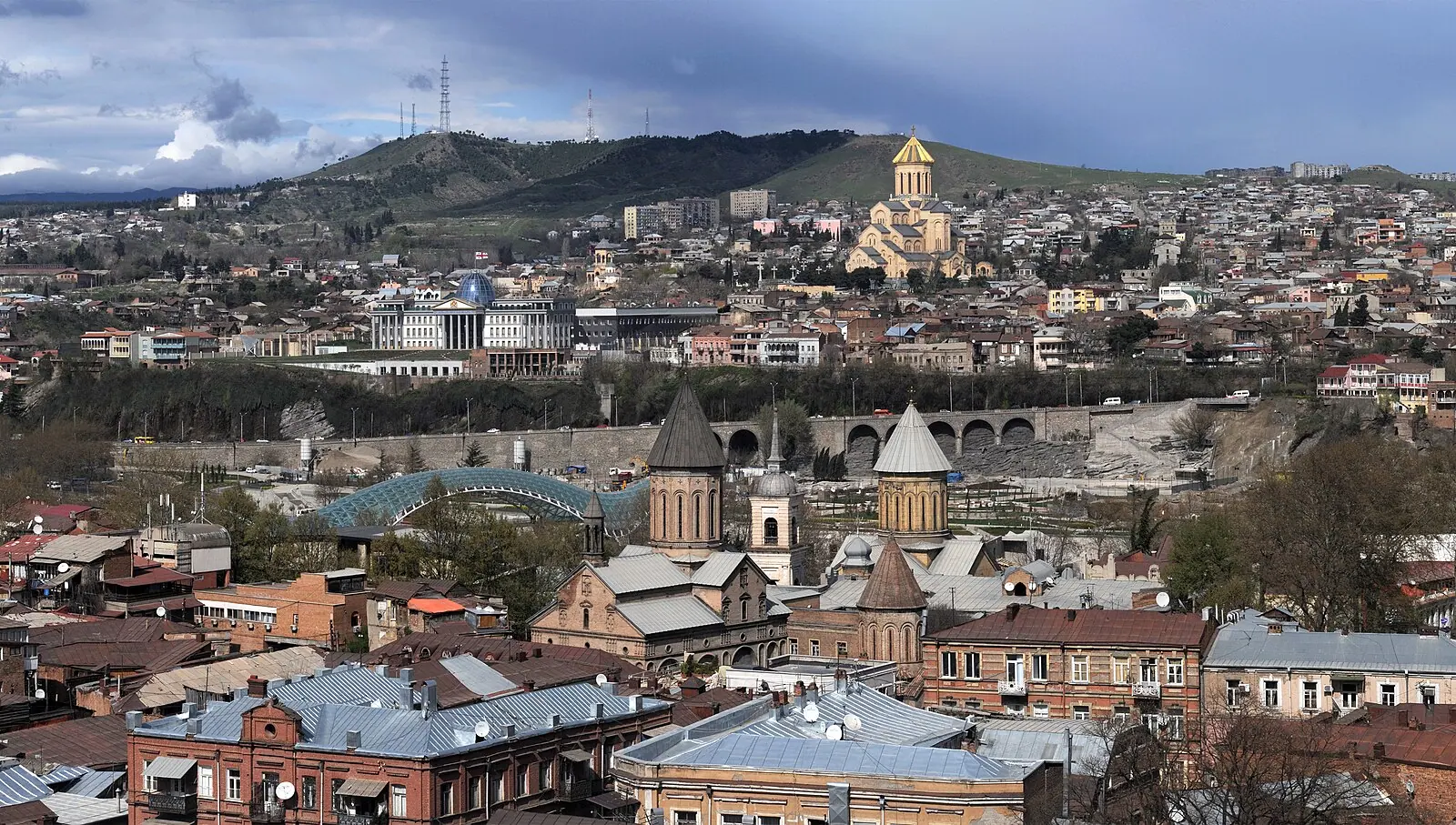
Stay in Georgia
Hotels, guesthouses and apartments — compared in one search.
Search hotels
Transfer in Georgia
Private driver waiting on arrival — no queues, no surprises.
Book a transfer
Travel insurance
Medical cover, delays and lost baggage — sorted before you go.
Get covered