French Polynesia is not one destination but 118 islands flung across a patch of Pacific as wide as Europe, and the only sane way to stitch them into a single week is with a boarding pass in hand. This is a seven-day flight-first itinerary that puts you on a black-sand beach at dawn, above a heart-shaped bay by lunch, and floating over a Bora Bora lagoon before sunset.
Why These Islands Are Made for Flying
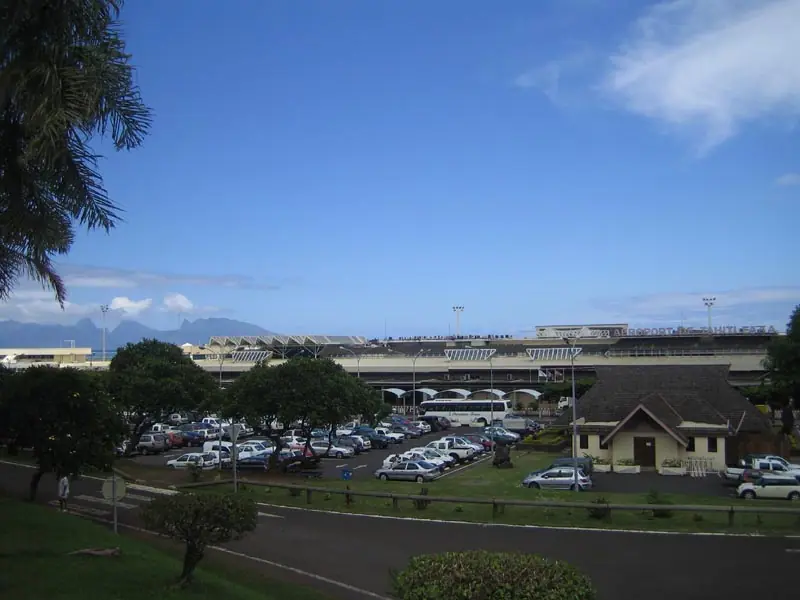
French Polynesia's five archipelagos — the Society Islands, the Tuamotus, the Marquesas, the Australs and the Gambiers — are separated by hundreds of kilometres of open ocean. There is no road, no rail and, in most cases, no practical ferry. The domestic network radiating from Faa'a, on Tahiti's west coast, is the spine of any multi-island trip, linking airstrips where the terminal is little more than a thatched roof and a luggage trolley.
The distances sound intimidating but the hops are short. Tahiti to Moorea is a seven-minute flight so brief the cabin crew barely finish the safety demonstration. Tahiti to Bora Bora runs 45 to 50 minutes, Tahiti to Rangiroa about an hour, Fakarava roughly 75 minutes. Only the Marquesas, more than three hours northeast, demand a real dedication of time.
Time your flying for the morning. Trade winds build through the afternoon, turning small-aircraft approaches into a bumpy affair, and the light on the lagoons — that impossible turquoise that shifts to ink where the reef drops away — is at its most luminous before about ten o'clock. The dry season, roughly May to October, brings cooler air, calmer seas and the clearest flying weather; November to April is hotter and stickier, with heavier downpours and a cyclone risk from December through March.
Days 1–2: Tahiti, the Gateway Island
Almost every trip begins at Faa'a, and Tahiti rewards a full day before you fly onward. Base yourself in Papeete and start at the Marché de Papeete, the two-storey municipal market where stalls heave with vanilla pods, monoi oil, shell jewellery, pareos and woven pandanus hats, and where flower crowns are strung each morning. Come back after dark to the waterfront roulottes — food vans serving grilled fish, poisson cru and thin-crust pizzas on the harbour edge.
Spend day two on a clockwise loop of Tahiti Nui. Head east to Point Venus, the black-sand point where the lighthouse still stands and where eighteenth-century astronomers once set up their instruments; then continue to the Faarumai waterfalls, a ten-minute walk through dense forest to three separate cascades, and the Arahoho blowhole, where surf explodes through a lava tube. Push on to Teahupo'o at the end of the road, a village of fishing boats and wooden houses backed by the most fearsome reef break in the Pacific, best watched from the pass at dawn or late afternoon.
West of Papeete, the Museum of Tahiti and Her Islands at Puna'auia gives a compact, well-labelled grounding in Polynesian migration, marae architecture and traditional navigation. In the evening, either take the seven-minute flight to Moorea — a scenic hop that reveals the heart-shaped pair of bays from above — or the 30- to 45-minute ferry from the terminal in central Papeete. Fly if you can; the aerial view alone justifies the fare.
Days 3–4: Moorea by Land and Lagoon
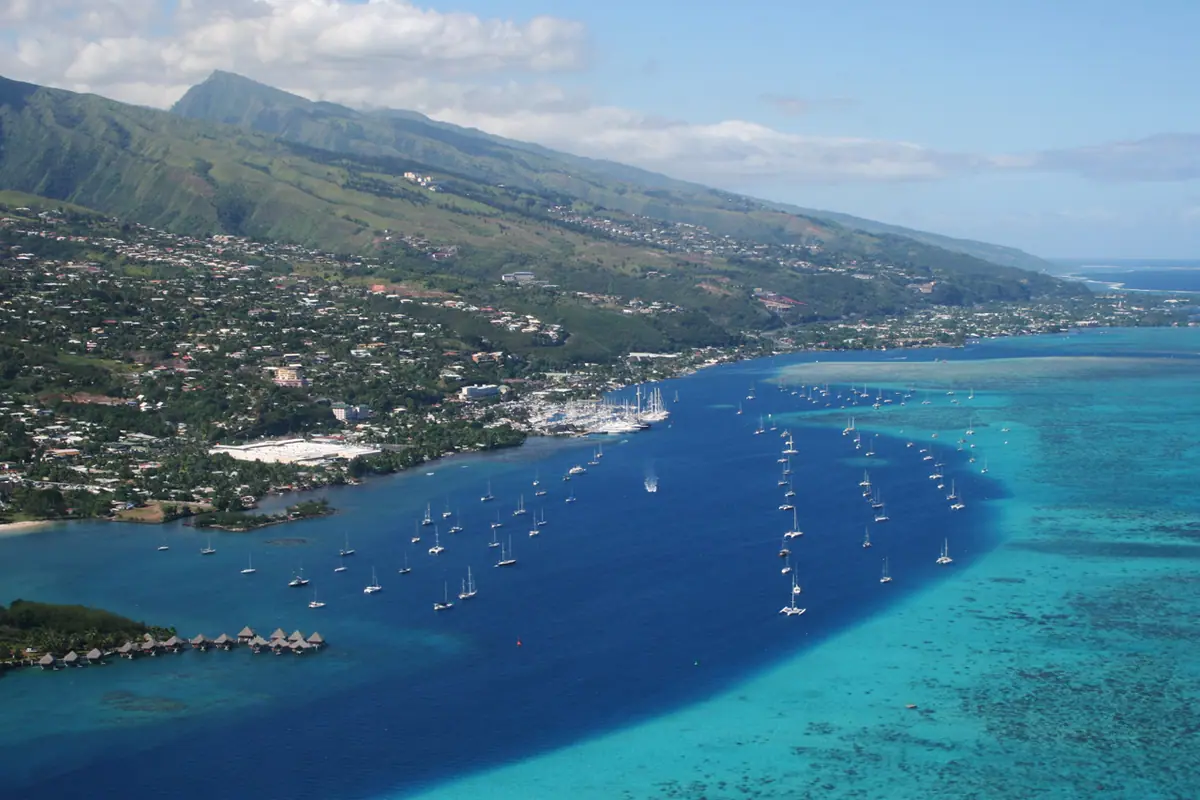
Moorea is the South Seas silhouette of postcards: a jagged crown of basalt spires above two deep bays, ringed by a reef and a string of motu islets. The island is small enough to drive in a morning — the coastal road circles roughly 60 kilometres — so rent a car or scooter and treat the island as a single, sprawling excursion.
The essential stop is the Belvedere Lookout, reached by a winding plantation road, where the view takes in Cook's Bay and Opunohu Bay with Mount Rotui rising between them like a hunched shoulder. On the way up, detour into the Opunohu valley, thick with pineapple fields and scattered marae — ancient stone ceremonial platforms — including the well-preserved Titiroa marae. Fit hikers can continue past the lookout to the Col des Trois Cocotiers or tackle the steep climb up Mount Mouaputa, a four-hour round trip through fern forest with ropes on the final scramble.
Save a full afternoon for the lagoon off Tiahura and its neighbouring motu, where boat trips glide over coral gardens and shallow sandbanks frequented by blacktip reef sharks and stingrays. For a gentler panorama, the short, paid trail up Magic Mountain above the northern coast delivers sweeping views with a fraction of the effort. Finish with sunset from the west coast near 'Āfareaitu, where the sun drops behind Moorea's sister island on the horizon.
Days 5–6: Bora Bora and the Mount Otemanu Lagoon
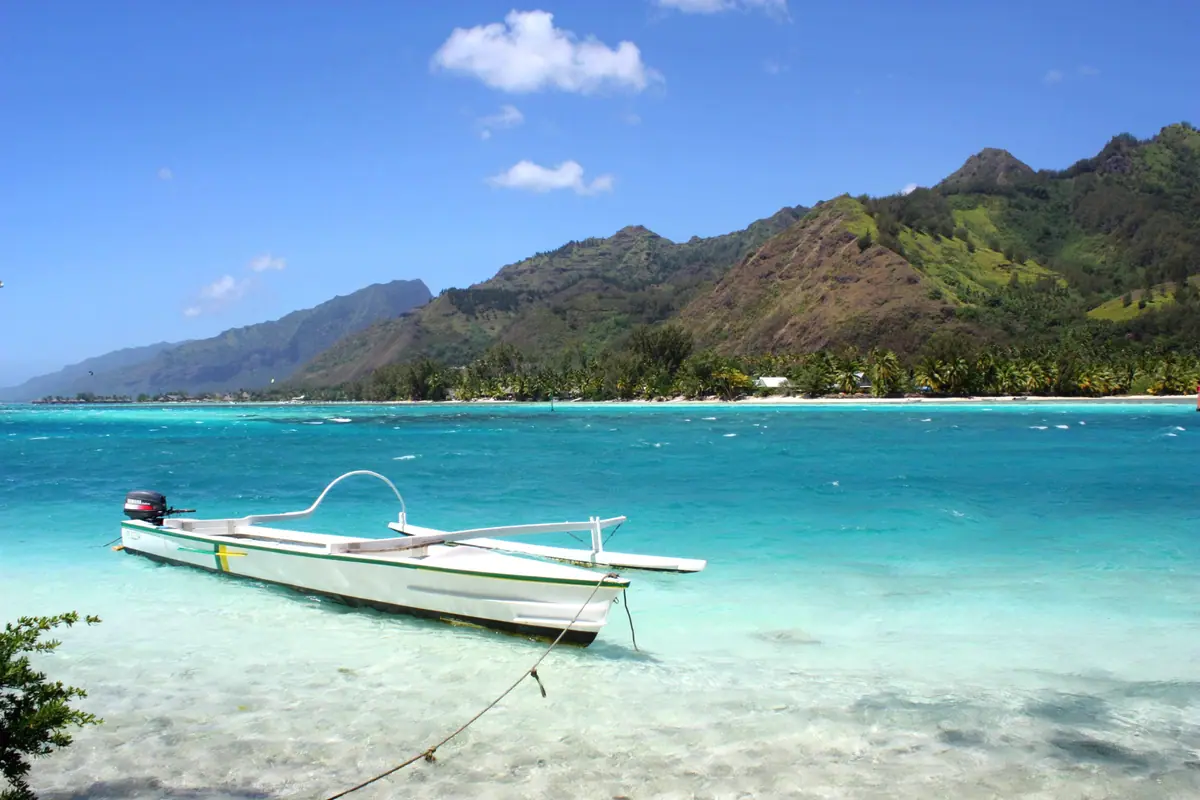
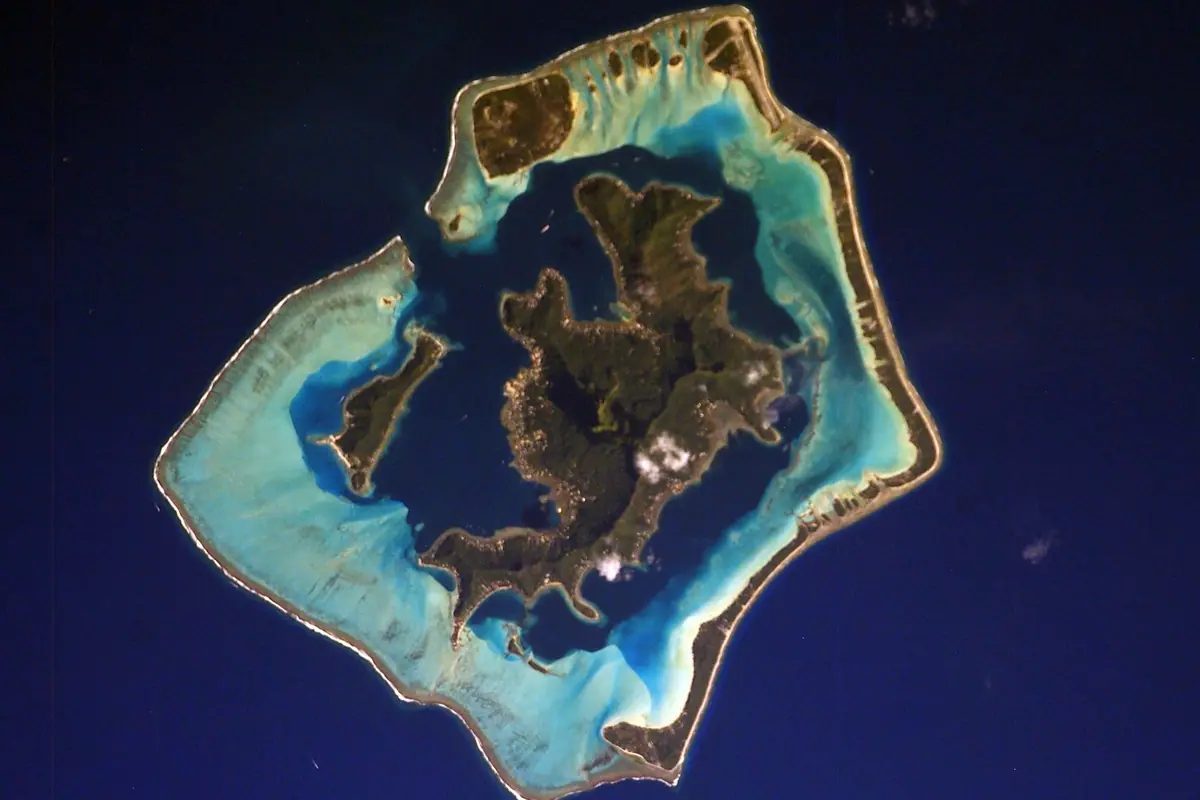
From Moorea you fly back through Papeete and onward to Bora Bora, roughly an hour and twenty minutes in total. The approach is the highlight of the week: the aircraft banks over a lagoon so vividly blue it looks artificially coloured, with Mount Otemanu — a 727-metre plug of dark volcanic rock — rising from the centre. The airport itself sits on a motu, so arrivals continue by boat, a detail that sets the tone for everything that follows.
Mount Otemanu cannot be summited, but you can get close on a 4x4 circuit that climbs to the World War II American gun emplacements on the hillside above Faanui Bay, from where the whole lagoon unfolds beneath you. Matira Beach, on the southern tip, is the island's only truly public white-sand beach and the easiest place to swim straight off the sand into clear, shallow water; nearby motu Piti Aau shelters a lagoonarium where rays and reef fish gather in knee-deep water.
Give Bora Bora one day on the water and one on land. A lagoon day usually includes a motu picnic, snorkelling in the coral gardens and a stop in the shallows among stingrays; the land day covers the Otemanu viewpoints, Matira, and the sleepy village of Vaitape, where you can watch outrigger canoes being paddled across the bay at dusk. Two nights here is the minimum that feels unhurried.
Day 7: Add a Second Archipelago
With a week, you can bolt on one atoll beyond the Society Islands — and the contrast is worth the extra flight. Rangiroa, an hour from Tahiti, is a vast ring of coral enclosing a lagoon so large it has its own horizon; the current at Tiputa Pass draws dolphins, grey reef sharks and clouds of fish, making it one of the world's great drift snorkels and dives. A boat trip to the Blue Lagoon, a shallow nursery of sand and coral on the atoll's far side, is the classic day out.
Fakarava, about 75 minutes from Tahiti and a UNESCO-listed biosphere reserve, is quieter still: a single road, a handful of villages and the legendary Tumakohua Pass at Tetamanu, where hundreds of grey reef sharks rest in the current and pink sand edges the shore. Alternatively, stay in the Societies and fly 45 minutes to Raiatea, launch point for the marae of Taputapuatea — the most sacred site in Polynesia, now UNESCO-listed — and the nearby island of Taha'a, where vanilla vines are grown on family plantations and motu picnics are the norm. Huahine, with its dozen-plus marae at Maeva village and low-key town of Fare, makes an equally good final stop.
The Marquesas — Nuku Hiva's Taipivai valley, Hiva Oa's Atuona with the graves of Paul Gauguin and Jacques Brel — are a different journey altogether. The flight alone takes over three hours, and the islands deserve their own week. Save them, rather than squeezing them into this one.
Practical Flying Notes for a One-Week Trip
Inter-island flying is best booked as a multi-island air pass rather than a string of separate tickets. Passes are cheaper, usually require a fixed route and order of travel, and must be purchased before you arrive; changes are possible but rarely free. Seats to Bora Bora and the Tuamotus sell out weeks ahead in peak season, so lock in your dates early — July, when the islands celebrate their annual dance and sport festival, and the Christmas period are the busiest.
Baggage rules catch people out. On most inter-island services you can check around 23 kilograms plus a small cabin bag, but some smaller aircraft allow only five kilograms in the cabin and prefer soft-sided luggage. Anything surplus can be stored in Papeete while you hop. Check in an hour before departure, expect to walk across the tarmac to the plane, and remember that on Bora Bora you reach the terminal by shuttle boat from Vaitape.
Two final rules will save your trip. Always fly early in the day, when the air is smooth and delays are less likely, and never schedule an island departure on the same morning as an international flight home — spend the last night in Papeete instead. Ferries do exist between Tahiti and Moorea and across the short channel between Raiatea and Taha'a, and they are a fine, cheap alternative, but everything beyond those two crossings is a job for the aircraft.
Frequently asked questions
How many islands can I realistically visit in a week in French Polynesia?
Three comfortably, four if you fly everywhere. Tahiti, Moorea and Bora Bora make a classic first week, with Rangiroa or Fakarava as an ambitious fourth stop. Each additional island means at least half a day lost to transfers, so resist adding more.
Do I need a multi-island air pass, and can I buy one on arrival?
Passes are far cheaper than separate tickets but must generally be booked before you travel, with a fixed route and sequence of flights. Buy early, especially for Bora Bora and the Tuamotu atolls, and confirm date-change fees before committing.
What is the luggage allowance on inter-island flights?
Typically one checked bag of about 23 kilograms plus a small cabin bag, though some smaller aircraft restrict cabin luggage to five kilograms and discourage hard-shell suitcases. Extra bags can be stored in Papeete while you island-hop.
When is the best time to fly around French Polynesia?
May to October brings the driest, coolest and calmest conditions, with the steadiest flying weather. November to April is hotter and more humid with heavier rain, and December to March carries a cyclone risk. Book well ahead for July and the Christmas period.
Is there a ferry to Bora Bora instead of flying?
No. Ferries only connect Tahiti with Moorea (30 to 45 minutes) and Raiatea with Taha'a (a few minutes). Bora Bora, Rangiroa, Fakarava and the Marquesas are reachable only by air.
Plan it — flights in French Polynesia
Live search, booked directly with trusted providers.
Sort the rest of your trip
Everything for French Polynesia, in one place
Stay in French Polynesia
Hotels, guesthouses and apartments — compared in one search.
Search hotels
Transfer in French Polynesia
Private driver waiting on arrival — no queues, no surprises.
Book a transfer
Travel insurance
Medical cover, delays and lost baggage — sorted before you go.
Get coveredMore guides in French Polynesia
French Polynesia Food, Culture and Local Experiences: An Island-by-Island Guide
Where to Stay in French Polynesia: Hotels, Overwater Bungalows and Island Guide
Best Things to Do in French Polynesia: Lagoons, Islands and Must-Visit Sights