Sweden rewards travellers who slow down: a cinnamon bun taken seriously at 3pm, a maypole raised in the rain, a picnic on a granite skerry with the sun still up at midnight. This guide maps the country through its table, its festivals and its landscapes, from Stockholm's cobbled islands to the reindeer-herding north and the medieval wall of Visby.
Fika, Husmanskost and the Swedish Table
Fika is not a coffee break so much as a protected ritual. Most workplaces stop twice a day, and cafés fill with the same unhurried choreography: a strong filter coffee, a small pastry, conversation that refuses to be rushed. The kanelbulle is the national benchmark — cinnamon, cardamom and pearl sugar — but look for the knotted kardemummabulle, the almond-paste-and-cream semla that appears around February on Shrove Tuesday, and the domed prinsesstårta in green marzipan. In Stockholm, the tiny cellars and courtyards of Gamla Stan are made for lingering; in Gothenburg, the Haga district has been baking famously oversized buns for generations.
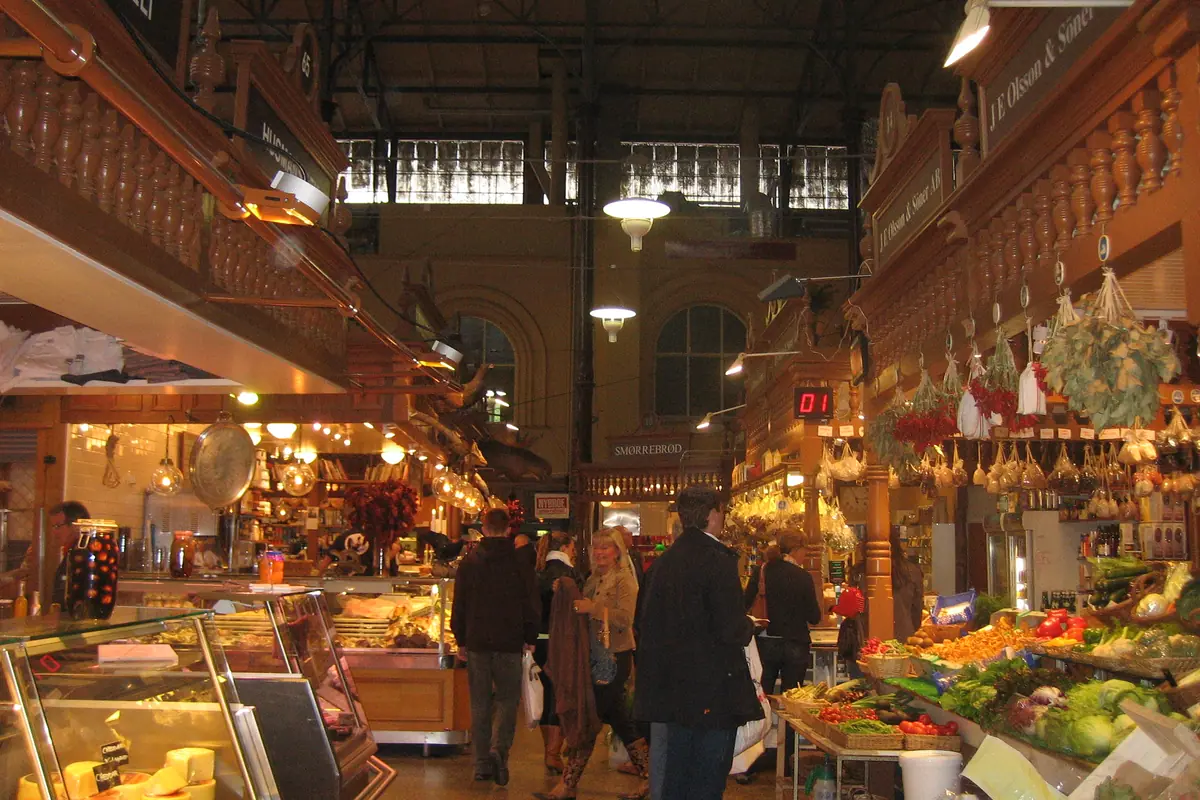
Alongside the pastries runs husmanskost, the honest home cooking that Swedes defend fiercely: meatballs with cream sauce, lingonberry and pickled cucumber; raggmunk, a crisp potato pancake topped with pork belly; pyttipanna, yesterday's potatoes fried with onion and egg; and Jansson's temptation, a creamy anchovy-and-potato gratin. For the best single lesson in this cuisine, walk the aisles of Stockholm's Östermalms Saluhall, a brick food hall from the late 1800s where fishmongers, cheesemongers and delis sit under one soaring roof, or Gothenburg's Feskekôrka, the salmon-pink 'fish church' on the canal. The full ceremonial version is the smörgåsbord — herring in three marinades, gravlax with dill mustard, cheese pie, cured meats — and it reaches its peak as the julbord of December.
A few practical notes: the best-value meal of the day is dagens lunch, served roughly between 11.30 and 14.00, when restaurants plate a hot dish, salad, bread and coffee for a fraction of evening prices. Alcohol is sold through the state monopoly, whose shops shut by early evening on Saturdays and all day Sunday, so plan ahead. And in autumn, allemansrätten — the right of public access — lets you pick chanterelles and lingonberries in the forest, provided you leave no trace behind. For the truly brave, surströmming, the fermented Baltic herring, is opened outdoors in late August, never indoors.
A Year of Swedish Celebrations: Midsummer, Lucia and Crayfish
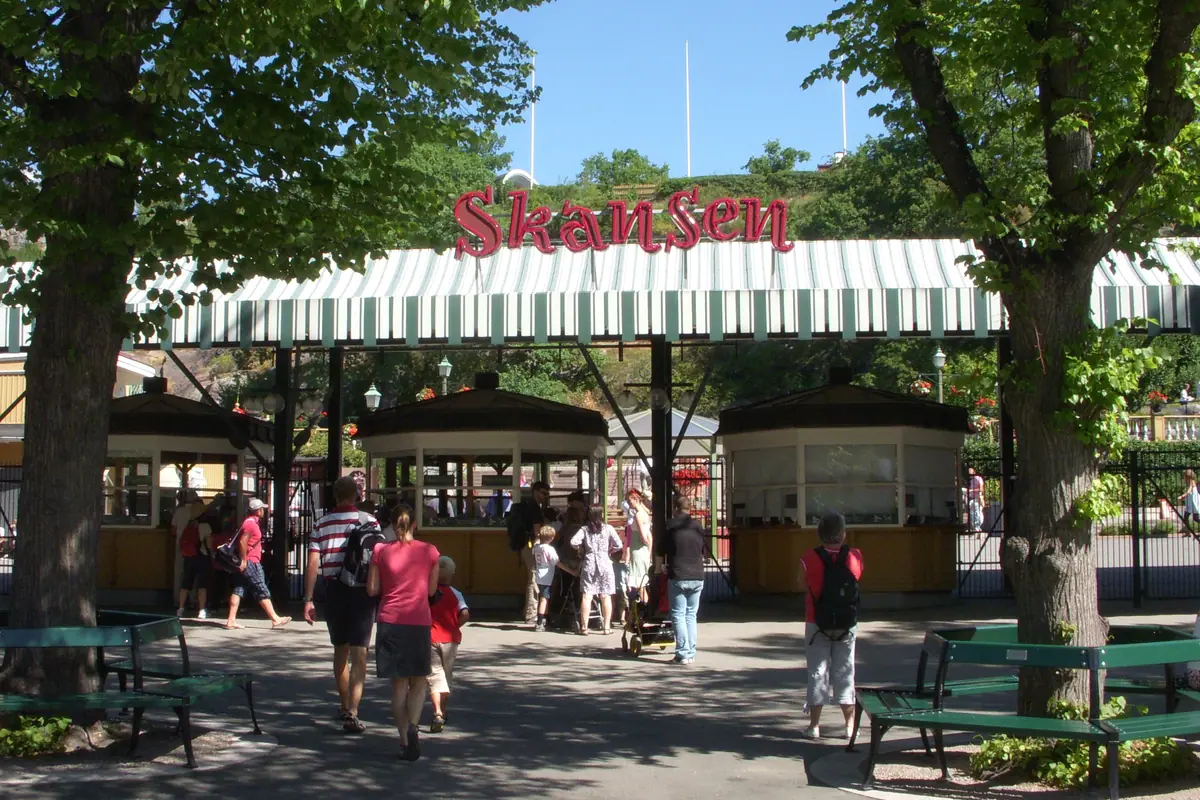
Midsummer is the country's emotional high point. It falls on the Friday between 19 and 25 June, and the whole nation migrates to the countryside to raise a leafy maypole — two crossed poles crowned with birch and wildflowers — and dance like small frogs around it. The classic setting is Skansen, the open-air museum on Stockholm's Djurgården, but purists head to Dalarna, where villages around Lake Siljan still gather in folk costume and sing the old songs at Leksand and Mora. The menu is fixed: pickled herring, new potatoes boiled with dill, chives, sour cream and strawberry cake — plus snaps, taken in time with a drinking song that nobody fully knows the words to.
December 13 belongs to Lucia, a candlelit procession of white-gowned singers led by a girl in a crown of lingonberry leaves and real candles. Churches such as Storkyrkan in Gamla Stan and Uppsala Cathedral fill early in the morning, and the smell of saffron lussekatter buns and mulled glögg follows you through the streets. From mid-November the julbord tables appear, groaning with ham, ribs, lutefisk and cheese; on 30 April, Valborg, students in Uppsala and Lund light enormous bonfires to greet the spring.
Summer ends with the crayfish party, kräftskiva, an August evening of paper lanterns, dill-crowned crustaceans and more snapsvisor singing. Late August also brings the surströmming premiere along the High Coast, where the year's fermented herring is finally allowed to be eaten. And if you notice Swedes treating 4 October like a holiday, you have discovered Cinnamon Bun Day — a fitting tribute to a country that measures comfort in coffee cups.
Stockholm: Gamla Stan, Djurgården and the Archipelago
Start in Gamla Stan, the medieval island where Stockholm began. Stortorget, the little square lined with gabled merchant houses, is the city's most photographed corner, and from it you can walk to the Royal Palace, the cathedral of Storkyrkan, and the Nobel Prize Museum in the old Stock Exchange building. The streets narrow into alleys barely wide enough for two people, and the north German-influenced architecture dates largely to the 1600s, so a slow wander beats any planned route. Allow at least half a day, ideally early morning before the crowds arrive.
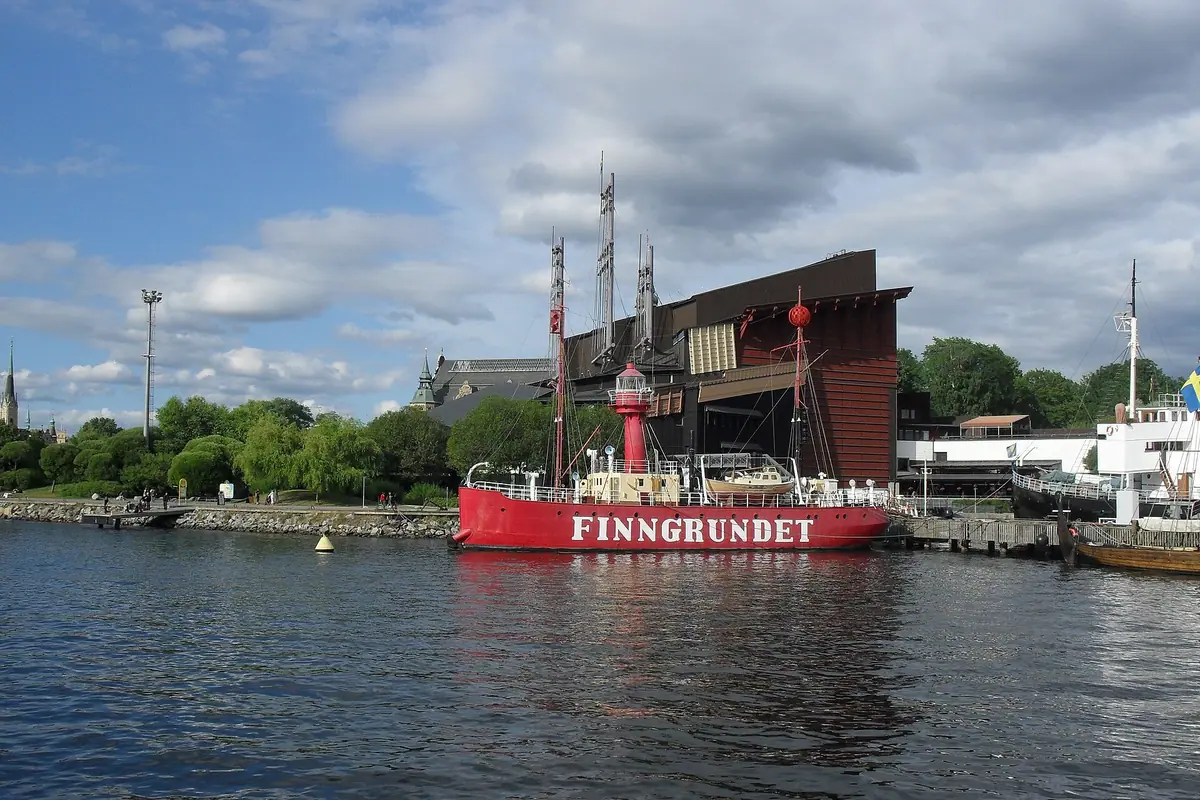
Cross to Djurgården for the museums that justify a full second day. The Vasa Museum holds the astonishingly intact warship that sank on her maiden voyage in 1628 and was raised from the harbour in 1961, complete with carved stern and six decks of history. Beside it sits Skansen, the world's oldest open-air museum, a whole village of transplanted farmsteads and crafts workshops, plus a zoo of Nordic animals — moose, lynx, reindeer and bear. Photography fans can spend an evening at Fotografiska, and modern art lovers should head for Moderna Museet. Back on Södermalm, the cliff walk at Monteliusvägen gives the postcard view over the water to the city hall, whose Golden Hall hosts the Nobel banquet.
Then take the water seriously, because Stockholm is a city built across fourteen islands at the mouth of an archipelago of some 30,000 more. Ferries leave Strömkajen year-round; Fjäderholmarna takes about 25 minutes, the old spa town of Vaxholm roughly an hour, and Sandhamn at the outer edge a few hours more. In July, swimming off warm granite and eating shrimp on a jetty at 22.00 in broad daylight is not a novelty — it is simply how summer works here. Budget three to four days for the city and its closest islands.
Gothenburg, Bohuslän and Skåne: Seafood, Boardwalks and Bronze Age Stones
Gothenburg is the country's west-coast kitchen. The Haga district's 19th-century wooden houses shelter cafés where the cinnamon buns genuinely overflow the plate, while Feskekôrka sells the catch landed that morning: langoustines, oysters from Grebbestad, mackerel, and shrimp piled on open sandwiches. Ride the Paddan boats through the old moat and canals for a view of the harbour cranes, or spend an evening among the rides of Liseberg, the city's much-loved amusement park. Two days here is comfortable.
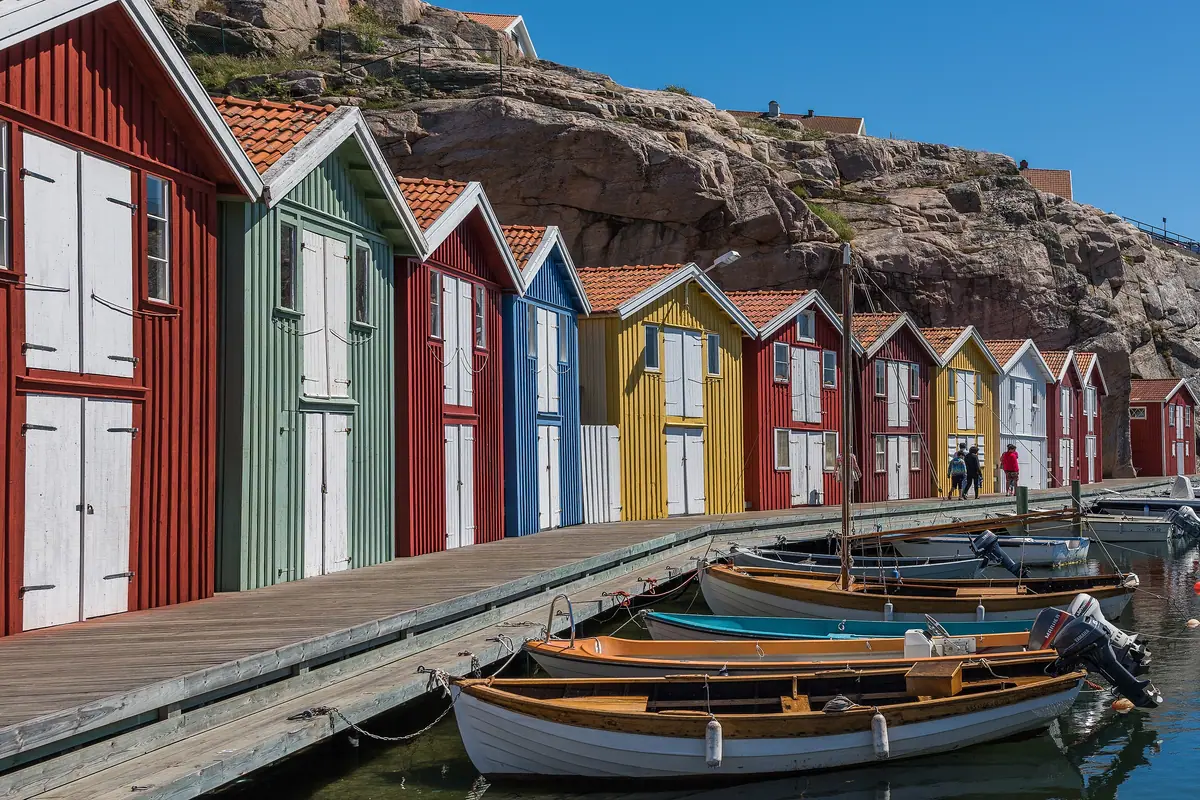
An hour and a half north lies Bohuslän, a coast of bare granite islands that glows pink at sunset. Smögen's wooden boardwalk is the most famous stroll, lined with ice-cream stands and fishing huts, but the quieter rewards are further out — sea kayaking between skerries, crab fishing with a local skipper, mussels and lobster on a jetty in Fjällbacka. Come between June and August when the water is swimmable and the seafood shacks are open; the light in late June barely fades at all.
The southern province of Skåne feels almost continental, with beech woods, half-timbered farmhouses and fields that bloom earlier than anywhere else in Sweden. In Malmö, start at Lilla Torg, look up at the twisting Turning Torso tower and visit Malmöhus Castle, then cross the long Öresund Bridge by train for the view. An hour east at Kåseberga lies Ales stenar, a 67-metre ship-shaped setting of 59 standing stones on a cliff above the Baltic — arrive at sunset. Nearby are Kullaberg's rugged headland, the Romanesque Lund Cathedral and the cobbled lanes of Ystad. Spring and early autumn are the sweet spots for cycling between them.
Sápmi and the Arctic North: Ice, Auroras and Reindeer
North of the Arctic Circle, Sweden turns into a different country. In Jukkasjärvi, near Kiruna, the Icehotel is rebuilt every winter from blocks of ice cut from the Torne River — art suites, an ice bar and a chapel that melt back into the river each spring; it usually opens for overnight guests from December and closes around April. Winter here is serious: minus 15 to minus 30 Celsius is normal, so invest in a proper down layer, insulated boots and hand warmers, and treat the cold as part of the experience rather than an obstacle. Snowmobile safaris, dog-sled runs, ice fishing and frozen-lake skates fill the short daylight hours.
The aurora season runs from roughly September to late March, with the strongest activity around the equinoxes. Abisko National Park is the classic base, thanks to a rain shadow that keeps skies unusually clear, and the chairlift up to the Aurora Sky Station above Lake Torneträsk is one of the most reliable places to wait with a thermos. Give yourself three or four nights — the lights are never guaranteed, only more likely. In summer the same landscape flips: from mid-June to mid-July the sun never sets, and hikers set off at midnight along the Kungsleden trail, whose northern stages start at Abisko and pass the unmistakable U-shaped valley of Lapporten.
This is Sápmi, the homeland of the Sami, and their culture is not a museum piece. You can hear joik singing, see duodji handicrafts worked in reindeer antler and root, and join herders feeding their animals — remembering that reindeer husbandry is a working livelihood, not a performance. For a deeper immersion, the Jokkmokk Winter Market, held on the first Thursday to Saturday of February for more than four centuries, is the most important gathering in the north, with reindeer races, crafts and Arctic food. Elsewhere: Gammelstad Church Town outside Luleå, a UNESCO-listed cluster of 400 wooden cottages built for Sunday worship, and Kebnekaise, Sweden's highest peak at 2,096 metres, an 18-kilometre trek from the trailhead at Nikkaluokta.
Gotland, Dalarna and the Deep Countryside
Gotland is the Baltic's great surprise: a limestone island of wild orchids, sea stacks and a medieval capital that feels imported from another century. Visby's ring wall, more than three kilometres of stone towers and gates, is a UNESCO World Heritage Site, and behind it lie rose-covered cottages, the ruined church of St Karin and the botanical garden where the wall meets the sea. Reach the island by ferry from Nynäshamn in about three hours or by a short flight from Stockholm, and don't stop at Visby — the northern peninsula of Fårö has the eerie rauk fields at Langhammars, where limestone pillars stand in the water like weathered teeth. July is glorious but crowded, especially during the island's politics festival week; June and late August give you the same light with fewer people.
Inland, Dalarna is the Sweden of postcards. The Great Copper Mountain in Falun, mined for a thousand years and now a UNESCO site, once supplied much of Europe's copper; nearby, Lake Siljan's villages at Tällberg and Leksand keep midsummer traditions alive, and the workshops of Nusnäs still carve and paint the wooden Dala horse by hand. Every March, the Vasaloppet ski race sends thousands of skiers 90 kilometres from Sälen to Mora, a distance that commemorates a 16th-century flight through the snow.
Smaller treasures fill the gaps between: Sigtuna, Sweden's oldest town, with its rune stones and lakeside main street an hour from Stockholm; the royal burial mounds of Gamla Uppsala; and Kalmar Castle, a Renaissance fortress on the southeastern coast. In Småland, the so-called Kingdom of Crystal keeps glassblowing furnaces burning for visitors, and anywhere in the country you can end a day in a wood-fired sauna before a plunge into a lake. With allemansrätten on your side, a tent, a packed lunch and a pair of good boots will take you a long way.
Frequently asked questions
When is the best time to visit Sweden?
It depends entirely on what you want. May to September is best for Stockholm, Gothenburg, the archipelago and Gotland, with long daylight and warm café terraces; late June brings midsummer celebrations. February and March suit northern lights seekers and skiers, with cold, dry, clear skies and reliable snow. Late September to March is aurora season, while June and July deliver the midnight sun above the Arctic Circle.
How many days do I need to tour Sweden?
Give Stockholm three to four days including a day trip into the archipelago, and two days each to Gothenburg and Malmö or Skåne. A northern add-on for auroras needs at least three nights in places like Kiruna or Abisko. A comfortable nationwide loop taking in the south, the capital and the Arctic runs ten to fourteen days, not counting travel time from abroad — Sweden is long, and the train or flight north eats the better part of a day.
Is Sweden expensive, and how do I eat well on a budget?
It is one of Europe's pricier countries, but food is manageable. Dagens lunch, served around 11.30 to 14.00, is the best value meal of the day and usually includes salad, bread and coffee. Supermarkets, food halls and market stalls are excellent, and allemansrätten lets you picnic and camp on uncultivated land responsibly. Cards and mobile payments are accepted almost everywhere, so you rarely need cash, but note that the state alcohol shops shut early on Saturdays and stay closed on Sundays.
Where and when can I see the northern lights in Sweden?
Aurora season runs from about September to late March, with the best odds around the spring and autumn equinoxes. Abisko National Park is the classic base thanks to its unusually clear skies, with Kiruna, Jukkasjärvi and the surrounding villages close behind. You need darkness, a cloudless sky, patience and ideally three or four nights — the lights cannot be promised, only pursued. The hours around 21.00 to 02.00 tend to be most active.
What is allemansrätten, and what does it allow?
The right of public access is a centuries-old custom written into law: anyone may walk, ski, cycle or camp on uncultivated land, and pick wild berries and mushrooms, without asking the landowner. You may pitch a tent for a night or two, but you must keep away from houses and gardens, leave no litter, light no fires when conditions are dry, and never disturb crops, livestock or wildlife. It applies to private land, so treat it as a gift that comes with clear responsibilities.
Sort the rest of your trip
Everything for Sweden, in one place
Stay in Sweden
Hotels, guesthouses and apartments — compared in one search.
Search hotels
Transfer in Sweden
Private driver waiting on arrival — no queues, no surprises.
Book a transfer
Stay online in Sweden
Travel eSIM — data the moment you land, no roaming bills.
Get an eSIM