Mozambique tastes of coconut milk, charcoal smoke and bird's-eye chilli, and it sounds like marrabenta guitars drifting out of a Maputo courtyard. It is a country where a Portuguese creole, a Swahili trading town and a Makonde carver's blackwood knife sit within a few days of each other. Go for the prawns, stay for the layers.
Maputo Markets: Where the Capital Eats, Argues and Greets the Day
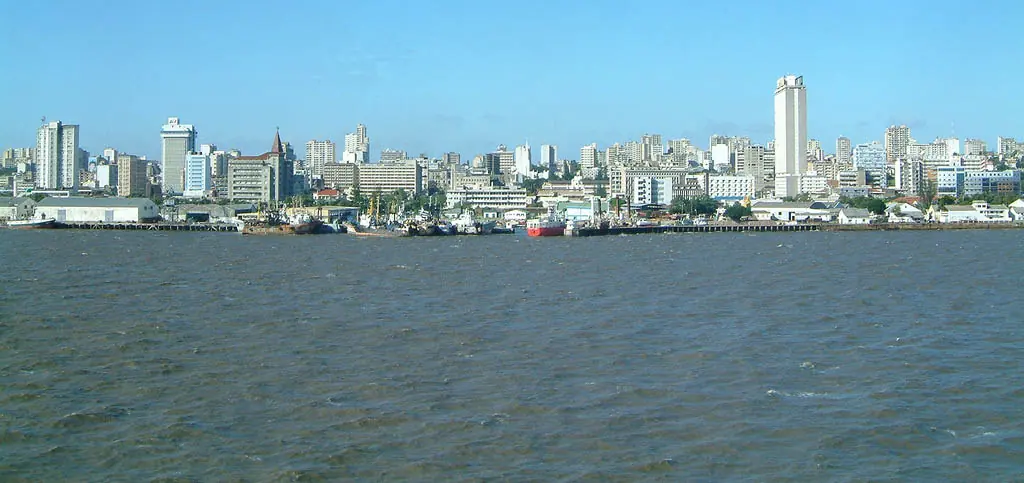
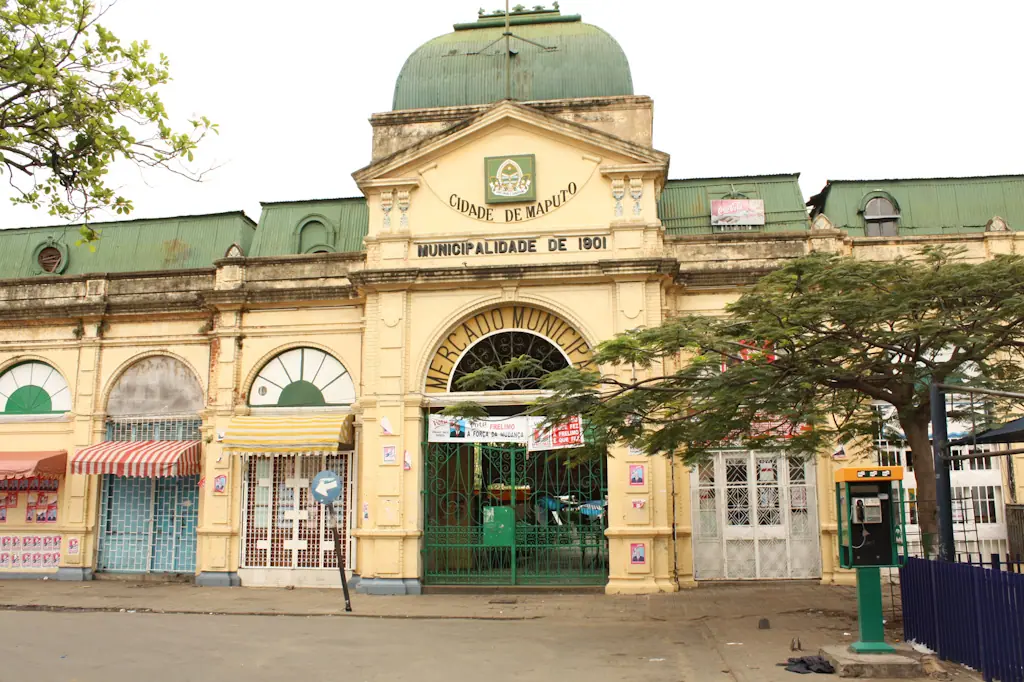
Start at the Mercado Central, the iron-framed market hall in the Baixa where the city's cooks buy in the cool of the morning. Stalls are stacked with dried fish, ground cassava, green bananas, tangerines in season, plastic tubs of piri-piri paste and sacks of cashews — the nut that once made this coast famous. Outside, women sell capulanas, the printed cotton wraps that are worn, used as baby slings and given as gifts, and the air smells of roasting maize and wet fish.
Then drive along the bay to the fish market on the Marginal, which is less a market than a nightly ritual. You choose prawns, squid, crab or a whole reef fish from the stalls, agree a price, then carry your bag to the grill tables behind and pay a small fee to have it cooked with garlic, lemon and chilli. It arrives with xima, rice, chips or a squeeze of lime, and everyone eats with their hands and a cold national lager. This is the single best introduction to how Mozambicans eat: simply, sociably and very well.
Maputo's landmarks are close together, so string them into one slow day. The CFM railway station — a wedding-cake of green-and-white ironwork and marble, still handling commuter trains — faces Praça dos Trabalhadores, a tiled square with a bronze statue at its centre. A few blocks on stand the Fortaleza de Nossa Senhora da Conceição, an eighteenth-century stone fort turned museum, and the Casa de Ferro, a prefabricated iron house shipped out from Europe in kit form. Finish in the Tunduru Botanical Gardens and the natural history museum, whose slightly eccentric collection includes a famous elephant foetus in a jar.
Matapa, Xima and Peri-Peri: How Mozambican Food Is Built
The national dish is matapa, and it is worth ordering everywhere you go. Young cassava leaves are pounded, then simmered slowly with garlic, coconut milk and ground peanuts until they turn dark and velvety, usually with crab, prawns or goat stirred through. It is spooned over xima, a stiff white porridge of maize meal that acts as both plate and cutlery. Alongside it you will meet caril de amendoim, a peanut curry, and frango à zambeziana, chicken grilled with coconut milk, garlic and piri-piri in the style of the Zambezi valley.
Piri-piri itself is a local obsession — a sauce of crushed bird's-eye chillies, lemon, vinegar, oil and sometimes whisky or herbs, kept in a bottle on every table. Prawns are the coastal currency: grilled, fried in garlic, or folded into a coconut curry with rice. Portuguese and Indian trading history shows up in chamussas and rissóis sold from street windows, and the sweet side — bolo polana, a dense coconut and cashew cake, plus rice cakes and egg puddings — belongs to afternoon coffee in the leafier parts of town.
Drinking is part of the picture. Coffee is strong and Portuguese in style, fresh juices are cheap and abundant, and the south produces a fiery white rum from sugar cane that is mixed with raspberry syrup into a sweet, pink, quietly dangerous cocktail. Cashew spirit, distilled from the fruit, is the older local nip. In the markets, look for vendors selling by the cup rather than the bottle and drink what they drink.
Practical note: outside the cities, many kitchens cook to order and slowly. Ordering lunch at 11am to eat at 1pm is normal and appreciated. Vegetarians do well with matapa without meat, bean stews, cassava chips and coconut rice, but should ask whether the beans have been cooked with meat stock.
Marrabenta, Timbila and Makonde Carvings: Culture You Can Hear and Hold
Maputo has its own music, and it is unmistakable. Marrabenta is a guitar-driven dance music born in the city's suburbs, sung in Portuguese and Changana, played at weddings and on Saturday nights in small bars and cultural centres. It is loose, warm and impossible to sit still through. Book a live night around the Núcleo de Arte, an old house in the city that has been the meeting point for painters and musicians for generations and now hosts performances in its courtyard.
Deeper down the coast, in the Zavala district of Inhambane province, the Chopi people play timbila: orchestras of tuned wooden xylophones with gourd resonators, played in interlocking parts that sound like rain on a tin roof. Performances are tied to harvests, coming-of-age ceremonies and funerals, and hearing a full ensemble is one of the great musical experiences of southern Africa. In the far north, Makonde carvers work pau-preto, an almost black hardwood, into twisting family trees and spirit figures; the craft fair in Maputo, where Makonde sculptors, basket weavers and capulana sellers set out their stalls, is the easiest place to meet the work.
Ilha de Moçambique: Coral Stone, Reed Roofs and Five Centuries of Trade
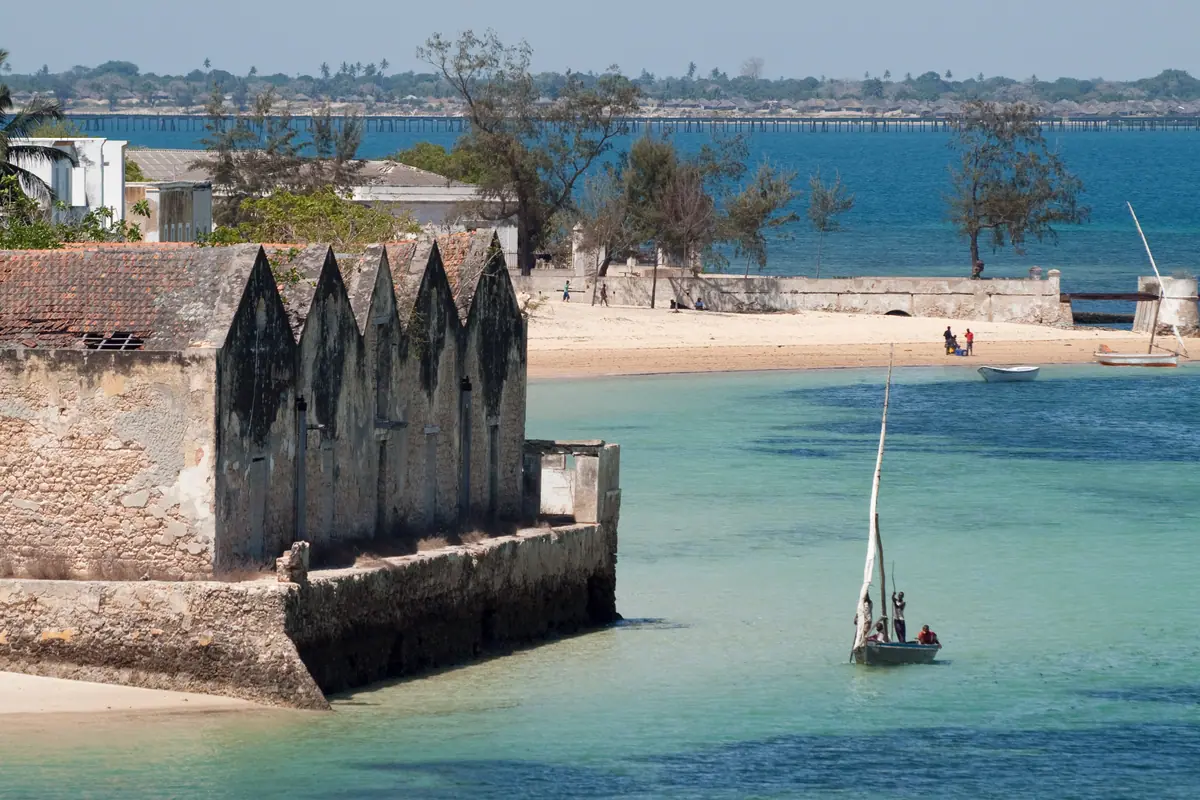
The country's most absorbing historic site lies off the northern coast, reached by a long bridge from the mainland — most travellers fly to Nampula and drive two to three hours to the crossing. Ilha de Moçambique is barely three kilometres long and you can walk its length in well under an hour, but the island holds Arab, Swahili, Portuguese, Indian and African layers stacked on top of one another, which is why it is protected as a World Heritage site.
At the northern tip stands the Fort São Sebastião, a vast sixteenth-century bastion of coral-stone walls with a chapel inside that is often described as the oldest surviving European building south of the equator. Below it, the macuti town spreads out in a maze of reed-roofed houses, coral rag walls, mosques, a Hindu temple and a colonial palace. Local guides will walk you through the lanes for a couple of hours and explain how the island worked as a port for Indian Ocean trade, then take you to the silversmiths, Makhuwa craftsmen who still make fine filigree chains by hand with tiny flames and pliers.
Stay two or three nights rather than day-tripping. Mornings are for the fort and the old hospital, afternoons for the fish market and a bowl of coconut fish curry with cassava, evenings for the sea wall, where the whole island seems to gather for the sunset. Bicycles are the way to move around, and the seafood, landed that morning and grilled that evening, is worth the journey alone.
Bazaruto, Tofo and Inhambane: Reefs, Whale Sharks and Dhow Sails
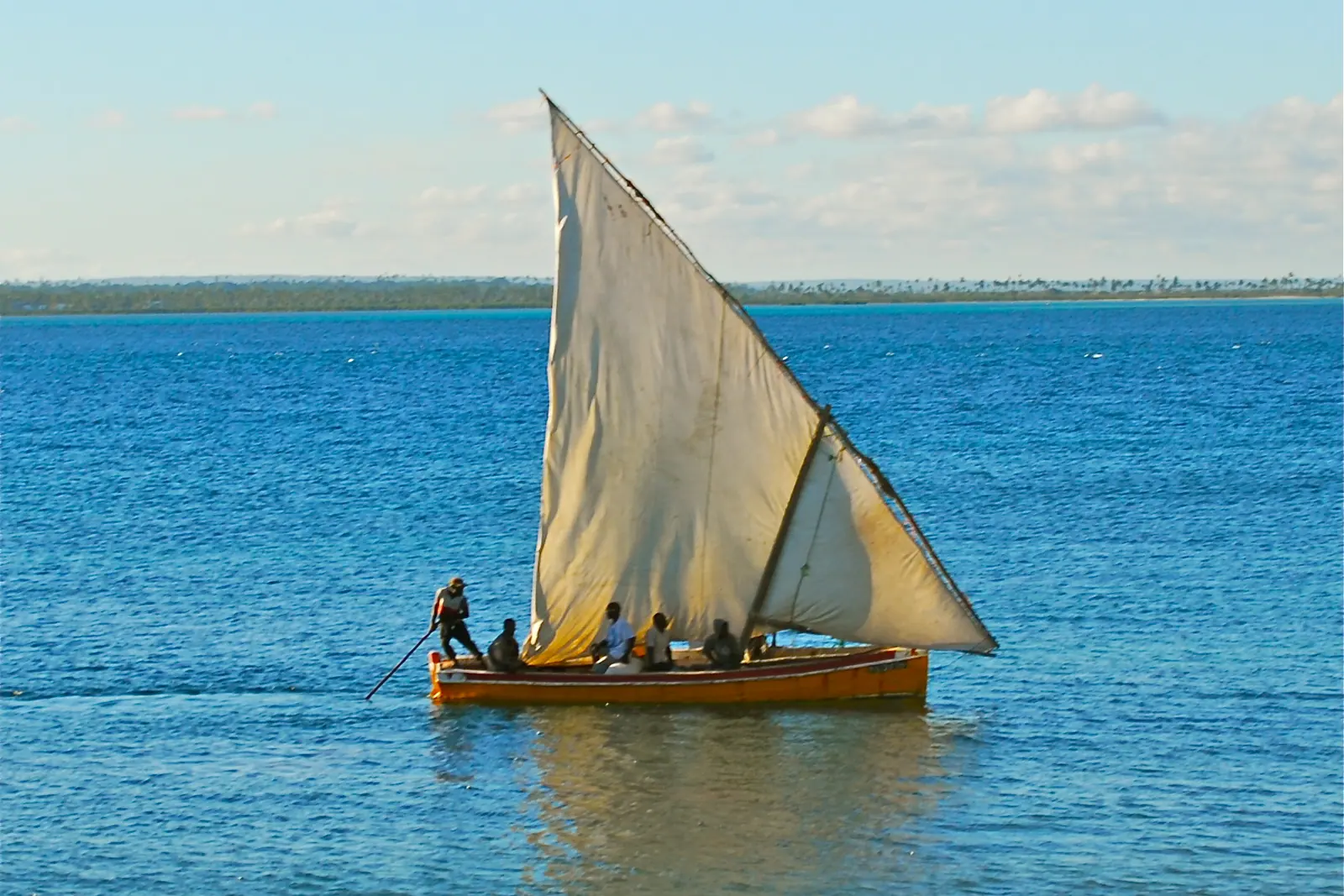
The Bazaruto Archipelago, reached from the mainland town of Vilankulo, is a scatter of sand islands — Bazaruto, Benguerra, Magaruque, Santa Carolina and Bangue — set inside a protected marine area. Two Mile Reef offers gentle, colourful diving for beginners, the channels hold sailfish and kingfish for sport fishermen, and the archipelago is one of the last refuges in this part of the ocean for the dugong. Skip the resort bubble for a morning: take a traditional dhow sailing trip, watch the crew handle the lateen sail, and swim off the side in water so clear it looks filtered.
Further south, Inhambane province is the country's diving heartland. Tofo and neighbouring Barra are the base for encounters with whale sharks and manta rays, most reliable from October through April, while humpback whales pass through between roughly July and October. Visibility is often at its best in the cooler dry months. Inhambane's old town, above the bay, is worth an afternoon in itself: a cathedral with a clock tower, arcaded colonial shopfronts, a busy market, and the dhow-and-pontoon crossing to Maxixe, which is a piece of daily life rather than a tourist attraction.
In the far north, the Quirimbas Archipelago strings out towards Tanzania, with Ibo Island at its heart — a sleepy place of crumbling forts, a star-shaped bastion, silversmiths and mangroves. Pemba is the usual gateway. Note that the extreme northern province of Cabo Delgado has experienced security problems in recent years, so check current travel advice before committing to that leg.
Gorongosa, the Zambezi and the Wild Interior — Plus When to Go
Mozambique's greatest conservation story is inland. Gorongosa National Park, in the centre of the country, was emptied of wildlife during the long civil war and has since been patiently restocked and protected; today you can see elephants, lions, wild dogs and antelope on the floodplains below Mount Gorongosa, with more than four hundred bird species recorded. Go on early morning and late afternoon game drives, walk with a guide in the buffer zone, and taste the coffee grown by smallholder farmers on the mountain's slopes — the beans are roasted and sold to fund the park's work.
Elsewhere, the wild interior is for the committed: the enormous Niassa Reserve in the far north with its miombo woodland and the Lugenda River; the Zambezi, broad and brown, with houseboats and tiger fishing; the Chimanimani mountains on the eastern border, where you hike to rock pools and camp on granite outcrops. Distances are long, roads vary from excellent to appalling, and a 4x4 plus patience is the price of the good stuff.
Time your trip to the dry season, roughly May to November, when roads hold, humidity drops and the coast is at its most inviting. July to October brings the whales, the best diving conditions and the finest game viewing as waterholes shrink; December to March is hot, wet and cyclone-prone, though it is also green, cheap and full of nesting turtles. Whatever the month, carry meticals in small notes, because markets, chapas and village stalls run on cash.
Frequently asked questions
What is the best time of year to visit Mozambique?
The dry season from May to November is the most comfortable and reliable window. July to October is prime: humpback whales move along the coast, diving visibility is strong, and wildlife in Gorongosa is easier to find as water sources dry up. December to March is hot, humid and wet, with a risk of cyclones, though it is greener, quieter and good for turtle nesting.
What food should I not leave Mozambique without trying?
Matapa — cassava leaves slow-cooked with coconut milk, peanuts and often crab or prawns — served over xima. Then grilled prawns with piri-piri, frango à zambeziana, caril de amendoim, street-side chamussas, and bolo polana for pudding. The best-value meal of the trip is usually at a fish market, where you buy your own catch and pay a small fee to have it grilled.
Do I need to speak Portuguese in Mozambique?
It helps a great deal. Portuguese is the official language, alongside Changana, Makhuwa, Sena and others. English is common in city hotels and dive lodges but rare in markets and rural areas. A few phrases — bom dia, obrigado or obrigada, quanto custa?, está bom — transform how you are received and often the price you are offered.
How do I get around Mozambique?
Domestic flights link Maputo with Inhambane, Vilankulo, Nampula, Pemba and Beira, which saves days on long routes. On the ground, chapas (minibus taxis) are cheap and crowded and cover most towns; for parks and remote coast you need a 4x4 and, ideally, a local driver. Ilha de Moçambique is now reached by road bridge, usually with a drive from Nampula.
Is Mozambique a cash or card country?
Overwhelmingly cash. The currency is the metical, and ATMs exist in cities but are limited, sometimes empty and often capped per withdrawal, so carry a backup supply of dollars or euros to exchange. Markets, chapas, small restaurants and guides work in cash, and small notes make everything easier. Larger lodges and city hotels usually accept cards.
Sort the rest of your trip
Everything for Mozambique, in one place
Stay in Mozambique
Hotels, guesthouses and apartments — compared in one search.
Search hotels
Transfer in Mozambique
Private driver waiting on arrival — no queues, no surprises.
Book a transfer
Stay online in Mozambique
Travel eSIM — data the moment you land, no roaming bills.
Get an eSIM