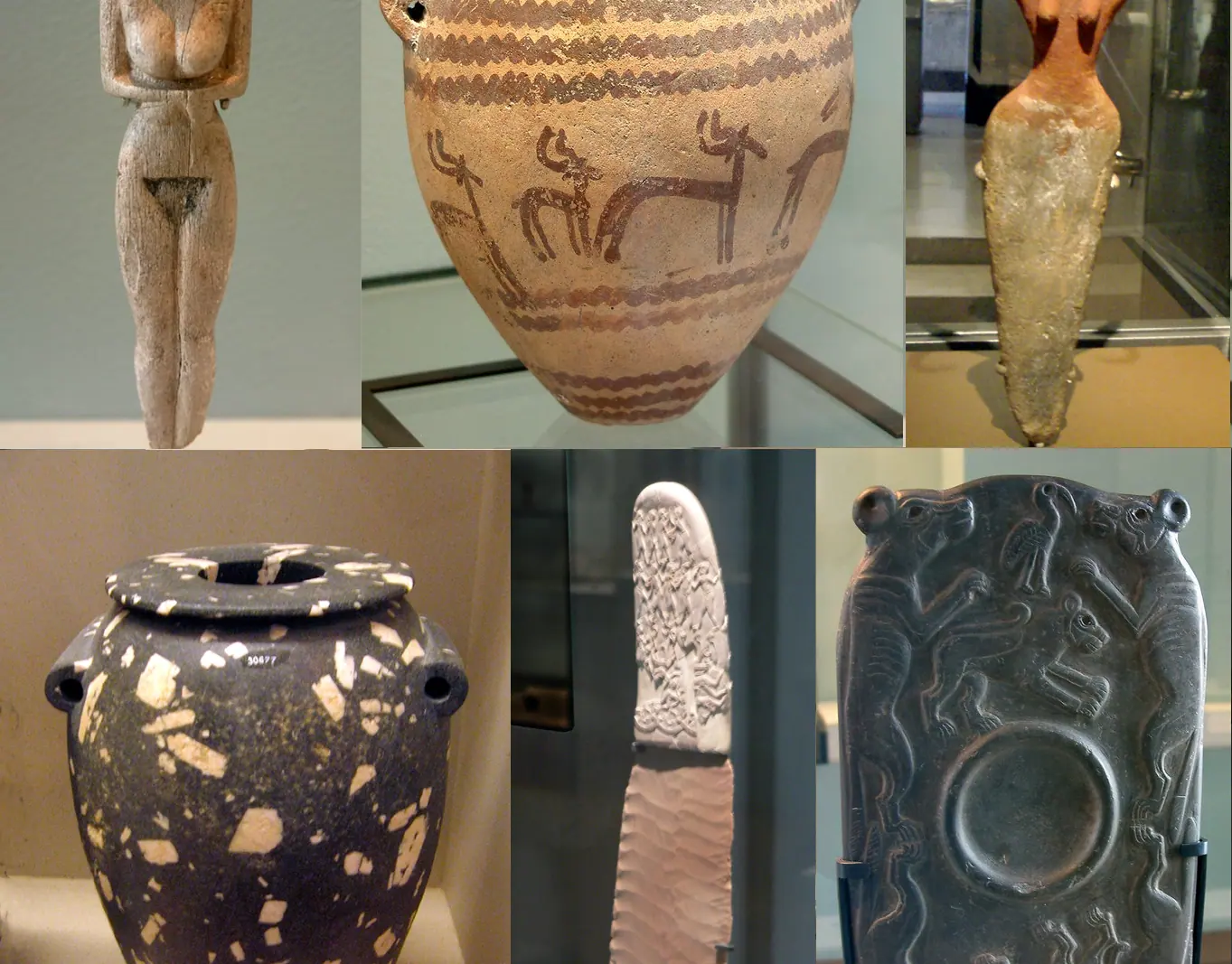
Egypt rarely gives itself up in one sweep of the Pyramids. It comes in stages — a glass of mint tea in a Cairo alleyway, a felucca tilting into the current, columns of Karnak casting shadows long past noon. Come for the monuments, but stay for the table, the music and the slow rhythm of the Nile.
Why Egypt Rewards Slow, Food-First Travel
Egypt compresses five millennia into a stretch of green valley a few kilometres wide, but its great sights sit far apart. The Pyramids of Giza, the temples of Luxor and the rock-cut colossi of Abu Simbel are separated by long desert drives or short internal flights, and a tour that tries to swallow them all in a week turns into a coach window and a camera roll. The travellers who return happiest build their itinerary around two or three bases and let the space between them be the point.
That means treating the everyday as sightseeing. Breakfast is a bowl of stewed fava beans scooped up with baladi flatbread; a mid-afternoon break is a small glass of sweet tea or dark, cardamom-scented coffee in a neighbourhood ahwa where backgammon clicks against the tables. Markets, bakeries, ferry crossings and Nile-side promenades are as memorable as any tomb, and they cost almost nothing.
Timing shapes everything. From roughly October to April the country is at its most comfortable, with warm days in Cairo and Alexandria and mild ones in the south. Late spring and high summer push temperatures past 40°C in Luxor and Aswan, which is why the classic touring season runs through the winter and shoulders. In any season, starting early and stopping during the fiercest midday hours is the local way.
Cairo: Pyramids, Sphinx and the Old City
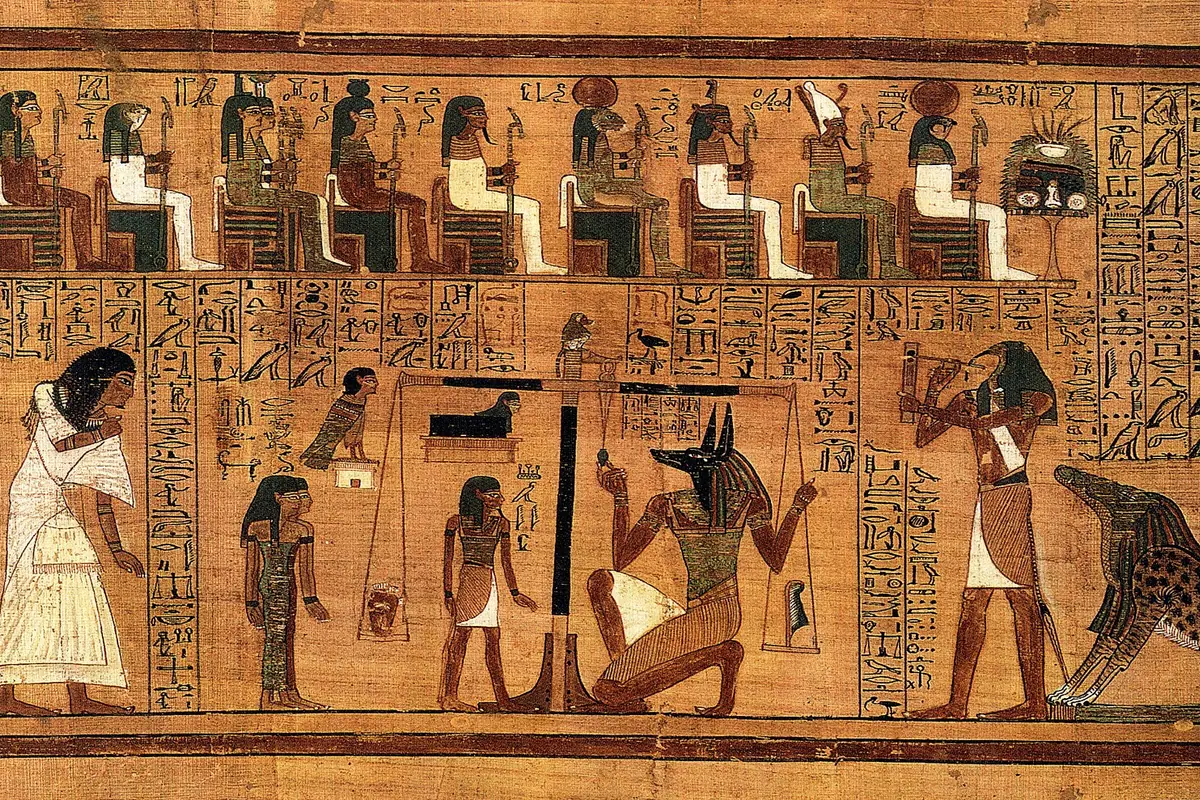
The Giza plateau is the obvious opening act, and it still earns the fuss. Arrive at the gates as they open, when the light is low and the tour buses have not yet filled the car park, and you can walk the causeway between the Great Pyramid of Khufu, the smaller pyramids of Khafre and Menkaure, and the Great Sphinx staring out across the sand. Climb no further than you should — the heat and the altitude feel steeper than they look. On the same side of the city, the vast Grand Egyptian Museum at Giza holds the complete Tutankhamun collection, while the older Egyptian Museum on Tahrir Square remains a dense, wonderful jumble of sculpture, mummies and gilded oddities.
South of Cairo, the pyramids at Saqqara and Dahshur are the better half-day for anyone who cares about how these things were built. Saqqara's Step Pyramid of Djoser is the oldest of them all, and the Bent and Red Pyramids at Dahshur show the learning curve in stone. Combine them with a stop at Memphis, the old capital, and you have a morning that explains the Giza plateau far better than any caption.
Back in the city, Cairo's pleasure is in its layers. Walk the Nile corniche at dusk, take a felucca out on the river as the lights come up, then eat grilled kofta and fresh bread in a crowded street-side restaurant in downtown or Zamalek. The city is loud, dusty and endlessly sociable; give it a full day of nothing in particular and it will repay you.
Eating Egypt: Koshari, Ful Medames and Ahwa Culture
Egypt's national dish is koshari: rice, brown lentils and macaroni layered in a bowl, flooded with spiced tomato sauce, crowned with fried onions and sharpened with a splash of garlicky vinegar. Every neighbourhood has its favourite koshari counter, usually a tiled room with a queue out of the door and a handful of tables upstairs. Order a medium, add extra onions, and you have eaten for the price of a coffee back home. Alongside it sit the everyday staples: ful medames for breakfast, taameya — Egyptian falafel made from fava beans rather than chickpeas, pale green inside and crisp outside — hawawshi, a spiced minced-meat flatbread baked until the edges blister, and feteer meshaltet, flaky layered pastry that can be sweet or savoury and is best eaten hot from the tray.
Push a little further and the cooking gets more domestic. Molokhia, a vivid green soup of chopped jute leaves, is served over rice with chicken or rabbit. Hamam mahshi — pigeon stuffed with seasoned rice or freekeh — is a celebration dish in Cairo. Sayadeya, fish cooked with onions and rice browned in the pan, belongs to the coast, while the Red Sea towns do excellent grilled grouper and shrimp. Round things off with om ali, a hot bread pudding of milk, nuts and raisins, or a slice of konafa, shredded pastry soaked in syrup and layered with cream.
Drinks matter as much as food. Karkadeh, deep red hibiscus tea, is served hot or iced; tamarind and sugarcane juice are pressed fresh on street corners; and shisha smoke curls out of almost every ahwa doorway after dark. During Ramadan the rhythm flips entirely — daytime fasting, then lantern-lit iftar tables groaning with soup, dates and sweets, and long nights of visiting. In spring, the Sham el-Nessim holiday brings families to the parks with salted fish, spring onions and coloured eggs.
Islamic Cairo, Coptic Cairo and Living Traditions
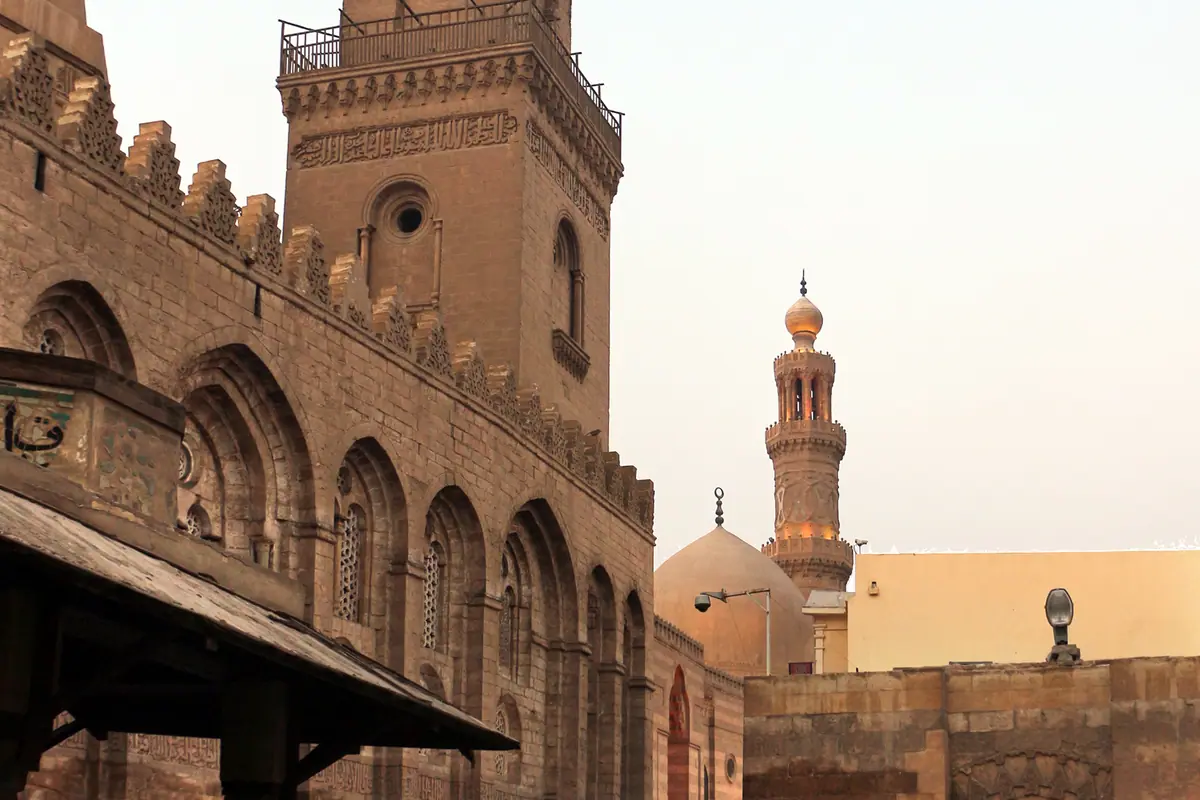
Al-Muizz li-Din Allah Street is the spine of Islamic Cairo, a kilometre or so of Mamluk and Ottoman architecture that is best walked on foot in the late afternoon. You pass under the gates of Bab al-Futuh and Bab Zuweila, past the ornate Qalawun complex, the mosque of al-Hakim and the fine stone facades of the sabils and kuttabs that once served the city's water and its children. This is a living quarter, not a museum: boys play football against a fourteenth-century wall, and shopkeepers roll up their shutters as the call to prayer echoes between the minarets.
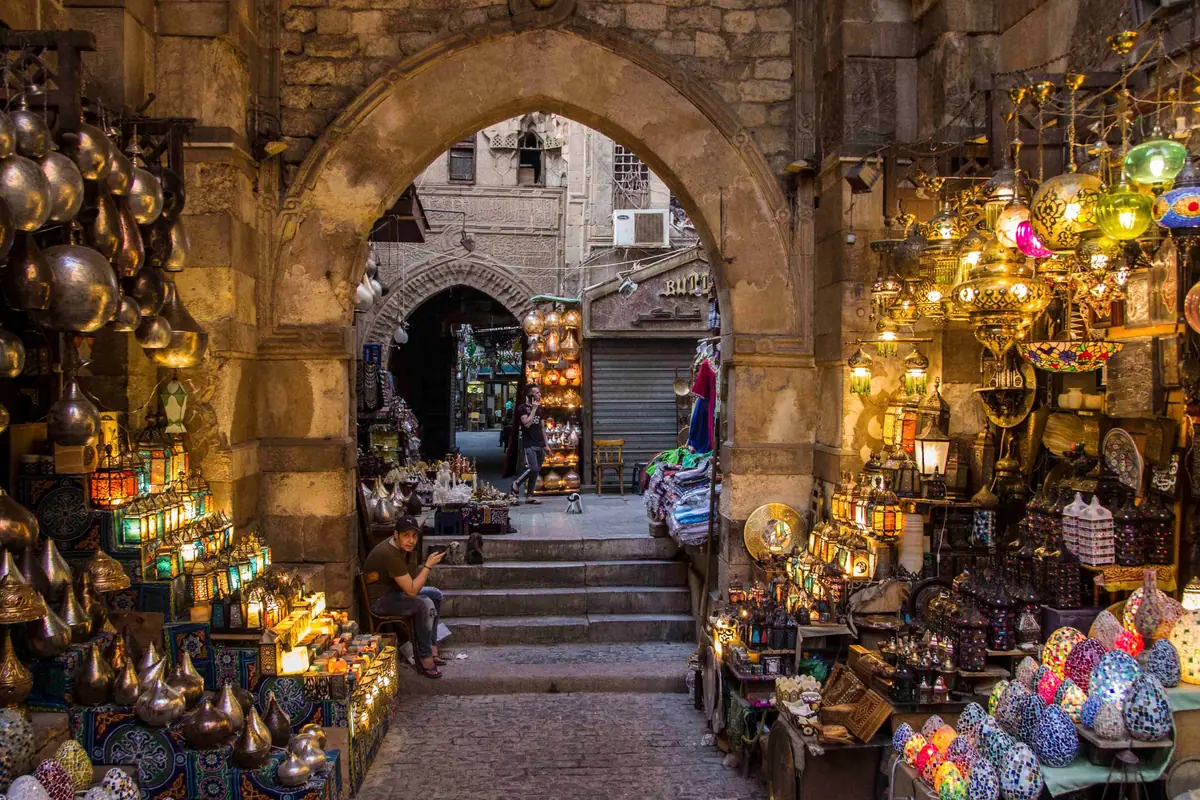
At its heart sits Khan el-Khalili, the great bazaar, where lanes of brass trays, lanterns, perfume oils, scarves and sheesha pipes give way to workshops where metal is still hammered by hand. Bargaining is expected and good-humoured; start low, stay smiling, and walk away if the price does not suit. Duck into the surrounding lanes for coffee in one of the old coffeehouses, and you will find the same scene that has played out here for centuries. Nearby stand the serene mosques of Ibn Tulun, the city's oldest surviving mosque, with its spiral minaret, and the neighbouring Gayer-Anderson Museum, a restored merchant's house of mashrabiya screens and quiet courtyards.
South, the Citadel of Saladin rises above the rooftops, crowned by the alabaster domes and twin minarets of the Mosque of Muhammad Ali — the view from its terrace stretches to the Nile and, on a clear day, to the Pyramids. Coptic Cairo is a short walk away: the Hanging Church suspended over the Babylon Fortress, the Church of Saints Sergius and Bacchus, the Ben Ezra Synagogue and the Coptic Museum, all pressed together inside a walled quarter. In the evening, look for a tanoura dance show in one of the restored caravanserais of Islamic Cairo, where a single whirling figure spins for half an hour to drums and reed flute.
The Nile Corridor: Luxor, Aswan, Abu Simbel and Nubia
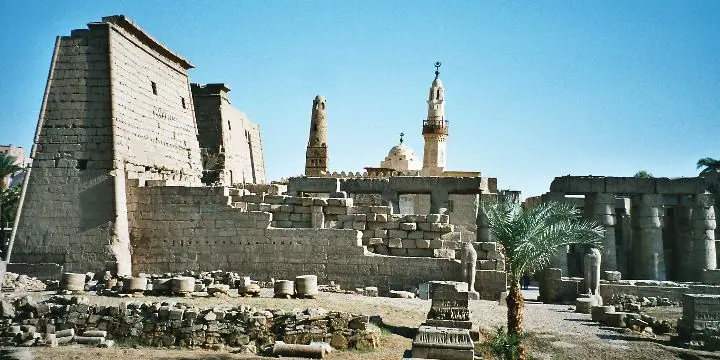
Luxor is the world's largest open-air museum, split by the river into the living city on the east bank and the cemeteries and mortuary temples on the west. On the east side, Karnak Temple unfolds over more than two thousand years, its Great Hypostyle Hall a forest of 134 columns carved from top to bottom; nearby Luxor Temple is at its best after dark, lit amber along the Avenue of Sphinxes. Across the water lie the Valley of the Kings, where painted tombs cut into limestone still hold colour thousands of years old, the Valley of the Queens, the terraced temple of Hatshepsut at Deir el-Bahari and the towering Colossi of Memnon. Hot-air balloons lift off over the west bank at first light, the cheapest way to see the scale of the whole site at once.
Sailing south, the Nile narrows between the twin temple of Kom Ombo, dedicated to the crocodile god Sobek, and the remarkably intact Temple of Horus at Edfu, whose pylons and courtyards still feel like a working sacred building. Aswan is slower and warmer, a Nubian city of pink granite and river islands. Philae Temple, dedicated to Isis, stands on its own island and is reached by small boat; the Unfinished Obelisk still lies in its quarry; and the Nubian Museum tells the story of a culture displaced by the Aswan High Dam. Hire a felucca for a sunset sail past Elephantine Island, or take a boat to a Nubian village on the west bank for dinner, where houses are painted in blues and yellows and the music is unmistakably Nubian.
The finale is Abu Simbel, far south near the Sudanese border. Ramses II's Great Temple, fronted by four seated colossi 20 metres high, and the smaller temple of Hathor carved for Queen Nefertari were moved block by block to higher ground in the 1960s. Visit at sunrise, when the facade glows and the crowds are thin; twice a year, around 22 February and 22 October, sunlight penetrates the inner sanctuary to illuminate the statues within. Most travellers reach it from Aswan by an early convoy or a short flight, and combine it with a three- to five-night Nile cruise between Luxor and Aswan.
Beyond the Classic Loop: Deserts, Oases, Sinai and Alexandria
West of the Nile, the Western Desert hides landscapes that feel like another planet. The White Desert near Farafra is a field of chalk formations sculpted by wind into mushrooms and tents, best seen at sunrise after a night in a simple desert camp; the nearby Black Desert and the Bahariya Oasis, with its hot springs and palm groves, make an easy extension. Farther west, Siwa Oasis sits close to the Libyan border, an Amazigh-speaking community of mud-brick ruins at Shali, salt lakes you can float in, and cool springs ringed by date palms. It is a long drive from Cairo and worth every hour of it.
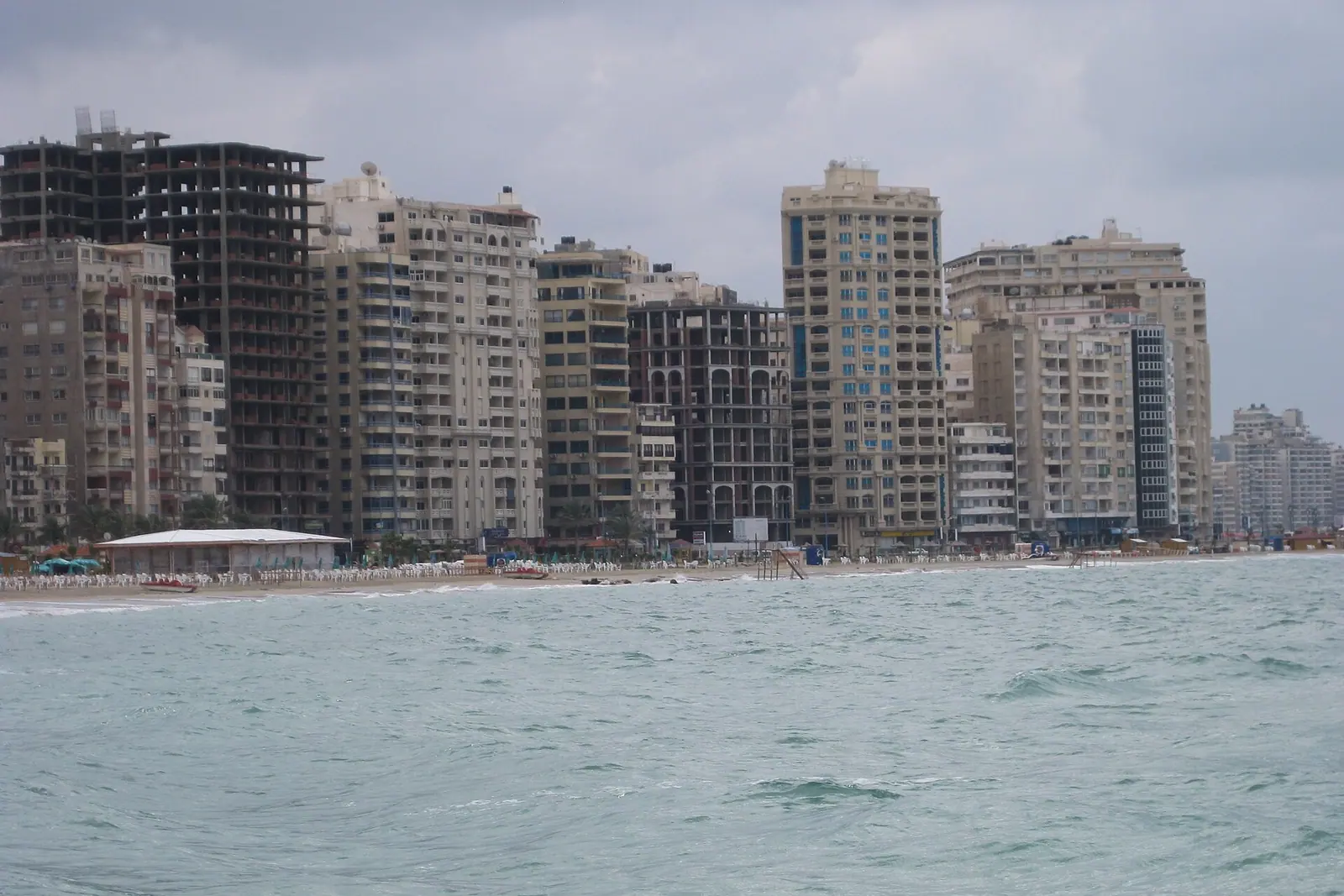
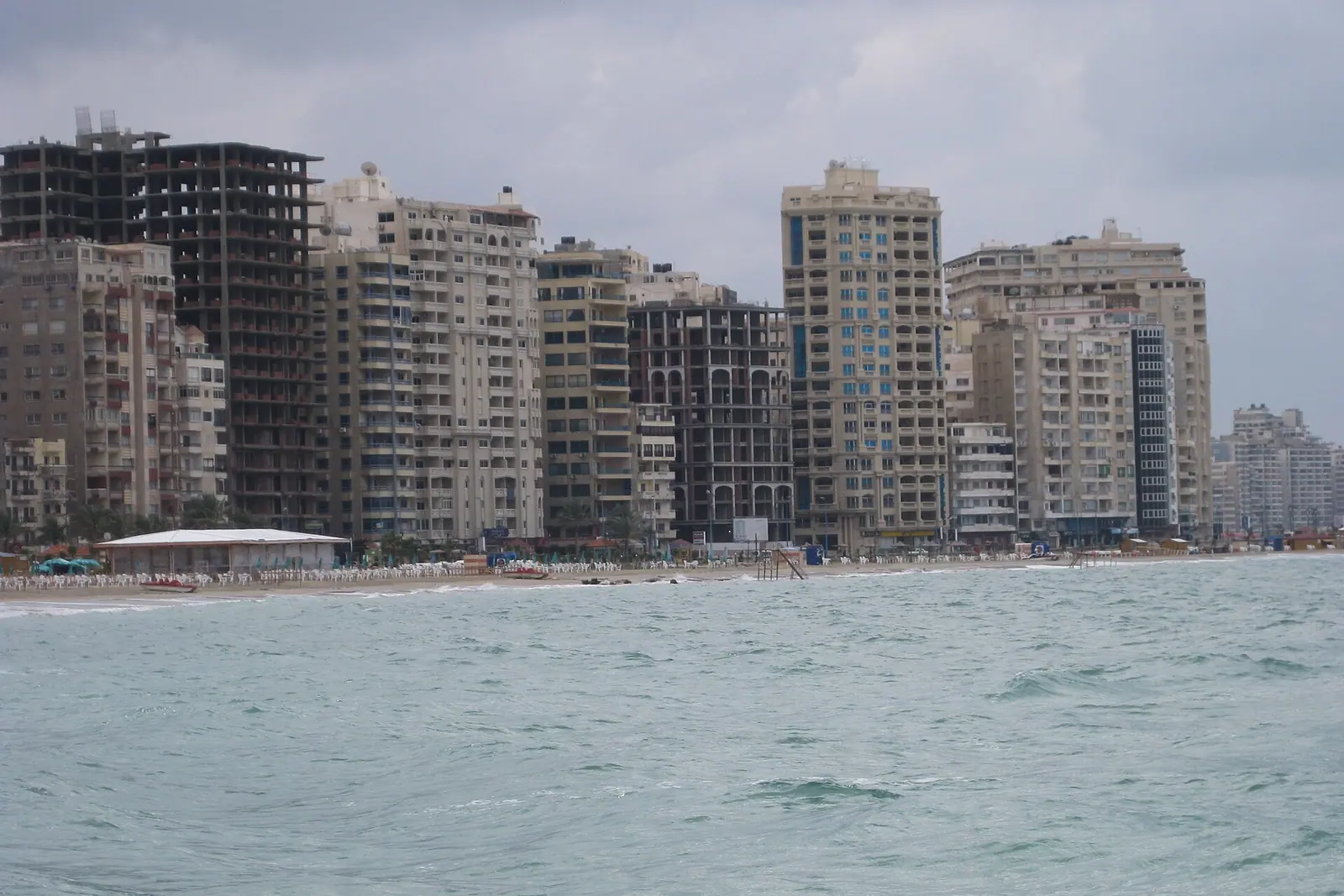
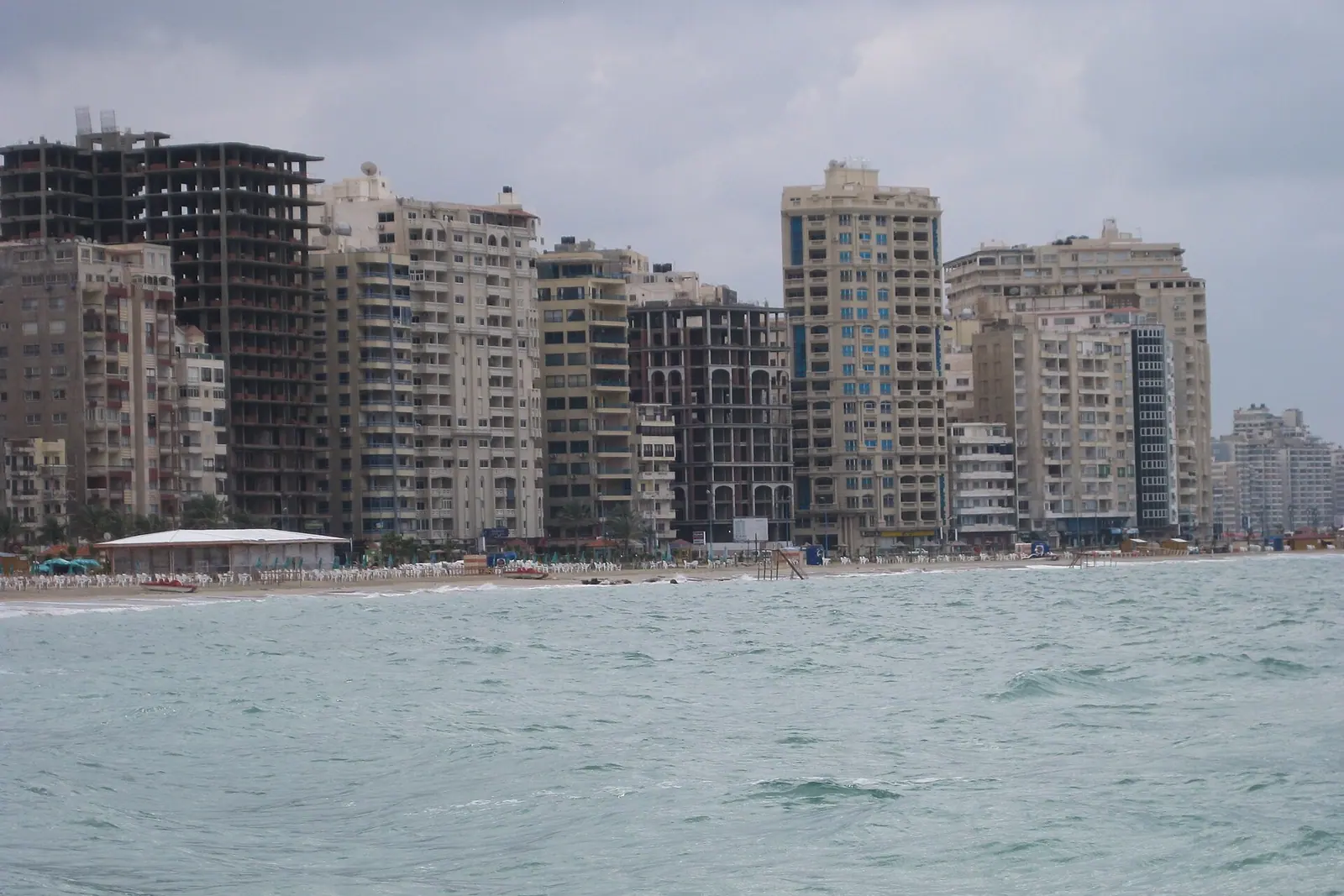
Alexandria, on the Mediterranean, is a different Egypt altogether — breezy, seafood-heavy and more European in feel. The Bibliotheca Alexandrina, a modern library commemorating the ancient one, anchors the Corniche; the Citadel of Qaitbay stands on the site of the old lighthouse; and beneath the streets the Catacombs of Kom el-Shoqafa mix Egyptian, Greek and Roman imagery in a single subterranean tomb. Finish with grilled fish by the harbour and a walk through the gardens of Montaza Palace.
Then there is Sinai and the Red Sea. Saint Catherine's Monastery, at the foot of Mount Sinai, shelters a burning-bush chapel and a library of manuscripts, and the pre-dawn climb to the summit for sunrise is one of the country's great walks. Down on the coast, Dahab and Ras Mohammed offer some of the easiest and most colourful reef diving in the world, while Hurghada and Marsa Alam serve resort-style breaks. Wherever you go, carry small notes for tips, dress modestly away from the beach, and drink bottled water — the tap is not for visitors.
Frequently asked questions
When is the best time to visit Egypt?
October to April is the sweet spot. Cairo and Alexandria are pleasant, and Luxor, Aswan and Abu Simbel are warm rather than punishing. December and January are the busiest and priciest weeks, so November and February often give the best balance of weather and crowds. From May to September, southern Egypt regularly exceeds 40°C, and sightseeing is best confined to early mornings and late afternoons.
How many days do you need for a first Egypt tour?
Ten to twelve days covers the essentials comfortably: three or four nights in Cairo for Giza, Saqqara and Islamic Cairo, a three- to five-night Nile cruise or train-and-hotel combination between Luxor and Aswan, and a night or two in Aswan with a sunrise trip to Abu Simbel. With only a week, choose either Cairo plus Luxor, or Luxor plus Aswan, rather than trying to see everything.
Is Egyptian street food safe to eat?
Generally yes, if you follow local logic. Choose busy places with high turnover — a koshari counter with a queue, a bakery pulling bread from the oven, a grill house full of families. Eat freshly cooked food, peel your own fruit, and be cautious with salads, ice and unpasteurised dairy. Bottled water is cheap and everywhere; tap water is best reserved for brushing teeth if you have a sensitive stomach.
How does tipping work in Egypt?
Baksheesh is part of everyday life, not an insult. Keep a supply of small notes for bathroom attendants, parking helpers, hotel staff and anyone who shows you something unasked. Restaurants often add a service charge, in which case a little extra is optional. For guides and drivers, a daily amount per person is customary, and it is worth budgeting for tipping as a real line in your travel costs.
What should I wear and how should I behave at religious sites?
Light, loose clothing that covers shoulders and knees is the safest default, especially in Luxor, Aswan and rural areas. Women are not required to cover their hair but will need a scarf to enter most mosques, and everyone removes shoes at the door. Swimwear belongs at hotel pools and beaches only. During Ramadan, avoid eating and drinking openly in the street during daylight hours, and accept invitations to iftar if they are offered — it is one of the warmest experiences the country has to give.