Bosnia and Herzegovina rewards anyone who slows down: Ottoman bazaars, Austro-Hungarian facades and grey socialist blocks share the same street, and lunch is a ritual rather than a pit stop. Tours here rarely stay in one lane — a single day can take in a sixteenth-century bridge, a dervish house built into a cliff, a plate of ćevapi and a glass of Žilavka grown on the same limestone that feeds the waterfalls.
Sarajevo's Baščaršija: Where Most Tours Begin
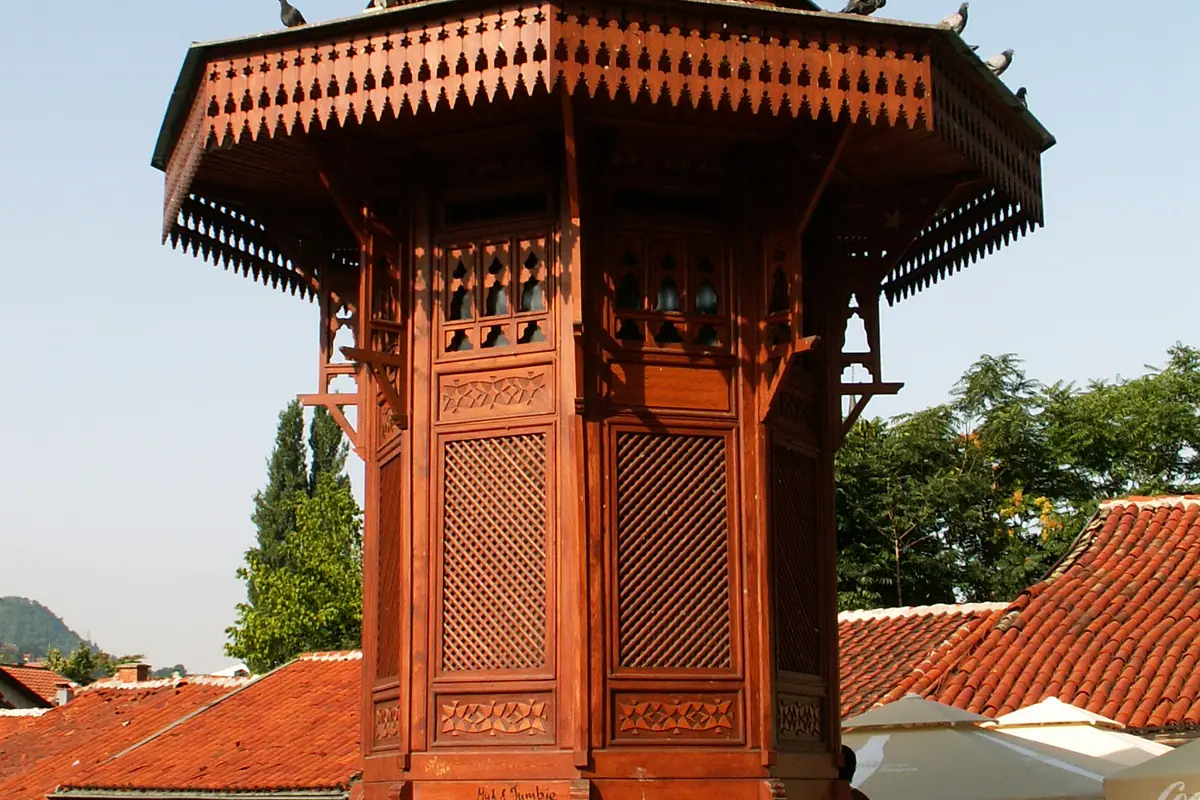
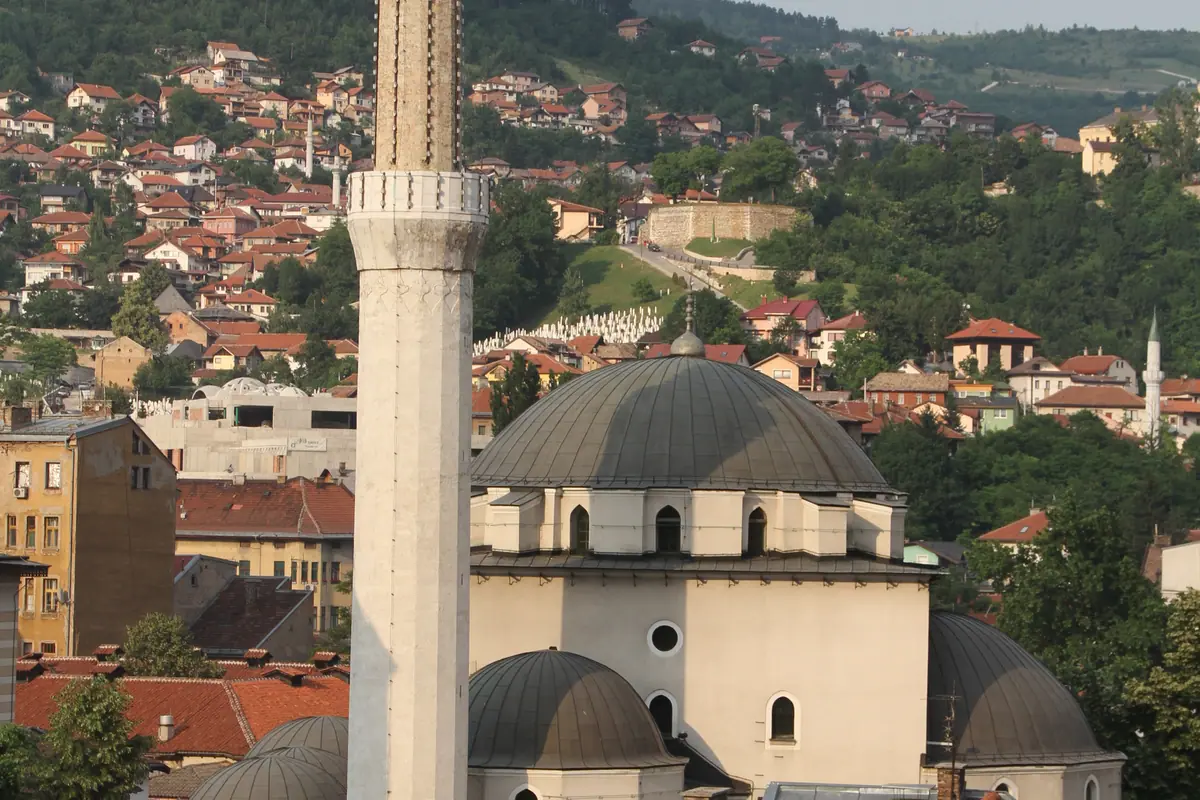
Almost every tour of Bosnia and Herzegovina starts in Sarajevo's Baščaršija, the Ottoman trading quarter laid out in the fifteenth century. At its centre stands the Sebilj, an ornate wooden fountain surrounded by pigeons, and a few steps away the Gazi Husrev-beg Mosque anchors a complex of madrasa, library and covered bezistan market. Turn into Kazandžiluk, the coppersmith alley, and the ring of hammers on hand-beaten coffee sets follows you past workshops that have done nothing else for generations.
A few minutes east, the Austro-Hungarian city begins: the Vijećnica, Sarajevo's flamboyant city hall, glows above the Miljacka river, and the Latin Bridge marks the corner where the First World War was set in motion in 1914. The best walking tours take two to three hours and finish at the Yellow Fortress, a ruined Ottoman bastion where minarets, rooftops and pale gravestones turn gold at sunset. Add the Tunnel of Hope in Butmir, a hand-dug passage from the 1990s siege that is now a small, quietly devastating museum.
The city's layers sit side by side rather than apart: within a short stroll you pass a mosque, an Orthodox cathedral, a Catholic cathedral and a synagogue, hearing the call to prayer overlap with church bells. Coffee has its own etiquette — bosanska kafa arrives on a copper tray in a džezva, poured into a small fildžan cup with sugar cubes and a piece of rahat lokum, and nobody brings the bill until you ask for it.
Mostar, Blagaj and Herzegovina's Water Trail
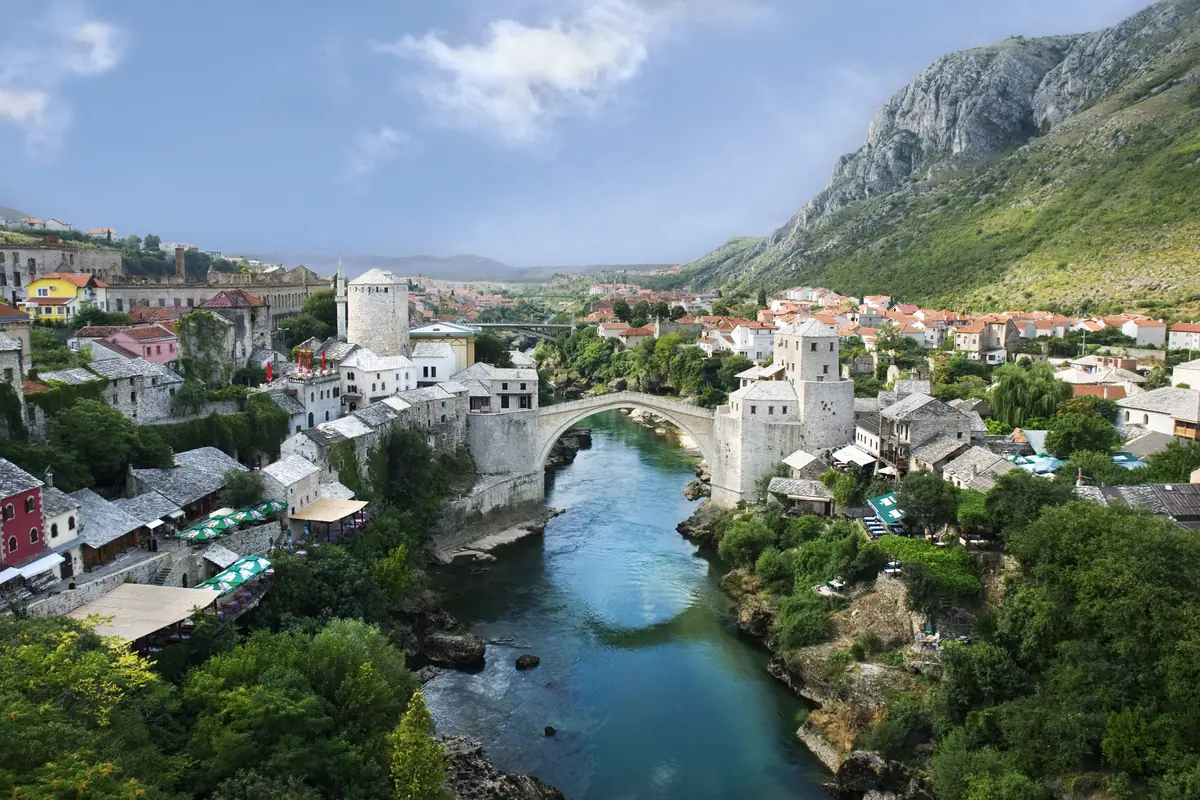
Ninety minutes south of Sarajevo the Neretva carves a canyon, and Mostar appears around a bend with Stari Most — the Old Bridge — arcing twenty-nine metres above green water. Destroyed in 1993 and reopened in 2004, it is a UNESCO World Heritage Site and the emblem of the country; local divers still leap from the parapet into the cold current below. The surrounding Kujundžiluk bazaar sells filigree, copper and Turkish delight from tiny stone shops, and the minaret of the Koski Mehmed Pasha Mosque gives the classic view down onto the bridge.
Tours then fan out across Herzegovina's water country. Blagaj Tekke, a white dervish house from around 1520, sits at the mouth of a cave where the Buna bursts out of the limestone — one of the strongest karst springs in Europe. Kravice waterfalls, roughly forty minutes away on the Trebižat river, is a wide green amphitheatre of cascades you can swim beneath from May to September. Počitelj, a fortified Ottoman village on a hillside, smells of figs and pomegranates in late summer, and the medieval tombstones scattered near Stolac are among the country's quietest, strangest monuments.
Ćevapi, Burek and the Ritual of Bosnian Coffee
Bosnian food is Ottoman in origin, hearty by necessity and best eaten where the tablecloths are plastic. Ćevapi — small grilled fingers of minced beef and lamb — arrive tucked into warm somun flatbread with raw onion and kajmak, a clotted cream that improves almost everything it touches. Burek means meat only; sirnica, zeljanica and krompiruša cover cheese, spinach and potato, sold in buregdžinicas that open at dawn. Order a glass of yoghurt alongside and you are eating breakfast the local way.
Dinner fills the table: begova čorba, a thick chicken and okra soup; sogan-dolma, onions stuffed with mince and rice; sarma, dolma and slow-cooked lamb. Livno and Travnik cheeses are salty, firm and worth carrying home, and Herzegovina supplies the wine — Žilavka white and Blatina red from around Trebinje and Čitluk — while homemade rakija appears before the meal whether or not you asked for it. Finish with tufahija, a walnut-stuffed apple in syrup, or sticky hurmašice.
Jajce, Travnik and the Fortresses of Central Bosnia
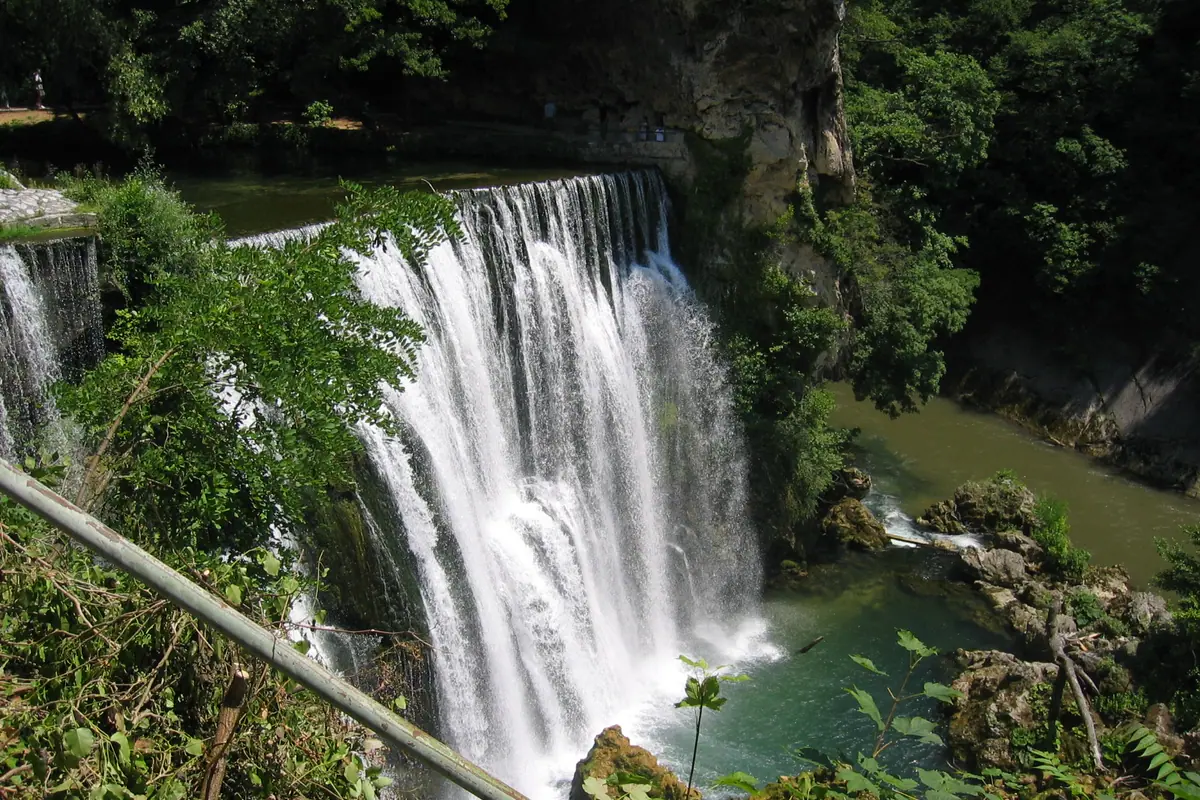
Central Bosnia is fortress country. Jajce, once the seat of the last Bosnian kings, is built around a thundering twenty-one-metre waterfall where the Pliva drops into the Vrbas; above it sits a hilltop fortress, below it catacombs carved into the rock. A short drive away, the small Pliva lakes and their thatched watermill cottages make an easy half-day, and in late June the surrounding hills fill with a folk festival that books out every guesthouse in town.
Travnik, an hour or so further on, was the seat of Ottoman viziers and still feels administrative and faintly melancholic, with a preserved fortress, a brightly painted mosque and the Plava Voda springs, where restaurants perch on wooden terraces above rushing water. This is cheese country: travnički sir is sold in every market. Further north, Tešanj and Srebrenik hold two of the oldest fortresses in the land, Tuzla's salt lakes offer a grittier slice of daily life, and far to the east, Višegrad's eleven-arched bridge on the Drina is worth the detour.
Wild Rivers, Primeval Forest and Mountain Villages
Bosnia and Herzegovina is one of Europe's last genuinely wild corners, and adventure tours make the most of it. Rafting on the Una near Bihać runs past Štrbački buk, a twenty-four-metre waterfall that arrives with a roar after miles of clear green water; trips run roughly April to October, with spring meltwater delivering the biggest waves. The Neretva near Konjic is the classic day trip from Sarajevo and gentle enough for beginners, while canyoning, kayaking and fly-fishing fill the rest of the summer calendar.
For hiking, head east to Sutjeska National Park, home to Perućica — one of Europe's last primeval forests — and Maglić, the country's highest peak at 2,386 metres, with views across to Montenegro. Above Sarajevo, Bjelašnica and Jahorina, both 1984 Winter Olympic venues, offer skiing from December into March; in summer their high pastures lead up to Lukomir, the highest village in the country, where stone houses, hand-knitted socks and coffee brewed over an open fire reward the walk up from Umoljani.
When to Go, What to Expect and How to Travel Well
May, June, September and early October are the sweet spots: warm days, green hills and no crush. July and August push past 35°C in Herzegovina — Mostar is punishing at midday, so tours there start early and finish with a swim at Kravice — while Sarajevo, at 500 metres, stays a few degrees cooler. Winter belongs to skiers and to snow-dusted kafanas, with Orthodox Christmas on 7 January and Ramadan's shifting dates bringing long, crowded iftar tables to the old town. August brings the Sarajevo Film Festival, July the open-air concerts and sevdalinka singing of Baščaršija Nights.
The currency is the convertible mark, and although cards work in hotels and larger restaurants, cash still rules in markets and village guesthouses. Buses reach almost everywhere; the rail line between Sarajevo and Mostar, which follows the Neretva gorge, is a highlight in itself. For Lukomir, Sutjeska or the Una, a guided tour or a local driver removes a lot of guesswork — and stick to marked paths, because some outlying land has never been fully cleared of wartime mines. Tipping about ten percent is normal, coffee is never rushed, and a cheerful 'dobar dan' opens most doors.
Frequently asked questions
How many days do you need to tour Bosnia and Herzegovina?
Four or five days covers Sarajevo and Mostar comfortably, including Blagaj, Počitelj and Kravice. Allow seven to ten days to add Jajce, Travnik, the Una National Park near Bihać, Sutjeska and the wine country around Trebinje without spending every day on a bus.
When is the best time to visit?
Late spring (May–June) and early autumn (September–early October) offer warm, clear weather and comfortable walking. Herzegovina is very hot in July and August, while December to March suits skiers heading for Jahorina and Bjelašnica.
What are the must-see sights on a first tour?
Stari Most in Mostar, Baščaršija and the Tunnel of Hope in Sarajevo, Blagaj Tekke, Kravice waterfalls, the Jajce waterfall and fortress, and the Ottoman bridge at Višegrad on the Drina. Most sit within easy day-trip distance of Sarajevo or Mostar.
Do I need a car to get around?
No. Buses connect all major towns and the Sarajevo–Mostar train ride through the Neretva gorge is a scenic highlight, but rural sights such as Lukomir, Štrbački buk and the stećci fields are far easier on a guided day tour or with a local driver.
What food should I not leave without trying?
Ćevapi with somun and kajmak, a slice of sirnica or burek at breakfast, begova čorba, grilled lamb, Livno or Travnik cheese, and tufahija for dessert — all washed down with Bosnian coffee served in a džezva.
Plan it — tours in Bosnia and Herzegovina
Live search, booked directly with trusted providers.
Sort the rest of your trip
Everything for Bosnia and Herzegovina, in one place
Stay in Bosnia and Herzegovina
Hotels, guesthouses and apartments — compared in one search.
Search hotels
Transfer in Bosnia and Herzegovina
Private driver waiting on arrival — no queues, no surprises.
Book a transfer
Stay online in Bosnia and Herzegovina
Travel eSIM — data the moment you land, no roaming bills.
Get an eSIM