Bosnia and Herzegovina packs an improbable amount into a country you can cross in a day: Ottoman bazaars and Habsburg boulevards, a bridge that leaps a green river, waterfalls that roar in spring and whisper by August. It is a place of coffee rituals, mountain villages and roads that switchback past fortresses older than most nations.
Sarajevo: Where East Meets West in a Single Afternoon
Start in Baščaršija, the old Ottoman bazaar at the heart of Sarajevo, where the Sebilj — a wooden kiosk-shaped fountain — marks the square everyone uses as a meeting point. Around it, coppersmiths still hammer džezvas (small coffee pots) along Kazandžiluk street, and the Gazi Husrev-beg Mosque, completed in 1531, anchors a complex of madrasa, library and clock tower that has survived five centuries of empires. Wander the covered bezistan arcades for filigree silver and hand-beaten trays, then sit for a bosanska kahva: coffee served in a copper pot with a sugar cube and a lump of rahat lokum on the side.
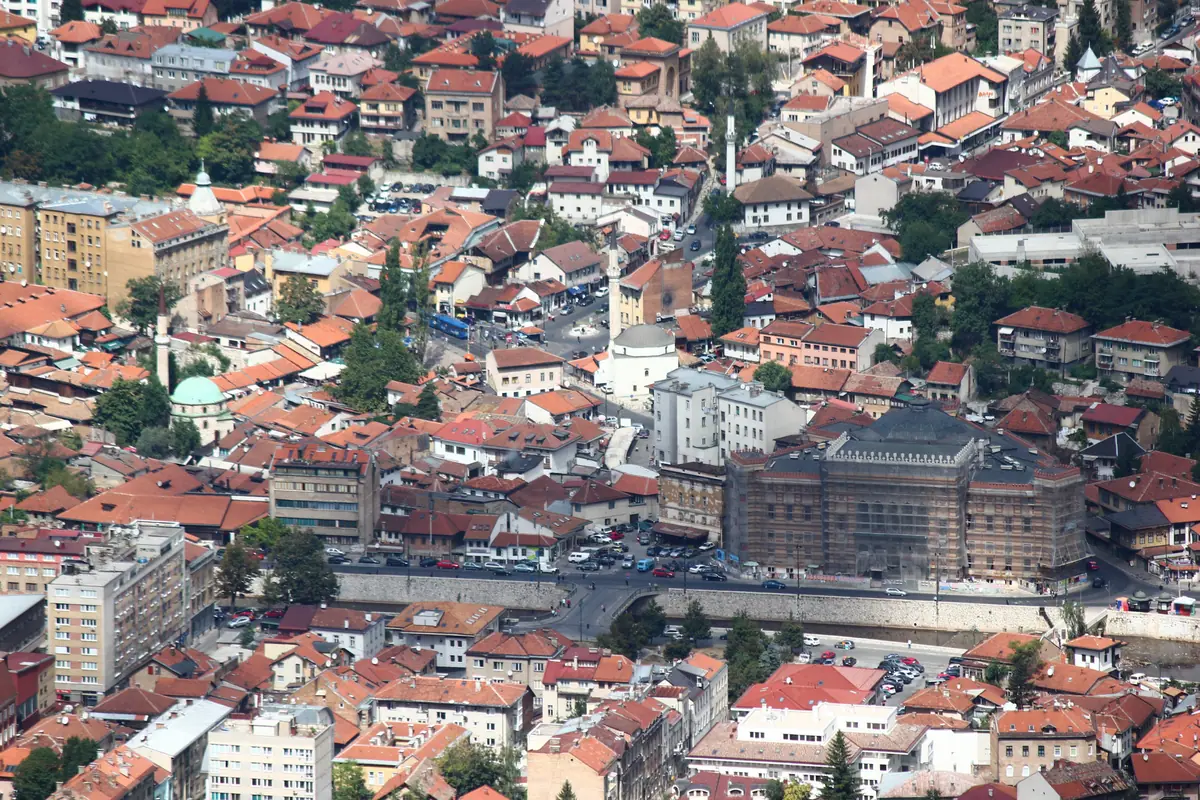
A ten-minute walk west takes you across the Latin Bridge, where the shot that lit the fuse of the First World War was fired in 1914, and on to the Vijećnica, the wildly striped neo-Moorish city hall that reopened as a library and gallery. Climb (or ride the cable car) to the Yellow Fortress for the classic sunset view over a city of minarets, bell towers and red roofs filling a valley. Nearby Trebević still holds the graffiti-covered bobsleigh track from the 1984 Winter Olympics, now half-reclaimed by pine forest and oddly beautiful.
To understand the recent past, head southwest to the Tunnel of Hope in Butmir, a hand-dug passage that kept Sarajevo supplied during the 1990s siege and is now a small, deeply affecting museum. Give Sarajevo two full days: one for the old town and fortifications, one for museums, coffee and an unhurried evening of ćevapi — skinless minced-meat sausages in warm flatbread — in the Baščaršija lanes.
Mostar and the Sun-Baked Herzegovina
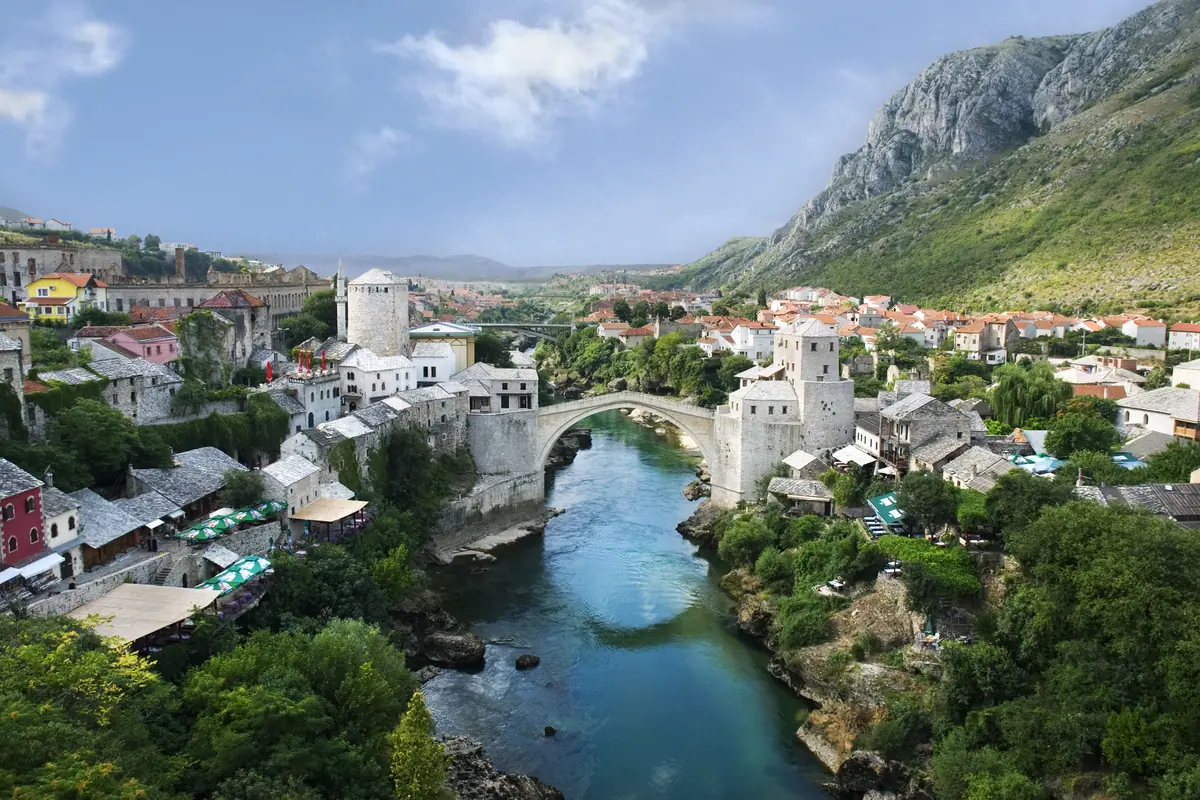
Mostar's Stari Most is the image that sells the country, and it earns the hype. The single-arch stone bridge, first built in the 16th century and painstakingly rebuilt after its destruction in the 1990s, arcs 29 metres over the emerald Neretva. Local divers still leap from it — a tradition centuries old — after collecting informal donations from onlookers. On either side, the bazaar street Kujundžiluk sells copperwork and carpets, and the Koski Mehmed Pasha Mosque offers the best viewpoint over the bridge from its minaret balcony.
Herzegovina is where the Mediterranean creeps in: pomegranates, figs, sturdy stone houses and a summer heat that peaks above 35°C in July and August. Use Mostar as a base. Fifteen minutes away, Blagaj Tekija — a whitewashed Sufi dervish house — sits at the mouth of a cave where the Buna river erupts, ice-cold, straight out of the cliff. Twenty minutes the other way, Počitelj climbs a hillside in tiers of stone and fig trees, its fortress watching the Neretva valley.
Forty minutes south, Kravica (Kravice) Waterfalls tumble about 25 metres over a wide amphitheatre of tufa, swimmable in summer and thunderous in spring. Spring and early summer are the sweet spot; by late summer the flow thins and the pools warm. Bring water shoes, go early to beat the tour buses, and pair the falls with a stop at the Roman villa ruins of Mogorjelo on the way back.
Rivers, Waterfalls and Primeval Forest
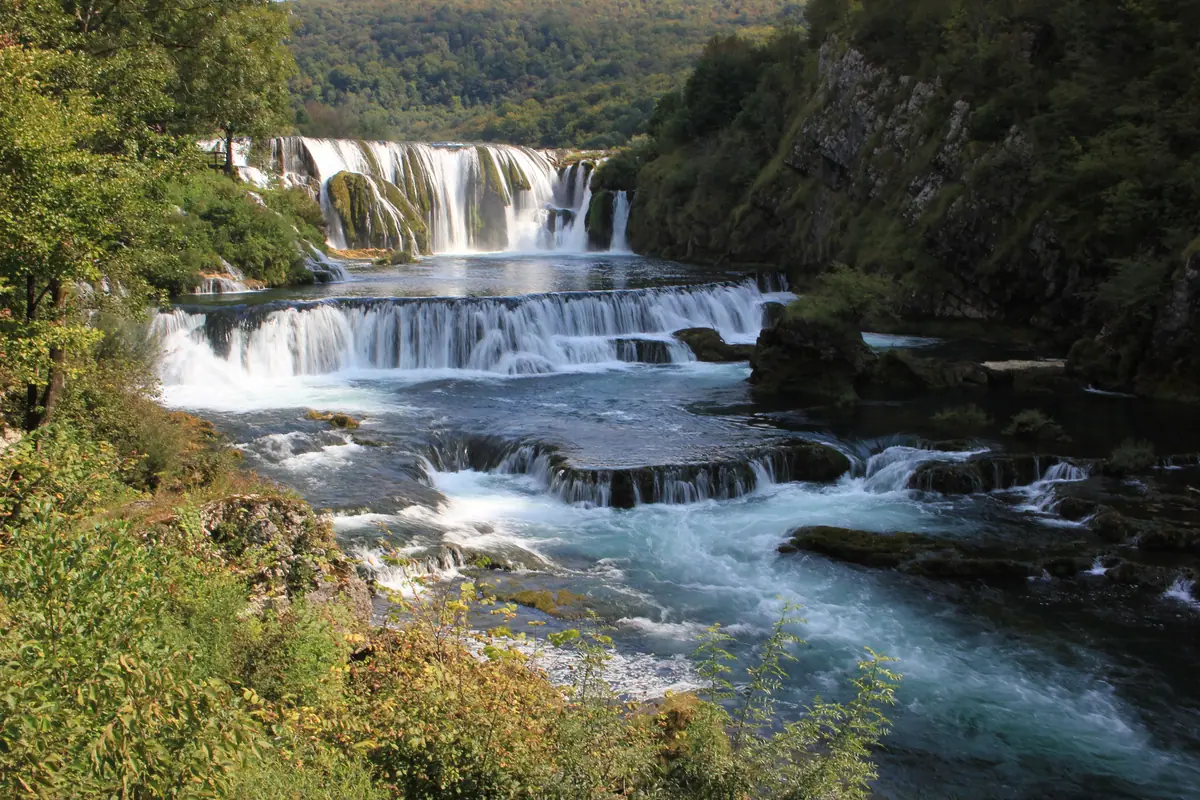
Bosnia and Herzegovina is a country defined by water. In the northwest, Una National Park guards the Una river as it tumbles over Štrbački buk, a staircase of falls roughly 24 metres high that you can watch from wooden walkways, with rafting and kayaking on calmer stretches downstream near Martin Brod. The water here is an unreal turquoise, coloured by dissolved limestone, and the park's trails and wooden viewpoints are quiet on weekday mornings.
In the southeast, Sutjeska National Park holds the country's highest peak, Maglić at 2,386 metres, and Perućica — one of the last primeval forests in Europe, where beeches and firs grow to enormous size and visitors must stay on marked trails. The hike to Trnovačko Lake, a heart-shaped glacial tarn just over the Montenegrin border, is one of the finest day walks in the Balkans: roughly six to eight hours return from the Prijevor trailhead.
Elsewhere, the Neretva near Konjic is the classic rafting river, running gentle to moderate rapids through a canyon that suits first-timers and families from April to October. Add the Vjetrenica cave in Popovo polje, a wind-blown subterranean system with underground lakes, and Hutovo Blato, a wetland of reed beds and birdlife where boats glide between channels. If you only have time for one, make it Kravica in spring and Una in summer.
Ottoman Bridges, Fortresses and Medieval Tombs
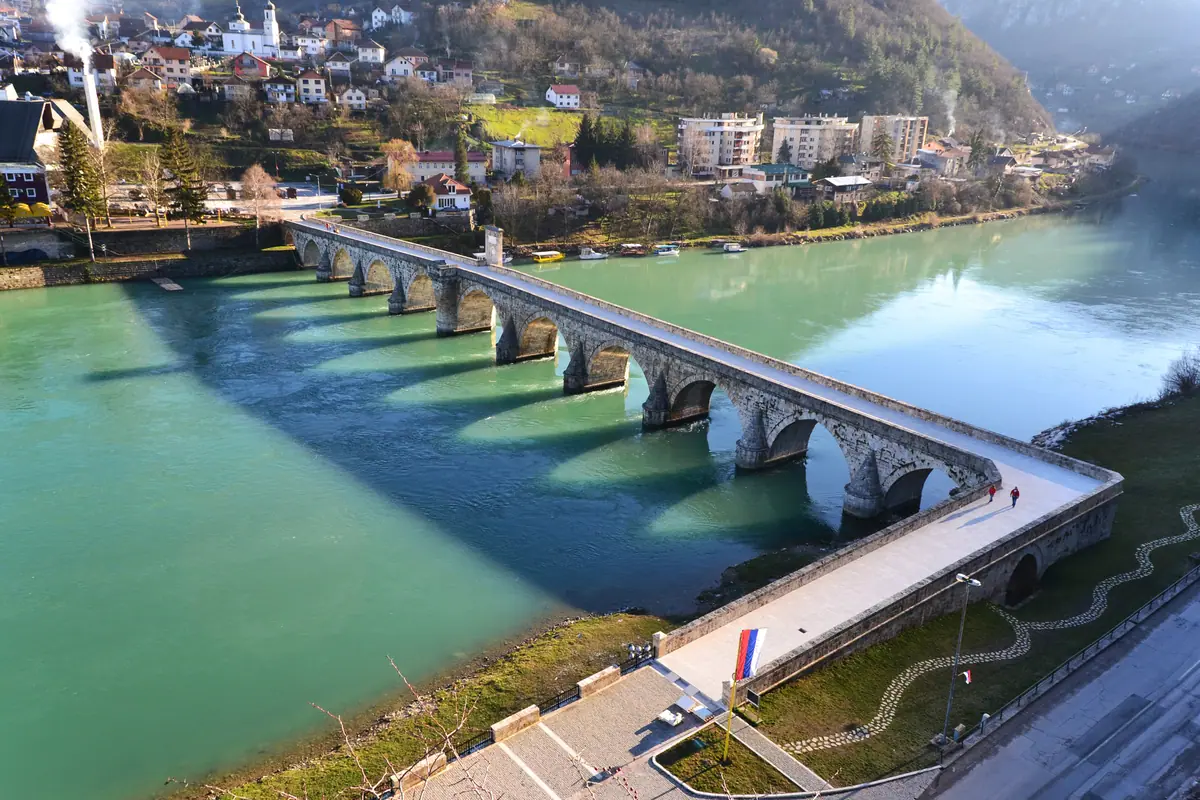
In Višegrad, the Mehmed Paša Sokolović Bridge spans the Drina in eleven elegant stone arches, completed in 1577 by the Ottoman architect Mimar Sinan and now a protected World Heritage site. Walk it at dawn when mist sits on the water, then explore the nearby stone town built as a literary tribute to the Nobel-winning novelist born here. It is a long detour from Sarajevo but an unforgettable one if you are heading east.
Travnik, in the green heart of the country, has a ruined hilltop fortress, a pretty blue-tiled mosque, and Plava voda — a spring-fed stream lined with cafés under trees, perfect for a slow lunch. Further west, Jajce is famous for its 21-metre waterfall in the middle of town, where the Pliva river plunges into the Vrbas, plus a hilltop citadel, medieval catacombs and the cluster of little wooden watermills at Pliva Lakes a few kilometres away.
Počitelj's stepped Ottoman townscape and the Radimlja necropolis near Stolac — a field of carved medieval tombstones known as stećci — round out a heritage trail that rarely feels crowded. These sites are scattered, so plan on a car or local buses and give yourself a full day for each region rather than trying to tick off three in one go.
Hiking, Skiing and Mountain Villages
The Dinaric Alps run the length of the country, which means high trails with big views and very few people on them. Lukomir, at around 1,495 metres the highest inhabited village in Bosnia and Herzegovina, is reached on foot from Umoljani on Bjelašnica mountain in three to four hours, past shepherd huts, stone-roofed houses and the sheer Rakitnica canyon. Stay overnight in a village guesthouse and you will be fed homemade cheese, lamb and sour cream by families who still move with their flocks in summer.
Winter flips the same mountains into ski country. Jahorina and Bjelašnica, both venues for the 1984 Winter Olympics, have lift-served slopes, rental shops and a relaxed, affordable atmosphere compared with Western European resorts. Snow generally holds from late December to March, and the season is short enough that booking a week ahead is usually fine.
Beyond walking and skiing, there is paragliding above the Rakitnica, canyoning in the canyons feeding the Neretva, cycling on the old Austro-Hungarian forest roads around Sarajevo, and rafting on the Una and Tara. Guided day trips leave most towns, but the mountains are accessible enough that independent travellers with a car and a decent map can string together their own routes.
When to Go, How Long to Stay, and What to Eat
May, June, September and October are the best months overall: green valleys, gentle temperatures, waterfalls at full power and fewer crowds. July and August are hot in Herzegovina — Mostar and the wine country around it regularly pass 35°C — but ideal for river swimming and high-altitude hiking. Winter belongs to Sarajevo's ski mountains and to the city's café culture, when snow settles on the minarets and the bazaars smell of roasted coffee and grilled meat.
Seven to ten days is a sensible length for a first visit: two nights in Sarajevo, two or three in Mostar with day trips to Blagaj, Počitelj and Kravica, then either north to Jajce and Travnik or southeast into Sutjeska. Distances look short on the map but mountain roads are slow, so resist planning more than about 150 kilometres of driving per day. The train from Sarajevo to Mostar follows the Neretva gorge and is a scenic experience in itself.
Eat well and eat cheaply: ćevapi with raw onion and somun bread, burek by the slice for breakfast, dolma, stuffed peppers, and tufahija — a poached apple filled with walnut cream. Vegetarians will find plenty in the markets and bakeries. Order rakija after dinner, accept the second cup of coffee, and remember that meals here are long, generous and rarely rushed. Bosnia and Herzegovina rewards travellers who slow down to its pace rather than trying to sprint through it.
Frequently asked questions
How many days do you need in Bosnia and Herzegovina?
Seven to ten days lets you cover Sarajevo, Mostar and Herzegovina's waterfalls and Ottoman towns at a comfortable pace, with time for one national park. A focused four-day trip can cover Sarajevo and Mostar only, using the scenic train between them.
What is the best time of year to visit Bosnia and Herzegovina?
Late May to June and September to October offer mild weather, flowing waterfalls and thinner crowds. July and August are best for river swimming and mountain hiking but very hot in Herzegovina. December to March is ski season on Jahorina and Bjelašnica.
Is Bosnia and Herzegovina easy to travel around without a car?
Yes, for the main route. Buses link Sarajevo, Mostar, Jajce and Travnik, and the Sarajevo–Mostar railway runs through the Neretva canyon. For Blagaj, Počitelj, Kravica, Lukomir and the national parks, a car, a taxi, or a small-group day tour is far more practical.
What are the must-see attractions in Bosnia and Herzegovina?
Baščaršija and the Latin Bridge in Sarajevo, Stari Most in Mostar, Blagaj Tekija, Kravica Waterfalls, the Mehmed Paša Sokolović Bridge in Višegrad, Jajce's waterfall and fortress, Una National Park and Sutjeska National Park with its primeval Perućica forest.
What should I know before visiting Mostar and Herzegovina in summer?
Expect intense heat, strong sun and busy old-town lanes between 10am and 4pm. Visit Stari Most early or at dusk, carry water, wear shoes with grip for the bridge's polished stones, and keep small change for the divers who leap from the arch.
Plan it — experiences in Bosnia and Herzegovina
Live search, booked directly with trusted providers.
Sort the rest of your trip
Everything for Bosnia and Herzegovina, in one place
Stay in Bosnia and Herzegovina
Hotels, guesthouses and apartments — compared in one search.
Search hotels
Transfer in Bosnia and Herzegovina
Private driver waiting on arrival — no queues, no surprises.
Book a transfer
Stay online in Bosnia and Herzegovina
Travel eSIM — data the moment you land, no roaming bills.
Get an eSIM