Belarus is a country that feeds you first and explains itself later — over a plate of draniki still hissing from the pan, a glass of birch sap, and a banya that leaves your skin pink and your head clear. Beyond Minsk's granite boulevards lie medieval castles, bison-haunted forest and villages where a potato is treated as a form of national literature.
Draniki, Machanka and the Gospel of the Potato
In Belarus, the potato is not a side dish — it is a worldview. The country grows it, praises it, and turns it into draniki: grated, squeezed, fried into lacy golden pancakes that arrive at the table in stacks, with sour cream and often a jug of cold milk to cut the richness. Order them in a plain village canteen and they are chunky and rustic; order them in a Minsk cellar restaurant and they come with mushroom sauce, grated cheese or smoked pork. Both versions are correct.
Move on to machanka, a thick stew of pork and sausage simmered in sour cream and served with pancakes you tear and dip, and to vereshchaka, where sausage is braised in a sweet-sour gravy and eaten with the same pancakes. In summer the national relief is holodnik — a cold beetroot and kefir soup, magenta and bracing, with a hard-boiled egg and a boiled potato on the side. Winter belongs to zhur, a sour rye soup that tastes like somebody's grandmother decided you needed strengthening.
Eating local here also means drinking local. Kvas, fermented from bread, is sold from street tanks in warm months; birch sap is drunk straight and unglamorously, as it has been for centuries; and krambambula, a honey-and-herb liqueur, turns up at weddings and festivals. Belarusian salo — cured pork fat, sliced thin and eaten with black bread and a raw onion slice — is a ritual, not a dare.
Minsk's Table: Independence Avenue and the Old Town
Minsk is a city rebuilt after the Second World War in soaring Stalinist Empire style, and its spine is Independence Avenue, a boulevard of colonnades, monumental facades and wide, uncluttered pavements that runs for kilometres between Victory Square and Independence Square. Walk it slowly: the scale is deliberate and slightly theatrical, best seen in late afternoon light when the granite glows honey-coloured.
At the eastern end, the National Library of Belarus — a rhombicuboctahedron of glass and steel, one of the strangest and most beautiful buildings in Europe — has an observation deck with a panorama over the whole city. Not far away, the Island of Tears memorial, with its small bronze figure of a weeping mother and a chapel of white stone, commemorates soldiers lost in Afghanistan, and is one of the most affecting spots in a city that mostly prefers monumentality to melancholy.
For the flavours of the country, head to the Upper Town and Trinity Hill, the restored nineteenth-century quarter of pastel wooden houses and cobbled lanes on the banks of the Svislach. Around Komarovsky market you can assemble a picnic of the whole nation: smoked cheese, dense rye bread, pickled mushrooms, cranberries, honey from forest hives, and strings of dried fish. Restaurants in the nearby courtyards serve the same food upgraded, often with live music and a shot of something herbal to finish.
Castles and Country Tables: Mir and Nesvizh
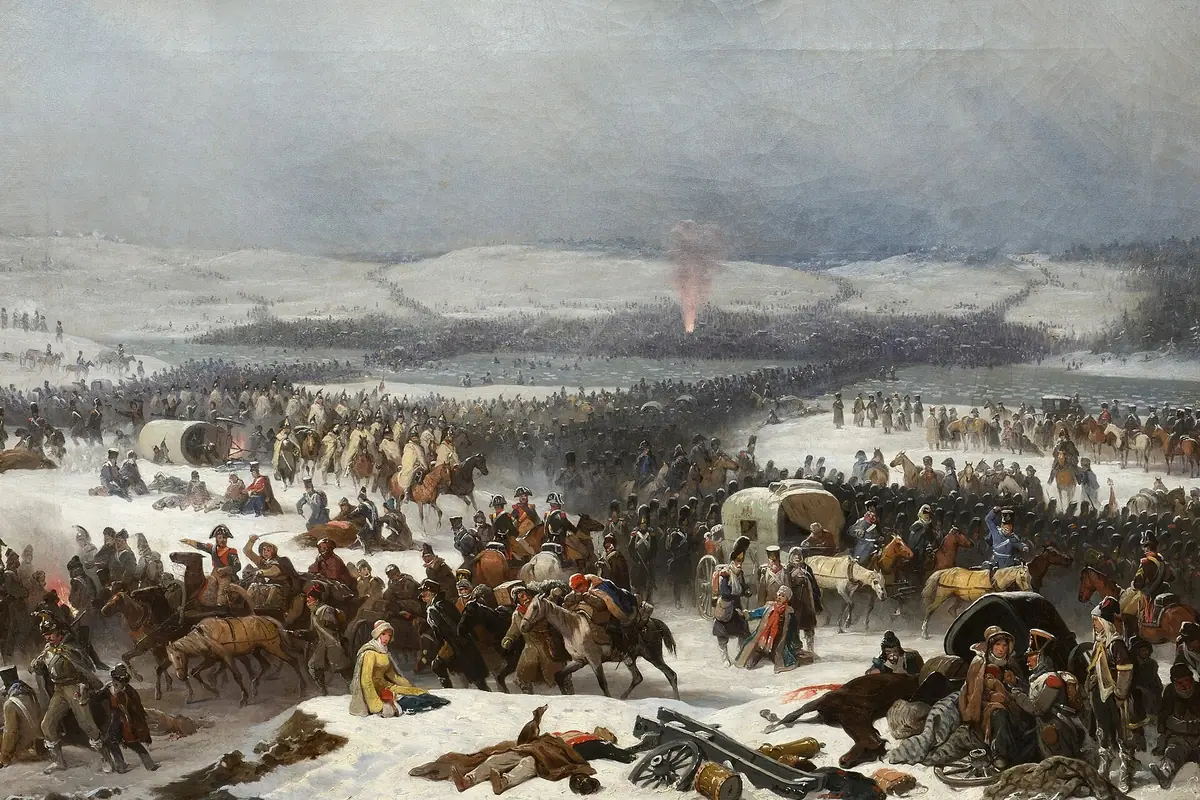
About an hour and a half southwest of Minsk, Mir Castle rises out of flat farmland like something badly disguised as a fairy tale — red brick, five towers, a moat, and a history that runs through several dynasties and at least two restorations. It is a UNESCO World Heritage site, and the interior has been furnished to show how the gentry lived, ate and warmed themselves; the cellars, unsurprisingly, are partly about food and drink.
Nesvizh Castle, half an hour further on, is a different creature: a palatial residence of the Radziwill family, surrounded by formal parks and ponds, with a church — the Corpus Christi Church — that is one of the earliest Baroque buildings in the region and holds the family tombs. Between the two, the landscape is rural Belarus at its calmest: storks nesting on water towers, cows on the verge, and roadside stalls selling honey, cheese curd and potatoes by the bucket.
This is the loop most visitors take as a day trip, and it rewards lingering rather than rushing. Stay overnight in a small guesthouse in Nesvizh or Mir and you get the castle grounds at dusk, when the tour buses have gone and the only sounds are frogs and a distant tractor. Dinner will be whatever the host's kitchen produces: probably soup, probably pork, probably draniki.
Forest and Marsh: Belovezhskaya Pushcha and the Lakes
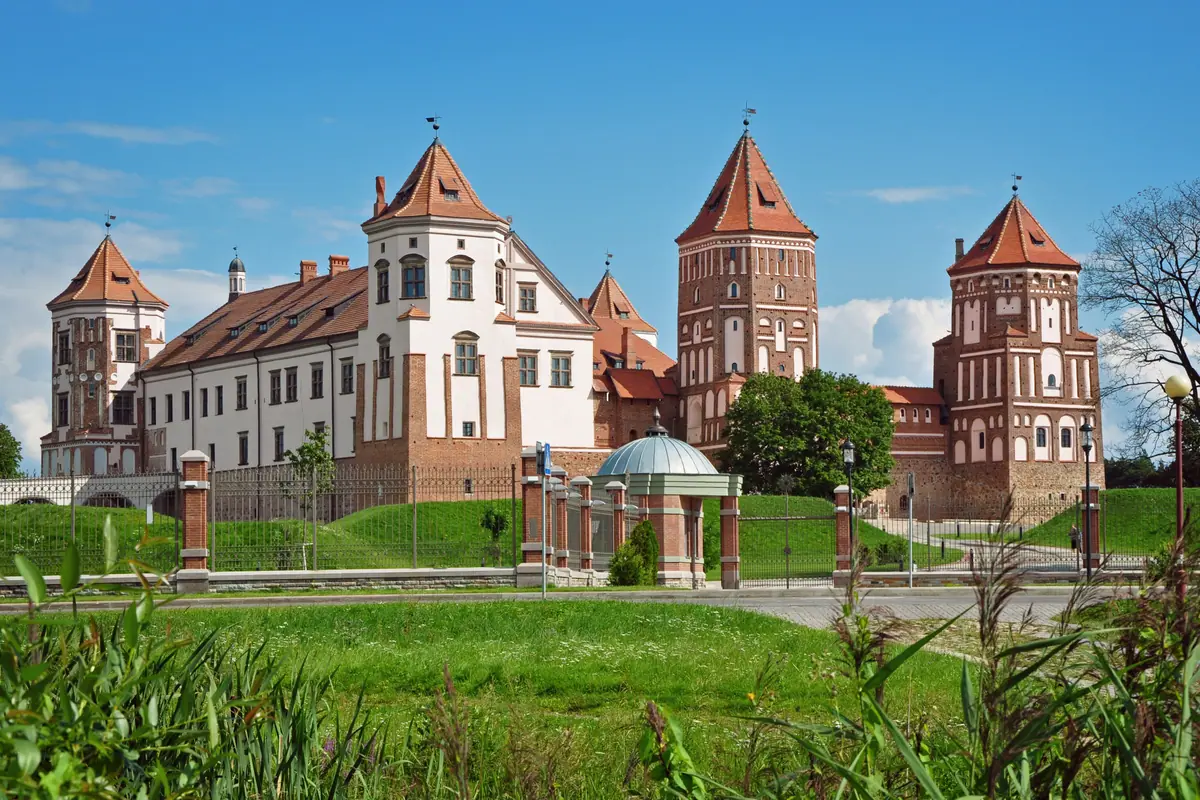
Belovezhskaya Pushcha, on the western border, is one of Europe's last fragments of primeval lowland forest and the ancestral home of the European bison — the zubr, a heavy, shaggy animal that was bred back from the edge of extinction in these woods. Walking its trails in autumn, with oak and hornbeam turning amber and the undergrowth rustling, is the closest Belarus comes to wilderness. There is a small enclosure where the bison are reliably visible, but the real experience is the silence of the old forest itself.
Further north, the Braslaw Lakes and Lake Naroch offer a very different kind of outing: flat water, sandy shallows, wooden piers and rental rowing boats. Belarusians take their lake holidays seriously — a week at Naroch in July means swimming, smoked fish, grilled pork, cold beer and absolutely no schedule. Lake Naroch is the largest in the country and comes with sanatoriums, cycling paths and pine forest, while the Braslaw chain feels more intimate and village-like.
Between these wilder places, the country is laced with marshes and rivers that reward slow travel. The Pripyatsky National Park, down in the south, is a land of floodplain meadows and birds — spring and early summer are the times to go, when the water meadows are full and the air is loud with frogs and cranes.
Rituals and Seasons: Banya, Bazaars and Festival Nights
The banya is the social heart of Belarusian hospitality. It is not a spa and not quite a Finnish sauna: it is a hot, wet, birch-scented room where you sit until you can't, then plunge into cold water, then eat, then repeat. Guests are traditionally invited, not asked, and the correct answer is yes. Take a felt hat, take a towel, and expect the evening to end with salted cucumbers, bread and something strong.
The calendar has its own rituals. Kupalle, the midsummer night of Ivan Kupala in early July, brings bonfires, flower wreaths floated down rivers and couples leaping hand in hand over the flames. Kalyady, in the depths of January, is when groups of carol singers in costume travel from house to house, performing for sweets and coins. Both are genuinely old, genuinely rural in origin, and still done properly outside the cities.
Music runs through all of it. In Vitebsk in July, the Slavianski Bazaar festival turns the riverside city into a stage of folk ensembles, street musicians and open-air concerts, and the town's association with Marc Chagall — who was born here and painted its rooftops for a lifetime — gives it a melancholy charm that balances the crowds. Here in late summer, the smell from the bazaar stalls is a reliable index of the country itself: grilled sausage, dill, honey, and warm bread.
Beyond the Ring Road: Grodno, Brest and the Memorials
Grodno, in the west, is the city Belarusians themselves often name as their favourite. Its old centre is compact and hilly, dominated by the Old Castle and the New Castle on the river bluff, and home to the Kalozha Church, a twelfth-century brick structure of extraordinary simplicity that predates almost everything else still standing in the country. Nearby, the city's cafés and student streets give Grodno a relaxed, European pulse that's comfortable to settle into for a couple of days.
Brest, in the southwest, is where the country remembers war. The Brest Fortress, a nineteenth-century citadel turned into a vast memorial of stone sculptures, eternal flame and echoing corridors, is sobering and magnificent — visit early in the day and allow two or three hours. Inland, Khatyn is a different kind of pilgrimage: a memorial built over a village destroyed during the occupation, with a bell tower and an avenue of chimney-shaped monuments where houses once stood.
Eastward and north, Polotsk holds the oldest surviving cathedral in the country, Saint Sophia, and Vitebsk offers Chagall murals, riverside promenades and the artist's own small museum. Together these places make the case for the train: Belarus's rail network links Minsk with Brest, Grodno and Vitebsk in comfortable day-length journeys, which means you can eat badly nowhere and sleep in a different town every night.
Frequently asked questions
What food must I try on a first trip to Belarus?
Draniki (fried potato pancakes) with sour cream, machanka (pork in sour cream with pancakes), holodnik (cold beetroot soup, summer), zhur (sour rye soup, winter) and salo with black bread. Drink kvas, birch sap and krambambula. Order at least one meal in a village canteen — the cooking is plainer and often better than in city restaurants.
When is the best time to visit Belarus?
Late May to September for warm weather, long evenings, lake swimming and Kupalle in early July; September and early October for castle trips and golden forest colours. December to February is deep winter — short days, snow on the castles and a very good excuse to spend an evening in a banya.
How many days do I need, and how do I get around?
Six to eight days covers Minsk, Mir and Nesvizh, plus either Brest or Grodno. Trains connect Minsk with Brest, Grodno and Vitebsk in journeys of a few hours, and buses reach Mir, Nesvizh and the lake regions. Renting a car makes the castle-and-village loop much easier if you're comfortable driving.
Do I need to speak Russian or Belarusian?
Russian is the practical language of daily life and both Russian and Belarusian are official. English is common among younger people in Minsk but thin outside the cities. Learning a few phrases — hello, thank you, please — opens doors, and menus in restaurants frequented by visitors often have English translations.
What should I know about the banya and local etiquette?
Accept an invitation to the banya; it is genuine hospitality, not a tourist show. Bring a towel, take a felt hat if offered, and follow your host's rhythm of heat, cold plunge and rest. When visiting memorials such as Brest Fortress or Khatyn, dress soberly, keep voices low, and don't photograph people without asking. Cash is useful at markets and village stalls.
Sort the rest of your trip
Everything for Belarus, in one place
Stay in Belarus
Hotels, guesthouses and apartments — compared in one search.
Search hotels
Transfer in Belarus
Private driver waiting on arrival — no queues, no surprises.
Book a transfer
Stay online in Belarus
Travel eSIM — data the moment you land, no roaming bills.
Get an eSIM