Belarus is the quiet giant of Eastern Europe: a country of wide avenues built in stone, Renaissance palaces ringed by ponds, and a primeval forest where European bison still move through the fog. It rewards slow travel, Cyrillic curiosity and a willingness to look beyond the obvious stops.
Minsk: Grand Avenues, Red Brick Churches and a Rebuilt Old Town
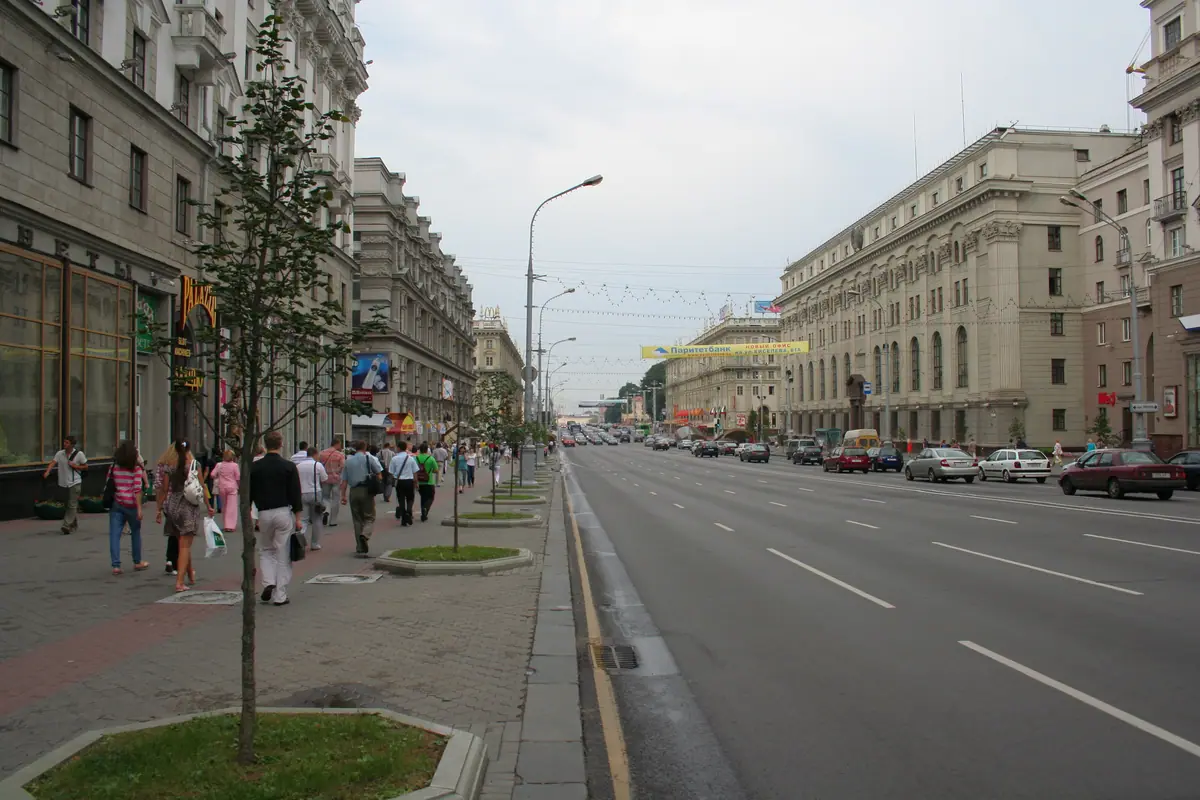
Most journeys begin in Minsk, a capital that swings between monumental and intimate within a few metro stops. Independence Avenue runs for kilometres in a near-perfect line, its post-war facades of ochre and grey stone giving the city an unlikely, almost theatrical grandeur. Start at Independence Square, where the Government House faces the red-brick Church of Saints Simon and Helena — the 'Red Church', completed in 1910 and one of the few landmarks to survive the war intact. Walk north to Victory Square, where a granite obelisk and eternal flame mark the city's dead, and then detour to the Island of Courage and Sorrow, a small park on the Svislach river whose bronze weeping angel honours soldiers lost far from home.
The historic core is compact and worth half a day on foot. Trinity Hill, a restored 19th-century suburb of pastel houses and cobbles, tumbles down to the river, while the Upper Town holds the Town Hall, the baroque Cathedral of the Holy Spirit and the squat, golden-domed St. Mary's Cathedral. Cross the river for the National Library, a glass diamond that glows blue after dark and has an observation deck on the roof — one of the best free views in the country.
For atmosphere rather than architecture, head to Komarovsky market, where jars of pickled everything, smoked lard and farm cheese are stacked beside stalls frying draniki — potato pancakes served with sour cream. The Museum of the History of the Great Patriotic War, in a purpose-built modern building, is sobering and superbly curated, and you should allow two hours minimum. Minsk rewards two full days at a relaxed pace.
Mir and Nesvizh: Two UNESCO Castles in One Day
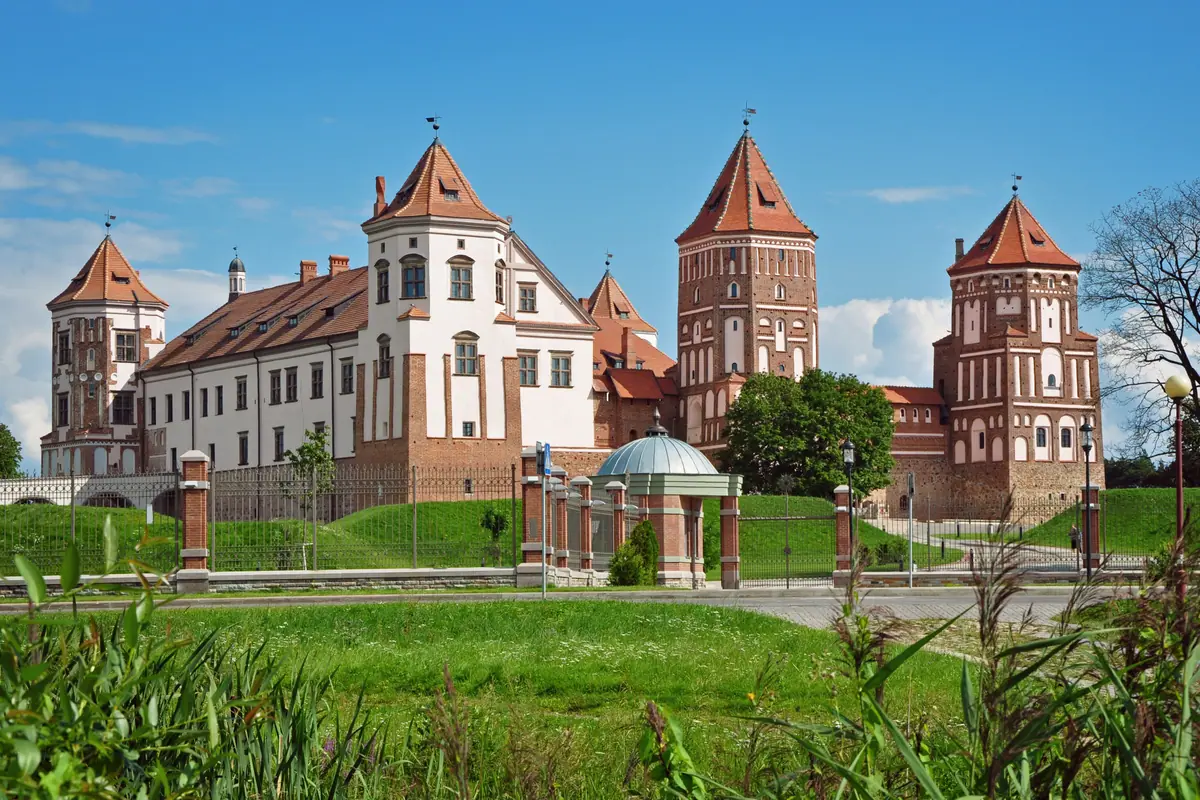
About 100 km southwest of Minsk, Mir Castle is the image most people carry of Belarus before they arrive: a red-brick fortress with four corner towers, a moat, and a stone-and-brick face that shifts from Gothic to Renaissance depending on which wall you study. Built in the early 16th century and later reshaped by the Radziwiłł family, it survived sieges, neglect and a spell as a potato warehouse before being restored. Climb the towers for views over the park and lake, and don't skip the vaulted cellars, which host small exhibitions and, in summer, the occasional knight tournament on the surrounding field.
Roughly 30 km further on, Nesvizh Palace was the country's most opulent aristocratic residence for four centuries — a long, elegant palace with corner towers, a moat and a series of landscaped ponds where black swans drift between water lilies. The interiors have been painstakingly rebuilt: gilded halls, tiled stoves, hunting trophies and the famous golden hall. Buy a combined ticket for the palace, the park and the Corpus Christi Church nearby, a 1593 baroque masterpiece that holds the tombs of the Radziwiłł line and is, by any measure, one of the finest churches in the region.
Both castles are easy to combine in a single long day — an hour and a half to Mir, half an hour between the two, and a straight run back to Minsk. Regional trains and buses reach Mir, but Nesvizh is far simpler with a hired car or a small-group tour. Weekday mornings in May and September are blissfully quiet; summer weekends bring school groups and wedding parties posing on the bridges.
Brest and Belovezhskaya Pushcha: Fortress Walls and Ancient Forest
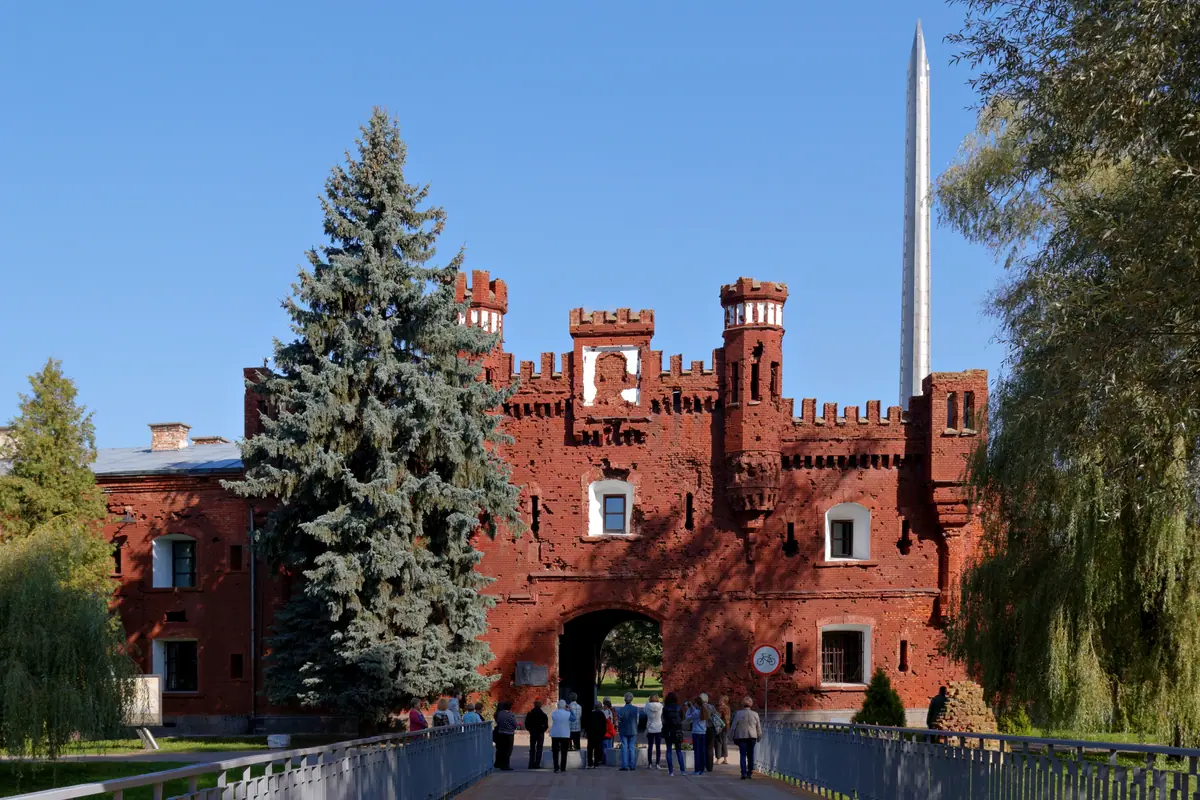
Brest, on the western edge of the country, is a city of one overwhelming sight and several charming ones. The Brest Fortress is a sprawling 19th-century citadel whose garrison held out for weeks in June 1941; today its brick gateways, ruined barracks and colossal stone monuments — including the star-shaped main memorial and the haunting 'Thirst' sculpture — form a memorial complex that takes three or four hours to absorb properly. Afterward, walk the pedestrian Sovetskaya Street, where a lamplighter still appears at dusk to light the street lanterns by hand, a small ritual that draws a daily crowd.
North of the city lies Belovezhskaya Pushcha, the last fragment of the primeval lowland forest that once covered Europe and a UNESCO-listed national park since 1979. This is the heart of the European bison's comeback: around 2,000 animals live here and across the border, and the enclosures near the village of Kamenyuki almost guarantee a sighting. Deeper into the forest, ancient oaks stand over boggy ground, woodpeckers drum, and a narrow-gauge railway trundles visitors through the trees.
Allow a full day for the forest and consider staying overnight in Kamenyuki, where the forest estate includes a residence of Ded Moroz — the local Father Frost — that turns into a gentle winter wonderland for families. Autumn, when the oaks turn copper in late September and October, is the most beautiful season here.
Grodno and the Western Borderlands: Two Castles, One River
Grodno is many travellers' favourite Belarusian city, and it earns that affection with a rare pairing: an Old Castle and a New Castle standing almost shoulder to shoulder above the Neman river. The Old Castle began as a 12th-century stronghold and later became a royal residence; the New Castle next door is a restrained 18th-century palace that now houses museum displays. Between them, lanes of 19th-century houses, cobbled squares and the twin-towered baroque Farny Church make the centre feel almost Central European.
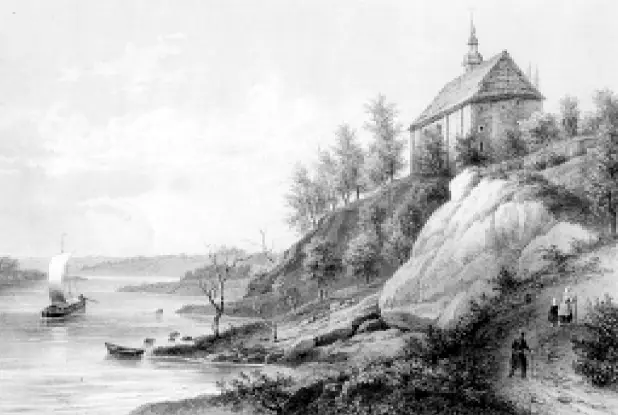
Down by the river, the Kalozha Church of Saints Boris and Gleb is the city's treasure — a small 12th-century stone church with inset coloured boulders and preserved fresco fragments, still standing after landslides and centuries of neglect. Just outside the city, the Augustów Canal, a 19th-century waterway of locks and clear water, is lovely for a bicycle afternoon.
The wider region is studded with smaller fortresses that see a fraction of the visitors: Lida Castle, a squat 14th-century stronghold with a moat and summer jousting events, and the lakeside ruins and manor parks scattered toward the Lithuanian border. Grodno sits close to the frontier, so build in time for border-adjacent paperwork if you are crossing overland. Two days here, plus a stop at Mir on the way back to Minsk, makes a satisfying western loop.
Vitebsk, Polotsk and the Northern Lakes
In the northeast, Vitebsk wears its artistic heritage openly. Marc Chagall was born here in 1887, and the city honours him with an art centre hung with his prints and drawings and a small house museum recreating his childhood home. The rebuilt Assumption Cathedral crowns a hill above the Western Dvina, and every July the city fills with folk singers and street performers for Slavianski Bazaar, the country's biggest cultural festival. Vitebsk pairs naturally with Polotsk, an hour away and one of the oldest towns in the country.
Polotsk holds Saint Sophia Cathedral, whose 11th-century stonework was later remade in baroque style but still sits on the original foundation — among the oldest masonry in Belarus. Nearby, the Spaso-Euphrosyne convent preserves 12th-century frescoes painted by a local saint, and a modest monument marks the supposed geographical centre of Europe. Half a day is enough for the highlights; a full day lets you wander the riverbank and the old market streets.
Scenery, rather than architecture, draws people to the north. Lake Naroch, the largest lake in the country, is a resort strip of pines, sandy beaches and sanatoriums, best in July when the water finally warms. Further north, the Braslav Lakes form a blue-green maze of 200-plus interconnected pools and islands often nicknamed the country's lakeland — perfect for kayaking, camping and slow afternoons with a picnic.
When to Go, How Long to Stay and What to Expect
Late May to early September is the sweet spot: long evenings, temperatures in the low twenties, café terraces in Minsk and lakes warm enough for swimming by July. Late September and October bring gold and rust to the forests and castles without the crowds — arguably the best photography of the year. Winter is cold, often between minus 5 and minus 12 in January, but Mir and Nesvizh under snow are genuinely magical, and city Christmas markets run through early January. Spring arrives late and muddy, so late April is the earliest comfortable window.
For a first visit, plan five to seven days: two in Minsk, a long day for Mir and Nesvizh, two nights in Brest with a forest day, and a night or two in Grodno if you can stretch it. Ten days allows the castles, Brest, Grodno and either the northern lakes or Vitebsk and Polotsk without rushing. Minsk has a clean, cheap metro and suburban trains reach most towns, but the castle circuit and the park areas are far easier with a hire car or a small guided group.
Expect limited English outside Minsk — learning the Cyrillic alphabet pays off enormously for reading signs and menus. Carry local currency in cash, as cards work in cities but not at small rural stalls, and remember that many museums close one day a week, usually Monday. Meals are hearty and cheap: draniki with sour cream, machanka pork stew with pancakes, cold beetroot soup in summer, and krambambula honey liqueur to finish. Slow down, and Belarus delivers far more than its quiet reputation suggests.
Frequently asked questions
How many days do I need to see the best of Belarus?
Five to seven days covers Minsk, the Mir and Nesvizh castles, and Brest with a day in Belovezhskaya Pushcha. Add three or four more days and you can fold in Grodno, and either Vitebsk and Polotsk or the northern lakes, without spending half your trip in transit.
What is the best time of year to visit Belarus?
Late May to early September offers warm days and open-air cafés. Late September and October are best for golden autumn colour in the forests and castle parks, while December to February suits travellers who want snow-covered palaces and city Christmas markets, provided they pack for temperatures well below freezing.
Can I visit Mir and Nesvizh castles in one day?
Yes. They are about 30 km apart and roughly a 90-minute drive from Minsk, so a single long day works well — two to three hours at each plus travel. Weekday mornings are quietest; a hired car or a small-group tour is much simpler than public transport, especially for Nesvizh.
Do I need to speak Russian or Belarusian?
Not fluently, but English is scarce outside Minsk and major hotels. Learn basic Cyrillic for signs and menus, carry a translation app with offline dictionaries, and keep key phrases written down. Locals are generally patient and helpful if you make the first effort.
What food should I try in Belarus?
Draniki (grated potato pancakes with sour cream), machanka (pork stew served with pancakes), cold beetroot soup in summer, mushroom and sorrel dishes in autumn, and krambambula, a spiced honey liqueur. Farmers' markets and small canteens serve the most authentic versions at very low prices.
Plan it — experiences in Belarus
Live search, booked directly with trusted providers.
Sort the rest of your trip
Everything for Belarus, in one place
Stay in Belarus
Hotels, guesthouses and apartments — compared in one search.
Search hotels
Transfer in Belarus
Private driver waiting on arrival — no queues, no surprises.
Book a transfer
Stay online in Belarus
Travel eSIM — data the moment you land, no roaming bills.
Get an eSIM