Belarus is a country of Stalinist boulevards and red-brick castles, of bison grazing in one of Europe's last primeval forests and a fortress that still smells of gunpowder and grief. A single week is enough to cross it from the marble avenues of Minsk to the Polish border, if you let the overnight trains do the work. This is how to do that.
Landing in Minsk: Flights, Arrival and Getting Your Bearings
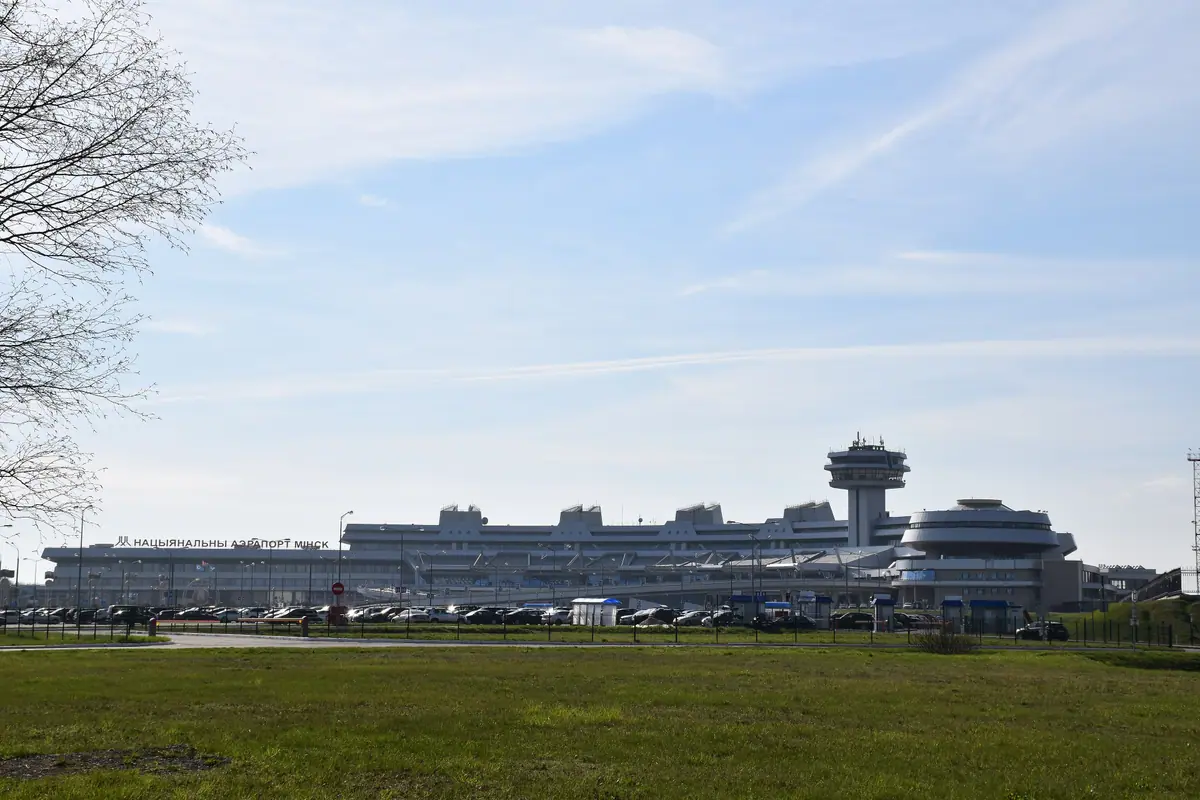
Almost every trip begins at Minsk National Airport, roughly 40 kilometres east of the capital along a straight, pine-flanked highway. The flight schedule is modest and shifting, so most travellers arrive on a regional connection or a long-haul flight timed to land in the small hours. Plan for immigration queues, a bank or exchange desk for Belarusian rubles, and a local SIM card bought at the terminal. Visa rules have changed repeatedly in recent years and vary sharply by nationality, so confirm your current status at an embassy before you book anything non-refundable.
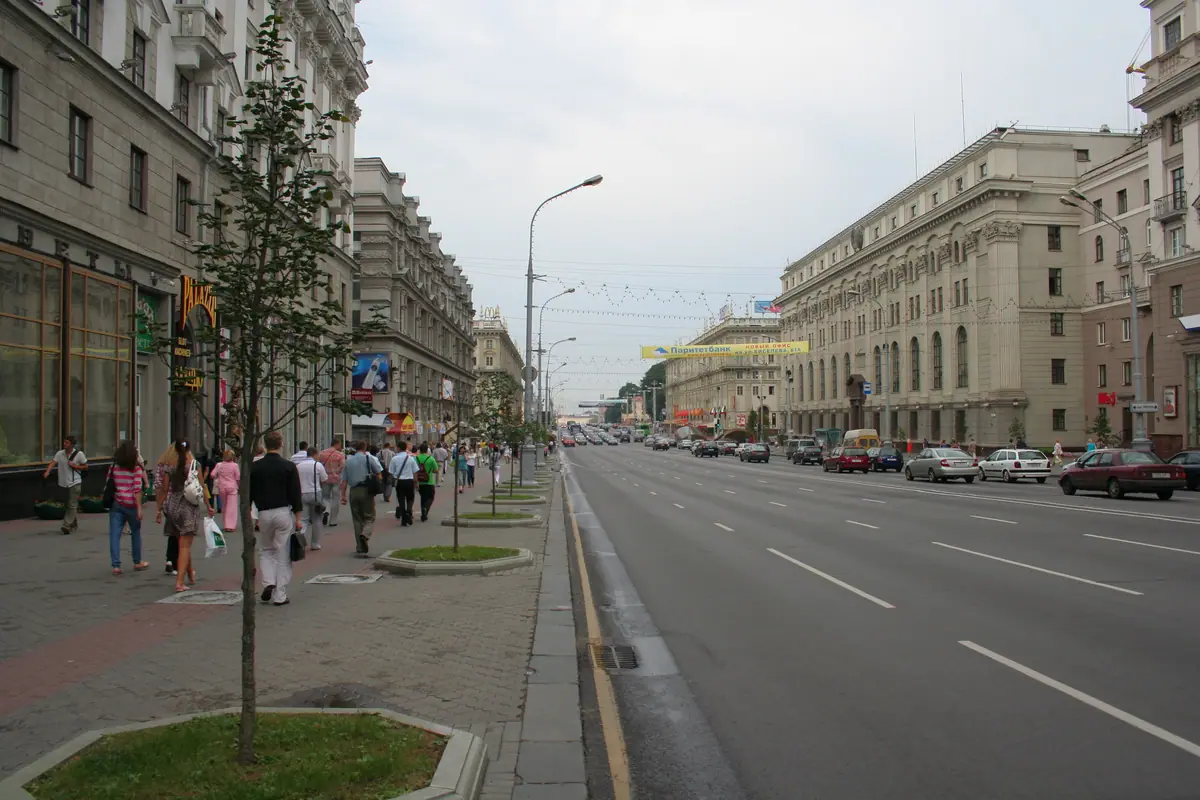
The airport bus and trolleybus run into the city centre in about 45 minutes; a taxi takes half that in light traffic and rather longer at 8am. Once downtown, the metro is cheap, deep and beautifully tiled, with stations that double as Soviet-era art galleries. Give yourself the first evening to walk Independence Avenue at dusk, when the fountains come on and the city's scale becomes clear. Late spring through early autumn is the easiest season; late December brings snow on the castle towers, but only about eight hours of daylight.
Days 1–2: Minsk — Stalinist Avenues, Old Quarters and the Island of Tears
Start on Independence Avenue, the city's spine, and let it guide you past Victory Square with its eternal flame and monolithic obelisk. Nearby, on a small island in the Svislach River, stands the Island of Courage and Sorrow, a memorial of bronze and weeping stone to soldiers lost abroad. From there, cross into the Trinity Hill suburb, where pastel houses and cobbles spill down to the river, then climb to the Upper Town for the town hall, the baroque Cathedral of the Holy Spirit and the restored market square.
Minsk rewards slow days. The Belarusian State Museum of the History of the Great Patriotic War is genuinely affecting and needs two hours; the National Art Museum and the island's little chapel fill another afternoon. Book an evening at the opera and ballet theatre if you can, and finish in the glass-walled National Library, a diamond-shaped oddity with a rooftop viewing platform. Gorky Park and the embankment paths are where locals actually spend their weekends — join them with an ice cream and no itinerary at all.
Day 3: Mir and Nesvizh — Two Great Castles in One Day
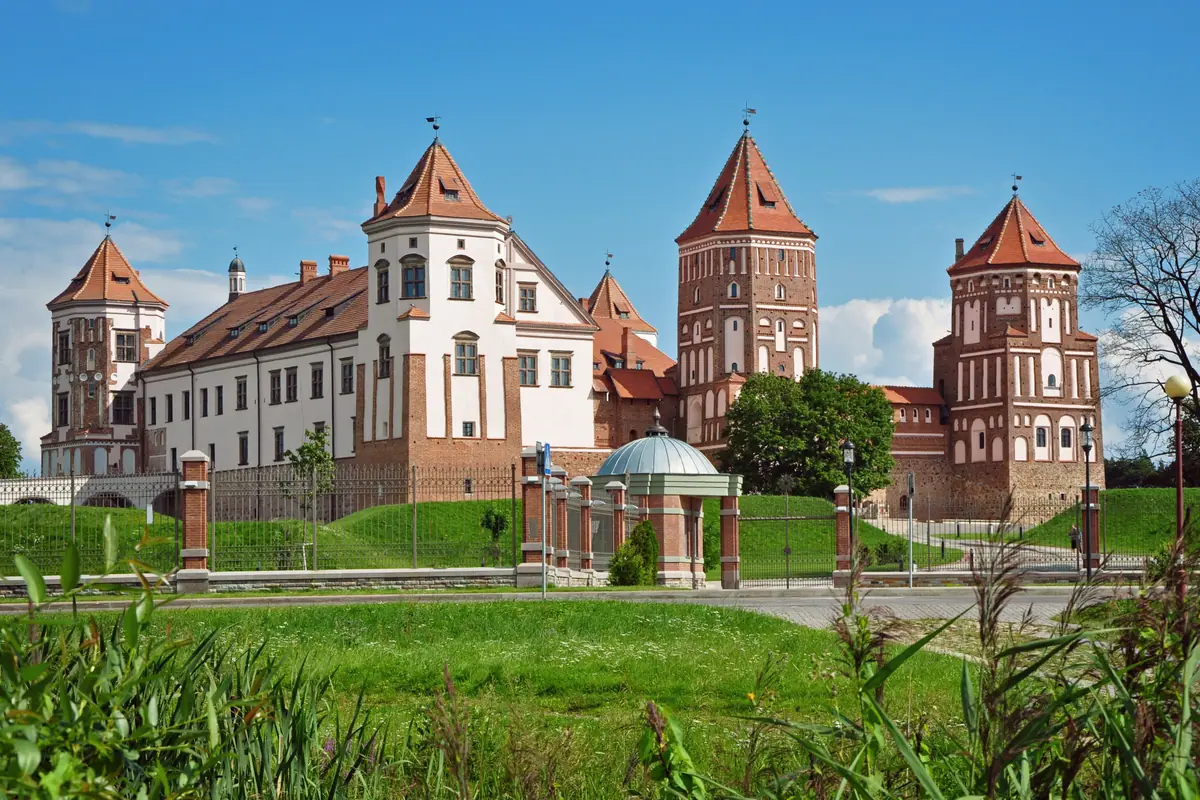
Hire a driver or take the early train towards Baranovichi and you can pair Belarus's two headline castles in a single long day. Mir Castle comes first, about 100 kilometres southwest of Minsk: a red-brick fortress of five towers and a stone-and-brick facade, begun in the 16th century and later dressed up as a romantic residence. Walk the courtyard, climb the towers for views over the lake, and spend an hour in the small town around it, where the little St. Nicholas Church sits almost at the castle gate.
Nesvizh, half an hour further on, was the seat of the Radziwill family for centuries. Its palace faces a landscaped park and moat, and beside it stands the Corpus Christi Church, one of the earliest baroque churches in the region, with a vaulted interior that keeps a cool, dark calm. Most visitors day-trip and leave; stay overnight instead if you can, because the tour buses vanish by five and the palace, the pond and the empty avenues belong to you alone. Winter visits are cold and short but unforgettable, with snow outlining every tower.
Days 4–5: Brest Fortress and the Primeval Forest of Belovezhskaya Pushcha
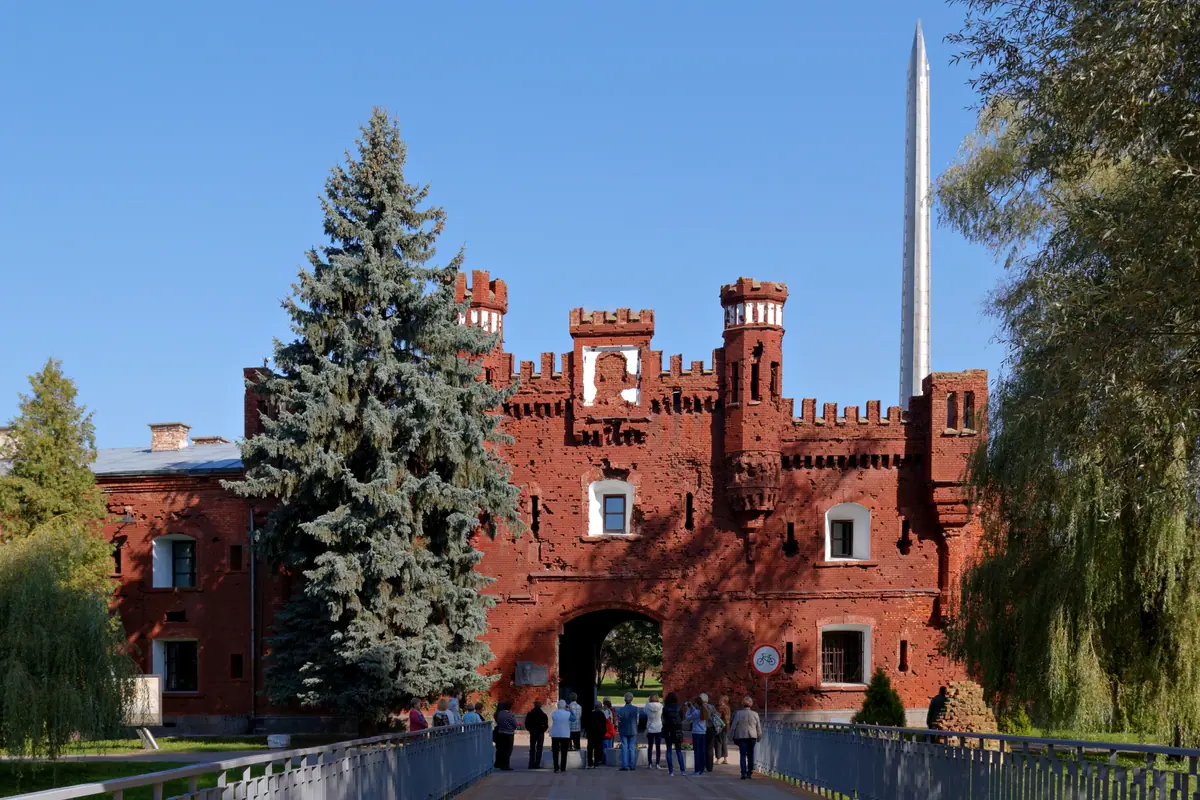
Take an overnight or early train from Minsk to Brest — four to five hours through flat farmland and pine — and head straight for the Brest Fortress. This sprawling 19th-century citadel, defended for weeks in 1941, is now a memorial complex of ruined barracks, the Kholm Gate, and monumental sculpture that is sobering rather than triumphant. Give it three hours, then decompress along Brest's pedestrian Gogol Street, where a lamplighter still walks at dusk to light the old street lamps by hand.
The next day belongs to Belovezhskaya Pushcha, a UNESCO-listed primeval forest about an hour from Brest and one of the last fragments of the woodland that once covered Europe. Its emblem is the European bison, or zubr, and the visitor centre at Kameniuki runs walking and cycling trails, plus a large enclosure where you are almost guaranteed a sighting. On the way back, stop at the 13th-century Kamyanets Tower, a stout red-brick keep known as the White Tower, standing alone in a field with storks nesting on it in summer. Two days here is comfortable; one is rushed.
Day 6: Grodno's Ancient Churches, or Vitebsk and Polotsk in the East
West of Minsk, Grodno is the country's most likeable old city, and the overnight train gets you there for breakfast. The 12th-century Kalozha Church, built of thin brick on a bank above the Nieman River, is the oldest surviving building in the region and worth the walk alone. Add the Old Castle and New Castle, the baroque St. Francis Xavier Cathedral with its layered facade, and Soviet Street for coffee, and you have a full, unhurried day. Trains back to Minsk run overnight or late evening.
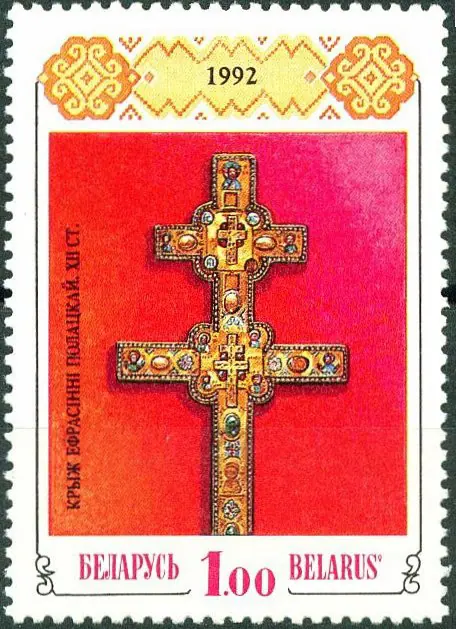
If you prefer the east, Vitebsk and Polotsk make an equally good sixth day. Vitebsk is Marc Chagall's birthplace, with an art centre devoted to him, a handsome restored old town and the Assumption Cathedral above the river. Polotsk, forty minutes further north, is older still: St. Sophia Cathedral, rebuilt in baroque form over an 11th-century core, and the convent founded by Euphrosyne of Polotsk. Both towns are compact, walkable and far less visited than Minsk.
Day 7: Khatyn, Lake Naroch and the Practical Bits
Before your flight home, use the last day for Khatyn, a memorial about 50 kilometres north of Minsk marking a village destroyed in 1943. Its grey concrete chimneys stand where houses stood, topped by a single bell, and the walk through it is quiet in a way that stays with you. If time allows, continue to Lake Naroch, the largest lake in the country, where pine forest meets shallow, reed-fringed water and Belarusians swim and camp all summer.
A few practical things make the week run smoothly. Buy train tickets as early as you can, especially for Brest and Grodno sleepers, and carry some cash — cards are widely accepted in cities but not in small towns or at rural stops. Russian and Belarusian will carry you far beyond English, even a dozen words help. Bring layered clothing and a rain jacket whatever the month, and remember that dusk falls before five in midwinter and after ten in June, which changes how much you can pack into a day.
Frequently asked questions
How many days do you need in Belarus?
Seven days covers Minsk properly, Mir and Nesvizh castles, Brest Fortress and the Belovezhskaya Pushcha forest, with one city to spare. Add two or three more if you want both Grodno and the eastern towns of Vitebsk and Polotsk, which sit in opposite directions.
What is the best time of year to visit Belarus?
Late May, June and September are ideal: long daylight, mild temperatures and everything open. July and August are warm but busier at the castles and lakes. Winter is atmospheric for snowy castle photography, though days are short and rural sights keep limited hours.
How do you get from Minsk to Brest?
Trains from Minsk take roughly four to five hours, with comfortable overnight sleepers arriving early morning. Day trains are also frequent. From Brest it is about an hour by road to the Belovezhskaya Pushcha visitor centre, which is easiest to reach by taxi or an organised local tour.
Can you visit Mir and Nesvizh castles in one day?
Yes, but it is a long day: expect an early start from Minsk, two to three hours at Mir, slightly less at Nesvizh, and a late return. Staying overnight in Nesvizh turns it into a far more relaxed experience and gives you the castle grounds in the quiet evening light.
Do you need a visa to enter Belarus?
It depends entirely on your nationality, and the rules have changed several times in recent years. Check the current requirements with the Belarusian embassy or consulate in your country well before booking flights, and note that entry conditions can differ depending on where you cross the border and whether you arrive by air.
Sort the rest of your trip
Everything for Belarus, in one place
Stay in Belarus
Hotels, guesthouses and apartments — compared in one search.
Search hotels
Transfer in Belarus
Private driver waiting on arrival — no queues, no surprises.
Book a transfer
Travel insurance
Medical cover, delays and lost baggage — sorted before you go.
Get covered