The Bahamas is not one island but an archipelago of some 700, strung across warm Atlantic water where conch is cracked by hand and cowbells start ringing at two in the morning on Boxing Day. Come for the beaches if you like, but stay for the fish fries, the rake 'n' scrape bands and the small settlements where everyone still waves at passing golf carts.
Conch, Peas 'n' Rice and Guava Duff: What Bahamian Cooking Tastes Like
Start with conch, the mollusc that shapes the national palate. It arrives cracked and pounded thin, deep-fried golden; scorched in a lime-heavy marinade; simmered into chowder; or served raw as conch salad, chopped to order with onion, tomato, sweet pepper, sour orange and a fierce squeeze of lime. The freshest bowls come from shacks where the shell is still piled outside — around Arawak Cay, just west of downtown Nassau, and under the Paradise Island bridge at Potter's Cay, where fishermen unload in the afternoon and you eat standing up with sand on your feet.
The everyday table is built on peas 'n' rice — pigeon peas cooked down with rice, tomato, thyme and salted pork — alongside boiled fish with johnnycake, stewed fish, cracked lobster, and souse, a tart Sunday-morning soup of pork or chicken with lime, onion and fiery pepper that locals swear cures whatever the night before did. Spiny lobster, called crawfish here, is the real prize; the season runs roughly August through March, so summer menus lean harder on conch, snapper and grouper. Finish with guava duff, a steamed pudding drowned in warm rum butter sauce, and sip a Sky Juice — gin, coconut water and condensed milk — or a rum punch made with local amber rum.
Practicalities matter. Fish fries are casual, mostly cash-friendly and busiest between noon and 3pm; many family-run kitchens close on Sundays and serve until the pot runs out, so arrive early rather than late. Ask what came in that morning, order the conch salad mild unless you are serious about pepper, and remember that Bahamian cooking is seasoned for heat and acid, not for cream and butter.
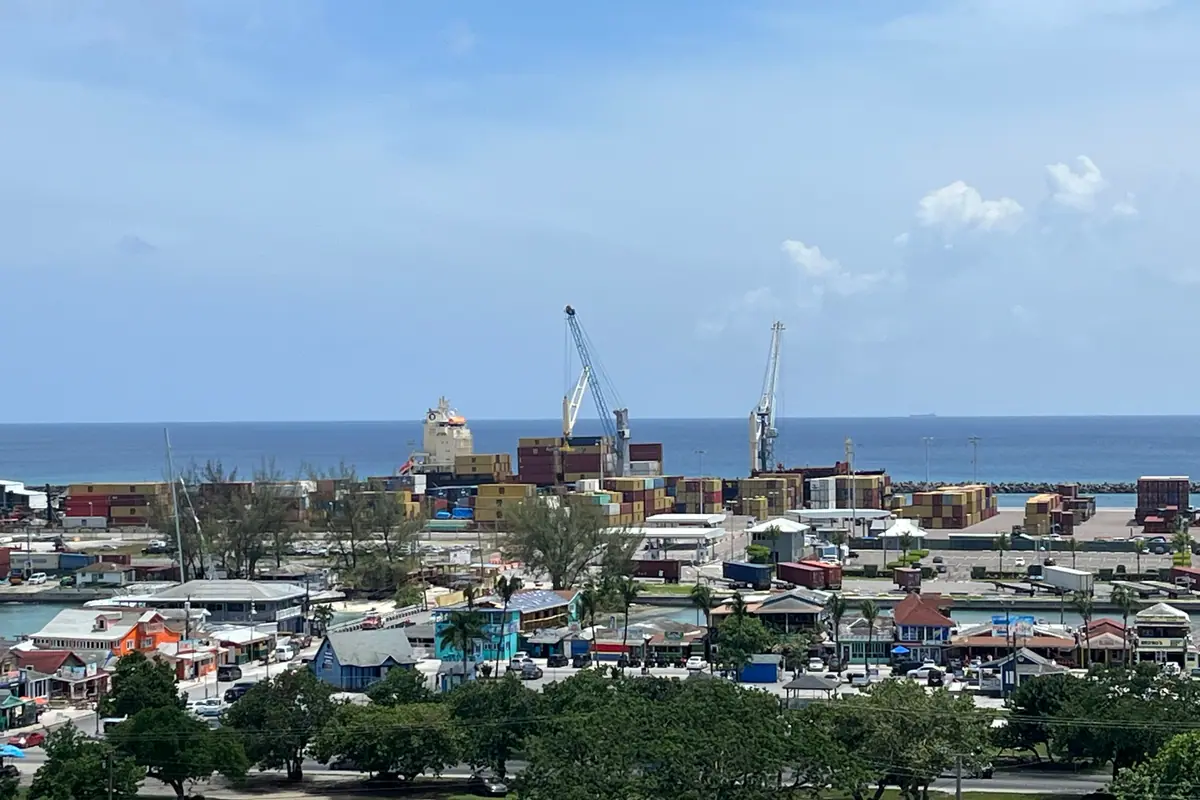
Nassau's Historic Heart: Queen's Staircase, Forts and Parliament Square
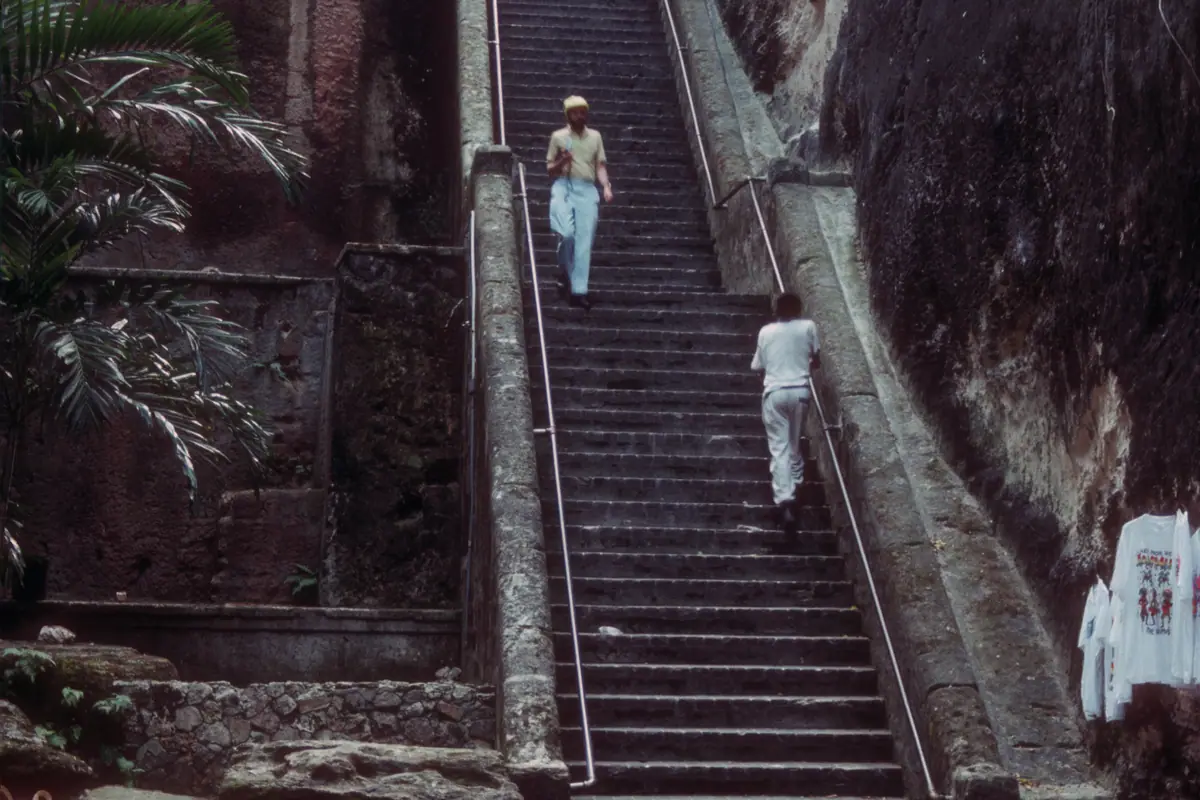
Most trips begin on New Providence, and the island's history is packed into a few walkable blocks. The Queen's Staircase is the essential first stop: 66 steps cut by hand through limestone in the late 1700s, named for Queen Victoria and flanked by palms and ferns that keep the passage ten degrees cooler than the street. Climb to Fort Fincastle at the top, a wedge-shaped lookout built in 1793, for a wide view across Nassau Harbour and the cruise piers below.
West of town, Fort Charlotte is the largest of the island's fortifications, complete with a dry moat, dungeons and cannon aimed at the channel that once funnelled pirate and privateer traffic. In the centre, Parliament Square shows off the pink-and-white colonial buildings where the country's government still sits, with a statue of Queen Victoria presiding over the lawn, while the old market building on Bay Street now houses a museum tracing slavery, rebellion and emancipation in 1834. Fort Montagu, guarding the eastern approach, is quieter and worth the short drive.
Between the landmarks, the Straw Market is the place for hand-plaited palm bags, wood carvings and straw hats, and Junkanoo Beach is an easy ten-minute walk from the cruise terminal for a swim and a rum punch. Ardastra Gardens, a small zoo and conservation centre, is famous for its marching flamingos and is a genuine hit with children. Do the historic circuit early — by 9am the heat and the tour buses both arrive — and use the local jitney buses, which are cheap, frequent and far more sociable than a taxi.
Junkanoo, Rake 'n' Scrape and the Rhythm of Bahamian Life
Junkanoo is the cultural heartbeat of the Bahamas, a costumed street parade with roots in West African festival traditions and enslaved communities who were given a few days of freedom around Christmas. It erupts on Boxing Day, 26 December, and again in the small hours of New Year's Day, when groups called shacks pour onto the streets of Nassau from around 2am until sunrise, driven by goatskin drums, cowbells, whistles and brass, wearing costumes built from thousands of glued crepe-paper strips that took months to assemble. Nothing else in the islands matches the volume, the glitter or the sheer stamina of it.
Away from the big parades, listen for rake 'n' scrape, the older Bahamian sound in which a carpenter's saw is bent and scraped with a screwdriver to produce that eerie, singing note, backed by accordion, guitar and goombay drum. It survives strongest on Cat Island and in the Out Islands, and you will also hear it at the smaller summer Junkanoo festivals and in the bars along Arawak Cay on a Friday night.
The festival calendar rewards planning. Independence Day on 10 July brings parades and fireworks; the Family Island Regatta in George Town, Exuma, fills the harbour each April with traditional wooden sloops racing under sail; Andros hosts a crab festival, Eleuthera celebrates its pineapple harvest in early summer, and almost every settlement holds its own homecoming or regatta weekend. Watch the costumes from a respectful distance — they are fragile and precious — and ask before photographing performers up close.
Harbour Island, Exuma and the Out Islands: Where Life Slows Down
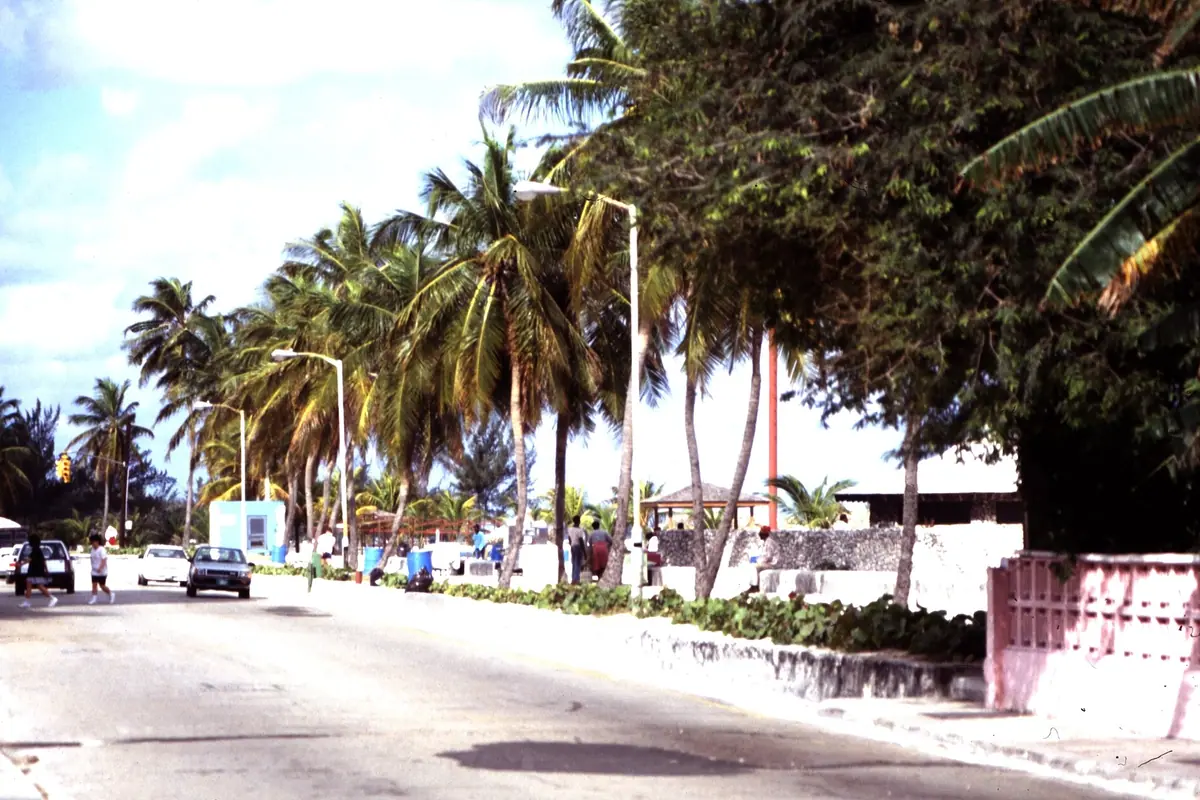
The Out Islands are where the Bahamas feels least like a resort and most like itself. On Harbour Island, reached by water taxi from Eleuthera, Dunmore Town's pastel clapboard houses and narrow lanes are navigated almost entirely by golf cart, and Pink Sands Beach runs for five kilometres of blushed coral sand on the Atlantic side. Across the channel on Eleuthera, the Glass Window Bridge squeezes a road onto a razor-thin ridge where the dark Atlantic meets pale turquoise water on either side.
Exuma is the classic island-hopping archipelago: 365 cays scattered over shallow, glassy water. Around Staniel Cay, Thunderball Grotto is a hollow limestone cavern you snorkel into at slack tide, lit from above by shafts of sunlight and crowded with sergeant majors and angelfish. On nearby Big Major Cay, the famously swimming pigs paddle out to visiting boats, while the Exuma Cays Land and Sea Park, a no-take marine reserve stretching across the chain, offers some of the clearest snorkelling and diving in the country around Warderick Wells.
Further out, Long Island holds Dean's Blue Hole, a 200-metre-deep plunging sinkhole that free divers travel the world to train in. Andros shelters the Andros Barrier Reef, the third-largest barrier reef system on the planet, plus hundreds of inland blue holes. Grand Bahama's Lucayan National Park pairs one of the longest charted underwater cave systems with Gold Rock Beach, a sweep of sand that appears and disappears with the tide and is at its most photogenic at low water.
Reefs, Blue Holes and Wild Beaches Worth Planning Around
Nature is the Bahamas' other headline act, and the best of it needs a little forward planning. Snorkelling and diving are clearest from December to May, when water temperatures sit in the mid-twenties Celsius and visibility often exceeds 30 metres; summer brings warmer, slightly hazier water and the chance of afternoon squalls. Bring reef-safe sunscreen, a rash guard and, if you plan to hop cays, a soft dry bag — boat crossings are short but wet.
On New Providence, Clifton Heritage National Park protects a shoreline layered with Lucayan, Loyalist and African Caribbean history and includes an underwater snorkel trail where sunken sculptures have quietly become artificial reef. On Grand Bahama, the caves at Lucayan National Park can be toured on boardwalks before you walk out to Gold Rock Beach. In the Exuma park, rangers ask visitors to leave shells and coral where they lie, and anchoring rules protect the seagrass that nurse sharks, rays and bonefish depend on.
Wildlife encounters are becoming more regulated for good reason. Feeding the swimming pigs human food, chasing turtles or handling starfish all cause real harm, so choose operators who keep their distance and keep hands off. Bonefishing on the flats of Andros, Abaco and Eleuthera is a serious pursuit with strict catch-and-release ethics, best booked well ahead and best done in the cooler months. If your visit coincides with turtle nesting between May and October, keep beach lights low and give marked nests a wide berth.
When to Go and How to Travel Like a Local
December through April is peak season: dry, breezy days in the low-to-mid twenties, cool enough for a light layer in the evening and crowded enough that accommodation and inter-island flights should be booked two to three months out. May and June are the sweet spot for value — warm water, thinner crowds, occasional afternoon showers. Hurricane season officially runs June to November, with the highest risk and the most closures in September and October; if you travel then, buy flexible tickets and watch forecasts rather than cancelling on rumour.
Getting around takes a shift in habit. Traffic drives on the left, Bahamian style, which catches out most North American visitors renting a car on New Providence or Grand Bahama. On New Providence, jitney buses cover the main routes for pocket change and water taxis run to Paradise Island; on the Out Islands you will rely on golf carts, bicycles, taxis or the mailboat, which crawls between settlements on a weekly rhythm and is cheap, slow and excellent for meeting people. The Bahamian dollar is pegged one-to-one with the US dollar, and US cash is accepted almost everywhere, though change often comes back in local notes.
Finally, tune into island time. Many shops and smaller restaurants close on Sundays, and some shut entirely for a week or two in September. Tipping of 15 to 20 percent is standard for good service, tap water on New Providence and Grand Bahama is generally fine to drink while bottled water is safer on remote cays, and a little patience and a greeting go a long way. Slow down, talk to the person frying your conch, and the Bahamas will show you far more than its beaches.
Frequently asked questions
What is the best time of year to visit the Bahamas?
December to April is the driest, coolest and busiest stretch, ideal for beaches, sailing and diving. May and June offer warm water and better value with fewer crowds. June to November is hurricane season, with the highest risk and most temporary closures in September and October, so flexible bookings are wise if you travel then.
What food should I try first in the Bahamas?
Start with conch salad, made to order with lime, onion, tomato and pepper, then cracked conch, peas 'n' rice, boiled fish with johnnycake and spiny lobster when it is in season roughly August to March. Finish with guava duff and a Sky Juice or rum punch. Arawak Cay in Nassau and the shacks at Potter's Cay are the classic introductions.
Which islands should a first-time visitor choose?
New Providence gives you Nassau's Queen's Staircase, Fort Charlotte and the Straw Market in a few walkable days. Add Harbour Island for Pink Sands Beach and golf-cart life, or Exuma for Thunderball Grotto, the swimming pigs and the Exuma Cays Land and Sea Park. Grand Bahama suits cave and beach lovers at Lucayan National Park.
Is Junkanoo worth planning a trip around?
Yes, if you can handle a sleepless night. The main parades run from about 2am on Boxing Day, 26 December, and again on New Year's Day in Nassau, with smaller summer Junkanoo events on other islands. Book accommodation months in advance for those dates and expect crowds, noise and unforgettable costumes.
How do I get around the Bahamas without hiring a car?
On New Providence, jitney buses and water taxis to Paradise Island cover most needs, and taxis are easy to find. Between islands, small regional flights are quick while mailboats are slow and cheap. Once you reach an Out Island, expect to rent a golf cart or bicycle, since public transport is limited.
Sort the rest of your trip
Everything for Bahamas, in one place
Stay in Bahamas
Hotels, guesthouses and apartments — compared in one search.
Search hotels
Transfer in Bahamas
Private driver waiting on arrival — no queues, no surprises.
Book a transfer
Stay online in Bahamas
Travel eSIM — data the moment you land, no roaming bills.
Get an eSIM