The Bahamas is not one destination but a scatter of some 700 islands strung across 100,000 square miles of impossibly clear water, where the sand shifts from blinding white to blush pink and the sea runs through a dozen distinguishable shades of blue. Some islands are busy and brimming with colonial forts and buzzing fish shacks, others are so quiet that a single lane of coral dust counts as a highway. This guide picks out the places worth building a trip around, from the classic first-timer stops to the out-island corners that reward a little extra effort.
Nassau and New Providence: Forts, Colonial Streets and Cable Beach
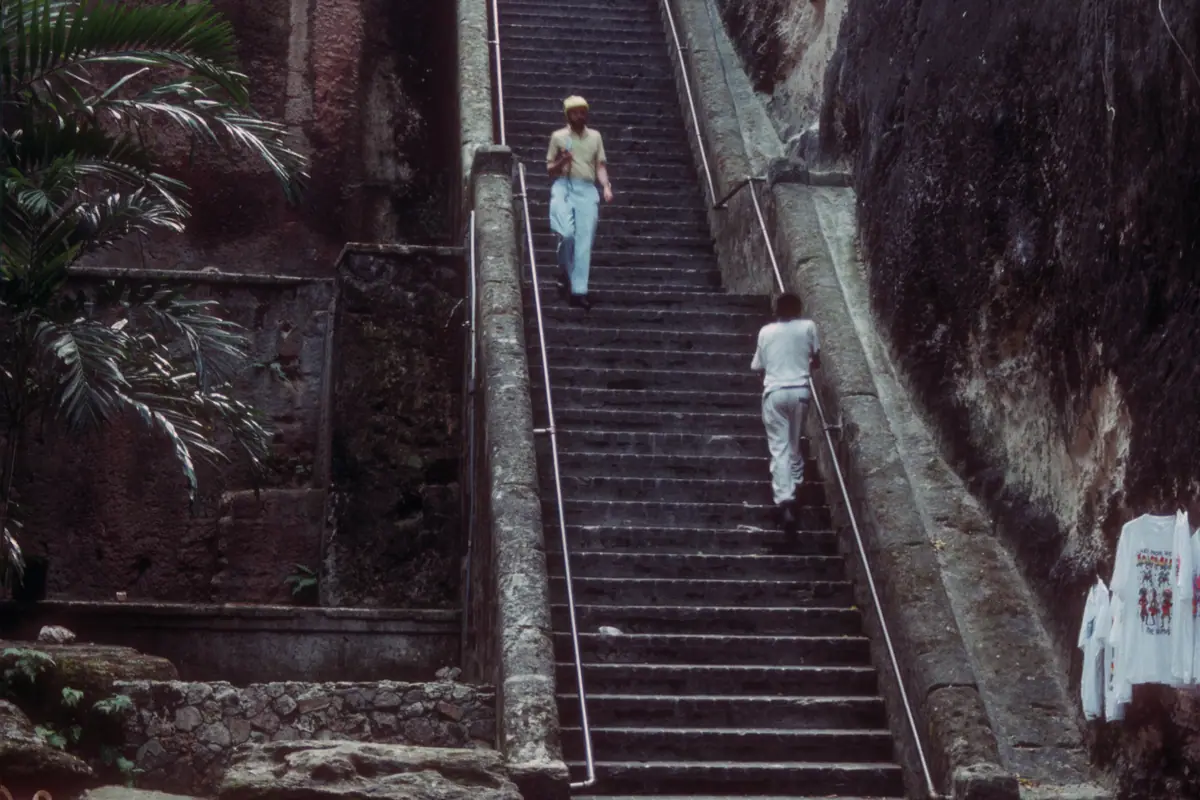
Most journeys begin on New Providence, and downtown Nassau hands you the island's history in a single walkable morning. Start at Parliament Square, where pink-and-white Georgian buildings flank a statue of a young Queen Victoria, then wander Bay Street past the Straw Market, a warren of stalls where vendors weave palm fronds into bags while you watch. Above the town, carve out time for the Queen's Staircase — 66 steps chiselled by hand through solid limestone in the late 1700s, now a cool, fern-draped canyon that climbs to Fort Fincastle, a paddle-wheel-shaped lookout with harbour views. A short drive west, Fort Charlotte is the largest of the island's defences, complete with a dry moat, dank dungeons and a rampart lined with cannons.
When the heat builds, follow the locals to the water. Junkanoo Beach sits a 15-minute stroll from the cruise port and stays free, lively and lined with stalls selling cold coconut water and grilled conch. Further west, Cable Beach stretches for more than two miles of soft white sand, while Cabbage Beach on Paradise Island, reached by a quick water taxi from the harbour, offers a longer, breezier strand with enough swell for body surfing. Come evening, head to Arawak Cay, universally known as the Fish Fry, where a strip of open-air kitchens plates cracked conch, peas and rice, and conch salad tossed to order with lime and fiery goat pepper.
Two or three days is enough to see the essentials, plus a detour to Ardastra Gardens to watch flamingos parade, or a boat trip to the shallow lagoon at Blue Lagoon Island for a gentle introduction to snorkelling. If you have a spare half-day, the Retreat Gardens on Village Road shelter one of the finest collections of tropical palms in the region.
The Exuma Cays: Swimming Pigs, Thunderball Grotto and the Land and Sea Park
The Exumas are the postcard version of the Bahamas: 365 cays laid out like stepping stones in water so translucent that a boat appears to float on air. Great Exuma is the hub, with the easygoing town of George Town wrapped around Elizabeth Harbour, where sailors gather each April for a week-long regatta of racing and beach parties. From here, day boats fan out into the Exuma Cays Land and Sea Park, a 176-square-mile marine reserve where fishing has been banned since the late 1950s and the result is a reef system thick with grouper, angelfish, hawksbill turtles and reef sharks that glide past snorkellers without much interest.
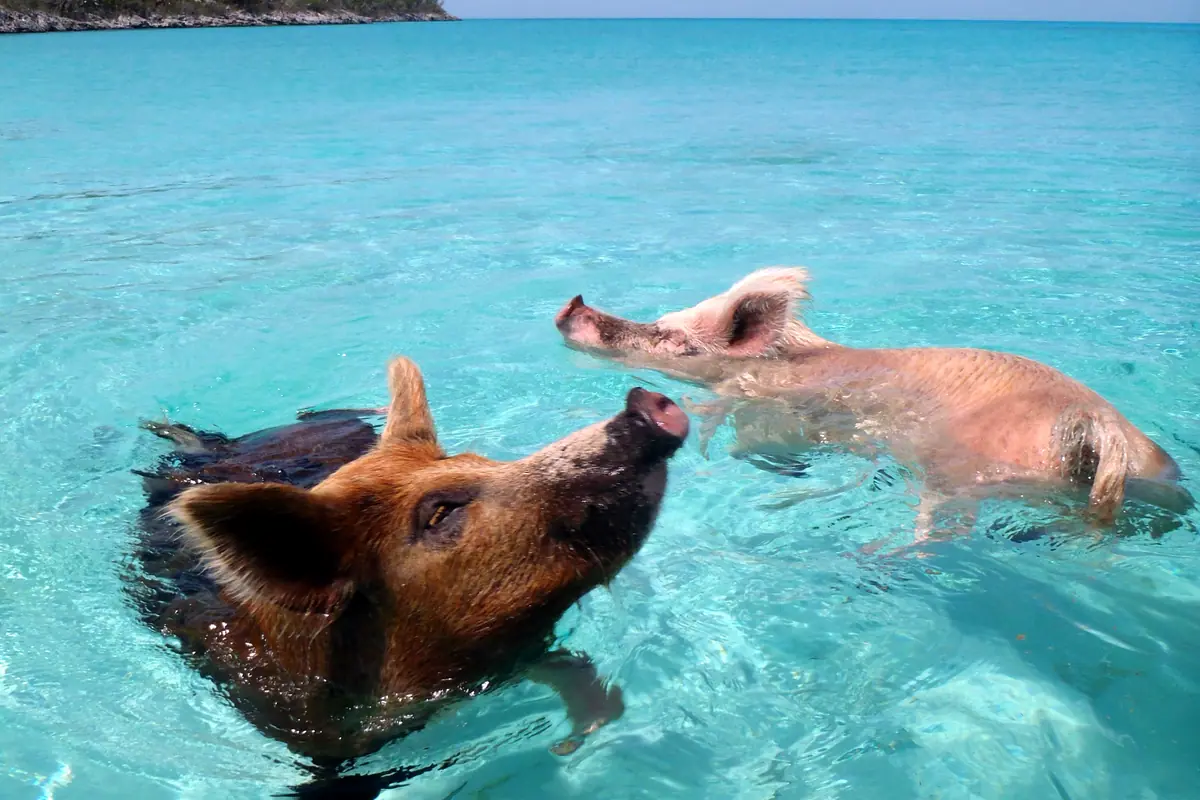
The headline act is Big Major Cay, better known as Pig Beach, where a colony of swimming pigs paddles out to greet arriving boats — go early in the morning before the afternoon tour flotillas arrive. Just south, Thunderball Grotto at Staniel Cay is a hollow limestone islet you snorkel into at slack low tide; inside, shafts of light fall through ceiling holes onto clouds of sergeant majors and yellowtail snapper. Nearby Allen Cay belongs to rock iguanas that lumber down the beach expecting fruit, and at Compass Cay you can wade into knee-deep water while nurse sharks brush past your legs.
Plan on four to five days if you want to island-hop properly, sleeping in small guesthouses and family-run cottages rather than rushing back to Nassau each night. Between June and November the water is at its warmest and calmest, though this is also the season to keep an eye on the forecast.
Eleuthera and Harbour Island: Pink Sands and the Glass Window Bridge
Eleuthera is a 110-mile ribbon of land never more than a couple of miles wide, and its mood is set by two very different coasts. On the Atlantic side, Surfer's Beach near Gregory Town catches the swells that made this stretch a favourite with wave riders; on the sheltered west, the water lies flat and glassy. The island's most photographed spot is the Glass Window Bridge, a narrow neck of rock where the deep blue Atlantic and the pale turquoise Bight of Eleuthera meet within a few feet of each other — stand on the bridge at high tide and the contrast is almost unbelievable. Further north, Preacher's Cave is a limestone cavern with a sandy floor where some of the island's earliest European settlers sheltered in the 1640s.
A short water taxi ride from the northern tip brings you to Harbour Island and its Pink Sands Beach, three miles of sand tinted rose by tiny shelled organisms. The island itself is small enough to explore by golf cart in an afternoon: pastel clapboard cottages, picket fences, a handful of low-key restaurants and a dive scene that includes the wreck of a 19th-century train ferry lying in shallow water. Governor's Harbour, Eleuthera's main town, is worth an evening for its 19th-century wooden houses and Friday night fish fry on the waterfront.
Eleuthera rewards a slow trip — allow at least three or four days if you want both shores, and rent a car, because distances between settlements are longer than the map suggests.
Andros and Long Island: Blue Holes, Barrier Reefs and Bonefish Flats
Andros is the largest and least developed island in the Bahamas, a tangle of pine forest, mangrove creeks and inland lakes that sits above one of the world's great reef systems. The Andros Barrier Reef runs for around 190 miles along the island's eastern edge before plunging into the Tongue of the Ocean, a trench that drops to roughly 6,000 feet within a mile of shore — which is why divers come here for wall dives, and why the flats on the western side have a reputation among anglers as prime ground for elusive bonefish. Inland, the island is pocked with blue holes: freshwater and saltwater sinkholes like Captain Bill's Blue Hole and Uncle Charlie's Blue Hole, where the tide visibly rises and falls in the middle of the forest.
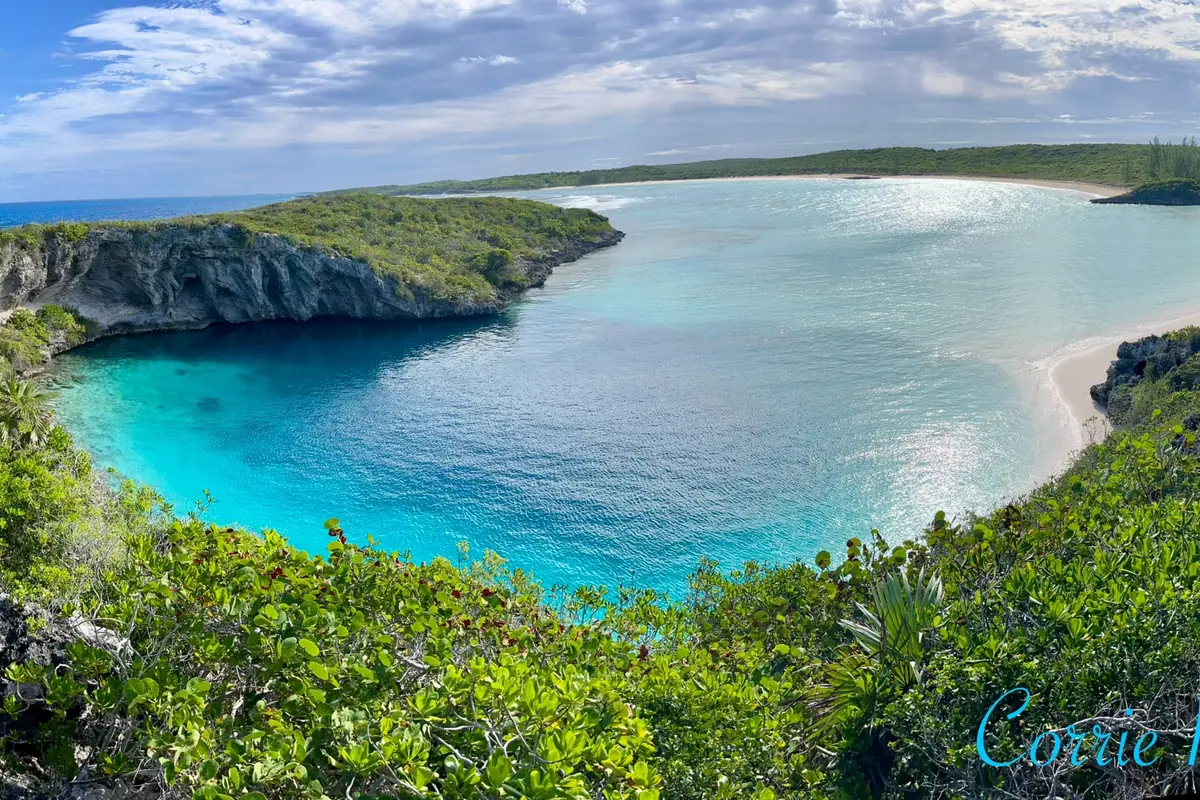
Long Island, further south, holds the most famous of them all. Dean's Blue Hole near Clarence Town is a submerged shaft around 660 feet deep, set in a sheltered bay, and it has become a pilgrimage site for freedivers who descend without tanks along its sheer walls. Above ground, Long Island offers caverns at Hamilton's Cave, the cliffs at Columbus Point and a string of quiet settlements where tourism has barely made a mark.
This is out-island travel in the truest sense: fewer flights, fewer restaurants, and a real need to book diving or fishing guides ahead of your dates. In exchange you get reefs and flats that see a fraction of the traffic of the northern cays.
Grand Bahama and the Abacos: Caves, Beaches and a Striped Lighthouse
Grand Bahama, the northernmost of the main islands, is the easiest out-island to reach and a good place to ease into Bahamian pace. Its showpiece is Lucayan National Park, a protected pocket of mangrove, beach and one of the longest charted underwater cave systems anywhere, where you can walk a boardwalk over Ben's Cave and then cross the road to Gold Rock Beach — a wide, shallow, near-empty strand that appears at low tide like a sandbar built for picnics. Freeport and Port Lucaya anchor the island's resorts, markets and dive operators, with the Garden of the Groves offering a gentler, botanical half-day.
East of Grand Bahama lie the Abacos, a 120-mile chain of cays that has long been the Bahamas' sailing heartland. Hope Town on Elbow Cay is the picture-postcard settlement: pastel cottages, narrow lanes, and the candy-striped Hope Town Lighthouse, built in 1863 and among the last in the world still burning kerosene. Man-o-War Cay keeps a boatbuilding tradition alive, Green Turtle Cay hides quiet beaches and a small museum, and Treasure Cay's beach is regularly named among the finest in the region. The cays were hit hard by a hurricane in 2019 and have rebuilt steadily since, so expect a mix of restored classics, new openings and a warm welcome from people who are genuinely glad you came.
Allow three to five days to sail or ferry between the cays, and note that the summer regatta season brings the best atmosphere and the busiest moorings.
When to Go, Junkanoo and Getting Around
The driest, coolest months run from December through April, when daytime temperatures sit in the mid-20s Celsius and the trade winds keep things comfortable — this is peak season, so book accommodation and inter-island flights well ahead. May to November is warmer and wetter, with the hurricane season officially spanning June to November; September and October are the quietest and cheapest weeks of the year, but also the likeliest to be disrupted. Whenever you come, pack reef-safe sunscreen, a light rain shell and shoes you don't mind getting sandy.
Time a visit around Junkanoo if you can. In Nassau the streets erupt before dawn on Boxing Day and New Year's Day with cowbells, goatskin drums, whistles and costumed groups competing in a parade that traces its roots to the 18th century; smaller summer Junkanoo events take place across the islands. Regattas are the other great local calendar marker, drawing sailors and spectators to George Town, the Abacos and Long Island at different points in the year.
Getting between islands means small planes, fast ferries or the working mailboats that sail from Nassau's Potter's Cay dock — slower, cheaper and genuinely characterful. Within an island, taxis and rental cars are the norm, and remember that traffic drives on the left. The Bahamian dollar is pegged one-to-one with the US dollar, which is accepted almost everywhere, so there's no maths to do at the till.
Frequently asked questions
What is the best time of year to visit the Bahamas?
December to April offers the driest weather, lower humidity and comfortable daytime temperatures in the mid-20s Celsius, which makes it ideal for beach days, sailing and snorkelling. It is also the busiest and priciest window. May to November is hotter and wetter, with hurricane season running June to November; September and October bring the lowest rates and emptiest beaches, but you should keep an eye on storm forecasts and consider travel insurance.
How many days do I need in the Bahamas?
For Nassau and New Providence alone, two to three days covers the forts, colonial downtown and the main beaches. If you want a proper island-hopping trip, allow four to five days for the Exumas or the Abacos, and three to four for Eleuthera and Harbour Island. Trying to combine three or more island groups in under a week means spending most of your time in transit.
Which island is best for a first visit?
New Providence, based in Nassau, is the simplest introduction: direct flights, a wide range of places to stay, and historic sights like the Queen's Staircase, Fort Charlotte and Parliament Square within easy reach of the beaches. From there, Exuma is the classic next step if you want swimming pigs, Thunderball Grotto and the Exuma Cays Land and Sea Park.
How do you travel between the Bahamian islands?
Small inter-island flights are the fastest option and connect Nassau and Freeport with most inhabited out islands. Fast ferries link some of the closer cays, while mailboats sail on set weekly schedules from Potter's Cay dock in Nassau — they are slow, inexpensive and a memorable experience in themselves. On the islands, taxis and rental cars are the usual way to get around, and driving is on the left.
Is the Bahamas worth visiting for divers and snorkellers?
Absolutely. The Andros Barrier Reef and the drop-off into the Tongue of the Ocean deliver dramatic wall dives, Dean's Blue Hole on Long Island is a world-renowned freediving site, and the Exuma Cays Land and Sea Park protects a no-take marine area packed with reef fish, turtles and nurse sharks. Shallow, calm inshore sites around Staniel Cay and Harbour Island make snorkelling accessible even for beginners.
Plan it — experiences in Bahamas
Live search, booked directly with trusted providers.
Sort the rest of your trip
Everything for Bahamas, in one place
Stay in Bahamas
Hotels, guesthouses and apartments — compared in one search.
Search hotels
Transfer in Bahamas
Private driver waiting on arrival — no queues, no surprises.
Book a transfer
Stay online in Bahamas
Travel eSIM — data the moment you land, no roaming bills.
Get an eSIM