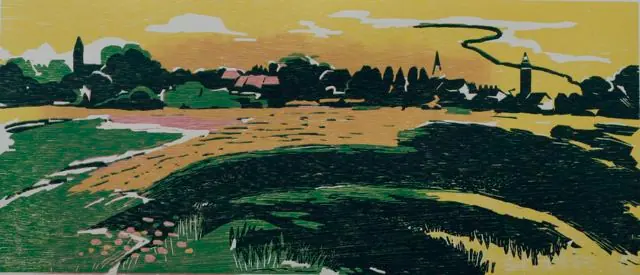
Austria rewards the traveller who slows down: a city built for lingering over a single cup of coffee, mountain villages where the cheese is made two valleys away, and imperial palaces that still set the rhythm of the day. This guide follows the country from the marble cafés of Vienna to the timber huts of the High Alps, with the landmarks, dishes and local customs that make each stop worth the detour.
Vienna's Coffee Houses: The Art of Staying Put
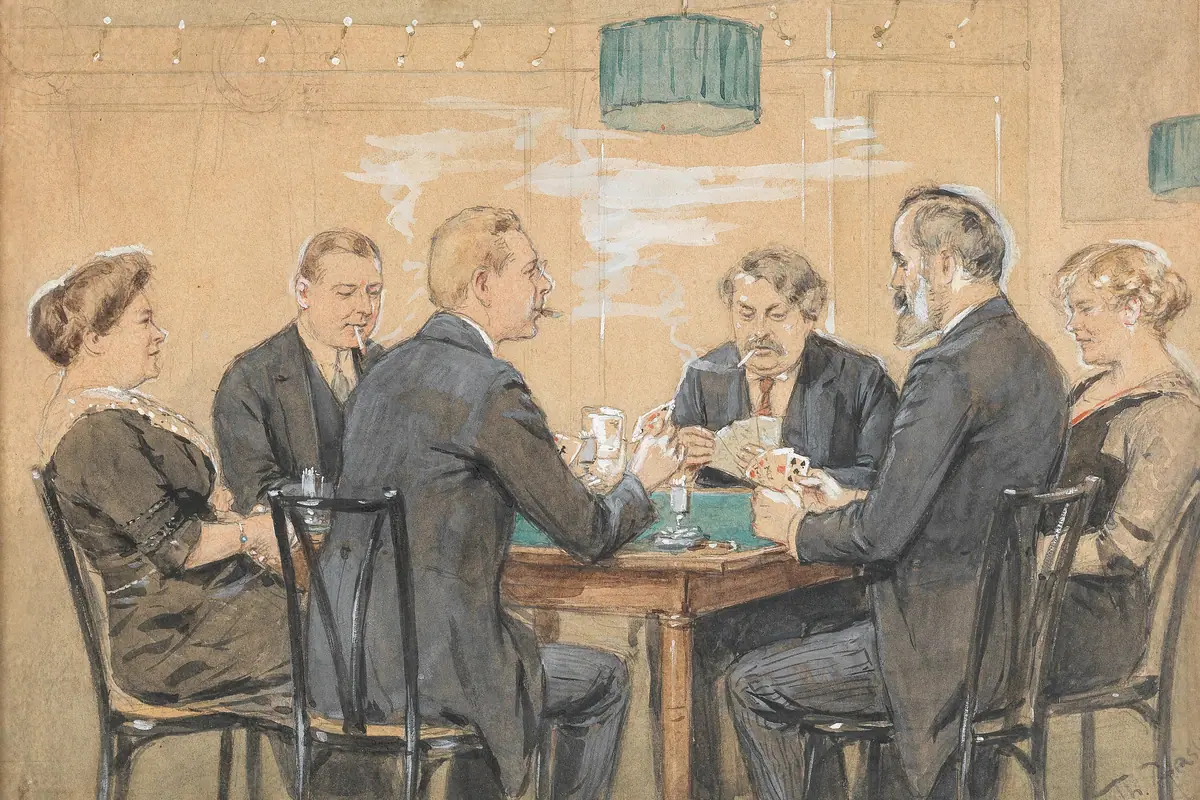
In Vienna, coffee is less a drink than a licence to sit still. A Kaffeehaus is a room of marble tables, bentwood chairs, brass coat hooks and newspapers on wooden holders, where a single order buys you an entire afternoon. The classic order is a Melange — a long espresso softened with hot milk and a cap of foam — though regulars also swear by the Einspänner, a mocha served in a glass and buried under whipped cream. A small glass of water arrives unasked and is refilled all day, a quiet signal that no one is waiting for your table.
The grandest examples line the Ringstrasse and the lanes around the Hofburg and the Vienna State Opera, with chandeliers, mirrored walls and waiters in black ties who have worked the same floor for decades. Smaller, friendlier versions hide in the side streets of Spittelberg, Josefstadt and the seventh district, where students and pensioners share the same corner tables. Wherever you land, the food is deliberately unfussy: apple strudel with warm vanilla sauce, a slice of dense chocolate Sachertorte with unsweetened cream, or a plate of boiled beef with apple horseradish if you are there at lunchtime.
A few local manners go a long way. Take a seat rather than waiting to be shown one, share a table if the room is full, and never rush the bill — you will need to ask for it with a quiet 'Zahlen, bitte.' The sweet spot is mid-morning, when the pastry trays are still full, or late evening after a concert, when the city's orchestras and their audiences drift in for one last Melange before the trams thin out.
Schnitzel, Knödel and the Long Austrian Lunch
Austrian cooking is mountain food dressed for a ballroom: filling, seasonal and unapologetically rich. The benchmark dish is the Wiener Schnitzel, a veal cutlet pounded thin, dipped in flour, egg and breadcrumbs and fried in a pan until it puffs into a golden, airy sheet that overhangs the plate. It is served with nothing more than a wedge of lemon and a potato-and-field-salad with a warm bacon dressing — no sauce, no garnish, no negotiation. Order it with a small beer or an Almdudler, the herbal alpine soda that has been a national habit for generations.
Look beyond the schnitzel and the menu opens up. Tafelspitz brings a gently simmered cut of beef to the table in its own broth, carved tableside and eaten with apple horseradish and chive sauce. Dumplings appear in every form: bread Knödel in soups, spinach or apricot versions beside roasts, tiny speck-filled ones floating in clear broth. Dessert is Kaiserschmarrn, a shredded pancake caramelised in butter and served with plum compote, or Salzburger Nockerl, a soufflé-like mountain of sweet egg foam that deflates the moment it reaches the table.
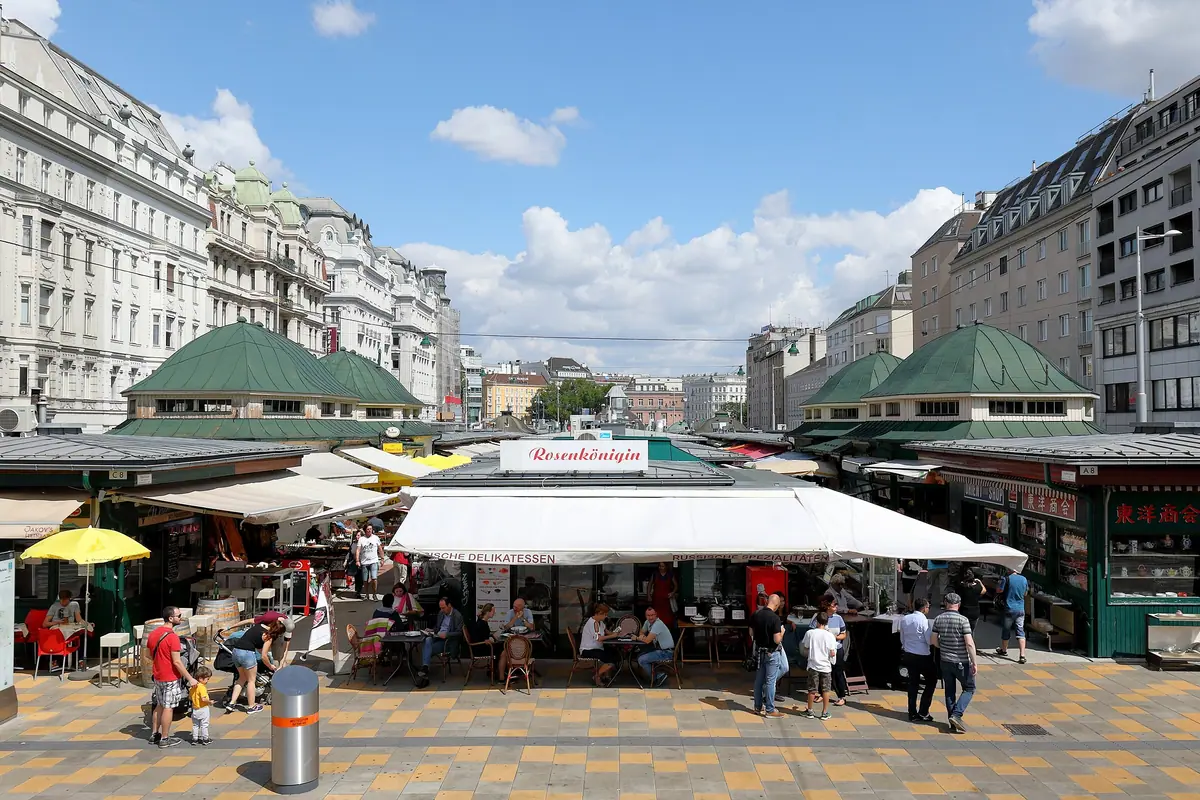
For a truly local lunch, head to a Heuriger — a wine tavern on the edge of Vienna in villages like Grinzing and Nussdorf, where vineyard families serve their own young wine alongside a cold buffet of cheese spreads, ham, radishes and dark rye bread. In late autumn the same taverns pour Sturm, cloudy half-fermented grape juice that tastes sweeter than it is. In the city, the Naschmarkt's long Saturday sprawl of olives, dried fruit, spices and cheese counters is the best place to assemble a picnic before a train ride into the countryside.
Imperial Vienna: Palaces, Klimt and the Lipizzaners
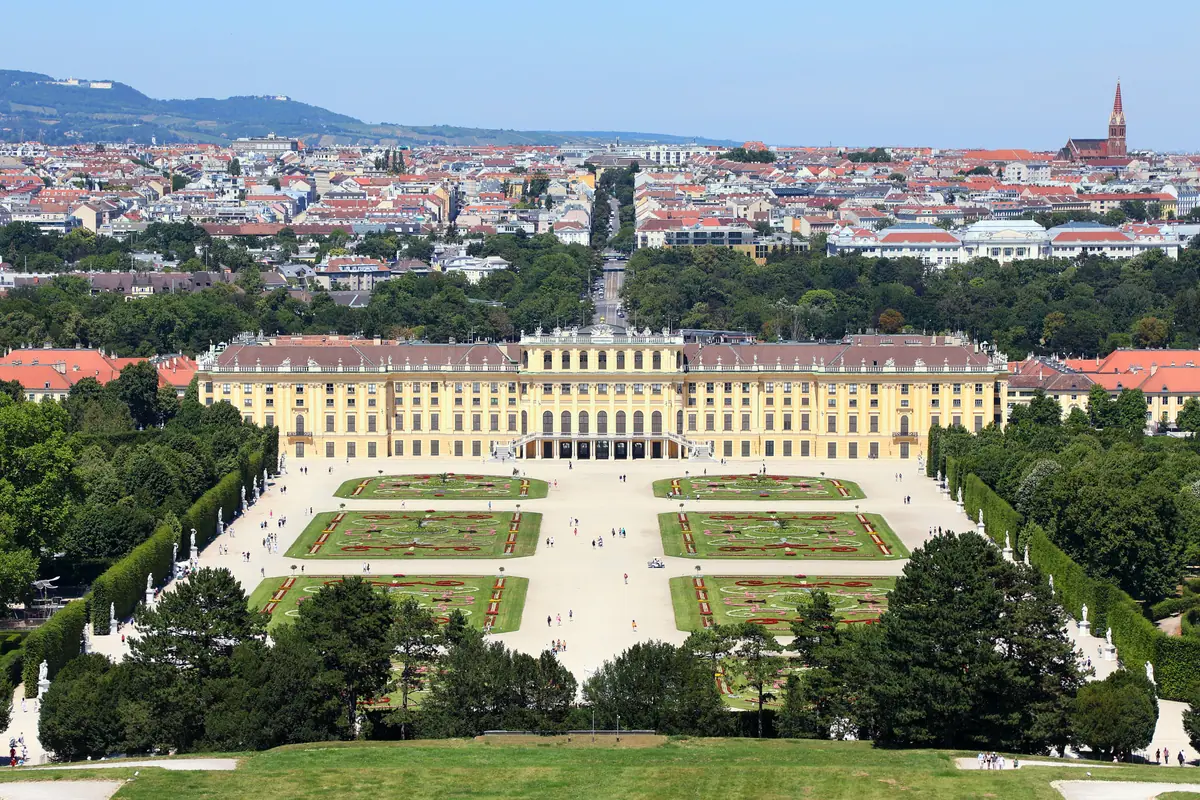
Vienna's showpieces are packed tightly enough to walk between them. Schönbrunn Palace, the Habsburg summer residence, is the obvious starting point: a staggering 1,441 rooms, formal French gardens and the Gloriette hilltop pavilion that gives the postcard view back over the city. Give it at least half a day, and book a timed entry in summer, when queues snake past the fountain. In the opposite direction, the Hofburg anchors the old centre — the imperial apartments, the silver collection and the winter riding hall of the Spanish Riding School, where the white Lipizzaner stallions perform their classical dressage several mornings a week.
A few minutes' walk away stands St. Stephen's Cathedral, whose diamond-patterned roof tiles and 136-metre south tower define the skyline; climb the 343 steps for the tightest view in the city, or take the lift up the north tower to see the great bell. The Belvedere, split across two baroque palaces, holds the world's finest collection of Gustav Klimt, including The Kiss, and its upper gardens frame the city centre like a stage set. Art lovers should reserve an afternoon for the Kunsthistorisches Museum, where Bruegel, Vermeer and Velázquez hang in a building as ornate as the art inside it.
Evenings belong to performance. The Vienna State Opera sells standing-room tickets on the day, a genuine local tradition involving early queues and a ribbon tied across your spot during the interval. Elsewhere, the Musikverein and the Konzerthaus host orchestras and chamber ensembles almost nightly, and the Vienna Boys' Choir sings Sunday mass in the Hofburg Chapel. Pair any of these with a late supper of goulash and bread dumplings, and you have had the essential Viennese day.
Salzburg: Mozart, Fortresses and Festival Season
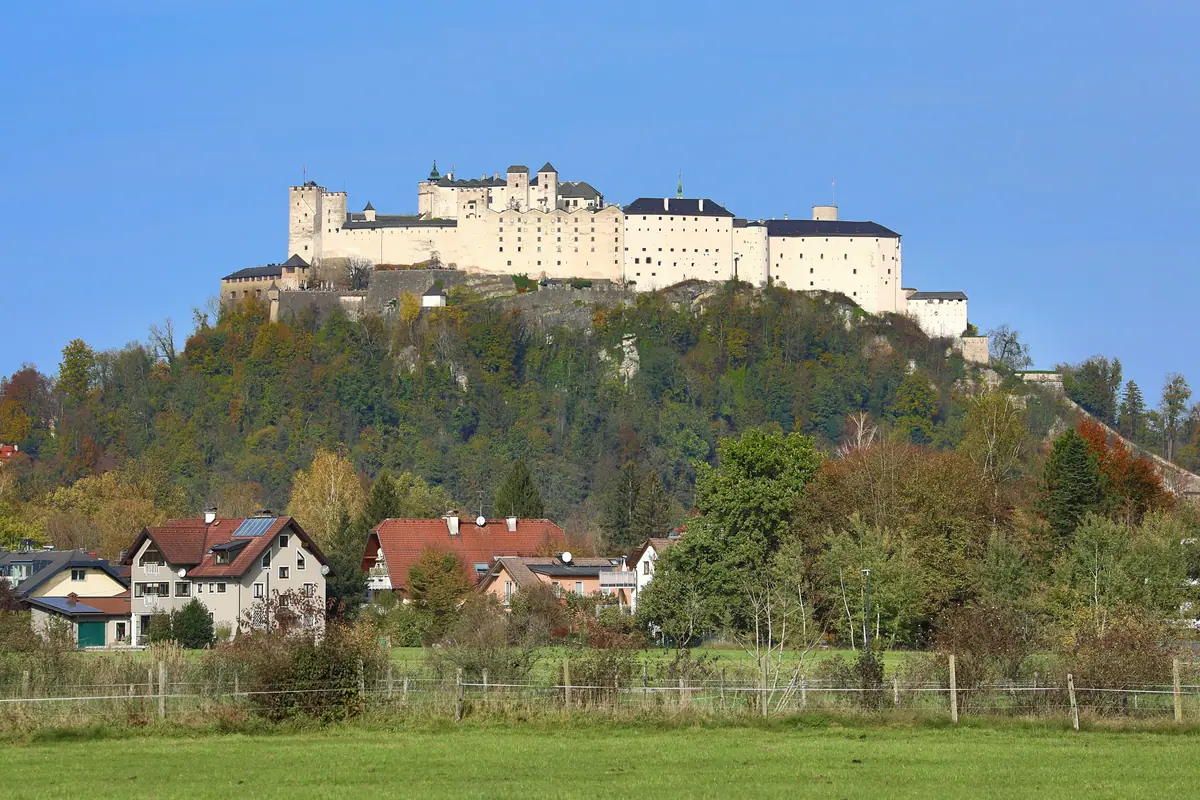
Salzburg compresses Austria's baroque genius into a walkable old town pinned between the Salzach river and a sheer rock face. Hohensalzburg Fortress sits above it all, one of the largest fully preserved castles in Europe, reachable by a steep funicular or a sweaty 20-minute climb, and worth it for the courtyard, the state rooms and the panorama over the cathedral domes. Below, the Getreidegasse is a narrow shopping street of wrought-iron guild signs where Mozart was born in 1756; the yellow house is now a museum of his childhood instruments and letters.
Cross the river for Mirabell Palace and its geometrically clipped gardens, the backdrop of the famous 'Do-Re-Mi' sequence and, more importantly, one of the best free views of the fortress. The Salzburg Festival takes over the city for five weeks each July and August, filling the cathedral square and the festival halls with opera, theatre and orchestral concerts; book months ahead or simply enjoy the street life and open-air screenings that come with it. Winter is quieter and colder, with Advent markets in the cathedral square selling roasted chestnuts and mulled wine.
Eat like a Salzburger between sights: a bowl of clear beef broth with a semolina dumpling, trout from the alpine lakes, and a Mozartkugel — pistachio, marzipan and nougat rolled in dark chocolate — eaten straight from the wrapper on the riverbank. The Salzach promenade at dusk, with the fortress lit gold above and the water running fast and green below, is the memory most visitors carry home.
The Alps: Hallstatt, the Grossglockner and Mountain Huts
Austria's high country is where the country's food, farming and folklore actually live. Hallstatt, in the Salzkammergut lake district, is the most photographed village in the Alps — pastel houses stacked between a glassy lake and a mountain wall — and it is genuinely small, so arrive early or stay overnight to see it without crowds. Nearby, the Dachstein ice caves and the five-fingers viewing platform hang over a 400-metre drop, and the salt mines above town have been worked for thousands of years.
Further south, the Grossglockner High Alpine Road climbs 36 hairpin bends to Austria's highest mountain, passing glaciers, marmot meadows and the Pasterze ice tongue; the road is open roughly from May to early November, weather permitting, and is a full-day drive with frequent stops. In the west, Innsbruck pairs the golden-roofed balcony of the Goldenes Dachl — built for Emperor Maximilian I around 1500 — with the Nordkette cable car, which lifts you from the old town to 2,000 metres in about twenty minutes. Kitzbühel, Zell am See and St. Anton cover the winter side, with ski runs that suit everyone from beginners to downhill racers.
Wherever you walk, eat where the farmers eat. An alpine hut, or Alm, serves Brettljause — a wooden board of speck, mountain cheese, liver pâté and rye bread — with buttermilk or a radler. In September, cows come down from the high pastures decorated with flowers and bells in the Almabtrieb processions, and village fairs follow with brass bands, schnapps and deep-fried dough. Sturdy shoes and a light rain jacket are non-negotiable at any time of year.
Seasons, Markets and Austria's Local Calendar
Austria changes character completely with the calendar, and timing your trip matters more than any packing list. Late November through December brings the Advent markets: Vienna's Christkindlmarkt in front of the neo-Gothic Rathaus, with its arched lanes of stalls and ice rink, and Salzburg's smaller, more intimate version in the cathedral square. Expect punch in ceramic mugs, roasted chestnuts, hand-painted ornaments and brass choirs on the church steps. Spring arrives with Easter markets, blossoming orchards in the Wachau Valley and comfortable hiking weather from April onward.
Summer is festival season — Salzburg in July and August, the Bregenz lake stage with its floating opera sets, open-air concerts across Vienna — and the busiest, priciest window for Alpine villages. Autumn is the connoisseur's choice: September and October bring grape harvest in the Wachau and Vienna's vineyards, Sturm in the Heurigen, golden larch on the mountain trails and far thinner crowds at Schönbrunn and Hallstatt. Winter, outside the ski resorts, is quiet, cheap and atmospheric, with snow-dusted baroque squares and concert halls that never close.
Wherever you travel, the train network makes it easy: Vienna to Salzburg takes about two and a half hours by rail, Salzburg to Innsbruck around two, and regional lines reach Hallstatt, Melk Abbey on the Danube and the Semmering Alps without a car. Buy a day or multi-day national rail pass if you plan several long hops, validate tickets before boarding, and remember that Sundays close most shops outside stations and museums — a good day for a long lunch, a palace garden and a very slow coffee.
Frequently asked questions
What food should I try first in Austria?
Start with Wiener Schnitzel — veal, pounded thin and pan-fried in a golden breadcrumb coat, served only with lemon and potato salad. Then work through Tafelspitz (simmered beef with apple horseradish), Knödel in all forms, and Kaiserschmarrn for dessert. In wine villages, order a Brettljause board with a young Heuriger wine.
When is the best time to visit Austria?
September and October are the sweet spot: warm days, grape harvest and Sturm in the wine taverns, golden alpine larch and thinner crowds at Schönbrunn and Hallstatt. May and June are also excellent for hiking and city sightseeing. December is magical for the Advent markets but cold and busy; July and August are festival season and peak prices in the mountains.
How many days do I need in Austria?
Three or four full days in Vienna covers Schönbrunn Palace, the Hofburg, St. Stephen's Cathedral, the Belvedere and at least one evening at the opera. Add two days for Salzburg — Hohensalzburg Fortress, Getreidegasse and Mirabell Gardens — and another two or three for the Salzkammergut, Hallstatt or Innsbruck. A week to ten days lets you use the trains comfortably.
Is Austria easy to travel without a car?
Very. The rail network links Vienna, Salzburg, Innsbruck, Graz and Linz frequently and comfortably, with regional lines reaching Hallstatt, Melk Abbey and the Semmering. Mountain valleys have buses and cable cars, though a few remote huts and the Grossglockner High Alpine Road are easier with a rental car in summer.
What local etiquette should I know in Austria?
In restaurants, seat yourself and expect to share tables in busy coffee houses; ask for the bill rather than waiting for it. Tipping is rounded up loosely, around five to ten percent. On Sundays, most shops outside train stations close, so plan museum visits, long lunches and walks instead. Say hello when entering small shops and huts — it is expected.
Sort the rest of your trip
Everything for Austria, in one place
Stay in Austria
Hotels, guesthouses and apartments — compared in one search.
Search hotels
Transfer in Austria
Private driver waiting on arrival — no queues, no surprises.
Book a transfer
Stay online in Austria
Travel eSIM — data the moment you land, no roaming bills.
Get an eSIMMore guides in Austria
Top Things to Do in Austria: Must-See Landmarks and Alpine Sights
Best Time to Visit Austria for Hotels: A Season-by-Season Guide
Best Places to Visit in Austria: Imperial Cities, Alpine Roads and Lake Villages
Austria in One Week: Flights, Rail Runs and the Sights You Can't Skip