Austria compresses an improbable amount of landscape into a small country: baroque palaces stacked along a Danube bend, a village of wooden boathouses pinned between a lake and a cliff, and a glacier road that climbs past 2,500 metres in a single afternoon. It is a place where you can tour a Habsburg ballroom in the morning and be above the treeline by lunchtime, which is exactly why first-time visitors so often wish they had booked another week.
Vienna: Imperial Palaces, Coffee Houses and the Ringstrasse
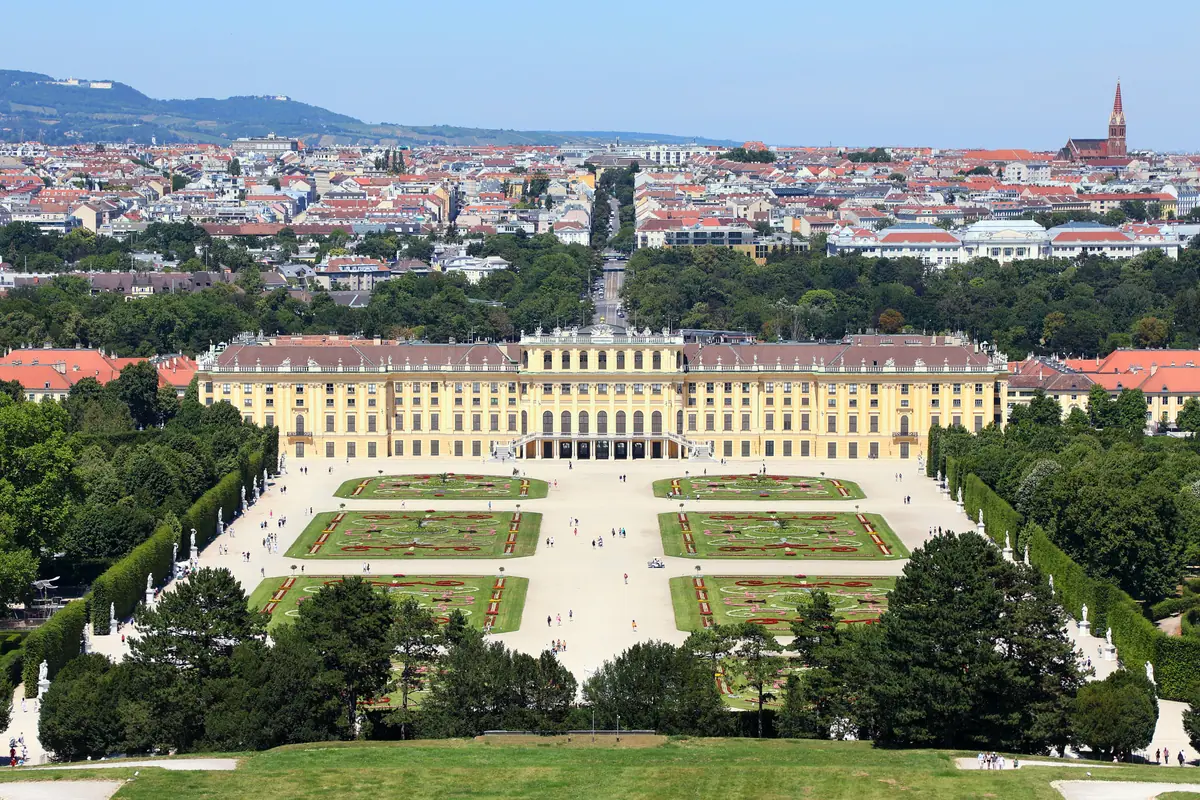
Vienna is where most Austrian journeys begin, and it deserves at least three unhurried days. Schönbrunn Palace is the headline act — 1,441 rooms, of which the Grand Tour route opens around forty, from mirrored ballrooms to the modest chamber where Mozart performed as a child. The formal gardens, the Neptune Fountain and the Gloriette viewpoint on the hill behind are free to wander, and early-morning entry slots are far calmer than the crush after ten. In the old centre, the Hofburg complex holds the Imperial Apartments, the Sisi Museum and the Spanish Riding School, where you can watch the famous white stallions go through their morning training.
The Ringstrasse, the grand boulevard built on the old city walls, strings together the Kunsthistorisches Museum, the Natural History Museum, the Parliament and the Burgtheater within a pleasant forty-minute walk. At its heart stands St. Stephen's Cathedral, whose south tower can be climbed via 343 steps for a close-up of the tiled roof, while the catacombs below hold the bones of plague victims and Habsburg entrails. Finish at the Belvedere, split between two baroque palaces, where Gustav Klimt's shimmering golden painting hangs in the upper building.
Vienna's everyday pleasures matter as much as its monuments. Traditional coffee houses serve a single melange for hours of reading, the Naschmarkt provides a graze-through lunch of olives, cheeses and dried fruit, and a late-afternoon ride on the giant wooden Ferris wheel in the Prater gives you the city skyline for a fraction of the palace crowds. April to June and September to October bring mild weather and manageable lines; late November and December transform the squares into Christmas markets. Pack layers either way, as Vienna's wind is brisker than its latitude suggests.
The Wachau Valley: Danube, Vineyards and Melk Abbey
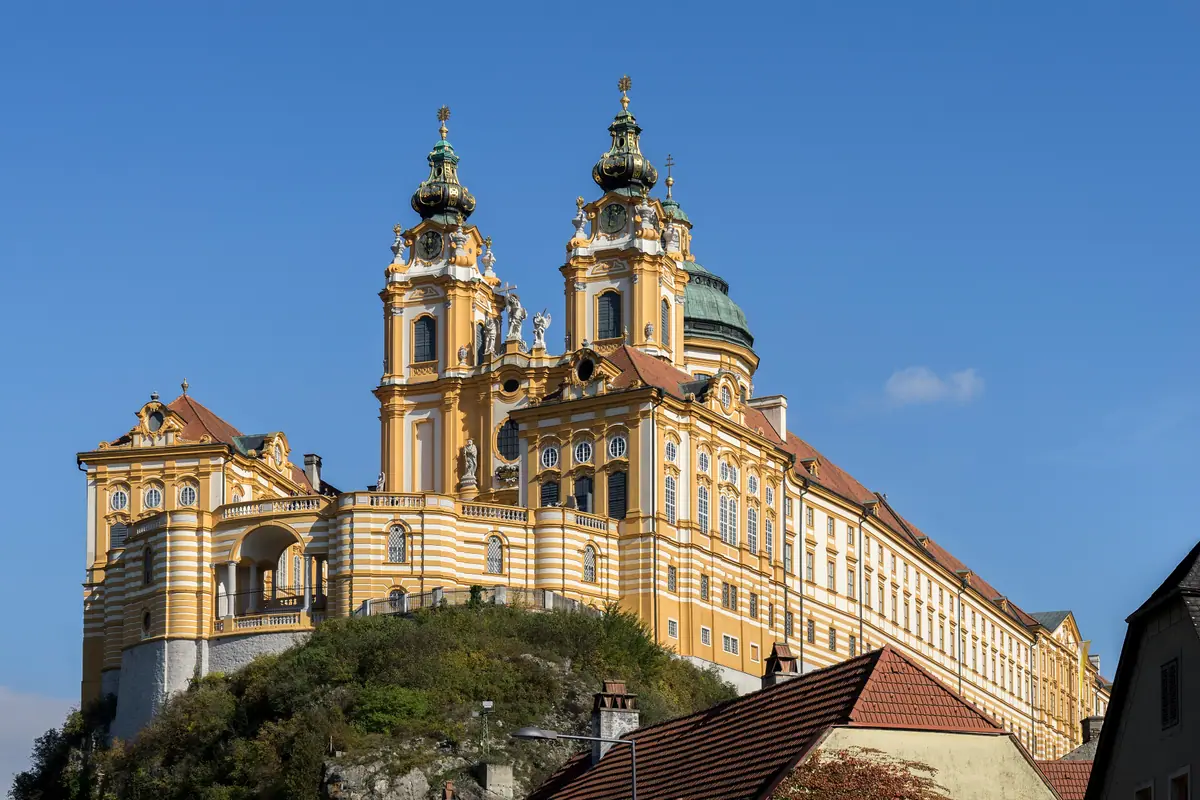
An hour west of Vienna, the Danube narrows into the Wachau, a 36-kilometre stretch of terraced vineyards, apricot orchards and castle ruins that many Austrians consider the prettiest river landscape in the country. Its anchor is Melk Abbey, a vast Benedictine monastery in butter-yellow baroque that sits on a bluff above the river. The guided route through the imperial rooms, the marble hall and the library — with its gilded spines and frescoed ceiling — takes about an hour, and the terrace café looks straight down over the rooftops of the town.
From Melk, boats and the regional railway link the riverside villages of Spitz, Weißenkirchen and Dürnstein. Dürnstein is the essential stop: a blue-and-white church tower, lanes of wine taverns, and the ruined Kuenringer castle above the village where Richard the Lionheart was famously held captive on his way home from the Crusades. The climb to the ruin takes roughly twenty minutes on foot and pays off with a bend-in-the-river panorama.
This is white-wine country — crisp Grüner Veltliner and mineral Riesling poured in heuriger taverns where a flight of small glasses costs less than a city cocktail. The Danube Cycle Path runs flat and signposted along the whole valley, with rental bikes available in Krems and Melk, and the Wachau railway carries cyclists back uphill for a few euros. Come in late April for apricot blossom, in September for the grape harvest, and on any warm weekday if you want the lanes to yourself.
Salzburg: Mozart's Birthplace Beneath the Fortress
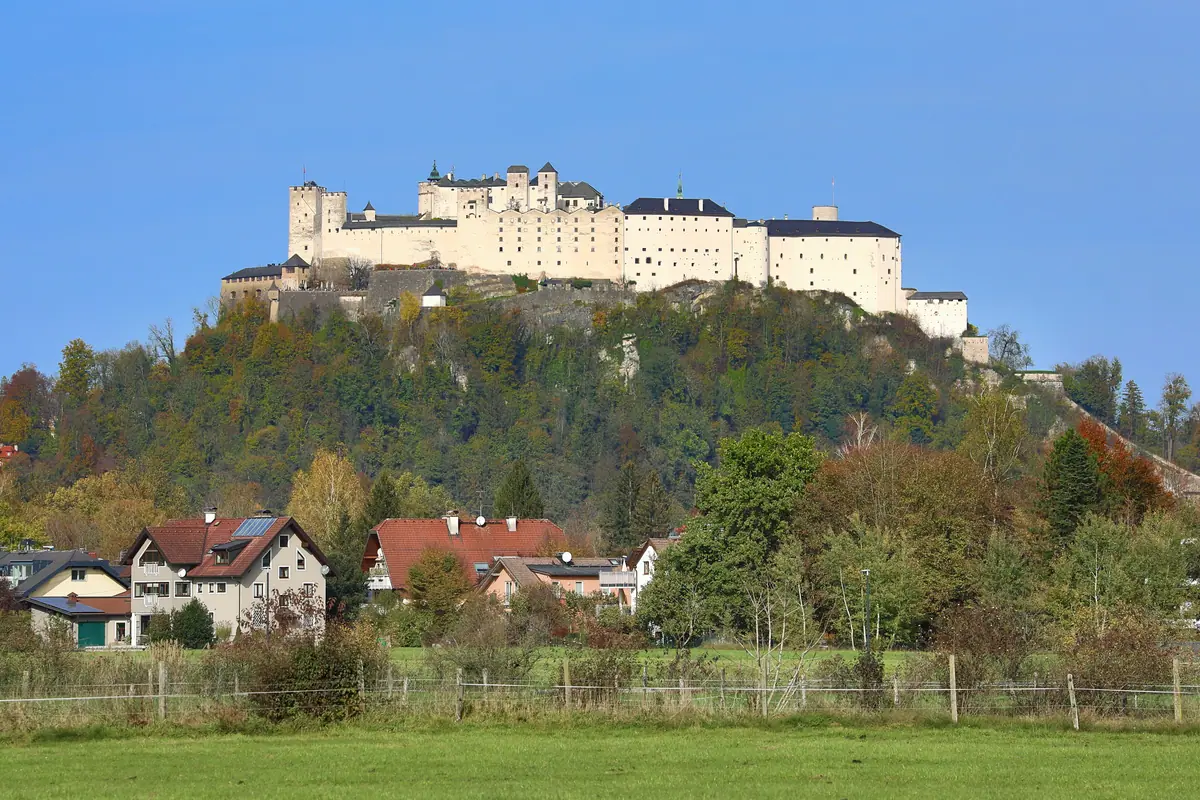
Salzburg is compact enough to walk end to end in half an hour, yet it holds one of the best-preserved baroque old towns in Europe. The Hohensalzburg Fortress, one of the largest medieval castles on the continent, looms over everything; a funicular whisks you up in under a minute, and the ramparts, torture chamber and puppetry museum are easy to combine with the view over the domed cathedral and the river. Below it, the Getreidegasse is a narrow canyon of wrought-iron shop signs, with Mozart's Birthplace halfway along — a small, genuinely evocative museum of childhood instruments and letters.
Give Salzburg two full days. One belongs to the old town: the cathedral's bronze doors and marble nave, the Residenz state rooms, the catacombs carved into the cliff at St. Peter's Cemetery, and the monastery brewery where locals gather under chestnut trees. The other belongs to the edges: Mirabell Palace and its geometrically planted gardens, the Nonnberg Abbey above the river, and the Untersberg cable car, which lifts you from the valley floor to a 1,776-metre summit with views deep into Bavaria.
Salzburg's calendar shapes its crowds. The summer festival in July and August fills hotels and concert halls with world-class opera and orchestral performances, so book months ahead or embrace the atmosphere. May, June and September are quieter and greener, and the forests above the city are at their best for walking. Note that the most photographed viewpoints — the fortress terrace and the Mirabell garden axis toward the fortress — are best in early light, before the tour groups arrive mid-morning.
Hallstatt and the Salzkammergut Lake District
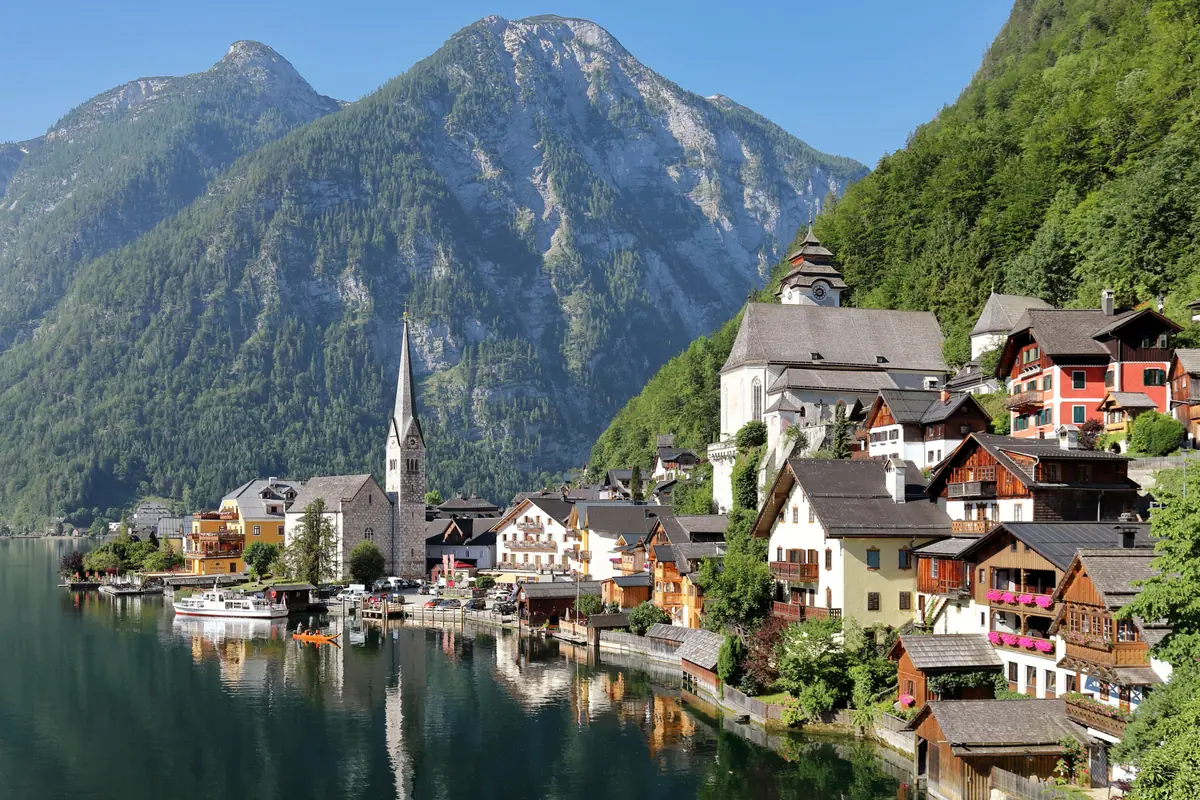
Hallstatt is the image most people carry of Austria before they arrive: a ribbon of pastel houses squeezed between a glassy lake and a sheer mountain wall, with swans drifting past the church spire. It is genuinely that beautiful, and genuinely crowded between ten in the morning and four in the afternoon. The solution is simple — sleep in the village or one of the neighbouring hamlets, and walk the lakeside path at sunrise, when mist still clings to the water and the only sound is a ferry engine.
Above the village lies the salt mine that gave the region its name and its wealth, worked for around 7,000 years and reached by a steep path or the funicular. Inside, you slide down wooden chutes between ancient galleries and cross an underground salt lake on a lit walkway. Back at village level, the small chapel by the water holds a charnel house of painted skulls, a reminder of how little burial ground this sliver of land provides.
The wider Salzkammergut spreads out around it: Wolfgangsee with the pilgrimage village of St. Wolfgang and the Schafberg cog railway that climbs to a 1,783-metre summit; the dark, deep waters of Traunsee and Attersee; the Dachstein massif on the southern rim, where the Five Fingers viewing platform juts over a 400-metre drop and the ice cave stays frozen through summer. Distances are short by road, but public buses are infrequent on Sundays, so plan accordingly. Lake swimming is at its best from late June to early September; hiking holds up from May to October.
Innsbruck and the Tyrolean Alps
Innsbruck is the rare city where you can ski in the morning and stroll a Habsburg old town in the afternoon. The Goldenes Dachl — a copper-tiled oriel built for Emperor Maximilian I around 1500 — marks the heart of the pedestrian centre, and Maria-Theresien-Straße frames the Alps at the end of every street. The Court Church next door contains Maximilian's elaborate black marble tomb surrounded by 28 larger-than-life bronze statues, an unexpectedly theatrical sight that most visitors miss.
The Nordkette cable car is the city's signature experience: four stages lift you from the old town to the Hafelekar ridge at 2,256 metres in about twenty minutes, delivering a panorama over the Inn valley that stays spectacular even in poor weather. Below the top station, signposted trails range from a twenty-minute ridge walk to full-day descents to the village of Seegrube or the Alpine zoo on the lower slopes. Bring a windproof layer — the temperature at the top is often ten degrees colder than the square where you started.
Beyond Innsbruck, the Tyrol fills out with classic mountain villages. Kitzbühel and the Zillertal suit summer walkers and winter skiers alike, the Ötztal leads to glacier terrain and high passes, and the Bergisel ski jump on the city's edge offers a glass viewing deck above the landing slope. Winter sports run roughly December to early April; hiking and via ferrata take over from June to early October, when the meadows flower and the huts reopen.
The High Alps and the South: Grossglockner, Carinthia and Graz
Austria's greatest drive is the Grossglockner High Alpine Road, 48 kilometres of switchbacks climbing to the Hochtor pass at 2,504 metres beneath the country's highest peak. It usually opens in early May and closes with the first heavy snow in late October or early November, and a toll applies. From the Kaiser Franz Josefs Höhe viewpoint you look straight across to the Pasterze Glacier, retreating year by year, and the side spur to the Edelweissspitze delivers a panorama of more than thirty three-thousand-metre summits on a clear day. Allow three to four hours with stops, and check conditions before setting out — snow can fall even in midsummer.
South of the main ridge, Carinthia is Austria's warm, lake-dotted counterweight. The Wörthersee, Lake Klopein and the smaller bathing lakes reach 25°C in July and August, ringed by lidos, cycling paths and gentle hills rather than glaciers. On the Salzburg side, the Krimml Waterfalls plunge 380 metres in three tiers — an hour's walk along a well-built path, with spray soaking anyone who stands on the lower viewing platforms.
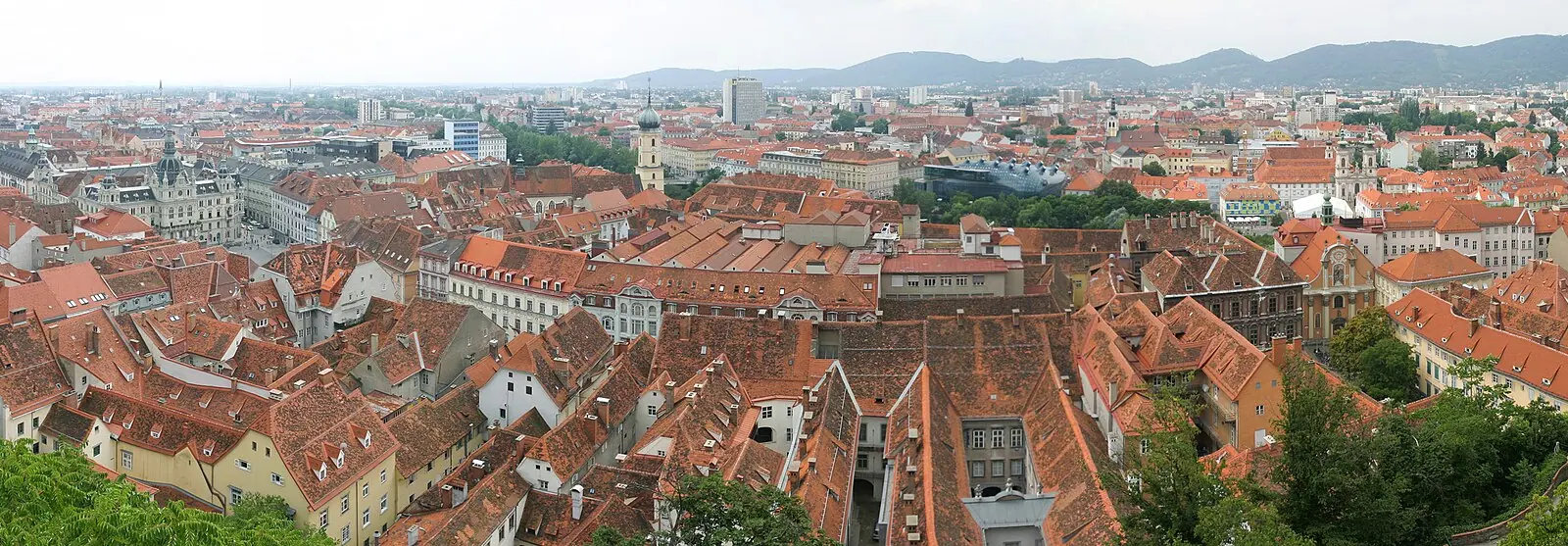
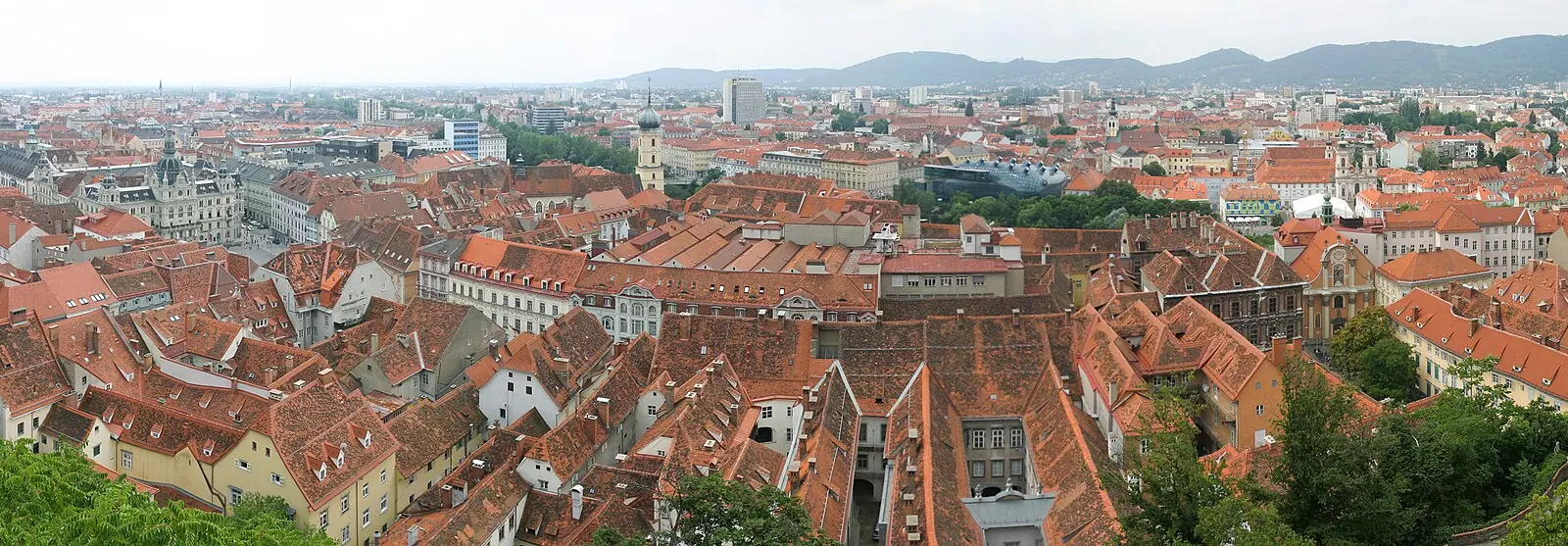
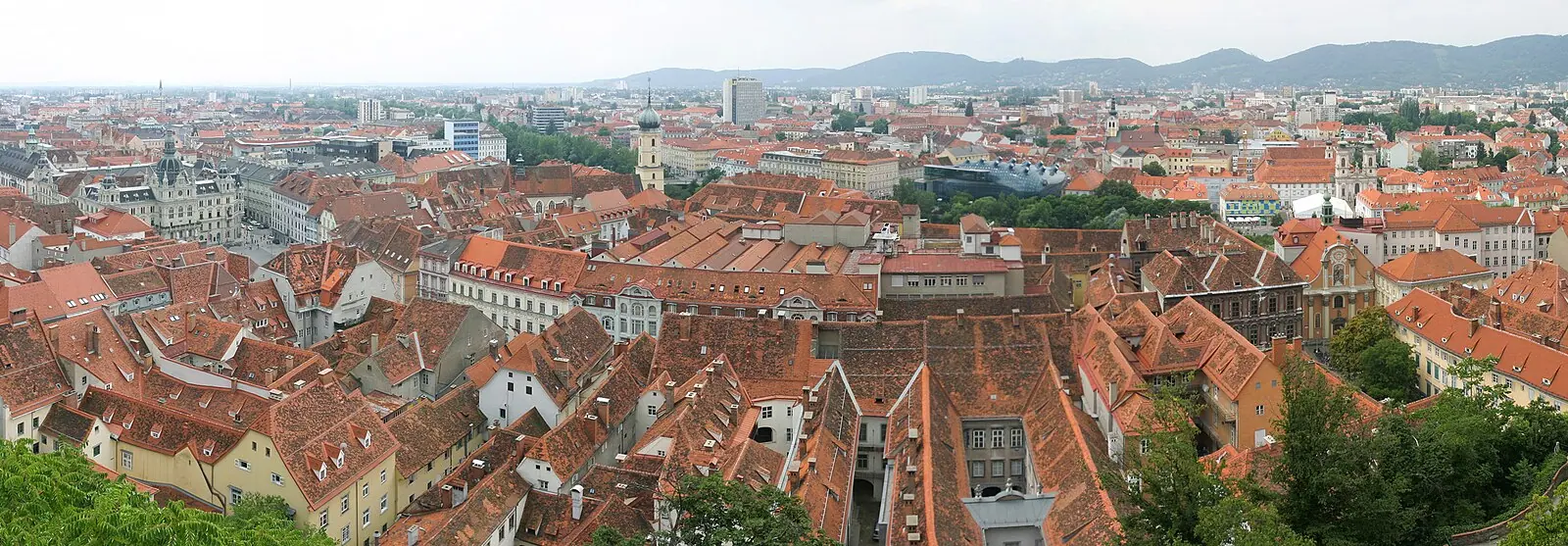
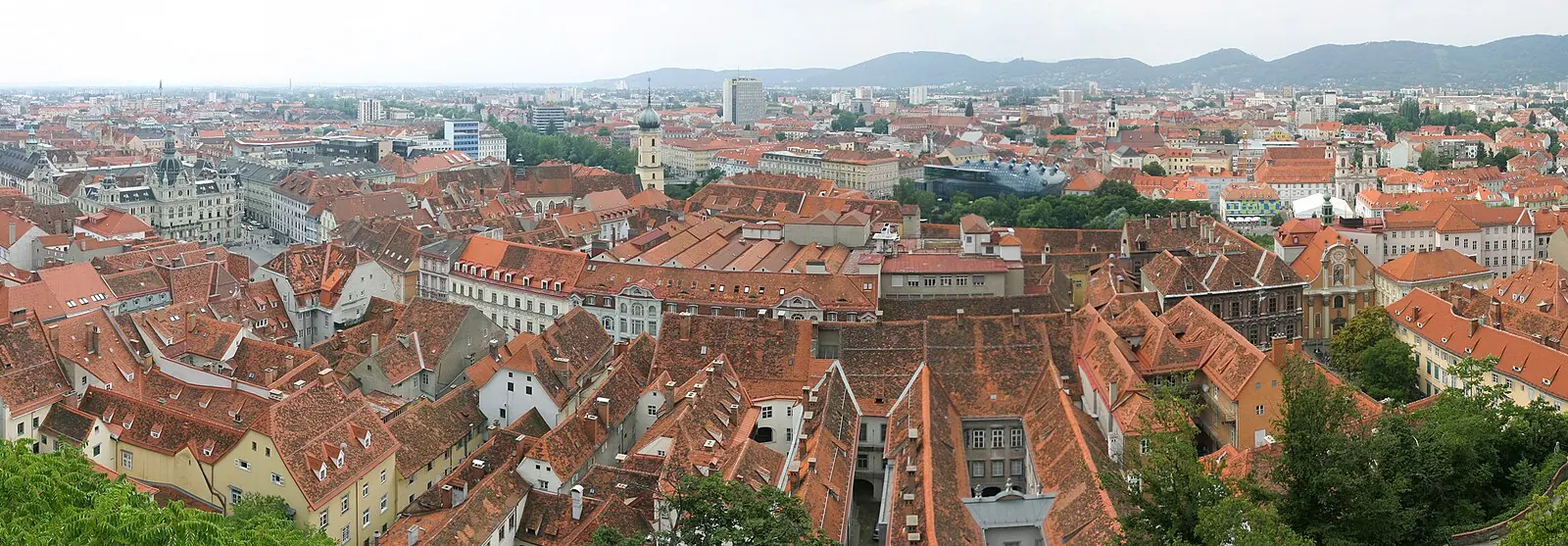
In the southeast, Graz offers a different Austria entirely: a UNESCO-listed old town of Renaissance courtyards, the Schlossberg hill with its clock tower and the curious blue bubble of its modern art gallery. It is also the gateway to the Styrian wine roads, where sauvignon blanc and schilcher rosé are poured in farm taverns along rolling green hills. Pair it with a day in the vineyards rather than treating it as a train-change city — Graz rewards at least two nights.
Frequently asked questions
How many days do you need to see Austria properly?
Ten days covers the classic loop comfortably: three nights in Vienna, two in Salzburg, one or two in the Salzkammergut around Hallstatt, two in Innsbruck or the Tyrol, plus travel days. With only a week, choose either the east (Vienna, Wachau, Salzburg, Hallstatt) or the west (Salzburg, Innsbruck, Tyrol) rather than racing between them.
When is the best time to visit Austria?
Late May to June and September to early October offer mild weather, open mountain huts and smaller crowds. July and August are warm but busy, best for lake swimming and alpine hiking. December is magical for Christmas markets in Vienna, Salzburg and Innsbruck, while January to March suits skiers. Mountain roads and high passes are usually closed from November to early May.
Do you need a car to get around Austria?
Not for the cities. Trains connect Vienna, Salzburg, Innsbruck and Graz frequently and comfortably, and regional lines reach Melk, Krems and the Salzkammergut. A car becomes worthwhile for the Grossglockner High Alpine Road, remote Tyrolean valleys and small Carinthian lakes, where bus services thin out dramatically on Sundays.
Is Hallstatt worth visiting despite the crowds?
Yes, with timing. Day-trippers arrive mid-morning and leave by late afternoon, so staying overnight or arriving before 9am gives you the village close to empty. Park outside the centre and walk or take the ferry across the lake; the sunrise view from the northern shore is the one everyone recognises.
What are the absolute must-see sights on a first trip?
Schönbrunn Palace and St. Stephen's Cathedral in Vienna, Melk Abbey in the Wachau, the Hohensalzburg Fortress and Getreidegasse in Salzburg, the lakeside village and salt mine at Hallstatt, the Nordkette cable car above Innsbruck, and the Grossglockner High Alpine Road with its glacier viewpoint. Those seven cover the country's imperial, alpine and lake landscapes in one arc.
Plan it — experiences in Austria
Live search, booked directly with trusted providers.
Sort the rest of your trip
Everything for Austria, in one place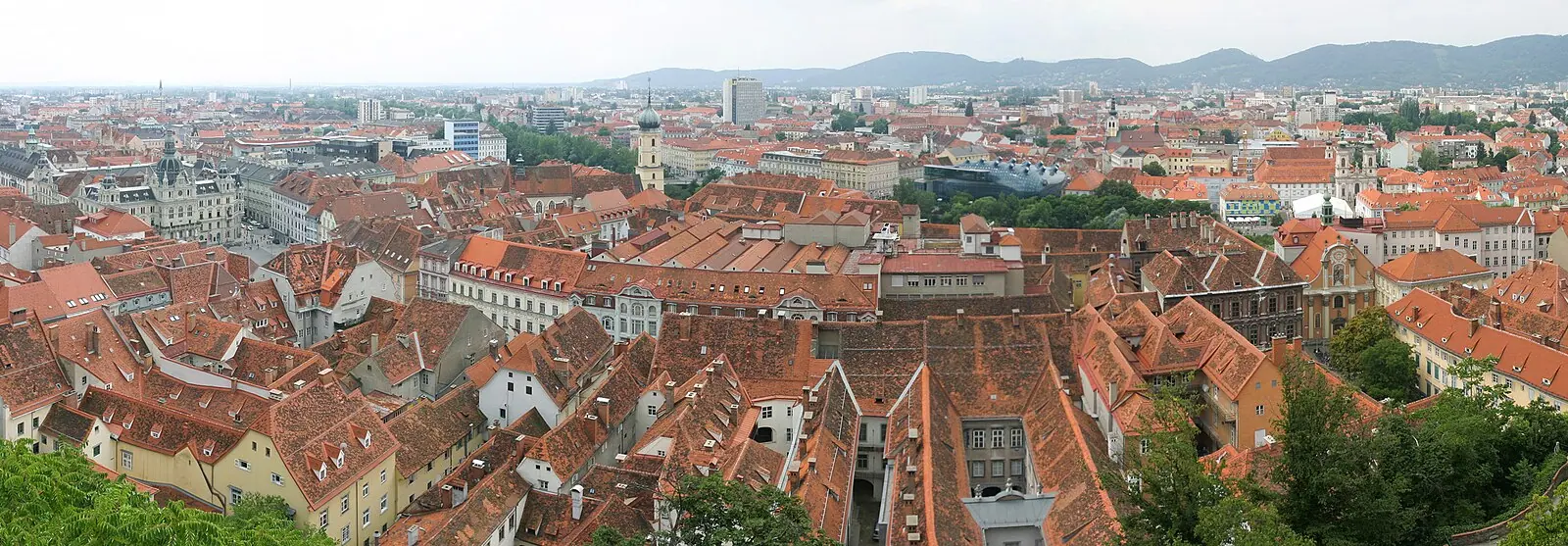
Stay in Austria
Hotels, guesthouses and apartments — compared in one search.
Search hotels
Transfer in Austria
Private driver waiting on arrival — no queues, no surprises.
Book a transfer
Stay online in Austria
Travel eSIM — data the moment you land, no roaming bills.
Get an eSIMMore guides in Austria
Top Things to Do in Austria: Must-See Landmarks and Alpine Sights
Best Time to Visit Austria for Hotels: A Season-by-Season Guide
Austria Food, Culture and Local Experiences: A Guide to Vienna, Salzburg and the Alps
Austria in One Week: Flights, Rail Runs and the Sights You Can't Skip