Albania is a country you taste before you fully understand: lamb baked in yogurt, peppers stewed with cottage cheese, and the sweet burn of grape raki poured by a host who simply will not let you leave. Between the Adriatic and the high mountains, food, faith and history run together in one long conversation. This guide follows that conversation from Tirana's cafe-lined boulevards to the stone towns, the olive terraces of the Riviera and the wood-stove guesthouses of the Accursed Mountains.
Tirana: Morning Byrek, the New Bazaar and the Evening Xhiro
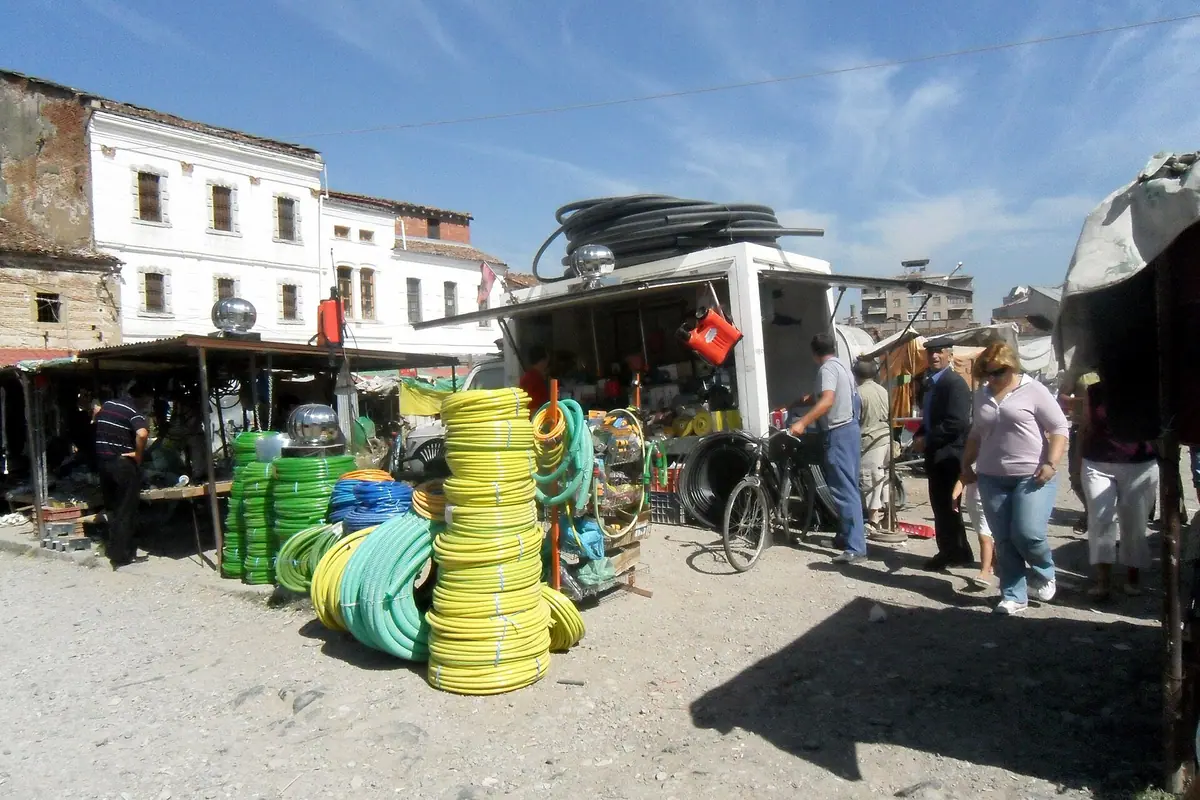
A Tirana day begins early at a neighbourhood bakery, where byrek comes out of the oven in long coiled trays - paper-thin pastry wrapped around spinach, salted white cheese or pumpkin, eaten standing up with a paper napkin and a small cup of strong Turkish-style coffee. From there, walk to Pazari i Ri, the New Bazaar, a refurbished market where pyramids of tomatoes, jars of honey and gliko (whole fruit suspended in thick syrup), mountain cheeses, dried oregano and sacks of walnuts set the tone for everything you will eat later. This is where you learn that Albanian cooking is seasonal by necessity and generous by instinct.
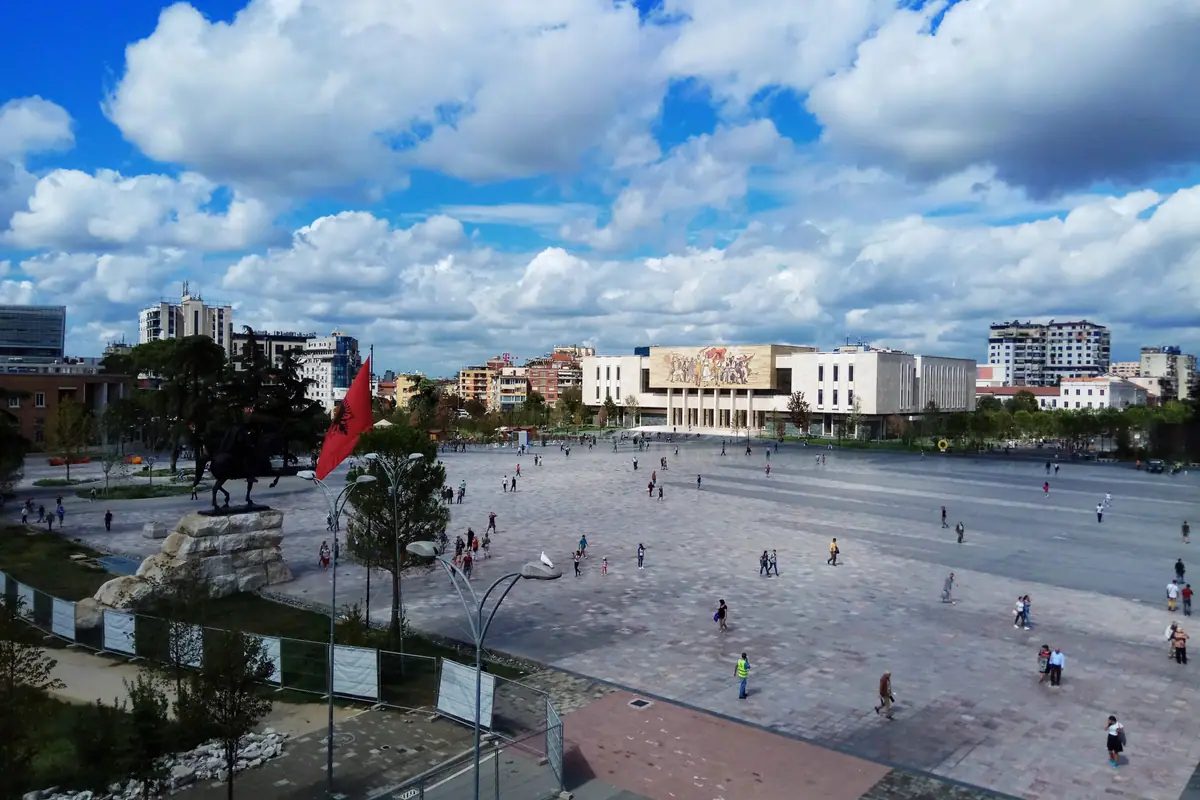
The centre itself is compact and made for wandering: Skanderbeg Square with its vast paved expanse, the frescoed porch of the Et'hem Bey Mosque, the striped clock tower, and the mosaic facade of the National History Museum. Allow an hour and a half for Bunk'Art 1, an enormous Cold War bunker converted into a labyrinth of rooms that tells the country's 20th-century story with almost unsettling immediacy. On the edge of town, the cable car up Mount Dajti offers a cool escape and a slow lunch above the city; the Roman amphitheatre at Durres, one of the largest in the Balkans, is an easy half-day trip if you want antiquity before dinner.
Come evening, Tirana performs its ritual: the xhiro, an unhurried promenade along the main boulevard that starts around six-thirty and fills with grandparents, teenagers and young families. Do as everyone does - walk, stop for a macchiato, walk again - then sit down to a late dinner of grilled meat, qofte, roasted peppers, a chopped salad and a jug of house wine or a glass of raki with raw vegetables and cheese. Two nights here is the honest minimum; three is better if you plan to day-trip.
Berat and Gjirokaster: Two Stone Towns, One Long Dinner Table
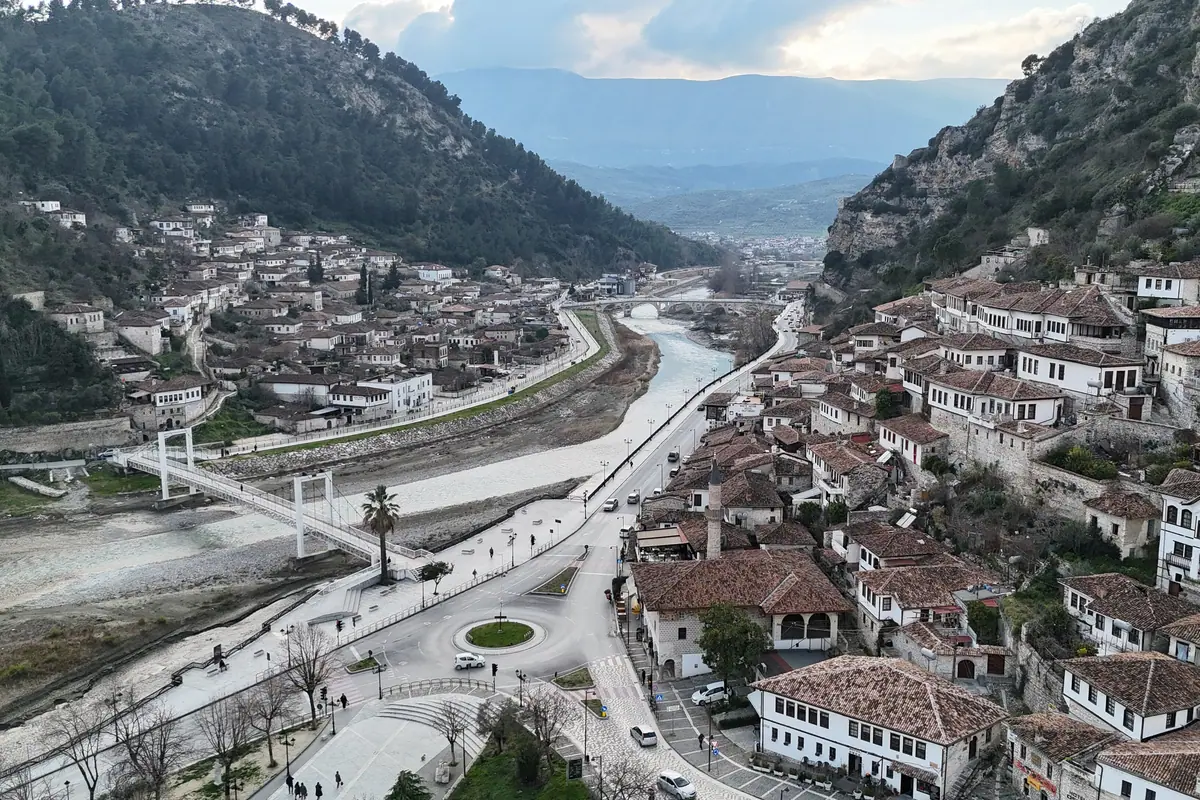
Berat, the UNESCO-listed City of a Thousand Windows, climbs in tiers above the Osumi river, its white Ottoman houses in the Mangalem and Gorica quarters stacked so tightly that they seem to be peering over one another's shoulders. Cross the old stone bridge at dusk and climb into Berat Castle (Kala), which is still inhabited, still planted with vines and figs, and still holds the Onufri Museum inside the Church of the Dormition of St Mary, where a gilded iconostasis glows in near-darkness. Below, the family kitchens turn out tave kosi - lamb baked slowly in yogurt and egg - alongside fergese of peppers, tomato and cottage cheese, stuffed peppers and pispili, a cornbread studded with wild greens.
Gjirokaster is Berat's colder, sterner sibling: a slate-roofed town of steep cobbles dominated by its castle, which houses captured artillery and a folklore collection, with views straight down onto the rooftops. Do not miss the Zekate House or the Skenduli House, both preserved Ottoman homes with carved ceilings, hidden windows and rooms for every season, or the Old Bazaar where a silversmith may still be working. Gjirokaster has its own dish, qifqi - fried rice balls with herbs - and a sweet, dense pasha qofte to look for during local festivals.
Stay in guesthouses in both towns rather than hotels. Breakfast arrives as a spread: yogurt, honey, gliko, olives, eggs, local cheese and thick slices of bread, often with a shot of raki that you are warmly encouraged to accept. Give each town two nights and drive the three to four hours between them across the Drino valley; the road itself, past stone villages and roadside hives, is part of the meal.
The Albanian Riviera: Olive Groves, Seafood and Butrint
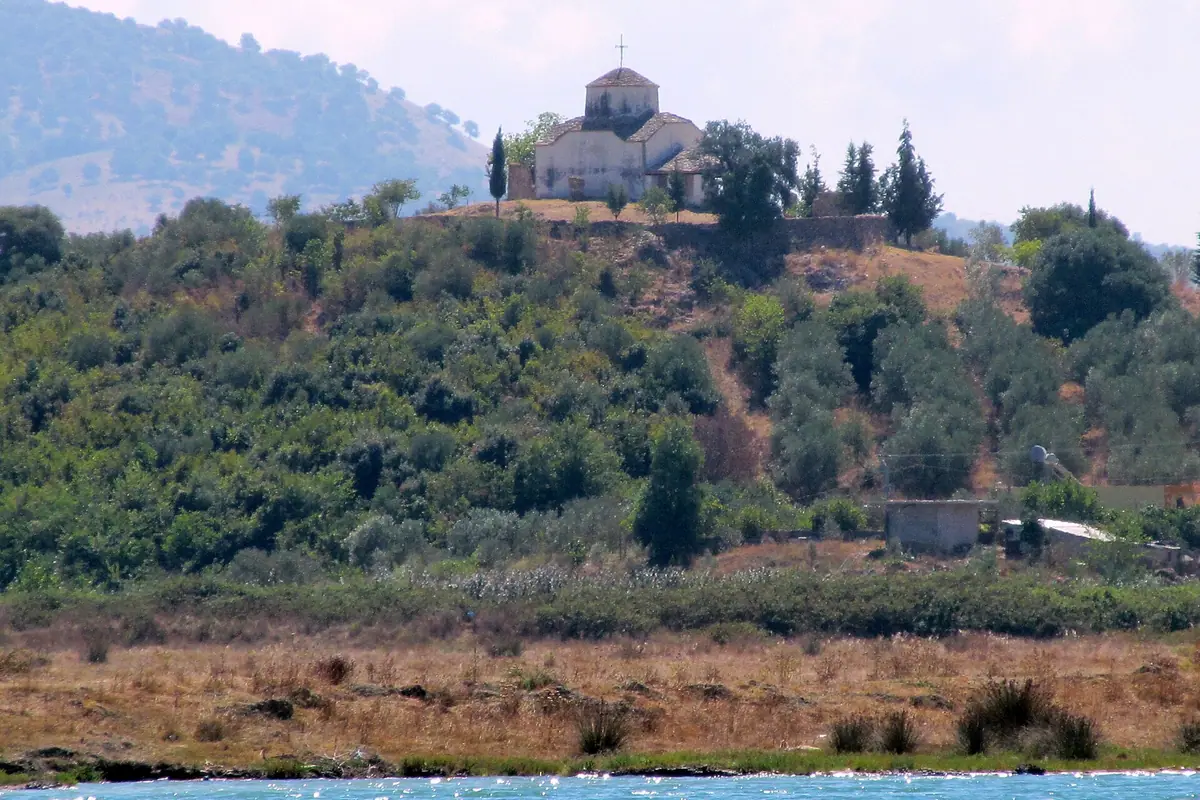
South of Vlore the road lifts over the Llogara Pass, where pine trees lean in the wind and the whole Ionian opens below you, then drops through Dhermi, Himare, Qeparo and Borsh to Saranda and Ksamil. The anchor of this stretch is Butrint National Park, a UNESCO site on a wooded peninsula where a Greek theatre, Roman baths, a Byzantine baptistery with a floor mosaic and a Venetian tower sit within a few minutes' walk of each other, with herons stalking the Vivari channel beside them. Go early in the morning, give it two to three hours, then swim off the Ksamil islands a short drive away. Inland, the Blue Eye spring, Syri i Kalter, is a shock of cold, impossibly clear water welling out of the ground under dense forest.
Eat your way along the coast. Mussels farmed in the Butrint lagoon arrive steamed with garlic; sea bream and sea bass are grilled whole with lemon and oregano; octopus is stewed with onions or dried in the sun; wild greens called horta are boiled and dressed with olive oil, and ladera - olives preserved in oil - appear on every table. Much of the oil you taste comes from family groves pressed in small mills, and the oranges of the Saranda plain are worth buying by the bag at roadside stalls. Around Permet and Leskovik, further inland, small wineries produce surprisingly serious reds.
May, June, September and October are the sweet spots: warm sea, quiet beaches, reasonable guesthouse rates. August is hot, expensive and packed, and the coast road crawls. Book coastal rooms weeks ahead in high summer, and carry cash for the small tavernas where the best fish is served.
Korca, Lake Ohrid and the Eastern Table
Korca feels like a different country: wide boulevards, chestnut trees, and the Old Bazaar, a low, cobbled quarter of wooden shopfronts, copper workshops and cafes that has been trading for centuries. Climb to the Resurrection Cathedral with its slender bell tower, spend an hour among the icons in the Museum of Medieval Art, and in the evening listen for serenades - groups of men singing old urban songs in harmony, a Korca tradition you may stumble across in a restaurant courtyard. The town is also fiercely proud of its brewing culture, and a cold local pilsner at dusk is part of the experience.
An hour east, Lake Ohrid softens the landscape. In Pogradec, order koran, the lake's celebrated trout, grilled simply with lemon, and watch wooden boats work the shallows. Follow the shore to the village of Lin, where a small mosaic floor from a Roman villa sits under a protective roof near the water, then branch inland to Voskopoja, once a great trading and scholarly town, where painted churches such as St Nicholas and St Athanasios still stand among walnut trees.
Autumn suits this region best: mushrooms, chestnuts, grape harvest and fresh walnut gliko from Permet and Leskovik. Spring is green but wetter. In winter the lake wind bites and the mountain passes above Korca can close, so keep your plans flexible between November and March.
The Accursed Mountains: Theth, Valbona and Highland Hospitality
The north is Albania at its most dramatic. The ferry across Komani Lake threads between sheer forested gorges, a three-hour passage that feels like a fjord crossing, before buses or jeeps continue to the Valbona valley. From there, hikers cross the pass to Theth, a village of stone and slate roofs in the Accursed Mountains, with the Grunas waterfall, the cold Blue Eye of Theth and the Lock-in Tower - a bleak reminder of the old law code and blood feud - within walking distance. Guesthouses are modest, family-run and unforgettable, with wood stoves, woollen blankets and coffee that appears the moment you sit down.
Food up here is mountain food. Flija is the emblem: layer after layer of thin batter and cream baked under a metal lid, served with honey, yogurt or cheese and traditionally eaten at midday. Look also for maza, honey and walnut raki, nettle pies, lamb cooked over coals, and white cheese so fresh it squeaks. Hospitality in the north is a matter of honour; a guest is treated as a gift, and refusing the first toast is not really an option.
Below the mountains, Shkodra makes a fine staging post: Rozafa Castle above the city, with the lake and the plains spread out beneath its walls, and a pedestrian centre that fills every evening with the same slow xhiro you saw in Tirana. The highland season runs from mid-June to September - snow can linger into May - and guesthouses book out in July and August, so reserve well ahead and bring cash.
When to Go, What to Eat and How to Travel Well
For a first tour, aim for April to June or September to October. Spring brings wild greens, blossom and comfortable walking temperatures in Berat, Gjirokaster and Korca; autumn brings harvest food and warm sea without the crowds. July and August are for the Riviera and the mountains, with heat on the coast, packed beaches and peak prices. Winter is quiet and inexpensive - rainy on the coast and in Tirana, snowy above - and ideal if you want museums, castles and long lunches rather than swims. A comfortable loop of Tirana, Berat, Gjirokaster, the Riviera and Butrint takes ten days to two weeks; add Korca or the northern mountains and you have three weeks.
Learn the rhythm. Lunch is the main meal, roughly one to two in the afternoon; dinner starts at eight and stretches late. Coffee is a social event, not a takeaway. Small mountain tavernas and family guesthouses often take cash only, so keep leke on you. Minivans connect the towns cheaply, but a rented car opens the Riviera, Ohrid and the highlands properly - and note that mountain roads are slow, narrow and occasionally dramatic.
Finally, taste widely and eat with people. Order a mixed platter to share, ask what was picked or caught that morning, sip the raki even if you only raise the glass, and accept the second helping that always comes. Learn one word - faleminderit, thank you - and you will find doors, bottles and plates opening faster than you can say it. In Albania, the table is the tour, and the sights simply mark where you sit down.
Frequently asked questions
What food should I try in Albania?
Start with byrek for breakfast, then tave kosi (lamb baked in yogurt), fergese (peppers, tomato and cottage cheese), pispili cornbread with greens, qofte and grilled meats, and qifqi rice balls in Gjirokaster. On the coast, eat mussels from the Butrint lagoon, grilled sea bream, octopus and wild greens dressed in local olive oil. Finish with gliko fruit preserves, baklava and trilece, plus raki or a Korca-style beer.
When is the best time to visit Albania?
April to June and September to October are the best all-round months: mild weather, good markets, quieter roads and warm enough seas in September. July and August are hottest and busiest on the Riviera. The northern mountains are only comfortably walkable from mid-June to September. Winter suits city and castle sightseeing in Tirana, Berat, Gjirokaster and Korca, with rain on the coast and snow in the highlands.
How many days do I need for a first Albania tour?
Ten days to two weeks covers Tirana, Berat, Gjirokaster, the Riviera and Butrint at a relaxed pace. Allow three weeks if you want to add Korca and Lake Ohrid or the Theth and Valbona valleys. A short week is best spent on one region - the south coast or the northern mountains - rather than trying to cross the whole country.
Do I need a car to travel around Albania?
Not strictly - minivans and buses connect most towns, and the Komani Lake ferry links the north. But a car makes the Riviera, Lake Ohrid and the mountain villages far easier and lets you stop at roadside stalls and viewpoints. Expect narrow, winding roads, slow average speeds, and cash-only fuel stations or ferries in remote areas.
Is Albanian food suitable for vegetarians?
Very much so, though the dishes are often less advertised. Byrek with spinach, pumpkin or cheese, fergese without meat, grilled and roasted vegetables, stuffed peppers, pispili cornbread with greens, boiled wild horta, beans, salads and dairy-heavy breakfasts are all easy options. Say no meat clearly, and expect generous portions of cheese, olives and bread to fill any gaps.
Sort the rest of your trip
Everything for Albania, in one place
Stay in Albania
Hotels, guesthouses and apartments — compared in one search.
Search hotels
Transfer in Albania
Private driver waiting on arrival — no queues, no surprises.
Book a transfer
Stay online in Albania
Travel eSIM — data the moment you land, no roaming bills.
Get an eSIM


