Albania is small enough to cross in an afternoon and layered enough to keep you busy for a fortnight, sliding from Ottoman stone towns to Roman ruins, turquoise coves and snow-streaked alpine valleys. The trick is knowing which corners deserve your days — and which months to give them.
Tirana: Bunkers, Boulevards and a Cable Car Into the Clouds
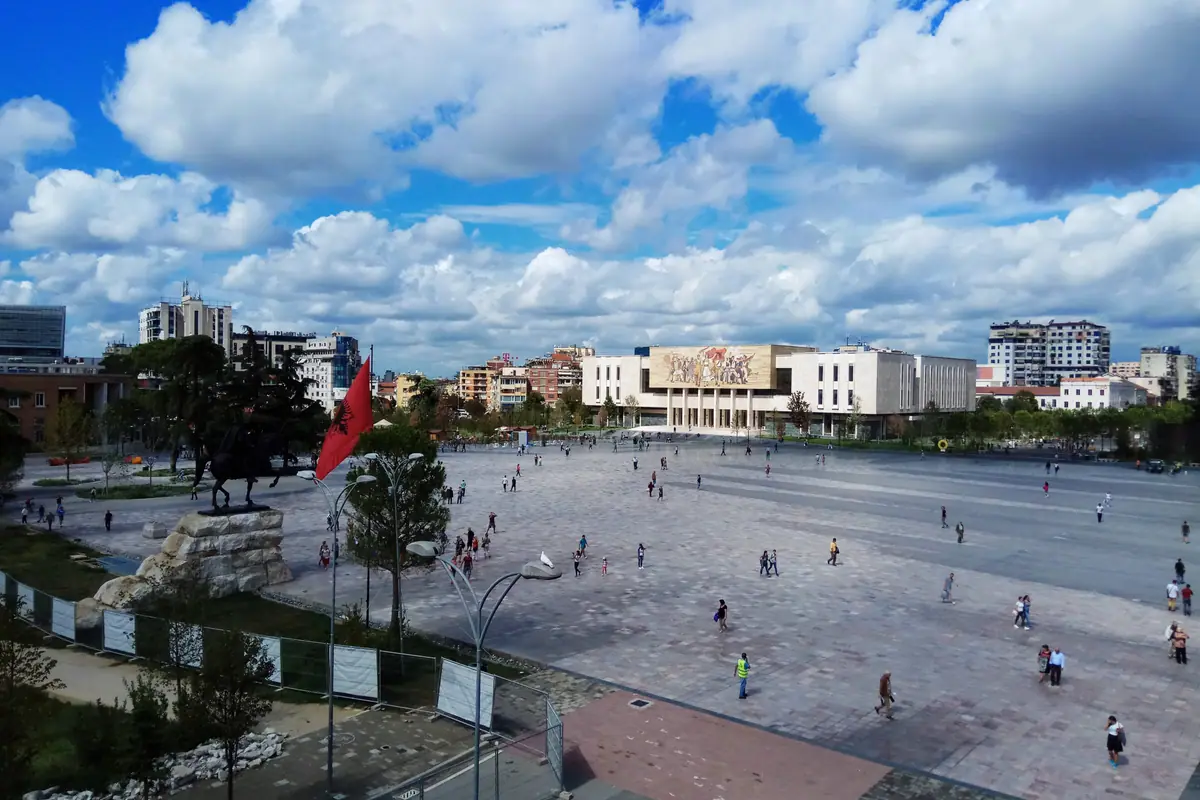
Most journeys begin in Tirana, a capital that has reinvented itself in a single generation. The natural starting point is Skanderbeg Square, a vast pedestrian expanse ringed by the Et'hem Bey Mosque with its painted portico, the slender Clock Tower and the National History Museum, whose mosaic facade is the city's most photographed wall. Wander ten minutes south to Blloku, once a sealed-off enclave for the political elite and now the densest concentration of cafes, wine bars and late-night kitchens in the country.
Tirana rewards curiosity more than checklist-ticking. The converted bunkers of Bunk'Art 1, on the city's outskirts, and Bunk'Art 2, hidden beside the interior ministry, turn Cold War concrete into immersive museums about occupation, surveillance and everyday life under isolation. For a breather, ride the cable car from the eastern edge of the city up to Mount Dajti, roughly 15 minutes of swaying ascent to a ridge where the whole coastal plain opens below. Allow two full days here, three if you like your mornings slow.
Eat like a local: the New Bazaar area is the place for byrek, grilled meats and strong, gritty coffee served in tiny cups. Tirana is also the easiest place to sort out a car rental or a local SIM before heading into the mountains, and almost everything worth seeing in the centre is walkable.
Berat and Gjirokastër: The Two UNESCO Stone Towns
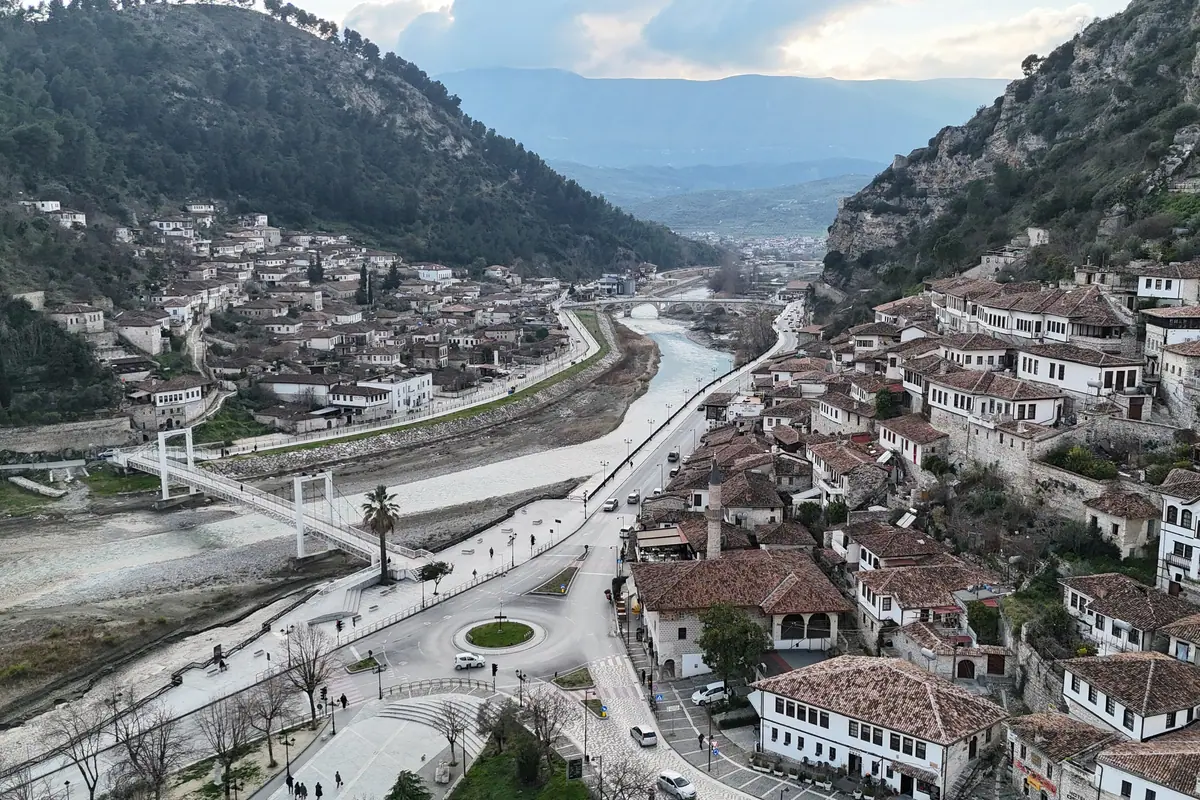
Berat is the postcard Albania shows the world, and it earns it. Whitewashed Ottoman houses climb the hillside in tiered rows — the Mangalem quarter on one bank of the Osum river, Gorica on the other, linked by a stone footbridge. Above them sits Berat Castle, still inhabited after more than two thousand years, its lanes sheltering churches, a mosque, and the Onufri Museum with its gold-lit Orthodox icons. Give it a half day, more if you're staying inside the walls.
Gjirokastër, further south, is darker and steeper — a town of slate roofs and grey stone towers that seem to grow from the mountain itself. Its castle is one of the largest in the Balkans, housing a military museum and a captured aircraft that looks absurd perched on the ramparts. Below, houses such as Zekate and Skenduli reveal how wealthy Ottoman families lived, with carved ceilings and hidden rooms. The two towns are about four hours apart by road; seeing both properly takes three days.
Spring and early autumn are ideal here: warm stone, clear light and far fewer visitors than the coast in August. Bring shoes with grip — the cobbles of both old towns are polished smooth and slick after rain.
Butrint, Ksamil and the Albanian Riviera
The south is where Albania becomes a beach destination, and the anchor is Butrint National Park, a UNESCO-listed site on a wooded peninsula near Sarandë. Layer upon layer of history sits in a few shady acres: Greek walls, a Roman theatre, a Byzantine basilica with a mosaic floor, and Venetian fortifications looking out over the lagoon. Two to three hours is enough for a good walk; take water, as the shade is welcome and the humidity bites in summer.
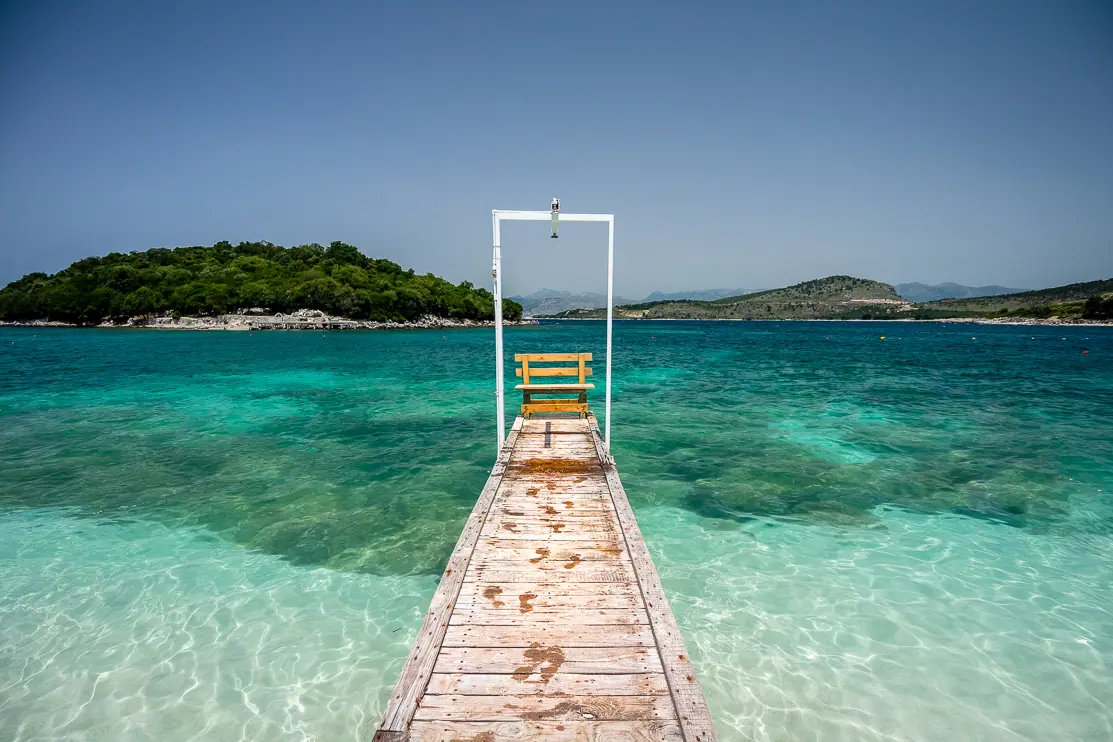
From there the coastline unspools. Ksamil is the famous one — a clutch of small islands you can swim to from the beach, with water so clear it looks retouched. Sarandë is the busy hub, Himarë and Dhërmi are the low-key alternatives, and Gjipe is a pebble cove reachable by a short hike that feels like a reward. The Llogara Pass between Vlorë and the Riviera climbs through pine forest to a viewpoint over the whole Ionian coast, and it's worth stopping even if you're only passing through.
Two warnings from people who've been: the beaches are mostly pebbles, so water shoes earn their luggage space, and July and August bring traffic and full car parks. June and September give you the same water with a fraction of the crowd. Inland detours to the Blue Eye spring, where impossibly cold, impossibly blue water wells up from a karst pool, take about half a day.
The Albanian Alps: Theth, Valbona and Lake Komani
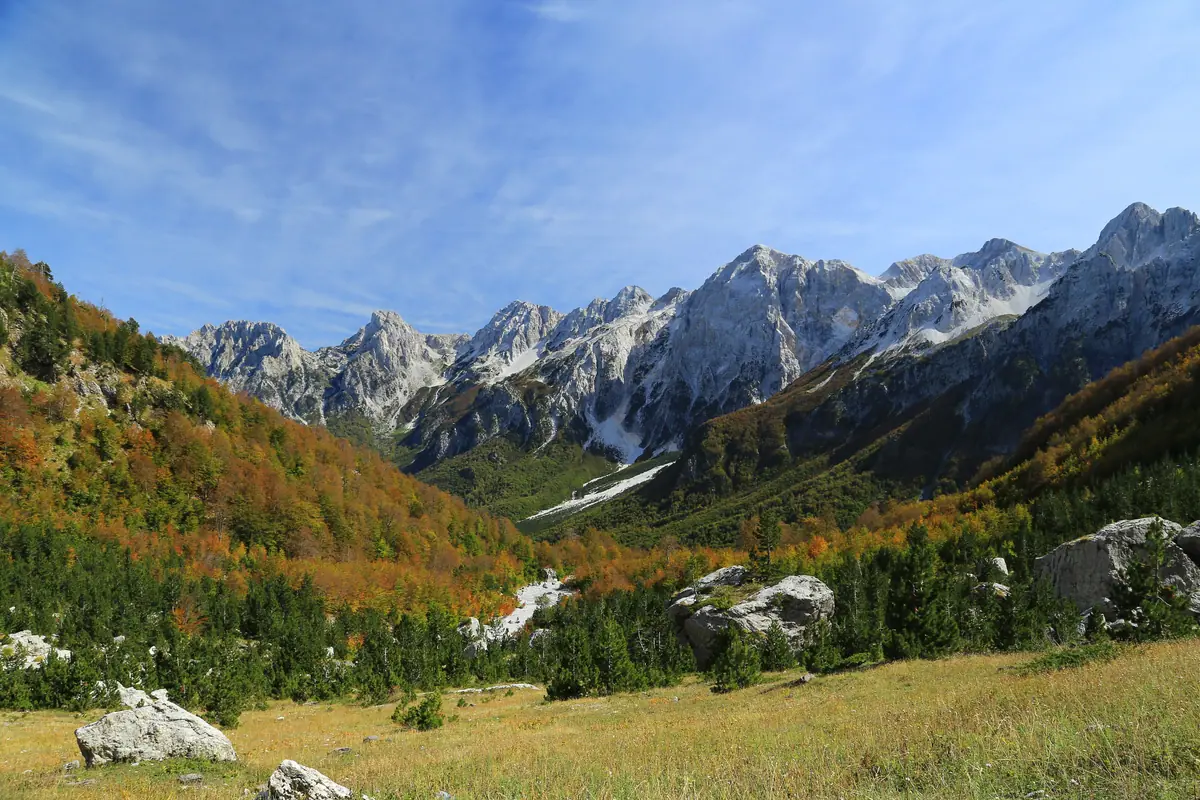
Northern Albania has nothing to do with the beaches, and that's the point. The journey in is part of the experience: the ferry across Lake Komani threads through drowned mountain valleys so narrow and green it's often compared to a fjord, and it only runs reliably from roughly April to October. From the lake, roads wind up to Valbona Valley National Park, a long glacial valley of beech forest, waterfalls and limestone peaks that turn pink at dusk.
Theth is the other bookend, reachable from Shkodër over a dramatic mountain pass. Its draws are modest and satisfying: the Grunas waterfall, a cold plunge spot known as the Blue Eye of Theth, and the stone tower houses that once served as the village's places of refuge. Between Theth and Valbona runs the country's signature day hike, a mountain crossing of six to eight hours across a pass at roughly 1,800 metres. It's well trodden but genuinely demanding, and hiring a local guide is sensible if you're unsure of your footing.
The season is short and sharp — late June through September, with snow lingering on high ground into June. Accommodation is almost entirely family-run guesthouses, so book ahead for July and August, and carry cash; card readers don't exist up here.
Krujë, Shkodër and the Castles of the North
An hour north of Tirana, Krujë is a pilgrimage site for Albanian history. Its hilltop castle holds the Skanderbeg Museum, dedicated to the fifteenth-century leader who held off Ottoman armies for decades, and the surrounding old bazaar is one of the most atmospheric shopping streets in the country — carpets, copper, antiques and carved wood, all under the same stone arcades they've occupied for centuries. Allow half a day, and pair it with a stop at the nearby mountain village of Sari Salltik for the view.
Shkodër, in the far north-west, is a lake city with a lively cafe culture and Rozafa Castle, a sprawling ruin on a rocky outcrop above the confluence of two rivers. The legend attached to it — a woman walled into the foundations to keep the fortress standing — is told to every visitor, and the sunset from the walls over Lake Shkodra is the best in the region.
If you're heading south along the coast, break the drive at Durrës to see its Roman amphitheatre, one of the largest in the Balkans, and at Apollonia near Fier, where a hillside of Greek and Roman remains sits almost empty of tourists. Lake Ohrid's Albanian shore, around Pogradec and the fishing village of Lin, is a quieter alternative for a final night.
When to Go and How to Get Around
April to June and September to October are the sweet spots: mild temperatures, passable mountain roads and beaches that aren't cheek to cheek. July and August are hot, dry and crowded on the Riviera but perfect for high-altitude hiking and swimming. Winter shuts down most of the mountain guesthouses, though the cities and the southern coast stay open and mild.
Public transport exists but rewards patience: intercity buses and minivans link the main towns, yet schedules are loose and some of the best places — Theth, Gjipe, the Blue Eye — are only reachable by private car or hired driver. Renting a car for the southern half of the trip is the single biggest upgrade to your itinerary. Roads have improved enormously on the main arteries; side roads to remote valleys are still slow and occasionally unnerving.
Albania remains one of Europe's better-value destinations, but it runs on cash outside the cities — withdraw lek as you go. At the table, order tavë kosi, fërgesë and whatever fish came in that morning, and accept the rakia you'll inevitably be offered. A week covers Tirana, Berat and the Riviera at a sprint; ten days to two weeks lets you add Gjirokastër, Butrint and the northern Alps without spending your whole trip in a vehicle.
Frequently asked questions
How many days do you need in Albania?
Seven days is the practical minimum for Tirana, Berat and the southern coast as far as Ksamil. Ten days to two weeks allows Gjirokastër, Butrint and the northern Alps around Theth and Valbona without constant driving. Trying to combine the Alps and the Riviera in under a week means spending most of it in transit.
What is the best time of year to visit Albania?
Late April to June and September to October offer the best balance of warm weather, open mountain roads and manageable crowds. July and August are hottest and busiest on the coast but ideal for alpine hiking. Winter is quiet and mild in the south, though many mountain guesthouses close.
Is Albania cheap to visit?
It's among the more affordable countries in Europe, especially for food, guesthouses and intercity transport. Coastal towns in peak season and boutique hotels in Berat or Gjirokastër push prices up considerably. Carry cash, as smaller guesthouses, mountain villages and beach bars rarely accept cards.
Do you need a car to get around Albania?
Not for a simple Tirana–Berat–Riviera route, where buses and minivans work fine. You do need a car or a hired driver for Theth, Valbona, Gjipe, the Blue Eye and other remote spots, and it's the easiest way to explore the south at your own pace. Main roads are generally good; minor mountain roads are slow.
Are the Albanian Riviera beaches sandy?
Mostly pebbles, shingle and coarse sand, with the notable exception of stretches near Vlorë and Durrës. Water shoes make a real difference, especially at Ksamil and the smaller coves. Water is clean and clear along the Ionian coast, and the season runs from roughly mid-May to mid-October.
Plan it — experiences in Albania
Live search, booked directly with trusted providers.
Sort the rest of your trip
Everything for Albania, in one place
Stay in Albania
Hotels, guesthouses and apartments — compared in one search.
Search hotels
Transfer in Albania
Private driver waiting on arrival — no queues, no surprises.
Book a transfer
Stay online in Albania
Travel eSIM — data the moment you land, no roaming bills.
Get an eSIM


