Albania squeezes a whole country's worth of scenery between the Ionian Sea and the Accursed Mountains, and the places you sleep shape how much of it you actually see. Choose your bases well and you can breakfast above a UNESCO old town, swim off an island in the afternoon and watch the sun drop behind a castle wall by evening.
Where to Stay in Albania: Choosing Your Base
Albanian accommodation used to mean two things: blocky coastal resort hotels and a spare room in a family house. That has changed fast. Restored stone houses inside the walls of Berat and Gjirokastër now run as small boutique guesthouses, Tirana's leafy Blloku district has filled up with design-led hotels and rooftop bars, and vineyard villages in the hills above Berat and Korça have turned farmhouses into relaxed agriturismos. You are rarely choosing between luxury and squalor here — you are choosing between character, location and convenience.
The geography decides most of it. Tirana is the arrival point and the natural first base for a night or two, with the airport at Rinas only a short drive away. Berat sits about two hours south and Gjirokastër another two beyond that, so the two UNESCO towns pair neatly as a historic loop. The Riviera — Saranda, Ksamil, Himarë, Dhërmi — is a four-to-five-hour run from Tirana over the Llogara Pass, and worth at least three nights. In the north, Shkodra is the gateway to the Komani Lake ferry, the Valbona Valley and Theth. For a quieter, cooler alternative, Korça and Pogradec on Lake Ohrid reward anyone with a few spare days.
Expect simple but spotless rooms in village guesthouses, thick stone walls that stay cool without air conditioning in the old towns, and homemade breakfasts of byrek, honey and village cheese. Parking inside historic quarters is close to impossible, so ask ahead whether your host has a space outside the walls. In small mountain villages, bring cash.
Tirana: Boutique Hotels and the Capital's Sights
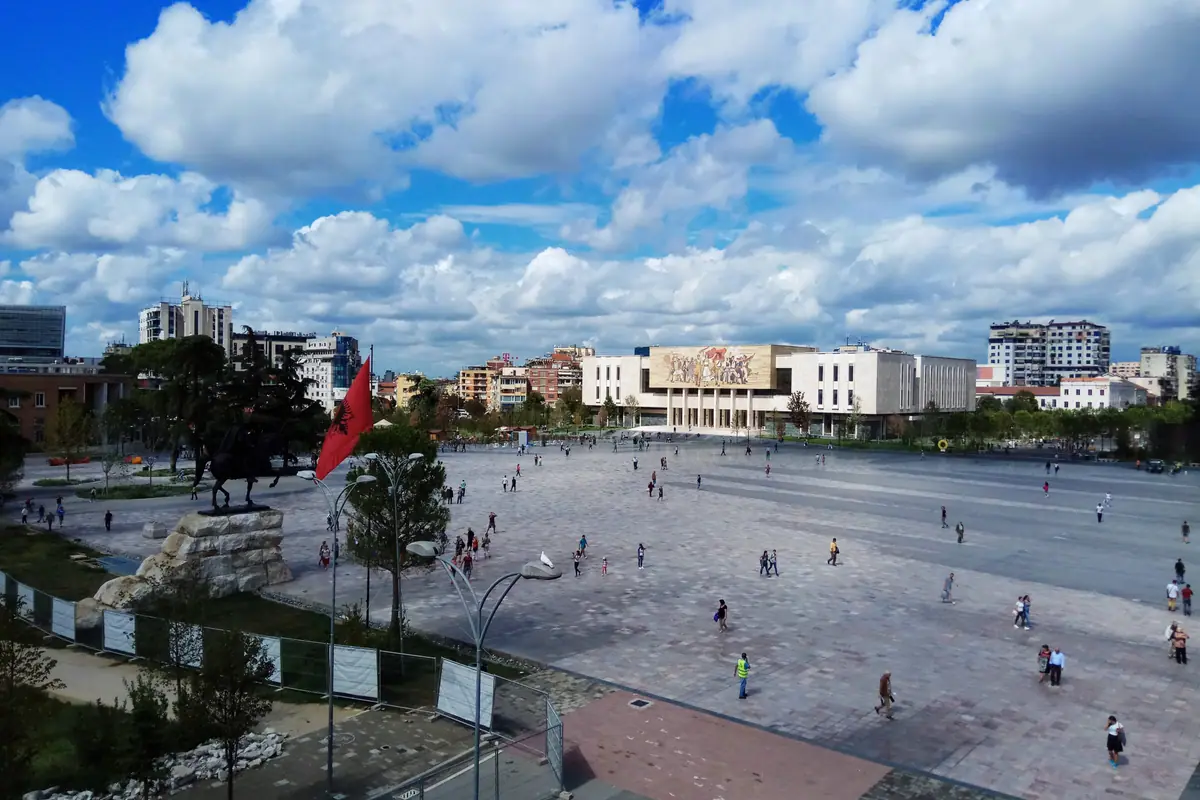
Almost every Albanian trip starts in Tirana, and the city rewards more than a transit night. Skanderbeg Square is the anchor: a vast pedestrian expanse ringed by the Et'hem Bey Mosque with its painted portico, the slender Clock Tower you can climb, and the National History Museum, whose facade carries an enormous mosaic of Albanian history. A few minutes' walk away, the concrete pyramid structure and the leafy Grand Park with its artificial lake give the centre an easy, walkable feel.
Stay in Blloku if you want cafés, cocktail bars and small boutique hotels in converted villas, or near the square if you prefer to step out of your door into the sights. Two unusual museums are worth building an afternoon around: Bunk'Art 1, an enormous underground nuclear bunker turned exhibition space on the city's edge, and Bunk'Art 2 in the centre, which traces the country's surveillance-era history. For views, ride the cable car up Mount Dajti — in clear weather the whole coastal plain unfolds below.
Tirana also makes an excellent base for day trips. Krujë, an hour north, has the hilltop Krujë Castle and its Skanderbeg Museum plus a wonderful old bazaar of carpet and antique shops. Durrës, on the coast, offers a Roman amphitheatre and a sandy city beach within forty minutes. Two or three nights here is ideal: long enough for the museums and food scene, short enough to leave you time for the south.
Berat and Gjirokastër: Sleeping Inside a UNESCO Old Town
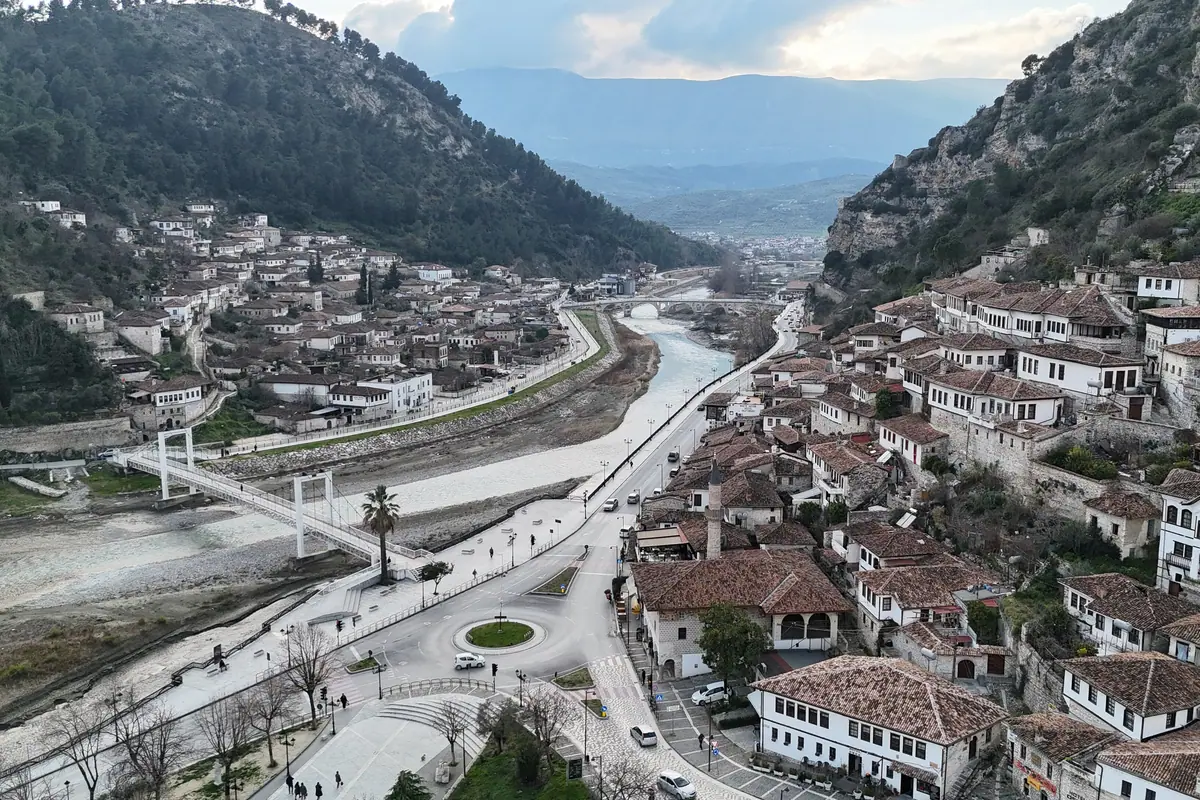
Berat is the postcard Albania most people carry home. Known as the city of a thousand windows, it stacks white Ottoman houses up a hillside in the Mangalem and Gorica quarters, linked by the stone Gorica Bridge over the Osum river. Above them all sits Berat Castle, a walled citadel that people still live inside, complete with cobbled lanes, the Red Mosque, Byzantine churches and the Onufri Iconographic Museum, home to luminous sixteenth-century icons. Staying inside the castle walls is the memory most visitors keep longest.
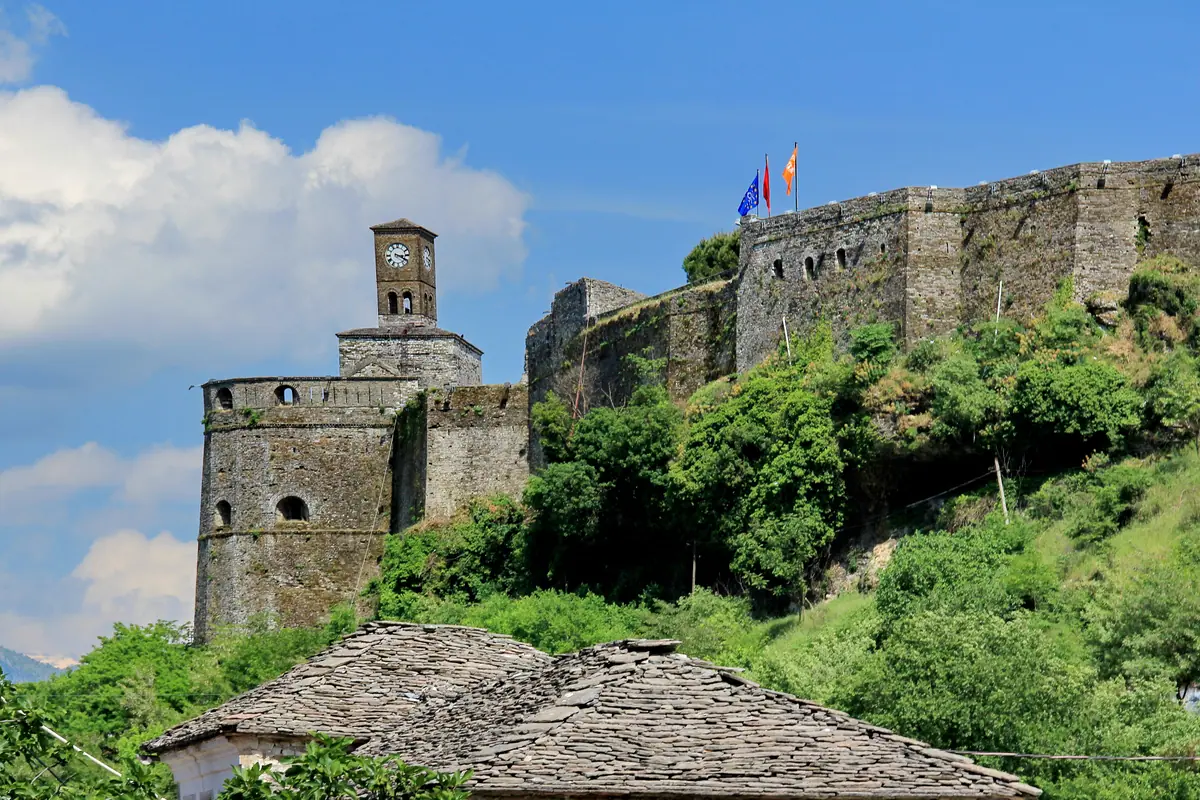
Gjirokastër, further south, is the city of stone — a steep, slate-roofed town dominated by its enormous hilltop castle, which houses an arms collection and captured artillery from the communist era. Below the ramparts, the Cold War Tunnel burrows into the hill, while the Old Bazaar, Skenduli House and Zekate House show off Ottoman interiors of carved ceilings and guest rooms. Both towns are UNESCO World Heritage Sites, and both are best explored slowly, on foot, in the cool of the morning.
Guesthouses here are usually family-run conversions with a handful of rooms, wooden shutters and terraces looking over the roofs. Book well ahead between May and September, because the best places are tiny. Be ready for stairs, uneven cobbles and a short walk from wherever the car can stop, and pack light. One night in each town is possible, but two in Berat lets you add a winery visit in the surrounding hills, and two in Gjirokastër leaves room for the castle, the bazaar and a slow lunch.
The Albanian Riviera: Saranda, Ksamil and the Ionian Coast
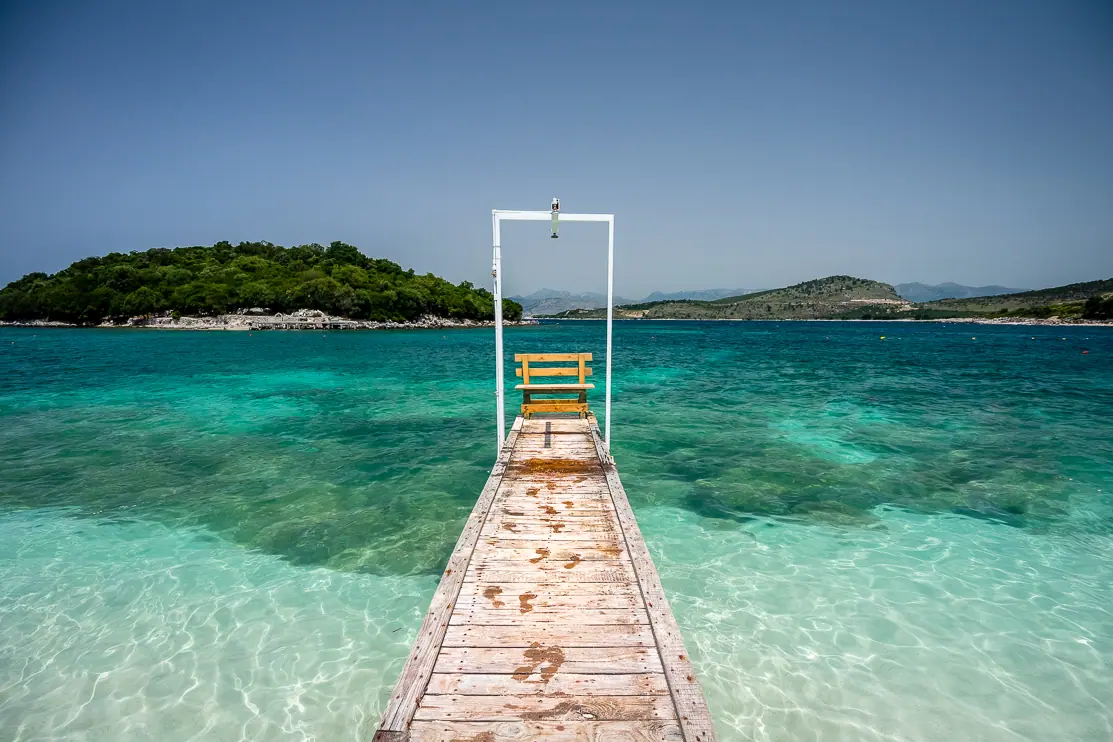
The Riviera is where Albanian hotel choice explodes: seafront blocks in Saranda, apartment-style stays with kitchens in Ksamil, small family hotels in Himarë, and hillside rooms above the pebbles at Dhërmi and Jale. Saranda is the busiest hub, with a long promenade, ferries to Corfu, and the hilltop Lekursi Castle viewpoint over the bay. From town, the must-see sights come thick and fast: the Butrint Archaeological Park, a UNESCO-listed Greco-Roman city twenty minutes south, the Ksamil Islands with their turquoise shallows, and the Blue Eye spring, a startlingly deep pool of cold, impossibly clear water inland.
North along the coast, Himarë splits into old town and beachfront, Dhërmi has a famous long shingle beach, and Gjipe Beach — reachable by boat or a walk down a canyon — is one of the most beautiful spots in the country. The Llogara Pass, high in a national park of black pines, marks the dramatic descent to the coast from the north. Further up the Adriatic side, Vlorë offers Kanine Castle and Independence Square, while the Apollonia Archaeological Park near Fier makes a fine stop on the drive south.
Timing matters more here than anywhere else. July and August are packed, hot and pricey, with the best places sold out months in advance. June and September are the sweet spot: warm sea, open hotels, and space to move. Many coastal properties shut between November and March, so a winter Riviera trip means checking opening dates carefully. Families do well in self-catering apartments; couples should look for small hotels with sea-facing terraces.
The Accursed Mountains and Lake Shkodra: Guesthouses in the North
Northern Albania trades beach hotels for mountain guesthouses, and it is all the better for it. Shkodra, the region's gateway, is a lively city of boulevards and bicycles, with Rozafa Castle looming above the confluence of rivers, the Marubi National Museum of Photography, and the wide grey expanse of Lake Shkodra on its doorstep. Stay in a restored house near the pedestrian centre for a night before heading into the peaks.
From here, the Komani Lake ferry threads through a fjord-like gorge to Fierzë, a boat journey many travellers rate as the highlight of their whole trip. Beyond it lies the Valbona Valley, and over the pass, Theth National Park, where stone-roofed guesthouses sit among meadows. In Theth, walk to the Grunas Waterfall, follow the trail to the Blue Eye of Theth, see the old church, and visit the lock-in tower, a relic of the region's customary law. Rooms are simple, dinners are enormous, and hosts often speak enough English to plan your next day's walk.
The classic hike from Valbona to Theth takes roughly six to eight hours and is best from late June through September, when snow has cleared the passes. Book guesthouses in advance for July and August, and confirm whether dinner and breakfast are included — in villages this is often the arrangement. Bring cash, as card machines are rare, and expect minibuses and shared vans rather than scheduled buses for the final stretches.
When to Go, What to Book, and How to Get Around
For cities and culture, May, June, September and October are ideal: warm, walkable and far less crowded. July and August are best for swimming but bring forty-degree heat, full hotels and Riviera traffic. Winter suits Tirana, Berat and Gjirokastër, where the museums are empty and the mountains dusted with snow, though many coastal hotels close. If you want snow sports, the hills around Korça are the place to look, with a small ski area and a lovely lakeside town at Pogradec nearby for a quieter few days.
Booking habits differ by region. Coastal hotels and popular Berat and Gjirokastër guesthouses should be reserved two to four months ahead for summer. Smaller mountain guesthouses frequently take bookings by phone or message and expect cash on arrival, so carry enough lek with you. Cards work widely in Tirana and larger towns, less so in villages. Always confirm whether heating, air conditioning or an enclosed car park is available, since old stone buildings vary enormously.
Getting around is easiest with a rental car, which gives you the freedom to stop at Butrint, the Blue Eye or a roadside winery. Roads between the main cities have improved greatly, but mountain routes are slow and winding, so plan shorter driving days than the map suggests. Intercity buses and shared vans cover most towns cheaply, and the international airport near Tirana is the usual arrival point. A sensible two-week shape: three nights Tirana, two Berat, two Gjirokastër, four on the Riviera, and three in the northern mountains.
Frequently asked questions
Where should I stay in Albania for a first trip?
Start with two or three nights in Tirana, then split your time between Berat and Gjirokastër for history and Saranda or Ksamil for the coast. If you have more time, add Shkodra and the Valbona Valley or Theth for mountains, and Korça or Pogradec for a quieter lake stay.
Are hotels in Albania expensive?
No — Albania remains one of the better-value destinations in Europe. Simple guesthouses and family rooms are inexpensive, mid-range boutique stays in restored old-town houses are very reasonable by Western European standards, and prices climb mainly in July and August on the Riviera. Mountain guesthouses often include dinner and breakfast, which makes them excellent value.
What is the best time of year to visit Albania?
Late May, June, September and early October offer the best balance of warm weather and manageable crowds. July and August suit beach lovers but are hot and busy, especially along the Riviera. Winter is good for Tirana, Berat and Gjirokastër, though many coastal hotels shut between November and March.
Can you actually stay inside Berat Castle or Gjirokastër's old town?
Yes, and it is one of the great experiences in Albania. Both towns have small family-run guesthouses in restored stone houses, some within the castle walls themselves. Rooms are limited, so book two to four months ahead for summer, and be prepared for cobbles, stairs and a short walk from where your car can park.
Do I need cash for guesthouses in the Albanian Alps?
In the villages around Valbona and Theth, yes. Card machines are rare, so bring enough lek for accommodation, meals and transport before you leave Shkodra or the last larger town. In Tirana and bigger cities, cards are widely accepted, but it is still wise to carry some cash for smaller places.
Sort the rest of your trip
Everything for Albania, in one place
Transfer in Albania
Private driver waiting on arrival — no queues, no surprises.
Book a transfer
Things to do in Albania
Skip-the-line tickets, guided tours and standout experiences.
See experiences
Stay online in Albania
Travel eSIM — data the moment you land, no roaming bills.
Get an eSIMMore guides in Albania

Best Places to Visit in Albania: Riviera Beaches, Stone Towns and Alpine Passes

Best Time to Visit Albania: A Season-by-Season Guide to Its Hotels and Coast

Albania Food, Culture and Local Experiences: A Tour from Tirana to the Riviera
