Fiji is not one holiday but a whole archipelago of them — around 330 islands strung across the South Pacific, roughly a third of them inhabited. Where you sleep decides almost everything else: the reef you snorkel before breakfast, how long the boat ride to dinner takes, and whether your days unfold inside a resort or around a village lawn. This guide maps Fiji's main hotel regions, the landmarks that anchor each one, and the practical details that turn a booking into a genuinely good trip.
Fiji's Hotel Map: Which Island, Which Coast, Which Base
Almost every trip begins at Nadi International Airport, on the dry western side of Viti Levu, Fiji's largest island. From there the options fan out fast. Denarau Island sits twenty minutes away by road; the Coral Coast runs for roughly 80 kilometres of beach two to two-and-a-half hours further along the Queens Road; the Mamanuca Islands are 30 minutes to an hour and a half by catamaran or seaplane; the Yasawas take three to five hours by fast catamaran or a short flight. Taveuni, Vanua Levu and Kadavu all sit a one- to one-and-a-half-hour domestic flight from Nadi, with slower ferry alternatives from Suva.
Timing shapes both weather and prices. The dry season, May to October, brings cooler nights, lower humidity, clearer water and the steadiest trade winds — it is also peak season, with July and August busiest. November to April is the wet season: hotter, stickier, prone to heavy afternoon showers, and carrying the cyclone risk that peaks from January to March. Rates drop sharply in that window and the countryside turns impossibly green, so budget travellers and photographers often prefer it. May, June, October and early November tend to hit the sweet spot.
Accommodation styles vary enormously by island. Denarau is a cluster of large resort complexes with manicured lawns, pools and a marina. The Coral Coast mixes mid-range resorts with simple beach bures. Remote islands typically run full-board lodges where meals are compulsory and sometimes the only option, while Suva has business-oriented hotels and Levuka leans on small guesthouses. Remember that boat and air transfers between islands are usually not included in your room rate and can add meaningfully to a trip's cost.
Nadi and Denarau: The Gateway Stay, Done Well
Most visitors treat Nadi as a transit town, but it rewards a day or two. The standout sight is the Sri Siva Subramaniya Temple, a riot of blue, yellow and red Dravidian carving that is the largest Hindu temple in the Southern Hemisphere and welcomes respectful visitors outside prayer times. In the Sabeto foothills, the Garden of the Sleeping Giant hides an orchid collection and jungle boardwalks beneath the mountain profile that gives it its name, with the Sabeto hot springs and mud pools a short drive further on for a gloriously messy soak. Nadi Market, Wailoaloa Beach and the cafés along the main road fill out an easy afternoon.
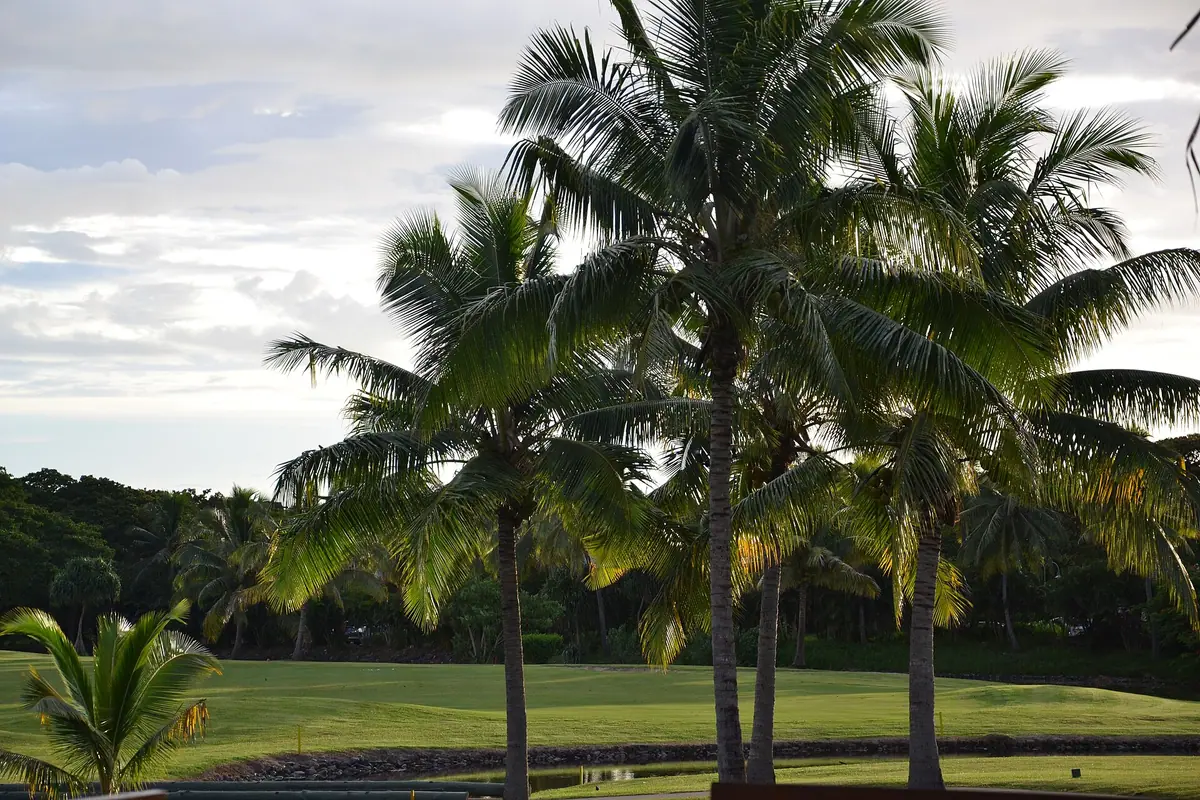
Denarau is the practical choice for a first or last night. It is a man-made island of resort compounds, a golf course, a marina and a strip of restaurants, all within a twenty-minute transfer of the airport — invaluable when you land at night or fly out at dawn. Family facilities are the strongest in the country: shallow lagoon swimming, kids' clubs, interconnecting rooms and plenty of shade. Beaches here are pleasant rather than spectacular, and the swimming is tidal, so pair a Denarau base with a boat trip or a Coral Coast stint for real sand and reef.
The Coral Coast and Pacific Harbour: Bures, Dunes and Adrenaline
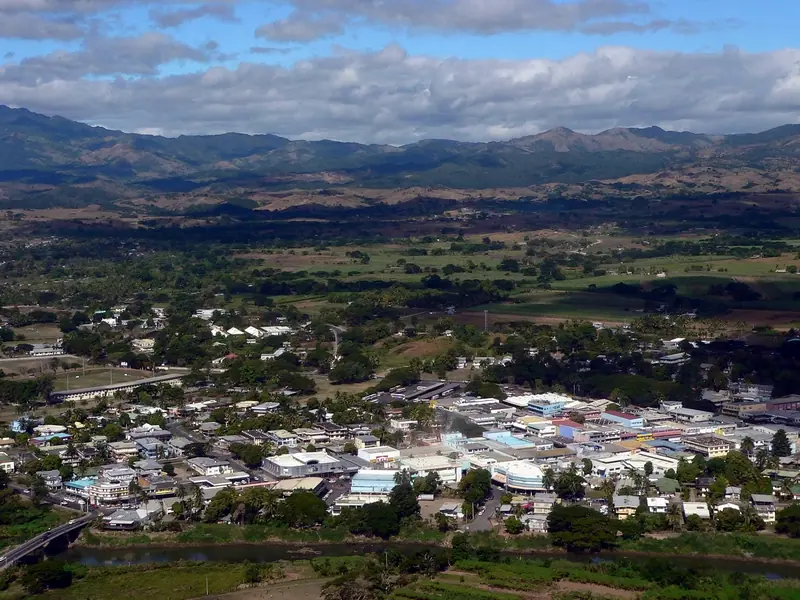
South of Nadi, the Queens Road threads past sugarcane fields, Fijian villages and a string of bays that make up the Coral Coast. This is where value lives: mid-range resorts, self-contained bures and dive lodges, generally cheaper than Denarau and far more characterful. The beach at Natadola is the showpiece — a long sweep of pale sand and clear water that many visitors rate the finest on Viti Levu, reachable by a short detour off the main road.
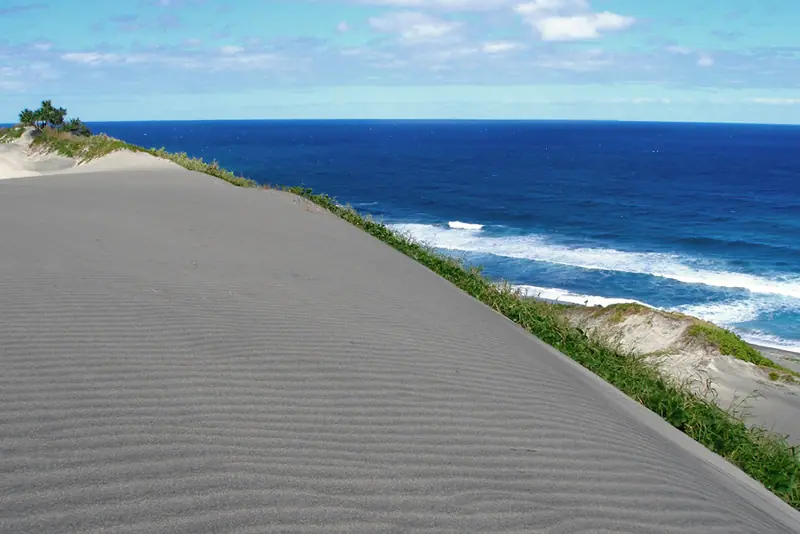
Inland and along the coast, the attractions are unusually varied. Sigatoka Sand Dunes National Park protects a rolling field of orange dunes above the river mouth, with a one- to two-hour walking loop and archaeological finds that stretch back thousands of years. Tavuni Hill Fort above the Sigatoka Valley preserves the terraces of an old hilltop stronghold, while the nearby Kula Wild Adventure Park combines a forest walkway, wildlife encounters and a water slide for hot afternoons. River safaris push up the Sigatoka by jet boat to visit pottery-making villages.
Further east at Pacific Harbour, the pace turns to diving. Beqa Lagoon is famous for its shark encounters, and the surrounding reefs suit everything from beginner courses to drift dives. Inland, the Navua River cuts through gorges and waterfalls that can be explored by raft or kayak. Note that the Coral Coast fringes a shallow reef flat, so at low tide you may need reef shoes to reach deep water — check tide charts before planning a swim-heavy day.
The Mamanuca and Yasawa Islands: Overwater Bures and Private Islets
The Mamanucas are the postcard Fiji: low coral islets ringed by turquoise lagoons, 30 minutes to an hour from Denarau by catamaran or a few minutes by seaplane. Monuriki, an uninhabited islet of castaway-film fame, is a popular day stop, and Malolo Lailai, Mana and Tokoriki offer everything from backpacker bungalows to exclusive adult-only retreats. This is also the place to find the handful of overwater bures that Fiji is known for, though most luxury here still comes in the form of beachfront villas with private plunge pools.
The Yasawas stretch north in a long chain of volcanic peaks and pale beaches, reachable by fast catamaran in three to five hours or by seaplane in far less. Highlights include the Sawa-i-Lau Caves, a limestone cavern where you swim through an underwater passage into a luminous inner chamber, the Blue Lagoon at Nanuya Lailai, and Devil's Beach on Tavewa. Surfers know the region for its reef breaks, while divers head for the soft coral walls and bommies scattered between the islands.
Accommodation on the outer islands is almost always full board, with meals included and little in the way of shops, ATMs or nightlife. Budget bungalows may share bathrooms, use solar power and run limited generator hours; top-end resorts offer plunge pools, spa treatments and private dinners on the sand. Bring cash in small denominations, reef-safe sunscreen and a good book — the point of the Yasawas is that there is very little to do beyond swim, eat and watch the light change.
Suva, Levuka and Fiji's Cultural Heart
Suva, on the wet southeastern coast of Viti Levu, is Fiji's capital and its most urban face. The Fiji Museum, set within the lawns of Thurston Gardens, holds one of the Pacific's finest collections of Fijian artefacts, including a massive double-hulled war canoe and intricate ivory and shell ornaments. Around the corner, the Suva Municipal Market is a cauldron of produce, kava roots and chatter, best visited early on a Saturday. Twenty minutes out of town, Colo-i-Suva Forest Park offers shaded trails and a chain of natural swimming pools beneath the rainforest canopy.
Hotels in Suva cater mainly to business travellers and government visitors, so weekend rates are often softer, and the harbourside and city-centre properties put you within walking distance of Albert Park, the museum and the market. It is also the departure point for ferries to Ovalau and the northern islands.
On Ovalau, the old capital of Levuka is a UNESCO World Heritage site and feels like a time capsule: a single street of timber storefronts, mission buildings and churches pressed between the sea and a steep green ridge. Walk Beach Street, climb to the mission hill for the view, and stay in one of the small, family-run guesthouses. Getting there means a short domestic flight or a ferry from Suva, and the town is small enough to cover on foot in a day.
Taveuni, Vanua Levu and Kadavu: Green Islands, Big Reefs
Taveuni, the Garden Island, is the pick for walkers and divers. Bouma National Heritage Park protects rainforest that tumbles down to the coast, with the three Tavoro Falls a short, muddy, wonderful walk apart, and the Lavena Coastal Walk tracing a black-sand shore to a hidden waterfall. The Waitavala natural waterslide is a slippery local rite of passage, and Des Vœux Peak delivers sweeping views on clear mornings. Offshore, the Rainbow Reef's Great White Wall is one of the South Pacific's signature dives — a sheer face draped in white soft coral, at its best from roughly May to October.
Vanua Levu, Fiji's second-largest island, is quieter still. Savusavu is a small harbour town with hot springs steaming right at the waterline, a market, and a handful of low-key resorts and guesthouses. Nearby Natewa Bay is one of the largest in the region and superb for dolphins and kayaking, while the Waisali Rainforest Reserve and the dive sites at Split Rock reward a slower itinerary. Accommodation here is mostly small-scale: garden bures, eco-lodges and dive-focused properties where the hosts know every guest by name.
Kadavu, far to the south, is the least developed of the main islands and home to the Great Astrolabe Reef, a vast barrier system with channels, drop-offs and reliable manta encounters. Rooms are simple, electricity can be intermittent, and even getting there involves a domestic flight or a long ferry — which is precisely why it stays so quiet. On all three islands, book transfers and any dives before you arrive, and carry enough cash to cover a week, since card facilities are rare.
Frequently asked questions
What is the best time of year to visit Fiji?
The dry season from May to October offers the most reliable weather, clearest water and coolest nights, but it is also the busiest and most expensive period, with July and August at their peak. November to April is hotter, wetter and within cyclone season, yet rates fall sharply and the islands look lush and dramatic. Late May, June, October and early November usually blend decent weather with better value.
How do I get between the islands?
From Nadi you can reach Denarau by road in about twenty minutes, the Coral Coast in two to two-and-a-half hours, and the Mamanuca Islands by catamaran or seaplane in under ninety minutes. The Yasawas take three to five hours by fast catamaran or a short flight, while Taveuni, Vanua Levu and Kadavu are one- to one-and-a-half-hour domestic flights from Nadi. Suva sits roughly three hours from Nadi by road and serves as the ferry hub for the eastern islands.
Are Fiji resorts all-inclusive?
It depends entirely on the island. Large resorts on Denarau and much of the Coral Coast usually sell room-only or breakfast-included rates, so you pay for meals as you go and have restaurants nearby. Most remote island lodges and nearly all Yasawa properties require a full-board meal plan, because there is nowhere else to eat. Transfers by boat or plane are almost always charged separately.
Where should a first-time visitor stay in Fiji?
For an easy introduction, split your trip: a night or two on Denarau or in Nadi to recover from the flight and see the Sri Siva Subramaniya Temple and Sabeto mud pools, then a few days on the Coral Coast or in the Mamanucas for beach and reef time. Honeymooners and divers often skip straight to a Mamanuca or Yasawa island, while anyone interested in Fijian history should add Suva and Levuka.
What should I know about money, etiquette and reefs in Fiji?
ATMs are plentiful in Nadi and Suva but scarce or nonexistent on outer islands, so carry cash in small notes and expect card surcharges where cards are accepted. Dress modestly away from resorts, ask before photographing villages, and if you are invited to a kava ceremony, accept the bowl with both hands. Use reef-safe sunscreen, never stand on coral, and pack reef shoes for the shallow lagoon flats along the Coral Coast.
Sort the rest of your trip
Everything for Fiji, in one place
Transfer in Fiji
Private driver waiting on arrival — no queues, no surprises.
Book a transfer
Things to do in Fiji
Skip-the-line tickets, guided tours and standout experiences.
See experiences
Stay online in Fiji
Travel eSIM — data the moment you land, no roaming bills.
Get an eSIM