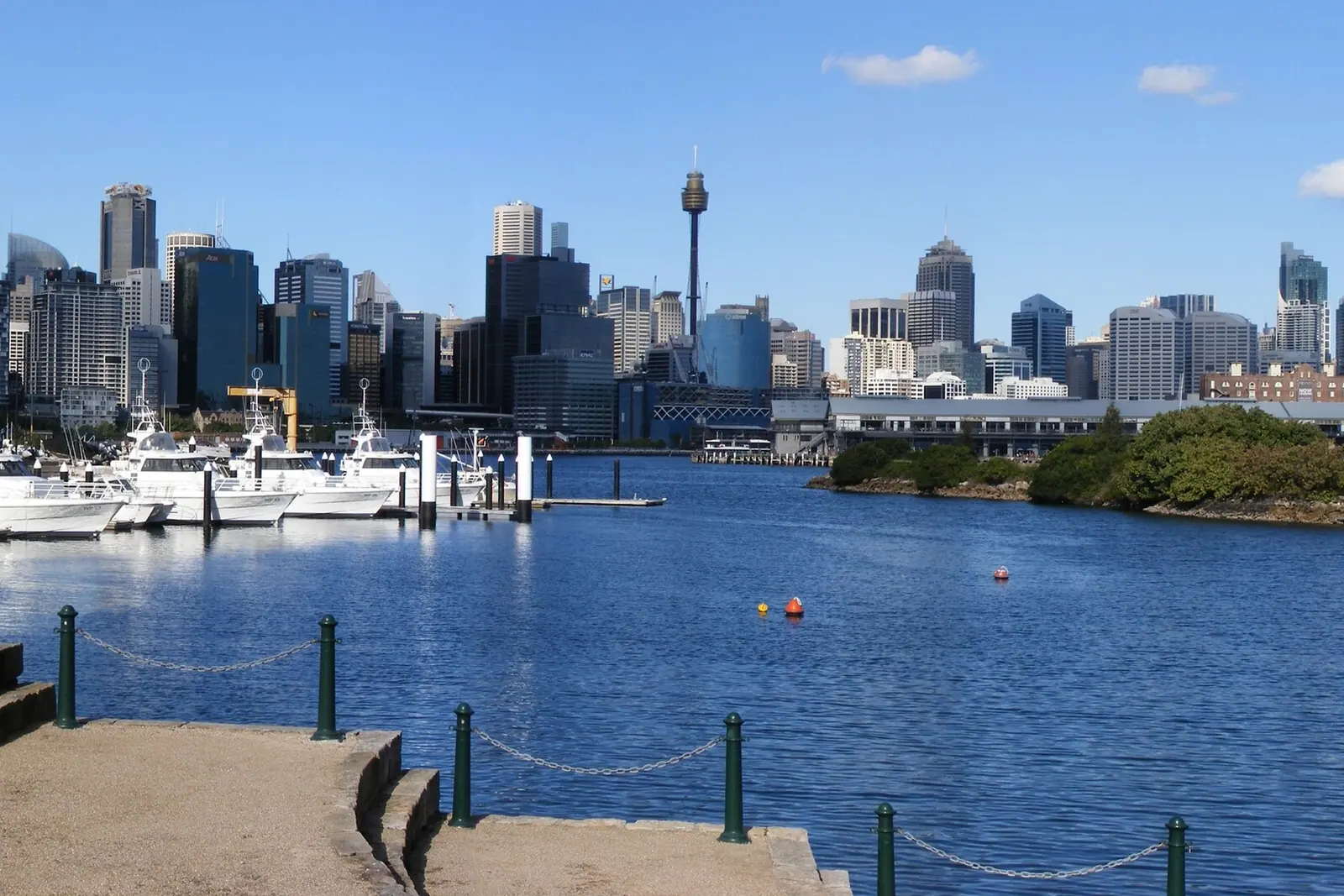
Fiji is not one island but more than 300 of them, flung across a warm blue expanse of the South Pacific where reef gardens start a few metres off the sand. Some are bare coral cays you can walk around in twenty minutes; others hide cloud forest, volcanic peaks and villages that have welcomed visitors for generations. This guide picks the places worth building a trip around, and tells you when to go.
Nadi, Denarau and the Sabeto Valley: Fiji's Front Door
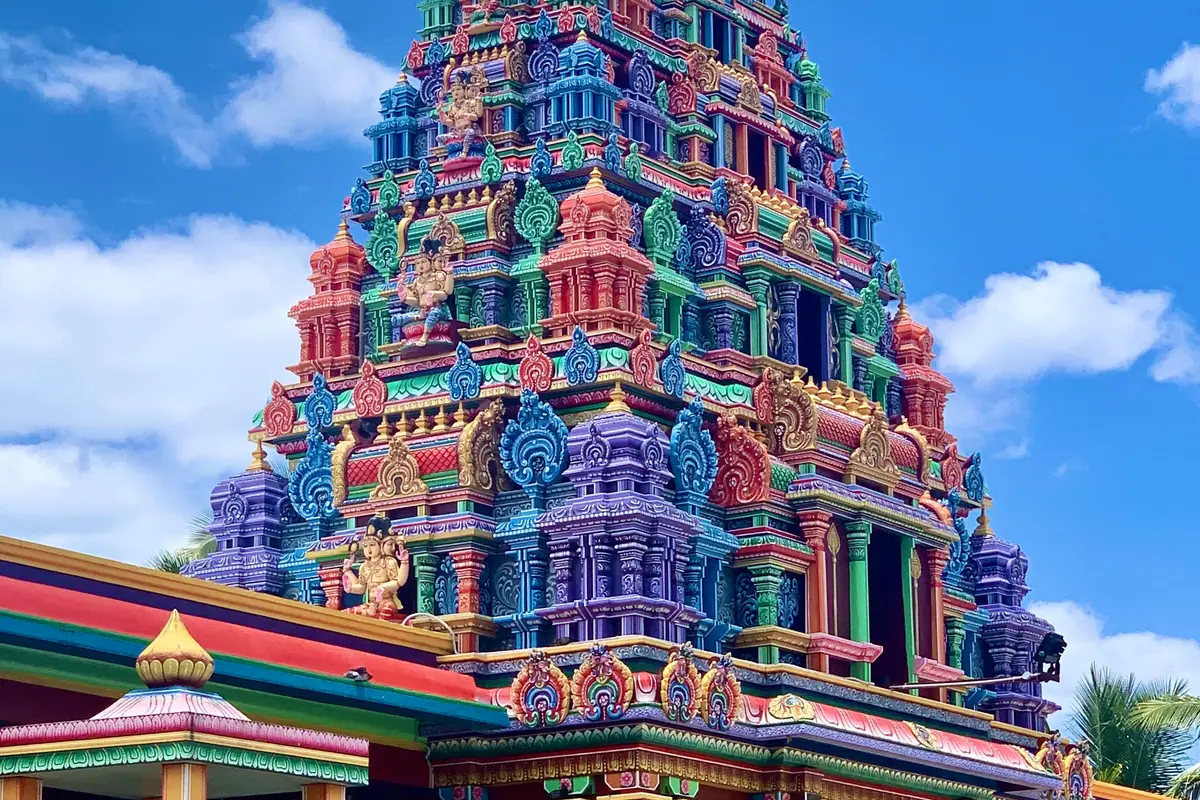
Almost every trip starts on the dry western side of Viti Levu, where Nadi's airport sits ringed by sugar cane and flame trees. Before you rush to a resort, spend a morning in town: the Sri Siva Subramaniya Swami Temple is the largest Hindu temple in the South Pacific, a tower of painted deities in vivid blue, yellow and red. Cover shoulders and knees, remove shoes, and don't photograph inside. Nearby, Nadi's produce market sells bundles of kava root, jackfruit, papaya and the small, fiery chillies that turn up in local curries.
Twenty minutes away, Denarau Island is a tidy peninsula of hotels, a golf course and a marina that doubles as the departure point for island ferries. A better use of a spare day, though, is the Sabeto Valley just inland. The Garden of the Sleeping Giant is a hillside of orchids, ferns and shaded boardwalks beneath a mountain range whose ridgeline really does look like a reclining figure. Further up the valley, Sabeto's hot springs and mud pools invite you to plaster yourself in cool grey volcanic mud before soaking in warm mineral water — an hour is plenty, and it's a joy for children.
Allow one or two nights here before moving on. On the road north towards Lautoka, the village of Viseisei is traditionally held to be where the first Fijian ancestors landed, and its stone church and thatched meeting hall make a gentle introduction to village etiquette. Public buses rattle along the Queens Road in both directions, but for the Sabeto Valley and Viseisei a taxi or hired car for the day is far easier.
The Mamanuca Islands: Small, Close and Almost Too Easy
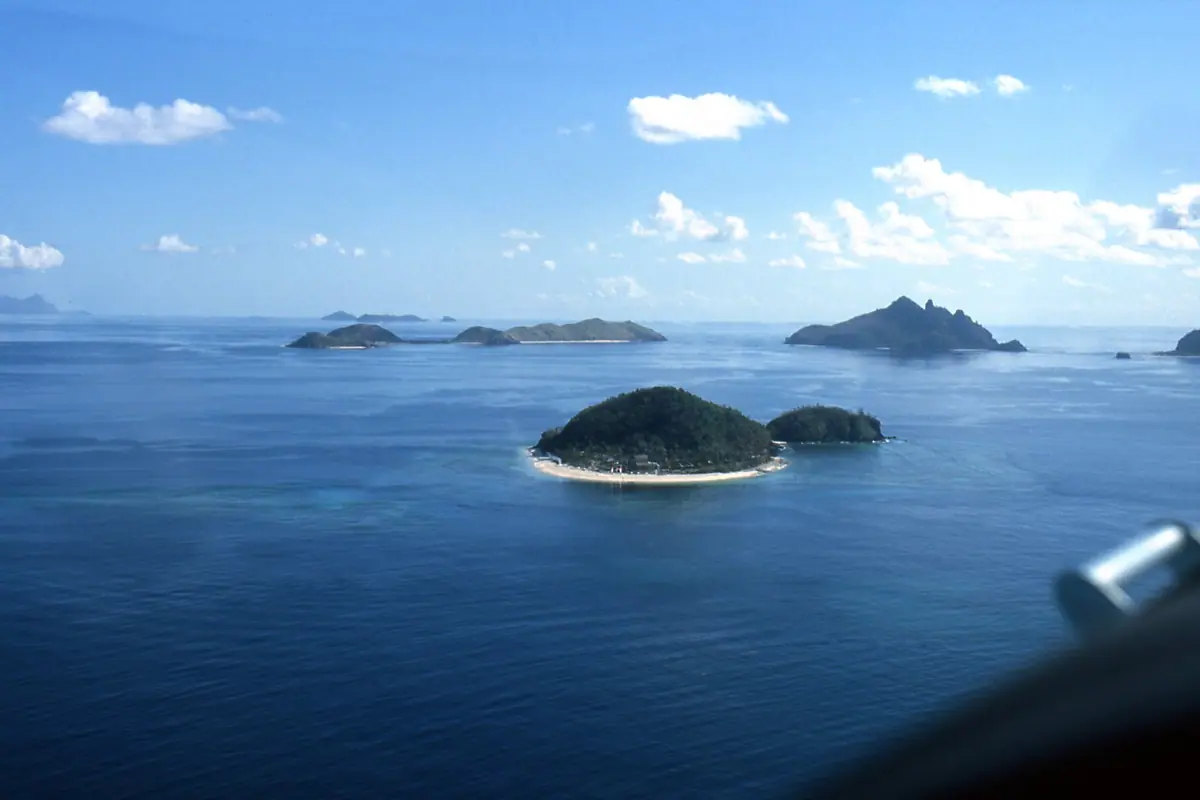
The Mamanucas are the postcard Fiji of travel brochures: roughly twenty volcanic islands and coral cays scattered an hour or less by boat from Denarau. Malolo, Mana, Qalito, Treasure and Beachcomber are the best known, most with a single resort and a ring of reef you can snorkel straight off the beach. Monuriki, an uninhabited islet with a steep, scrubby interior, is the wildest and most photogenic of the group. Because the islands sit in the lee of Viti Levu, the lagoons are calm enough for beginners and nervous swimmers alike.
Days here revolve around water. Snorkelling and introductory dives happen in sheltered coral gardens; more experienced divers head for the channels and wrecks further out. Surfers chase the famous reef breaks off Tavarua and Namotu, which work best between April and October when southern swells arrive. In the evenings there are sunset sails, kava ceremonies and meke performances of story-telling dance, though many resorts are quiet by ten.
You can see a Mamanuca island on a day trip, but two to four nights is the sweet spot. The dry season from May to October brings lower humidity, steadier trade winds and the clearest water. November to April is hotter, wetter and cheaper, and while it is also cyclone season, severe storms are uncommon and usually well forecast.
The Yasawa Islands: Caves, Mantas and Village Life
Stretching about ninety kilometres northwest of Nadi, the Yasawas are a chain of roughly twenty volcanic islands with dramatic ridgelines, empty beaches and far fewer people than the Mamanucas. High-speed catamarans run daily from Denarau, taking two to five hours depending on how far north you go; seaplanes and helicopters cut the journey to minutes. Many travellers buy a hop-on, hop-off boat pass and work their way up and back over a week.
The star attraction is the Sawa-i-Lau caves, on the west coast of Yasawa-i-Rara. You swim into a towering limestone chamber lit by a shaft of daylight, then, if the tide allows, duck under a submerged passage into a pitch-black second cavern — go with a local guide, and only at low tide. Further north, the Blue Lagoon area around Nanuya Levu and Nacula Island offers some of the calmest, clearest water in the country.
Between roughly May and October, manta rays gather to feed in the channel near Drawaqa Island, and snorkellers regularly share the water with them. The Yasawas are also where village stays shine: simple guesthouses in Naviti and Nacula, cold showers, set meal times and limited power, plus kava ceremonies and Sunday church singing that will stay with you longer than any resort pool.
The Coral Coast, Sigatoka and Pacific Harbour
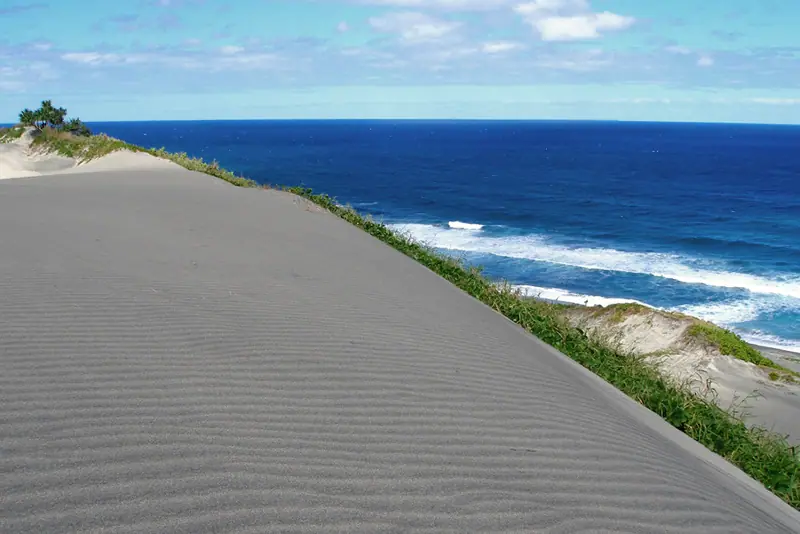
The Queens Road between Nadi and Suva runs along the Coral Coast, where a fringing reef sits so close to shore that you can wade out and snorkel within minutes. Inland at Sigatoka, the Sigatoka Sand Dunes National Park protects the country's first national park — a shifting landscape of grey dunes up to sixty metres high, with a one- to two-hour loop trail and archaeological traces of early settlement. Sigatoka town itself has a lively market worth a stop.
Pacific Harbour, a little further east, is Fiji's adventure base. The Beqa Lagoon is famous for its shark dives, where bull, tiger and reef sharks circle in clear water — an experience usually done as a guided two-tank trip. Inland, inflatable rafts run the Navua River through forested gorges and past waterfalls, and zip-line courses thread through the canopy. Near Sigatoka, a wildlife park breeds crested iguanas and displays some of Fiji's rare endemic birds, which makes a good wet-weather option.
The Coral Coast lies about two hours from Nadi and three from Suva, so it works neatly as a stopover between the two. Dive conditions are best in the dry season, while the wet months swell the rivers and make rafting more exciting but snorkelling murkier.
Suva and the Forested Interior
Suva, on the rainy southeastern corner of Viti Levu, is Fiji's capital and its most cosmopolitan city. The Fiji Museum in Thurston Gardens is the essential stop, holding a deep collection of Fijian artefacts — including the rudder of the Bounty — alongside displays on the country's indentured labour history. Across town, the Suva Municipal Market is a sprawling, noisy wonder of produce, seafood and kava, best visited early in the morning. Colonial-era government buildings and the palm-lined waterfront fill out a comfortable half-day.
Nature is closer than you would expect. Colo-i-Suva Forest Park, fifteen minutes from the city centre, has walking trails, waterfall pools and a surprising amount of birdlife. For something steeper, the hike to Joske's Thumb climbs to a rocky pinnacle above the harbour in three to four hours return — muddy after rain, so wear shoes with grip.
Further inland, the road up to Navala in the Ba Highlands leads to Fiji's last village of traditional thatched bures, where village-run guesthouses offer a rare, quiet stay. Above Lautoka, Koroyanitu National Heritage Park protects cloud forest and the trails around Mount Evans, with waterfalls and ridges reached on foot or by four-wheel drive. This is the Fiji that most short-haul visitors never see.
Taveuni, Vanua Levu and Kadavu: The Outer Islands
Taveuni, the 'Garden Island', is where Fiji's rainforest and reef collide. Bouma National Heritage Park protects the Tavoro Falls, three tiers of waterfalls reached by an easy trail, and the Lavena Coastal Walk follows the shore for about five kilometres to a hidden cascade. Elsewhere on the island, a natural rock waterslide at Waitavala, the misty summit of Des Voeux Peak and the rare tagimaucia flower at its crater lake reward anyone who stays a few days. Just offshore, the Somosomo Strait's Rainbow Reef and the Great White Wall are regarded as some of the finest soft-coral diving anywhere, with visibility best from June to September.
Across the strait, Vanua Levu is quieter and greener. Savusavu is a small harbour town with hot springs steaming beside the road and excellent snorkelling at Split Rock, while the vast Natewa Bay offers dolphin sightings and sheltered diving. Off its coast, the Namena Marine Reserve is a protected reef known for dense soft corals and, in season, schooling hammerheads. To the east, the old capital of Levuka on Ovalau retains a UNESCO-listed waterfront of wooden shopfronts and clapboard churches.
Far south, Kadavu is reached by a short domestic flight and then by boat, since roads barely exist. It is the gateway to the Great Astrolabe Reef, one of the largest barrier reefs in the world, where manta rays glide through the Naiqoro Passage. Between June and September, humpback whales pass through Fijian waters and some outer-island operators run whale-watching trips. If your dream Fiji is a small guesthouse, a long boat ride and a reef all to yourself, this is it.
Frequently asked questions
When is the best time to visit Fiji?
May to October is the dry season, with lower humidity, steady trade winds and the clearest water — ideal for diving and island hopping. November to April is hotter and wetter, and it doubles as cyclone season, but prices drop and the landscape is lush. Diving visibility peaks from June to September; manta rays are usually seen near Drawaqa in the Yasawas from May to October.
How many days do you need in Fiji?
Five days is enough for a single island group such as the Mamanucas. Seven to ten days lets you add the Yasawas or the Coral Coast. Two weeks gives you time for the Yasawas plus a domestic flight to Taveuni, Savusavu or Kadavu, and still leaves a night or two in Nadi at each end.
How do you get between the islands?
High-speed catamarans leave from Denarau for the Mamanucas and Yasawas, with a hop-on, hop-off pass suiting longer trips. Domestic flights connect Nadi with Taveuni, Savusavu, Labasa and Kadavu, and seaplanes and helicopters serve some resorts. On Viti Levu, buses run the Queens Road between Nadi, Sigatoka, Pacific Harbour and Suva.
Is Fiji good for families and non-divers?
Very. Shallow lagoons make snorkelling easy for children, and sandbar picnics, glass-bottom boats, mud pools and village visits fill the days. Non-divers can enjoy reef walks, river rafting, rainforest hikes and the Sawa-i-Lau caves, while divers and surfers head for the outer reefs and breaks.
What practical things should first-time visitors know?
English is widely spoken alongside Fijian and Fiji Hindi, and the currency is the Fijian dollar. Many nationalities receive a visitor permit on arrival. Village visits call for modest clothing — shoulders and knees covered, hats off, and always accept a bowl of kava with both hands. Carry reef-safe sunscreen and cash for small islands, where card machines are rare.