Dominica rises out of the Caribbean like a green secret — a volcanic island of 365 rivers, steaming sulphur vents and rainforest so dense it seems to swallow the sky. There are no sprawling beach mega-resorts here; instead the island's hotels are small, independent and often tucked into the very landscapes travellers come to see. This guide maps where to stay, region by region, and the must-see sights waiting within reach of each base.
Why Dominica's Hotel Scene Looks the Way It Does
Dominica is roughly 29 miles long and 16 miles wide, wedged between Guadeloupe and Martinique and built along a volcanic spine that peaks at Morne Diablotin, the island's highest point. Because so much of the interior is protected — including the World Heritage-listed Morne Trois Pitons National Park — development has stayed deliberately low-rise and low-key. You will not find the walled resort complexes of its neighbours. What you will find is a hotel stock made almost entirely of six- to twenty-room properties: plantation-era wooden inns, family guesthouses, dive lodges and solar-powered eco-lodges tucked into the hills.
Almost every property is locally owned, and that shapes the experience. Reception is often the owner, breakfast is often fresh fruit from the garden, and the person sketching a trail route on a napkin has usually walked it that week. Rooms tend to be simple and generous rather than polished: ceiling fans more often than air conditioning, louvered windows, verandas built for watching rain move across the valley.
Accommodation clusters in a handful of places: the capital Roseau and nearby Canefield; the hill villages of Laudat, Wotten Waven and Trafalgar above the valley; the northern town of Portsmouth and adjoining Picard; the northeast coast around Calibishie and Marigot; and the southern village of Soufrière. Choose your base by what you want to do — hike the interior, dive the reefs, or drift slowly between villages — rather than by hotel brand, because there are essentially none.
Roseau, Wotten Waven and the Southwest: The Classic First Base
Roseau is the island's compact capital, a grid of colourful Creole houses, market stalls and one-way streets pressed between the sea and the mountains. Its small hotels and guesthouses sit mostly in and around the old French Quarter and along the waterfront, with a few larger properties on the edges of town. Fill a morning at the Dominica Museum and the Old Market Square, wander the Botanical Gardens, then drive or walk up to Morne Bruce for the classic view back over the rooftops and the cruise berth. Fifteen minutes inland, the valley village of Wotten Waven has spring-fed lodges built around sulphur pools, the kind of place where you soak before dinner and sleep with the windows open.
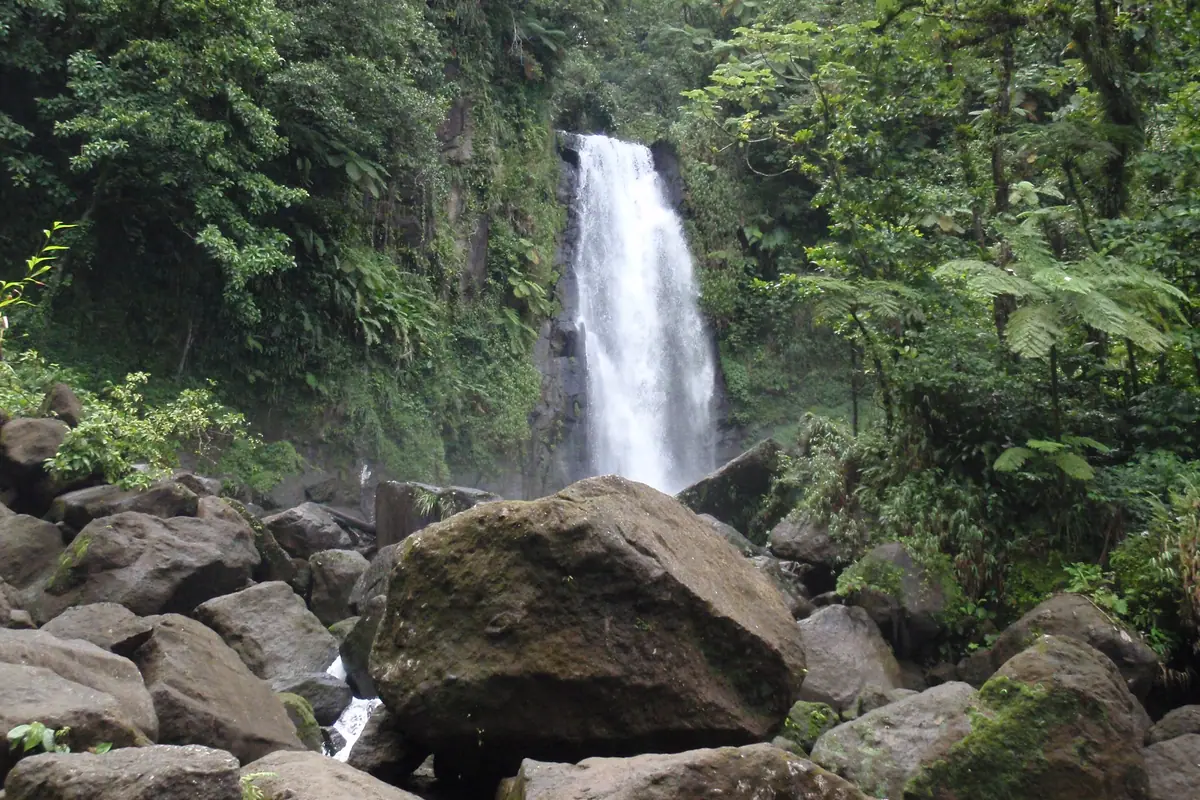
The southwest is where most first-time visitors spend their first three or four days, because the headline sights are all close. Trafalgar Falls delivers two cascades — the taller and the broader, known locally as the father and mother — a ten-minute walk from the road, with a viewing platform and a warm mineral pool below. Titou Gorge is a short, bracing swim upstream through a slot canyon of cold water and high walls. Higher still, above the village of Laudat, Freshwater Lake sits in cool, misty hill country that feels nothing like the coast.
Roseau suits travellers who want markets, transport links and easy access to both coasts. It is also the obvious base for Carnival in February or March and for the World Creole Music Festival in late October, when small hotels sell out months ahead and rates climb sharply. Bear in mind that island roads are winding and steep: a destination that looks 20 minutes away on a map can take 45 minutes in practice.
The Southeast: Soufrière, Scotts Head and Champagne Reef
The south coast is drier, sunnier and calmer than the rainforest interior, and it is where divers tend to settle. The tiny village of Soufrière sits in the shadow of the Soufrière Sulphur Springs, where warm mineral pools and mud baths steam gently beside a river. A short drive south brings you to Scotts Head, a village perched on a narrow isthmus with the Atlantic on one side and the Caribbean on the other. The surrounding Scotts Head Marine Reserve protects a drop-off that plunges close to shore, and a short, steep walk up to the old fort at the tip rewards you with a panoramic view of the bay.
Just along the coast lies Champagne Reef, one of the island's signature experiences: volcanic gas streams up through the water in silver beads, so snorkelling here feels like swimming through a glass of champagne. Entry is from the shore, which makes it accessible to swimmers who have never worn a tank. Dive lodges and simple guesthouses in and around Soufrière and nearby villages put you within minutes of the reef rather than an hour's drive away.
Further east, the village of Delices is the gateway to Victoria Falls, a tall cascade reached by a river hike that takes a couple of hours each way and involves boulder scrambling and a river crossing. Staying south makes that an early-morning outing rather than an all-day expedition. This is also the best corner of the island for a lazy swim, since several beaches here are calmer and more sheltered than the surf-battered east coast.

Rainforest Lodges: Laudat, Morne Trois Pitons and the Boiling Lake Trail
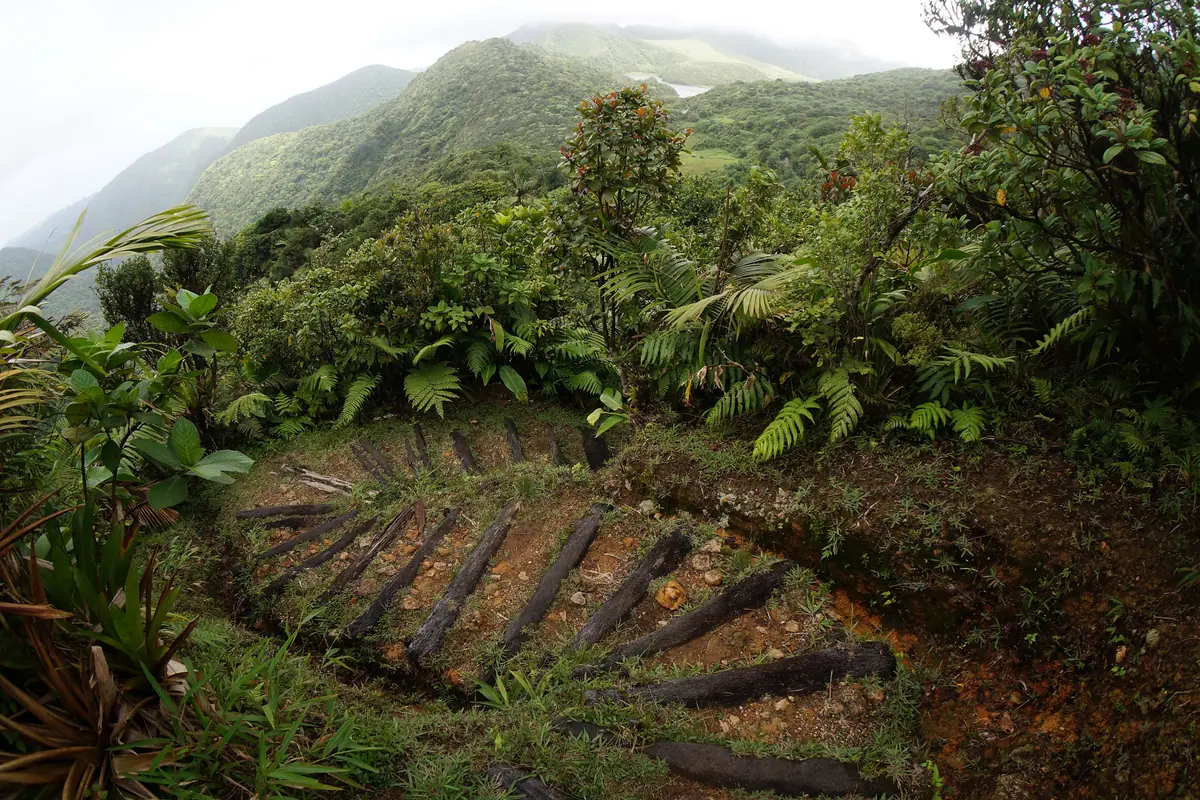
If you came to Dominica to walk, base yourself in the interior. Morne Trois Pitons National Park protects a staggering concentration of scenery: boiling lakes, steaming valleys, crater lakes, waterfalls and cloud forest, all linked by trails that begin within a short drive of Laudat and Wotten Waven. Eco-lodges up here are small, often off-grid, and built for damp, cool nights — think hot showers, thick blankets, hummingbird feeders and a drying room for boots.
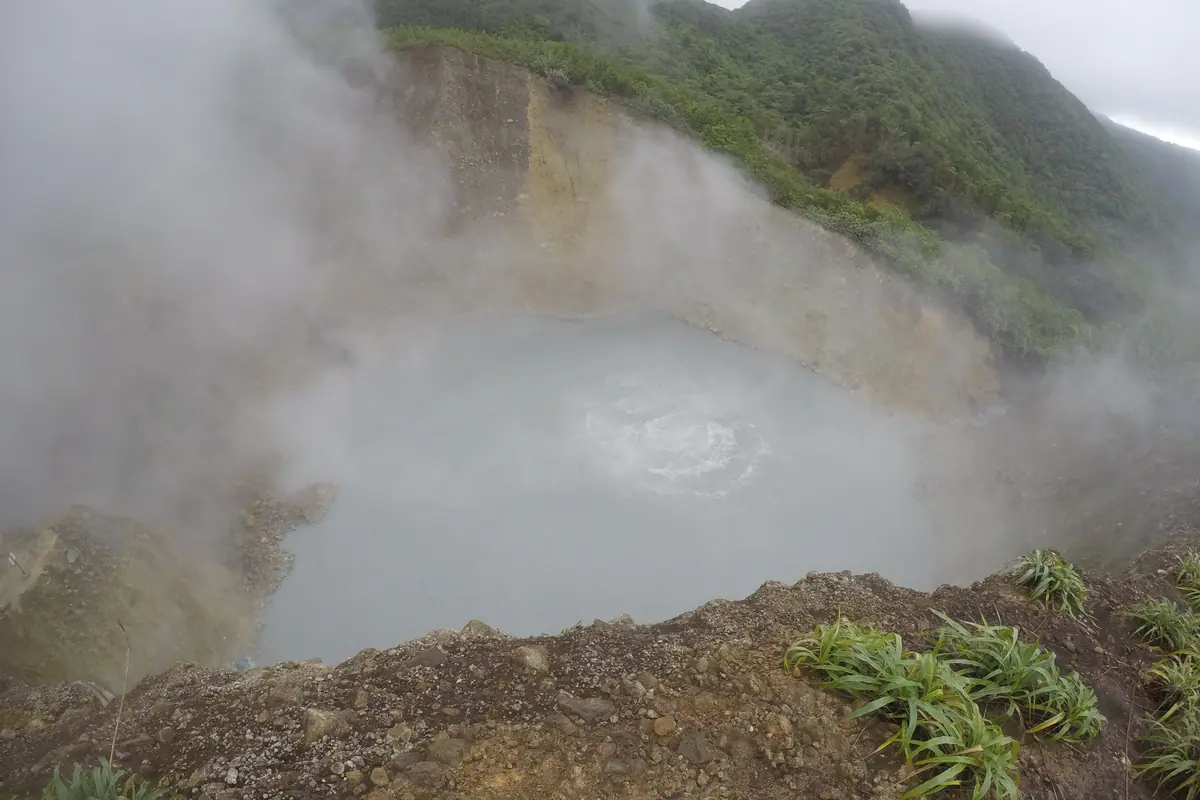
The centrepiece is the Boiling Lake, one of the largest flooded fumaroles on earth, reached via the Valley of Desolation on a demanding six- to eight-hour round trip from Laudat. It is not a walk to attempt without a local guide, both for navigation and for safety around the vents. Easier rewards include Middleham Falls, about an hour's climb each way to a towering plunge pool, Emerald Pool, a short stroll off the road to a waterfall and swimming hole, and Boeri Lake, a steep but short ascent from Freshwater Lake.
Staying in the hills gives you two luxuries: dawn on the trail before anyone else arrives, and evenings of mist, frogs and total quiet. The endemic sisserou and red-necked parrots are most often heard — and occasionally seen — at first light. The trade-off is logistics: you will want a car or a driver arranged in advance, and provisions, cash and fuel are best sorted in Roseau before you head up. Several segments of the long-distance Waitukubuli National Trail, which runs roughly 115 miles across the island in fourteen stages, pass through this high country.
The North: Portsmouth, Cabrits, Calibishie and the Kalinago Territory
Portsmouth, the island's second town, is quieter and slower than Roseau, set on a broad sheltered bay. Its signature outing is the Indian River, where small boats glide up a mangrove tunnel at a pace that suits the place, usually with a guide who can point out herons, crabs and the trees that lean over the water. Hotels and guesthouses cluster in Portsmouth and the adjoining village of Picard, a short walk from both the river mouth and the beach.
Across the bay, Cabrits National Park is built around Fort Shirley, an eighteenth-century British garrison whose stone ruins, powder magazines and grassy ramparts now sit among dry forest trails with wide views over Prince Rupert Bay. It is one of the most rewarding half-days on the island, and the water below the headland is good for snorkelling when the sea is calm. Inland, Morne Diablotin National Park and the Syndicate Trail protect some of the last strongholds of the endemic sisserou parrot, in rainforest that feels genuinely untouched.
The northeast coast around Calibishie is the island's most photogenic shoreline, where red rocks, black sand and palm coves alternate along a road that rises and falls with every headland. Batibou Beach, reached by a bumpy track, is the postcard: pale sand, leaning palms and shade. A little further north, the Kalinago Territory is home to the Kalinago people, the island's indigenous community, with a cultural village, craft workshops and cassava bread baked over open fires. Small hillside lodges and guesthouses around Calibishie and Marigot make an excellent second base, especially since the island's main northeastern airport is nearby.
Practical Planning: When to Go and What to Expect
The driest, coolest months run from December to April, with January to April the busiest stretch — book well ahead if that is your window. Rain is possible year-round in a place this green, but the wettest period is June to November, which overlaps with hurricane season from the start of June to the end of November; the riskiest weeks are generally August to October. Two dates to plan around: Carnival in February or March, when the whole island moves to a different rhythm, and the World Creole Music Festival in late October, when accommodation fills fast.
Getting around takes longer than the map suggests. Cars are driven on the left, roads are narrow and hairpin-heavy, and a four-wheel-drive vehicle makes life easier on the interior tracks toward Laudat, Freshwater Lake and the trailheads. The two airports — one near Roseau at Canefield and a larger one in the northeast near Marigot — are served by regional flights, while ferries link the island with Guadeloupe, Martinique and Saint Lucia. Local buses run between towns but stop early; taxis are reliable and usually fixed-price, and drivers often double as informal guides.
As for the hotels themselves, expect character over gloss. Many small properties include breakfast, some eco-lodges run on solar power and rainwater and skip air conditioning and televisions entirely, and Wi-Fi is often best in a shared lounge rather than your room. The local currency is the Eastern Caribbean dollar, though US dollars are widely accepted; smaller guesthouses appreciate cash, and ATMs are found mainly in Roseau and Portsmouth. Pack reef-safe sun cream, sturdy shoes, a light rain shell and insect repellent, and plan to tip around ten to fifteen percent where service is not already included. The reward for the extra planning is an island that still feels unrepeatable — and a hotel that feels like somebody's home rather than somebody's portfolio.
Frequently asked questions
Are there all-inclusive resorts in Dominica?
No. Dominica has deliberately avoided large all-inclusive chains. Accommodation is dominated by small, independently owned hotels, guesthouses, dive lodges and eco-lodges, typically with six to twenty rooms. Some of the larger properties offer half-board or meal packages, but you will generally eat out at local restaurants rather than inside a resort compound.
Where should I stay to hike the Boiling Lake?
The closest bases are Laudat, at the trailhead, and Wotten Waven and Trafalgar a short drive away. Roseau works too if you are happy with an early start. The round trip takes six to eight hours, so staying nearby means a dawn departure. Go with a local guide — the route through the Valley of Desolation is easy to lose and the terrain around the vents is genuinely hazardous.
What is the best time of year to visit Dominica?
December to April brings the driest weather and the coolest nights. It is also the busiest period, so book accommodation early. June to November is wetter and coincides with hurricane season, with the highest risk from August to October. Rainforest showers are possible at any time of year, so bring a light waterproof layer whatever the season.
Do I need to rent a car in Dominica?
It helps, especially if you plan to stay in the interior or the northeast coast, where buses are infrequent and stop in the early evening. Driving is on the left on narrow, steep, winding roads, so a four-wheel-drive is useful for the hill villages and trailhead tracks. If you would rather not drive, taxis are fixed-price and reliable, and many guesthouses can arrange a driver for day trips.
Which part of Dominica is best for diving and snorkelling?
The southwest and south coast, particularly around Scotts Head and Soufrière. The Scotts Head Marine Reserve has a dramatic drop-off close to shore, and Champagne Reef offers shore-entry snorkelling among volcanic gas bubbles. Staying in Soufrière or nearby villages puts you minutes from the water instead of an hour away, which matters for early boat departures.
Sort the rest of your trip
Everything for Dominica, in one place
Transfer in Dominica
Private driver waiting on arrival — no queues, no surprises.
Book a transfer
Things to do in Dominica
Skip-the-line tickets, guided tours and standout experiences.
See experiences
Stay online in Dominica
Travel eSIM — data the moment you land, no roaming bills.
Get an eSIM